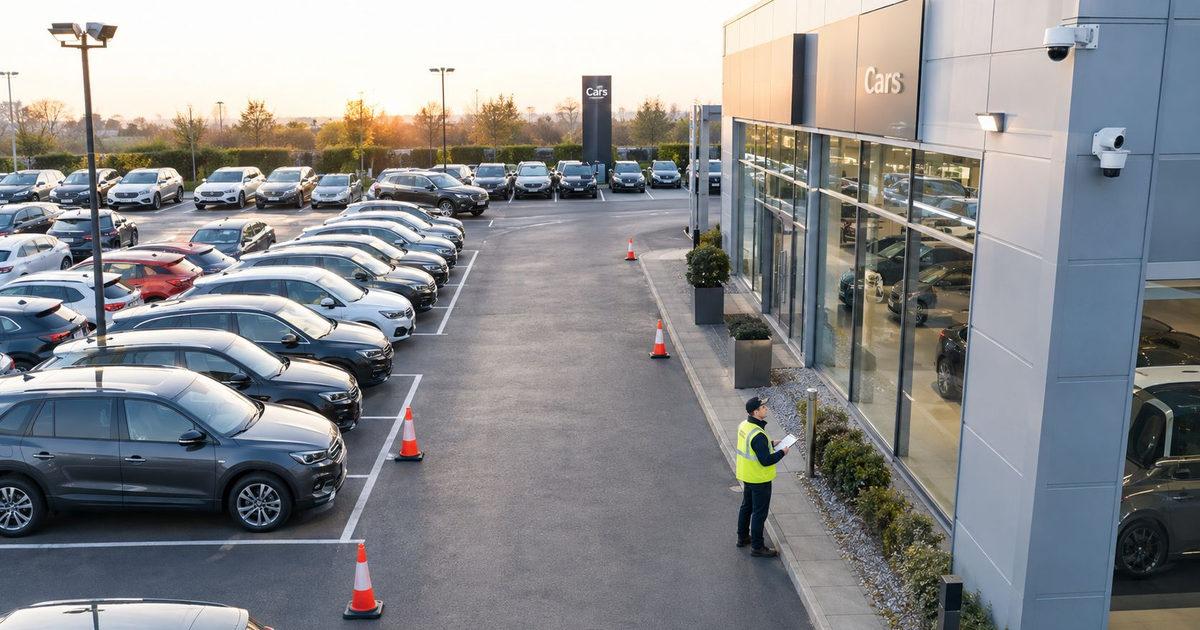
A vehicle disappears from the forecourt overnight, a customer trips beside an unlit pedestrian route, or a buyer later challenges the mileage on a recently acquired car. These incidents look unrelated until the business examines the controls behind them. In each case, a trader relied on an incomplete view of risk.
A car park risk assessment should protect more than the boundary, cameras and lighting. It should also test whether the vehicles stored on site have a credible history, whether access records support accountability, and whether the site can respond to changing risks such as EV charging. For UK motor traders, the car park is an extension of the dealership, not passive storage.
Table of Contents
- Why Your Car Park Needs a Dedicated Risk Assessment
- The business case for a site-specific approach
- Mapping Physical Hazards and Crime Risks
- Inspect the site as a connected system
- Integrating Vehicle Provenance into Site Security
- Mileage is a commercial risk signal
- Structural Safety and Emerging Technical Risks
- Examine legacy construction before adding capacity
- EV charging changes the fire and access profile
- Practical Mitigation Steps for Dealers
- Improve what people can see
- Control access and stock movement
- Integrate charging into daily operations
- Building a Continuous Risk Management Culture
Why Your Car Park Needs a Dedicated Risk Assessment
A dealership car park combines valuable stock, staff activity, customer movement, delivery traffic and out-of-hours access. That makes it an operational asset with several overlapping exposures. A property inspection may identify damaged fencing or a failed light, but it won't necessarily reveal that vehicles with unexplained mileage changes are being bought, that access permissions remain active after staff leave, or that a blind spot allows stock to be moved without a clear record.
A practical assessment has two linked parts. The first examines the physical environment, including perimeter security, lighting, access control, CCTV, pedestrian routes, structural condition and emergency response. The second examines vehicle intelligence, including ownership chronology, MOT readings, mileage anomalies, insurance-related events and rapid resale patterns. The same discipline applies to both: identify the signal, test the evidence, record the decision and assign ownership.

The business case for a site-specific approach
Historical UK evidence shows why traders shouldn't assume that a professionally operated car park is low risk. A House of Commons Public Accounts Committee report, using 2003–04 data, recorded more than 2 million thefts of or from vehicles, approximately 1.4 million vehicle-vandalism incidents, and stated that approximately 20% of car crime occurred in car parks. Only 6% of thefts from vehicles and 13% of vehicle thefts were resolved in that period.
The same report identified approximately 20,000 car parks in England and Wales, with only about 1,350 participating in the Association of Chief Police Officers' Safer Car Parking Scheme, approximately 6.75%. Those are historical figures, not a current forecast, but they demonstrate why location-specific controls matter. A scheme, insurer inspection or basic checklist can't replace knowledge of how stock, staff and visitors really use your site.
Practical rule: Treat every vehicle movement as an accountable event, and every physical control as something that needs testing rather than simply listing.
Use the site assessment to support wider fleet risk management guidance, particularly where several locations share vehicles, staff, keys or buying procedures. A solid record should state the hazard, affected people or assets, existing controls, responsible owner, deadline and evidence that the control works.
Mapping Physical Hazards and Crime Risks
Start at the boundary, then walk the routes used by thieves, employees, customers and emergency responders. Record where vehicles enter, queue, reverse and leave. Map pedestrian movement between parking bays, offices, payment points, valeting areas, workshops, lifts and public roads. Note how these routes affect both personal safety and the protection of stock.
Crime data should be segmented by time, location, offence type and affected user, rather than reduced to an annual total. The British Parking Association's Park Mark assessment guidelines require operators to provide crime figures for the preceding 12 months, helping assessors consider seasonal variation and compare site experience with police statistics. Dealers should apply the same discipline to thefts, attempted thefts, vandalism, unauthorised access, key incidents, suspicious vehicle movements and near misses. Record the vehicle involved where possible, so a site incident can be checked against its stock and movement history.
For perimeter controls and key management, use our guide to keeping your car secure and safe.
Inspect the site as a connected system
Lighting and surveillance should be assessed together. Portsmouth design guidance says lighting uniformity is generally more important for crime reduction than absolute illuminance, while UK lighting guidance recommends consistent illumination that supports recognition and minimises shadows. Inspect glare, contrast, colour rendering, vegetation, parked-vehicle obstructions, failed lamps and the quality of images recorded at night.
CCTV cannot compensate for a poor layout. Each camera needs a defined purpose, a known field of view and an agreed response arrangement. Test whether an operator can identify a person at relevant entrances and crime-generating locations, rather than merely confirm that movement was recorded. The Institution of Lighting Professionals guidance recommends a minimum colour-rendering index of 80, with 90 considered for critical locations. Any dimming or part-night switch-off should follow a documented risk assessment.
Risk Category Primary Concerns Inspection Focus Vehicle crime Theft, unauthorised movement, key misuse and unexplained stock movement Gates, barriers, key control, access logs and vehicle positioning Personal security Assault, concealment and poor visibility Lighting uniformity, sightlines, pedestrian routes and staff presence Vehicle and pedestrian movement Collision, reversing and trip hazards One-way routes, markings, crossings, surfaces and delivery controls Surveillance Blind spots, unusable night images and slow response Camera coverage, identification quality, monitoring and fault logs Structural condition Vehicle impact, corrosion and deteriorating barriers Age, alterations, damage, parapets, restraints and engineering records Emergency response Delayed evacuation or restricted fire access Routes, signage, isolation points, emergency access and drills Check stairs, lifts, payment machines, pedestrian gates and isolated corners separately. A clean forecourt can conceal a serious hazard at the rear boundary or in a stairwell used after closing. Include staff visibility, reporting procedures, defect ownership and the time taken to close faults. Ensure every control supports a clear record of what happened to the vehicle, who accessed it and whether the site response worked.
Integrating Vehicle Provenance into Site Security
Physical security answers one question: can an unauthorised person access or move stock? Vehicle provenance answers another: is the vehicle itself represented accurately, and can the business explain how it entered the stock chain?
A static assessment records the site at one point in time. An integrated workflow adds a decision at purchase, intake, valuation and resale. It links the physical identity of the vehicle with documentary evidence, source information and the person who approved the transaction.
Decision area Static risk assessment Integrated trade workflow Stock identity Records registration and location Reconciles registration, VIN, keys, documents and movement history Mileage Accepts the displayed odometer as an input Compares dated MOT readings, invoices, auction records and ownership chronology Ownership Notes the current seller Examines short-term ownership, rapid resale and unexplained changes Site access Reviews gates and cameras Links access events, transporter details and stock movement to the vehicle record Buying decision Uses a pass or fail check Escalates anomalies for inspection, documentary review, valuation adjustment or rejection Resale file Retains basic preparation records Preserves the underlying evidence supporting the vehicle description
Mileage is a commercial risk signal
A mileage check UK process should never treat the dashboard reading as conclusive. The UK Government has cited an estimate that approximately 2.3% of UK vehicles may show signs of clocking, while knowingly selling a vehicle with altered mileage is a criminal offence. The government consultation on vehicle mileage supports comparing the displayed reading with dated MOT history and other records.
The financial exposure is material. The Office of Fair Trading estimated that consumers could overpay by up to approximately £580 million each year because of clocking, and later government-cited research estimated that around 18,000 vehicles were sold annually after being clocked. These figures come from the government response on the second-hand car market. They support a trade policy that treats an unexplained discrepancy as a buying and valuation issue, not just a data-quality warning.
Access technology should support the same audit trail. Where a site uses mobile connectivity for gates, traders may find it useful to understand how a GSM gate opener works, particularly its relationship with authorised users, remote access and event records. Technology doesn't remove the need for approval controls. It makes weak approval controls faster to misuse.
A used car history report becomes more useful when it shows dates, sources and relationships rather than a simple result. A dedicated vehicle provenance report can sit within that workflow, provided the dealer still reviews original documents and escalates contradictions.
Structural Safety and Emerging Technical Risks
Start with the site map, then test how the premises behave under pressure. Mark vehicle impact points, weakened barriers, pedestrian routes beside moving traffic, and locations where a structural incident could restrict emergency access. Record the evidence in the same disciplined way used to assess a vehicle's condition: identify the risk, document its source, assign ownership, and set a review date.
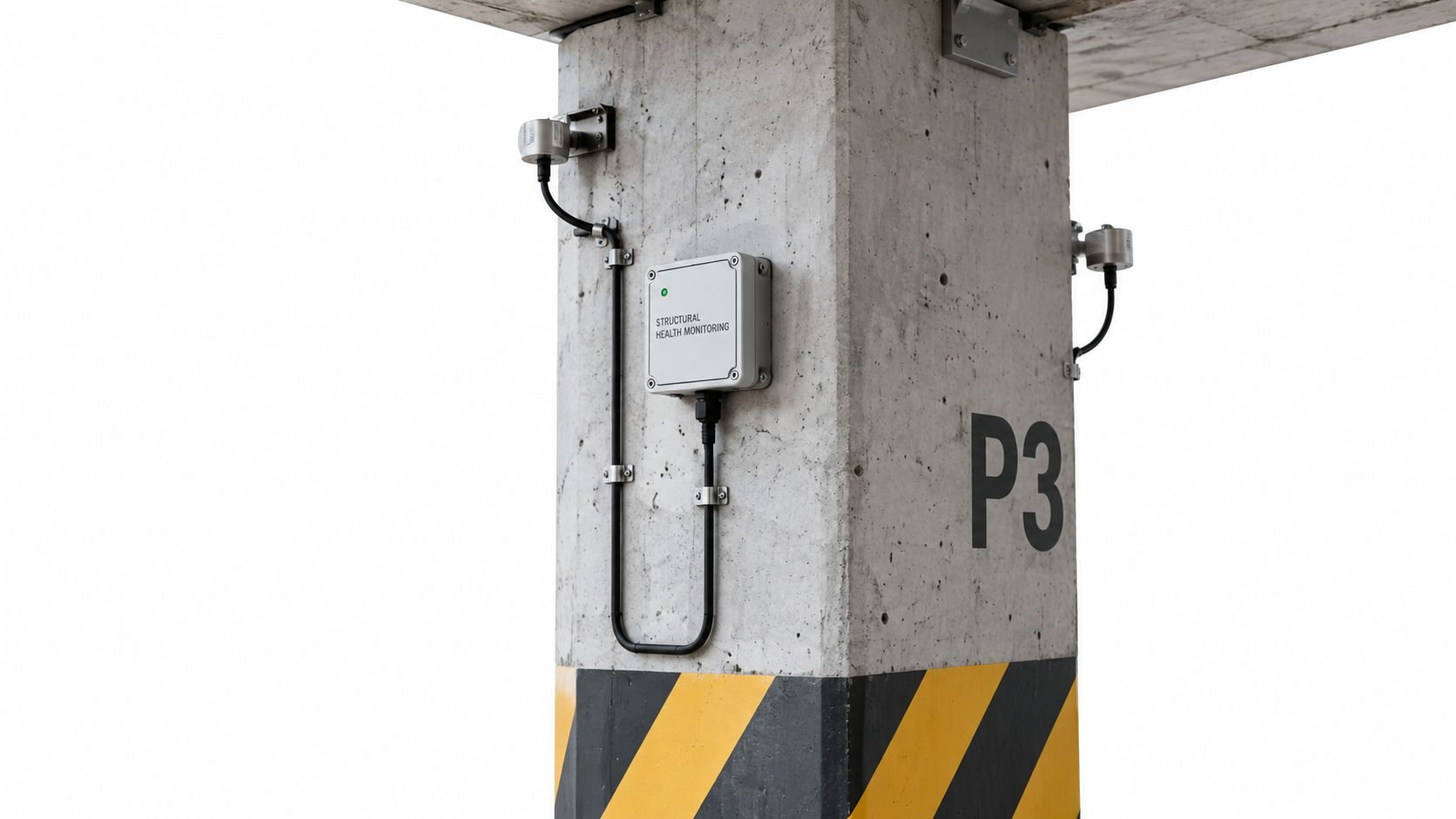
Older multi-storey facilities deserve an early review. A UK government edge-protection specification reports that approximately 25% of existing UK car park stock was built before 1972 without reference to a national edge-protection design standard, as described in the government design specification and compliance testing document. That figure does not predict failure. It identifies sites where drawings may be incomplete, alterations undocumented, collision damage unrepaired, corrosion present, or barrier design uncertain.
Examine legacy construction before adding capacity
Document the structure's age, original design basis, later alterations, barrier geometry, maintenance history, and impact repairs. Inspect parapets, edge restraints, columns, ramps, drainage, expansion joints, and areas where water or de-icing materials can accelerate deterioration. A temporary barrier or new paint does not demonstrate that the underlying containment will withstand a vehicle strike.
Apply the same standard to raised work platforms and vehicle-handling equipment. TP Training EWP risk assessment can help structure checks covering equipment condition, operator competence, falling objects, and exclusion zones. Record the actual equipment, operators, work area, and controls on site. A generic form cannot replace that assessment.
EV charging changes the fire and access profile
A charging-bay review must cover electrical equipment, fire controls, vehicle dwell time, and emergency movement. UK Government guidance for covered car parks remains interim because evidence on EV fires continues to develop, and it covers both retrofitted and new covered facilities. Review the covered car park EV fire safety guidance alongside the site's fire risk assessment and emergency arrangements.
Record charger type and location, occupancy, structural containment, detection, emergency isolation, firefighting access, cable damage, and out-of-hours operation. When assessing EV charging bays, pair the structural review with an electric vehicle battery health check to contextualise dwell time and fire-risk controls. Maintain at least 2 metres of clear space around chargers and vehicles where insurer guidance recommends it. Preserve fire-brigade access, and assess detection and sprinklers as part of a proportionate strategy. Publicly accessible chargers may require daily inspection under the operating model.
Accessibility covers the complete pedestrian journey. UK-oriented guidance recommends roughly 5% of bays as designated accessible spaces and a further 5% as enlarged spaces. EV guidance recommends that at least 10% of charging spaces, with a minimum of one, should suit disabled badge holders, as set out in the UK-oriented accessibility guidance. Test gradients, surface grip, dropped kerbs, payment-machine reach, cable routing, weather exposure, lighting, and route continuity in wet weather and low light.
Practical Mitigation Steps for Dealers
Mitigation works best when the business fixes the highest-consequence weaknesses first and gives every control an acceptance test. Don't buy another camera before confirming that the existing layout, lighting and response process allow anyone to use the footage.

Improve what people can see
Remove concealment opportunities before adding technology. Prune or relocate vegetation, control overflow parking, keep pedestrian routes direct and position high-value stock where staff can observe it. Check lighting at entrances, payment points, lifts, stairs, vehicle exits and isolated bays. Test for deep shadows beside bright pools, not just whether lamps switch on.
Use a night inspection to document uniformity, glare, colour rendering and lamp failures. Then test camera identification at representative distances and angles. A camera that records a clear outline but can't support identification hasn't met its operational purpose.
Control access and stock movement
Use role-based access for gates, offices, key cabinets and charging controls. Review permissions when staff, contractors or transporters change. Keep a record of who approved vehicle movement, who collected keys, where the vehicle went and when it returned.
For trade stock, combine the physical record with dealer vehicle checks. At intake, capture the seller, purchase date, source mileage, inspection findings and supporting documents. If a vehicle has changed hands quickly, appears prepared for immediate resale, or shows a reversal in recorded mileage, pause the transaction for enhanced verification. The Kensington Trading Standards prosecution illustrates the danger of ignoring this pattern. A trader sold 46 clocked vehicles worth more than £350,000, and one Audi A4 was advertised at 28,450 miles after being bought through British Car Auctions two months earlier at 108,401 miles, according to the Kensington Trading Standards case report.
Integrate charging into daily operations
Keep a clear area around chargers, protect cables from vehicle and pedestrian damage, maintain emergency isolation instructions and preserve access for fire services. Record faults, damage and unavailable chargers, including who responded outside normal hours. Don't assume that placing a charger at the edge of the site removes the risk. Vehicle dwell time, supervision, ventilation and the route to safety all affect the control decision.
A documented handover can link the inspection to wider sales compliance. Guidance on a checklist for commercial property owners can help prompt routine observations about surfaces, drainage and external condition, although UK dealers must apply their own risk criteria. For vehicle records, a compliant PDI report for used car sales should preserve defects, corrective work and sign-off rather than relying on informal messages.
Building a Continuous Risk Management Culture
A car park risk assessment becomes useful only when staff change their behaviour after reading it. Review the assessment after a layout change, a rise in occupancy, altered operating hours, new charging equipment, a security incident or a significant change in stock movement. Repeat inspections should verify whether defects were closed and whether the control achieved its intended result.
Train staff to report near misses, failed lights, damaged barriers, unfamiliar vehicles and suspicious requests for keys. Give supervisors authority to stop a movement or quarantine a vehicle when the evidence doesn't reconcile. A short, documented escalation route is more effective than a policy that nobody can apply during a busy buying day.
The strongest motor trade risk framework connects the place where vehicles are stored with the evidence that supports their identity and value. Physical controls reduce opportunities for theft and harm. Trade vehicle intelligence helps identify stock that may carry hidden financial, legal or reputational exposure. Neither replaces the other.
A secure yard can still hold risky stock, and a well-documented vehicle can still be exposed by a poorly controlled site.
Review the controls together, measure whether they work, and make point-of-decision evidence part of normal buying practice. That approach protects staff, premises, stock value and the reputation attached to every vehicle sold.
AutoProv provides UK-focused vehicle history, provenance and risk intelligence for dealers, wholesalers and professional buyers, including mileage analysis, ownership timelines and contextual anomaly detection. Visit AutoProv to strengthen your dealer vehicle checks and connect vehicle intelligence with the wider risk controls used across your car park and buying operation.
Frequently Asked Questions
AI-Generated Content Notice
This article was created with the assistance of artificial intelligence technology. While we strive for accuracy, the information provided should be considered for general informational purposes only and should not be relied upon as professional automotive, legal, or financial advice. We recommend verifying any information with qualified professionals or official sources before making important decisions. AutoProv accepts no liability for any consequences resulting from the use of this information.
From our AI insights
- Spotting Insurance Frauds: Key Indicators UK Dealers Need
Learn to identify insurance frauds with key risk indicators using AutoProv.
- Navigating Insurance Write-Offs in 2024: What UK Traders Need to Know
Explore how UK traders can navigate insurance write-offs using provenance intelligence in 2024.
- Impact of Write-Off Categories on Car Values in 2024
Explore how Cat S, Cat N, Cat A, and Cat B write-offs affect UK vehicle pricing and trader responsibilities.
Related Articles

Understanding UK Car Insurance: Types and Legalities
Explore the UK car insurance sector, types of coverage, and the legal implications of incorrect coverage.

How to Check If a Car Is Insured in the UK | Easy Guide
The quickest and most reliable way to check if a car is insured is by using the Motor Insurance Database (MID) online. All it takes is the vehicle's registration number to see if a valid insurance policy is on record. Remember, driving without at least third-party insurance is a serious offence here in the UK.

Hit by an uninsured driver: UK accident rights & claim guide
Being hit by an uninsured driver is a deeply frustrating experience. The shock of the accident is bad enough, but finding out the other party has no insurance just adds a whole new layer of stress and confusion. Suddenly, the straightforward path to getting your car fixed seems to vanish. This guide is here to cut through that noise and show you that you're not out of options.
Published by AutoProv
Your trusted source for vehicle intelligence