Being hit by an uninsured driver is a deeply frustrating experience. The shock of the accident is bad enough, but finding out the other party has no insurance just adds a whole new layer of stress and confusion. Suddenly, the straightforward path to getting your car fixed seems to vanish. This guide is here to cut through that noise and show you that you're not out of options.
Being hit by an uninsured driver is a deeply frustrating experience. The shock of the accident is bad enough, but finding out the other party has no insurance just adds a whole new layer of stress and confusion. Suddenly, the straightforward path to getting your car fixed seems to vanish.
This guide is here to cut through that noise and show you that you're not out of options.
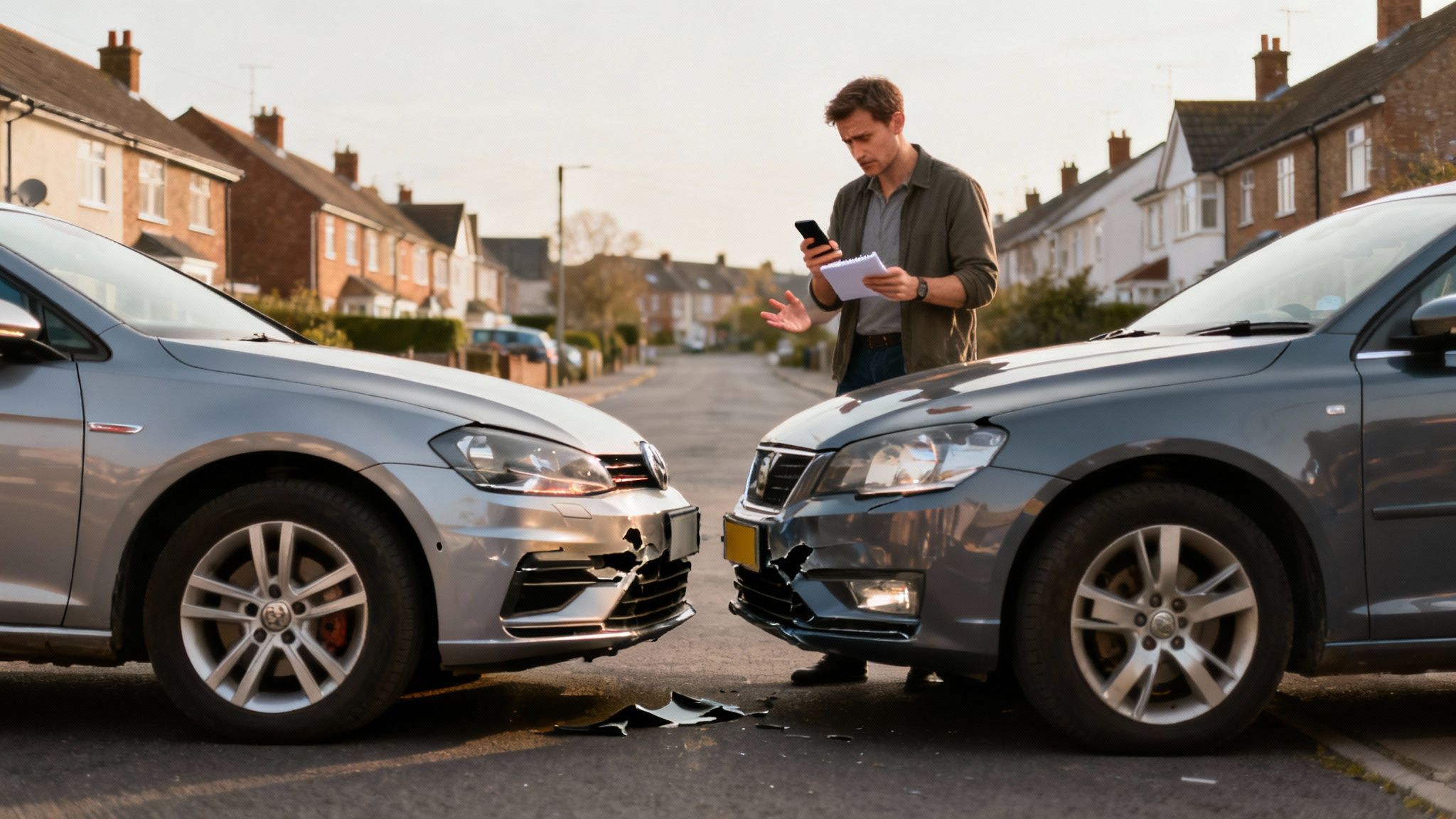
If this has happened to you, the most important organisation you need to know about is the Motor Insurers’ Bureau (MIB). The MIB is a non-profit body, funded by every single insurer in the UK, created for this exact situation: to compensate victims of uninsured and untraced drivers. It's a critical safety net for law-abiding motorists.
Even with the MIB, you can still claim through your own comprehensive policy if you have one. But the MIB is the ultimate backstop.
The Scale of the Problem
This is a far more common issue than most people think. Right now, there are over 1,050,000 uninsured vehicles on UK roads. That’s roughly 1 in every 25 cars you pass.
It’s no surprise that this leads to thousands of incidents every year, leaving innocent drivers without an obvious party to claim against. The MIB reports paying out over £340 million in compensation in recent years—a cost that ultimately trickles down and inflates insurance premiums for all of us. You can find more insights on the hidden costs of uninsured drivers in recent studies.
When you're dealing with an uninsured driver claim, it's a completely different ball game. You have to prove your case without a traditional insurance company to negotiate with. The burden of proof falls squarely on you to show what happened, who was at fault, and what your losses are.
Building an Airtight Case
Because the MIB and your own insurer will scrutinise every detail, having solid, undeniable proof is non-negotiable. This is where creating a verifiable, timestamped record of the entire incident becomes absolutely essential. Using a service like AutoProv.ai helps you establish a concrete timeline and evidence log right from the start, building a case that stands up to scrutiny.
A strong, successful claim is always built on these foundations:
- Immediate Evidence: Documenting the scene, the damage, and all the details while they are still fresh in your mind.
- Verifiable Information: Double-checking every detail you collect, especially things like the vehicle registration number. Accuracy is key.
- Clear Liability: Presenting a clear, logical sequence of events that leaves no doubt about who was at fault.
This guide will walk you through each step, giving you the practical advice you need to take control of the situation and manage the aftermath with confidence.
Securing Critical Evidence at the Scene
In the chaotic moments after a collision, your first instinct is safety. But once you've made sure everyone is okay, what you do next can make or break your claim, especially when the other driver is uninsured. The evidence you gather right there, right then, becomes the bedrock of your entire case.
Before anything else, check the scene is safe. If you can, move your car out of the flow of traffic, flick on your hazards, and make sure you and any passengers are clear of danger. Your wellbeing is priority number one.
With that sorted, it’s time to switch gears and start collecting evidence. This isn't just about a quick word with the other driver; it’s about methodically documenting everything while the facts are fresh and impossible to argue with.
Gathering Essential Driver and Vehicle Details
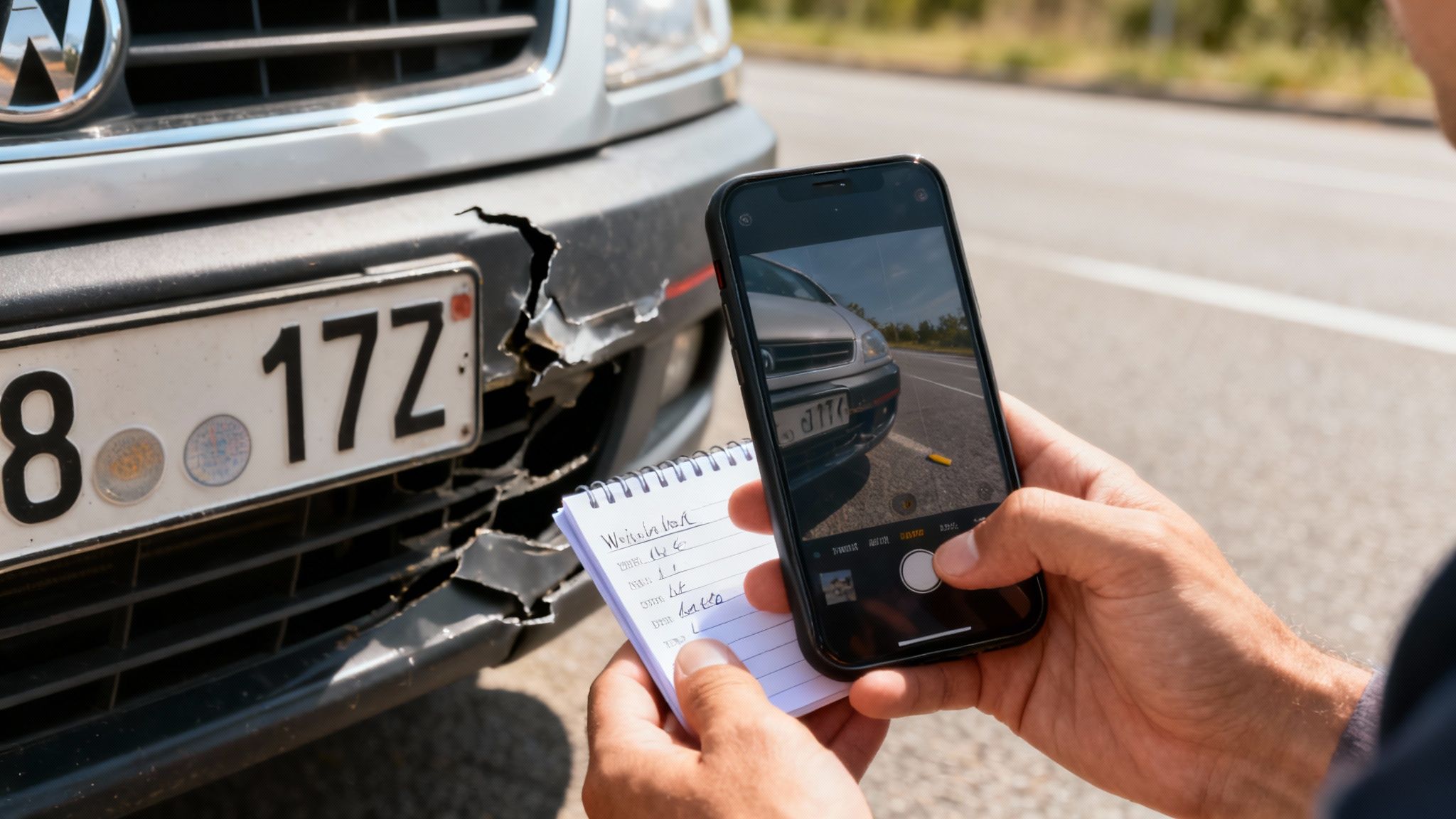
This is your first, most vital job. You need to get the other driver's details, and you need to be precise. Don't trust your memory—use your phone's notepad or a pen and paper.
- Driver's Full Name and Address: If they're willing, ask to see their driving licence to confirm what they're telling you is accurate.
- Vehicle Registration Number (VRN): This is non-negotiable. It's the single most important detail for running official checks later on.
- Make, Model, and Colour of the Vehicle: Get these basic identifiers down.
I always recommend reading the registration number back to them to double-check. One wrong letter can send you down a dead-end street when you try to trace the vehicle. You might also find it useful to learn more about how to check if a car has been in a crash, as this can offer extra insight.
The Power of Photographic Evidence
They say a picture is worth a thousand words. In an uninsured driver claim, it’s priceless. Your smartphone is your best friend here, so use it to create a complete visual record of the scene before any cars are moved.
Put on your investigator hat and snap everything from different angles. Your photo evidence should cover:
- Damage to Both Vehicles: Get close-ups of the impact points, but also take wider shots to show the damage in context.
- The Scene as a Whole: Photograph where the cars ended up, any tyre marks on the road, and the general layout.
- Surrounding Environment: Capture anything relevant like road signs, traffic lights, or even the weather. Sun glare or a rain-slicked road can be important details.
- The Other Vehicle's Registration Plate: A crystal-clear photo of the VRN is fantastic proof to back up your notes.
Your aim is to build a visual story of the incident. Each photo should help someone who wasn't there—like an insurance assessor—understand exactly what went down, leaving no room for doubt.
This is where a tool like AutoProv.ai can be incredibly helpful. Using the app at the scene lets you log all these photos and notes in one go, creating a timestamped and secure record. This kind of impartial documentation is tough to argue with and can seriously strengthen your case with the MIB or your own insurer.
Notifying the Police Is Not Optional
You absolutely must report the accident to the police. Driving without insurance isn't just a paperwork problem; it's a criminal offence in the UK. Reporting the incident creates an official record, which the MIB will almost certainly ask for.
If anyone's hurt or the road is blocked, call 999. Otherwise, report it on 101 or online as soon as you can—ideally within 24 hours.
This is a bigger problem than many people realise. Recent stats show over 86,000 drivers were caught without insurance across the UK. The penalties start with a £300 fine and six penalty points, but they can quickly escalate to unlimited fines and a driving ban if the case goes to court. Official reporting is essential.
How to Navigate the MIB Claims Process
When you find out the driver who hit you is uninsured, your first thought is probably, "Well, who's going to pay for all this?" This is precisely why the Motor Insurers’ Bureau (MIB) exists.
Think of the MIB as the insurance industry's collective safety net. It’s funded by every single insurer in the UK to act as the insurer of last resort when the person at fault doesn't have cover.

But here's something you need to know upfront: making a claim with the MIB isn't like dealing with your average insurer. They effectively step into the shoes of the missing insurer, but their standards for evidence are sky-high. They need to be absolutely certain the uninsured driver was to blame and that your losses are genuine.
This isn't just a bit of administrative paperwork; it's a critical service. The scale of uninsured driving in the UK is staggering, creating an economic hole of nearly £2.4 billion every year from uninsured and hit-and-run incidents. The MIB pays out hundreds of millions annually, which just shows how vital its role is.
Understanding Your Eligibility for an MIB Claim
Before you dive in, it’s worth checking if you actually qualify. The MIB has some pretty clear criteria for who they can and can't help.
Generally speaking, you can make a claim if:
- You were in an accident in the UK with a driver who had no insurance.
- The accident was clearly the other driver's fault.
- You suffered a personal injury or your property (including your car) was damaged.
It’s important to remember that the MIB works within a strict legal framework. For a better grasp of the rules governing UK roads, have a look at our guide on understanding UK automotive regulations.
The Stages of an MIB Claim
The MIB process is methodical, so you’ll need a bit of patience. It all kicks off when you submit your application, which you can do directly through their online portal. You'll need to hand over all the information you collected at the scene—the other driver’s details, the police incident number, the lot.
Once your application is in, the MIB assigns a claims handler to your case. Their job is to investigate everything, confirm the other driver was uninsured, and figure out who was at fault. This investigation stage is where your evidence really needs to shine. They’ll scrutinise your photos, go over witness statements, and look at the official police report. If liability is clear, they’ll move on to working out your losses.
The MIB will not simply take your word for it. They need impartial, verifiable proof for every aspect of your claim, from who caused the crash to the cost of your repairs and the extent of any injuries.
What Can You Actually Claim For?
A common mistake is thinking the MIB only covers damage to your car. The truth is, you can claim for a whole range of losses that are a direct result of the accident.
Your claim can include compensation for:
- Personal Injury: This covers anything from minor whiplash to much more serious, life-changing injuries. The payout is based on medical reports and established guidelines.
- Vehicle Repairs: The cost to get your car back on the road. The MIB will almost certainly want an independent engineer's report to confirm the damage and that the repair costs are fair.
- Loss of Earnings: If your injuries meant you couldn't work, you can claim for the income you lost while recovering. You’ll need payslips or company accounts to back this up.
- Other Financial Losses: This bucket can include things like physiotherapy costs, prescription charges, travel expenses for medical appointments, or even personal items in your car that were damaged.
For every single expense, you must keep meticulous records and receipts. A vague claim for "travel costs" will get you nowhere, but a folder full of receipts and a detailed mileage log is a different story.
Imagine you suffered whiplash and needed six physio sessions. You’d need to submit the actual invoice from the clinic as proof. If you had to get taxis to those appointments because you couldn’t drive, you’d need to provide the taxi receipts. That level of detail is non-negotiable.
This is where having a solid evidence log from the moment the crash happens is so valuable. When you use a service like AutoProv.ai to document the scene, you’re creating a structured, timestamped record that lines up perfectly with the MIB’s high standards. That clear, organised evidence—from photos of the damage to notes on your injuries—helps build a much more convincing case, cutting down on the back-and-forth and avoiding the delays that frustrate so many people.
Understanding Your Own Insurance Policy's Role
When you’ve just been hit by an uninsured driver, your mind might jump straight to the Motor Insurers’ Bureau (MIB). But hold on—your own insurance policy is your first and most immediate line of defence, and what you do next is critical.
The big question I always hear is, "Do I really have to tell my insurer?" The answer, without a shadow of a doubt, is yes.
Failing to report an accident, even if you don't plan to claim, can put you in breach of your policy terms. Insurers need to know about any incident, and staying quiet could give them a reason to void your cover down the line. Reporting it keeps you compliant and leaves all your options open.
Comprehensive vs. Third-Party Cover
The type of insurance you have completely changes the game here. If you've only got third-party cover, your policy won't pay for the damage to your own car. In that situation, your only path to getting repair costs back is through the MIB.
A comprehensive policy, on the other hand, is built to cover damage to your vehicle, no matter who was at fault. This means you can get the ball rolling with your own insurer to have your car repaired far quicker than if you were waiting on the MIB process.
But what about your premium and that No Claims Discount (NCD) you've worked so hard for? It’s a fair worry, but this is where a brilliant policy feature comes into play.
The Uninsured Driver Promise
This is a clause you really want to see in your policy documents. The Uninsured Driver Promise (sometimes called 'Uninsured Driver Protection') is your insurer’s pledge to protect you if you’re hit by an uninsured motorist and it wasn't your fault.
In simple terms, if you can prove the other driver was uninsured and completely to blame, this promise means you won’t have to pay your policy excess, and your No Claims Discount will be protected. It’s a genuine safety net.
To get this protection, you’ll need to give your insurer a few key bits of information:
- The other vehicle’s registration number. This is non-negotiable. It’s the only way to officially confirm the vehicle was uninsured.
- The make and model of the other car. This helps paint a clear picture of what happened.
- The other driver’s details, if possible. Getting a name and address isn't always easy, but it massively strengthens your case.
This is exactly why gathering solid evidence at the scene is so crucial. Without that registration number, you can't prove the other car was uninsured, and your insurer will probably have to treat it like a normal fault claim. For a closer look at this, check out our easy guide on how to check if a car is insured in the UK.
Using Your Policy for Faster Repairs
Going through your own comprehensive policy, especially one with an Uninsured Driver Promise, is almost always the more efficient route. Your insurer can authorise repairs and get you back on the road quickly, while they take on the hassle of recovering their costs from the MIB behind the scenes.
Suddenly, your insurance policy isn't just a legal necessity—it’s a powerful tool working for you. You pay for this level of protection, and after the stress of an accident, it's there to deliver peace of mind and real, practical help. It’s well worth digging out your policy documents today to see if you have this valuable cover.
Avoiding Common Mistakes in Your Claim
The road to getting fair compensation after an uninsured driver hits you is, unfortunately, littered with potential slip-ups. A simple oversight can cause frustrating delays, slash your payout, or even get your claim thrown out entirely. To navigate this process successfully, you need to be proactive and sidestep the common pitfalls that catch so many people out.
From missing key deadlines to underestimating just how much evidence you need, these mistakes are far too common. The good news? With a bit of foresight, they are also completely avoidable. Let’s break down the most frequent errors and, more importantly, how you can steer clear of them to keep your claim on the right track.
Not Calling the Police Immediately
One of the biggest blunders you can make is failing to report the incident to the police straight away. It's tempting to hesitate, especially if the damage seems minor or the other driver tries to talk you out of it. Don't fall for it. This is a major mistake.
Driving without insurance is a criminal offence in the UK. A police report creates an official, time-stamped record of what happened, and it’s a cornerstone piece of evidence for both your insurer and the Motor Insurers’ Bureau (MIB). Without it, your claim is missing that crucial layer of official validation.
The MIB will almost certainly ask for a police incident number. If you can't provide one, it can seriously undermine your claim from the get-go, raising questions about whether the incident even happened as you described. Always, always report the accident within 24 hours, if not sooner.
Submitting Weak or Incomplete Evidence
Just telling the MIB that an uninsured driver hit you isn't going to be enough. The burden of proof is on you to show not only that the other driver was at fault but also to back up every single penny of your losses with solid evidence.
Too many claims falter because the evidence is thin. A few blurry photos and a one-line description just won’t cut it. The MIB needs a detailed, compelling story backed by irrefutable proof. This is where meticulous documentation becomes your best friend.
- Photographic Proof: Go beyond the dents. You need to capture the positions of the vehicles after the collision, the road layout, any relevant signs or road markings, and even the weather conditions. A crystal-clear photo of the other vehicle's registration plate is non-negotiable.
- Witness Details: Independent witnesses are gold dust. Make sure you get their full names and contact details. Their testimony can be the deciding factor if it comes down to your word against the other driver's.
- Financial Records: For every expense you claim—from physiotherapy sessions to the taxi you took to the hospital—you absolutely must have a receipt. Keep a dedicated folder for all this paperwork.
This is exactly why using a service like AutoProv.ai at the scene can be a game-changer. It guides you through gathering all the necessary details and locks them into an immutable, time-stamped log. This creates a structured, professional evidence file that's much harder for anyone to dispute later on.
Missing Strict Deadlines
The claims process runs on a tight schedule. Both your own insurer and the MIB have specific deadlines for reporting an incident and submitting all the required paperwork. Missing one can put your entire claim in jeopardy.
For example, personal injury claims generally have to be made within three years of the accident date. While that might sound like a long time, gathering medical reports, expert opinions, and other evidence can be a slow, drawn-out process. It's always best to act fast while the details are still fresh in your mind.
Taking the Other Driver's Details at Face Value
When you're hit by a driver who's already breaking the law by having no insurance, you need to be cautious. Someone willing to drive uninsured might have no problem giving you a fake name or address. The one piece of information that’s much harder to fudge is the vehicle registration number (VRN).
This is why verification is so critical. A quick check can confirm the make and model of the car associated with that registration plate. If you work in the motor trade, you already know the value of good data; our guide to vehicle checks with a VIN number highlights just how much information you can uncover. The principle is the same here: trust, but verify.
By being aware of these common mistakes, you can approach your claim with a clear head and a solid strategy. Proactive reporting, diligent evidence gathering, and a keen eye for detail will make all the difference, helping turn a stressful situation into a manageable process with a successful outcome.
Your Uninsured Driver Claim Questions Answered
Getting hit by an uninsured driver throws up a lot of questions. It's a confusing and deeply unfair situation, but getting your head around your rights and the next steps is the best way to regain control. Let's tackle some of the most common worries I hear from people in this position.
Will My Insurance Premium Go Up if an Uninsured Driver Hits Me?
This is usually the first thing people ask, and the answer is: not necessarily. If you have a comprehensive policy with an 'Uninsured Driver Promise' and—crucially—you have solid evidence you weren't at fault, you should be fine. Your insurer will handle things without it affecting your premium or your No Claims Discount.
But it’s a different story if your policy doesn't have that specific clause, or if your evidence is weak. In that case, your insurer might have to log it as a 'fault' claim, which can unfortunately hit your premium when it's time to renew. This is exactly why gathering undeniable proof right from the scene is absolutely vital.
How Long Does a UK MIB Claim Usually Take?
You'll need a bit of patience when dealing with the Motor Insurers' Bureau (MIB). The timeline can really vary. A straightforward claim for vehicle damage, where the other driver is identified and it's obvious who's at fault, might get sorted in a reasonable 3-6 months.
More complex cases, though, can drag on. Claims involving serious personal injury, arguments over who caused the crash, or trouble finding the other driver can easily take over a year. The best way to avoid unnecessary delays is to give them everything they need, perfectly organised, from day one. A meticulously prepared file with clear, timestamped evidence helps their handlers make decisions faster.
The MIB doesn't just pay out; they have a duty to investigate every claim thoroughly. When you provide them with a well-documented, professional-grade evidence file, you're helping them do their job efficiently, which ultimately gets you a result quicker.
What Should I Do if the Uninsured Driver Gives Me False Details?
Realising the driver gave you a fake name or address is infuriating. The moment you suspect this, you need to report it to the police. Lying about your identity after a collision is a serious offence.
For your claim, this scenario usually gets treated as a 'hit and run'. Your case would then be handled under the MIB's Untraced Drivers' Agreement, which has slightly different rules. This is why the vehicle's registration number is the single most important piece of information you can get. It’s the one thing that can be officially traced, even if everything else they told you was a complete lie.
What Can I Claim For Besides Car Damage from the MIB?
A lot of people think the MIB only covers vehicle repairs, but that's not the case. Their role is to put you back in the financial position you were in before the accident, which covers a much wider range of losses. To get a better sense of what insurance generally covers, our guide to understanding UK car insurance types and legalities is a good starting point.
You can claim for much more than just the damage to your car. Think about including:
- Loss of Earnings: If your injuries stopped you from working, you can claim for that lost income.
- Medical and Treatment Costs: This covers things like physiotherapy, prescriptions, or any private medical care you needed.
- Travel Expenses: Kept the receipts for taxis to and from hospital appointments? You can claim for those.
- Damaged Personal Items: If anything inside your car was broken in the crash—a laptop, your phone, a child's car seat—its value can be part of your claim.
For every single expense, you must have proof. Keep every receipt and invoice. When it comes to an MIB claim, organised financial records are completely non-negotiable.
Frequently Asked Questions
AI-Generated Content Notice
This article was created with the assistance of artificial intelligence technology. While we strive for accuracy, the information provided should be considered for general informational purposes only and should not be relied upon as professional automotive, legal, or financial advice. We recommend verifying any information with qualified professionals or official sources before making important decisions. AutoProv accepts no liability for any consequences resulting from the use of this information.
From our AI insights
- Navigating Insurance Write-Offs in 2024: What UK Traders Need to Know
Explore how UK traders can navigate insurance write-offs using provenance intelligence in 2024.
- Impact of Write-Off Categories on Car Values in 2024
Explore how Cat S, Cat N, Cat A, and Cat B write-offs affect UK vehicle pricing and trader responsibilities.
- Navigating Experian Indemnity: A Deep Dive for UK Traders
Explore Experian indemnity protection in-depth: coverage, claims, and exclusions for UK traders.
Related Articles

Understanding UK Car Insurance: Types and Legalities
Explore the UK car insurance sector, types of coverage, and the legal implications of incorrect coverage.
How to Check If a Car Is Insured in the UK | Easy Guide
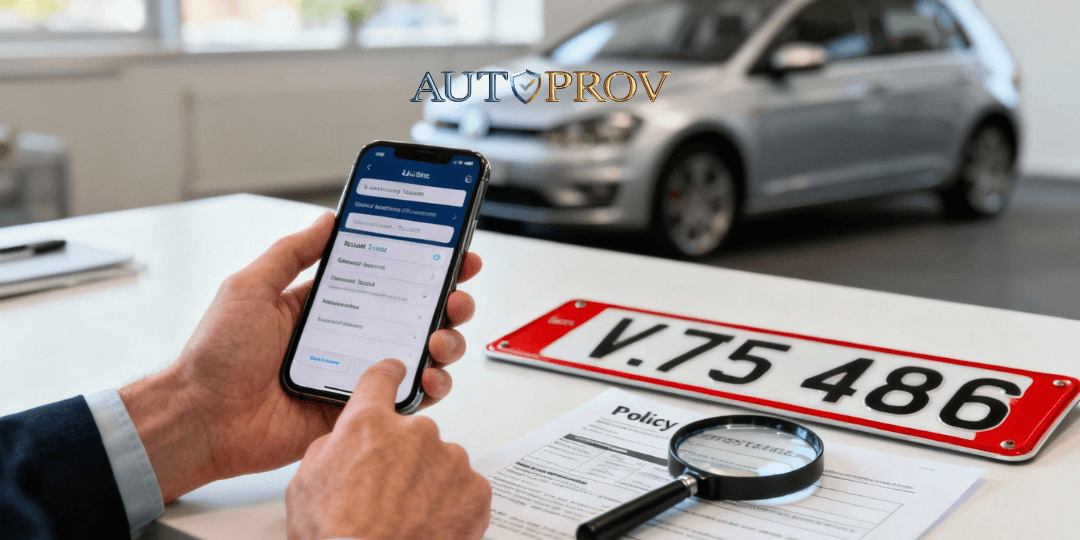
The quickest and most reliable way to check if a car is insured is by using the Motor Insurance Database (MID) online. All it takes is the vehicle's registration number to see if a valid insurance policy is on record. Remember, driving without at least third-party insurance is a serious offence here in the UK.
A Guide to Insuring a Category Car in the UK: Finding Affordable Cover
You can insure a vehicle with a Category designation, but the process can be more complex than insuring a standard vehicle. Expect higher premiums and the possibility of needing to find coverage through non-traditional insurers. This is because insurers view previously damaged vehicles as higher risk, even if they have been repaired professionally.
Published by AutoProv
Your trusted source for vehicle intelligence