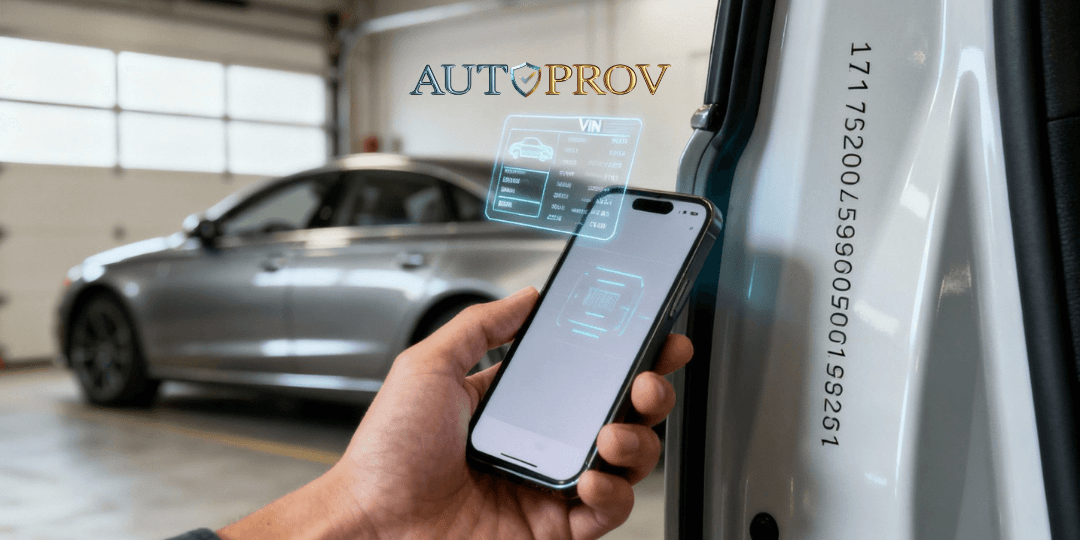
A vehicle check with vin number is easily the most important thing you can do before buying a used car. Think of it as your first line of defence—a quick, simple step that pulls back the curtain on a vehicle's past, protecting you from expensive mistakes, legal headaches, and downright dangerous cars.
A vehicle check with vin number is easily the most important thing you can do before buying a used car. Think of it as your first line of defence—a quick, simple step that pulls back the curtain on a vehicle's past, protecting you from expensive mistakes, legal headaches, and downright dangerous cars.
Why a VIN Check Is Your First Line of Defence

Before you even think about booking a test drive, it’s crucial to understand what's really at stake. A vehicle history check isn't just another task to tick off a list; it's your best weapon against fraud, hidden damage, and financial traps that can haunt you for years.
Picture this: you've found what looks like the perfect family car. The seller seems genuine, the paintwork is gleaming, and the price is right. Without a proper check, you could be moments away from unknowingly buying a vehicle that an insurer previously declared a total loss, was patched up on the cheap, and is now structurally unsafe.
Uncovering Critical Hidden Information
Skipping this step is a massive gamble. A comprehensive report digs up the kind of critical information a seller might not want to share—or might not even know themselves. These checks are designed to give you straight answers to the biggest questions about a used car's history.
So, what exactly can you expect to find?
- Outstanding Finance: Is there a loan still secured against the car? If you buy it without checking, the finance company can legally show up and repossess the vehicle from you, leaving you out of pocket.
- Theft Records: A quick check confirms the car hasn't been reported as stolen on the Police National Computer (PNC).
- Write-Off Status: You'll find out if the vehicle has ever been written off by an insurer and, crucially, how severe the damage was (for example, a Cat S or Cat N).
- Mileage Discrepancies: The report flags signs of "clocking," an illegal practice where the odometer is wound back to make the car seem less used and more valuable.
A proper vehicle check with VIN number transforms you from a hopeful buyer into an informed investor. It provides the objective facts needed to validate a seller's claims and protect your financial interests.
A Non-Negotiable Step for Every Buyer
In the UK, this isn't just a good idea; it's an essential part of the car-buying journey. Each of the roughly 41.9 million licensed vehicles on our roads has a unique 17-character VIN. This code acts as its fingerprint, tracking its entire life from the moment it left the factory. You can explore more about these vehicle statistics and how they are managed.
Ultimately, running a check puts the power back in your hands. It gives you the confidence to walk away from a bad deal or the solid evidence you need to negotiate a fairer price based on the car’s real history. It’s a tiny investment that can save you from a monumental headache later on.
How to Find and Verify the VIN

Before you can run a vehicle check with vin number, you need that all-important 17-character code. Think of this as more than just looking for a number; it’s your first real chance to spot something fishy. The VIN is the car's unique fingerprint, so knowing where to look—and what you’re looking for—is a non-negotiable skill for any savvy buyer.
The easiest place to find the VIN is almost always on the dashboard. Just peer through the windscreen on the driver's side, right down at the bottom corner. Its placement there is standardised, making it simple for officials and buyers like you to find it without a fuss.
But here’s a pro tip: never rely on that one location alone. You absolutely must cross-reference it with VINs found elsewhere on the car to ensure they all match up perfectly. A mismatch is one of the biggest red flags you can find, often pointing to a stolen or "cloned" vehicle where a legitimate identity is being used to hide a car's dodgy past.
Where Else to Check for the VIN
Right, time to put your detective hat on. Your mission is to find that same 17-character code stamped in a few different places. Consistency is everything here.
Start by opening the driver’s door and looking at the B-pillar—that’s the frame where the door latches. You should find a sticker or a small plate there listing the VIN, usually alongside other key details like tyre pressures and vehicle weights.
From there, you need to dig a little deeper into some less obvious, but equally critical, spots:
- Engine Bay: Pop the bonnet. Have a good look at the front of the engine block or on the chassis itself. It's often stamped directly into the metal frame.
- Boot Floor: Lift up the carpet in the boot, especially around the spare wheel well. It’s another common spot for a stamped VIN or sticker.
- The V5C Logbook: This is the big one. The VIN printed on the official V5C document must be an exact match to the numbers you find on the car itself. No exceptions.
Always physically compare the VINs from at least three places—the dashboard, the door jamb, and the V5C logbook. If there’s any discrepancy, even a tiny one, you need to walk away and investigate. It's a classic sign of vehicle fraud.
Inspecting the VIN for Tampering
Once you've found the VINs, don't just read them—inspect them. Get in close and look at their condition. You're searching for any signs of physical tampering that suggest a criminal has tried to alter the car's identity.
Keep a sharp eye out for:
- Scratches, gouges, or signs of grinding around the VIN plate.
- Loose rivets holding a VIN plate in place, or rivets that don’t look factory-standard.
- Stickers that look like they've been peeled off and stuck back on.
- Characters in the stamped numbers that are uneven or misaligned.
If a VIN is hard to read, damaged, or just doesn't look right, treat it as a massive red flag. A legitimate seller has no reason to hide or alter this information. Getting this first step right is the foundation of a safe and secure vehicle purchase.
Running Your Vehicle Check Online
With the correct VIN in your possession, you're ready to peel back the layers and uncover the car's real story. This is where the digital detective work begins, transforming that 17-character code into a detailed history report.
Platforms like AutoProv are built to make this process as simple as possible. All you need to do is pop the VIN you’ve just double-checked into the search box. Make sure it's an exact match with the V5C and the car itself, because one wrong digit can send you down a rabbit hole, looking at a completely different vehicle.
Choosing the Right Level of Report
After entering the VIN, you'll usually be presented with a choice: a basic free check or a comprehensive paid report. Knowing the difference is absolutely critical, as it could be what separates a smart buy from a financial headache down the road.
- Free Checks: These are great for a quick first glance. They’ll typically confirm the basics like the make, model, colour, and maybe the MOT status. Think of it as a quick confirmation that you're looking at the car you think you're looking at.
- Comprehensive Paid Reports: This is where the gold is. A paid report is the only way to find out about the heavy-hitting stuff: outstanding finance, write-off history, theft records, and any suspicious mileage readings.
Frankly, a free check just confirms what you can see with your own eyes. A paid check reveals what a seller might be hoping you don't see. The small fee for a full report is one of the best investments you can make when buying a car.
The sheer volume of cars changing hands reinforces this. In the first quarter of 2025 alone, 732,000 vehicles were registered for the first time, a 2% jump from the year before. You can discover more about UK vehicle registration trends on the official government site. With so much movement in the market, a proper vehicle check with vin number is your best defence against buying a dud.
Never rely solely on a free check. It provides a false sense of security by omitting the most critical risk factors. The real value and protection come from the detailed data in a comprehensive report.
Navigating the Report Interface
Once you've chosen your report, the results are usually back in under 30 seconds. A good service like AutoProv won't just dump a load of data on you. Instead, it’s presented in a clean, easy-to-read format.
Most professional reports use a simple traffic light system (green, amber, red) to instantly flag any potential issues. This means you can spot a problem at a glance without having to be an expert yourself.
The information is broken down into clear sections, so you're not just getting a simple "Pass" or "Fail." For example, if there's outstanding finance, the report won't just say "yes" – it'll name the finance company and provide their contact details. This gives you a clear, actionable path to resolve the issue, empowering you to make a decision right there and then, backed by solid data.
Decoding the Vehicle History Report

Alright, you've run the vehicle check with vin number, and now the report is in your hands. Think of this document as the car's CV, and your job is to read between the lines. A professional-grade report from a service like AutoProv will lay everything out clearly, often using a simple traffic light system to highlight the good, the bad, and the ugly.
But don't just skim for the big red warnings. The real story is often hidden in the smaller details. You need to scrutinise every piece of data, as this report is your best tool for confirming—or challenging—what the seller has told you. It’s what separates a smart buy from a costly mistake.
The Major Red Flags to Watch For
When that report first opens, your eyes need to hunt for the instant deal-breakers. These are the serious issues that can quickly turn a dream car into a financial and legal nightmare.
Here’s what you need to prioritise:
- Outstanding Finance: Does the seller even own the car outright? If there’s finance owing, the vehicle still legally belongs to the lender, who has every right to come and repossess it.
- Stolen Vehicle Markers: Has the car been flagged as stolen on the Police National Computer (PNC)? This is a massive, non-negotiable red flag.
- Insurance Write-Offs: Was the car ever declared a total loss by an insurance company? The write-off category is critical for understanding its past trauma and current safety.
- Mileage Discrepancies: Does the mileage history jump around or suddenly drop? This is the classic sign of ‘clocking’—the illegal practice of winding back the odometer.
Finding even one of these requires a serious conversation, and in some cases, an immediate decision to walk away.
Demystifying Write-Off Categories
One area that causes a lot of confusion is the insurance write-off status. In the UK, these categories are there to tell you just how serious the damage was. Ignoring them is a huge gamble.
You’ll most commonly see these two:
- Category S (Structural): This tells you the car has suffered damage to its core structural frame or chassis. It can be repaired and put back on the road, but its fundamental integrity was compromised at one point.
- Category N (Non-Structural): This indicates damage that didn’t affect the vehicle's main structure. Think of issues with electrics, brakes, or cosmetic body panels. It’s generally seen as less severe than a Cat S.
If you’re looking at a Cat S or Cat N vehicle, you absolutely must see photographic proof of the damage before the repair, along with receipts for all the work done. Without that paper trail, you’re just guessing at the quality and safety of the fix.
Absolute Deal-Breaker: A vehicle with a stolen marker or active outstanding finance is a non-starter. Buying a stolen car makes you part of a criminal investigation, and a car with finance can be repossessed from you without warning. Walk away immediately.
Spotting a Stolen Vehicle
The danger of accidentally buying a stolen car is very real. With tens of thousands of vehicles stolen across the UK each year, a proper vehicle check with vin number is your only real defence. You can learn more about the scale of vehicle theft in the UK from official sources. The report checks the VIN directly against the PNC, giving you a clear yes or no answer.
Tackling Mileage Discrepancies
A mileage reading that inexplicably drops between MOTs is the calling card of a clocked car. A good vehicle history report will highlight these gaps and inconsistencies, flagging potential fraud.
If you spot something fishy, your question to the seller needs to be direct: "The history report shows a mileage inconsistency back in 2022. Can you tell me why that might be?" Their response will tell you a lot. An honest seller might have a reasonable explanation, like a simple typo at the garage, but a dodgy one will often get flustered or defensive.
Common Mistakes and Pro Tips for Your Check
Going beyond a basic vehicle check with vin number is what separates a smart buy from a serious headache. I’ve seen it time and time again—even experienced buyers can make small slip-ups that end up costing them dearly.
Let's talk about some of the most common pitfalls and how you can sidestep them to really sharpen up your buying game.
One of the biggest traps is seeing a flagged issue on a report and treating it like a deal-breaker, or worse, ignoring a pattern. A minor MOT advisory from a few years back for a worn tyre? That's usually nothing to worry about. But if you see recurring advisories for the same issue, like brake wear year after year, that's a huge red flag. It often points to a nagging, expensive problem the last owner kept patching up instead of fixing properly.
Another classic mistake is waiting until you're standing on the seller's driveway to run the check. Don't do it. Run the report before you even think about getting in your car. Just imagine driving for two hours, getting your hopes up, only to find out the car has outstanding finance. That's a deal-killer you could have spotted from your sofa.
Turning Your Report into a Negotiation Tool
A solid vehicle history report isn't just a simple pass/fail certificate; it's one of the best negotiation tools you can have. You've paid for that information, so don't be shy about using it to your advantage. A spotless report can give you the confidence to meet the asking price, but one with a few blemishes gives you serious leverage.
Here’s how you can put it into practice:
- Minor Write-Off History: If the car shows up as a Cat N, bring it up directly. You could say something like, "The report confirms the Cat N status. I know it's been repaired, but its history is always going to affect its resale value down the line, so the price needs to reflect that."
- Spotty Service History: Noticed big gaps between services in the records? Point it out. It suggests the car might not have been looked after properly and could justify a lower offer to cover the cost of a full service and a proper once-over.
- Lots of Previous Keepers: A high number of owners in a short period can sometimes hint at underlying problems. It’s a fair point to raise when questioning the car's reliability and negotiating the price.
Here’s a crucial pro tip: always, always compare the details on the V5C logbook with your report, side-by-side. If the keeper's details, registration date, or even the colour listed on the V5C doesn't perfectly match what your AutoProv report says, stop. This is a massive red flag for potential fraud or a cloned vehicle. Don't go any further until the seller can give you a rock-solid explanation.
The Final, Crucial Step
Finally, the single biggest mistake you can make is relying only on the digital check. A report is fantastic for telling you a car's past, but it can’t tell you a thing about its current mechanical health.
You absolutely must pair your detailed report with a thorough physical inspection and a good test drive. It's the combination of a clean digital history and a positive hands-on assessment that lets you buy with real confidence.
Your VIN Check Questions Answered
Let's clear up some of the most common questions people have when they're about to run a vehicle check. Getting these answers straight can give you the confidence to move forward on a deal.
Is a VIN Check the Same as a Provenance Check?
Good question. Yes, for all intents and purposes, they are the same thing. 'Provenance Check' is just a brand name that has become the go-to term for any vehicle history check here in the UK, a bit like how we say 'Hoover' for any vacuum cleaner.
Any comprehensive vehicle check with vin number from a trusted provider like AutoProv pulls together the same essential data. It's designed to tell you if the car has outstanding finance, if it's been written off by an insurer, or if it's been reported stolen. It’s all about getting a complete picture of the car’s official past.
What if the Report Shows Outstanding Finance?
This is a big one. If a report flags outstanding finance, you need to stop and not buy the car until that debt is sorted. Legally, the car belongs to the finance company, not the person trying to sell it to you.
If you go ahead and buy it, the finance company can legally repossess the car from you, leaving you out of pocket with nothing to show for it. Treat this as a non-negotiable deal-breaker.
You must insist that the seller gets a 'settlement letter' from their finance company. This is an official document confirming the loan has been paid off in full. Without it, you’re taking a massive risk.
Does a VIN Check Include Service History?
No, a standard VIN check won't give you the car's service history. These checks focus on official records held by organisations like the DVLA, the police, and insurance companies.
A car’s maintenance record is kept separately by the owner and the garages they've used. You should always ask to see the physical service book and any invoices or receipts for work done. Think of it this way: the digital VIN check and the manual paperwork review are two separate but equally vital steps.
How Quickly Can I Get a Vehicle Check Report?
One of the best things about modern vehicle checks is the speed. In nearly all cases, the report is generated almost instantly.
As soon as you’ve put in the VIN and paid for your check, the results usually pop up on your screen within seconds. You’ll typically get a copy sent to your email in a few minutes, too. This means you can get the answers you need on the spot, even while you’re standing with the seller looking at the car.
Frequently Asked Questions
AI-Generated Content Notice
This article was created with the assistance of artificial intelligence technology. While we strive for accuracy, the information provided should be considered for general informational purposes only and should not be relied upon as professional automotive, legal, or financial advice. We recommend verifying any information with qualified professionals or official sources before making important decisions. AutoProv accepts no liability for any consequences resulting from the use of this information.
From our AI insights
- Navigating UK Grey Imports: A Trader's Guide
Understand the complexities and opportunities of UK grey imports for savvy motor traders.
- Navigating Private Plate Challenges in UK Vehicle Checks
Learn how private plates affect UK vehicle checks and how traders verify provenance and spot cloning risks.
- Navigating VIN Checks Post-Brexit: What UK Traders Need to Know
Discover how Brexit impacts VIN checks for UK traders and the crucial data to review.
Related Articles

Essential Vehicle Checks Before Buying a Used Car
Learn essential checks to ensure your used car purchase is safe and sound in the UK market.

Why a Provenance Check is Essential for Used Car Buyers
Ensure your used car is a smart investment by understanding the importance of a provenance check and how AutoProv can help.

The Essential Autotrader Provenance Check Guide
So, you've found what looks like the perfect car on Autotrader. Before you get swept away by the polished paintwork and glossy photos, it’s time for a reality check. An Autotrader provenance check is your most important line of defence against hidden problems that could turn your dream car into a nightmare.
Published by AutoProv
Your trusted source for vehicle intelligence