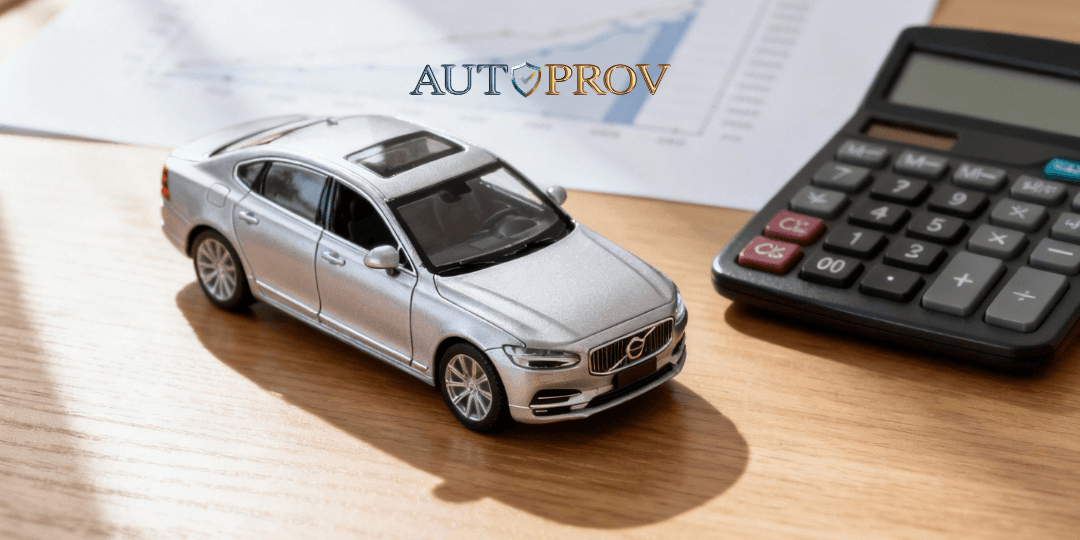
On the surface, calculating vehicle depreciation seems simple enough: it’s just the difference between what you paid for your car and what it’s worth now. But this figure represents the single biggest cost of owning a vehicle, and it’s one that most people completely overlook.
On the surface, calculating vehicle depreciation seems simple enough: it’s just the difference between what you paid for your car and what it’s worth now. But this figure represents the single biggest cost of owning a vehicle, and it’s one that most people completely overlook.
What Is Car Depreciation and Why It Matters
You can think of depreciation as an invisible cost, one that’s silently chipping away at your car’s value over time. The second you drive a new car off the forecourt, its value starts to plummet, and a whole host of factors influence how quickly it falls. Getting your head around this financial reality is absolutely crucial for making smart decisions down the line.
This loss of value isn’t just a number you worry about when it’s time to sell. It has a very real impact on your finances in several key ways:
- Insurance Payouts: If your car is written off, your insurer will pay out its current market value, not the price you bought it for. A big drop in value means a smaller cheque.
- Finance Agreements: Have you heard of negative equity? That’s when your outstanding car loan is worth more than the car itself, and it’s a direct result of rapid depreciation.
- Future Purchases: Knowing what your current car is actually worth is the first step in accurately budgeting for your next one.
The Financial Impact of Depreciation
Just how fast a car loses its value can be staggering. For business owners and anyone managing a fleet, depreciation can account for around 60% of a vehicle's total running costs. That’s often far more than fuel and maintenance combined.
On average, a new car in the UK will lose about 47.7% of its value after just three years and 36,000 miles. Of course, this varies wildly between different makes, models, and whether it’s an electric or combustion engine vehicle. You can dig deeper into vehicle depreciation trends to see just how much it can impact fleet management costs.
Grasping how to calculate vehicle depreciation transforms you from a passive owner into a proactive manager of your asset. It empowers you to anticipate future value, choose models with better value retention, and ultimately protect your investment.
By understanding the forces at play, you can start making smarter choices to minimise the financial hit. This guide will walk you through the practical methods to finally put a real number on this hidden cost.
The Real-World Factors Driving Your Car's Value
Before you can even begin to calculate depreciation, you need to get to grips with the real-world story behind the numbers. While age and mileage grab all the headlines, several other tangible factors have a huge say in how quickly your car’s value drops.
These are the details that separate a well-cared-for car from just another motor on the market.
Think about it: a car with a fully stamped service book tells a story of consistent care. This paperwork is gold dust to a potential buyer, proving it has been properly looked after. That alone can add significant value compared to a car with a patchy or non-existent history.
Beyond the Basics: What Buyers Really Look For
The number of previous owners is another massive tell. A car that’s changed hands multiple times in a few short years can be a major red flag, often hinting at underlying issues or being a "problem car." Fewer owners suggest stability and consistent care, which really helps to hold its value.
Beyond the paperwork, the car's physical and mechanical health is what truly seals the deal. This includes things like:
- Desirable Options: Factory-fitted extras are a big deal. A panoramic sunroof, a premium sound system, or advanced driver-assistance features can make a car stand out and command a higher price.
- Colour and Trim: It might sound trivial, but a popular, sought-after colour can genuinely add hundreds of pounds to a car's value. An unusual or dated shade, on the other hand, might make it a much harder sell.
- Overall Condition: This is just common sense. Obvious wear and tear, kerbed alloys, and cosmetic dings will instantly knock down what a buyer is willing to pay.
Your car's depreciation isn't just a fixed formula; it's a dynamic value influenced by its history, condition, and desirability. By managing these factors, you can actively protect your investment.
Of course, the badge on the bonnet has a massive impact. Some cars are simply known for holding their value better than others. For example, prestige sports and luxury brands like Porsche tend to depreciate far slower, with some models famously retaining around 75.9% of their value after three years.
In contrast, certain electric vehicles have seen much faster depreciation recently, highlighting how brand reputation directly impacts your pocket. To see how different makes and models stack up, you can explore the full Carmoola Car Depreciation Index.
Getting a Simple Estimate with the Straight-Line Method
If you’re looking for a straightforward, predictable way to track your car's value for personal accounting or basic business records, the straight-line method is the perfect place to start. It neatly smooths out the depreciation process into equal, manageable chunks over a set period.
It’s popular for a reason: it's incredibly easy to understand and apply. You don’t need to mess around with complex percentages, just a few key figures to get going.
The Straight-Line Formula Explained
The calculation itself is as simple as it gets. The whole point is to spread the total expected loss in value evenly across the vehicle's useful life.
Here's the formula you’ll need:
(Purchase Price - Salvage Value) / Useful Life = Annual Depreciation
Let’s quickly break down what those terms actually mean in the real world.
- Purchase Price: This is the total amount you paid for the vehicle, including any fees and taxes. It's the "on-the-road" price.
- Salvage Value: This is your best guess of what the car will be worth at the end of its useful life. Think of it as its final trade-in or scrap value.
- Useful Life: This is simply the number of years you expect to own and use the car before you plan to sell it on.
Let's plug in some numbers for a common UK model, like a Ford Focus, bought for £25,000. Say you plan to keep it for 5 years and reckon its salvage value will be around £5,000.
Using the formula, the calculation would be: (£25,000 - £5,000) / 5 years = £4,000 per year.
This means, for your records, the car loses a consistent £4,000 in value each year. It’s clean, it’s simple, and it works perfectly for basic bookkeeping.
Getting a More Realistic View with the Reducing Balance Method
While the straight-line method is simple, it doesn’t really mirror the harsh reality of car ownership. Let's be honest, a car's value doesn't drop in neat, equal chunks.
To get closer to a car's true market value, particularly in its early years, you need a more dynamic approach. This is exactly where the reducing balance method comes into its own. It reflects the real-world cliff-edge drop in value that happens the moment you drive a new car off the forecourt.
Instead of a fixed amount, this technique applies a fixed percentage to the car's current value each year. The result? A much bigger depreciation hit in year one, which then gets smaller over time.
How to Calculate Using the Reducing Balance Method
The formula might look a bit more involved at first glance, but the concept is actually quite simple. You're just taking the car's current book value and multiplying it by a fixed depreciation rate.
Current Book Value x Depreciation Rate = Annual Depreciation
Let’s go back to our £25,000 Ford Focus. For this method, a realistic annual depreciation rate might be 30%, which is much closer to what you'd see in the real world for a new car.
- Year 1: £25,000 x 30% = £7,500 depreciation. The car is now worth £17,500.
- Year 2: £17,500 x 30% = £5,250 depreciation. The car is now worth £12,250.
- Year 3: £12,250 x 30% = £3,675 depreciation. The car is now worth £8,575.
This front-loaded approach gives you a much more accurate snapshot of your equity in the vehicle's first few years, which is absolutely critical if you're on a finance deal.
This method is particularly useful for businesses needing precise asset valuation, or for any owner who wants to avoid the nasty shock of negative equity in the early stages of a finance agreement.
The UK market is a perfect example of why this matters so much. Some models, like the Audi E-Tron, have been known to lose a staggering 66% of their value in just three years. In stark contrast, an Audi A1 might only lose around 18.5% over the same period.
You can dig into more of these UK vehicle depreciation rates to see just how wildly they can vary. Using the reducing balance method helps to accurately model these steep, early-year value drops and gives you a far clearer picture of where you stand.
Beyond Formulas: Getting an Accurate Market Valuation
While running the numbers gives you a solid baseline, the formulas can't quite capture the fast-moving, real-time dynamics of the used car market. For a figure you can actually bank on, you need to turn to the same tools that dealers and industry pros use every single day.
The most practical way to pin down your car's current market worth is through online valuation services. These platforms aren’t just pulling numbers out of thin air; they’re constantly crunching millions of data points from actual vehicle sales, dealer listings, and auction results. This gives you a live snapshot of what cars just like yours are selling for right now.
Using UK Valuation Tools Effectively
Here in the UK, services like Auto Trader and Parkers are pretty much indispensable. When you use them, getting a reliable figure all comes down to the details. Don’t just punch in the make and model; be specific about the trim level, mileage, and any optional extras that were fitted. It all makes a difference.
The golden rule for an accurate online valuation is brutal honesty. A tool can only work with the information you provide, so be realistic about your car's condition. A few scratches or worn tyres will absolutely affect the final price.
Once you get a figure back, it's vital to understand the context. These tools often give you a couple of different values, and knowing what each one means is crucial for making a smart decision.
- Private Sale Value: This is usually the highest number. It's what you could realistically expect to get if you sell it directly to another person. Of course, this route means putting in a bit more effort yourself.
- Trade-in Value: This is the lower price a dealer will likely offer you. You’re essentially swapping cash for convenience, as the dealer needs to build in a profit margin for themselves when they sell it on.
Having both these numbers gives you a complete picture of where you stand. It helps you weigh up whether the speed and ease of a trade-in are worth taking a hit on the price, or if you're better off putting in the time to secure a private sale and maximise your return.
Got Questions About Car Depreciation?
Once you get your head around the basic formulas, the real-world questions start popping up. Knowing how to calculate depreciation is one thing, but knowing what to do with that knowledge is what really counts. Let's tackle some of the most common queries I hear.
One of the biggest is about modifications. Will that expensive sound system or flashy set of alloy wheels add value? The honest answer is: probably not. While a performance exhaust or custom wrap might make your car more attractive to a specific buyer, they rarely increase its overall market value. Sometimes, especially with things like engine tuning, they can even put people off and drag the price down.
How Can I Slow Down Depreciation?
You can't stop depreciation – it’s an unstoppable force of motoring physics. But you can absolutely put the brakes on it. The single most powerful tool in your arsenal is a meticulous maintenance schedule, backed up by a full service history. Regular oil changes, timely repairs, and just keeping the car clean inside and out all signal to a potential buyer that it's been cared for.
Beyond the basics, here are a few other things to keep in mind:
- Watch the Mileage: It's a simple truth – the fewer miles on the clock, the more your car is worth. If you can, hop on public transport or use another car for those short, unnecessary trips.
- Choose Your Car Wisely: This is a big one. Some makes, models, and even certain colours hold their value far better than others. A bit of research before you buy can save you thousands in the long run.
- Keep It Standard: As we mentioned, modifications are rarely a good investment. Stick to original manufacturer parts where possible and avoid any major changes that can't be easily reversed.
Think of your car’s service book as one of its most valuable assets. A complete, stamped history from a reputable garage is solid proof of care, and it can genuinely add hundreds, if not thousands, of pounds to its final selling price.
When Is the Best Time to Sell My Car?
This might surprise you, but timing your sale can make a real difference to the price you get. The used car market has its own seasons, with clear peaks and troughs you can use to your advantage.
Generally, the best times to sell are in the spring (March to May) and again in the autumn (September to October). Demand is usually higher then, as people are either gearing up for summer road trips or getting a reliable motor before the bad weather sets in. Trying to sell in the dead of winter or right in the middle of the summer holidays often means fewer buyers and weaker offers. Line up your sale with these peak times, and you'll give yourself the best shot at maximising your return.
Frequently Asked Questions
AI-Generated Content Notice
This article was created with the assistance of artificial intelligence technology. While we strive for accuracy, the information provided should be considered for general informational purposes only and should not be relied upon as professional automotive, legal, or financial advice. We recommend verifying any information with qualified professionals or official sources before making important decisions. AutoProv accepts no liability for any consequences resulting from the use of this information.
From our AI insights
- Navigating ULEZ Compliance for Used Car Dealers
A deep dive into ensuring your used car stock meets ULEZ standards, avoiding costly fines.
- Mastering Paint Verification with VIN Decoding
Learn how UK traders verify original paint using VIN decoding and provenance data.
- Understanding VIN Decoding: Avoid Misleading Imports
Learn how VIN decoding reveals vehicle origins and specs, preventing import pitfalls.
Related Articles

Car Specs by Reg: Instantly Find Vehicle Details & MOT History
Trying to find the full car specs by reg? In the UK, that little number plate is the key to unlocking a huge amount of information about a vehicle. From the exact engine size and CO2 emissions to its MOT history and tax status, it's all tied to the registration.

How to Check Previous Owners of a Car in the UK
Before you even start thinking about how to check the previous owners of a car, you need to get your head around why it's so important. This isn't just about being nosy; it’s a non-negotiable step that protects you from serious financial headaches and safety risks lurking under a shiny bonnet.

How to Check Service History in the UK
Think of a car's service history as its detailed CV, not just some dusty folder in the glovebox. To check service history is to get the real story behind a vehicle, digging into everything from its routine oil changes to any major surgery it's had. For any savvy car buyer in the UK, this record is the single most important document you can get your hands on.
Published by AutoProv
Your trusted source for vehicle intelligence