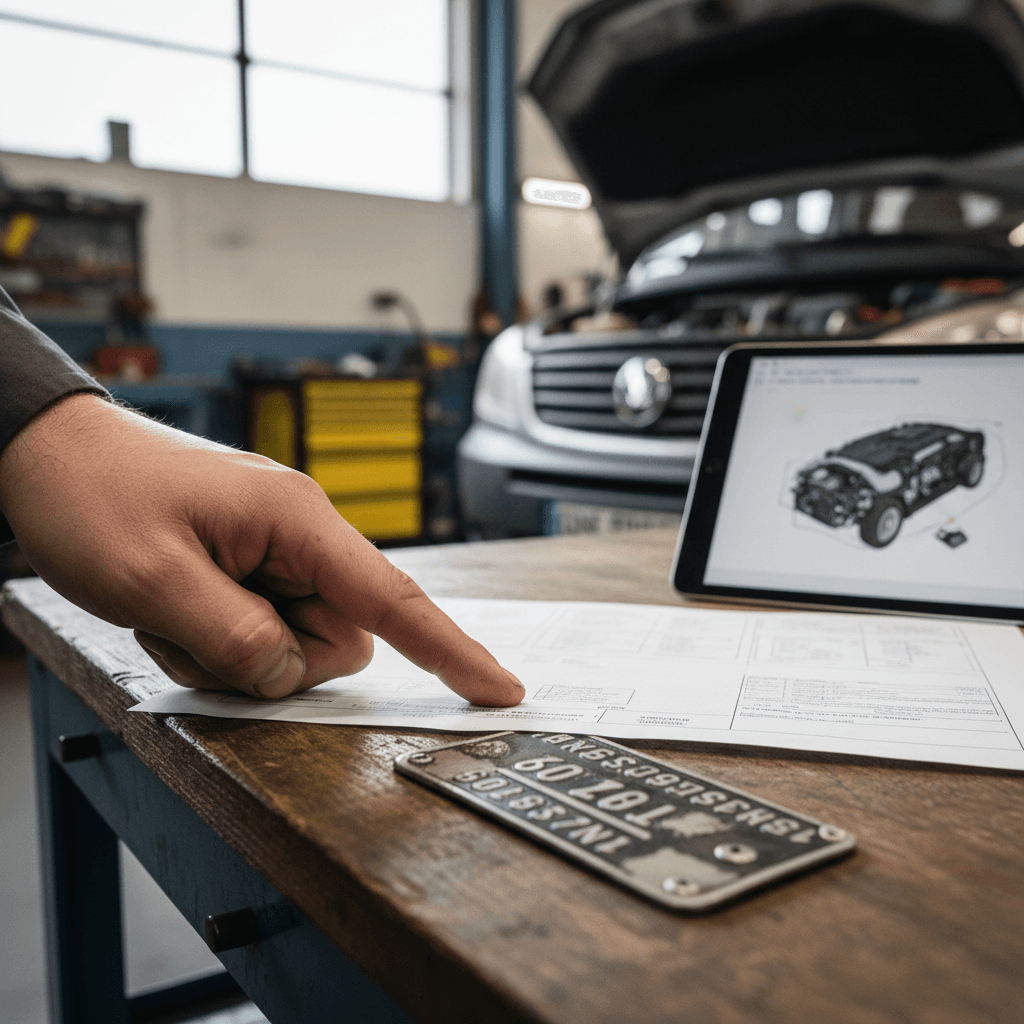
Learn how motor traders can verify actual Euro emissions standards using factory build data to avoid mis-described vehicles and ULEZ compliance issues.
Why Euro Emissions Standards Matter for Motor Traders
Euro emissions standards directly affect vehicle saleability, valuation, and legal compliance in the UK market. Vehicles that fail to meet Euro 4 (petrol) or Euro 6 (diesel) standards face daily charges in London's ULEZ and similar clean air zones across Birmingham, Bristol, and other cities. A vehicle incorrectly advertised as ULEZ-compliant exposes dealers to Consumer Rights Act 2015 rejection claims, whilst stock mis-described with the wrong Euro standard sits longer and sells for less. Factory build data provides the definitive emissions classification because it records what the manufacturer certified when the vehicle was built, not what a registration document assumes or a seller claims.
The V5C logbook does not reliably indicate Euro emissions standards. Registration data shows CO2 figures and tax bands, but these do not directly translate to Euro 4, 5, or 6 compliance. A 2016 diesel might be Euro 5 or Euro 6 depending on its exact build date and homologation. Grey imports, re-registered vehicles, and older stock present particular risk because DVLA records may lack complete emissions certification data. Using factory build data eliminates guesswork by accessing the original equipment manufacturer specifications that confirm the precise Euro standard the vehicle was certified to meet.
Understanding Euro Emissions Standard Classifications
Euro emissions standards are progressive European regulations limiting exhaust pollutants from vehicles. Each standard (Euro 1 through Euro 6 for light vehicles) sets maximum permitted levels of nitrogen oxides, particulate matter, carbon monoxide, and hydrocarbons. The standards have tightened progressively since Euro 1 in 1992, with Euro 6 introduced in September 2014 for new type approvals and September 2015 for all new registrations.
Petrol and diesel vehicles follow different timelines and limits. Euro 4 petrol vehicles (typically 2006 onwards) generally meet ULEZ requirements, whilst diesel vehicles need Euro 6 certification (typically late 2015 onwards) for automatic ULEZ compliance. However, build dates create overlap periods where vehicles from the same model year may meet different standards depending on when they were manufactured and which homologation batch they belonged to.
The confusion arises because registration date, model year, and emissions certification date rarely align perfectly. A vehicle first registered in January 2016 might have been built in late 2015 to Euro 5 standards, or built in early 2016 to Euro 6 standards. The V5C shows the registration date, not the certification standard. Only factory build data confirms which emissions standard the manufacturer certified for that specific VIN.
How Factory Build Data Records Emissions Standards
Manufacturer build sheets contain the emissions certification data assigned during production. When a vehicle rolls off the production line, the OEM records its compliance with specific type approval regulations, including the Euro emissions standard it meets. This data links directly to the VIN and remains constant regardless of subsequent registration changes, imports, or ownership transfers.
Build data typically includes the emissions standard designation (Euro 4, Euro 5, Euro 6), the specific type approval number, and the certified emissions values for key pollutants. Premium manufacturers often record additional detail including particulate filter specifications, NOx sensor configurations, and AdBlue system presence. This technical specification data allows traders to verify not just the Euro standard but also the specific emissions control equipment the vehicle left the factory with.
Accessing this data requires querying manufacturer databases using the VIN. AutoProv retrieves factory build sheets from OEM sources, presenting the emissions certification data alongside other technical specifications. The vehicle build sheet report shows the exact Euro standard recorded by the manufacturer, eliminating reliance on assumptions based on registration dates or model year.
Common Scenarios Where Emissions Verification Prevents Costly Mistakes
Grey imports present the highest risk for emissions mis-description. A vehicle originally sold in Japan or the United States may have been built to different emissions standards than its European equivalent. When imported and registered in the UK, the DVLA assigns a registration based on available documentation, but this does not guarantee the vehicle meets any specific Euro standard. Without factory verification, dealers risk advertising ULEZ compliance that does not exist.
Pre-registered and manufacturer stock vehicles create confusion around build versus registration dates. A diesel vehicle built in August 2015 to Euro 5 standards might not be registered until March 2016, creating the appearance of a Euro 6 vehicle based on registration date alone. Buyers assume 2016 diesels meet Euro 6, but the actual build standard determines ULEZ compliance. Identifying mis-described vehicles using factory build data prevents these assumptions from becoming rejection claims.
Commercial vehicles converted to passenger use, re-imported vehicles, and older premium stock all carry elevated risk. A 2015 BMW might be Euro 5 or Euro 6 depending on its exact production month. Without build data, traders guess based on registration patterns or model knowledge, but individual vehicles vary. The cost of a mis-described vehicle includes the rejection claim, transport, refund administration, and the reputational damage from selling a vehicle that cannot enter clean air zones.
Step-by-Step Process for Verifying Emissions Standards
Start by obtaining the VIN from the vehicle or documentation. The 17-character VIN provides the unique identifier needed to query manufacturer databases. Check the VIN is correct by comparing it against the VIN plate locations (typically dashboard, door pillar, and engine bay) to ensure documentation matches the physical vehicle.
Run a factory build sheet check using the VIN. AutoProv's build sheet service queries OEM databases to retrieve the original factory specifications including emissions certification. The report returns the Euro standard the vehicle was certified to meet, along with supporting technical data such as engine code, emissions control equipment, and type approval numbers.
Cross-reference the build data emissions standard against ULEZ and clean air zone requirements. Euro 4 petrol vehicles (typically 2006 onwards) meet London ULEZ standards. Euro 6 diesel vehicles (typically late 2015 onwards) meet ULEZ standards. Some Euro 5 diesels also comply if they meet the NOx limit of 0.18g/km, but this requires checking the specific certified emissions values in the build data, not just the Euro 5 designation.
Document the verified emissions standard in your stock records and advertising. Use the specific Euro standard from the build data in your descriptions rather than assumptions based on age or registration date. If the vehicle is ULEZ-compliant based on factory data, state this clearly with the supporting Euro standard. If it is not compliant, disclose this to avoid mis-description claims under the Consumer Rights Act 2015.
For vehicles where manufacturer data is unavailable or unclear, consider obtaining a certificate of conformity (CoC) directly from the manufacturer's UK importer. The CoC provides official confirmation of the emissions standard and type approval details. This adds cost and time but provides definitive proof for high-value or problematic stock where emissions verification is critical to saleability.
Interpreting Build Data Emissions Information
Factory build sheets present emissions data in various formats depending on the manufacturer. Most show a clear Euro standard designation such as "Euro 6" or "EU6", but some use type approval codes or regulation references. Understanding how to read these codes prevents misinterpretation.
Type approval numbers follow the format "e*" followed by numbers indicating the approval authority and regulation. For example, "e112007/46" indicates a UK type approval under the 2007/46/EC framework directive. The specific emissions regulation appears separately, often as "715/2007" (Euro 5) or "459/2012" (Euro 6). Cross-referencing these regulation numbers confirms the Euro standard even when not explicitly stated.
Some manufacturers record emissions values without stating the Euro standard directly. In these cases, compare the certified NOx, particulate matter, and hydrocarbon values against the limits for each Euro standard. A diesel showing NOx at 0.08g/km meets Euro 6 limits (0.08g/km maximum), whilst NOx at 0.18g/km indicates Euro 5 (0.18g/km maximum). The VIN decoder data and factory build codes article explains how to interpret technical specification formats across different manufacturers.
Particulate filter and AdBlue system presence provides supporting evidence. Euro 6 diesels require particulate filters and typically include AdBlue SCR systems for NOx reduction. If build data shows no AdBlue system on a diesel, it is unlikely to be Euro 6 regardless of registration date. However, absence of these systems in the build data does not automatically mean non-compliance, as some manufacturers met Euro 6 through other technologies.
Avoiding ULEZ and Clean Air Zone Compliance Errors
London's ULEZ requires Euro 4 for petrol vehicles and Euro 6 for diesel vehicles. Birmingham, Bristol, Portsmouth, and other cities operate similar clean air zones with varying requirements. Mis-describing a vehicle as compliant when it is not creates immediate Consumer Rights Act 2015 rejection grounds, as the vehicle is not fit for purpose if the buyer cannot drive it in their local area without daily charges.
The government's online ULEZ checker uses DVLA registration data, not factory build data. This checker sometimes produces incorrect results for edge cases, re-registered vehicles, and imports. Relying solely on the DVLA checker exposes dealers to risk when the registration data does not accurately reflect the vehicle's actual emissions certification. Factory build data provides the definitive answer because it shows what the manufacturer certified, not what DVLA records assume.
Advertising a vehicle as ULEZ-compliant requires evidence. Stating compliance based on age or registration date alone is insufficient if the factory data shows a different Euro standard. Document the emissions standard from build data in your stock records and retain this evidence to defend against any subsequent disputes. Verifying vehicle true CO2 emissions and tax band follows similar principles, using factory data rather than assumptions.
For borderline vehicles where ULEZ compliance is uncertain, disclose the specific Euro standard and let buyers verify their local requirements. A Euro 5 diesel might be compliant in some clean air zones but not others. Stating "Euro 5 diesel, not ULEZ-compliant" is accurate and defensible, whilst claiming compliance without verification is not.
Integrating Emissions Verification into Trade Due Diligence
Emissions standard verification belongs in your standard pre-purchase checks alongside finance, mileage, and salvage verification. The same VIN-based build sheet check that confirms factory-fitted options and specifications also returns emissions certification data. Running this check before bidding at auction or agreeing a trade purchase prevents buying stock that will sit longer or sell for less due to clean air zone restrictions.
High-volume traders benefit from integrating emissions verification into their stock intake workflow. AutoProv's API allows automated build data retrieval during vehicle appraisal, flagging non-compliant vehicles before purchase decisions. This prevents accumulating diesel stock that cannot sell in urban markets where ULEZ and clean air zones restrict buyer demand.
Document the verified emissions standard in your CRA 2015 compliance records. The Consumer Rights Act requires vehicles to match their description and be fit for purpose. If you advertise a vehicle without disclosing its Euro standard, and a buyer subsequently discovers it incurs ULEZ charges, they have grounds for rejection. Recording the factory-verified emissions standard in your distance sale pack demonstrates due diligence and supports your description accuracy.
For premium and specialist stock, emissions verification adds value to your provenance documentation. Buyers of higher-value vehicles expect complete technical verification. Providing a factory build sheet showing Euro 6 compliance alongside service history and specification confirmation differentiates your stock from competitors who rely on registration date assumptions.
Regional Variations and Future Emissions Zone Expansion
Clean air zones are expanding across UK cities, increasing the importance of emissions verification. Manchester, Newcastle, and Sheffield have introduced or announced emissions-based charging zones. Scotland's Low Emission Zones in Glasgow, Edinburgh, Aberdeen, and Dundee follow different timelines and requirements. Each zone sets its own standards, but most follow the London ULEZ model of Euro 4 petrol and Euro 6 diesel.
Regional market dynamics reflect these emissions restrictions. Diesel stock sells more slowly in areas with established or planned clean air zones, whilst petrol equivalents maintain stronger demand. Days-to-sell data and market insights show this pattern clearly, with non-compliant diesels taking significantly longer to sell in urban markets. Verifying emissions standards before purchase allows traders to avoid stock that will underperform in their local market.
Future emissions regulations will tighten further. Euro 7 standards are under development and will eventually apply to new vehicles. Whilst this does not affect current used stock, the trajectory is clear: emissions compliance increasingly determines vehicle saleability and value. Traders who build emissions verification into their standard processes now will adapt more easily as restrictions expand.
Frequently Asked Questions
AI-Generated Content Notice
This article was created with the assistance of artificial intelligence technology. While we strive for accuracy, the information provided should be considered for general informational purposes only and should not be relied upon as professional automotive, legal, or financial advice. We recommend verifying any information with qualified professionals or official sources before making important decisions. AutoProv accepts no liability for any consequences resulting from the use of this information.
Published by AutoProv
Your trusted source for vehicle intelligence