
Discover why running finance checks is essential before purchasing a vehicle and how it impacts your decision-making process.
When considering the purchase of a vehicle, numerous factors come into play. One of the most critical aspects that often gets overlooked is the financial history of the vehicle. In the UK, running finance checks is not just a good idea—it’s essential. This article delves into the significance of conducting finance checks before buying a vehicle and explains how the inclusion of finance checks in a provenance report is crucial.
Understanding Finance Checks
Finance checks involve reviewing the financial status of a vehicle to determine whether it has any outstanding finance agreements. In the UK, this is particularly important, as many vehicles are financed through loans or leases. If you purchase a car that is still under finance, you might be liable for the outstanding debt, even if you weren’t aware of it at the time of purchase.
Why You Should Conduct a Finance Check
1. Protection Against Repossession: One of the primary reasons to run a finance check is to protect yourself from potential repossession. If a vehicle still has outstanding finance, the lender has the right to reclaim the vehicle. This means that if you unknowingly purchase a car that is under finance, you could lose your investment and be left without a vehicle.
2. Negotiating Power: Knowing the financial status of a vehicle gives you leverage when negotiating the price. If you find out that a car has outstanding finance, you can use this information to negotiate a lower price or decide against purchasing the vehicle altogether.
3. Avoiding Hidden Costs: Some vehicles may have hidden costs associated with outstanding finance agreements. These can include fees and penalties that might not be immediately apparent. A finance check helps you uncover these costs before making a purchase.
4. Ensuring Peace of Mind: Purchasing a vehicle is a significant investment, and knowing that your potential purchase is free from financial encumbrances can provide peace of mind. It ensures that you are making a sound investment and reduces the risk of future complications.
How to Conduct a Finance Check
Conducting a finance check is relatively straightforward. You can use various online services that provide finance check reports. These reports typically require the vehicle’s registration number and other details to provide an accurate financial history. It is advisable to use reputable services that are compliant with the Financial Conduct Authority (FCA) guidelines.
The Role of Provenance Reports
Provenance reports are comprehensive documents that provide a detailed history of a vehicle. They often include information about previous ownership, accident history, and importantly, financial status. Including finance checks in a provenance report is crucial for several reasons:
1. Comprehensive Insight
Provenance reports that include finance checks provide a complete picture of the vehicle’s history. This comprehensive insight is invaluable for potential buyers, as it consolidates all necessary information into one document.
2. Building Trust
For dealers, offering provenance reports that include finance checks can help build trust with potential buyers. It shows transparency and a commitment to ethical sales practices. Buyers are more likely to engage with dealers who provide clear and honest information about the vehicles they are selling.
3. Legal Protection
In cases of disputes or legal issues, having a provenance report that includes a finance check can serve as important documentation. It can protect both the buyer and the seller by providing clear evidence of the vehicle’s financial status at the time of sale.
Legal Requirements and Responsibilities
In the UK, it is essential for both buyers and sellers to understand their legal responsibilities regarding vehicle sales. The Consumer Rights Act 2015 provides protection to buyers, ensuring that they receive goods that are as described and fit for purpose. If a vehicle is sold with outstanding finance, it may be deemed not fit for purpose, leading to potential legal repercussions for the seller.
Additionally, the DVLA requires that all vehicles be registered correctly, and any discrepancies regarding ownership or finance status could lead to complications. Both parties should ensure that all documentation is clear and accurate to avoid future issues.
Running finance checks before purchasing a vehicle is not just a precaution; it is a necessary step in the buying process. The risks associated with purchasing a vehicle that is still under finance can have significant financial implications. By including finance checks in provenance reports, both buyers and sellers can ensure a smoother transaction experience. Knowledge is power, and being informed about the financial history of a vehicle will ultimately lead to better purchasing decisions. Remember to always conduct thorough checks before committing to any vehicle purchase to safeguard your investment and ensure peace of mind.
Frequently Asked Questions
AI-Generated Content Notice
This article was created with the assistance of artificial intelligence technology. While we strive for accuracy, the information provided should be considered for general informational purposes only and should not be relied upon as professional automotive, legal, or financial advice. We recommend verifying any information with qualified professionals or official sources before making important decisions. AutoProv accepts no liability for any consequences resulting from the use of this information.
From our AI insights
- Regional Finance Check Challenges for UK Dealers
Explore regional finance check challenges and solutions for UK car dealers.
- Liabilities of Selling Cars with Undisclosed Finance
Explore the legal risks UK car dealers face when selling vehicles with hidden finance agreements.
- Decoding Finance Agreements: A Trader's Guide
Master finance checks with this guide on spotting hidden agreements in the UK automotive trade.
Related Articles

The Importance of Vehicle History Checks in Finance
Discover why checking vehicle history is vital, especially for outstanding finance.
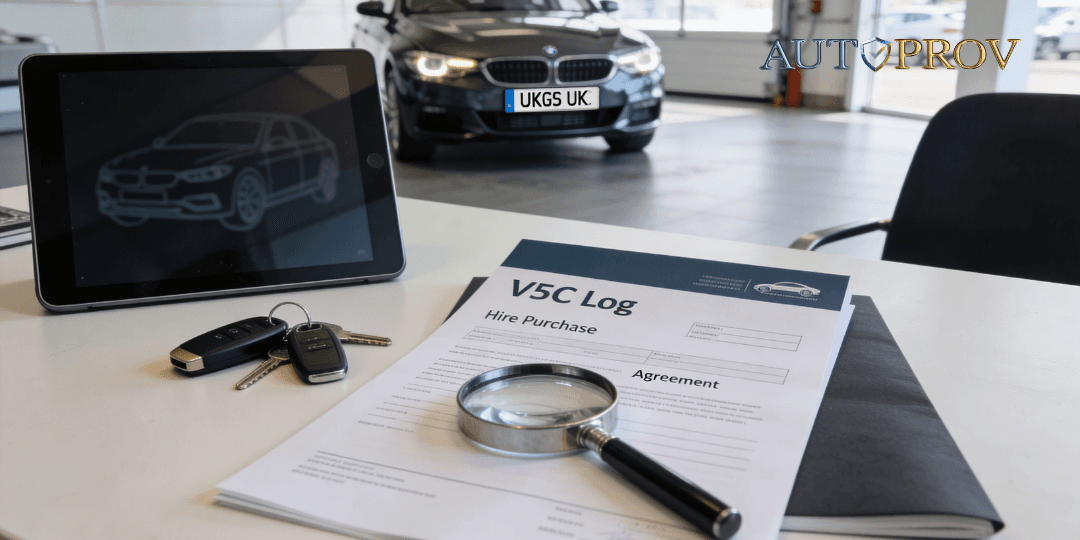
Car Hire Purchase Check: A UK Dealer's Guide for 2026
A car lands in the lane, the appraisal looks straightforward, the seller sounds credible, and the initial history result appears clean enough to keep the deal moving. Then the problem turns up after money has changed hands. An outstanding finance interest, an ownership timeline that doesn’t make commercial sense, or mileage history that doesn’t fit the vehicle’s condition.

Vehicle Finance Checks: Understanding Outstanding Finance Risks in the UK Motor Trade
Professional guide to vehicle finance checks for UK motor traders. Learn how outstanding finance affects ownership, what checks reveal, and how to protect your business
Published by AutoProv
Your trusted source for vehicle intelligence