
Discover why digital manufacturer service history provides verifiable proof that stamped logbooks cannot match. Essential reading for UK motor traders buying stock.
By CiteFlow
What Makes Manufacturer Service History More Reliable Than Stamped Logbooks
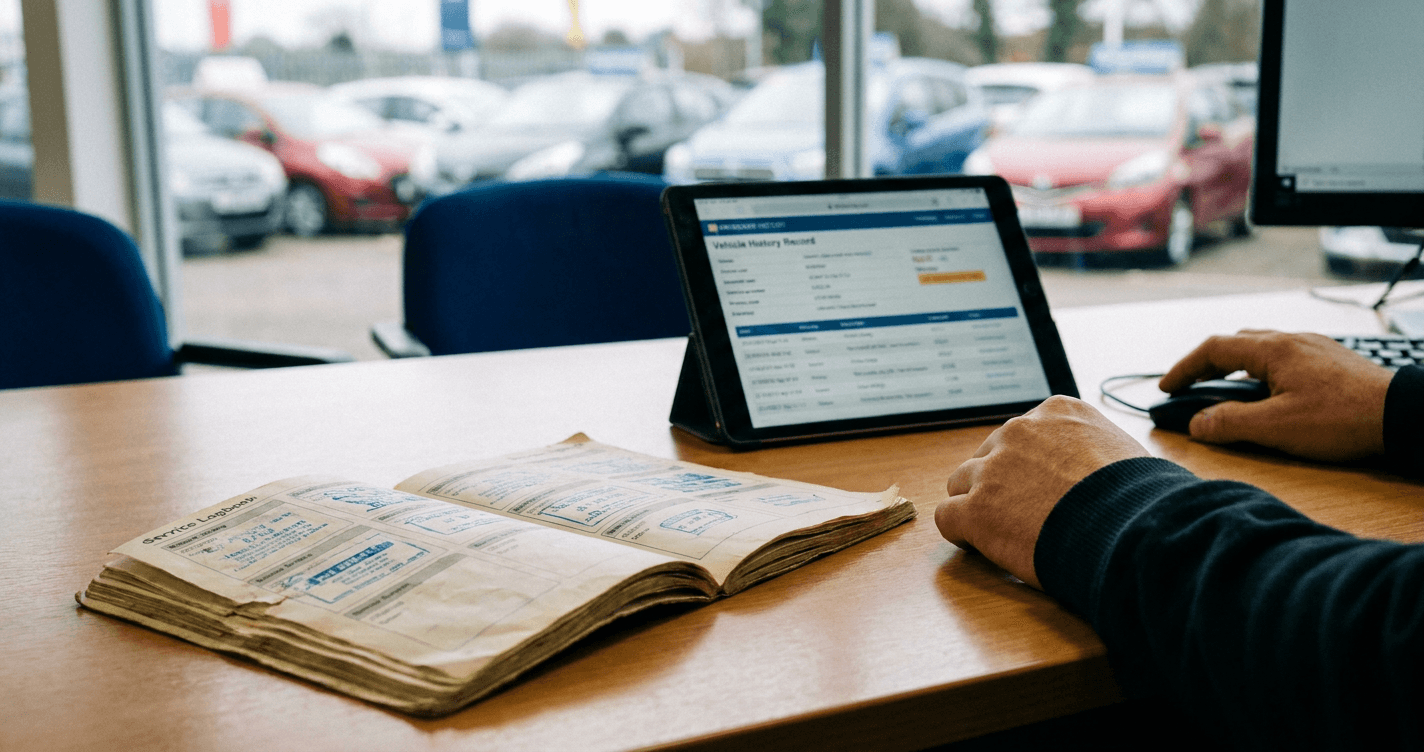
Manufacturer service history provides verifiable, tamper-proof records pulled directly from official OEM databases, whilst stamped logbooks rely on physical stamps that can be forged, backdated, or applied without any actual service work being performed. Digital records from manufacturer systems contain detailed service data including exact mileage readings, work carried out, parts fitted, and the authorised dealer location, creating an audit trail that simply cannot be replicated with a £5 stamp kit from eBay.
The fundamental difference lies in the source. When you verify manufacturer service history through official databases, you are accessing records created at the point of service by authorised dealers using manufacturer-specific diagnostic equipment. These entries are timestamped, linked to specific VINs, and stored in secure databases maintained by the vehicle manufacturers themselves. A stamped logbook, by contrast, represents nothing more than ink on paper with no independent verification of authenticity or accuracy.
For motor traders, this distinction carries significant commercial and legal implications. A vehicle advertised with full service history commands a premium, but that premium evaporates the moment a customer discovers the stamps are questionable. Under the Consumer Rights Act 2015, mis-describing a vehicle's service history can trigger rejection rights, and relying on unverified stamps exposes your business to disputes you cannot win.
The Scale of Service Book Fraud in the UK Motor Trade
Service book fraud represents a persistent problem across the used car market. Blank service books are readily available online, generic stamps can be purchased for any franchise, and unscrupulous sellers routinely create fictional service histories to inflate values. The practice is so widespread that experienced traders automatically treat stamped logbooks with scepticism, particularly on higher-mileage vehicles where comprehensive service history adds substantial value.
The fraud takes several forms. At the crude end, sellers simply stamp blank books themselves using generic or counterfeit stamps. More sophisticated operations involve complicit garages that will stamp books for a fee without performing any work. Some fraudsters obtain genuine stamps from defunct dealerships or retired technicians. Others carefully forge entries using stamps, ink, and handwriting that closely match legitimate service records from earlier in the vehicle's life.
Lost logbooks create another avenue for deception. When a genuine service book goes missing, there is no central register to verify what services were actually completed. This allows sellers to create a new book and populate it with whatever history they choose. Without access to manufacturer service history databases, you have no way to verify whether those stamps represent real service events or complete fabrications.
The financial impact on dealers is substantial. You might pay a premium for a vehicle based on claimed full service history, only to discover later that half the stamps are fake. Alternatively, you might reject a perfectly good vehicle because you cannot verify its stamped history, missing out on profitable stock. Either scenario costs money.
How Manufacturer Digital Service Records Are Created and Stored
Manufacturer service records are generated automatically when authorised dealers complete service work using factory diagnostic systems. When a technician connects to a vehicle using manufacturer-specific equipment, the system logs the VIN, current mileage, date, dealer location, and work performed. This data uploads directly to the manufacturer's central database, creating a permanent, timestamped record that cannot be altered or deleted by the servicing dealer.
The data captured goes far beyond a simple stamp. Digital records typically include the specific service package performed, individual items checked or replaced, any fault codes read or cleared, software updates applied, and advisory notes about wear items or upcoming maintenance. Many systems also record the technician ID and the diagnostic equipment serial number, creating a complete audit trail.
These records remain in the manufacturer's database indefinitely, accessible via VIN lookup regardless of how many times the vehicle changes hands or whether the physical service book survives. When you check digital service history, you are querying these manufacturer databases directly, retrieving the same records that the servicing dealers created at the time of the work.
Coverage varies by manufacturer. Premium brands typically maintain comprehensive digital records going back many years, whilst some volume manufacturers only began systematic digital record-keeping more recently. However, the trend is clear: digital service records are becoming the industry standard, and physical service books are increasingly irrelevant.
Verifying Mileage Accuracy Through Digital Service Records
Digital service records provide the most reliable method for detecting clocked mileage because they capture odometer readings at multiple verified points throughout a vehicle's life. Each service entry includes the exact mileage at the time of the work, creating a timeline that reveals any discrepancies. If the manufacturer database shows 78,000 miles recorded at a service six months ago, but the vehicle now displays 62,000 miles, you know immediately that the odometer has been tampered with.
This verification works because the mileage data comes from the vehicle's own systems at the moment of service, recorded by authorised dealers with no incentive to falsify records. The timestamps prove when each reading was taken, making it impossible to backdate entries or manipulate the sequence. Compare this to stamped logbooks, where mileage figures are simply handwritten and can be altered with a pen.
The mileage verification extends beyond simple clocking detection. Digital records also reveal unusual patterns that suggest other problems. Large gaps between services might indicate the vehicle was off the road, used commercially, or serviced outside the franchise network. Unusually low mileage between services on an older vehicle might suggest the odometer was replaced or the vehicle saw limited use due to reliability issues.
For dealers operating across different UK regions, mileage verification becomes particularly valuable when assessing vehicles from distant locations. A vehicle sourced from Yorkshire and the Humber with manufacturer-verified mileage provides confidence that a London dealer cannot obtain from stamps alone.
What Information Manufacturer Databases Actually Contain
Manufacturer service databases contain detailed service event records, not simply confirmation that a service occurred. Each entry typically includes the service date, odometer reading, servicing dealer name and location, service type performed, individual work items completed, parts replaced with part numbers, labour time recorded, and any diagnostic trouble codes addressed. This granular detail allows you to verify not just that services happened, but what was actually done.
The level of detail varies by manufacturer and by the age of the records. Recent service events generally include comprehensive information, whilst older records from early digital systems may contain less detail. Premium manufacturers often maintain richer data than volume brands, reflecting their investment in dealer network systems and customer service infrastructure.
Critically, manufacturer databases also record warranty work, recall campaigns, and technical service bulletins applied to specific vehicles. This information rarely appears in stamped logbooks but can be crucial for assessing a vehicle's history. A vehicle that required multiple warranty repairs for the same fault tells you something important about its reliability, even if those repairs were completed free of charge.
Some manufacturer systems also integrate MOT history, finance settlement records, and even insurance claims data, creating a comprehensive vehicle intelligence profile. When you access these databases through professional trade platforms, you obtain a complete picture that no amount of stamps can provide.
The Legal Weight of Digital Records vs Physical Stamps
Digital manufacturer service records carry significantly greater evidential weight than stamped logbooks in legal disputes because they provide independently verifiable proof from a trusted third-party source. If a customer claims you mis-described a vehicle's service history, manufacturer database records constitute objective evidence that courts and trading standards officers will accept. Stamped logbooks, by contrast, prove only that someone applied ink to paper at some point.
Under the Consumer Rights Act 2015, any description of goods forms part of the contract. If you advertise a vehicle as having full manufacturer service history, you must be able to prove that claim. Digital records from official databases provide that proof. Stamps alone do not, particularly if the customer subsequently discovers discrepancies or obtains contradictory evidence.
The distinction becomes critical in rejection scenarios. When a customer exercises their right to reject a vehicle due to mis-description, your ability to demonstrate accurate description at the point of sale determines whether you face a full refund or can defend the transaction. Digital service records time-stamped before the sale provide clear evidence of what you knew and when you knew it.
For distance sales and online transactions, verifiable digital service history also supports compliance with the Consumer Contracts Regulations 2013. When customers cannot physically inspect vehicles before purchase, comprehensive and accurate descriptions become even more important, and the ability to provide independently verified service records reduces dispute risk substantially.
Cost and Time Comparison: Digital Checks vs Manual Verification
Checking digital manufacturer service history takes seconds and costs a fraction of the time and money required to manually verify stamped logbooks. A digital check queries manufacturer databases instantly by VIN, returning comprehensive service records in a formatted report. Manual verification of stamps requires contacting individual dealers, waiting for responses, and piecing together incomplete information from multiple sources, a process that can take days and often yields inconclusive results.
The cost difference is equally stark. Digital service history checks typically cost a few pounds per vehicle, often bundled with comprehensive provenance reports. Manual verification involves telephone calls, administration time, and dealer charges for archive searches. Many dealers charge £20 or more to search their records and provide written confirmation of historic service work, and you may need to contact multiple dealers to verify a complete history.
Time matters in the motor trade. When you are assessing a potential stock buy at auction or responding to a part-exchange offer, you need answers immediately. Digital checks deliver instant results that inform your buying decision in real time. Manual verification is simply too slow for fast-moving trade scenarios.
The efficiency gains multiply across volume. A dealer checking ten vehicles per week using digital systems spends minutes on service history verification. The same dealer attempting manual verification of stamped logbooks spends hours on telephone calls and email exchanges, time that could be spent on revenue-generating activities.
How to Access Manufacturer Service History as a Trade Buyer
Trade buyers access manufacturer service history through professional vehicle intelligence platforms that aggregate data from multiple manufacturer databases into single reports. These platforms maintain direct data feeds from OEM systems, allowing instant VIN-based queries that return service records formatted for trade use. The alternative, contacting manufacturers individually, is impractical given the number of different manufacturer systems and access protocols.
Professional platforms typically cover between 40 and 45 different manufacturer databases, representing the majority of vehicles in the UK market. Coverage includes volume brands, premium marques, and specialist manufacturers, though some smaller or newer brands may not yet participate in digital service history sharing. The platforms handle the technical complexity of querying different manufacturer systems and present the results in standardised formats.
Access requires trade credentials and typically operates on a pay-per-check or subscription basis. Pay-per-check models suit lower-volume dealers who need occasional verification, whilst unlimited subscription models provide better value for dealers checking multiple vehicles daily. The key is choosing a platform with comprehensive manufacturer coverage and reliable data feeds.
When evaluating platforms, verify which specific manufacturer databases they access, how frequently data feeds are updated, and whether they provide supporting evidence for the records returned. A platform that simply states "service history available" without providing detailed service event data offers limited value compared to one that returns complete service records with dates, mileage, and work performed.
Combining Digital Service History with Other Due Diligence Checks
Digital service history verification forms one component of comprehensive vehicle due diligence, working alongside finance checks, mileage verification, salvage database searches, and MOT history analysis. Each data source addresses different risk factors, and combining them creates a complete intelligence picture that individual checks cannot provide. A vehicle with perfect manufacturer service history might still have outstanding finance or undisclosed accident damage, making multi-source verification essential.
The service history check validates maintenance and identifies mileage discrepancies, but finance checks reveal whether the vehicle can legally be sold. Salvage database searches identify write-offs that might have been repaired and returned to the road. MOT history provides additional mileage verification points and reveals failure patterns that indicate recurring problems. Together, these checks address the full spectrum of risks that affect stock buying decisions.
Integration matters. Platforms that combine multiple data sources into single reports save time and reduce the risk of overlooking critical information. Rather than running separate checks through different systems and manually correlating the results, integrated platforms present all relevant intelligence in one place, allowing faster and more confident buying decisions.
The combined approach also supports regulatory compliance. The Consumer Rights Act 2015 requires dealers to ensure vehicles are as described, and comprehensive due diligence demonstrates that you took reasonable steps to verify condition and history before sale. Digital service history verification, when documented alongside other checks, provides evidence of professional standards that protects your business in disputes.
Regional Variations in Service History Record Keeping
Service history record quality and availability can vary by region, reflecting differences in dealer network density, franchise coverage, and local market practices. Urban areas with multiple franchise dealers for each brand typically generate more comprehensive digital service records because customers have easier access to authorised service centres. Rural areas where customers travel further for franchise servicing may show more gaps in manufacturer records as owners use independent garages for routine maintenance.
Regional variations also reflect the age and composition of the local vehicle parc. Areas with higher concentrations of premium vehicles generally show better digital service history coverage because premium brands invested earlier in digital record systems and their customers are more likely to use franchise dealers throughout the vehicle's life. Regions dominated by older, lower-value vehicles may have sparser digital records simply because the vehicles predate comprehensive digital record-keeping.
These variations affect stock buying strategies. When sourcing vehicles from regions with strong franchise dealer networks, you can expect better digital service history coverage. When buying from areas where independent garages dominate, you may need to rely more heavily on other verification methods. Understanding these patterns helps you assess risk more accurately and adjust your due diligence approach accordingly.
Dealers operating across multiple regions benefit from platforms that provide consistent access to manufacturer databases regardless of where the vehicle was serviced. Whether you are checking a vehicle serviced in Manchester, Birmingham, or Leeds, the same digital records should be available through properly integrated systems.
The Future of Service History Verification in the Motor Trade
Digital service history is rapidly becoming the industry standard as older vehicles with paper-only records age out of the market and newer vehicles with comprehensive digital records dominate stock. Within the next few years, stamped logbooks will be largely irrelevant for vehicles built after 2015, and trade buyers will routinely expect manufacturer-verified digital records as standard due diligence. This transition fundamentally changes how dealers assess and describe service history.
Technology developments are expanding what digital records capture. Connected vehicle systems now allow manufacturers to monitor service intervals remotely and automatically schedule maintenance. Some systems record every journey, creating complete usage histories that go far beyond traditional service records. Future iterations may include predictive maintenance alerts based on actual component wear rather than time or mileage intervals.
Blockchain and distributed ledger technologies are being explored as methods to create immutable vehicle history records that no party can alter or delete. These systems would allow service history, ownership changes, accident repairs, and other events to be recorded in a permanent, transparent chain that travels with the vehicle throughout its life. Such systems could eventually eliminate disputes about vehicle history entirely.
For dealers, the practical implication is clear: investing in systems and processes that leverage digital service history now positions your business for a future where paper records carry no weight. Customers increasingly expect verifiable digital proof, and dealers who can provide it gain competitive advantage. Those still relying on stamped logbooks will find themselves at a disadvantage in both buying and selling.
FAQs
Can manufacturer service history be faked or altered?
Manufacturer service history stored in official OEM databases cannot be altered by dealers or third parties because the records are maintained in secure, centralised systems with access controls and audit trails. Only the manufacturer can modify their own database records, and they have no incentive to falsify service history. This makes digital manufacturer records essentially tamper-proof, unlike stamped logbooks which can be forged with readily available stamps and blank service books.
What happens if a vehicle was serviced by independent garages?
Independent garage servicing does not appear in manufacturer databases because independent garages do not have access to OEM diagnostic systems that create digital service records. This means a vehicle with genuine, comprehensive independent service history will show gaps or no records in manufacturer databases. However, this does not mean the vehicle was not serviced, it simply means the servicing was not recorded in manufacturer systems. For such vehicles, you must rely on invoices, independent garage records, and other verification methods.
How far back do manufacturer service records go?
Manufacturer service record coverage varies by brand, with most premium manufacturers maintaining digital records from the early 2000s onwards and some volume brands only implementing comprehensive digital systems from 2010 or later. The exact coverage depends on when each manufacturer deployed digital service recording systems across their dealer networks. Recent vehicles typically have complete digital records from first service, whilst older vehicles may have partial or no digital coverage even if they were serviced at franchise dealers.
Do all manufacturers participate in digital service history sharing?
Not all manufacturers participate in third-party digital service history sharing, though the majority of major brands operating in the UK now provide access to their service databases through approved trade platforms. Coverage typically includes most volume manufacturers and premium brands, representing the vast majority of vehicles in the UK market. Some smaller, specialist, or newer brands may not yet participate, and some manufacturers restrict access to certain data fields or impose specific usage conditions.
Can I check manufacturer service history for free?
Manufacturer service history checks are not typically available for free because accessing official OEM databases requires commercial data licensing agreements and technical infrastructure that platforms must pay for. Whilst some consumer-facing tools offer limited free checks, comprehensive trade-grade service history reports that query multiple manufacturer databases require paid access through professional vehicle intelligence platforms. The cost per check is generally low, particularly compared to the value of the information provided and the risks mitigated.
Frequently Asked Questions
AI-Generated Content Notice
This article was created with the assistance of artificial intelligence technology. While we strive for accuracy, the information provided should be considered for general informational purposes only and should not be relied upon as professional automotive, legal, or financial advice. We recommend verifying any information with qualified professionals or official sources before making important decisions. AutoProv accepts no liability for any consequences resulting from the use of this information.
From our AI insights
- Navigating Recall Compliance for UK Car Traders
Ensure compliance with recall regulations: essential steps for UK car traders.
- Unlocking Manufacturer Warranty Transfers for UK Traders
Master the nuances of manufacturer warranty transfers for used cars in the UK and avoid disputes.
- Navigating Incomplete Service Histories: A Trader's Guide
Effective strategies for UK traders managing incomplete vehicle service histories.
Related Articles

The Importance of Car Maintenance and Provenance Checks
Discover why regular car maintenance and proper provenance checks are essential for vehicle quality and longevity.

Essential Car Maintenance Tips for UK Drivers
Discover vital car maintenance tips to keep your vehicle roadworthy and compliant in the UK.

How Much Is a Car Service? Complete UK Price Guide
Trying to pin down exactly "how much is a car service?" can feel a bit like asking "how long is a piece of string?". Prices vary quite a bit, but to give you a ballpark figure, an interim service will usually set you back around £100 to get started. A more thorough full service often begins at £180, while a major service for many cars can easily top £300.
Published by AutoProv
Your trusted source for vehicle intelligence
