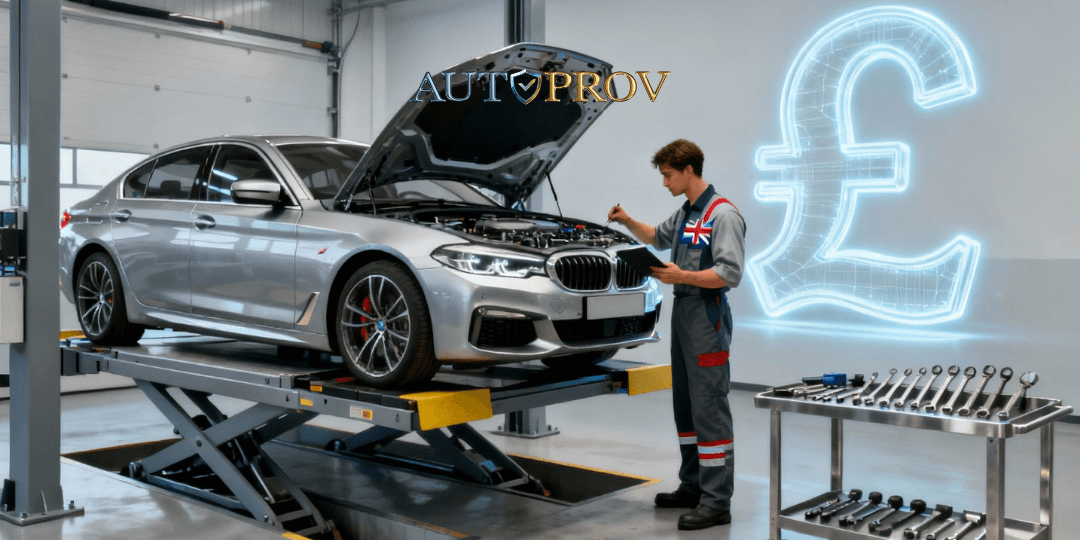
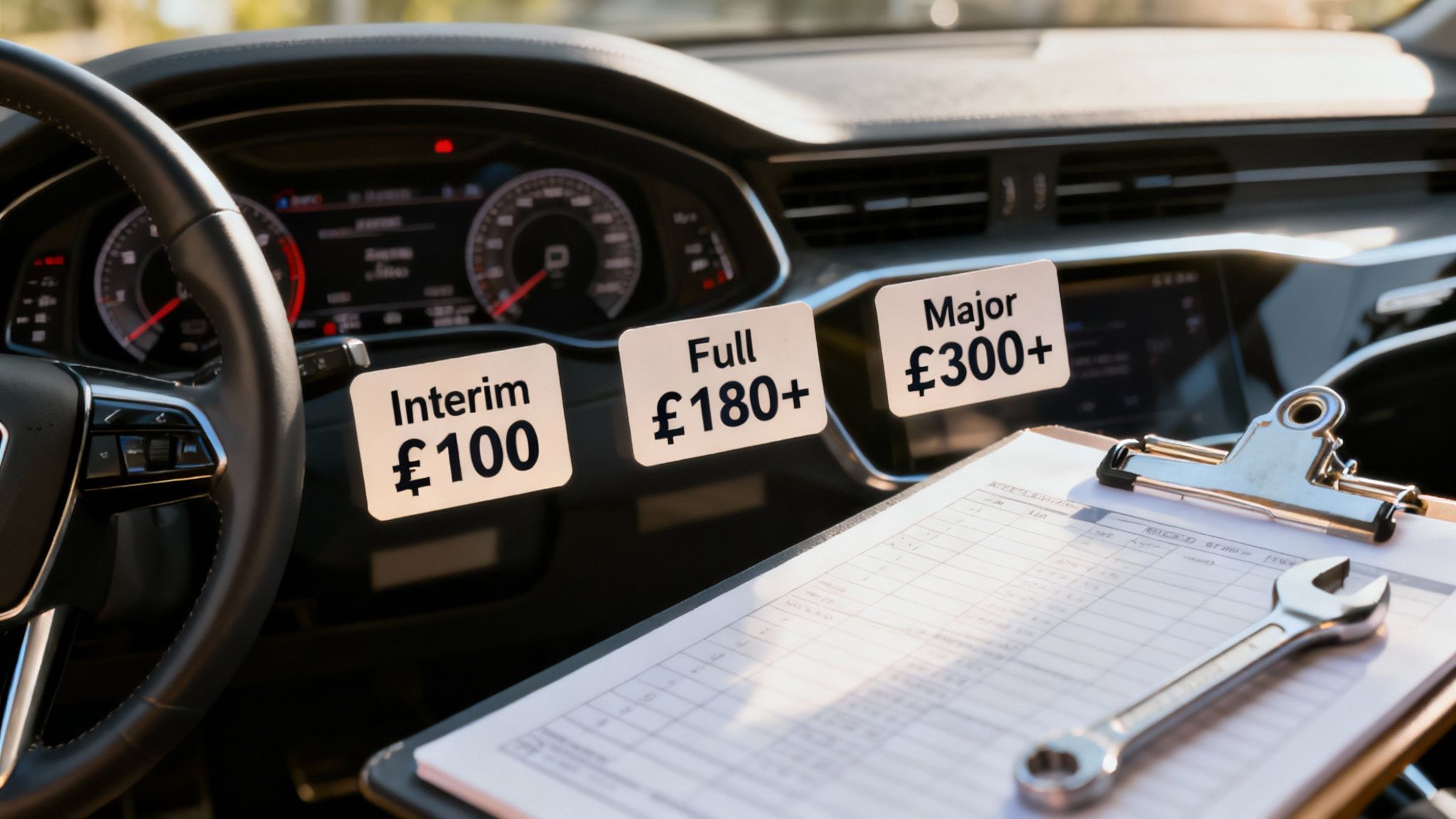
Trying to pin down exactly "how much is a car service?" can feel a bit like asking "how long is a piece of string?". Prices vary quite a bit, but to give you a ballpark figure, an interim service will usually set you back around £100 to get started. A more thorough full service often begins at £180, while a major service for many cars can easily top £300.
Trying to pin down exactly "how much is a car service?" can feel a bit like asking "how long is a piece of string?". Prices vary quite a bit, but to give you a ballpark figure, an interim service will usually set you back around £100 to get started. A more thorough full service often begins at £180, while a major service for many cars can easily top £300.
Understanding the Real Cost of a Car Service
It’s easy to see servicing as just another bill to pay, but it’s far better to think of it as an investment in your car's future health and your own safety. Regular maintenance is all about preventative care. It’s the best way to catch small issues before they snowball into serious, wallet-draining problems. A relatively small outlay now can genuinely save you from a massive repair bill down the road.
This proactive approach is something every car owner should adopt. And it seems many are; the UK's automotive service market is a huge and growing industry, predicted to hit a market size of USD 34.8 billion in 2024. This really shows a growing focus from drivers on keeping their vehicles reliable and safe. You can explore more data on the UK automotive service market growth to see the trend for yourself.
At the end of the day, a scheduled service keeps your car running as efficiently as it should, helps protect its resale value, and, most importantly, ensures it’s safe for you and your family. It’s about peace of mind, knowing that crucial bits like your brakes and tyres are in good working order.
A full-service history is one of the most valuable assets when you decide to sell your car. It demonstrates diligent ownership and gives potential buyers confidence, often leading to a higher resale value and a quicker sale.
Of course, finding a trustworthy garage that offers a fair price is the key to it all. At AutoProv, we equip automotive professionals with the data-driven tools they need to deliver transparent, high-quality servicing, ensuring you get a fair price and reliable work every time.
Decoding Your Car Service Options
To get a handle on the question "how much is a car service?", you first need to understand what you’re actually paying for. Not all services are created equal, and picking the right one is the key to getting real value for your money.
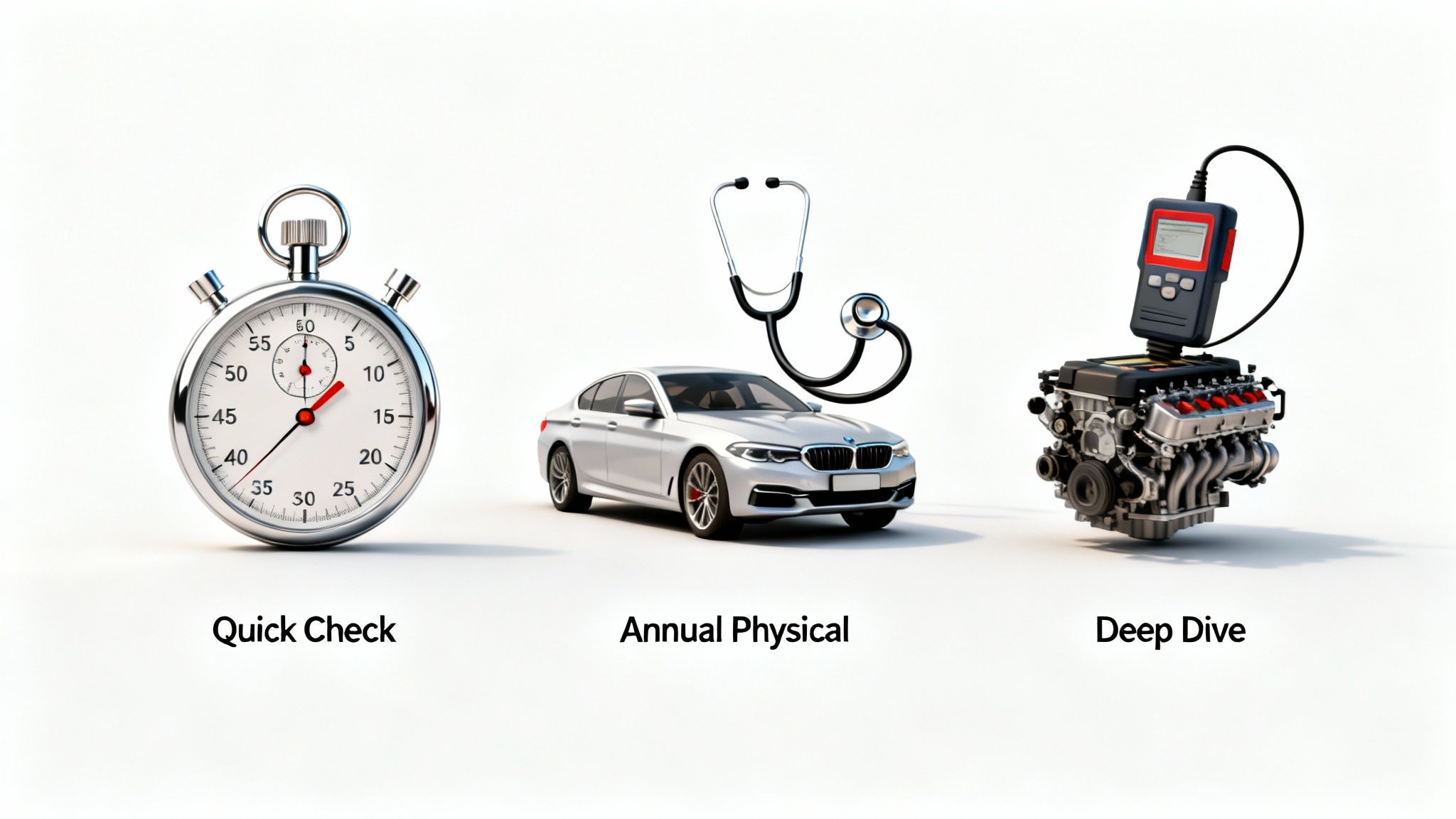
Think of them like different levels of a health check-up for your car. You’ll usually come across three main tiers: Interim, Full, and Major services. Each one is designed for a specific point in your car’s life and mileage, making sure it gets the right level of attention without you forking out for unnecessary work.
Your Quick Check-Up: The Interim Service
The Interim service is the most basic option on the menu. It's perfect for high-mileage drivers who clock up more than 12,000 miles a year and need a quick check-in between their annual services. It’s like a mini MOT to keep things ticking over.
Typically, you'll get one of these every six months or 6,000 miles. It focuses squarely on the essentials, which usually includes:
- An engine oil and filter change.
- A top-up of vital fluids like screenwash, brake fluid, and antifreeze.
- A check of key components like your lights, tyres, and windscreen wipers.
This is all about preventative care, keeping your car running smoothly and safely when it’s working hard.
The Annual Physical: A Full Service
A Full service is the comprehensive annual check-up that most car owners are familiar with. Garages recommend this every 12 months or 12,000 miles, whichever comes first. As you'd expect, it's a much more thorough inspection than an interim service.
A Full service is your car's essential yearly physical. It covers all the checks of an Interim service but goes much deeper, often including an air filter change and a detailed inspection of the brakes, engine, and suspension.
The Deep-Dive Diagnostic: A Major Service
Finally, we have the Major service. This is the most extensive check-up your car can get and is usually recommended every two years or 24,000 miles. It includes everything from a Full service but adds in replacements for parts that have a longer lifespan.
This often means changing the spark plugs, the fuel filter, and the brake fluid, ensuring your car stays in peak condition for the long haul.
Choosing the right service tier is crucial. A good garage can always advise you, but understanding these differences yourself helps you make a smarter decision based on your car’s service history and how you drive it. By providing workshops with precise vehicle data, AutoProv helps them recommend the correct service level for your car, ensuring you get exactly what your vehicle needs without unnecessary expense.
Key Factors That Drive Your Service Bill

Ever wondered why you got one quote for a service, while your neighbour paid something completely different for theirs last month? It’s a common situation, and it boils down to a simple truth: a car service isn't a one-size-fits-all deal. The final number on your bill is shaped by a handful of key variables that are specific to your car, its history, and even where you live.
Getting to grips with these factors is the first step to feeling confident about the price you're paying. It helps you see exactly where your money is going and why costs can swing so much from one vehicle to the next. Let's break down what really influences the price of a car service.
Your Car's Make, Model, and Age
The badge on the front of your car plays a massive role in what you’ll pay. Premium brands like a BMW or Audi often demand specialist parts and very specific grades of synthetic oil. These are naturally more expensive than the off-the-shelf components for a more common Ford or Vauxhall. It’s not a question of quality, but of specialised engineering and different supply chains.
The age and mileage of your vehicle are just as important. An older, high-mileage car might need more intensive checks and is more likely to have parts that are nearing the end of their life. A nearly-new car, on the other hand, will probably just need the basics covered.
Think of it this way: a high-performance sports car and a small city runaround have very different needs. One requires highly specialised care and components, while the other is built for efficiency and affordability, and their service bills will reflect that.
Engine Size and Fuel Type
The heart of your car—the engine—is another big cost driver. It’s simple maths, really. A hefty V6 diesel engine holds a lot more oil than a little 1.0-litre petrol one. That means an oil change alone will cost more, purely down to the volume of fluid needed.
On top of that, some parts are just more complex depending on the fuel type. Diesel engines, for instance, use specific fuel filters that can be a fair bit pricier to replace than their petrol equivalents.
Garage and Location
Finally, where you choose to get your car serviced makes a huge difference to the bottom line. This comes down to two main things:
- Type of Garage: A main dealer will almost always charge a premium for their services. You're paying for their brand-specific training, facilities, and overheads. An independent garage, however, can often offer much more competitive pricing. At AutoProv, we help connect automotive professionals with the data they need to service all types of vehicles with confidence.
- Geographical Location: Labour rates aren't the same everywhere. A garage in central London has far higher running costs than one in a rural town up north, and their hourly rates will reflect that. It’s a simple case of local economics.
By keeping these key factors in mind, you'll be able to make much better sense of any quote you receive and understand exactly what’s contributing to the final cost.
Main Dealer vs Independent Garage
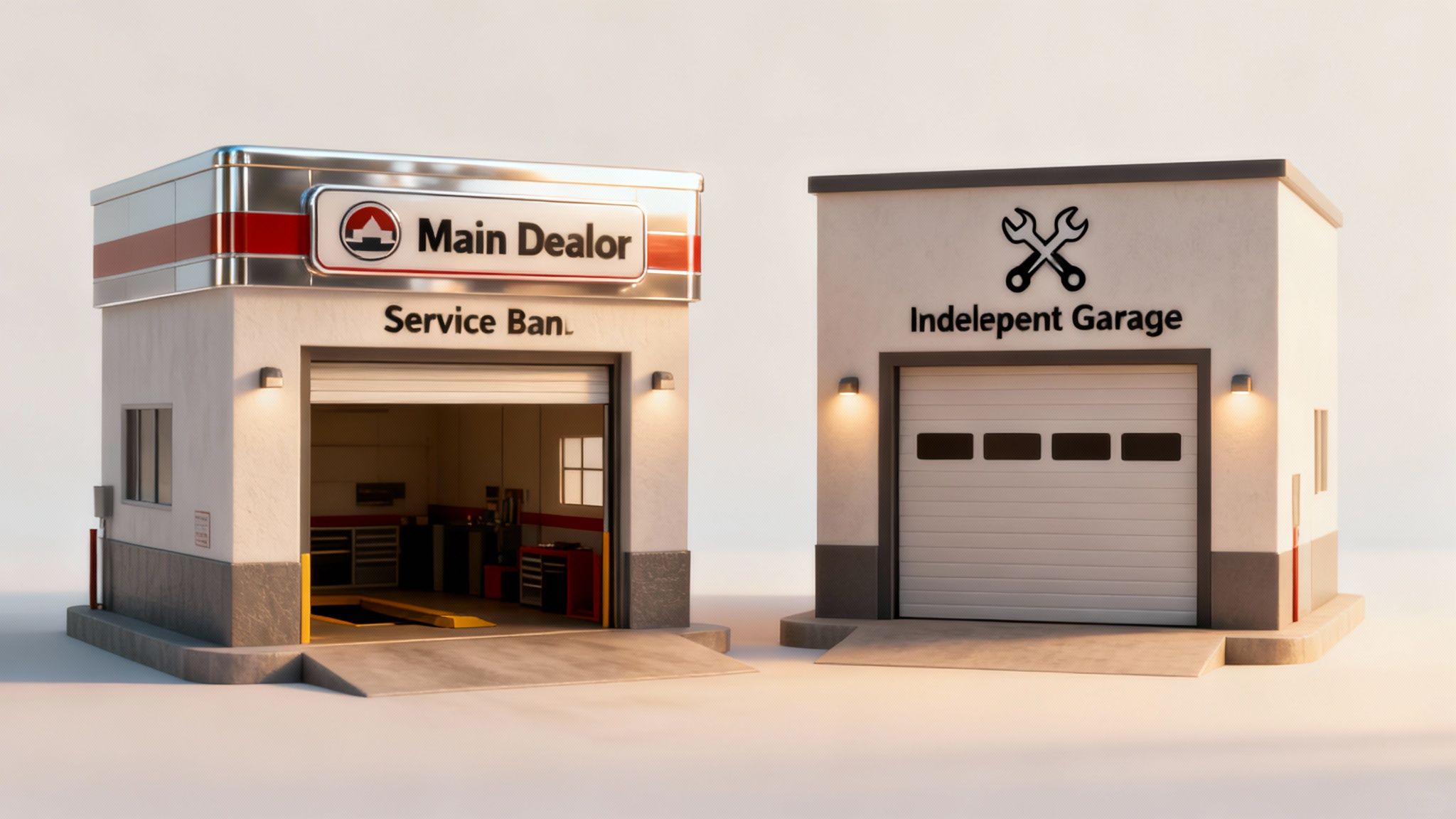
It’s the classic dilemma every car owner faces: stick with the main dealer or switch to a local independent garage? This decision goes way beyond just the final bill. It’s a balancing act between cost, expertise, and the kind of service you prefer, and it can seriously impact how much your car service costs over time.
Main dealers offer the comfort of brand-specific expertise. Their technicians live and breathe your car’s make and model, using official diagnostic tools and genuine parts straight from the manufacturer. This definitely brings peace of mind, but that specialised service often comes with a premium price tag reflecting higher labour rates and bigger overheads.
On the other side of the coin, independent garages can offer significant savings and a more personal, local feel. They’re often more flexible and can provide much better value on both labour and parts. The nagging worry for many, though, is whether going independent will mess with the car’s warranty.
Your Warranty Is Protected
Thankfully, UK law is firmly on your side here. The 'Block Exemption' regulations give you the freedom to service your car at any independent garage you choose without invalidating the manufacturer's warranty.
The crucial condition is this: the garage must use manufacturer-approved parts (often called Original Equipment or 'OE' equivalent parts) and stick to the manufacturer’s official service schedule. This ensures the job is done to the exact standard required.
This simple rule empowers you to shop around for the best deal without compromising on quality. You can get dealer-level work done without paying those hefty dealer-level prices. The real challenge, of course, is finding a trusted independent that you know meets these high standards.
This is exactly where AutoProv steps in to support the motor trade. We provide automotive professionals with the incredibly detailed vehicle data they need to service any car correctly, right down to the manufacturer’s specifications. This helps ensure independent garages can offer a service you can truly rely on, giving you confidence and great value all in one place.
How to Get a Trustworthy Service Quote
Right, so you've got a handle on the moving parts that make up a car service bill. But knowing the theory is one thing—getting a quote you can actually trust is a whole different ball game. This is where you take back control, swapping that feeling of uncertainty for a bit of well-earned confidence.
Forget the old-school method of ringing around a dozen garages and repeating your car's life story each time. There's a much smarter way to get clear, itemised quotes from reputable local workshops. The secret is knowing what a good quote actually looks like. Spoiler: it’s never just a single, lonely number.
What a Good Quote Should Look Like
Any trustworthy quote will break down the two main costs, plain and simple:
- Parts: This bit should list every single component needed for the job, whether it's an oil filter, air filter, or new spark plugs. You should see exactly what you’re paying for.
- Labour: This is the cost of the mechanic’s time, almost always charged at an hourly rate. Honestly, this is where you'll see the biggest price differences between garages.
Seeing this breakdown is non-negotiable. It lets you sanity-check the price of the parts and, more importantly, understand what you’re paying for the mechanic's expertise.
A detailed, itemised quote isn't just a piece of paper; it's a sign that a garage is professional and transparent. It shows they're confident in their pricing and have nothing to hide, which lets you make a proper decision about your car's care.
Before you give anyone the green light, don't be shy about asking a few questions. Make sure the price includes VAT, ask what sort of warranty they offer on parts and labour, and check if they'll be using manufacturer-approved parts (this is crucial for protecting your vehicle’s warranty).
At AutoProv, we equip automotive pros with the hyper-specific data they need to build these kinds of solid, accurate quotes. So when you get a price from a garage using our data, you know it’s based on your vehicle's exact needs—no guesswork, no crossed fingers, just trust.
Got Questions About Car Servicing? Let's Get Them Answered
To wrap things up, let’s tackle a few of the questions we hear all the time from car owners. Getting clear, straightforward answers is the key to making confident decisions about keeping your vehicle in top nick. Here are the queries that pop up again and again.
How Often Should I Service My Car?
This really depends on your car's make and model, plus how you drive it. But a solid rule of thumb is to book a full service every 12 months or 12,000 miles—whichever comes first.
If you cover a lot of ground, an interim service every six months is a smart move. It helps keep everything ticking over nicely between the big annual checks. Your best bet is always to have a look at your manufacturer's handbook for their specific advice.
Is a Car Service the Same as an MOT?
This is a really common mix-up, but the answer is a definite no. They're two completely different things, and both are vital for your car.
- An MOT is the government-mandated annual test. It’s a pass-or-fail inspection to make sure your vehicle meets the minimum legal safety and environmental standards to be on the road.
- A car service, on the other hand, is all about proactive maintenance. It’s a deep dive into your car's health, where mechanics check, top up, and replace worn parts like filters and fluids to stop problems from developing down the line.
Here’s an easy way to think about it: an MOT is a test to prove your car is roadworthy right now, while a service is a proper check-up to keep it reliable for the year ahead.
Can I Supply My Own Parts?
It might seem like a clever way to shave a few quid off the bill, but most garages prefer to source the parts themselves, and for good reason.
When a workshop supplies the parts, they come with the supplier's warranty. This means if a part fails prematurely, the garage is on the hook for replacing it, and that includes the labour. If you bring your own part and it turns out to be faulty, you'll likely have to pay for the labour all over again to have it removed and a new one fitted.
Using garage-supplied parts provides a crucial layer of protection for both you and the mechanic. It ensures accountability for the entire job, from the component itself to the labour involved in fitting it, giving you complete peace of mind.
Frequently Asked Questions
AI-Generated Content Notice
This article was created with the assistance of artificial intelligence technology. While we strive for accuracy, the information provided should be considered for general informational purposes only and should not be relied upon as professional automotive, legal, or financial advice. We recommend verifying any information with qualified professionals or official sources before making important decisions. AutoProv accepts no liability for any consequences resulting from the use of this information.
From our AI insights
- The Impact of EV Service Records on Resale Value
Discover how electric vehicle service records affect resale value and buyer confidence in the UK market.
- The Importance of Tyre Verification for UK Motor Traders
Discover why verifying tyre specs is crucial for UK traders to ensure safety and compliance.
- Decoding CO2 Emissions: A Trader's Guide
Learn how traders can verify CO2 data using factory build sheets to prevent disputes.
Related Articles

The Importance of Car Maintenance and Provenance Checks
Discover why regular car maintenance and proper provenance checks are essential for vehicle quality and longevity.

Essential Car Maintenance Tips for UK Drivers
Discover vital car maintenance tips to keep your vehicle roadworthy and compliant in the UK.
How Long Does a Car Battery Last? A UK Driver's Guide
If you’ve ever wondered how long a car battery lasts in the UK, you’re usually looking at around three to five years. Think of that span more like a “best before” date rather than a hard cut-off.
Published by AutoProv
Your trusted source for vehicle intelligence