If you’ve ever wondered how long a car battery lasts in the UK, you’re usually looking at around three to five years. Think of that span more like a “best before” date rather than a hard cut-off.
If you’ve ever wondered how long a car battery lasts in the UK, you’re usually looking at around three to five years. Think of that span more like a “best before” date rather than a hard cut-off.
Typical Car Battery Lifespan In The UK
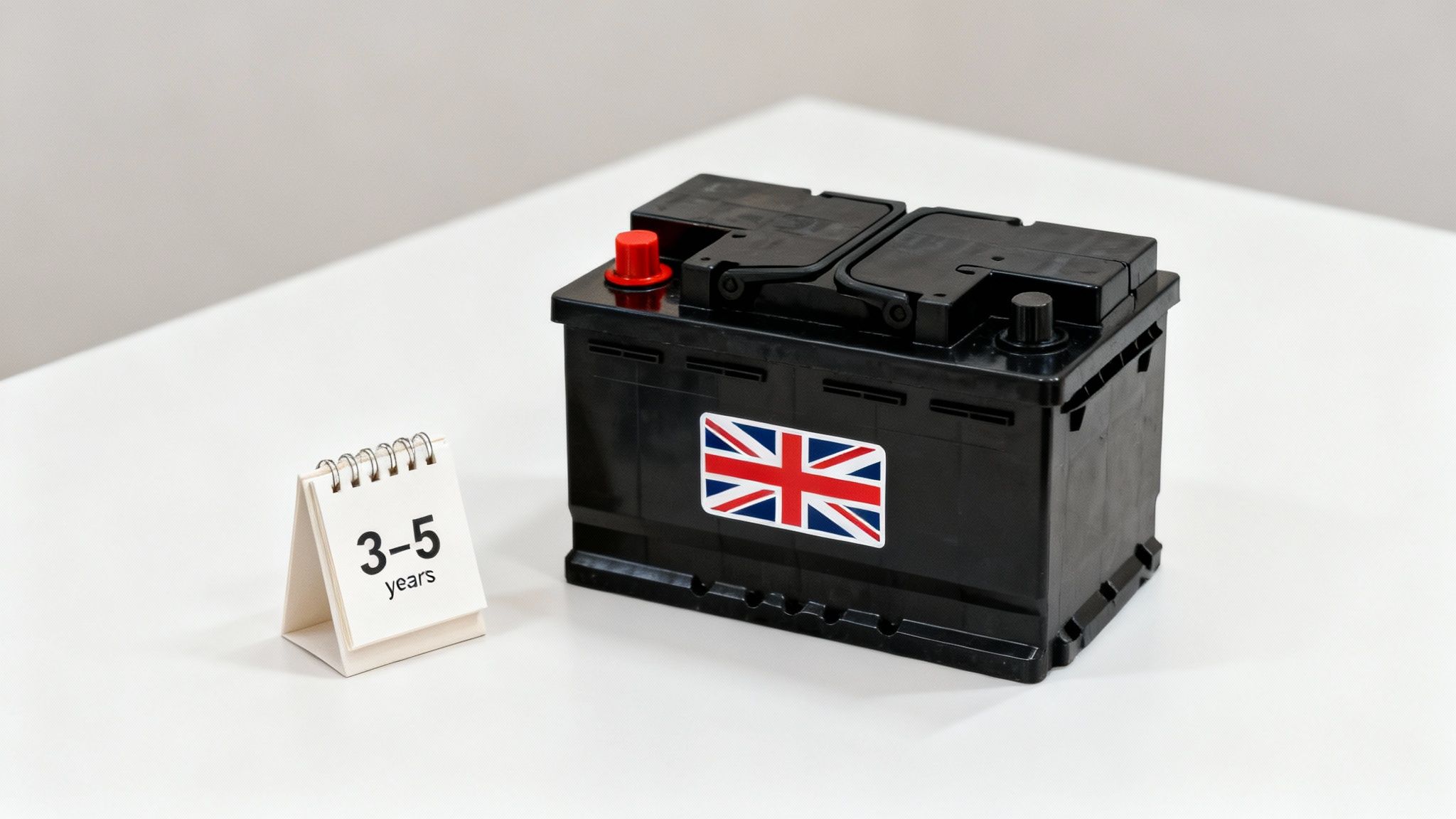
Imagine your battery as a marathon runner—not someone sprinting out of the gate. Over time, it naturally loses some pep and needs a bit of attention to keep pace.
Modern cars equipped with infotainment systems, dash cams and heated seats place extra demand on your battery. Left unchecked, that steady drain can shave months off its life. A battery's longevity is influenced by your driving style, especially frequent short trips that prevent a full charge, as well as weather extremes like frost and high temperatures that take their toll. The electrical load from accessories and onboard electronics adds strain, while your maintenance habits, including regular voltage checks and terminal cleaning, play a crucial role.
Understanding these factors helps you plan ahead and sidestep nasty surprises.
Regular battery health checks reveal issues long before failure.
The Role Of Proactive Monitoring
Keeping tabs on your battery isn’t guesswork. A vehicle health check from a service provider like AutoProv can monitor voltage history and performance trends, so you see exactly how your battery is behaving. Such services can provide instant insights from over forty data points, give alerts for hidden electrical drains, and deliver clear reports quickly.
A bit of corrosion on the terminals? A quick clean today can prevent a flat battery tomorrow. Secure mounting and tidy connections also cut down on vibrations that wear components out.
The Benefits Of Early Detection
Catching a weak battery before it quits means fewer roadside dramas and postponed replacements. It saves time and money on emergency call-outs, extends the overall battery lifespan, and improves your vehicle's reliability.
A watched battery never fails at the worst moment.
A professional vehicle diagnostic service slots right into your garage workflow, making routine battery health checks part of your standard service. With a grasp of what shortens battery life—combined with timely diagnostics—you’ll enjoy confidence every time you turn the key. Explore full vehicle health insights today to extend your battery’s service life effortlessly.
Key Factors That Affect Your Car Battery's Health
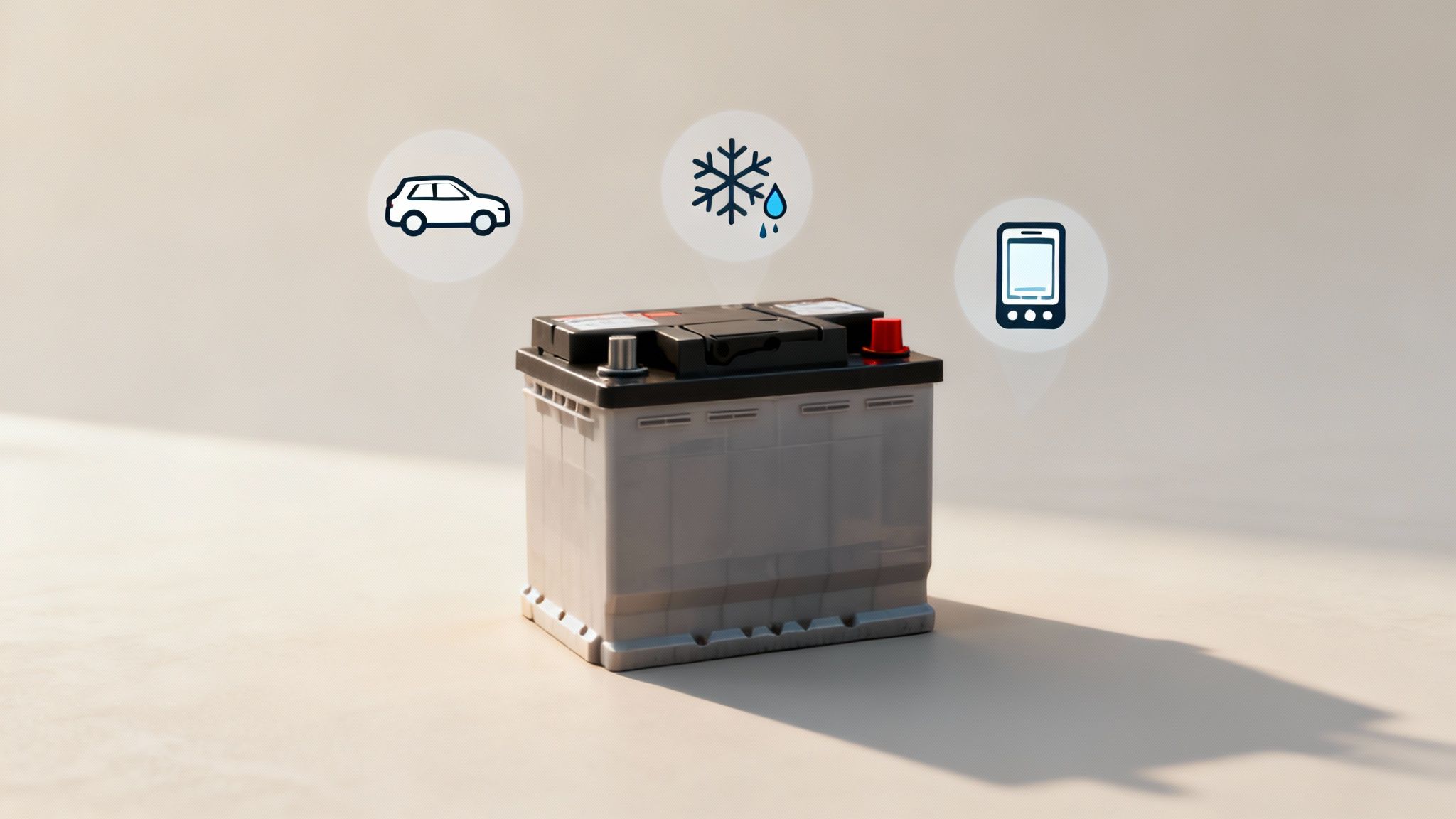
Think of your car battery like a marathon runner. Its performance depends on its training routine (your driving habits), the race conditions (the lovely UK weather), and how much kit it's carrying (the car's electrical load). When you see it this way, you start to realise that a battery’s lifespan is about much more than just its age.
Short, infrequent trips are the enemy of a healthy battery. They're like asking our marathon runner to do endless sprints without a proper recovery. The alternator never gets enough time to fully recharge the battery, leaving it constantly undercharged and stressed, which slowly chips away at its overall life.
Your Driving Habits Make a Huge Difference
If your daily drive is mostly stop-start city traffic, you're putting a lot of strain on the battery. Each time you restart the engine, you’re demanding a big burst of energy. Frequent short journeys often lead to a battery that’s never fully charged, whereas gentle motorway driving gives the alternator a chance to do its job properly. Ideally, you want a good run of 30 minutes or more to let the alternator fully top up the charge.
The Great British Weather Plays Its Part
We all know the UK climate can be a challenge, and it's no different for your car's battery. Cold, damp winters are particularly tough, slowing down the chemical reactions inside and reducing the power it can deliver. A sharp frost can slash a battery’s peak output by as much as 20%. Summer heatwaves aren't much better; temperatures above 30°C can speed up internal corrosion. Even high humidity can cause problems, encouraging corrosion on the battery terminals. All this means that where you live in the UK can genuinely influence how long your battery lasts.
Then there's the ever-growing list of electrical gadgets in modern cars. Infotainment systems, heated seats, and advanced safety features all need power. Every single one adds to the battery's workload, like making our runner carry an extra backpack.
For a clearer picture of how a car's been treated, our guide on how to check service history in the UK can reveal a lot about past maintenance and its effect on components like the battery.
“Hidden drains and charging faults are silent killers of battery health”
AutoProv expert insight
This is where technology can give you an edge. A diagnostic tool like the one offered by AutoProv can spot these "parasitic loads" and irregular charging rates before they become a real problem. These reports can show you voltage trends, highlight potential drains, and check the status of key components, helping you to identify hidden electrical drains, monitor the efficiency of your charging system, and receive proactive alerts before a problem leaves you stranded.
This simple, step-by-step approach helps you get to the root cause of potential issues, preventing those unexpected morning failures.
With a little understanding and some routine checks, you can seriously improve your car's reliability. By being mindful of your driving style, the climate, and the car's electrical demands, it's entirely possible to push your battery’s life well beyond the typical three-to-five-year window.
A Little Maintenance Goes a Long Way
You don't need to be a mechanic to make a difference. Simple jobs like keeping the terminals clean and ensuring the battery is securely mounted can pay huge dividends. You can clean the terminals with a simple baking soda and water solution to stop corrosion in its tracks. It's also wise to check that the battery bracket is tight once a month to reduce damaging vibrations. Finally, try to plan at least one solid, 30-minute drive each week to keep the battery in good shape.
Combine these simple habits with data from a professional vehicle health check, and you'll give your battery the best possible defence against wear and tear.
Recognising the Early Warning Signs of a Failing Battery
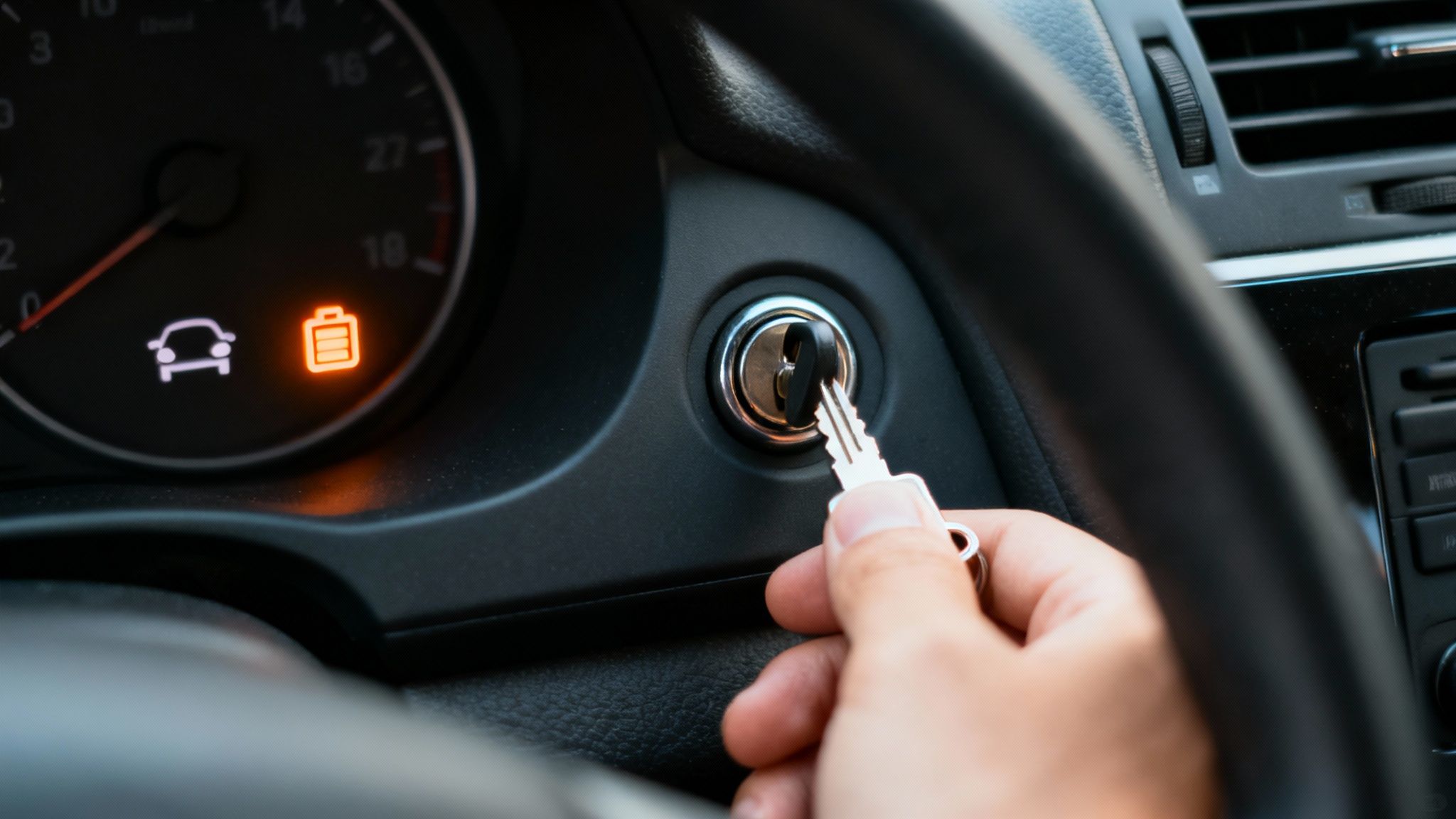
A car battery rarely just gives up the ghost without any warning. The signs are often there, but they can be subtle at first. Catching the problem before it leaves you stranded is the name of the game, and the most common clue is a slow, laboured engine crank when you turn the key.
Think of it like someone struggling to get out of bed on a cold morning—that's your engine telling you it's not getting the jolt of power it needs. This sluggish start is the classic symptom that your battery is losing its ability to hold a proper charge. If you pay attention, other little clues might start to pop up, each giving you a hint about your car's electrical health.
Common Symptoms of a Weakening Battery
You don't need to be a mechanic to feel that something's not quite right. Spotting these small changes can give you a much better idea of how long your battery might last and when it's time to get it looked at.
One tell-tale sign is dimming headlights, especially when the engine isn't running, which shows the battery is struggling to provide consistent power. You might also hear a rapid clicking noise when you turn the ignition; this is the starter trying to do its job but not having enough voltage from the battery to fully engage. Of course, the dreaded battery warning light on the dash is a clear signal. While it can sometimes point to an alternator issue, it’s your car’s way of saying "get the electrical system checked, now!"
A professional diagnostic check can confirm if the battery is the true culprit or if the fault lies with a related component, like the alternator. This ensures you fix the right problem the first time, saving both time and money.
At AutoProv, our diagnostic reports can analyse voltage trends and flag potential electrical issues before they escalate, giving you a clear, data-driven picture of your vehicle's health. Understanding these early warnings is a crucial part of any thorough vehicle check, much like what’s detailed in your ultimate used car inspection checklist.
Being able to read these signs means you can be proactive. Instead of waiting for the battery to fail completely, you can get it sorted on your own terms and avoid that sinking feeling of being stuck with a car that won't start.
How to Extend Your Car Battery Life
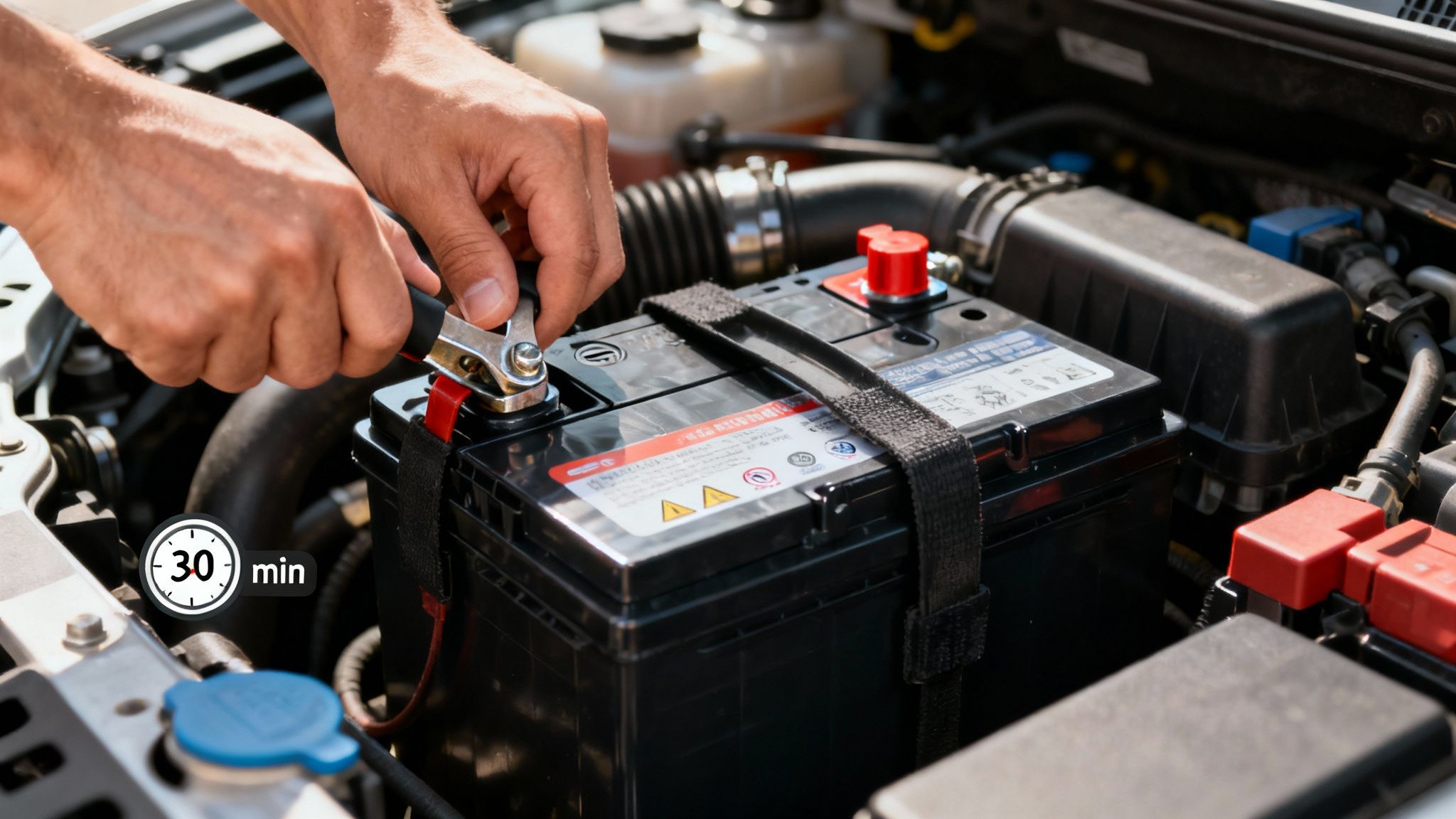
You’ve got more say in how long your car battery lasts than you might think. By picking up a few simple, regular habits, you can make a real difference, potentially adding years to its lifespan and steering clear of that dreaded moment when the car just won't start.
Think of it as a small weekly workout for your car's electrical system. A little effort now can prevent much bigger problems down the road, keeping your battery healthy and dependable for as long as possible.
Practical Maintenance Tips
Putting these tips into practice doesn’t require you to be a master mechanic, just to pay a bit of attention. They're some of the most effective ways to slow down the battery's natural ageing process and keep it in top shape.
A key task is to keep the terminals clean. If you notice a fuzzy, white or greenish powder on your battery terminals, that’s corrosion. It acts like a barrier, stopping electricity from flowing properly, so cleaning it off with a wire brush and a simple mix of baking soda and water will guarantee a solid connection. You should also secure the battery. A battery that isn't clamped down properly can vibrate as you drive, and this constant shaking can cause damage to its internal components and shorten its life. Just double-check that the clamps are tight and the battery doesn't wiggle in its tray. Finally, try to minimise power drain when the engine’s off by not going overboard with the radio, interior lights, or air con. These all draw power straight from the battery, and without the engine running, the alternator isn't there to top it up.
Taking your car for a regular spin of at least 30 minutes is one of the best things you can do. It gives the alternator enough time to work its magic and fully recharge the battery, which is crucial for its longevity.
These quick visual checks and mindful habits are the bedrock of good battery care. You can find more advice in our guide to essential car maintenance tips for UK drivers.
Here at AutoProv, our vehicle health reports can also act as a handy reminder for these checks. By tracking your battery's voltage over time, the reports give you a clear, data-driven picture of its overall condition, putting you in a position to act before a problem leaves you stranded.
Where Modern Car Batteries Came From
You might have noticed that battery technology is moving at a breakneck pace, and we have the electric vehicle (EV) revolution to thank for much of it. These breakthroughs are starting to trickle down and reshape what we can expect from the humble battery in any car, petrol or electric.
Just ten years ago, people were understandably worried about how long an EV battery would last. Today, many of them are built to outlive the cars they're in, and that same thinking is benefiting the traditional 12-volt battery. All batteries have a shelf life, of course, but the goalposts are constantly moving.
EV Tech in Your Everyday Car
The huge amounts of research and development ploughed into making EV batteries last longer is having a brilliant knock-on effect. The standard 12-volt batteries in modern cars are now far more robust and better equipped to handle the heavy electrical loads we throw at them – from power-hungry infotainment screens to sophisticated driver-assist features.
One of the biggest lessons from the EV world is a better understanding of how batteries age. Fresh data shows that EV batteries in the UK now degrade at an average rate of just 1.8% per year, a solid improvement from 2.3% five years ago. This slow, predictable decline is exactly what happens in a conventional car battery, proving that its lifespan is a marathon, not a sprint. You can dive deeper into these EV battery findings with Geotab's detailed analysis.
This constant improvement tells us one thing: both EV and traditional car batteries are getting tougher. The game is no longer about just replacing a dead battery, but about understanding and managing its long-term health.
This is precisely why a modern approach to vehicle diagnostics is so critical. A service like AutoProv.ai is built to understand the subtle differences between a simple 12-volt system and the complex electrical workings of the latest hybrids and EVs. It gives you the full story on your car's electrical health.
Got Questions About Your Car Battery?
We’ve covered the typical lifespan of a car battery and the things that can shorten it. But you probably still have a few questions rattling around. Let's tackle some of the most common ones we hear from UK drivers, giving you clear, no-nonsense answers.
Does a Car Battery Die Suddenly?
It often feels like it, but a battery rarely just gives up without warning. More often than not, it's been sending you subtle hints for a while.
That classic slow, groaning engine crank on a cold morning? That's your battery's way of telling you it's struggling. You might also notice your headlights seem a bit dim when you start the car, or hear a clicking sound instead of the engine turning over. These are the tell-tale signs.
Think of it as your car whispering for help before it starts shouting. A complete, out-of-the-blue failure is much less common than a gradual fade. This is why keeping an eye on your vehicle's health is so important. Using a service like AutoProv.ai for regular health checks can spot a battery's declining performance long before it leaves you stranded, giving you plenty of time to sort it.
Can I Replace My Car Battery Myself?
On an older, simpler car from a decade or two ago? Absolutely, it can be a straightforward DIY job. But for most modern cars, packed with complex electronics and stop-start systems, it’s a job best left to a professional.
Getting it wrong can open a real can of worms. A simple mistake could reset your car's onboard computers, trigger a flurry of electrical fault warnings, or even damage sensitive components. It's also vital that the new battery is correctly "registered" with the car's management system, which tells the vehicle how to charge it properly for a long and healthy life.
Is a More Expensive Battery Always Better?
Not necessarily. The "best" battery isn't always the one with the biggest price tag; it's the one that's right for your car. You need to match the manufacturer's specifications, paying close attention to two key figures: the Cold Cranking Amps (CCA) and the physical dimensions.
While premium brands often come with longer warranties and might offer a slight edge in extreme weather, a good-quality, mid-range battery that meets your car's specific needs is more than adequate for most UK drivers. The key is getting the right fit, not just paying the most.
Frequently Asked Questions
AI-Generated Content Notice
This article was created with the assistance of artificial intelligence technology. While we strive for accuracy, the information provided should be considered for general informational purposes only and should not be relied upon as professional automotive, legal, or financial advice. We recommend verifying any information with qualified professionals or official sources before making important decisions. AutoProv accepts no liability for any consequences resulting from the use of this information.
From our AI insights
- The Impact of EV Service Records on Resale Value
Discover how electric vehicle service records affect resale value and buyer confidence in the UK market.
- The Importance of Tyre Verification for UK Motor Traders
Discover why verifying tyre specs is crucial for UK traders to ensure safety and compliance.
- Decoding CO2 Emissions: A Trader's Guide
Learn how traders can verify CO2 data using factory build sheets to prevent disputes.
Related Articles

The Importance of Car Maintenance and Provenance Checks
Discover why regular car maintenance and proper provenance checks are essential for vehicle quality and longevity.

Essential Car Maintenance Tips for UK Drivers
Discover vital car maintenance tips to keep your vehicle roadworthy and compliant in the UK.
How Much Is a Car Service? Complete UK Price Guide
Trying to pin down exactly "how much is a car service?" can feel a bit like asking "how long is a piece of string?". Prices vary quite a bit, but to give you a ballpark figure, an interim service will usually set you back around £100 to get started. A more thorough full service often begins at £180, while a major service for many cars can easily top £300.
Published by AutoProv
Your trusted source for vehicle intelligence