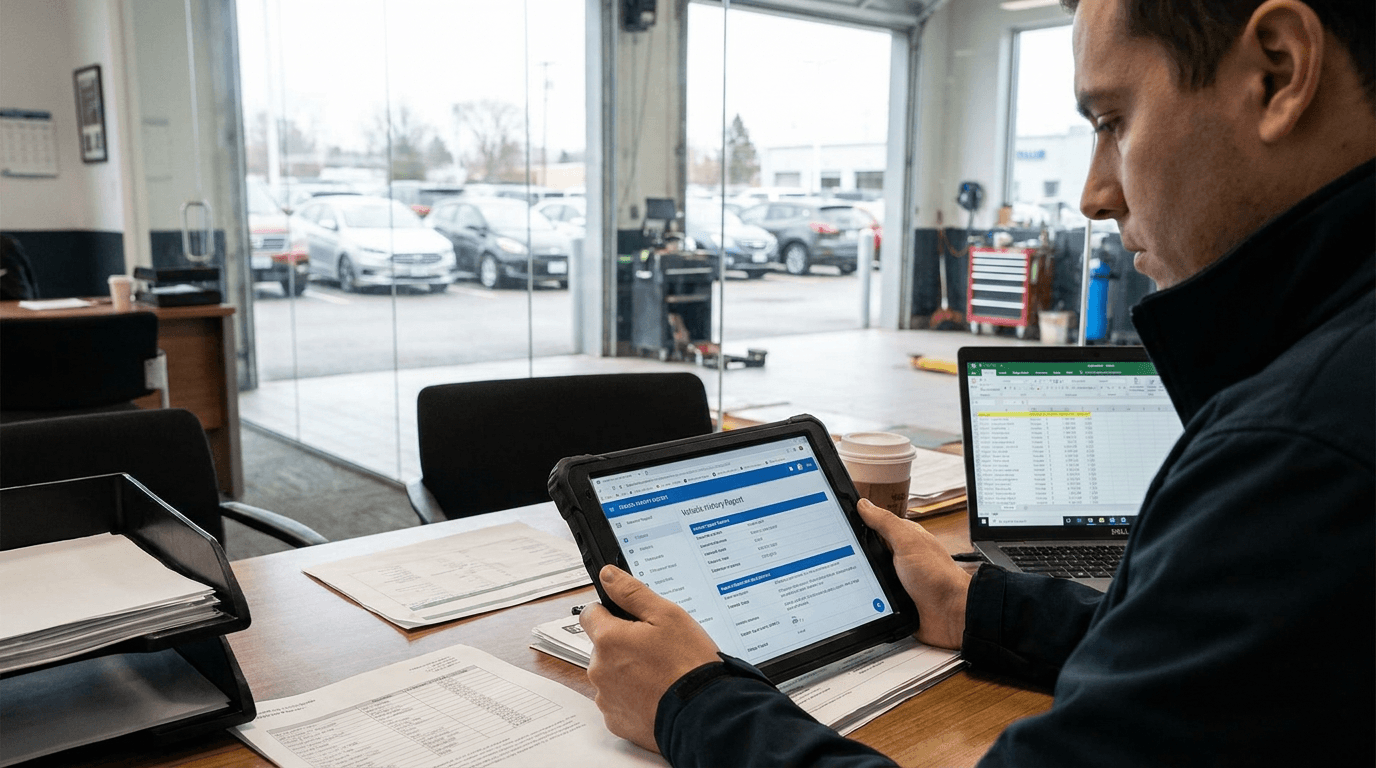
Professional vehicle checks need more than basic provenance data. Discover the 10 essential UK data sources motor traders require for complete due diligence and risk protection.
By CiteFlow
What Data Sources Should a Professional Vehicle Check Include?
A comprehensive trade vehicle check must aggregate data from at least ten distinct UK sources to provide adequate due diligence protection. These include DVLA keeper records, DVSA MOT history, finance agreement databases, insurance write-off registers, stolen vehicle records, mileage verification systems, manufacturer service history databases, salvage auction records, OEM build specification data, and market valuation intelligence. Single-source checks leave critical gaps that expose motor traders to hidden finance, undisclosed damage, clocked mileage, and mis-described specifications. Each data source reveals different aspects of a vehicle's history, and only their combination delivers the complete provenance picture professional traders require before committing capital to stock.
The motor trade operates on tight margins where a single wrong purchase can eliminate the profit from ten good deals. Consumer-grade checks designed for private buyers rarely provide the depth or breadth of data professional traders need. Understanding which data sources matter, what each reveals, and how they interconnect transforms vehicle checks from a compliance tick-box into genuine commercial intelligence.
DVLA Keeper and Registration Data
DVLA records form the foundational layer of any vehicle check, providing the official registration history, current keeper status, taxation records, and V5C logbook details. This data confirms the vehicle's legal identity and helps identify discrepancies between what the seller claims and what government records show.
Keeper change frequency matters significantly. A vehicle with six keepers in three years raises different questions than one with two keepers over ten years. Registration changes can indicate geographic movement patterns, while V5C issue dates help verify whether the seller actually holds the current logbook or is trading on an out-of-date document.
DVLA data also reveals export markers, scrapped status, and SORN declarations that might not be immediately obvious during a physical inspection. A vehicle showing as exported then re-imported warrants additional scrutiny around its condition and history during the period abroad.
DVSA MOT History and Mileage Records
MOT history from the DVSA database provides an independent mileage timeline and mechanical condition snapshot at each annual test. This data source is particularly valuable because it creates a government-verified mileage record that sellers cannot easily manipulate.
Advisory notices in MOT records often telegraph future problems. Corroded brake pipes noted as an advisory two years ago might now be a safety-critical failure waiting to happen. Patterns of advisories across multiple tests reveal whether a vehicle has been properly maintained or neglected between MOT appointments.
Mileage anomalies in MOT records are among the most reliable indicators of clocking. A mileage reading that drops between tests, or shows suspiciously low annual increases after years of high mileage, demands explanation. While digital service history can help spot clocked mileage, MOT records provide the baseline verification that makes those patterns visible.
Finance Agreement Databases
Outstanding finance checks protect traders from one of the most expensive mistakes in the used car business: buying a vehicle that legally belongs to a finance company. Finance databases aggregate records from major lenders, showing active hire purchase agreements, PCP contracts, and lease arrangements.
The risk extends beyond simply losing the vehicle. When a finance company exercises its right to recover a vehicle sold without settlement, the dealer faces the loss of both the vehicle and the purchase price paid. Customer disputes, reputational damage, and potential legal complications follow.
Understanding vehicle finance checks and outstanding finance risks becomes critical when operating at volume. A £15,000 stock purchase with undisclosed finance represents a total loss, not just a margin squeeze. Finance database coverage must be comprehensive, drawing from multiple lender networks rather than a single source.
Insurance Write-Off and Salvage Registers
Insurance databases record vehicles written off following accidents, theft recovery, flood damage, or fire. Category markings (A, B, S, N, and the older C and D classifications) indicate damage severity and whether the vehicle should have returned to the road.
Category B vehicles should never reappear in the trade, as they were deemed too damaged for any components to be salvaged. Their presence in the market indicates serious fraud. Category S (structural damage) and N (non-structural) vehicles can legally be repaired and resold, but their history must be disclosed to buyers under the Consumer Rights Act 2015.
Salvage auction records complement insurance data by showing when and where damaged vehicles were sold for repair. The gap between salvage purchase and reappearance in the trade indicates repair timeframes, while the salvage price versus current asking price reveals repair cost assumptions that may or may not reflect quality work.
Stolen Vehicle Databases
Stolen vehicle checks verify against police databases and industry registers that track vehicles reported stolen but not yet recovered. While less common than finance or write-off issues, purchasing a stolen vehicle creates severe legal and financial consequences.
Police can seize stolen vehicles regardless of the dealer's good faith purchase. The original owner retains legal title, and the dealer loses both the vehicle and the purchase price. Criminal investigation involvement, even as a victim, damages business reputation and consumes management time.
Stolen vehicle databases require regular updating as reports come in and vehicles are recovered. A check conducted weeks before purchase may not reflect a theft reported yesterday, which is why comprehensive trade provenance checks should be performed as close to purchase as practical.
Manufacturer Digital Service History Databases
Manufacturer databases provide official service history records directly from franchise dealer networks, covering 43 to 44 different marques. This data includes service dates, mileage at service, work performed, and parts fitted, all verified by the manufacturer's own systems.
Digital service history eliminates reliance on stamped logbooks, which are easily lost, forged, or selectively presented. A seller might show stamps for recent services while omitting a book that reveals a missed major service or undisclosed high mileage.
Manufacturer data also reveals recall compliance, warranty claims, and technical campaigns that indicate how well a vehicle has been maintained within the official network. Gaps in franchise service history might indicate independent garage use, which is not necessarily problematic, but the absence of any service records at all raises serious questions about maintenance standards.
OEM Build Specification and Options Data
Factory build sheets from OEM databases detail exactly what equipment, options, and specifications were fitted to a vehicle when it left the production line. This data prevents mis-described vehicles from entering stock and helps identify high-value options that sellers may not recognise.
A vehicle advertised as having a premium sound system, panoramic roof, or advanced driver assistance package should show those options in the factory build data. Discrepancies indicate either seller error or deliberate misrepresentation. Either way, the dealer needs to know before committing to purchase.
Identifying high-value factory options transforms stock profitability. A vehicle purchased at book value but equipped with £8,000 of factory options creates margin opportunity, while one missing advertised features represents overvaluation. Build data provides the verification needed to price accurately and describe honestly.
Mileage Verification Systems
Independent mileage databases aggregate readings from multiple sources including MOT tests, service records, insurance quotes, and dealer inspections to create a comprehensive mileage timeline. This cross-referencing reveals discrepancies that might not be obvious from a single data source.
A vehicle showing 60,000 miles on the odometer but 95,000 miles in service records from two years ago has clearly been clocked. Multiple data points create a web of verification that makes mileage fraud increasingly difficult to conceal.
Mileage verification becomes particularly important for high-value vehicles where clocking can artificially inflate value by thousands of pounds. The difference between genuine low mileage and clocked mileage determines whether a vehicle is a profitable stock buy or an expensive mistake.
Market Valuation and Intelligence Data
Market intelligence databases provide current valuations, days-to-sell metrics, and pricing trends that inform purchasing decisions. This data reveals whether a vehicle represents good stock potential or a slow-moving liability that will tie up capital.
Days-to-sell data shows how quickly similar vehicles are moving through the market. A model averaging 90 days to sell requires different pricing and margin strategies than one averaging 25 days. Stock turn directly impacts profitability, and market intelligence helps traders avoid vehicles that look attractive on paper but prove difficult to retail.
Valuation data must reflect current market conditions rather than outdated book values. Market intelligence that incorporates real-time transaction data, regional variations, and specification-specific pricing provides the accuracy professional traders need for confident purchasing decisions.
Compliance and Legal Status Verification
Compliance databases verify whether vehicles meet legal requirements for road use, including type approval, emissions standards, and recall status. This data protects traders from purchasing vehicles that cannot legally be sold or registered.
Recall status checks reveal outstanding safety campaigns that must be completed before sale. Some recalls are severe enough that vehicles should not be driven until rectified, while others represent minor updates. Either way, dealers need to know what work is required and factor completion into their purchasing and preparation costs.
Import and export markers indicate vehicles that have left and re-entered the UK market. These vehicles may have different specifications, require additional compliance work, or have history gaps during their time abroad that warrant investigation.
Why Single-Source Checks Leave Dangerous Gaps
Relying on a single data source, regardless of its reputation, creates blind spots that expose traders to risk. Finance databases do not show write-off history. Insurance records do not reveal outstanding finance. MOT history does not include manufacturer service records. Each source illuminates part of the picture, but only their combination reveals the complete provenance.
The gaps between data sources are where problems hide. A vehicle might pass a finance check but fail a write-off check. It might show clean insurance records but reveal clocked mileage in service history. Professional due diligence requires comprehensive data aggregation, not selective checking.
Understanding data gaps in single-source vehicle checks explains why comprehensive multi-source intelligence has become the professional standard. The cost of a thorough check is trivial compared to the cost of a wrong stock purchase.
How Data Source Integration Improves Due Diligence
Integrated data from multiple sources creates cross-verification opportunities that single checks cannot provide. When MOT mileage aligns with service history, which aligns with insurance records, confidence in the vehicle's provenance increases. When these sources conflict, red flags appear that demand investigation.
Automated integration eliminates the need to manually cross-reference multiple reports. Professional platforms aggregate data from all sources into a single comprehensive report, highlighting discrepancies and providing clear risk indicators that inform purchasing decisions.
The speed of integrated checks matters in competitive purchasing environments. Auction bidding and part-exchange negotiations require instant intelligence. Waiting for multiple separate checks to complete creates delays that cost opportunities. Integrated platforms deliver comprehensive results in seconds, enabling confident real-time decisions.
Experian Indemnity and Data Accuracy Protection
Data accuracy matters because purchasing decisions rely on the information provided. Indemnity protection from data providers like Experian offers financial recourse if inaccurate data leads to a wrong stock purchase.
Indemnity coverage typically protects against specific data errors rather than all possible losses. Understanding what is and is not covered, the claim process, and the evidence required to support a claim ensures traders can actually access protection when needed.
Indemnity limits vary by provider and service level. Higher coverage limits provide greater protection for high-value stock purchases where data errors could result in substantial losses. Professional traders should verify indemnity coverage matches their typical stock values and risk exposure.
Implementing Comprehensive Checks in Trade Operations
Establishing consistent checking procedures across all stock purchases creates a defensive barrier against hidden history problems. Every vehicle, regardless of source or apparent condition, should receive the same comprehensive data verification before purchase commitment.
Staff training ensures everyone involved in purchasing understands what data sources reveal, how to interpret reports, and when to escalate concerns. A comprehensive report is only valuable if the person reading it recognises the significance of the information presented.
Documentation of checks performed provides evidence of due diligence if disputes arise. Under the Consumer Rights Act 2015, demonstrating that reasonable checks were conducted before purchase strengthens the dealer's position if a customer later claims misrepresentation.
Cost-Benefit Analysis of Comprehensive Data Sources
The cost of comprehensive multi-source checks must be weighed against the cost of a single wrong purchase. A £2.50 to £3.50 check that prevents a £12,000 loss on a vehicle with hidden finance or undisclosed write-off damage represents extraordinary value.
Volume operations benefit from subscription models that provide unlimited checks for a fixed monthly fee. This eliminates per-check cost concerns and encourages thorough verification of every potential purchase, including part-exchanges and auction lots that might otherwise receive cursory inspection.
The hidden cost of inadequate checks extends beyond direct financial loss. Reputational damage from selling problem vehicles, customer disputes, legal costs, and management time consumed resolving issues all erode profitability in ways that are difficult to quantify but impossible to ignore.
FAQs
How many data sources does a professional vehicle check actually need?
A professional trade vehicle check should aggregate data from at least ten distinct sources to provide comprehensive due diligence coverage. These include DVLA records, DVSA MOT history, finance databases, insurance write-off registers, stolen vehicle records, mileage verification systems, manufacturer service history, salvage records, OEM build data, and market intelligence. Each source reveals different aspects of a vehicle's history, and their combination creates the cross-verification needed to identify discrepancies and hidden problems that single-source checks miss.
Why are manufacturer service history databases important for trade checks?
Manufacturer databases provide official service records directly from franchise dealer networks, eliminating reliance on paper logbooks that can be lost, forged, or selectively presented. This data includes verified service dates, mileage readings, work performed, and parts fitted, all authenticated by the manufacturer's own systems. Digital service history reveals maintenance patterns, identifies mileage discrepancies, and confirms whether a vehicle has received proper care within the official network, providing confidence that stamped books alone cannot deliver.
What is the difference between a consumer vehicle check and a trade check?
Consumer checks typically focus on basic history verification like outstanding finance, write-off status, and stolen records, designed to protect private buyers making a single purchase. Trade checks aggregate data from significantly more sources, include manufacturer service history, OEM build specifications, market intelligence, and compliance tools, and provide features like dispute response builders, PDI reports, and indemnity protection that professional dealers require. Trade platforms are designed for volume use with subscription options and deliver the depth of intelligence needed for commercial stock purchasing decisions.
How does cross-referencing multiple data sources improve accuracy?
Cross-referencing creates verification opportunities that single sources cannot provide. When MOT mileage aligns with manufacturer service records and insurance data, confidence in accuracy increases. When these sources conflict, such as service history showing higher mileage than the odometer, red flags appear that demand investigation. Multiple independent sources create a web of verification that makes fraud increasingly difficult to conceal and reveals discrepancies that indicate problems requiring further scrutiny before purchase.
Is Experian indemnity protection worth having on vehicle checks?
Experian indemnity protection provides financial recourse if inaccurate data leads to a wrong stock purchase, offering coverage up to £50,000 depending on the service level. While data accuracy from reputable providers is generally high, indemnity protection offers additional security for high-value stock purchases where data errors could result in substantial losses. The protection is particularly valuable when purchasing vehicles sight-unseen at auction or through remote appraisal, where physical inspection cannot verify all aspects of provenance and traders rely heavily on data accuracy for purchasing decisions.
Frequently Asked Questions
AI-Generated Content Notice
This article was created with the assistance of artificial intelligence technology. While we strive for accuracy, the information provided should be considered for general informational purposes only and should not be relied upon as professional automotive, legal, or financial advice. We recommend verifying any information with qualified professionals or official sources before making important decisions. AutoProv accepts no liability for any consequences resulting from the use of this information.
From our AI insights
- Navigating UK Grey Imports: A Trader's Guide
Understand the complexities and opportunities of UK grey imports for savvy motor traders.
- Navigating VIN Checks Post-Brexit: What UK Traders Need to Know
Discover how Brexit impacts VIN checks for UK traders and the crucial data to review.
- Navigating Low-Cost Vehicle Checks in the UK
Learn how to safely conduct low-cost vehicle checks and avoid pitfalls.
Related Articles

Essential Vehicle Checks Before Buying a Used Car
Learn essential checks to ensure your used car purchase is safe and sound in the UK market.

Why a Provenance Check is Essential for Used Car Buyers
Ensure your used car is a smart investment by understanding the importance of a provenance check and how AutoProv can help.

A Guide to Vehicle Check with VIN Number
A vehicle check with vin number is easily the most important thing you can do before buying a used car. Think of it as your first line of defence—a quick, simple step that pulls back the curtain on a vehicle's past, protecting you from expensive mistakes, legal headaches, and downright dangerous cars.
Published by AutoProv
Your trusted source for vehicle intelligence