
In the fast-paced UK motor trade, the threat of vehicle fraud is more sophisticated and pervasive than ever. From expertly cloned vehicles and hidden finance agreements to clocked odometers and forged documents, the financial and reputational risks for professionals are significant. A single oversight can lead to thousands of pounds in losses, complex legal complications, and severe damage to your dealership's hard-earned credibility. This is not about simple mistakes; it is about protecting your business from organised, deliberate deception that targets even the most experienced buyers.
In the fast-paced UK motor trade, the threat of vehicle fraud is more sophisticated and pervasive than ever. From expertly cloned vehicles and hidden finance agreements to clocked odometers and forged documents, the financial and reputational risks for professionals are significant. A single oversight can lead to thousands of pounds in losses, complex legal complications, and severe damage to your dealership's hard-earned credibility. This is not about simple mistakes; it is about protecting your business from organised, deliberate deception that targets even the most experienced buyers.
This guide moves beyond basic advice, providing a comprehensive roundup of actionable, professional-grade car fraud prevention tips for UK motor trade businesses. It is designed to equip you with the robust knowledge and systematic processes needed to operate with confidence and security. We will explore how integrating stringent due diligence into your daily workflow is non-negotiable for mitigating these evolving threats.
Throughout this list, we will detail the critical checks and verification steps essential for every acquisition. You will learn how to transform your procurement strategy from a game of chance into a science of certainty by leveraging powerful vehicle intelligence. Adopting these measures, supported by platforms like AutoProv which streamline data verification, ensures that you can protect every investment, safeguard your reputation, and stay one step ahead of the fraudsters who continually test the industry's defences. This is your essential defence against sophisticated vehicle fraud.
1. Check the Vehicle Identification Number (VIN) and Verify the V5C Registration
The foundational step in any vehicle acquisition process, and a cornerstone of car fraud prevention in the UK, is the meticulous verification of the Vehicle Identification Number (VIN) and the V5C logbook. This physical-to-paper check is your first line of defence against sophisticated scams like vehicle cloning, where a stolen car is given the identity of a legitimate one. A discrepancy between the VIN on the vehicle and its documents is a major red flag that requires an immediate halt to the transaction.
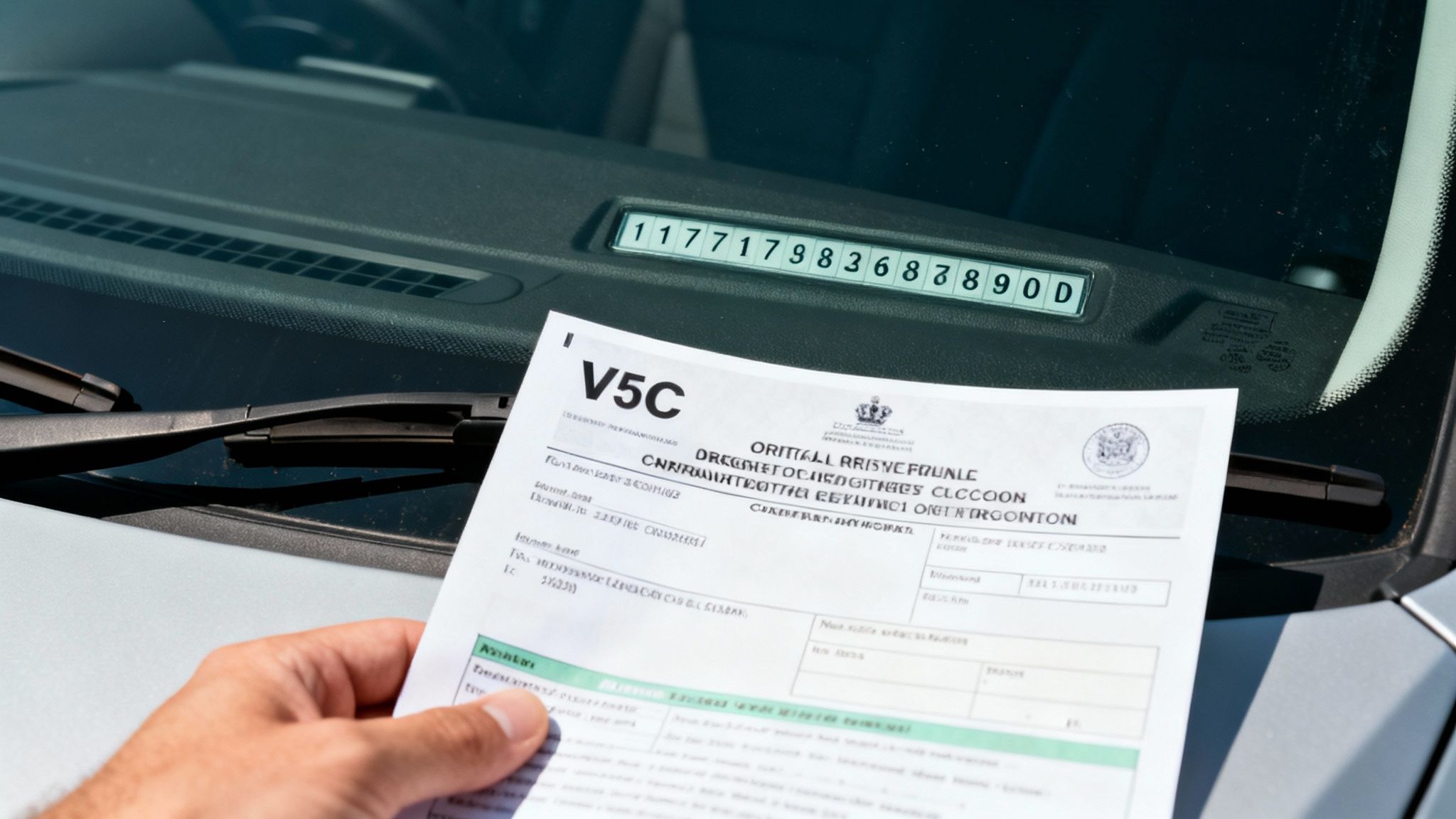
The VIN is a unique 17-character code assigned to every vehicle. It should be consistent across multiple locations on the car and all associated paperwork. Similarly, the V5C registration document is the official record of the registered keeper. Verifying that the person selling the vehicle is the one named on the V5C is essential to ensure you are dealing with the legal owner.
How to Implement This Check
Effectively integrating this check into your workflow involves a systematic, multi-point inspection:
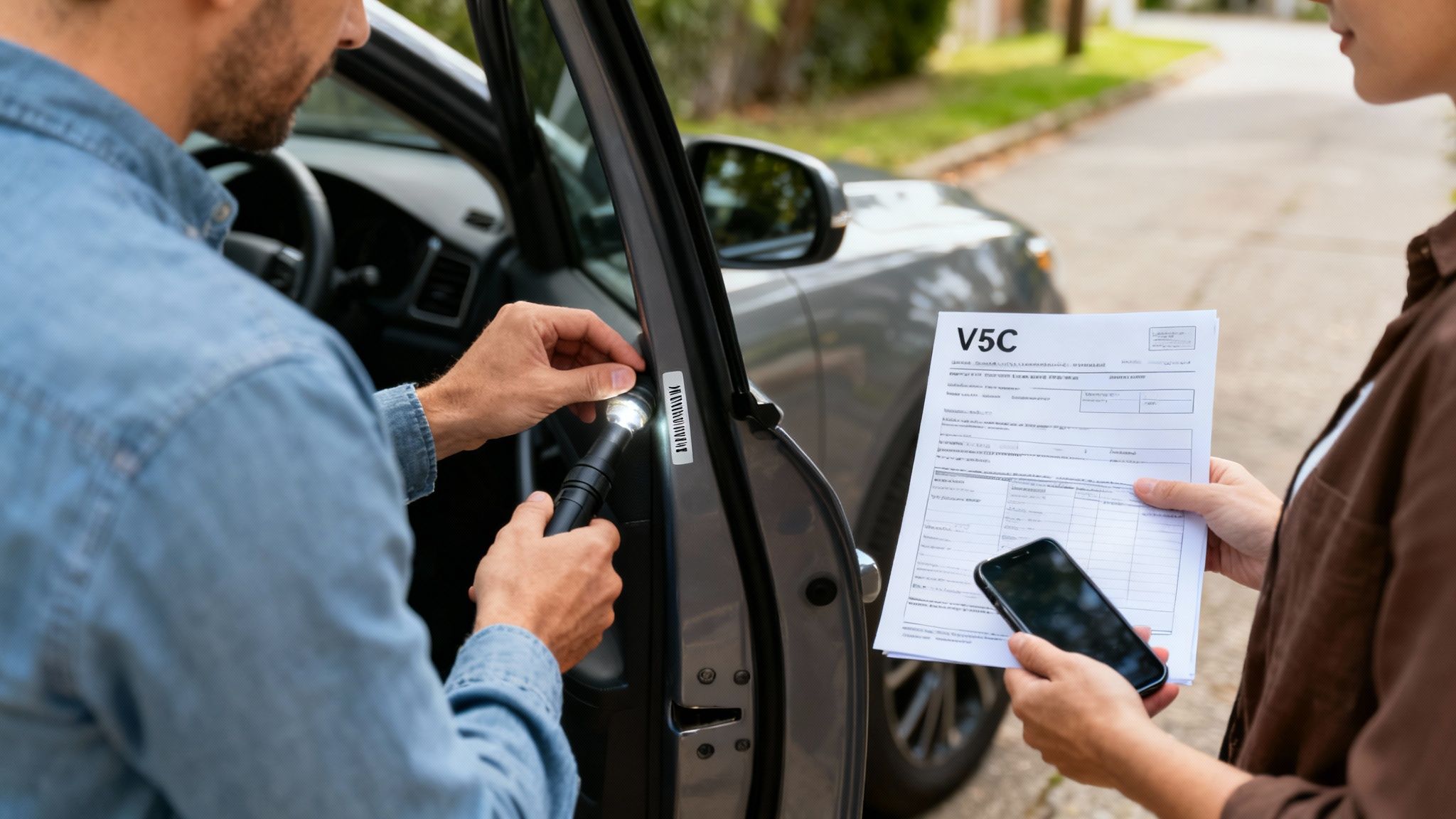
- Locate the VIN physically: Check the VIN in at least three places on the vehicle. Common locations include the plate visible through the bottom of the windscreen, the driver's side door pillar sticker, and stamped directly onto the engine block or chassis.
- Inspect for tampering: Look closely at the VIN plates and stamps. Are there signs of scratching, alteration, or recent replacement? Tampered VINs often indicate a stolen or cloned vehicle.
- Cross-reference with documents: Compare the physical VINs with the one printed on the V5C, the vehicle's service history, and any MOT certificates. They must all match perfectly.
- Validate the V5C: Examine the V5C document itself. Look for the DVLA watermark and ensure it isn’t a photocopy. Check that the seller’s name and address on the V5C match their personal identification, which you should always ask to see.
Key Insight: A common tactic used by criminals is to present a forged or photocopied V5C. Always insist on seeing the original document and verify the details against the seller's driving licence or another form of photo ID. This simple step can prevent you from purchasing a vehicle from someone who has no legal right to sell it.
2. Use Vehicle History Reports
Beyond physical inspection, delving into a vehicle’s recorded history is a critical, non-negotiable step for any motor trade professional. Comprehensive vehicle history reports are your digital defence against a wide range of sophisticated car fraud. These reports compile data from insurers, finance providers, police databases, and the DVLA to unearth hidden issues that are impossible to spot with a visual check alone. This due diligence is fundamental to protecting your business from acquiring a vehicle with a compromised past, such as one that has been stolen, written off, or has outstanding finance.
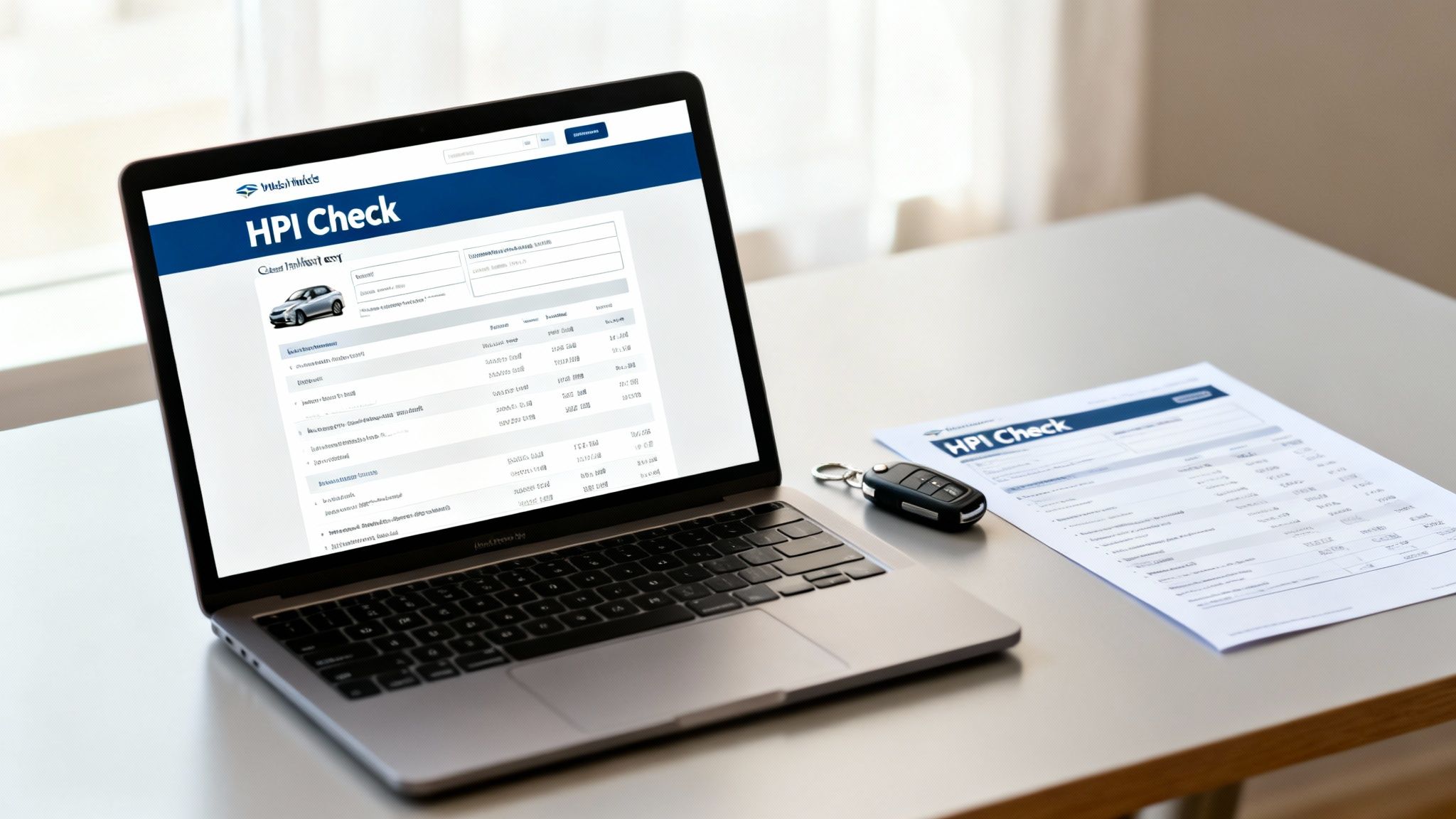
These checks are designed to flag major issues instantly. For instance, a report might reveal a vehicle is listed on the Police National Computer (PNC) as stolen or on the MIAFTR (Motor Insurance Anti-Fraud and Theft Register) as a total loss write-off. Similarly, it identifies if a car is still subject to a finance agreement, preventing you from inadvertently purchasing a vehicle that legally belongs to a finance company. Ignoring this check exposes your business to significant financial loss and legal complications.
How to Implement This Check
Integrating vehicle history reports into your acquisition process should be a standard operational procedure for every potential stock vehicle:
- Run a check before any commitment: Always obtain a full vehicle history report before making an offer or placing a deposit. A clean report provides the confidence to proceed, while a flagged report is an immediate stop signal.
- Cross-verify multiple data sources: While one provider is good, using a service like AutoProv, which aggregates data from multiple sources like provenance check and Experian, offers a more robust verification. This can catch discrepancies that might be missed by a single check.
- Analyse the mileage history: Pay close attention to the mileage records documented in the report from previous MOTs and services. Inconsistent or decreasing mileage is a classic sign of clocking, a common form of fraud.
- Keep all documentation: Retain a copy of the history report for every vehicle you purchase. This documentation is vital for your own records, provides a layer of protection, and demonstrates due diligence should any issues arise post-sale.
Key Insight: Outstanding finance is one of the most common red flags found by history checks. In 2022-2023, numerous cases were caught where sellers attempted to fraudulently offload vehicles with significant finance markers. Without this check, the dealership could have lost the vehicle to the finance company with no recourse, resulting in a total financial loss.
3. Request and Verify Service History Documentation
A vehicle's service history is its biography, detailing its care, mileage, and maintenance journey. For motor-trade professionals, meticulously scrutinising this documentation is a critical fraud prevention measure. It offers a powerful defence against odometer tampering, also known as 'clocking', and helps identify vehicles that have been poorly maintained or have a falsified history designed to inflate their value. An authentic and complete service record is a strong indicator of a legitimate vehicle, while gaps or inconsistencies are significant red flags.
Forged documents are increasingly sophisticated, but a thorough examination can uncover tell-tale signs of deception. Verifying the service history goes beyond simply checking for stamps in a book; it involves cross-referencing information with official online records and, where possible, contacting the servicing garages directly. This detailed approach is a cornerstone of due diligence and an essential part of effective car fraud prevention tips for any UK dealer.
How to Implement This Check
Integrating a robust service history verification process into your vehicle appraisal workflow requires a systematic and detailed approach:
- Utilise the DVLA MOT History Service: This free online tool is invaluable. Check the vehicle's entire MOT history and pay close attention to the mileage recorded at each test. Look for a logical and consistent progression. A sudden drop in mileage is a clear indicator of potential clocking.
- Verify Franchised Dealer Records: If the vehicle has stamps from a main dealer, contact that dealership's service department directly. Quote the vehicle's registration and VIN to confirm the dates and work carried out. This is one of the most reliable ways to validate a service record.
- Scrutinise Physical Documents: Insist on seeing original service books and maintenance receipts, not photocopies. Examine the stamps for consistency in ink and pressure. Look for legitimate garage branding, contact details, and VAT numbers on invoices.
- Cross-Reference Dates and Mileage: Compare the dates and mileage recorded in the service book with those on MOT certificates and individual repair invoices. Discrepancies, even minor ones, can point to a doctored history.
Key Insight: Fraudsters often create fake service histories using counterfeit stamps and fabricated invoices. In a notable 2022 case, forged Porsche service records were used to sell vehicles at inflated prices. Always verify stamps and receipts with the issuing garage. A quick phone call can confirm if the garage is genuine and if they actually performed the work claimed on the record.
4. Meet the Seller in Person and Inspect the Vehicle Thoroughly
In an increasingly digital marketplace, the value of a physical, face-to-face interaction cannot be overstated. Insisting on meeting the seller and inspecting the vehicle in person is a fundamental car fraud prevention tip in the UK. This step moves the transaction from the anonymity of the internet into the real world, dramatically reducing the risk of falling victim to scams involving non-existent cars, misrepresented conditions, or sellers who are not the legal owners. A physical inspection allows you to verify the car's existence, assess its true condition, and scrutinise the seller’s credibility.
The primary goal is to ensure the vehicle matches its description and the seller is legitimate. Many fraud schemes rely on buyers purchasing sight-unseen, often lured by a low price. For instance, a physical inspection could reveal non-original paint on a BMW advertised as 'accident-free', or you might discover the seller is not the registered keeper listed on the V5C. These are critical red flags that a remote transaction would almost certainly miss, protecting you from significant financial loss and legal complications.
How to Implement This Check
A thorough in-person meeting and inspection should be a non-negotiable part of your vehicle acquisition process. Here's a structured approach:
- Arrange a safe meeting: Always meet at the seller's home address, which you should verify matches the address on the V5C document. Avoid meeting in neutral locations like car parks, which can be a tactic used by fraudsters.
- Inspect in daylight: Never inspect a vehicle at night or in poor weather. Daylight is essential for spotting cosmetic defects like inconsistent paintwork, panel gaps, or signs of overspray that could indicate previous accident damage.
- Conduct a thorough walk-around: Check the tyres, lights, windows, and body panels. Open and close all doors, the bonnet, and the boot. Test all electrical components, from the radio to the electric windows and central locking.
- Verify the seller's identity: Ask to see the seller’s driving licence or another form of photo ID. The name and address should match the details on the V5C. A seller who is reluctant to provide this is a major warning sign.
- Always take a test drive: A test drive on various road types is crucial to assess the car's engine performance, brakes, steering, and suspension. Listen for unusual noises and feel for any vibrations or handling issues.
Key Insight: A common scam involves intermediaries or 'agents' selling a car on behalf of the 'owner'. This often means you are dealing with someone who has no legal right to sell the vehicle. Always insist on meeting the person named on the V5C at the address registered on the V5C. This direct verification is one of the most effective ways to prevent car fraud.
5. Arrange an Independent Pre-Purchase Inspection by a Qualified Mechanic
While data checks and document verification are critical, a physical examination by a trained professional provides a layer of security that no report alone can offer. Arranging an independent pre-purchase inspection is a vital part of car fraud prevention in the UK, especially for uncovering sophisticated physical deceptions. A qualified mechanic can identify hidden structural damage, poor-quality repairs, mechanical faults, and subtle evidence of cloning or VIN tampering that an untrained eye would easily miss.
This step moves beyond the paperwork to assess the vehicle's true mechanical and structural integrity. Services from organisations like the AA, RAC, or independent specialists can reveal if a car presented as 'mint condition' is actually a category B write-off that has been illegally returned to the road. This hands-on assessment acts as the ultimate validation, confirming that the vehicle's physical state matches its documented history.
How to Implement This Check
Integrating a professional inspection into your acquisition process mitigates significant financial and reputational risk.
- Engage a reputable third party: Use a well-known national service (like the AA or RAC) or a trusted independent specialist, preferably one with expertise in the specific vehicle make or model. Avoid using a mechanic recommended by the seller to ensure impartiality.
- Request a comprehensive report: Ask for a detailed written report that includes photographic evidence of any issues found. This document is crucial for negotiation and serves as a record of the vehicle's condition at the time of purchase.
- Direct the inspection focus: Specifically instruct the mechanic to look for signs of major accident repairs, chassis misalignment, and inconsistencies with the VIN across different parts of the car. Ask them to assess wear on components like pedals and gear knobs to help verify the stated mileage.
- Leverage the findings: If the inspection uncovers issues, use the official report to renegotiate the price with the seller. If significant problems like structural damage or signs of clocking are found, it is safest to walk away from the deal entirely.
Key Insight: Criminals often rely on cosmetic repairs to hide a vehicle's dangerous history. An AA inspection on a seemingly perfect Audi A4 once revealed it was a "cut-and-shut," where two different damaged cars were welded together. This kind of life-threatening fraud is almost impossible to spot without a professional ramp inspection, making this step an non-negotiable part of your due diligence.
6. Pay Safely and Use Secure Payment Methods
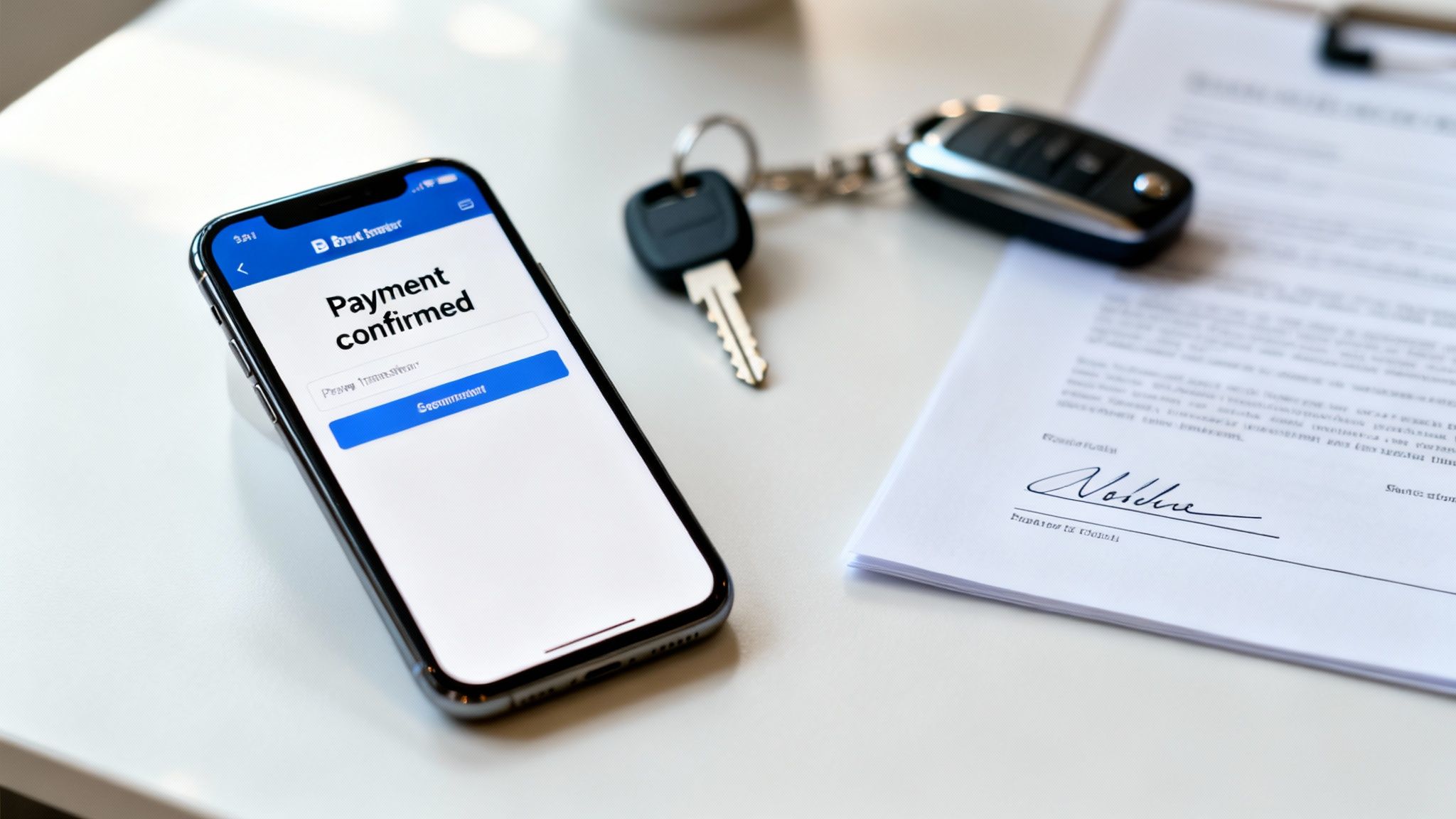
The method of payment is a critical control point in any vehicle transaction and a crucial element of car fraud prevention in the UK. How you transfer funds can determine whether you are protected or left completely exposed if the deal turns out to be fraudulent. Using secure, traceable payment methods is your final safeguard, ensuring there is a clear, verifiable audit trail of the transaction from your bank account to the seller's. It protects you from scenarios where a seller disappears after receiving untraceable cash.
Criminals thrive on anonymity and untraceable funds. By insisting on formal banking channels like CHAPS or verified bank transfers, you create a digital paper trail that law enforcement can follow. Conversely, paying with large sums of cash, cryptocurrency, or unprotected online payment platforms offers criminals an easy exit route, making recovery of your funds almost impossible. A legitimate seller will always accommodate a secure payment process.
How to Implement This Check
Integrating secure payment protocols into your acquisition process minimises financial risk and adds a layer of professionalism to your operations:
- Insist on Bank Transfers: Always use traceable electronic payments like a Faster Payment or CHAPS (Clearing House Automated Payment System) for larger sums. These methods provide a clear record of the payment, including the recipient's verified account details.
- Verify Recipient Details: Before making a transfer, request the seller's bank details in writing (e.g., on a formal invoice). Cross-reference the account holder's name with the name on the V5C and their photo ID. Many banks now perform a 'Confirmation of Payee' check to ensure the names match.
- Avoid Cash Payments: Never pay for a vehicle entirely in cash, especially for high-value stock. Cash transactions are anonymous, difficult to prove, and a huge red flag for both fraud and money laundering.
- Time the Payment Correctly: Do not transfer the full amount until you have completed all vehicle and document checks, are physically with the car, and are ready to take possession and sign the V5C. A small, refundable holding deposit is acceptable, but the final balance should only be sent upon completion.
Key Insight: For high-value or trade-to-trade transactions, consider using a solicitor's client account or a reputable third-party escrow service. This provides an independent, secure holding place for the funds, which are only released to the seller once both parties confirm that all conditions of the sale, including the successful transfer of ownership, have been met.
7. Check for Outstanding Finance Using FCA-Regulated Services
A critical component of due diligence, and a major area of potential financial loss for dealerships, is failing to identify outstanding finance on a vehicle. A significant portion of used cars in the UK are purchased using finance agreements, and if the loan is not settled before the vehicle is sold, the finance company legally remains the owner. This means they can repossess the vehicle from you or your customer, even after the sale is complete, leaving you to bear the entire loss.
Utilising a comprehensive vehicle history check from an FCA-regulated provider is the only reliable way to uncover these hidden liabilities. This check queries databases held by finance companies to confirm whether a vehicle is subject to a hire purchase, conditional sale, or personal contract purchase (PCP) agreement. Forgetting this step is a high-stakes gamble that can instantly erase the profit on a sale and damage your business's reputation. This is one of the most important car fraud prevention tips UK dealers must implement.
How to Implement This Check
Integrating a finance check should be a non-negotiable step in your vehicle appraisal and acquisition process:
- Use Regulated Providers: Always use trusted, FCA-regulated services like provenance check, Experian AutoCheck, or BritainSafe for your checks. These services provide guaranteed, accurate data directly from lenders.
- Check Before Committing: Perform the finance check before you make an offer or commit to a purchase. Discovering outstanding finance of £8,000 on a BMW 3 Series, for example, allows you to adjust your offer or walk away, preventing a significant loss.
- Request a Settlement Figure: If finance is outstanding, insist that the seller obtains an official settlement figure from the finance company. This is the exact amount required to clear the loan.
- Manage the Settlement Directly: Where possible, manage the payment of the outstanding finance yourself. Pay the finance company directly and deduct this amount from the payment to the seller. Always obtain written confirmation of clearance from the lender before concluding the deal.
Key Insight: Never take the seller's word that the finance will be cleared after you've paid them. A common scam involves sellers taking the full payment for the car and then defaulting on the outstanding finance, leaving you with a vehicle that can be repossessed. Always verify settlement directly with the finance house and secure the discharge paperwork.
8. Report Suspected Fraud and Use Consumer Protection Resources
Discovering or suspecting vehicle fraud can be a stressful experience, but taking swift and decisive action is a critical part of the overall car fraud prevention framework in the UK. Promptly reporting the incident to the correct authorities not only initiates a process that could lead to recovery or prosecution but also contributes vital intelligence that helps protect other motor trade professionals and the public from falling victim to the same criminals.
Knowing which organisations to contact and understanding the role each plays is essential for an effective response. From national fraud reporting centres to local consumer rights bodies, a network of resources exists to provide guidance, investigate criminal activity, and help resolve disputes. Engaging with these bodies strengthens the industry's collective defence against sophisticated fraud operations, such as the case where multiple dealer reports to Trading Standards led to the shutdown of a large-scale vehicle cloning ring.
How to Implement This Check
Integrating a clear reporting protocol into your dealership's operations ensures a consistent and effective response when fraud is suspected:
- Report to Action Fraud: For any fraud or cybercrime in England, Wales, and Northern Ireland, the first formal step is to report it to Action Fraud. This is the UK's national reporting centre, and it passes all reports to the National Fraud Intelligence Bureau (NFIB) for analysis and investigation.
- Contact Trading Standards: For issues like mis-described vehicles or dealers engaging in unfair practices, contact Trading Standards via the Citizens Advice consumer helpline. They have the power to investigate and prosecute businesses that break the law.
- Inform the Police: If the vehicle is stolen, cloned, or linked to other serious crimes, you must report it to the police directly by calling 101. Provide them with the crime reference number from Action Fraud if you have one.
- Keep Meticulous Records: Retain all documentation related to the transaction. This includes contracts, invoices, communication logs, vehicle history reports, and any advertisements. These documents are crucial evidence for any investigation.
Key Insight: Don't underestimate the power of collective intelligence. Reporting even a suspected attempt at fraud to the relevant authorities contributes to a larger data pool. This data helps agencies like the National Trading Standards eCrime Team identify patterns, link cases across regions, and build stronger cases against organised criminal networks targeting the motor trade.
A Summary of Key UK Car Fraud Prevention Methods
To effectively safeguard your business, it's helpful to understand the purpose and ideal application of each fraud prevention technique. Here's a brief summary of the methods discussed:
- VIN and V5C Checks: This low-cost, initial screening is essential for detecting vehicle cloning and confirming you are dealing with the registered keeper. It's your first line of defence before investing any more time or money.
- Vehicle History Reports: A non-negotiable step before making an offer. This reveals hidden history like theft, insurance write-offs, and outstanding finance, protecting you from major liabilities.
- Service History Verification: This method is crucial for validating a vehicle's claimed mileage and maintenance record, directly combating odometer fraud ('clocking') and uncovering neglect.
- In-Person Inspection: Meeting the seller and seeing the vehicle in daylight helps you spot poor repairs, verify the seller's identity, and confirm the car's physical condition matches its description.
- Professional Mechanical Inspection: For high-value vehicles or when in doubt, this provides expert assessment of structural integrity and mechanical health, uncovering hidden damage that only a specialist can find.
- Secure Payments: Using traceable bank transfers protects your funds and creates a clear audit trail. This step is your final financial safeguard in the transaction process.
- Outstanding Finance Checks: Specifically using an FCA-regulated service to check for outstanding loans is vital to ensure you gain clear title to the vehicle and prevent future repossession.
- Reporting Fraud: Knowing how and where to report fraud (e.g., Action Fraud, Trading Standards) not only helps you seek recourse but also protects the wider industry from criminal networks.
Making Every Vehicle Purchase a Confident One
Navigating the UK's used vehicle market requires more than just a keen eye for quality stock; it demands a robust, data-driven strategy to counter the ever-present threat of fraud. Throughout this guide, we've detailed a multi-layered approach to vehicle acquisition, moving from fundamental physical checks to sophisticated digital verifications. Mastering these car fraud prevention tips UK dealers trust is not merely a defensive measure, it's a proactive strategy for building a resilient, reputable, and profitable business.
The core principle underpinning every tip, from scrutinising the V5C logbook to commissioning an independent mechanical inspection, is the same: verify, don't assume. Relying on gut instinct or face value is a gamble your business cannot afford to take. Each step serves as a critical checkpoint, designed to expose inconsistencies and protect your investment.
From Disparate Checks to a Unified Strategy
The challenge for many motor trade professionals isn't a lack of awareness, but a lack of efficiency. Juggling multiple services for DVLA records, finance checks, Police National Computer (PNC) stolen status, and MIAFTR insurance write-off data can be time-consuming and lead to critical oversights. A fragmented due diligence process is a vulnerable one. This is where the true power of a unified vehicle intelligence platform becomes indispensable.
Instead of performing a series of disjointed searches, a service like AutoProv consolidates these essential data streams into a single, comprehensive report. This transforms your workflow from a reactive, box-ticking exercise into a strategic, data-led acquisition process. Imagine having instant access to:
- Full Provenance: Confirming the vehicle's identity with DVLA and DVSA data.
- Financial Clarity: Instantly verifying outstanding finance with Experian checks.
- Security Assurance: Cross-referencing against the PNC to ensure the vehicle isn't stolen.
- Condition History: Uncovering hidden damage history through the MIAFTR database.
By integrating these vital checks into one seamless report, delivered in under 30 seconds, you turn due diligence from a chore into a competitive advantage. You can make faster, more informed decisions at auction or during a part-exchange appraisal, secure in the knowledge that your assessment is backed by the most reliable data available.
Your Actionable Path Forward
To translate these principles into practice, your next steps should be to embed this culture of verification deep within your operational DNA.
- Standardise Your Appraisal Process: Create a non-negotiable checklist for every vehicle acquisition, incorporating every tip discussed. Ensure all staff are trained and adhere to this process without exception.
- Leverage Integrated Technology: Move beyond ad-hoc checks. Integrate a comprehensive vehicle intelligence platform like AutoProv directly into your stock acquisition workflow. This makes thorough vetting the default, not the exception.
- Foster a Culture of Vigilance: Encourage your team to question inconsistencies and empower them with the tools to find definitive answers. The most effective fraud prevention is a collective effort.
Ultimately, the goal is to shift your mindset from avoiding bad vehicles to confidently identifying and securing the best ones. By implementing these robust car fraud prevention tips, you’re not just protecting your business from financial loss and reputational damage. You are building a foundation of trust with your customers, enhancing your brand's integrity, and ensuring that every vehicle you add to your forecourt is a secure, profitable, and confident acquisition. Make professional-grade due diligence your standard, and watch your business thrive.
Frequently Asked Questions
AI-Generated Content Notice
This article was created with the assistance of artificial intelligence technology. While we strive for accuracy, the information provided should be considered for general informational purposes only and should not be relied upon as professional automotive, legal, or financial advice. We recommend verifying any information with qualified professionals or official sources before making important decisions. AutoProv accepts no liability for any consequences resulting from the use of this information.
From our AI insights
- Auction Pitfalls: Avoiding Costly Mistakes
Navigate UK car auctions with confidence by avoiding finance, write-off, and mileage risks.
- Mastering Paint Code Checks: Detecting Hidden Car Repairs
Discover how to use paint code verification to identify hidden car repairs and ensure a smarter purchase.
- UK Part-Exchange Checks: Protecting Dealer Margins
Explore essential part-exchange checks for UK dealers to safeguard profit margins, including provenance and finance verification.
Related Articles

Your Ultimate Guide to Buying a Used Car in the UK
Navigate the UK used car market with confidence using our comprehensive buying guide. Tips, checks, and AutoProv Provenance insights included.

Difference Between MOT and Service: What You Need to Know
An MOT is a mandatory legal inspection that every car on UK roads needs to pass.Think of it as the government's way of ensuring your vehicle meets the absolute minimum safety and environmental standards to be considered roadworthy. A service, on the other hand, is a completely different beast. It's the proactive maintenance routine recommended by the people who built your car, designed to keep it running smoothly and catch problems before they start. In short, an MOT is a pass-or-fail exam required by law. A service is a comprehensive health plan for your car.
Your Ultimate Used Car Inspection Checklist
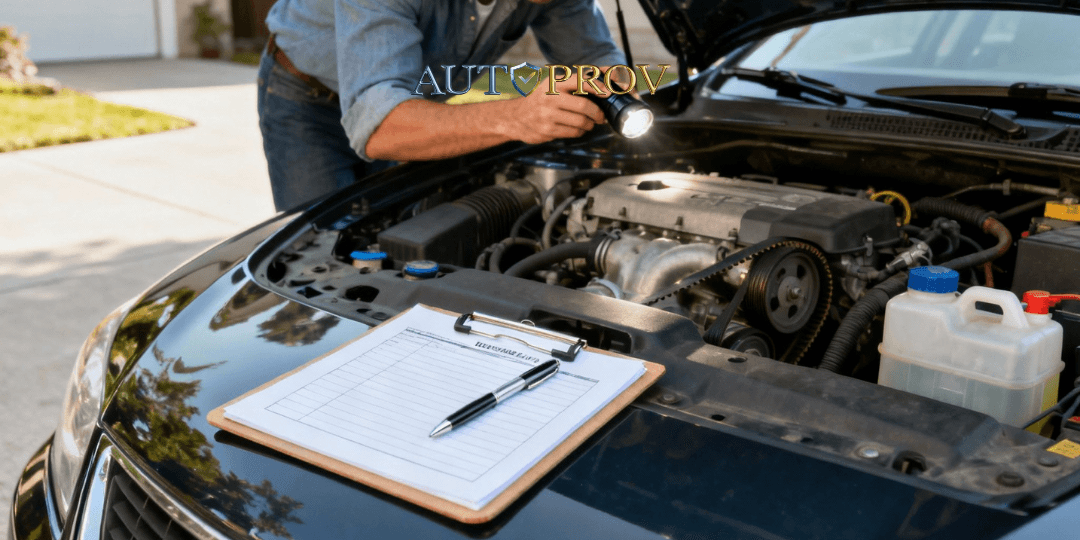
A solid used car inspection checklist is the single most powerful tool you have to avoid buying a lemon. It gives you a methodical way to look past the shiny paint and assess a car's real condition, helping you spot hidden problems and get a fair price before you shake hands on the deal.
Published by AutoProv
Your trusted source for vehicle intelligence
