
Don't be fooled by a fresh coat of wax and a clean interior. To truly avoid buying a lemon in the UK, you have to look past the surface and dig into the car's history. A shiny exterior can easily mask thousands of pounds in hidden mechanical faults, underlying accident damage, or even a fraudulent past. The golden rule? Verify everything the seller tells you before any money changes hands. Using a comprehensive service like AutoProv can arm you with the facts needed to make a smart, safe purchase.
Don't be fooled by a fresh coat of wax and a clean interior. To truly avoid buying a lemon in the UK, you have to look past the surface and dig into the car's history. A shiny exterior can easily mask thousands of pounds in hidden mechanical faults, underlying accident damage, or even a fraudulent past.
The golden rule? Verify everything the seller tells you before any money changes hands. Using a comprehensive service like AutoProv can arm you with the facts needed to make a smart, safe purchase.
The True Cost of a Lemon Car and Why Checks Are Essential

Realising you've bought a lemon is more than just a bit of bad luck; it's a financial and emotional nightmare. That initial buzz of getting a new car quickly turns into a miserable cycle of garage visits, eye-watering repair bills, and the constant worry that it'll let you down.
It’s a scenario that plays out far more often than you’d think. With millions of used cars changing hands every year in the UK, a surprising number are hiding serious, undisclosed problems. We’re not talking about a few cosmetic scratches, but major mechanical or structural issues that can make a car unsafe or a complete write-off.
The Financial Fallout of a Bad Purchase
The cost of putting things right can be staggering. That "slight engine rattle" the seller brushed off could be a failing timing chain, a fix that can easily top £1,500. A dodgy gearbox might need a full replacement, setting you back upwards of £3,000. These are the kinds of bills nobody budgets for, turning a supposed bargain into a crippling expense.
The scale of the problem is huge. Across the UK's used car market, where around 7 million vehicles are sold each year, hidden defects resulted in a jaw-dropping £3.2 billion in repair claims in 2024 alone. On top of that, the Financial Conduct Authority saw a 12% rise in disputes over faulty used cars bought on finance. The most shocking part? 40% of these cases involved odometer tampering—outright fraud designed to deceive buyers like you.
A 'lemon' doesn't just empty your wallet; it erodes your trust and peace of mind. Every strange noise becomes a source of worry, and every long journey is filled with uncertainty. The stress can far outweigh the initial purchase price.
Beyond Repairs: The Hidden Costs
The pain doesn't stop at the garage. If the car was previously written off and you weren't told, you could be in for a battle with your insurer. Then there’s the savage, unexpected depreciation. A car with a dodgy past or major faults will plummet in value, making it nearly impossible to sell on without taking a massive hit. To get a better handle on this, check out our guide on how to calculate vehicle depreciation.
This is exactly why spending a few quid upfront on a proper, professional-grade vehicle history check isn't just a good idea—it's your best line of defence. Services like the AI-powered reports from AutoProv give you the critical intelligence needed to see past the polished paintwork and uncover the truth, saving you from the immense financial and emotional toll a lemon car can inflict.
Uncovering a Car's Hidden Past with Digital Checks
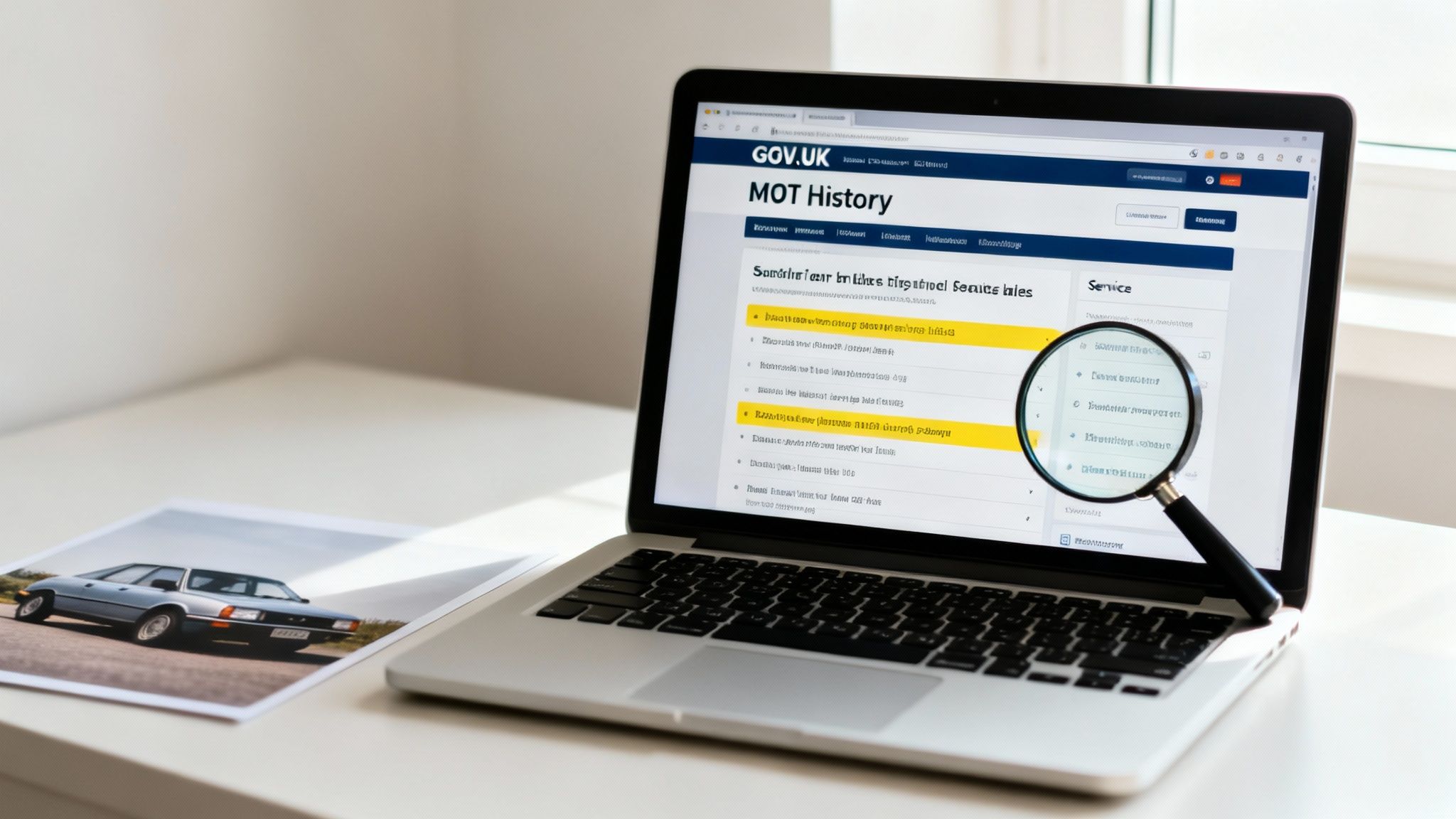
Before you even think about arranging a viewing, the real detective work begins at your desk. Every car leaves a digital paper trail, and it's often here you'll find the first tell-tale signs of a potential lemon. A few quick, free checks can save you from a wasted journey and a very expensive mistake.
Your first port of call, without question, should be the official GOV.UK MOT history checker. It's a goldmine of information, but only if you know how to read between the lines. Don’t just glance at the current pass certificate; you need to dig into the car’s entire MOT history.
Reading the MOT Tea Leaves
You're looking for patterns here. A car that consistently fails on the same things—say, suspension components or emissions year after year—is waving a giant red flag. This points to a recurring problem that has likely been patched up on the cheap rather than properly fixed for good.
Pay very close attention to the advisory notes. Think of these as the MOT tester's way of saying, "This is worn but not quite illegal… yet." A long list of advisories for things like "tyres nearing legal limit" or "slight corrosion on brake pipes" is a clear forecast of bills that are heading your way.
Also, track the mileage recorded at each test. Does it climb steadily and logically? Any big, unexplained drops or long periods with unusually low mileage could be a sign of clocking or suggest the car was off the road for major, undisclosed repairs.
Scrutinising the Service History
Next, let's talk about service history. A "Full Service History" (FSH) is a phrase that can mean very different things. A thick folder stuffed with main dealer stamps for a five-year-old car is fantastic. On the other hand, a ten-year-old car with a few patchy, handwritten receipts from backstreet garages needs a much closer look.
What you're really looking for is consistency and proof of proper care.
- Regularity: Have services been done on time or within the correct mileage intervals? Skipped services are a bad sign.
- Quality of Parts: Do the receipts show genuine or high-quality OEM parts were used? Or does it look like the owner always opted for the cheapest possible fix?
- Major Work: Keep an eye out for receipts covering crucial jobs like a timing belt or water pump replacement. If a big job like that is due and there’s no proof it’s been done, you have to assume it hasn't and budget accordingly.
A missing service book or a pile of vague receipts should set alarm bells ringing. An owner who can’t be bothered to keep records of maintenance is unlikely to have been diligent about the maintenance itself.
Why Basic Checks Are Never Enough
While the MOT and service history give you a great starting point, they only show a fraction of the full picture. Crucially, these checks will not tell you about some of the biggest risks that define a true lemon.
A free online check simply cannot confirm if there is outstanding finance on the vehicle or if it has been previously written-off by an insurer. It also won't flag if the car has been stolen or has a hidden past as a taxi or delivery van, which means extreme wear and tear.
This is exactly why a professional provenance report is so essential. To truly avoid buying a lemon, you need to dig deeper than the free checks allow. A comprehensive service like AutoProv scans dozens of data points from insurance, finance, and police databases in seconds. It uncovers the critical information the free checks miss, giving you the complete picture needed to make a safe and confident purchase.
For a more detailed breakdown, see our complete guide on how to check a car's history in the UK.
Mastering the Physical Inspection and Test Drive
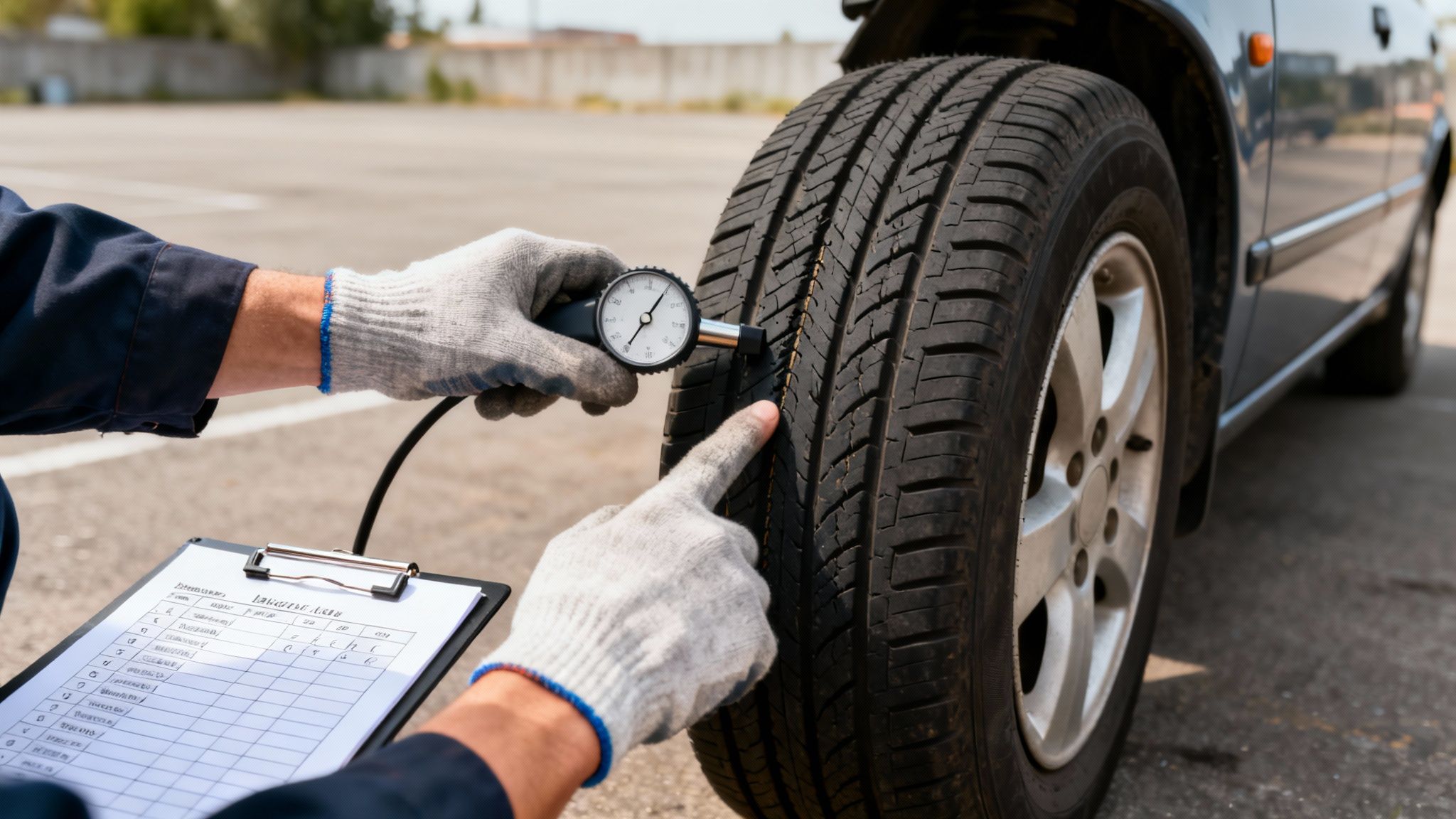
So, the paperwork checks out. Great start. But now for the real test: getting hands-on with the car itself. This is your chance to see if the metal in front of you lives up to the promise of the digital trail you’ve been following. A physical inspection is where you spot the things a seller might be hoping you’ll miss in the heat of the moment.
My first rule? Always, always view a car in broad daylight. A dry day is even better, as rain is brilliant at hiding everything from paint swirls to minor dents. Give yourself plenty of time and don't let anyone rush you. This needs a methodical approach.
Your Exterior Walkaround Checklist
Start by taking a slow walk around the car, looking at it from a few different angles. You're hunting for anything that looks 'off'—subtle clues that could point to a hidden history. Pay very close attention to the panel gaps between the doors, bonnet, and boot. They should be consistently tight and even. If a gap is noticeably wider at one end than the other, that's a classic giveaway of a shoddy repair after a bump.
Next, get down low and look along the length of the car's bodywork. This is the best way to spot ripples or waves in the panels, a tell-tale sign that filler has been used to smooth out damage. While you're there, scrutinise the paint. Does the colour match perfectly on every single panel? A door or bumper that's a slightly different shade is a dead ringer for a respray.
And don't overlook the simple things that say so much about how a car's been looked after:
- Tyres: Uneven wear across the tread—more worn on the inside or outside edge—screams of alignment problems. It could be a simple fix, but it could also signal deeper suspension issues.
- Glass: Look for the tiny manufacturer's stamp on each window. If one is different, it means that pane has been replaced. It might be from a simple stone chip, but it could also be from a more serious side impact.
- Lights: Check for any misting or condensation inside the headlamp and taillight units. This means the seals are shot, which can be a surprisingly pricey fix on modern cars.
The All-Important Interior Inspection
The cabin tells its own story, and it needs to match the mileage on the clock. A car that's supposedly done only 40,000 miles shouldn't have a steering wheel that's worn shiny and smooth, or a gear knob with all the markings rubbed off. Likewise, a heavily worn driver's seat bolster and worn-out pedal rubbers are big red flags on a low-mileage motor.
Make sure to lift the floor mats and press your hand firmly onto the carpet below, especially in the footwells and the boot. Any hint of damp could be a leaking window seal, a blocked drain, or even a failed heater matrix. Trust me, tracing water leaks can be an absolute nightmare.
Systematically test every single button, switch, and function. Don't be shy. Turn on the air conditioning, check the heated seats, test the electric windows and mirrors, and cycle through every setting on the infotainment system. A single non-working component could be a simple fuse or a complex electrical gremlin costing hundreds to sort out.
Putting the Car Through Its Paces on the Test Drive
This is it—the final, most crucial piece of the puzzle. Try to plan a route that covers a bit of everything: slow town traffic, a few bumpy roads, and a stretch of dual carriageway to get it up to speed.
First thing: turn the radio off. You need to listen. You're tuning in for any unusual noises that simply shouldn't be there. Whining from the gearbox, a knocking or clunking from the suspension over bumps, or a grinding noise when you brake are all immediate warning signs.
Pay close attention to how the car feels. The steering should feel direct and responsive, not vague, and the car shouldn't pull to one side. The brakes need to feel firm and confident, not spongy. Be alert for any vibrations coming through the steering wheel or pedals, which could be anything from unbalanced wheels to more serious drivetrain trouble.
For a comprehensive walkthrough of what to check, AutoProv offers your ultimate used car inspection checklist, which is an invaluable resource to have on hand during your viewing. It ensures you don’t miss a single detail in your quest to avoid buying a lemon car in the UK.
How to Decode Your Vehicle Provenance Report

So, you've got the MOT records and service book. That’s a good start, but if you really want to avoid buying a lemon car in the UK, you need a comprehensive vehicle history report. This is the single most powerful tool at your disposal, pulling back the curtain on a car's entire life. An AutoProv report provides exactly this level of detail.
Getting the report is just the first step. The real skill is knowing how to read between the lines and spot the genuine red flags that could cost you thousands.
Think of it as the car's complete CV. A basic free check is a flimsy one-page summary, but a professional report from a service like AutoProv is the full, unabridged version with all the juicy details. This is where the deal-breaking secrets are hiding.
The Million-Pound Question: Outstanding Finance
Let's start with the big one. If a car has outstanding finance, it doesn’t legally belong to the seller — it belongs to the finance company. This is a nightmare scenario. You could pay for the car in full, only for the lender to show up and repossess it, leaving you with no car and no money.
It’s a shockingly common problem. Thousands of cars are sold every year with unsettled loans, often because the seller hopes the buyer won't bother to check. Your provenance report will give you a clear "yes" or "no" on this. There’s no grey area here. Any hint of finance means you walk away, unless the seller can produce an official settlement letter from the finance company confirming the debt is cleared.
Understanding Insurance Write-Off Categories
The world of insurance write-offs can be a minefield for buyers. These categories tell you about the severity of damage a car has suffered, and understanding the difference is vital for assessing a car's safety, value, and even its insurability.
A Category S (Cat S) vehicle has sustained structural damage and has been professionally repaired. The key word here is "structural"—this affects the car’s core frame or chassis. Meanwhile, a Category N (Cat N) vehicle has sustained non-structural damage. This could be anything from cosmetic issues like dented panels to problems with the electrics that the insurer decided wasn't economical to fix.
A Cat N car can be a perfectly good purchase if it's been repaired to a high standard, but a Cat S vehicle demands serious scrutiny. You need to see proof of a professional, high-quality repair, and you absolutely must declare it to your insurer. Forgetting to do so could invalidate your policy. Thankfully, reports from AutoProv clearly flag these categories, so there’s no guesswork involved.
A car's history as an insurance write-off permanently hits its value. A Cat S or Cat N vehicle should always be significantly cheaper than an equivalent, undamaged model. If the price doesn’t reflect this history, the seller is trying to pull a fast one.
Unmasking Mileage Discrepancies and Hidden Histories
Mileage fraud, or 'clocking', is still a major issue in the UK used car market. A proper provenance report is your best defence. It cross-references mileage readings from multiple official sources—MOTs, service records, and even previous sale listings—to build a clear timeline.
This is where clever analysis comes in. AutoProv’s AI-driven platform is brilliant at spotting inconsistencies that a human eye might miss. A sudden drop in recorded mileage between MOTs? A long period where the car mysteriously covered zero miles? These are massive red flags that point to tampering.
The report also uncovers a car's previous life. Was it a high-mileage company hack, a taxi, or an ex-police car? This context is crucial. A former taxi might look tidy inside, but its engine and suspension will have endured far more wear than a typical family runabout. This hidden history is a classic sign of a lemon in waiting. To see exactly what data is uncovered, it's worth exploring what's included in a comprehensive provenance check for a used car.
Identifying High-Risk Models and Common Faults
When you’re trying to avoid buying a lemon, it's easy to get seduced by a premium badge on the bonnet. But in the used car market, a prestigious brand name is absolutely no guarantee of reliability. In fact, some of the most desirable makes are often the riskiest buys.
Brand reputation doesn't always equal dependability. Certain popular models, especially from premium European manufacturers, are notorious in the trade for developing eye-wateringly expensive, recurring faults. The very complexity that makes them so appealing when new—advanced electronics, high-performance engines, sophisticated air suspension—often becomes their Achilles' heel as they get older.
Why Premium Brands Can Be Problematic
The data paints a very clear picture here. Premium European brands consistently top the charts for UK lemon car complaints, all thanks to significant reliability issues. For example, Land Rover models were ranked last in J.D. Power's 2025 UK Vehicle Dependability Study, clocking up an alarming 242 problems per 100 vehicles—a figure way above the industry average.
It’s estimated that these used luxury lemons cost UK buyers a staggering £1.8 billion annually in fixes. The RAC's 2025 analysis found that one in ten high-end used cars fails within six months of purchase. To put that in perspective, the Citizens Advice Bureau dealt with 145,000 car fault disputes in 2024 alone, and 35% of them involved premium brands where repair bills often shot past £5,000. You can dig deeper into these common car issues in studies on European models from 2025.
This is exactly why your pre-purchase inspection needs to be targeted. You have to go beyond a generic check and actively hunt for the specific weak points known to plague the model you're looking at.
Knowing What to Look and Listen For
Arming yourself with model-specific knowledge is your best defence. Before you even arrange a viewing, spend some time on owner forums and specialist websites. Get to know the common failure points. This simple bit of homework turns your inspection from a quick once-over into a proper forensic examination.
Here are a few real-world examples of what this looks like in practice:
- Engine Noises: Looking at a BMW with the N47 diesel engine? You need to be listening intently on start-up for a 'marbles in a tin' rattling sound coming from the back of the engine. That’s the classic symptom of a failing timing chain, a repair that can easily run into thousands of pounds.
- Gearbox Behaviour: When you're test-driving a car with a DSG automatic gearbox (common in VW, Audi, and Skoda), pay very close attention to how it behaves at low speeds. Any hesitation, juddering when pulling away, or clunking noises can signal an impending failure of the mechatronics unit—another four-figure fix.
- Electrical Gremlins: On a used Range Rover, you should methodically test every single electrical function. The air suspension, infotainment screen, and keyless entry systems are all well-known trouble spots. A single warning light on the dash might be a simple sensor, or it could point to a complex electrical problem that’s a nightmare to diagnose and fix.
Being aware of a car's potential faults isn't about being paranoid; it's about being prepared. Knowing what to listen for allows you to ask the seller direct, informed questions and spot issues they might hope you'll overlook.
This is where a detailed provenance report becomes so important. While it won't diagnose a mechanical issue on the spot, an AutoProv report can provide essential context. For instance, it can show if a vehicle has been off the road for an extended period, which might correlate with a major repair. It gives you the full picture, helping you connect the dots between the car's history and its current condition.
Using Your Legal Rights to Finalise a Safe Purchase
You’ve done the digital deep dive, mastered the physical inspection, and decoded the provenance report. Now it’s time to bring it all home and get the deal done safely.
This final stage is where all that research turns into real-world power, protecting your investment and making sure you drive away with peace of mind, not just a new set of keys. Understanding your legal rights isn't just a fallback plan; it's a core part of the buying process that helps you steer clear of a lemon.
When you buy from a dealer, you're shielded by one of the most robust bits of consumer law in the country: the Consumer Rights Act 2015. This isn't some vague bit of legal jargon; it provides concrete, legally-binding protections that every car buyer should know inside out.
Your Most Powerful Ally: The Consumer Rights Act 2015
The Act is simple in its core mission. It states that any vehicle sold by a trader must be of 'satisfactory quality', 'fit for purpose', and 'as described'. This is the legal foundation of your entire purchase.
But what does 'satisfactory quality' actually mean for a used car? It's not about perfection.
The law assesses it based on what a reasonable person would expect, taking the car's age, mileage, and price into account. No one expects a ten-year-old car with 100,000 miles on the clock to be flawless. But they do expect it to be safe, roadworthy, and free from major faults that weren't pointed out when you bought it. A knackered gearbox or a serious engine problem a week after you bought it? That's almost certainly not 'satisfactory quality'.
The most potent tool the Act gives you is the short-term right to reject.
If a significant fault appears within the first 30 days of your purchase—one that was likely there when you bought the car—you are legally entitled to reject the vehicle and get a full refund. This is a non-negotiable right that puts the pressure squarely on the dealer to sell you a decent car in the first place.
To really get to grips with how these protections work for car purchases, our detailed guide on the Consumer Rights Act 2015 in the UK motor trade is an essential read for any buyer.
Navigating the Warranty Maze
Many dealers will dangle a warranty in front of you. While it sounds reassuring, you absolutely have to read the small print. These policies can be anything from comprehensive in-house cover to flimsy third-party insurance with more holes than a Swiss cheese.
Be very suspicious of warranties that have ridiculously low claim limits, exclude big-ticket items like clutches or turbos, force you to use their approved repairers, or slap you with a high excess fee for any claim.
And remember, a dealer's warranty never replaces your statutory rights under the Consumer Rights Act. A good warranty adds an extra layer of comfort, but a bad one is just expensive wallpaper. Don't let a weak three-month warranty blind you to your real legal protections.
Using Your Knowledge to Negotiate
Here's where all your hard work pays off. The notes from your physical inspection and, crucially, the data from your AutoProv report, are now your sharpest negotiating tools. You’re no longer just another punter; you’re an informed expert on this specific car.
Did your report flag an advisory on the last MOT for worn brake discs? That’s a legitimate reason to ask for money off the price. Does the car need a couple of new tyres to be truly road-safe? That's a bargaining chip. This isn't about being awkward; it’s about agreeing on a price that fairly reflects the car’s genuine condition and its immediate needs.
Finally, and this is the golden rule: get everything in writing. If the dealer promises to service the car before collection, get it on the sales invoice. If they agree to replace those worn tyres, make sure it’s written down. Verbal promises have a habit of evaporating into thin air and are almost impossible to prove.
A written agreement is your final, critical layer of protection. By combining thorough checks with a firm grasp of your legal rights, you can sign on the dotted line with complete confidence, knowing you've done everything possible to avoid buying a dud.
Frequently Asked Questions
AI-Generated Content Notice
This article was created with the assistance of artificial intelligence technology. While we strive for accuracy, the information provided should be considered for general informational purposes only and should not be relied upon as professional automotive, legal, or financial advice. We recommend verifying any information with qualified professionals or official sources before making important decisions. AutoProv accepts no liability for any consequences resulting from the use of this information.
From our AI insights
- Auction Pitfalls: Avoiding Costly Mistakes
Navigate UK car auctions with confidence by avoiding finance, write-off, and mileage risks.
- Mastering Paint Code Checks: Detecting Hidden Car Repairs
Discover how to use paint code verification to identify hidden car repairs and ensure a smarter purchase.
- UK Part-Exchange Checks: Protecting Dealer Margins
Explore essential part-exchange checks for UK dealers to safeguard profit margins, including provenance and finance verification.
Related Articles

Your Ultimate Guide to Buying a Used Car in the UK
Navigate the UK used car market with confidence using our comprehensive buying guide. Tips, checks, and AutoProv Provenance insights included.

Difference Between MOT and Service: What You Need to Know
An MOT is a mandatory legal inspection that every car on UK roads needs to pass.Think of it as the government's way of ensuring your vehicle meets the absolute minimum safety and environmental standards to be considered roadworthy. A service, on the other hand, is a completely different beast. It's the proactive maintenance routine recommended by the people who built your car, designed to keep it running smoothly and catch problems before they start. In short, an MOT is a pass-or-fail exam required by law. A service is a comprehensive health plan for your car.
Your Ultimate Used Car Inspection Checklist
A solid used car inspection checklist is the single most powerful tool you have to avoid buying a lemon. It gives you a methodical way to look past the shiny paint and assess a car's real condition, helping you spot hidden problems and get a fair price before you shake hands on the deal.
Published by AutoProv
Your trusted source for vehicle intelligence