
When you think of the best cars for long-distance driving, what comes to mind? For most, it's a combination of fantastic comfort, rock-solid reliability, and impressive fuel economy. This is the realm of the diesel saloon, like a BMW 3 Series, or a cavernous estate, like the Skoda Superb. These cars are legends on the motorway for a reason: they eat up the miles with a refined ride that doesn't break the bank at the pump.
When you think of the best cars for long-distance driving, what comes to mind? For most, it's a combination of fantastic comfort, rock-solid reliability, and impressive fuel economy. This is the realm of the diesel saloon, like a BMW 3 Series, or a cavernous estate, like the Skoda Superb. These cars are legends on the motorway for a reason: they eat up the miles with a refined ride that doesn't break the bank at the pump.
Sourcing the Right High-Mileage Heroes

As a dealer, you know the demand for dependable long-distance vehicles is always there, presenting a fantastic opportunity. But identifying a true motorway champion is about more than just a quick glance at the odometer. It takes a sharp eye and a deeper understanding of what turns a used car into a profitable, reliable asset for your forecourt.
This guide is about pinpointing those vehicles with proven endurance, superior comfort, and bulletproof reliability—exactly what drivers who live on the road are searching for. Sourcing through AutoProv gives you the data-driven edge to spot the difference between a car that’s simply covered a lot of ground and one that was built to do it without breaking a sweat.
Understanding the Market Need
People still rely heavily on their cars for long trips, and that's not changing anytime soon. Long-distance driving is a constant in the UK. In the year ending June 2025, cars and taxis travelled a staggering 255.8 billion vehicle miles. That number is just 2.7% below pre-pandemic levels, proving the sustained need for capable vehicles. See the full government road traffic estimates.
This non-stop travel creates a steady flow of customers who need cars that can handle the UK’s road network without rattling their bones or emptying their wallets.
A Strategy for Profitable Stock
Our goal here is to give you a solid game plan for stocking your dealership with the best long-distance cars. This means looking past the obvious and evaluating the critical, often-missed attributes that separate a decent car from a great one for this job.
A car's history is its CV. A clean, well-documented record of maintenance and care is the single best indicator of its suitability for future long-distance reliability. Ignoring this data is like buying a property without a survey—a needless risk.
We'll show you how to use advanced tools, like an AutoProv report, to get the full story behind a vehicle's past, going way beyond what you can spot in a walkaround. Our service is designed to help you:
- Mitigate Risk: Uncover red flags like mileage discrepancies or outstanding finance before you buy.
- Inform Valuations: Price your stock accurately based on its real condition and history.
- Build Customer Trust: Sell vehicles with verified provenance, giving your buyers total confidence.
By focusing on these principles, you can source cars that are not only good on fuel but are genuinely built for the long haul. That means happier customers and healthier profit margins. For more ideas on where to find these gems, check out our guide on great sourcing hubs for fuel-efficient cars.
What Defines a Superior Long-Distance Car

So, what really separates a run-of-the-mill A-to-B car from a genuine long-haul champion? It all comes down to a smart mix of clever engineering and thoughtful ergonomics, all geared towards keeping the driver fresh and the car reliable. When you’re sourcing the best cars for long distance driving, you have to look past the badge and dig into the core features that make a true motorway cruiser.
Think of it like picking the right pair of boots for a serious hike. Plenty of options look the part, but it's the small details in the support, the materials, and the way they're put together that decide if you finish the trail feeling great or completely wiped out. For a car, those crucial details are found in its seats, suspension, and powertrain.
For customers who rack up serious miles, these aren't just nice-to-haves; they're deal-breakers. A car that nails these elements isn't just a better drive—it's a more desirable and valuable asset for your forecourt, one that will command a much stronger retail price.
The Foundation of Comfort
Long-distance comfort isn't just about soft materials; it's a science. It’s built on three key pillars that work in harmony to stop driver fatigue in its tracks. A vehicle that gets these right will always be in high demand.
- Ergonomic Seating: This is about more than just plush leather. The best seats offer a huge range of adjustment, especially for lumbar support, which is critical for maintaining a good posture over hundreds of miles. Well-designed side bolsters stop the driver from slouching but don't feel restrictive, a key factor in preventing back and neck ache.
- Refined Suspension: The suspension's main job is to iron out the thousands of imperfections on the UK's road network. A setup dialled-in for distance will swallow bumps and undulations without ever feeling 'floaty' or disconnected, keeping the car beautifully stable and the ride calm.
- Low NVH Levels: Noise, Vibration, and Harshness (NVH) is that constant drone from wind, tyres, and the engine that slowly wears a driver down. Top-tier sound-deadening, acoustic glass, and well-balanced engine mounts are the tell-tale signs of a car built to keep the cabin a peaceful place to be.
A 300-mile journey in a car with poor ergonomics and high NVH can be more draining than a 500-mile trip in a well-engineered cruiser. This tangible difference in driver fatigue is a primary selling point for any long-distance vehicle.
Powertrain Characteristics for the Open Road
The engine and gearbox are the heart of any long-distance car. How they work together directly affects everything from the driving experience to the running costs. The perfect powertrain delivers its performance effortlessly, letting the car sit at motorway speeds without feeling like it's even trying.
This is where you start to see the different advantages of each fuel type. A modern diesel, for instance, offers a huge amount of low-down torque, which makes overtakes feel smooth and hills seem to disappear. For high-mileage drivers, its incredible fuel efficiency on long, steady runs is still a major selling point.
On the other hand, a well-sorted hybrid can run silently on electric power around town, then use that electric motor to boost the petrol engine on the motorway, cutting down fuel consumption. For EVs, the game is all about a solid real-world range and—critically—rapid charging capability to slash downtime. The ability to add 100-150 miles of range in less than 30 minutes changes everything for a long-distance driver.
To get a better handle on how mileage affects a car's value and suitability, you can check out our detailed guide on what is considered good mileage for used cars. This knowledge is essential for judging if an EV's battery health or a diesel's engine wear truly lines up with its odometer reading.
Ultimately, whether it’s a diesel, hybrid, or EV, the best powertrains for the long haul all share one thing: they make covering ground feel completely effortless, reducing both the mental and physical strain on the driver.
Uncovering a Vehicle's True Reliability and Efficiency
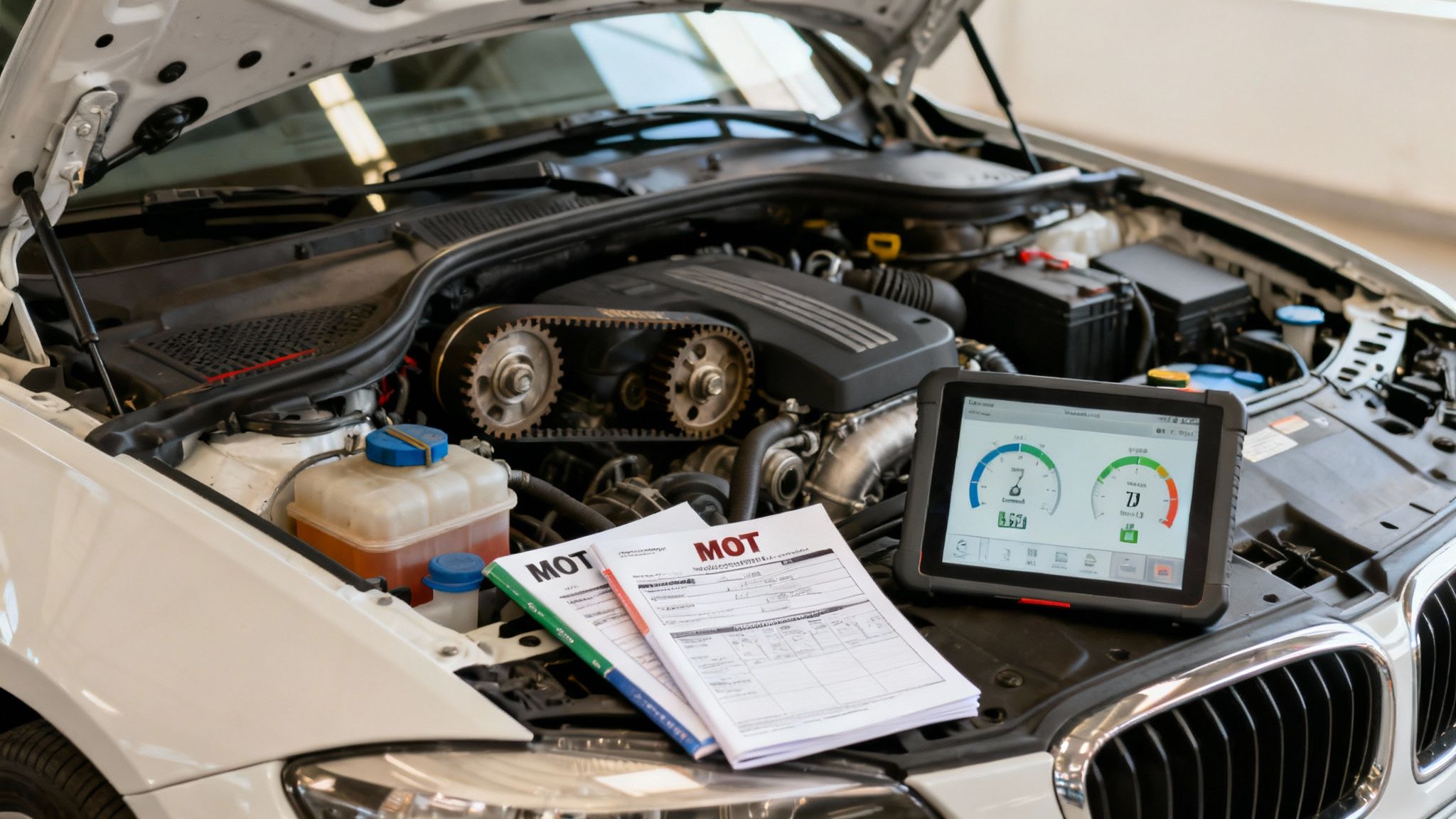
It’s on a long, hard journey that a car really shows its true colours. For dealers looking to stock the best cars for long distance driving, this means you have to look past the shiny paintwork and focus on the two things that really matter to a high-mileage customer: rock-solid reliability and genuine, real-world efficiency.
These aren’t just nice-to-haves; they are non-negotiable for anyone who spends serious time on the motorway. They’re the foundation of a desirable, easy-to-sell vehicle.
Of course, the manufacturer's MPG figures are a decent starting point. But they rarely tell the full story of what a car actually costs to run. Real-world efficiency, especially on the UK's mix of A-roads and motorways, can be a completely different beast. Getting to grips with the nuances between different powertrains is key to stocking your forecourt with the right metal.
The demand for this kind of stock is growing. According to the Department for Transport’s National Travel Survey, the average distance travelled per person in 2024 was 6,082 miles, a 2% jump from 2023. While that's still below pre-pandemic levels, it points to a clear trend: people are making more considered, less frequent long-distance trips, which puts a huge premium on vehicles that deliver fantastic economy.
Beyond the Official MPG
A car’s performance at the pump is often the first thing a long-distance driver looks at. Every powertrain has its own strengths that appeal to different buyers, and knowing these helps you match the right car to the right customer, every time.
- Modern Diesels: Still the undisputed kings of the motorway cruise. Their low-down torque and incredibly lean fuel burn at a steady 70 mph mean they can often smash their official combined MPG figures on a long run.
- Petrol Hybrids: These offer a brilliant balance. You get silent, zero-emission running around town, but on the motorway, the electric motor kicks in to help the petrol engine, trimming fuel consumption and boosting overall efficiency.
- Plug-in Hybrids (PHEVs): The perfect fit for drivers with a mixed bag of journeys. They can handle the daily commute or school run on pure electric power, but they've always got the petrol engine ready for those long, spontaneous trips, completely wiping out range anxiety.
Decoding Mechanical Reliability
This is where the real art of vehicle sourcing comes in. A car that's clocked 100,000 miles isn't necessarily on its last legs—if it’s been looked after properly. But certain parts are well-known weak spots on high-mileage cars, and spotting the signs requires a sharp eye and, crucially, the right data.
Think of it like getting a structural survey on a house. You're not just looking for a few cosmetic cracks; you're hunting for the deep-seated problems that could turn into a catastrophic failure and a massive headache for the next owner.
A vehicle's service and MOT history is a direct reflection of its previous owner's attitude to maintenance. Consistent, on-time servicing is the best predictor of future reliability, while gaps or repeated advisories for the same issue are clear warning signs of neglect.
An AutoProv report is your X-ray vision here. It lets you dig into a car's past before you've even laid eyes on it, helping you find evidence of crucial maintenance on common failure points.
Interpreting Service History and MOT Advisories
A clean MOT pass is great, but the advisory notes are where the real story is hidden. An AutoProv report lays this out clearly, helping you connect the dots. A recurring advisory for "slight play in steering rack" or "oil misting on shock absorber" is basically a flashing neon sign pointing to an inevitable, and often expensive, repair bill.
Gaps in the service history are another massive red flag. Missing a single scheduled service can void warranties, but more importantly, it can lead to premature wear on critical bits like timing belts or the specialist fluid in a dual-clutch gearbox. Our guide on how to properly check a car's service history in the UK dives deeper into what to look for.
Finally, don't forget the tech. Advanced driver-assistance systems (ADAS) like adaptive cruise control and lane-keeping assist are no longer just fancy extras. For long-distance drivers, they’re essential for safety and reducing fatigue. Making sure they all work perfectly during your appraisal adds serious value and makes the car a much easier, and more profitable, retail sale.
Popular Models and Their High-Mileage Weaknesses
Even the most celebrated workhorses have their weak spots, especially after clocking up serious miles on Britain's roads. Sourcing the best cars for long distance driving isn't about finding a flawless model; it’s about knowing exactly where to look for trouble on the forecourt favourites. Think of this as your inside guide to a smarter, more informed appraisal.
Getting to grips with these model-specific gremlins is absolutely critical. It stops you from stocking cars with known, expensive flaws that will kill your margin and, just as importantly, damage your dealership’s hard-won reputation. This isn't about blacklisting these motors; it’s about inspecting them with the precision of a specialist.
Volkswagen Passat and Skoda Superb
These VAG siblings are legends of the long-distance game. They’re loved for their huge cabins, comfortable ride, and frugal diesel engines, making them a staple on any forecourt catering to high-mileage drivers. But as they get older, a few well-documented issues crop up that demand your attention.
The main culprit is often the DSG (Direct-Shift Gearbox). It’s a brilliant bit of kit when new, but higher-mileage units can start to hesitate or judder, especially when crawling in traffic. A thorough test drive is a must, but the real story is in the service history. You need to see documented proof of regular gearbox oil and filter changes. If that's missing, be very careful – a new mechatronics unit can be a four-figure repair.
BMW 3 Series
The BMW 3 Series, especially the 320d, is the go-to choice for motorway warriors. It’s that perfect blend of performance, economy, and premium feel that makes it such a desirable piece of stock. And yet, certain engine generations have a notorious Achilles' heel.
The N47 diesel engine, found in models from roughly 2007 to 2014, is famous for timing chain problems. A tell-tale rattle from the back of the engine on start-up is a dead giveaway that the chain or its guides are on their way out. This is an engine-out job to fix, making it a ruinously expensive repair. Using an AutoProv report to check the car's age and specific engine code is your first line of defence before you even turn the key.
Volvo V60 and XC60
Volvo means safety and comfort, making them a natural fit for families and professionals covering long distances. That reputation is well-earned, but they aren’t immune to the realities of age. On models with automatic gearboxes, watch out for any harsh or delayed shifts, which could point to valve body issues brewing.
Scrutinising a vehicle's specific weak points transforms an appraisal from a simple walk-around into a targeted diagnostic inspection. This focused approach is the difference between buying a profitable asset and acquiring a hidden liability that will sit on your forecourt for months.
Another spot to check is the electronic parking brake, as they can sometimes fail. And on higher-mileage diesels, pay close attention to the health of the Diesel Particulate Filter (DPF). A history of short, town-based journeys can lead to clogging, which means expensive regeneration cycles or a costly replacement.
Of course, safety is a massive selling point for these models. Cars like the Volvo XC60, Audi A4, and Mercedes-Benz C-Class consistently nail their Euro NCAP crash tests, often scoring over 90% for adult occupant protection. Their advanced driver-assistance systems are a real bonus on those long, tiring journeys.
While many popular models make for excellent high-mileage heroes, they each carry a unique risk profile. For a broader view on what to look for in the used market, you might be interested in our guide on the 7 best second-hand cars to buy in the UK. Combining that knowledge with a model-specific inspection strategy ensures you only stock the best.
How AutoProv De-Risks Your Sourcing Strategy
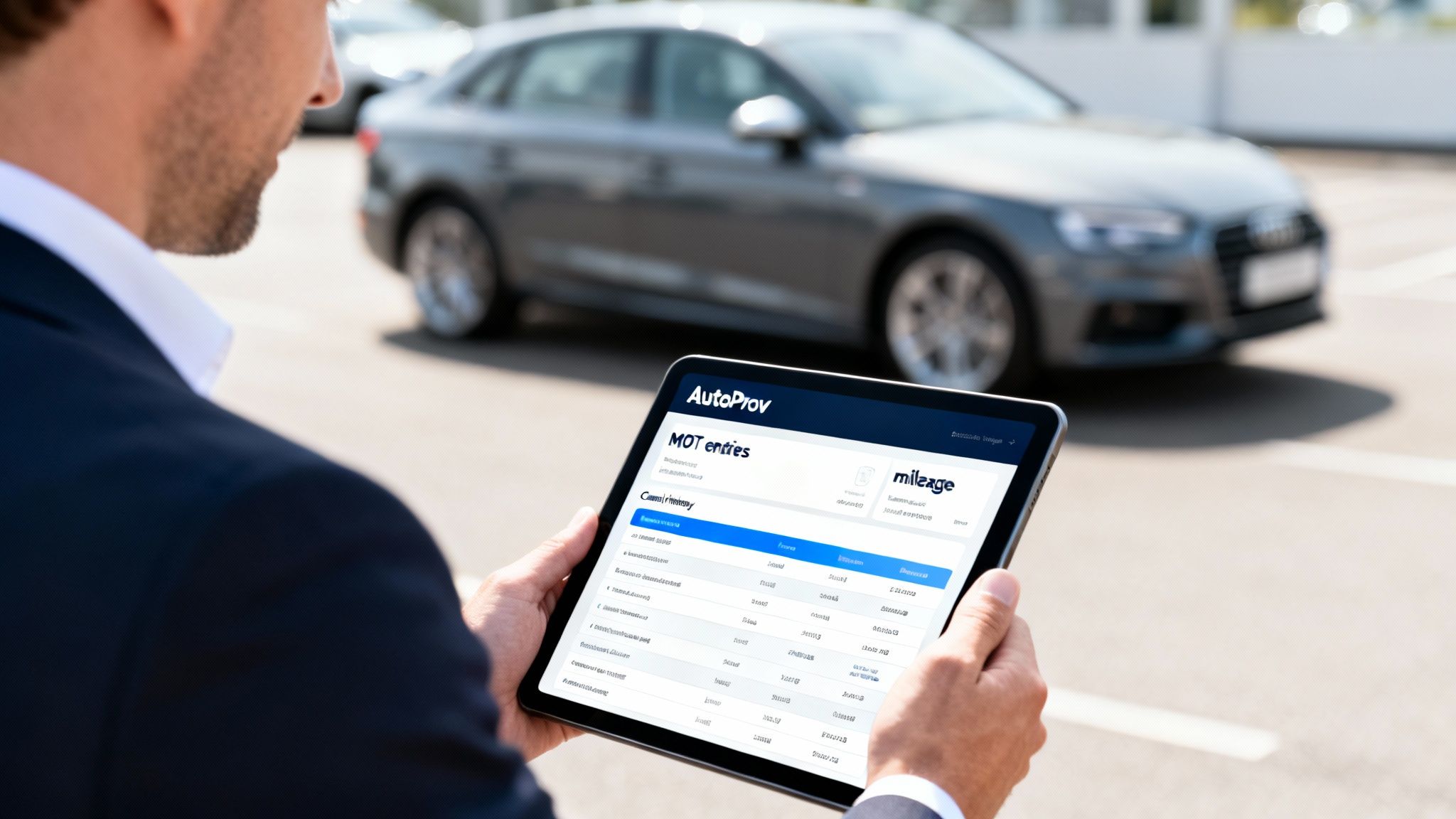
Connecting your expert eye with hard, actionable data is what separates a good buy from a great one. A physical inspection and a test drive are absolutely essential, but they only ever tell you part of the story. Think of an AutoProv report as your defence against the hidden, often costly, problems that even the most seasoned trader can miss.
When you're sourcing the best cars for long distance driving, you're looking for vehicles with a proven track record of care. You want the cars that have been properly prepped for the long haul, not just ones that have somehow endured it. A comprehensive vehicle check from our platform shifts your buying process from a calculated guess into an informed, data-backed business decision.
This is all about moving with certainty. It arms you with the knowledge you need to negotiate effectively and ensures every car you bring onto the forecourt is a sound, profitable asset. It’s how you mitigate risk long before you ever commit to a purchase.
Reading Between the Lines of MOT History
The MOT history in an AutoProv report is far more than a simple pass-or-fail record; it's a diagnostic timeline of the vehicle's health. Sure, major failure points are easy to spot, but the real value is in the patterns you can find buried in the advisory notes.
It’s an early warning system. A single advisory for "slight play in a suspension ball joint" might not seem like a big deal on its own. But when you see the same, or a similar, advisory pop up across consecutive tests? That’s a clear signal of a persistent, worsening issue the last owner chose to ignore.
A pattern of recurring advisories is basically a financial forecast. It flags imminent and often expensive work on components like brakes, suspension, or steering—costs that will eat directly into your profit margin if they're not spotted before you buy.
Using this data, you can build a solid picture of future liabilities. For a long-distance car, where the integrity of the suspension and brakes is paramount, this kind of insight is invaluable for making a smart acquisition.
Uncovering Financial and Mileage Discrepancies
Two of the biggest landmines in used stock are hidden finance agreements and clocked odometers. Both can turn a profitable-looking vehicle into a massive liability, and both are completely invisible during a physical appraisal. This is where an AutoProv data check becomes non-negotiable.
- Outstanding Finance: An AutoProv report will instantly flag any active hire purchase or PCP agreements. Buying a car with outstanding finance means you don’t legally own it, creating a huge risk for your business. You have to get this cleared up front.
- Mileage Discrepancies: "Clocking" is still a major problem in the used car market. Our reports cross-reference mileage from MOTs, service records, and previous sales listings to flag any inconsistencies. A discrepancy is a massive red flag on a high-mileage vehicle, suggesting a deliberate attempt to hide its true usage and potential wear.
Protecting your investment starts with verifying a vehicle’s identity and history. These checks are your shield against the most common types of vehicle fraud, giving you complete confidence in the legitimacy of every car you stock.
Negotiating with Data-Backed Certainty
At the end of the day, the information you pull from an AutoProv report becomes your most powerful tool in any negotiation. When you can point to a specific pattern of advisories or highlight a gap in the service history, your valuation is no longer just your opinion—it's based on verifiable facts.
This allows you to accurately price the vehicle while factoring in any reconditioning work it’s going to need. You can confidently explain your offer, demonstrating a professional, thorough approach that builds trust with the seller. You can see more on how our platform works to pull all this crucial data together.
By building these data checks into your standard process, you de-risk your entire sourcing strategy. You’ll sidestep problem cars, pay the right price for the good ones, and build an inventory of high-quality, long-distance vehicles you can sell with total transparency and confidence.
Right then, let's put a bow on this.
We've walked through a clear strategy for becoming the go-to dealership for proper long-distance cars. This isn't about just stocking the obvious stuff; it's about building an inventory that drivers will genuinely thank you for. Pulling this off consistently comes down to getting three things absolutely right.
First, you've got to be obsessed with real-world driver comfort – everything from the seats to how the suspension soaks up the miles. Second, you need an unwavering focus on mechanical integrity, which means only buying cars with a rock-solid, verifiable service history. And finally, the most important bit: a clean, fully-vetted history on every single vehicle. No exceptions.
In a market this crowded, carving out a name for yourself as the specialist for dependable motorway cruisers is a game-changer. It’s what separates you from the generalists and builds a base of loyal customers who trust your eye for quality.
Turning Art into Science
When you bake these checks into your daily buying process, sourcing stops being a gamble and starts becoming a science. This is where using the right tools becomes non-negotiable. An AutoProv report, for instance, isn't just a 'nice-to-have' anymore; it's the bedrock of a smart, risk-averse buying strategy.
Armed with the right trade knowledge and the complete data picture for every car, you’re not just buying stock. You're building a reputation and a more profitable business, one exceptional long-distance car at a time. It gives you the power to buy with certainty and sell with total confidence.
Following this methodical approach means you're consistently putting the best cars for long distance driving on your forecourt – the kind of cars that actually meet your customers' needs. That translates to fewer nasty surprises in the workshop, quicker stock turn, and healthier margins on every sale. It's simply the most effective way to build a resilient and profitable dealership that’s known for quality.
Your Questions Answered
Getting to grips with the risks and rewards of sourcing stock for long-haul drivers is half the battle. Here are some of the most common questions we hear from UK car dealers when it comes to finding and appraising the best cars for motorway life.
Are High-Mileage Diesel Cars Still Worth Stocking?
Definitely, but only for the right customer. A properly cared-for Euro 6 diesel is still one of the best tools for the job if your buyer is racking up serious motorway mileage. Nothing beats its fuel economy on those long, steady runs.
The trick is in the vetting process. You have to be ruthless. A car with a spotty history that hints at a life of short, urban trips is a massive DPF risk just waiting to happen. This is where an AutoProv report becomes indispensable, helping you confirm a solid, consistent service history. You need to be looking for proof of DPF health and evidence that crucial jobs like timing belt changes have been done on schedule.
For buyers outside the clean air zones, these cars are still hugely desirable and represent a very profitable slice of the market.
What’s the Single Most Important Check for a Long-Distance Car?
A thorough mechanical once-over is obviously crucial, but the single most important check is the one you can't see with your eyes: the car’s hidden history. Before you even think about committing to a purchase, a comprehensive data check from a service like AutoProv is completely non-negotiable.
It's the only way to shield your business from the invisible but potentially ruinous risks. We’re talking about things like outstanding finance agreements that could see the car repossessed, mileage discrepancies from clocking, or a secret past as an insurance write-off.
A car that looks perfect on the outside but carries a tainted history is a huge liability. It’s the kind of thing that can wreck your reputation and hit your bottom line hard. Verifying the vehicle's background first means you only sink your time and money into stock you can sell with total confidence.
How Can I Quickly Judge Comfort During an Appraisal?
Go beyond the usual quick spin around the block. Your focus should be on the driver’s seat and the key touchpoints. Real long-distance comfort isn’t just about soft leather; it’s all about solid support and smart adjustability.
During your appraisal, check for a wide range of seat movements, especially for lumbar support. Don't just look – feel for it. Look for heavy wear on the side bolsters, as that’s a dead giveaway of how the car’s been treated. Next, have a play with the infotainment system. Is it straightforward to use? A confusing interface is a massive source of frustration on a three-hour journey.
Finally, make sure the features that long-distance drivers really care about are all working perfectly: cruise control (especially the adaptive kind), heated seats, and a decent sound system. These aren't just extras; they are powerful selling points.
The most crucial, yet often overlooked, aspect of a long-distance car's appeal is how it reduces driver fatigue. A vehicle with superior ergonomics and well-functioning comfort features will always command more interest and a higher retail price from discerning buyers.
Are Electric Vehicles a Viable Option for Long-Distance Stock?
EVs are absolutely becoming a real option, but you have to be incredibly selective. If you’re sourcing for this market, you need to laser-focus on models with a genuine, real-world range of over 250 miles and proper rapid charging capabilities (100kW or more). Think along the lines of a Tesla Model 3 Long Range or a Kia EV6, not an early Nissan Leaf.
When you’re appraising a used EV, verifying its battery health is every bit as important as checking a petrol engine's service book. These cars appeal to a fast-growing segment of the long-distance market and can be seriously profitable, but only if they’re sourced intelligently and marketed with a clear, honest explanation of their real-world range and charging speeds. No fluff, just facts.
Frequently Asked Questions
AI-Generated Content Notice
This article was created with the assistance of artificial intelligence technology. While we strive for accuracy, the information provided should be considered for general informational purposes only and should not be relied upon as professional automotive, legal, or financial advice. We recommend verifying any information with qualified professionals or official sources before making important decisions. AutoProv accepts no liability for any consequences resulting from the use of this information.
From our AI insights
- Auction Pitfalls: Avoiding Costly Mistakes
Navigate UK car auctions with confidence by avoiding finance, write-off, and mileage risks.
- Mastering Paint Code Checks: Detecting Hidden Car Repairs
Discover how to use paint code verification to identify hidden car repairs and ensure a smarter purchase.
- UK Part-Exchange Checks: Protecting Dealer Margins
Explore essential part-exchange checks for UK dealers to safeguard profit margins, including provenance and finance verification.
Related Articles

Your Ultimate Guide to Buying a Used Car in the UK
Navigate the UK used car market with confidence using our comprehensive buying guide. Tips, checks, and AutoProv Provenance insights included.

Difference Between MOT and Service: What You Need to Know
An MOT is a mandatory legal inspection that every car on UK roads needs to pass.Think of it as the government's way of ensuring your vehicle meets the absolute minimum safety and environmental standards to be considered roadworthy. A service, on the other hand, is a completely different beast. It's the proactive maintenance routine recommended by the people who built your car, designed to keep it running smoothly and catch problems before they start. In short, an MOT is a pass-or-fail exam required by law. A service is a comprehensive health plan for your car.

Your Ultimate Used Car Inspection Checklist
A solid used car inspection checklist is the single most powerful tool you have to avoid buying a lemon. It gives you a methodical way to look past the shiny paint and assess a car's real condition, helping you spot hidden problems and get a fair price before you shake hands on the deal.
Published by AutoProv
Your trusted source for vehicle intelligence