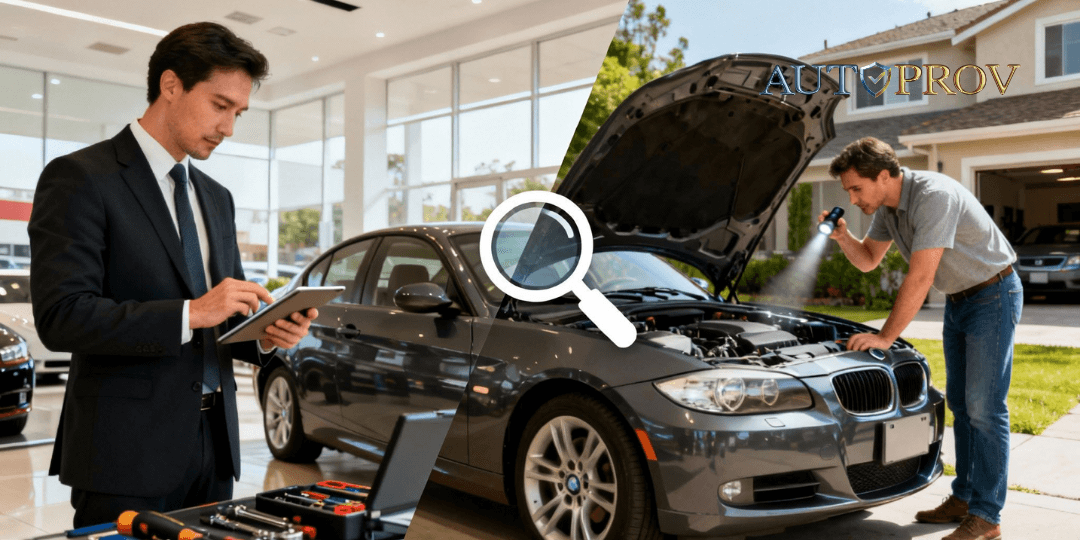
The biggest single difference between buying from a dealer and a private seller comes down to one thing: legal responsibility. When you buy from a dealer, UK consumer law has your back, making the seller liable for the car's quality. In a private sale, it's a completely different story. The old adage 'buyer beware' isn't just a saying—it's the rule, placing the entire burden of due diligence squarely on your shoulders.
The biggest single difference between buying from a dealer and a private seller comes down to one thing: legal responsibility. When you buy from a dealer, UK consumer law has your back, making the seller liable for the car's quality. In a private sale, it's a completely different story. The old adage 'buyer beware' isn't just a saying—it's the rule, placing the entire burden of due diligence squarely on your shoulders.
Key Differences In Car Checks: Dealer Vs Private Buyer

When you're in the market for a used car, the checks you need to run change dramatically depending on who you're buying from. A purchase from a recognised dealer is governed by some pretty robust consumer protection laws, which act as a vital safety net if the car turns out to have undisclosed faults. This legal framework means dealers must sell vehicles that are of satisfactory quality and match their description.
A private sale, on the other hand, is a world away. It operates under the principle of 'caveat emptor', or 'buyer beware'. This puts the full weight of responsibility on you, the buyer, to uncover any and all potential issues. The private seller's only real legal duties are to describe the car accurately and prove they actually have the right to sell it. That's a massive gap in protection after you've handed over the cash.
Your Due Diligence Priorities
For private buyers, a meticulous, almost forensic approach isn't just recommended; it's non-negotiable. Your checks have to be thorough enough to make up for the fact you have very little legal comeback if things go south. This means going far beyond a quick spin around the block and actively hunting for hidden problems.
Dealers, while legally on the hook, also perform intensive checks for their own commercial survival. They need to put an accurate price on a part-exchange, figure out potential reconditioning costs, and make damn sure the car is safe to sell on the forecourt. Their process is systematic and data-driven, designed to protect their bottom line and reputation. The detail they go into often mirrors what we outline in our guide to provenance checks for traders, covering everything from outstanding finance to write-off history.
It's easy to think a dealer's higher price is just for 'peace of mind'. While warranties and legal cover are part of it, their upfront checks are mostly about managing their own business risk—a process any switched-on private buyer should be trying to copy.
Comparing The Approaches
At its core, the difference in the car check for a dealer versus a private buyer is all about who carries the risk. When purchasing from a dealer, the risk is shared. The dealer has both a legal and a commercial incentive to make sure the car is sound. They carry out professional appraisals, and you're ultimately protected by the Consumer Rights Act. Conversely, in a private purchase, the risk is almost 100% yours. You have to become the expert, doing your own deep-dive inspection and history verification to dodge what could be a very expensive bullet.
This guide will break down these crucial differences, looking at the different legal protections and inspection priorities for each scenario. We’ll show you how to tackle both with confidence, using professional-grade tools like an AutoProv report to get the real story on any vehicle. This is how you make a properly informed decision, no matter who holds the keys.
Understanding Your Legal Protections When Buying A Car
The moment you decide to buy a used car, you’re stepping into one of two completely different legal arenas. It’s a crucial distinction to grasp, because the protection you have isn’t universal; it all hangs on whether you’re buying from a professional dealership or a private individual. Getting this right is probably the single most important factor in managing your risk.
When you buy from a dealer, you’re shielded by a powerful piece of legislation: the Consumer Rights Act 2015. This isn't just a friendly guideline; it's a legally binding framework that holds the dealer accountable for the quality of the car they sell. It provides a safety net that simply doesn't exist when you buy privately.
Under this act, the car you buy must meet three basic standards. It must be of satisfactory quality, fit for purpose, and as described in the advert or by the salesperson. If the gearbox gives up the ghost a week after you drive off the forecourt, this law gives you clear and direct comeback.
The Dealer's Legal Responsibility
The Consumer Rights Act is robust. It means any vehicle sold by a trader must be free from defects, safe, and reasonably durable, especially when you factor in its age and mileage. No one expects a car with 100,000 miles on the clock to be flawless, but it must be in a condition that’s reasonable for what it is.
For example, if a dealer sells you a five-year-old family car but "forgets" to mention a known fault with the air conditioning, you’ve got a strong claim. The law even presumes that any significant fault found within the first six months was likely there when you bought it, shifting the burden of proof onto the dealer to prove otherwise. Our in-depth article on the Consumer Rights Act and the motor trade dives much deeper into these obligations.
A dealer's legal duty is to ensure the car is roadworthy and accurately represented. A private seller's duty is simply to have the legal right to sell the car and not lie about its description. The gap in protection between these two scenarios is enormous.
The Private Sale Minefield
Now, contrast that with a private sale, which operates under a much harsher reality. The old saying ‘caveat emptor’, or ‘buyer beware’, is the absolute rule of the game here. The seller’s legal duties are minimal, which can create a minefield for an unprepared buyer.
A private seller really only has two main legal obligations: firstly, to accurately describe the car (they can't say it has air-con if it doesn't), and secondly, to prove they have the legal right to sell it (meaning the car isn't stolen or still has finance owing on it).
And that’s pretty much it. If you buy a car privately and the engine develops a major fault the very next day, you generally have no legal comeback. The only exception is if you can prove they deliberately and knowingly misled you about its condition—which is notoriously difficult to do.
This is why the checks you need to do are so fundamentally different. In the UK, buying from a dealer wraps you in these formal checks and statutory protections. Private buyers, on the other hand, are pretty much on their own if a fault appears after the money has changed hands.
This is exactly where a professional vehicle history check from a service like AutoProv becomes your personal safety net. While a dealer is legally bound to ensure a car isn't subject to outstanding finance, a private seller isn't. An AutoProv check bridges that gap, arming you with the critical data needed to uncover a hidden write-off history, mileage discrepancies, or outstanding finance before you part with a penny. It lets you apply the same risk-mitigation standards that dealers are legally required to, levelling the playing field and protecting your investment.
The Private Buyer's Essential Vehicle Inspection Guide
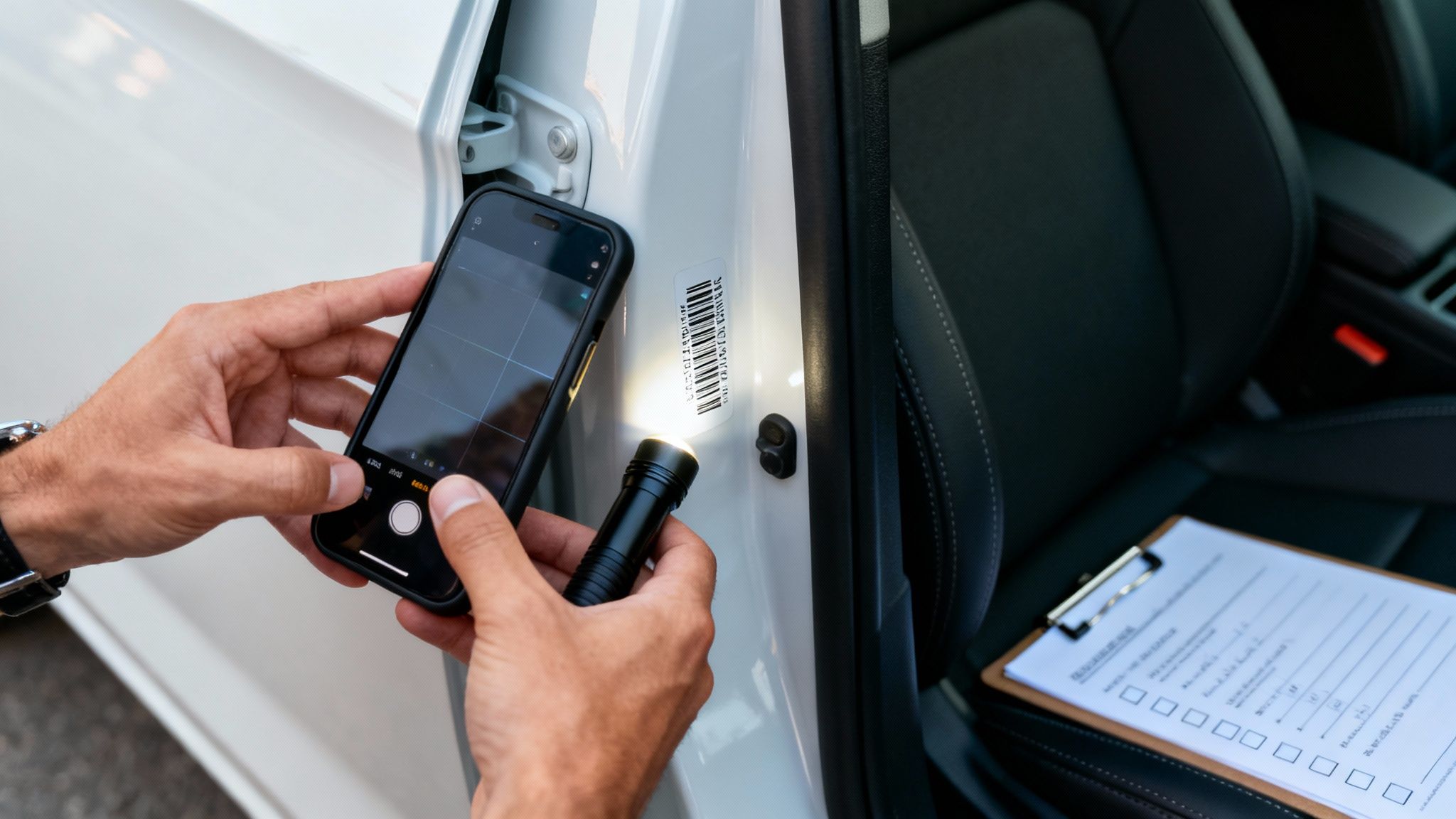
When you're buying privately, you are the first and only line of defence. There's no dealership warranty or legal safety net to fall back on, so a methodical, hands-on inspection isn't just a good idea—it's absolutely critical. This is the moment you switch from being an optimistic buyer to a sharp-eyed detective.
This guide isn't about vague tips; it's an actionable checklist for your pre-purchase examination. Your mission is to uncover the car's real story and spot the hidden problems that could turn a great find into a money pit.
The Paperwork And VIN Verification
Before you even think about kicking the tyres, the paperwork needs your undivided attention. It's the foundation of any good private car check.
Start with the V5C logbook. The name and address on the document must match the seller's details. If they don't, that's a massive red flag. It could mean they aren't the legal owner and have no right to sell the car.
Next, you need to match the Vehicle Identification Number (VIN) on the V5C to the car itself. You’ll find it stamped in a few key places: on the chassis under the bonnet, at the bottom of the windscreen, and on a sticker inside the driver’s door jamb. If those numbers aren't a perfect match, walk away. Don't hesitate.
A mismatched VIN is a classic sign of a stolen or cloned vehicle. This one check is non-negotiable. Getting it wrong could mean losing your money and finding yourself caught up in a criminal investigation.
An AutoProv report is your secret weapon here. It instantly cross-references the VIN and registration against national databases, flagging discrepancies that are almost impossible for a private buyer to spot on their own. It’s like having a trade expert in your pocket.
Exterior And Bodywork Inspection
With the paperwork squared away, it’s time for the physical inspection. Do a slow, deliberate walk-around in broad daylight—never inspect a car in the dark or in the rain, as it hides a multitude of sins.
Run your hand along the body panels. You're feeling for any ripples or uneven surfaces that might signal cheap filler from a previous repair. Check the gaps between the doors, bonnet, and boot; if they're uneven, it's a strong hint the car has been in a shunt. Also, keep an eye out for variations in paint colour or overspray on the rubber seals, which are giveaways for a budget repair job.
First, check the tyres. Make sure all four are from a reputable brand and have at least the legal minimum tread of 1.6mm. A safer benchmark is 3mm. Uneven wear across a tyre is a classic sign of alignment or suspension trouble. Next, inspect the glass for any chips or cracks in the windscreen, as they can be expensive to fix and are often an MOT failure waiting to happen. Finally, get the seller to help you test every single exterior light—headlights, indicators, brake lights, and fog lights—to make sure they all work as they should.
Under The Bonnet And Interior Checks
Don't be put off by popping the bonnet. You don't need to be a mechanic to spot the obvious warning signs. Pull the dipstick to check the engine oil; it should look golden brown, not black and sludgy. Scan the engine block and the ground underneath the car for any signs of fresh oil leaks.
Inside, your job is to be methodical. Test every switch, button, and gadget. That means the air-con, heater, stereo, electric windows, and central locking. Faulty electronics can be a real headache and rack up huge repair bills.
Finally, the test drive is where it all comes together. Turn the radio off and listen. Are there any strange knocks, rattles, or whines from the engine or suspension? Feel for any vibrations through the steering wheel and check that the brakes are responsive and pull the car up in a straight line. This is your chance to really feel the car's health on the road. Armed with these checks and an AutoProv report, you can negotiate like a pro and buy with the same confidence as a seasoned dealer.
How Car Dealerships Conduct Vehicle Checks
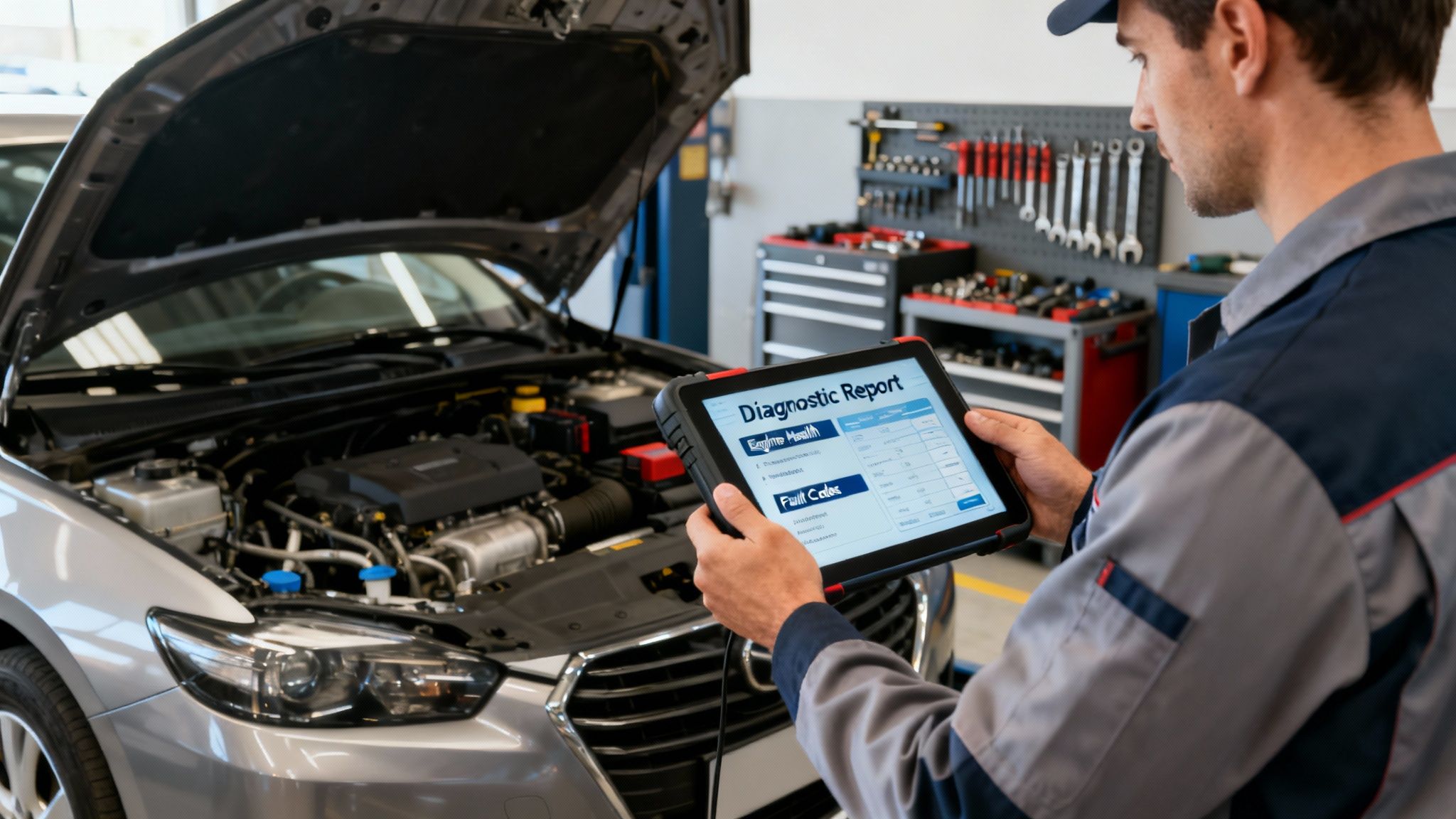
Where a private buyer's inspection is really about self-preservation, a car dealership's check is a masterclass in professional risk management. It's a systematic, data-driven process designed to answer one critical question: is this vehicle a profitable and safe asset for our forecourt?
This process goes miles beyond the visual once-over a typical private buyer might do. For a dealer, a vehicle check is a business-critical operation. It dictates the purchase price, forecasts reconditioning costs, and shields them from legal headaches down the line. They aren't just buying a car; they're investing in stock.
This professional appraisal blends a forensic physical inspection with deep data analysis—a combination that minimises nasty surprises and maximises their margin. Understanding how they do it gives you a real insider's view into what separates a basic look-over from a genuine, trade-grade evaluation.
Data First: The Foundation Of The Dealer Check
Before a mechanic even thinks about lifting the bonnet, a dealer’s first move is almost always a comprehensive data check. They use professional-grade tools that pull information from multiple, industry-leading sources, painting a complete picture of the vehicle's history and legal status in seconds.
This is exactly where platforms like AutoProv become indispensable for the trade. A dealer can instantly verify crucial data points that a private seller might not even realise exist. This isn't your average history check; it's a multi-layered verification process.
The key areas they zone in on include outstanding finance, ensuring they won't touch a car with finance owing on it. They also check accident history to know if the car has ever been written off, using reports that flag MIAFTR records and reveal write-off categories like Cat S or Cat N. Furthermore, a check against the Police National Computer (PNC) provides an immediate answer on whether the vehicle has been reported stolen. Finally, they review the service and MOT history, as gaps or a patchy record can scream poor maintenance and future problems.
For a dealership, a clean data report is the green light to move on to the physical inspection. Any red flags in the data—especially around finance or write-off status—can kill the deal on the spot, saving them serious time and money.
The Physical Appraisal And Cost Forecasting
Once the data gives the all-clear, the physical inspection begins. This is no casual walk-around. It’s a detailed assessment designed to calculate the precise cost of getting the car ‘forecourt ready’. A trained technician or appraiser will meticulously go over the vehicle.
They’re looking for far more than just obvious damage. The inspection involves checking for subtle signs of repair, measuring paint depth to spot resprayed panels, and assessing the condition of high-value components like the clutch, gearbox, and engine. Every single scuffed alloy wheel, worn tyre, or dodgy sensor is noted and priced up.
This detailed mechanical review allows the dealer to accurately forecast their reconditioning budget. That budget is then subtracted from the car’s potential retail value to land on the maximum price they’re willing to pay for it. For trade buyers, getting every detail right is key; you can explore a deeper dive into this with our ultimate car spec checker guide for trade buyers.
This rigorous, data-led approach is the industry standard for due diligence. It’s how professionals protect their investment and ensure the vehicles they sell are safe, sound, and accurately priced. By using a service like AutoProv, private buyers and sellers can tap into the same calibre of in-depth reporting, applying professional-grade standards to their own transactions.
Why Do We Mistrust Car Dealers, Yet Still Buy From Them?
The UK’s used car market is built on a strange paradox. Ask the average person on the street what they think of car dealers, and you’ll likely hear a few stereotypes. Yet, when it comes time to actually sign on the dotted line, the vast majority of us will walk onto a dealer’s forecourt rather than doing a deal on a stranger's driveway.
It’s a classic case of perception versus reality. While the old image of the untrustworthy salesperson lingers, buyers are ultimately swayed by the practical, real-world benefits that only a dealership can offer. This push-and-pull is something everyone in the car buying or selling process needs to understand.
The Gap Between What We Say and What We Do
The numbers really highlight this disconnect. You’ll often see reports showing a huge gap between how people feel about dealers in general and how they feel about the specific dealer they bought from. One survey, for example, found that a tiny 7% of consumers said they trusted used car dealerships as a whole.
But here’s the interesting part: that same report showed that among people who had actually bought a car recently, satisfaction and trust in their chosen dealer were much, much higher. You can dig into these consumer behaviour trends and see the full picture for yourself.
It seems that while we might be suspicious of the motor trade in theory, the actual experience of buying from a professional business—with its paperwork, processes, and legal footing—is far more reassuring.
The real takeaway here is that trust isn't just a feeling; it’s a calculation of risk. Buyers might not ‘trust’ a dealer in an emotional sense, but they trust the structured, legally protected process far more than the Wild West of a private sale.
Why Dealerships Still Win Out
So, what are these powerful factors that keep pulling buyers back to dealerships, even if they walk in with their guard up? It all comes down to a sense of security that a private seller struggles to compete with.
The main reasons are pretty clear. Firstly, there are warranties and legal backing. Knowing you're protected by the Consumer Rights Act is a massive safety net. If a serious fault appears shortly after you drive away, you have a legal route to get it sorted. That peace of mind is priceless. Secondly, dealerships offer integrated finance packages that allow people to afford a better, safer, or newer vehicle. Finally, the sheer convenience of a dealership as a one-stop shop—handling paperwork, tax, part-exchanges, and offering a range of inspected cars—is a major draw.
This is where the trust gap can be closed. For any seller, a comprehensive, independent report from a service like AutoProv becomes an impartial referee. For a dealer, it backs up their own workshop checks with hard data, proving their professionalism. For a private seller, it offers the kind of objective, detailed proof that gives a buyer the confidence they’d normally only get from a forecourt.
Why A Professional Vehicle History Check Is Essential
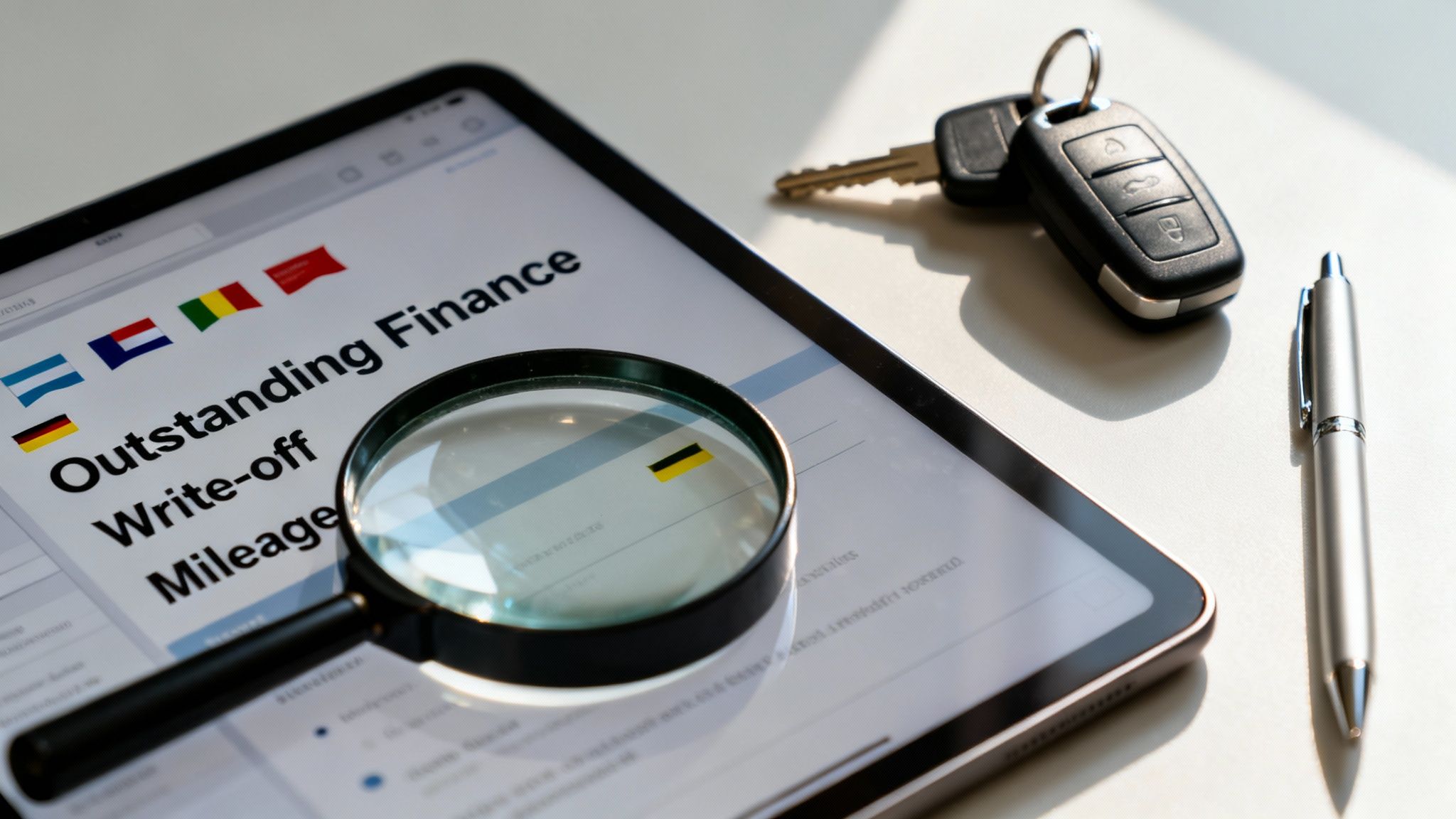 As we've seen, dealers and private buyers approach a car check from different angles. But no matter which side of the sale you're on, both journeys lead to the same unavoidable conclusion: a professional-grade vehicle history check isn't just a nice-to-have. It’s the absolute foundation of a safe and successful purchase.
A quick visual inspection and a test drive are important, of course, but they only ever tell you the surface story. The most expensive and dangerous problems are almost always invisible to the naked eye. These are the hidden skeletons in a car's closet that can turn a great find into a financial nightmare.
Uncovering The Hidden Dangers
A professional report, like one from AutoProv, digs deep into a vehicle's past, flagging the kind of critical issues that can and should make or break a deal. This isn't just about getting peace of mind; it's about protecting yourself from serious financial loss and potential legal headaches down the road.
The real-world risks a proper check uncovers include outstanding finance, where you could buy a car that legally belongs to a finance company and risk it being repossessed. It also identifies undisclosed accident damage, revealing if a car has been declared a write-off like a Cat S or Cat N. Mileage tampering, or 'clocking', is another major problem a check can spot by cross-referencing records. Lastly, it defends against cloned VINs, where stolen cars are disguised with the identity of a legitimate vehicle.
A professional vehicle check is the only way to be certain that the car you're buying is exactly what the seller claims it is. It replaces guesswork and trust with objective, verifiable data, giving you the power to make an informed decision.
The Universal Benefit For All Buyers
Whether you’re a seasoned dealer shifting hundreds of cars a year or a private buyer making your first purchase, the value of a comprehensive check is crystal clear. It creates a level playing field built on transparency and facts, which benefits everyone involved.
For dealers, folding an AutoProv report into the sales process is a mark of a professional, reputable operation. It builds instant trust with customers, validates your own appraisal, and ultimately helps you move stock faster and with more confidence.
For private buyers, it's the ultimate safety net. Armed with a detailed report, you can confidently check a seller's claims, negotiate from a position of strength, and walk away from a bad deal before it’s too late. It provides the clarity you need to avoid a very costly mistake.
Have Questions? We Have Answers
Navigating the world of used car checks can feel like a minefield, especially when the rules are different on a dealer's forecourt compared to a private seller's driveway. Let's clear up some of the most common queries people have when comparing car checks. Getting these points straight is crucial.
What Is The Single Most Important Check For A Private Car Sale?
While getting your hands on the car for a physical inspection is a must, the single most important check you can do is a comprehensive vehicle history report. A professional-grade report, like one from AutoProv, will instantly flag any deal-breaking issues that a quick test drive will never reveal.
We're talking about critical, hidden information like outstanding finance, which can lead to the car being repossessed. A check also verifies the stolen vehicle status against the Police National Computer (PNC). Furthermore, it uncovers any write-off history, which drastically affects the car's safety and resale value. These are massive risks that only a proper data check can uncover. Think of it as your essential first step before any money changes hands.
Can I Still Return A Car Bought From A Dealer If It Has Faults?
Yes, absolutely. When you buy from a dealer in the UK, your purchase is protected by the Consumer Rights Act 2015. This powerful piece of legislation gives you a 'short-term right to reject' the car within the first 30 days if it's faulty or wasn't described accurately.
Even if a major fault pops up after that initial 30-day window but within the first six months, the law is on your side. It assumes the fault was probably there when you bought it, meaning you're still entitled to a repair, a replacement, or a partial refund. This is a huge advantage of buying from a dealer and a level of protection you simply don't get in a private sale.
Does A Sold As Seen Receipt Have Legal Standing In The UK?
This is a great question, because the answer changes completely depending on who you're buying from. In a private sale, 'sold as seen' generally means you accept the car as it is, faults and all. The seller isn't on the hook for issues you find later, though they can't lie or deliberately misrepresent the vehicle to you.
For a registered car dealer, however, scribbling 'sold as seen' on a receipt is legally worthless. It doesn't cancel out your statutory rights under the Consumer Rights Act. A dealer can't use that phrase to dodge their legal duty to sell you a car that's of satisfactory quality and fit for purpose. It's a classic case of your legal rights trumping a line on a bit of paper.
Frequently Asked Questions
AI-Generated Content Notice
This article was created with the assistance of artificial intelligence technology. While we strive for accuracy, the information provided should be considered for general informational purposes only and should not be relied upon as professional automotive, legal, or financial advice. We recommend verifying any information with qualified professionals or official sources before making important decisions. AutoProv accepts no liability for any consequences resulting from the use of this information.
From our AI insights
- Auction Pitfalls: Avoiding Costly Mistakes
Navigate UK car auctions with confidence by avoiding finance, write-off, and mileage risks.
- Mastering Paint Code Checks: Detecting Hidden Car Repairs
Discover how to use paint code verification to identify hidden car repairs and ensure a smarter purchase.
- UK Part-Exchange Checks: Protecting Dealer Margins
Explore essential part-exchange checks for UK dealers to safeguard profit margins, including provenance and finance verification.
Related Articles

Your Ultimate Guide to Buying a Used Car in the UK
Navigate the UK used car market with confidence using our comprehensive buying guide. Tips, checks, and AutoProv Provenance insights included.
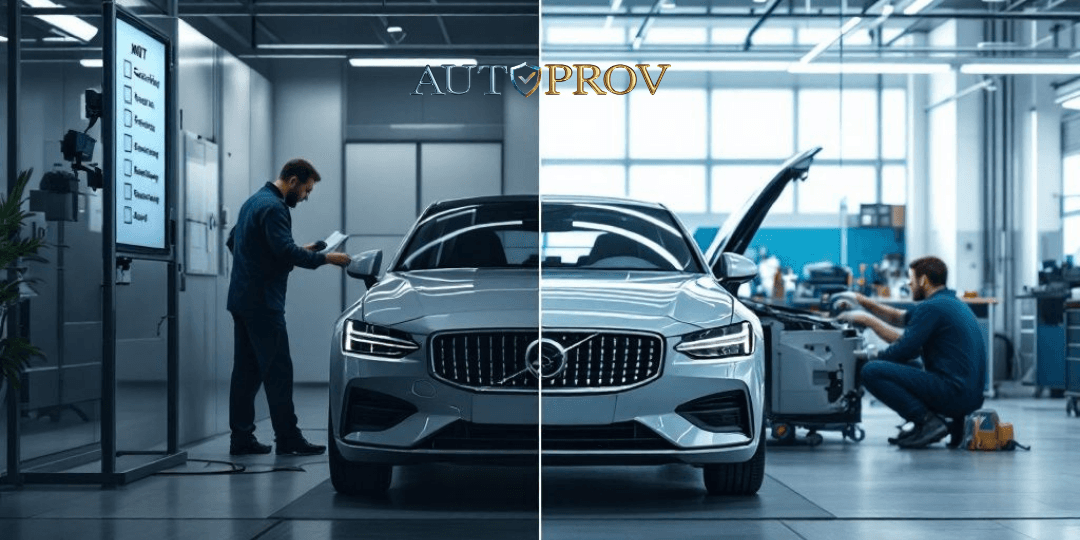
Difference Between MOT and Service: What You Need to Know
An MOT is a mandatory legal inspection that every car on UK roads needs to pass.Think of it as the government's way of ensuring your vehicle meets the absolute minimum safety and environmental standards to be considered roadworthy. A service, on the other hand, is a completely different beast. It's the proactive maintenance routine recommended by the people who built your car, designed to keep it running smoothly and catch problems before they start. In short, an MOT is a pass-or-fail exam required by law. A service is a comprehensive health plan for your car.
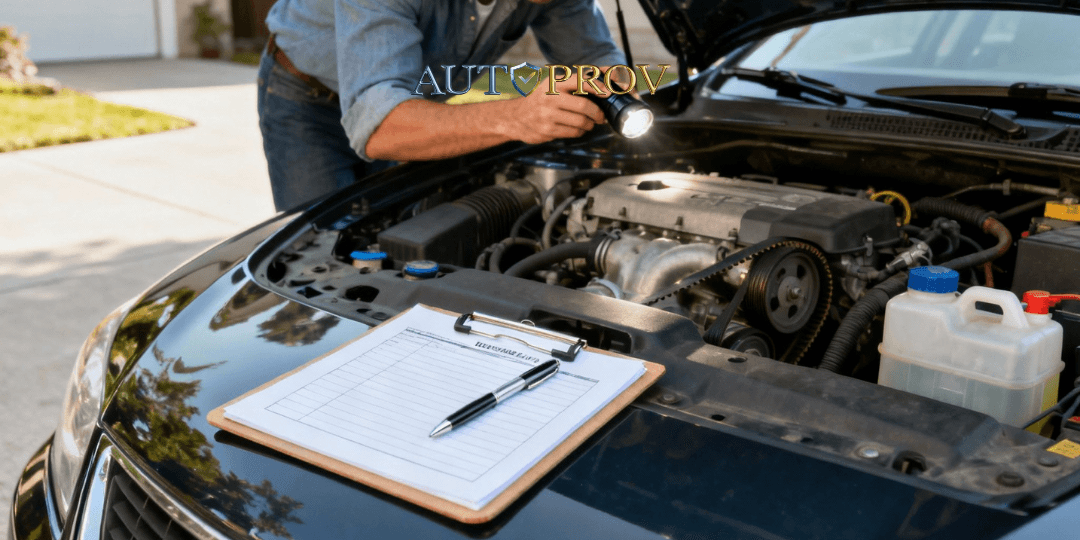
Your Ultimate Used Car Inspection Checklist
A solid used car inspection checklist is the single most powerful tool you have to avoid buying a lemon. It gives you a methodical way to look past the shiny paint and assess a car's real condition, helping you spot hidden problems and get a fair price before you shake hands on the deal.
Published by AutoProv
Your trusted source for vehicle intelligence