Finding one of the best second-hand cars under £5,000 in the UK is absolutely realistic. This budget puts you squarely in the territory of reliable superminis and solid family saloons. You should expect to see vehicles around 8-15 years old with higher mileage, but don't let that put you off – there's plenty of life left in them if you choose wisely and verify their history.
Finding one of the best second-hand cars under £5,000 in the UK is absolutely realistic. This budget puts you squarely in the territory of reliable superminis and solid family saloons. You should expect to see vehicles around 8-15 years old with higher mileage, but don't let that put you off – there's plenty of life left in them if you choose wisely and verify their history.
What to Expect in the UK’s Sub-£5,000 Car Market
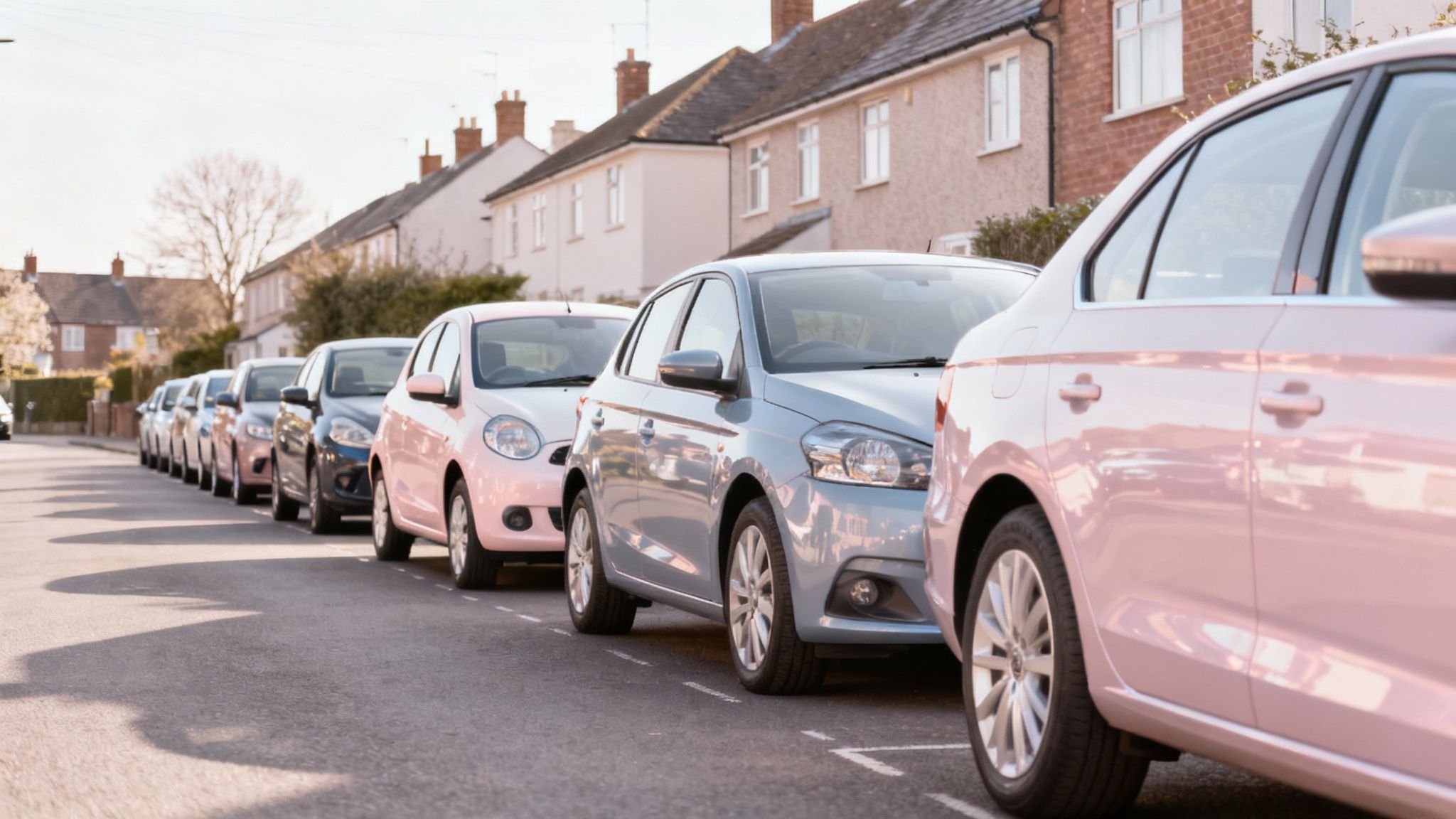
Dipping into the UK’s sub-£5,000 used car market can feel a bit like a treasure hunt. It’s a busy space, packed with potential bargains that are perfect for first-time drivers, families needing a second runaround, or anyone after a dependable daily driver without breaking the bank. But let’s be honest: setting realistic expectations is the key to finding a gem, not a money pit.
This price point is the sweet spot where many popular models land after their steepest depreciation has passed. The initial new-car cost has vanished, but the vehicle's core reliability is often still very much intact. You're looking at cars that have seen a bit of life but still have plenty more to give.
Typical Age and Mileage
Generally, cars in this budget will be between eight and fifteen years old. The mileage will also be higher, typically sitting somewhere between 80,000 and 120,000 miles. While those numbers might seem high at first glance, modern engineering means many cars can sail past this with proper maintenance.
The real key isn't the number on the odometer, but the story behind it. A car with 100,000 motorway miles is often in better mechanical shape than one with 50,000 miles of punishing, stop-start city journeys. This is exactly why a detailed history check becomes non-negotiable.
Condition and Common Finds
The condition of cars under £5,000 can vary wildly. You’ll find everything from meticulously cared-for examples with a full folder of receipts to cars that have clearly been neglected. Some of the most common finds include:
- Well-Maintained Superminis: Models like the Ford Fiesta and Honda Jazz are everywhere for a reason – they're known for their brilliant reliability and low running costs.
- Solid Family Saloons: Cars such as the Skoda Octavia or older Ford Mondeos offer practicality, space, and comfort for very little money.
- Dependable Hatchbacks: The Volkswagen Golf and Toyota Auris are popular choices, famed for their solid build quality and impressive longevity.
The UK used car market is incredibly active. Data from the Society of Motor Manufacturers and Traders (SMMT) shows that budget-friendly vehicles drive a huge volume of sales. It's no surprise that models like the Ford Fiesta and Vauxhall Corsa dominate this bracket; they nail the balance between cost and durability.
A car's value is more than its price tag; it's a combination of its history, condition, and the confidence you have in its future. A small investment in due diligence today prevents major expenses tomorrow.
This is precisely where AutoProv can transform your search. An AutoProv vehicle report cuts straight through the guesswork. It gives you a professional-grade background check, verifying MOT history, flagging any outstanding finance, and revealing if a car has a hidden write-off status. Armed with this information, you can turn a potentially risky purchase into a savvy, confident decision, steering clear of hidden problems and finding a genuine bargain.
Your Essential Pre-Purchase Inspection Checklist
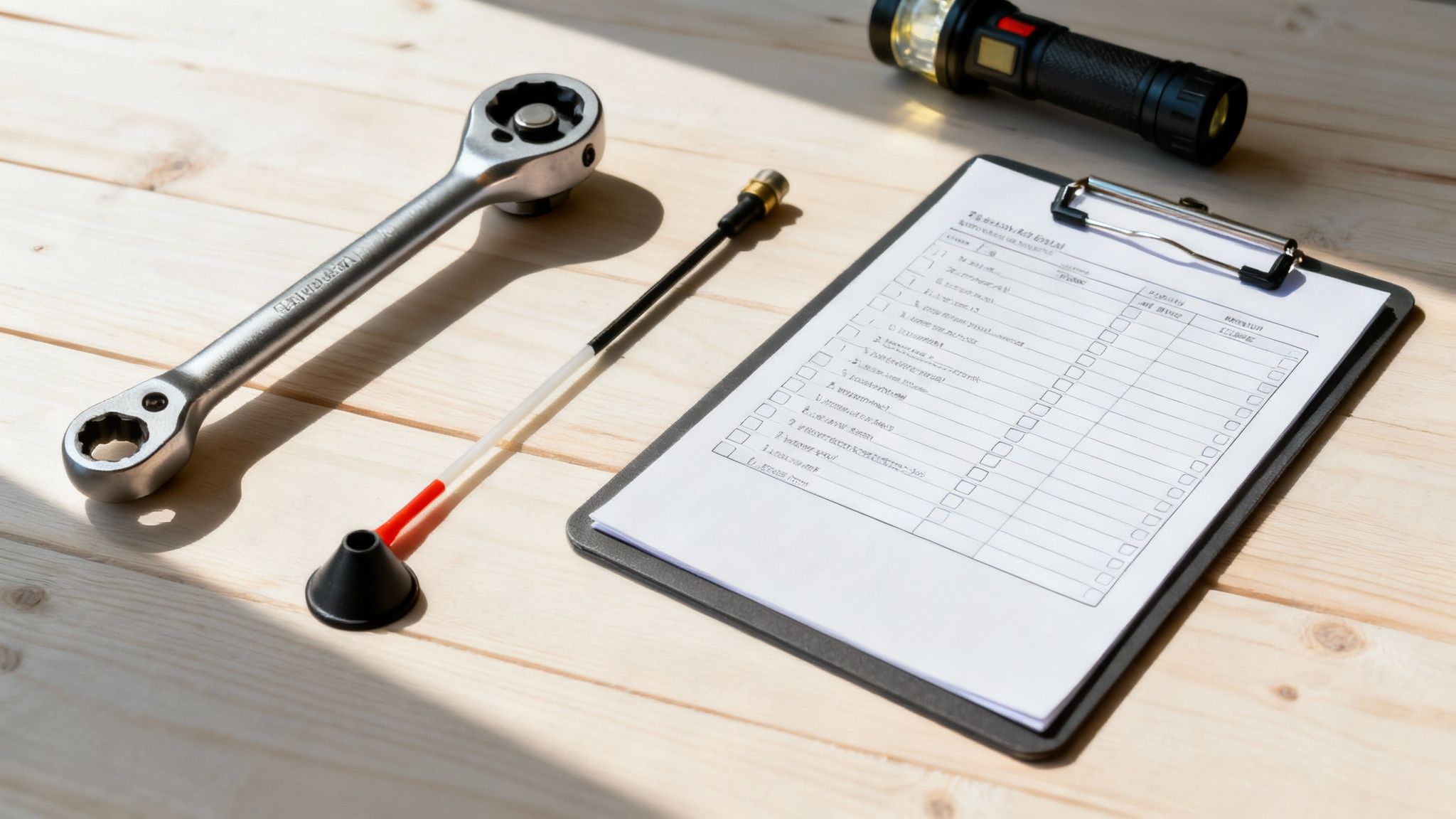
When you're hunting for a great second-hand car under £5,000, a proper physical inspection is your best line of defence against buying a lemon. Think of yourself as a detective. The seller has their story, but the car itself will tell you the truth if you know where to look. A methodical check can save you from a world of expensive repairs and headaches later on.
This goes way beyond just kicking the tyres. It's a systematic process of checking the car’s body, interior, and mechanical parts to spot the red flags that most people miss. A few focused minutes here can reveal problems a quick test drive might never uncover.
Bodywork and Exterior Checks
Always start your inspection in broad daylight on a dry day. Rain is brilliant at hiding scratches, dodgy paint jobs, and minor dents. Take a slow walk around the car, looking at it from various angles to see how the light hits the panels.
What you're really looking for are signs of previous accident damage. Uneven panel gaps are a classic giveaway—that's when the space between the bonnet and a wing, or a door and its frame, is wider at one end. Also, look closely at the paint for mismatched shades or a rough, "orange peel" texture, which is a sure sign of a respray.
- Check for Hidden Rust: Pay special attention to the wheel arches, the sills (the panels just below the doors), and the bottom edge of the doors themselves. A bit of surface rust might be okay, but any bubbling paint means there's serious corrosion eating its way through from underneath.
- Inspect the Tyres: Check they have enough tread (the legal minimum is 1.6mm) and look for uneven wear. If the tyres are worn down heavily on just one edge, it could point to suspension or alignment issues.
- Test All Lights: Flick every switch. Make sure the headlights, indicators, brake lights, and fog lights all work as they should. Chasing down electrical faults can be a nightmare you don't need.
Under the Bonnet and Mechanicals
You don't have to be a mechanic to do a few crucial checks under the bonnet. First, make sure the engine is completely cold. A seller who has warmed the car up before you arrive might be trying to hide a starting problem.
Have a good look around for any obvious fluid leaks on the engine itself or on the ground underneath. Pull out the oil dipstick – the oil should be a light honey-brown colour. If it's jet black and sludgy, it's long overdue a service. If it looks milky or creamy, walk away. That's a huge red flag for head gasket failure, which is a seriously expensive fix.
Your physical inspection is one half of the story; the vehicle's documented history is the other. Combining a keen eye with a professional report from AutoProv gives you a complete, 360-degree view of the car, leaving no stone unturned.
Another big one is the cambelt (or timing belt). Ask the seller when it was last changed and if there's a receipt to prove it. If there's no proof, you have to assume it needs doing and factor that cost into your budget. A snapped cambelt can completely wreck an engine.
Interior and Electrics
Once inside, the car's condition should tell a story that matches its mileage. An excessively worn steering wheel, driver's seat, or gear knob on a supposed low-mileage car is a dead giveaway for clocking. Systematically test every single button, switch, and dial you can find.
- Does the air conditioning blow properly cold?
- Do all the electric windows glide up and down smoothly?
- Does the radio or infotainment screen work without any glitches?
These might seem like small details, but a string of minor electrical faults can hint at much bigger, more complex problems lurking beneath the surface.
The AutoProv Advantage
Your physical inspection is absolutely vital, but some of a car’s biggest secrets are invisible to the naked eye. This is where your hands-on check and a digital history report come together perfectly. An AutoProv vehicle report is your ultimate backup, confirming what you can see and, more importantly, revealing what you can't.
Our reports instantly dig into the MOT history, flagging up any recurring advisories that could point to a persistent mechanical fault. We also expose if the car has ever been declared a write-off and check for outstanding finance that could see your new car repossessed. By pairing your diligent inspection with our data, you get a complete, undeniable picture of the car’s true condition and history.
Top Reliable Used Car Models Under £5,000

Choosing the right model is your best line of defence against surprise repair bills. It’s the most critical step you'll take when hunting for the best second-hand cars under £5,000 here in the UK. The good news? This budget unlocks a brilliant selection of cars known for their staying power, low running costs, and everyday usability. Let's move beyond a simple list and really dig into the top contenders that consistently deliver fantastic value.
Most cars in this price bracket have already proven their mettle on the road. Typically, a car sold for under £5,000 will be between 8 and 15 years old, with anywhere from 80,000 to 120,000 miles on the clock. They've taken the biggest hit on depreciation, yet many models—like the ever-present Ford Fiestas from 2010-2014—are still mechanically solid if they’ve been looked after. You can find out more about the trends driving used car prices to get a feel for the market.
The Versatile Supermini: Ford Fiesta
The Ford Fiesta has been a fixture on UK best-seller lists for decades, and it's no accident. For under £5,000, you can get your hands on a well-kept Mk6 model (2008-2017), which nails that perfect sweet spot of fun handling, practicality, and cheap running costs. It’s a fantastic all-rounder, just as happy on the school run as it is cruising down the motorway.
- Strengths: Amazing to drive, parts are available everywhere, and insurance groups are low. The 1.25-litre and 1.4-litre petrol engines are especially tough and simple to work on.
- Common Faults: Keep an eye out for potential trouble with the automatic gearboxes, which aren't as bulletproof as the manuals. Also, have a good poke around in the boot and front footwells for any signs of water leaks.
- Running Costs: Fuel economy is a real strong point, with many petrol versions easily hitting over 45 MPG. Servicing won't break the bank either, thanks to how common they are.
AutoProv Pro Tip: When you're looking at a Fiesta, pay special attention to the MOT history in your AutoProv report. A repeating pattern of advisories for suspension bits like bushes or drop links can be a dead giveaway that the car has had a tough life on bumpy British roads.
The City Car Champion: Honda Jazz
If you’re after bombproof reliability and incredibly clever design, the Honda Jazz is almost in a class of its own. Its reputation for dependability is the stuff of legend. Owners absolutely love the "Magic Seats" system, which creates a massive, flexible load space that puts bigger cars to shame. Your budget will comfortably get you into a second-generation model (2008-2015).
- Strengths: Unbeatable reliability, astonishing interior space, and brilliant fuel efficiency from its i-VTEC petrol engines. They hold their value incredibly well because everyone knows how good they are.
- Common Faults: The Jazz is remarkably trouble-free. The main things to check for are any juddering from the CVT automatic gearbox on older cars and to listen for a whining noise that might signal a worn wheel bearing.
- Running Costs: The Jazz sips fuel, managing over 50 MPG, and often sits in the lower road tax bands.
AutoProv Pro Tip: Use your AutoProv report to check the service history timeline carefully. Hondas are built to last, but they need their regular maintenance, especially oil changes. A Jazz with a patchy service record is rare, but it's a huge red flag that needs a closer look.
The Dependable Family Workhorse: Skoda Octavia
Need more space but don't want to compromise on build quality? The Skoda Octavia is the answer. Think of it as a Volkswagen Golf but in a more practical, cavernous body. It offers a massive boot and a really comfortable ride. You'll find plenty of well-cared-for second-generation models (2004-2013) well inside the £5,000 mark.
- Strengths: Enormous boot and cabin, rock-solid build quality using VW Group parts, and a smooth, comfortable ride. The 1.9 TDI diesel engine, in particular, is famous for its incredible longevity.
- Common Faults: On higher-mileage diesels, listen for a rattling sound at idle, which could mean a failing dual-mass flywheel, and check for any signs of turbo issues. Minor electrical gremlins can sometimes pop up with the windows or central locking.
- Running Costs: The diesel models are ridiculously economical on a long run and can easily see 60+ MPG. The petrols are a great option if you're doing shorter trips.
AutoProv Pro Tip: With a workhorse like the Octavia, mileage history is everything. Use the National Mileage Register data included in an AutoProv check to compare the number on the dashboard with its recorded history. Any big differences could point to clocking, a real risk with these high-mileage heroes.
Getting to Grips with a Car’s Paperwork and History
Think of a car’s paperwork as its life story. The seller might give you the glossy, edited highlights, but the official documents tell the whole unvarnished truth – everything from previous owners to every bump and scrape it's had along the way.
Learning how to read between the lines is one of the most important skills you can have when you’re hunting for a great used car under £5,000. This is your chance to verify what you've been told and uncover the details the seller might have conveniently forgotten.
Every document is a piece of a puzzle. The V5C logbook proves who the legal keeper is, the service history is its medical record, and old MOT certificates map out its past check-ups. If a piece is missing, you have to ask why. A tidy, complete folder of paperwork, on the other hand, is usually the hallmark of a careful owner who had nothing to hide.
Understanding the V5C Logbook
The V5C, or logbook as it's more commonly known, is the single most important document. It's the official proof of who the registered keeper is. The very first thing you need to do is check that the name and address on the V5C match the seller’s ID and the place where you’re actually seeing the car.
If there's a mismatch, you need a very good reason why. A genuine seller will have one, but any hesitation or flimsy excuse is a massive red flag. While you're at it, have a look at the number of previous keepers. A car that has changed hands multiple times in just a few years can sometimes be a sign of a persistent problem that owners are desperate to get rid of.
Scrutinising the Service History
There’s nothing better than seeing a thick folder crammed with receipts and a fully stamped service book. A full service history is a fantastic sign that a car has been properly cared for, but don't just take it at face value. You need to dig a bit deeper.
Look for a consistent pattern. Have the services been done on time, in line with the manufacturer’s schedule? Check for big-ticket items, like a cambelt change, and crucially, make sure there’s an invoice to back it up, not just a stamp. Big gaps in the history, particularly in the last few years, often mean an owner has been skipping maintenance to cut costs.
- Main Dealer vs Independent: Stamps from a main dealer look great, but don't discount a reputable independent specialist. For older cars, they are often just as good, if not better.
- Receipts Are King: A stamped book is nice, but itemised receipts are gold. They tell you exactly what work was done and which parts were fitted.
- Spot the Patterns: Do the same issues pop up on different invoices? That could point to a recurring fault that’s never been properly sorted.
A car’s paper trail is your best tool for backing up a seller’s story. But what about the things that never get written down? For that, an independent check is your ultimate safety net.
The Power of an AutoProv Vehicle Report
As crucial as the physical paperwork is, it simply doesn't tell the full story. No seller is going to hand you a document that says the car was written off or that there’s still finance owing on it. This is exactly where an AutoProv vehicle history check becomes your secret weapon, filling in the critical gaps the paperwork leaves out.
Think of our reports as a private investigator working for you. In a matter of seconds, we scan multiple official UK databases to uncover the kind of hidden truths that can save you from making a very expensive mistake. It’s like putting the car's entire life under a digital microscope.
For instance, our check compares the car's current mileage against the National Mileage Register and every MOT test it’s ever had. If we spot a dodgy reading – say, the mileage suddenly dropped by 20,000 miles between two MOTs – we flag it instantly. This is the clearest indicator of clocking, a scam that’s all too common in the budget car market.
On top of that, we uncover the critical details you can't find anywhere else:
- Write-Off Status: Has the car been in a major accident and declared a write-off by an insurance company? Our check of the official MIAFTR database will tell you in plain English.
- Outstanding Finance: We run an Experian check to see if there's a loan secured against the car. Buying a vehicle with outstanding finance could mean it gets repossessed, even though you paid for it.
- Stolen Vehicle Check: A quick search of the Police National Computer (PNC) confirms the car hasn't been reported stolen.
- Plate Changes: Has the car been through several registration plate changes? Sometimes this is used to hide a vehicle's murky past.
When you combine a thorough look at the physical documents with the hard data from an AutoProv report, you build a complete, undeniable picture of the vehicle. This knowledge gives you all the power – the power to negotiate a fairer price based on facts, or the confidence to simply walk away from a bad deal.
Spotting Common Scams and Buyer Traps

While the sub-£5,000 market is packed with fantastic, honest bargains, its affordability can also attract shady sellers looking to make a quick quid from an unsuspecting buyer. It’s a sad reality that scams exist, but arming yourself with knowledge is your best defence.
Being able to spot the red flags isn't about being cynical; it's about being smart. Think of it this way: a legitimate seller will have clear, consistent answers backed up by paperwork. A scammer's story, on the other hand, will often have holes you can easily pick apart if you know what you’re looking for. Your job is to be the detective who separates fact from fiction before any money changes hands.
The Dangers of Clocking and Hidden Histories
One of the oldest tricks in the book is odometer tampering, or 'clocking'. This is where a seller illegally winds back the car's mileage to make it seem less used and, therefore, more valuable. A car showing 60,000 miles might have actually covered double that, meaning key components are far more worn than you realise.
The signs can be subtle. Look for excessive wear on the driver's seat, steering wheel, and pedals that just doesn't seem to match the displayed mileage. But the most definitive way to catch a clocked car is with a digital history check.
A vehicle’s past is permanent. While a seller might try to hide it, digital records from MOT tests and official registers provide an unchangeable timeline. Verifying this data is your single most powerful tool against deception.
An AutoProv vehicle report cross-references the car's mileage against the National Mileage Register and its entire MOT history. Our system instantly flags any discrepancies, like a sudden drop in mileage between tests, giving you hard evidence of tampering.
Uncovering 'Cut-and-Shut' and Major Accident Damage
A far more dangerous scam is the 'cut-and-shut'. This is where a criminal welds together the undamaged sections of two separate, written-off cars to create one seemingly good vehicle. These cars are structurally lethal and can collapse in an accident, as the welded seam has none of the integrity of a factory-built bodyshell.
Spotting them requires a sharp eye during your inspection:
- Mismatched Paint: Look for slight variations in paint colour or finish between the front and back halves of the car.
- Poorly Aligned Trim: Check if the interior trim or exterior rubber seals don't quite line up around the middle of the car.
- Signs of Welding: Lift the carpets and inspect the floor pan for any crude welding marks that look out of place.
Again, a history check is your safety net. Our reports scour the MIAFTR (Motor Insurance Anti-Fraud and Theft Register) database to confirm if the vehicle has ever been declared a write-off. This simple check can stop you from buying a dangerously compromised car.
The Critical Risk of Outstanding Finance
Perhaps the most common and financially devastating trap is buying a car with outstanding finance. If a previous owner took out a loan to buy the car and then stopped making payments, the finance company legally owns the vehicle until the debt is settled.
This means that even if you buy the car in good faith, the finance company can track it down and repossess it. You're left with no car and no money. It's a brutal trap that catches out thousands of buyers every year.
You simply cannot rely on a seller's word alone on this. The only way to be certain is with a professional check.
Every AutoProv report includes a comprehensive finance check from Experian, giving you definitive proof of its financial status. This single piece of information provides the peace of mind needed to finalise the deal safely, ensuring the car you buy is truly yours.
Negotiating the Price and Finalising the Deal
Right, you’ve done the proper legwork. The car’s been inspected, the test drive felt good, and your AutoProv vehicle report has laid the car's history bare. Now for the final step: getting a great deal on one of the best second-hand cars under £5,000 in the UK. This is where all that research really starts to pay for itself.
Don't think of negotiation as a confrontation. It’s simply a calm, fact-based chat, and the information you've gathered is your most powerful tool. Approach it politely but with the confidence that comes from knowing the car inside and out.
Using Your AutoProv Report as Leverage
Think of your AutoProv check and your inspection notes as your script. Instead of just throwing out a lowball offer and hoping for the best, you can present specific, sensible reasons for adjusting the price. It's a much harder approach for a seller to argue with.
For example, you could say something like:
- "Your asking price is fair, but the AutoProv report highlights two MOT advisories for worn brake discs. I've had a quick quote, and it'll be about £200 to get them replaced, so I’d like to adjust the price to reflect that."
- "The service history is good, but I can see the cambelt is due for a change in the next 5,000 miles. That’s a pretty big upcoming expense, so I'd need to factor that into what I can offer."
- "I spotted a few deep scratches on the rear bumper that will need a smart repair. Could we agree on a price that takes getting that sorted into account?"
See the difference? This turns what could be an awkward haggle into a reasonable discussion about the car’s genuine value, based on its actual condition and history.
Finalising the Paperwork and Payment
Once you've shaken hands on a price, the last few steps are all about making sure the sale is secure and, most importantly, legal. Whatever you do, don't rush this bit.
First up is the V5C logbook. You'll need to fill in the "new keeper" section (that's section 6 on the newer forms) with your details. The seller will tear this slip off for you to keep as temporary proof of ownership and then send the main part of the V5C off to the DVLA. Even better, you can do the whole transfer online with the seller right there and then, which is usually much quicker.
Next, always, always get a written receipt. It doesn’t have to be anything formal, but it absolutely must include:
- The date and the price you agreed on
- The car's make, model, and registration number
- The full names and addresses of both you and the seller
- A note confirming the car is "sold as seen" if you're buying privately
Finally, before you even think about driving away, you must arrange tax and insurance. It is illegal to drive on a public road without either. Thankfully, you can usually sort both out online or over the phone in just a few minutes. With the paperwork done and dusted, you can finally get behind the wheel and enjoy your new car with complete peace of mind.
Got Questions? We’ve Got Answers
Stepping into the used car market can feel like navigating a minefield, especially when you’re trying to find a solid motor for under £5,000. It’s only natural to have a few questions. Let’s clear up some of the most common ones.
Should I Buy From a Private Seller or a Dealer?
This is the classic dilemma at this price point. A private seller often means a lower sticker price simply because they don’t have the overheads of a dealership. The trade-off? You have very little legal protection if things go wrong.
A dealer, on the other hand, is legally required to sell you a car that’s roadworthy and of satisfactory quality. This gives you much stronger comeback if a major fault appears soon after you drive away.
Regardless of where you buy, the best peace of mind comes from knowing the car's full story yourself. An AutoProv vehicle report puts the same professional-grade data that dealers use right into your hands, so there are no nasty surprises.
What’s Considered “High Mileage” for a Car Under £5,000?
Forget about fixating on a specific number. How a car has been driven and maintained is far more important than the figure on the odometer. A car with 120,000 motorway miles and a folder full of service receipts is often a much safer bet than one showing 70,000 miles of hard city driving with a patchy history.
For cars under £5,000, your focus should be squarely on the car's condition and the proof of its upkeep. A well-cared-for engine is built to go well beyond 100,000 miles.
Can I Just Rely on the MOT History?
In a word: no. An MOT certificate simply confirms that the car met the bare minimum legal safety standards on the day of the test. That’s it. It’s not a seal of approval for the car’s mechanical health.
A car can sail through an MOT but still be hiding expensive problems with the engine, clutch, or gearbox, as these major components aren't covered by the test. Think of the MOT as a starting point, not the final word.
How Fast Can I Get an AutoProv Report?
Instantly. We designed our reports for the real world, where you might be standing on a seller’s driveway needing to make a quick, smart decision.
Just pop the car's registration number into our system, and you’ll have a complete, professional-level vehicle history check delivered to your device in under 30 seconds. It’s all the critical information you need, right when you need it.
Frequently Asked Questions
AI-Generated Content Notice
This article was created with the assistance of artificial intelligence technology. While we strive for accuracy, the information provided should be considered for general informational purposes only and should not be relied upon as professional automotive, legal, or financial advice. We recommend verifying any information with qualified professionals or official sources before making important decisions. AutoProv accepts no liability for any consequences resulting from the use of this information.
From our AI insights
- Auction Pitfalls: Avoiding Costly Mistakes
Navigate UK car auctions with confidence by avoiding finance, write-off, and mileage risks.
- Mastering Paint Code Checks: Detecting Hidden Car Repairs
Discover how to use paint code verification to identify hidden car repairs and ensure a smarter purchase.
- UK Part-Exchange Checks: Protecting Dealer Margins
Explore essential part-exchange checks for UK dealers to safeguard profit margins, including provenance and finance verification.
Related Articles

Your Ultimate Guide to Buying a Used Car in the UK
Navigate the UK used car market with confidence using our comprehensive buying guide. Tips, checks, and AutoProv Provenance insights included.

Difference Between MOT and Service: What You Need to Know
An MOT is a mandatory legal inspection that every car on UK roads needs to pass.Think of it as the government's way of ensuring your vehicle meets the absolute minimum safety and environmental standards to be considered roadworthy. A service, on the other hand, is a completely different beast. It's the proactive maintenance routine recommended by the people who built your car, designed to keep it running smoothly and catch problems before they start. In short, an MOT is a pass-or-fail exam required by law. A service is a comprehensive health plan for your car.
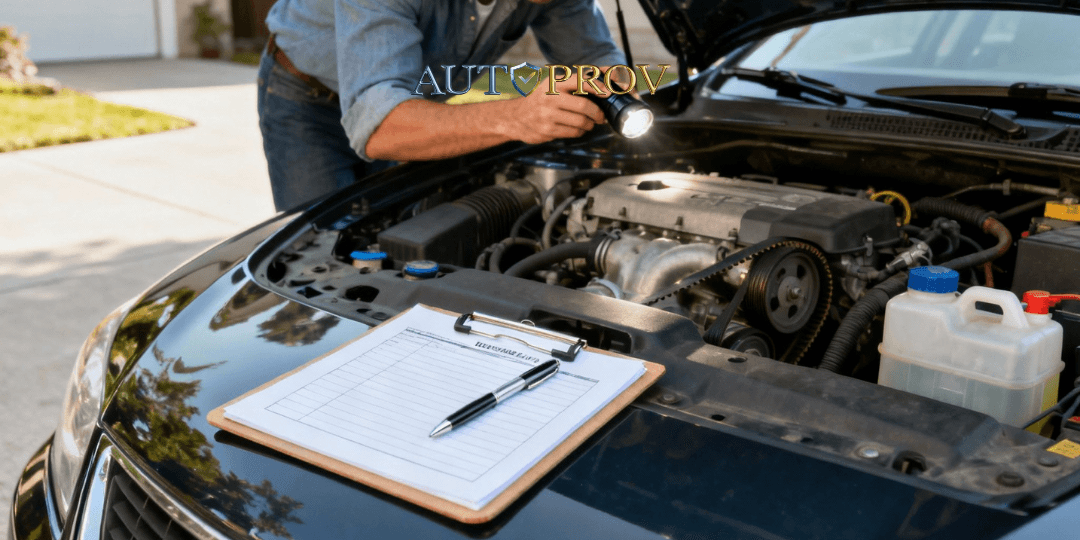
Your Ultimate Used Car Inspection Checklist
A solid used car inspection checklist is the single most powerful tool you have to avoid buying a lemon. It gives you a methodical way to look past the shiny paint and assess a car's real condition, helping you spot hidden problems and get a fair price before you shake hands on the deal.
Published by AutoProv
Your trusted source for vehicle intelligence