
To avoid getting stung by a scrapped car, you need to play detective. It’s a two-pronged attack: first, dig into its digital history, then get your hands dirty with a proper physical inspection. A car that looks a million quid on the forecourt could easily be a Category A or B write-off, illegally patched up and pushed back into the market. Trust me, running both checks is the only way to safeguard your cash and your reputation.
The Hidden Dangers Lurking in the Used Car Market

It’s the nightmare scenario every trader wants to avoid: buying a vehicle that looks immaculate, only to discover it’s a ghost—a resurrected write-off. This isn’t just about losing money; it’s a massive safety and integrity issue. The fallout from accidentally selling a previously scrapped car can be catastrophic, from forced buy-backs to torching the reputation you've worked so hard to build.
The problem is only getting worse. Criminals are using more sophisticated methods than ever to repair and clone vehicles that were officially junked. They're so good at it that telling them apart from legitimate stock is almost impossible with just a visual once-over. That's why the old way of "kicking the tyres" just doesn't cut it anymore.
Why This is a Growing Concern
It all comes down to pure profit. Dodgy sellers snap up statutory write-offs for next to nothing, slap them back together with cheap, often dangerous repairs, and then try to flog them at full market value. These cars might look the part, but underneath that shiny paint, you could be looking at a compromised chassis, dodgy airbags, or a weakened frame just waiting to fail.
For anyone in the motor trade, the stakes are ridiculously high. Making a smart buy means looking past the polish and digging deep into the car’s real story.
A vehicle’s past is its most reliable predictor of future performance and safety. Ignoring its history means you're not just buying a car; you're buying all of its hidden problems, too.
This guide is all about adopting a professional, multi-layered approach to verification. It’s about shifting from a quick glance to a proper, evidence-based appraisal. The first, most critical step is running a comprehensive digital provenance check. At AutoProv, we provide exactly this service, giving you the hard data you need to operate with confidence. Keeping an eye on the wider UK used car market trends also helps put into perspective why these checks are no longer a 'nice-to-have'.
By building our digital tools into your buying process, you can spot red flags in an instant. It’s the difference between landing a great deal and buying a hidden, and potentially lethal, disaster.
Start with a Digital Deep Dive

Before you ever lay eyes on the metal, the real story of a vehicle is already written in its digital footprint. For any serious motor trade professional, this digital deep dive isn’t just a good idea; it's the absolute bedrock of a solid appraisal. It’s your first and best line of defence against buying a liability dressed up as an asset.
Think of yourself as a detective piecing together a puzzle. Each check you run is another piece of the story, and only when you have them all can you see the full picture. Getting to grips with what each check reveals is the key to knowing how to avoid buying a scrapped car.
Deconstructing the Digital Dossier
The first port of call for most is the DVLA for registration details and the free MOT history check. Don't just glance at the pass or fail results; you’re looking for patterns. Are there long, unexplained gaps between tests? Does the mileage suddenly plummet, or barely tick over for years at a time? These are classic red flags for clocking or a sign the car has been sitting idle for dubious reasons.
Next, you need to uncover any ghosts of accidents past. This is where the Motor Insurance Anti-Fraud and Theft Register (MIAFTR) is indispensable. A quick check here will tell you if an insurer has ever written the vehicle off. Any category marker—especially a Cat S (structural) or Cat N (non-structural)—is a massive warning sign that demands a much closer look.
The digital trail is impartial. It doesn’t care about a fresh valet or a persuasive seller. It simply presents the facts, giving you the objective data needed to make a sound commercial decision.
But a write-off isn't the only skeleton in the closet. You’ve got to confirm its legal status, too. A check against the Police National Computer (PNC) is non-negotiable to ensure the vehicle hasn’t been reported stolen. At the same time, you need to know if there's any outstanding finance attached to it, which makes an Experian check vital. Buy a car with finance still on it, and you risk losing both the vehicle and your money.
Consolidating Data for a Clearer Picture
Juggling all these separate checks is a drain on your time and resources, which is where a professional vehicle intelligence platform like AutoProv really proves its worth. Our service pulls data from the DVLA, MIAFTR, PNC, Experian, and more into a single, easy-to-digest report. This doesn't just save you a headache; it flags up critical alerts you might otherwise miss when you're in a rush.
This comprehensive approach is essential. The data shows that certain makes are far more likely to end up on the scrap heap. Vauxhall recently topped the charts, accounting for 16% of all scrapped vehicles, with Ford hot on its heels at 15.6%. The typical scrapped car is over 17 years old with nearly 132,000 miles on it. Running a full history check, like the one we offer, helps you sidestep these statistical nightmares.
Ultimately, a complete digital background check lays the foundation for your physical inspection. It tells you exactly what to look for and where to be suspicious. To get a more detailed breakdown of these individual checks, you can learn more about how to check vehicle history in our comprehensive UK buyer's guide. Getting this first step right means you're buying with confidence, armed with facts, not just a gut feeling.
Mastering the Physical Inspection
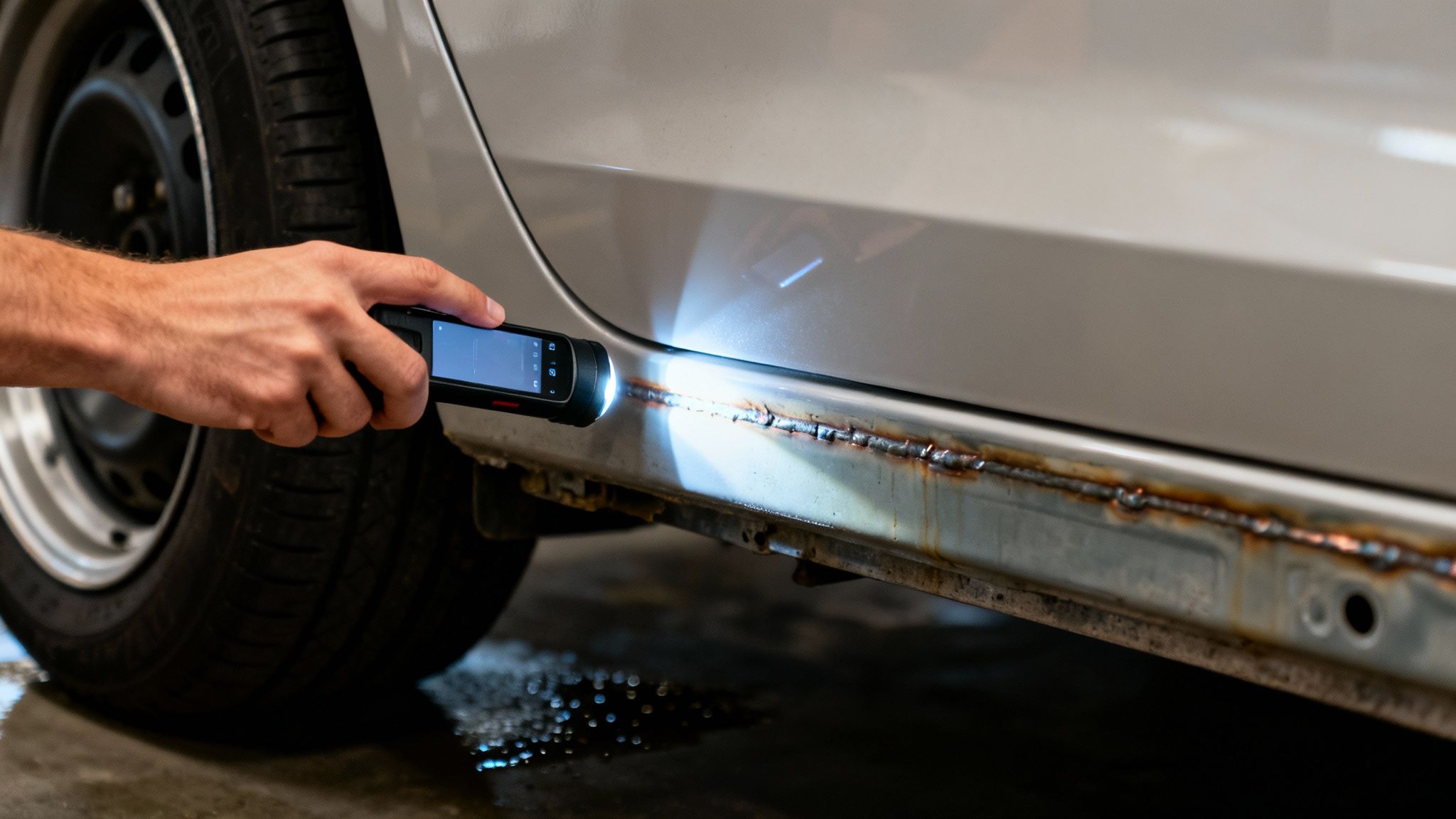
Right, so the digital checks have given you a green light. Now for the real test: getting your hands on the car itself. This is where you connect the dots, verifying the data and uncovering the truths a computer screen can never show you. Forget a quick kick of the tyres; this is a systematic, expert walk-around designed to spot the subtle, tell-tale signs of a resurrected write-off that the average buyer would walk right past.
This is your chance to confirm the story the vehicle's digital history has been telling you. A comprehensive check from a platform like AutoProv gives you a hit list of things to verify, turning what could be a guessing game into a targeted investigation. Armed with the facts, you can approach the vehicle with a professional's eye, ready to scrutinise every single panel and seam.
Look Beyond the Surface Shine
A fresh valet can hide a multitude of sins, so your job is to look past the polish. Start with the basics, but with a trained eye. Run your hand along the panel gaps—are they consistent? Perfectly even? Shoddy alignment is a classic calling card of a poorly repaired vehicle where panels just don't sit right anymore.
Next up, get forensic with the paintwork. Don't just rely on daylight. Use the torch on your phone and look at the car from multiple, shallow angles. You're hunting for:
- Mismatched Shades: Even the best bodyshop can struggle to perfectly match a factory finish. Look for those subtle differences in colour or texture, especially between adjacent panels like a door and a front wing.
- Overspray: This is a dead giveaway. Check the edges of plastic trim, around window seals, and inside the door jambs for that fine, gritty mist of paint. It’s a sure-fire sign of a respray.
- Paint Depth: While a paint depth gauge is the proper tool for the job, you can often feel differences in the paint's texture or spot a slight "orange peel" effect that simply wasn't there when it left the factory.
This level of detail is absolutely crucial. Remember, knowing how to avoid buying a scrapped car often comes down to spotting the tiny imperfections that point to a bigger, hidden story.
Uncovering Structural and Water Damage
Time to get down and dirty. Get a good look underneath the car and along the chassis rails. Are there any signs of fresh underseal or unusual welding? Factory welds are neat, tidy, and uniform. Messy, thick, ugly welds are a clear signal of a post-accident repair. Run your fingers along the seams—if it feels rough or uneven, your alarm bells should be ringing.
The physical inspection is the final piece of the puzzle. It’s where you either confirm the vehicle's integrity or uncover the seller's deception. Trust your eyes and hands over any story you're told.
Flood damage is another ghost you need to hunt down, and this one engages your nose as much as your eyes. Don't be shy—pull back the carpets in the footwells and the boot. Look, feel, and sniff for:
- Dampness or musty smells that a cheap air freshener is failing to mask.
- Silt or water lines in the spare wheel well or under the seats.
- Corrosion on unexpected metal parts, like the seat runners or screw heads buried deep under the dashboard.
Finally, a step you can never, ever skip: verifying the Vehicle Identification Number (VIN). Check the VIN plate in the engine bay, the stamp on the chassis, and the little tag visible through the windscreen. Make sure they all match each other and, most importantly, the V5C logbook. Any discrepancy here isn't just a red flag; it's a full-blown, non-negotiable deal-breaker.
For a more detailed breakdown of what to look for, our ultimate used car inspection checklist has even more pro tips.
Getting Your Hands on the Paperwork
A car's physical condition tells one story, but the paperwork tells the real one. In this trade, glossing over the documents is a classic rookie mistake, and it's one that can cost you dearly. Think of a car's paperwork as its passport; any smudge, missing stamp, or dodgy-looking detail is a massive red flag. You need to become a bit of a forensic expert with this stuff.
The absolute heart of it all is the V5C logbook. Now, the forgeries are getting scarily good, but they almost always slip up on the small things. Hold it up to the light – are you seeing that official DVLA watermark? A genuine V5C has a certain feel to it, a quality that the fakes just can't nail.
V5C and Service History: The Nitty-Gritty
The first thing you must do is cross-reference the document reference number on the V5C with the DVLA's own records. If they don't match, it's game over. You're holding a fake, and you need to walk away immediately. It’s a common trick to hide a stolen or written-off car's true identity. You can get the full rundown in our guide on what a V5C document is and how to check it.
Next up, get stuck into that service history. A fat folder full of stamps and receipts looks great, but you can't take it at face value.
- Look for a pattern: Is there a logical history of services from proper, VAT-registered garages? If it suddenly switches to a few handwritten notes from "Dave's Autos," your alarm bells should be ringing.
- Pick up the phone: Don't be shy about calling one or two of the garages in the book. A quick "Can you confirm you serviced a blue Ford Focus, reg XX12 XXX, on this date?" can expose a completely fabricated history in minutes.
- Check against the mileage: Make sure the mileage noted at each service lines up with the MOT history you've already pulled. Big jumps or inconsistencies are a classic sign of clocking.
Remember, a patchy or missing service history isn’t just about poor maintenance. It’s often a deliberate ploy to hide something nasty, like a car being off the road for a year after a major write-off.
Tying It All Together with Digital Checks
This is the moment of truth, where the physical paper in your hand has to match the official digital record. This is precisely where a proper vehicle intelligence tool like AutoProv becomes your best mate. Our reports act as your instant cross-reference, flagging any clashes between what the seller is telling you and what the databases say. Our service will instantly tell you if the VIN on the V5C is the same one the DVLA has on file, or if that document reference number is a dud.
This digital safety net is non-negotiable. With UK car recycling rates hitting 86.5%, cars that are properly scrapped through Authorised Treatment Facilities (ATFs) have a clear and official end-of-life record. The dodgy, illegally repaired write-offs are specifically designed to fly under this radar, getting pushed back onto the market with a wiped history. A car with no clear, verifiable paper trail is a huge gamble, but an AutoProv report turns that gamble into a calculated, confident decision.
Navigating High-Risk Buying Scenarios
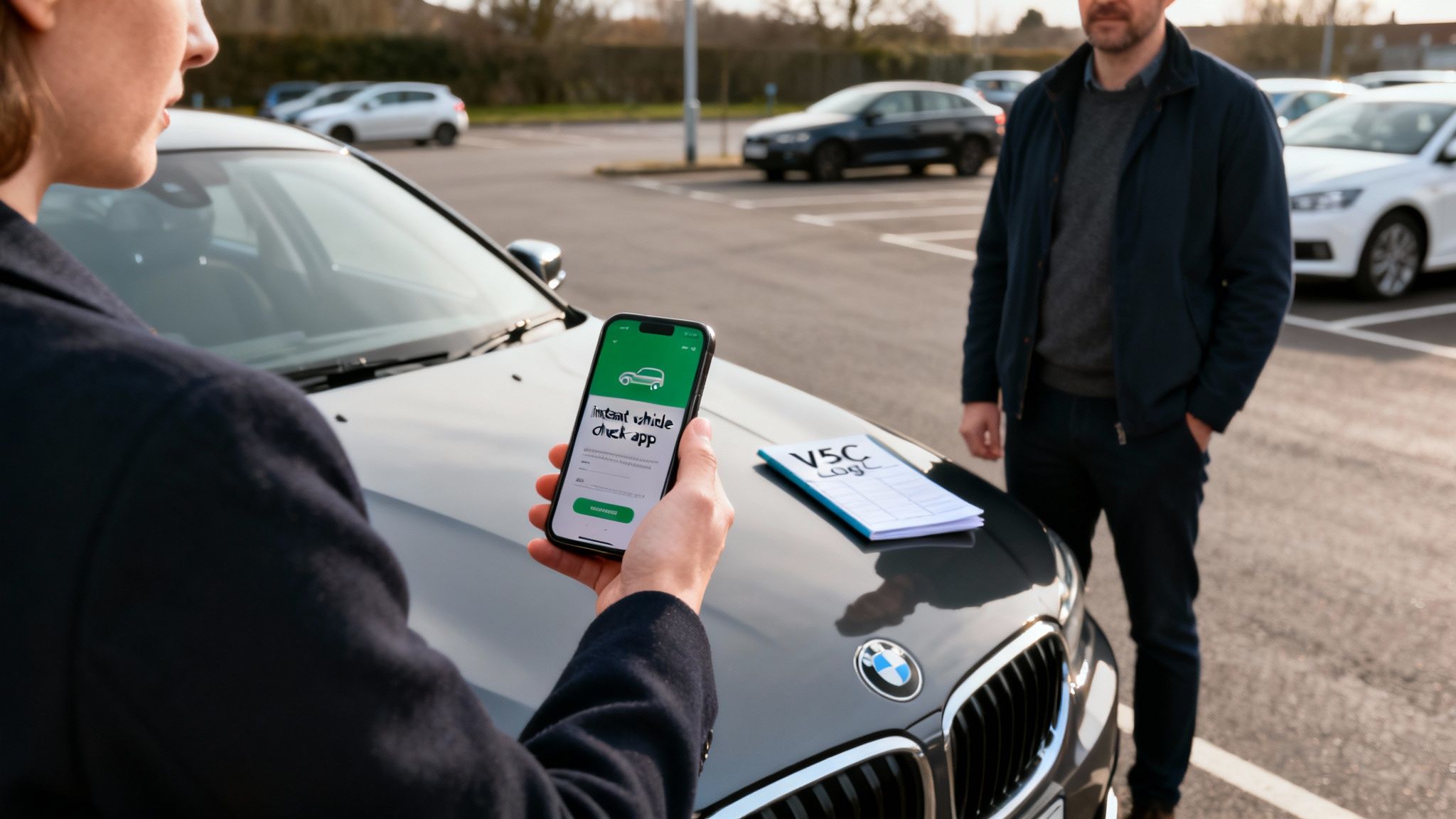
Private sales and vehicle auctions are the classic hunting grounds for a bargain. But let's be honest, they're also the preferred marketplaces for shifting resurrected write-offs onto traders who aren't on their guard.
To come out on top in these high-stakes environments, you need a different set of tactics—ones built on speed, healthy scepticism, and rock-solid data. This is where criminals thrive, using pressure and a veneer of informality to offload problem vehicles. Knowing how to sidestep a previously scrapped car here means cutting through the noise and getting to the facts, fast.
Tackling the Auction House Gauntlet
Auctions move at a blistering pace, and that's by design. There’s barely any time for a proper look-over, let alone a deep dive into a car's history. This is where your digital due diligence becomes your most powerful bidding tool.
You'll hear legal get-out clauses like 'sold as seen' or 'without warranty' thrown around, but they offer zero protection if that motor turns out to be a previously scrapped vehicle.
Before you even think about raising your paddle, you need instant clarity. A rapid check with AutoProv is non-negotiable, giving you the full story of a vehicle’s past in seconds. You can verify its write-off status, check for outstanding finance, and confirm its identity against the Police National Computer, all while the auctioneer is rattling through the lots. Trying to make a smart bid under that kind of pressure without instant data is just gambling.
In the high-pressure world of auctions, your best defence is preparation. A 30-second digital check before bidding can save you from a multi-thousand-pound mistake.
Decoding Private Sale Dangers
Private sales present their own unique minefield. Scammers often use tactics specifically designed to rush you into a bad decision and hide the car’s real history.
Be immediately suspicious of any seller who suggests meeting in a 'neutral' spot like a supermarket car park or a service station. It’s a classic ploy to stop you from seeing where the car is actually registered. You must always insist on viewing the vehicle at the address printed on the V5C document. If they kick up a fuss or make excuses, it's time to walk away. No exceptions.
Keep an eye out for these all-too-common scammer tactics:
- Creating False Urgency: Lines like, "I've got another buyer coming in an hour," are designed to make you panic and skip crucial checks. Don't fall for it.
- A Sob Story: Elaborate tales about why they're forced to sell can be a clever smokescreen, distracting you from asking the tough questions you need to ask.
- Cash-Only Demands: While not always a red flag, a flat-out refusal to accept a bank transfer can be a way to avoid a paper trail. Remember, this is an illegal practice for scrap metal dealers under the Scrap Metal Dealers Act 2013.
Ultimately, your gut feeling is one of your most valuable tools in this game. If a story feels off or a deal seems too good to be true, it almost certainly is. For a deeper dive, you can learn more about how to check if a car is a write-off in our guide. Combining that intuition with hard data is how you protect your business and your reputation.
Got Questions? We've Got Answers
Even with the best checklist in hand, you’re bound to run into situations that make you pause. This final section is all about tackling those common, nagging questions we hear from trade professionals out in the field. Think of it as that last bit of advice you need before you shake hands on a deal.
Can I Still Buy a Category S or N Write-Off?
Absolutely. You can legally buy, repair, and sell both Category S (structural) and Category N (non-structural) write-offs. The golden rule here, though, is total transparency. You have to know its history inside and out, and you’re legally obliged to pass every detail on to your customer. The real trouble starts with vehicles that have been written off, but some dodgy seller has tried to scrub the history clean.
This is where a proper provenance check from AutoProv is non-negotiable. Our service will flag that write-off status immediately. That gives you the power to properly assess the quality of the repair and decide if the car is a safe, transparent, and ultimately profitable addition to your stock.
What's the Single Biggest Red Flag I Should Watch Out For?
There are plenty, but if I had to pick one, it's a seller who gets cagey about the V5C logbook. If they dodge showing it to you, have a laundry list of excuses for why it's "not here right now," or insist on meeting you in a supermarket car park miles from the registered address, your alarm bells should be screaming. Just walk away.
Nine times out of ten, this sort of behaviour means they're hiding something big. It could be a cloned car, an active theft marker, or God knows what else. A legitimate seller with nothing to hide will have no problem showing you the paperwork.
The V5C is the car's passport. If a seller won't let you check it against the metal, that’s not a red flag—it’s a brick wall. End the conversation right there.
If a Car Has a Full Service History, Is It a Safe Bet?
A thick folder of stamps and receipts is always a good sign, but it is not a bulletproof guarantee of a clean past. I've seen it all—criminals are incredibly skilled at faking service books to make a resurrected wreck look like it's been cherished its whole life. Don't just glance at it; dig deeper. Cross-reference the garages in the book with the online MOT history and maybe even give one or two of them a quick call to confirm they actually saw the vehicle.
Remember, a service history tells you about oil changes and brake pads. It tells you nothing about a major insurance claim or a run-in with the Police National Computer. The only way to get the full picture is with a digital check from AutoProv that pulls data straight from the MIAFTR and PNC. Relying only on a paper service book is a gamble you can't afford to take.
Frequently Asked Questions
AI-Generated Content Notice
This article was created with the assistance of artificial intelligence technology. While we strive for accuracy, the information provided should be considered for general informational purposes only and should not be relied upon as professional automotive, legal, or financial advice. We recommend verifying any information with qualified professionals or official sources before making important decisions. AutoProv accepts no liability for any consequences resulting from the use of this information.
From our AI insights
- Navigating ULEZ Compliance for Used Car Dealers
A deep dive into ensuring your used car stock meets ULEZ standards, avoiding costly fines.
- Mastering Paint Verification with VIN Decoding
Learn how UK traders verify original paint using VIN decoding and provenance data.
- Understanding VIN Decoding: Avoid Misleading Imports
Learn how VIN decoding reveals vehicle origins and specs, preventing import pitfalls.
Related Articles

Car Specs by Reg: Instantly Find Vehicle Details & MOT History
Trying to find the full car specs by reg? In the UK, that little number plate is the key to unlocking a huge amount of information about a vehicle. From the exact engine size and CO2 emissions to its MOT history and tax status, it's all tied to the registration.

How to Check Previous Owners of a Car in the UK
Before you even start thinking about how to check the previous owners of a car, you need to get your head around why it's so important. This isn't just about being nosy; it’s a non-negotiable step that protects you from serious financial headaches and safety risks lurking under a shiny bonnet.

How to Check Service History in the UK
Think of a car's service history as its detailed CV, not just some dusty folder in the glovebox. To check service history is to get the real story behind a vehicle, digging into everything from its routine oil changes to any major surgery it's had. For any savvy car buyer in the UK, this record is the single most important document you can get your hands on.
Published by AutoProv
Your trusted source for vehicle intelligence