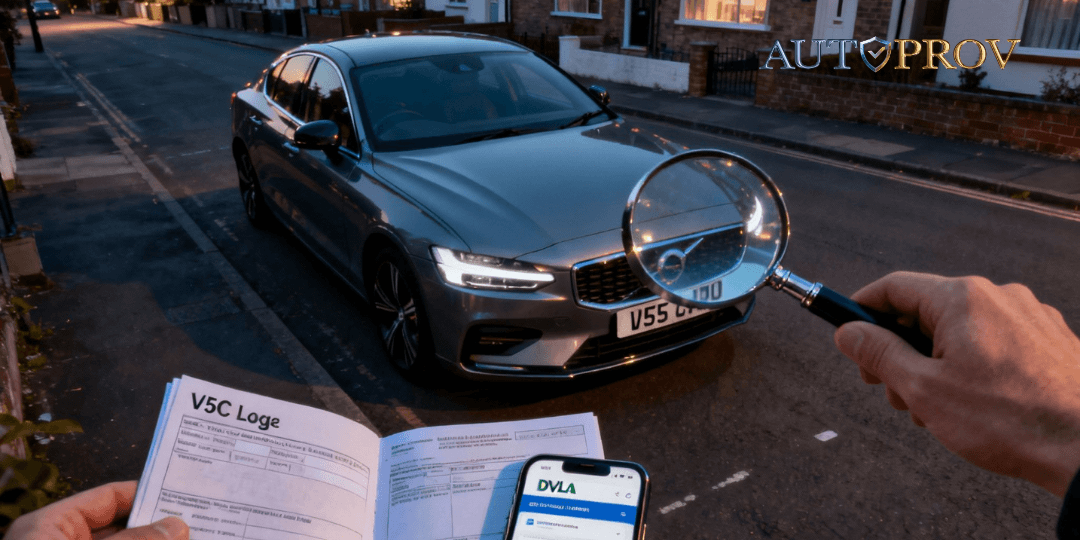
Figuring out a car's history often starts with one burning question: how do you find the previous owner of a car? While there are legitimate routes, like using the DVLA's V888 form or a professional vehicle history service from a provider like AutoProv.ai, it all hinges on having a valid reason for your search. UK privacy laws are tight, and personal data is rightly protected.
Figuring out a car's history often starts with one burning question: how do you find the previous owner of a car? While there are legitimate routes, like using the DVLA's V888 form or a professional vehicle history service from a provider like AutoProv.ai, it all hinges on having a valid reason for your search. UK privacy laws are tight, and personal data is rightly protected.
So, whether you're a classic car enthusiast trying to piece together a vehicle's story or you're stuck dealing with a legal headache, understanding the 'why' is always the first step.
Why You Might Need to Find a Car's Previous Owner
Before we jump into the 'how', it’s vital to get your head around the legitimate reasons for tracking down a car's former keeper. This isn't about satisfying idle curiosity. Under UK law, especially the Data Protection Act and GDPR, you must have a 'reasonable cause' to request this kind of personal information. Simply wanting to know who drove the car before you won't cut it.
So, what counts as a valid reason? You'd be surprised how often these situations pop up.
Uncovering a Vehicle's Story
For anyone deep into restoring a classic or unique vehicle, getting in touch with a previous owner can be gold dust. Picture this: you've just bought a vintage BMW E92. The stamped service book tells you part of the story, but the previous keeper might hold the key to its entire past.
They could share old photos, tell you about unique modifications, or just share memories that bring the car's history to life. This passion for preservation is a widely accepted and legitimate reason for a search.
Resolving Legal and Financial Issues
Moving on to more practical matters, you might find yourself landed with the fallout from a previous owner's actions. It happens more than you think. Common scenarios include:
- Mistaken Identity: You start receiving parking fines, speeding tickets, or congestion charge notices for something that happened long before you owned the car.
- Insurance Claims: You need to contact a past owner as part of an accident investigation, perhaps to clarify the vehicle's condition or history at the time.
- Outstanding Finance: You discover the car you just bought still has finance attached to it from a previous keeper. This is a serious issue that could even lead to the vehicle being repossessed.
In these cases, knowing how to find the previous owner becomes a genuine necessity to sort out the dispute and protect yourself financially.
A complete vehicle history check is your first line of defence. It provides critical context, such as the number of keepers and dates of sale, which can instantly clarify whether a fine or issue is your responsibility.
This is where professional services really show their worth. While they can't legally just hand you a name and address, platforms like AutoProv.ai are built to support genuine enquiries by verifying a vehicle’s past. You can learn more by reading our detailed guide on the importance of a provenance check for a used car.
By flagging critical details—like keeper change dates, outstanding finance, and write-off history—these reports arm you with the evidence needed to challenge incorrect fines or approach the DVLA with a strong, justifiable case.
Decoding the V5C Logbook for Ownership Clues
When you’re digging into a car's past, the V5C registration document—or logbook, as most of us call it—is often the first real piece of evidence you’ll get your hands on. Think of it as the car’s paper passport. It shows you where it’s been registered, but it doesn't tell you the full story of the journey.
A proper look at this document is a crucial first move. It gives you the baseline information you need before you decide to investigate any further.
Registered Keeper vs Legal Owner
One of the most overlooked details on the V5C is printed right on the front: "This document is not proof of ownership." It's easy to gloss over, but this is a massive legal distinction you can't afford to ignore.
The person named on the logbook is simply the registered keeper. They're the one responsible for taxing the car and dealing with speeding tickets or parking fines.
The legal owner, on the other hand, could easily be a finance company or a leasing firm. This is more common than you might think, especially when you consider that around 90% of new private cars in the UK are bought with some form of finance. The V5C will never tell you this, which creates a huge blind spot if it's the only thing you're relying on.
What the V5C Actually Reveals
While it won't confirm who legally owns the car, the V5C is packed with essential details that form the starting point of any vehicle check. When you get your hands on it, zero in on this information:
- Date of First Registration: This tells you the true age of the vehicle.
- Previous Keeper Count: You'll find this in section 3. It shows how many people have been registered as the keeper. A high number over a short time frame should raise a few questions.
- Keeper Details: It will list the name and address of the current registered keeper and sometimes the previous one.
- Vehicle Identification Number (VIN): This is the car's unique fingerprint. It’s absolutely vital to make sure the VIN on the V5C matches the one stamped on the car itself. Our guide on how to use a vehicle check chassis number can show you exactly where to look.
The logbook is just a snapshot in time. Its information is only as good as its last DVLA update. It can’t warn you about outstanding finance, whether the car has recently been written off, or if there's a shady finance agreement lurking in the background.
Ultimately, the V5C is your starting block, not the finish line. The clues it provides, like the keeper count and the date of the last sale, are valuable. But they need to be backed up by real-time, comprehensive data.
This is where a professional check from a service like AutoProv.ai becomes non-negotiable. Our service takes the V5C's details and runs them against live national databases. It will instantly flag any inconsistencies and uncover the critical information the paper document simply can't—like outstanding finance, insurance write-off history, and mileage discrepancies. This turns the humble logbook from a simple document into a powerful tool for verification, giving you the complete picture before you part with your money.
Going Official: Submitting a DVLA V888 Request
When all other avenues lead to a dead end, the official route in the UK for finding a car’s previous owner goes straight through the Driver and Vehicle Licensing Agency (DVLA). This isn’t a casual enquiry; it’s a formal process that involves submitting a V888 request form.
This entire process is tightly controlled by data protection laws. Your success hinges entirely on proving you have a ‘reasonable cause’ for needing the information. Just being curious about who owned your classic car before you won't be enough to unlock these records.
What Actually Counts as a "Reasonable Cause"?
The DVLA takes its role as a data guardian very seriously, and rightly so. Your reason for needing the keeper’s details must be substantial and justifiable. Vague requests are almost guaranteed to be rejected.
Here are a few of the most common scenarios the DVLA considers valid:
- Chasing a Hit-and-Run: If a vehicle was involved in an accident and the driver didn't stop, you can request the keeper’s details to pass on to your solicitor or insurance company.
- Issuing Parking Fines: This is a common one. Private parking companies use this process all the time to trace the keepers of vehicles that have broken their rules.
- Dealing with an Abandoned Vehicle: If a car has been dumped on your private land, you can apply for the keeper's details to kick off the legal process of getting it removed.
- Sorting Out Liability: You might be pursuing a claim against the previous keeper for damage they caused or for selling you a faulty car under false pretences.
Essentially, you need to show that you're in the middle of taking some kind of action and need the keeper's information to move forward. The DVLA is the central hub for all vehicle registration and ownership data in the UK, making it the ultimate source. You can get a sense of the sheer scale of their data management by looking at the government's own UK vehicle licensing statistics.
How to Get the V888 Form Right
Filling out the V888 form correctly requires precision. Your application will be scrutinised, so providing clear, concise, and truthful information is absolutely vital.
First, download the right form from the GOV.UK website—there are different versions for individuals and companies. You’ll need to provide your details, the car’s registration number, and a detailed, specific explanation of why you need the information.
Don't just write "legal dispute." Instead, explain the situation clearly, like: "pursuing a small claims court case for misrepresentation of the vehicle's service history at the point of sale."
My Tip: Always back up your claim with evidence. If you’re dealing with an accident, include the police incident number. For a parking charge, attach a copy of the notice. The more solid evidence you provide, the stronger your application will be.
There’s a small fee for the service (currently £2.50), and it can take several weeks for the DVLA to process your request. Even if you're successful, they will only release the name and address of the registered keeper at the time of the incident you’ve specified. You won't get a full history of every single person who has ever owned the car.
Think of it as a targeted tool for specific legal or liability issues, not a way to do general historical research on your vehicle.
Using Professional Vehicle History Checks for Insight
While the official DVLA route has its place for specific legal situations, let's be honest—it's often a slow and clunky process. For any clued-up buyer, the smartest and fastest first move is always a professional vehicle history check. This is where you pivot from trying to find a name and address to gaining powerful, immediate insight into the car's entire life story.
Services like AutoProv.ai are built to deliver crucial information instantly. They give you the context you need to make a solid decision long before a V888 form would even get looked at. Instead of just focusing on who owned the car, these reports tell you how it was owned.
Beyond the Name: What a Professional Check Reveals
A comprehensive check digs far deeper than the V5C logbook or a basic DVLA enquiry could ever go. It pulls together data from multiple official sources—we're talking police records, finance houses, and insurance databases—to paint a complete picture of the car's past.
This means you get instant answers to the questions that really matter:
- Keeper Change History: How many keepers has the car actually had? A high turnover in a short space of time is a massive red flag.
- Ownership Timelines: When did the vehicle last change hands? This helps you confirm the seller's story and can be vital if you're disputing incorrectly assigned fines.
- Hidden Financial Baggage: Is there outstanding finance tied to the vehicle? An AutoProv.ai report uncovers this, protecting you from buying a car that a finance company could repossess.
- Write-Off History: Has the car ever been declared an insurance write-off? A proper check will reveal its salvage category, information that’s absolutely essential for both safety and valuation.
To understand why this is so critical, just look at the numbers. In 2023 alone, around 7.24 million used cars were sold in the UK. Each one of those sales creates a new data point in a vehicle's history. You can get a sense of the scale of the UK's used car market to see why a detailed check is non-negotiable.
Turning Information Into Leverage
Imagine this scenario. You're looking at a car that seems perfect. The seller is charming and the paintwork is immaculate. But a quick check with AutoProv.ai reveals it's had five keepers in the last two years. That’s powerful knowledge. It doesn’t just tell you about the previous owner; it tells you this car has a troubled history that demands serious questions.
This is the core value of an instant vehicle check. It provides immediate leverage. The data allows you to ask tougher questions, negotiate a better price based on uncovered history, or confidently walk away from a potentially bad deal.
For instance, discovering a mileage discrepancy between the current odometer reading and previous MOT records is an instant deal-breaker for most people. These are the kinds of insights a V5C simply cannot provide. We cover this in more detail in our guide explaining why an AutoTrader provenance check is essential before any purchase.
By putting a professional history report first, you're arming yourself with the facts right from the start. This proactive approach saves time, prevents costly mistakes, and ensures that by the time you even think about a formal DVLA request, you already know almost everything you need to about the vehicle’s past. You can act with certainty.
Avoiding Common Pitfalls and Legal Issues
Trying to find a car's previous owner can feel like walking through a legal minefield if you're not careful. The whole process is tightly controlled by UK privacy laws, mainly the Data Protection Act 2018 and GDPR. These regulations are there for a good reason: to protect people's personal information.
Going off-piste and using unofficial channels isn't just a waste of time; it can land you in some serious hot water. It’s vital you understand where the lines are drawn. The information you're looking for is sensitive, and getting it the wrong way carries hefty penalties. Your search needs to be safe, ethical, and strictly legal.
Steer Clear of Unofficial Services
A quick search online will throw up dozens of sites promising to reveal a car's complete ownership history for a small fee. Be incredibly wary of these. The vast majority are either outright scams or operate in a legal grey area, offering data that's either freely available elsewhere or has been obtained illegally.
Key Takeaway: If a service promises to give you personal details like names and addresses without asking for a legitimate, provable reason, it's almost certainly not compliant with UK law. Legitimate services protect data; they don't sell it.
The only safe bet is to stick to official routes. That means a DVLA V888 request or using a trusted, compliant vehicle history service. Services like AutoProv.ai, for instance, are built to work within these legal frameworks. They provide crucial data points, like keeper change dates and alerts, without ever breaching personal privacy rules.
Interpreting Information Correctly
Even when you get information legally, you have to know how to read it without jumping to the wrong conclusions. Just because a car has had several previous keepers doesn't automatically make it a bad buy. It could have been a company car that was changed regularly or simply passed down through a family.
On the other hand, a car with just one owner isn't guaranteed to be perfect. Context is everything. Instead of getting bogged down on who owned it, focus on the what:
- Ownership Gaps: Are there strange, unexplained periods where the car seems to have been off the road?
- MOT History: Do the mileage records and advisory notices throw up any red flags?
- Write-Off Status: Has the vehicle ever been declared an insurance write-off?
These details paint a much more accurate picture of a car’s past than a name ever could. It’s also crucial to know your rights as a buyer. It's well worth getting familiar with the Consumer Rights Act 2015 in the motor trade to understand the protections you have. Protecting yourself means relying on verified data from official channels—that’s how you ensure your search is both effective and secure.
Frequently Asked Questions
When you're digging into a car's past, a few common questions always pop up. Getting to grips with the rules, knowing how to read the data, and understanding what you can realistically find out are all part of making a smart, confident purchase. Let's tackle some of the queries we hear most often.
Is It Legal to Contact a Previous Owner in the UK?
This is one of the most common questions, and the answer isn't a simple yes or no. While it’s not illegal to try and get in touch with a previous owner, it is absolutely illegal to get their personal details through shady or unlawful methods.
The DVLA holds this data, but they won't just hand it over. You need what they call a ‘reasonable cause’—think sorting out a legal dispute or a parking ticket mess. Unfortunately, just wanting to ask about the car's service history doesn't cut it. Any approach you take has to be squeaky clean and fully compliant with UK GDPR and the Data Protection Act.
How Many Previous Owners Is Too Many?
There’s no magic number here; context is everything. Think about it: a three-year-old car that’s already had five keepers? That’s a huge red flag. It screams "get rid of it, fast!" and suggests there might be a nasty, persistent issue lurking under the bonnet.
On the other hand, a ten-year-old classic with five keepers could be completely normal. It might just show a healthy journey through the hands of different enthusiasts over the years.
Instead of getting fixated on the raw number, look at the timeline. An AutoProv.ai report shows you the exact dates of keeper changes. This lets you spot worrying rapid turnover versus a steady, logical ownership history.
A high number of owners isn’t an automatic deal-breaker, but it should always make you dig deeper. Use it as a prompt to give the MOT history, service records, and the car's overall condition a much closer look.
What Will an AutoProv Report Tell Me?
An AutoProv.ai report is built to give you the critical data you need to buy safely, all while respecting privacy laws. You won't get personal details like names or addresses. What you do get is powerful, actionable intelligence that tells the vehicle's real story.
Our reports include:
- The precise number of previous keepers.
- The date the last keeper acquired the vehicle.
- Crucial alerts for any outstanding finance, write-off history, or if it's been reported as stolen.
This is the information that gives you real leverage. It lets you ask the seller the right questions and verify what they're telling you without ever crossing a data protection line.
For a full breakdown of what our reports cover and how it all works, our comprehensive AutoProv frequently asked questions page has all the details you need to buy with total confidence.
Frequently Asked Questions
AI-Generated Content Notice
This article was created with the assistance of artificial intelligence technology. While we strive for accuracy, the information provided should be considered for general informational purposes only and should not be relied upon as professional automotive, legal, or financial advice. We recommend verifying any information with qualified professionals or official sources before making important decisions. AutoProv accepts no liability for any consequences resulting from the use of this information.
From our AI insights
- Navigating ULEZ Compliance for Used Car Dealers
A deep dive into ensuring your used car stock meets ULEZ standards, avoiding costly fines.
- Mastering Paint Verification with VIN Decoding
Learn how UK traders verify original paint using VIN decoding and provenance data.
- Understanding VIN Decoding: Avoid Misleading Imports
Learn how VIN decoding reveals vehicle origins and specs, preventing import pitfalls.
Related Articles

Car Specs by Reg: Instantly Find Vehicle Details & MOT History
Trying to find the full car specs by reg? In the UK, that little number plate is the key to unlocking a huge amount of information about a vehicle. From the exact engine size and CO2 emissions to its MOT history and tax status, it's all tied to the registration.

How to Check Previous Owners of a Car in the UK
Before you even start thinking about how to check the previous owners of a car, you need to get your head around why it's so important. This isn't just about being nosy; it’s a non-negotiable step that protects you from serious financial headaches and safety risks lurking under a shiny bonnet.

How to Check Service History in the UK
Think of a car's service history as its detailed CV, not just some dusty folder in the glovebox. To check service history is to get the real story behind a vehicle, digging into everything from its routine oil changes to any major surgery it's had. For any savvy car buyer in the UK, this record is the single most important document you can get your hands on.
Published by AutoProv
Your trusted source for vehicle intelligence