Before you even think about handing over money for a used car, you need to get to grips with its real identity. The key to this isn't the registration plate, but the chassis number – or as it's more formally known, the Vehicle Identification Number (VIN). This is the one true way to uncover a car's full story. Unlike a number plate, which can be swapped in minutes, the VIN is stamped onto the car's body during manufacturing. It's permanent.
Before you even think about handing over money for a used car, you need to get to grips with its real identity. The key to this isn't the registration plate, but the chassis number – or as it's more formally known, the Vehicle Identification Number (VIN). This is the one true way to uncover a car's full story. Unlike a number plate, which can be swapped in minutes, the VIN is stamped onto the car's body during manufacturing. It's permanent.
Your Vehicle's Chassis Number Is Its DNA

Think of this 17-digit code as the car's unique fingerprint. It’s what unlocks everything you need to know about its past, from the day it left the factory to its entire life on the road. For anyone in the motor trade, running a thorough vehicle check using the chassis number isn’t just good practice; it's a non-negotiable part of your due diligence.
This unique identifier is far more reliable than just checking the reg. In the UK, registration numbers can be changed at any time, especially with private plates floating about. But the VIN? That stays with the car for life, making it the most dependable way to trace a vehicle’s history. If you're interested in the specifics, Motorway offers a good breakdown of its role in provenance checks.
Why It Matters for Your Business
For dealerships and fleet managers, skipping this simple check can be a costly mistake. It reveals the kind of hidden problems that a quick walk-around and a test drive will never show you. For instance, a VIN check can instantly flag crucial issues. It confirms if there's an active finance agreement tied to the vehicle, so you don't buy a car only to have a finance company repossess it. Running the chassis number against the Police National Computer (PNC) is the only way to be certain the vehicle isn't on the stolen list. Furthermore, it brings to light whether the car has been declared a write-off by an insurer, which absolutely tanks its value and raises serious safety questions.
Grasping the importance of the chassis number is the first step in protecting your business from acquiring a cloned, stolen, or previously written-off vehicle.
This is precisely why services like AutoProv were built for the motor trade. By using the chassis number, you can get instant access to over 40 critical data points. This guide will walk you through how to use this number to make genuinely smart buying decisions, protecting both your investment and your reputation.
How To Find The Chassis Number On Any Car
Before you can run a proper vehicle check with the chassis number, you obviously need to find it first. This isn't some well-kept secret; manufacturers put the Vehicle Identification Number (VIN) in a few standard spots to make it easy to find. For anyone in the motor trade, knowing exactly where to look is second nature.
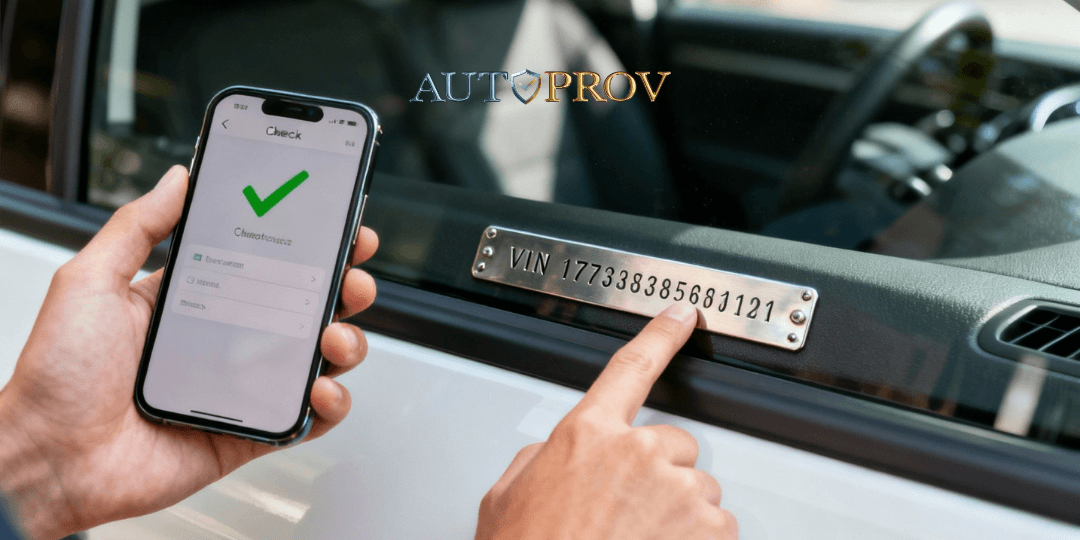
Your first port of call should almost always be the dashboard. Peer through the windscreen on the driver's side, right down in the corner where the dash meets the glass. You’ll spot a little metal plate showing the full 17-character VIN. It’s the quickest way to grab the number without even opening the car door.
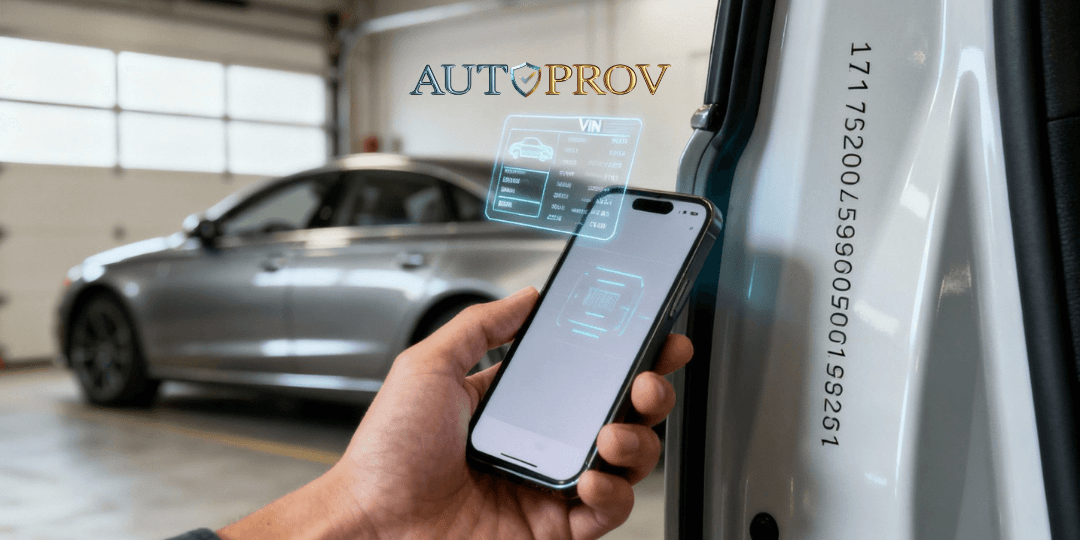
Next, open the driver's door and check the door jamb. Look for a sticker or plate on the frame where the door latches shut. This label is a goldmine of information, usually showing the VIN alongside other key details like recommended tyre pressures and vehicle weight limits.
Other Common VIN Locations
The dash and the door jamb are your go-to spots, but a true professional knows to check the other locations too. It’s all about cross-referencing to make sure everything lines up. You should check under the bonnet, as the VIN is often physically stamped directly onto the vehicle's body. Pop the bonnet and have a look on the firewall (the metal divider between the engine and the cabin) or sometimes on the front of the engine block itself.
The V5C logbook is another big one. The vehicle’s registration document will have the chassis number printed clearly on it. The number on this document must match the ones you find on the car. No exceptions. Finally, don't overlook the paperwork. A vehicle's service book is another place to check, as garages almost always record the VIN along with the registration number when carrying out work.
The most critical takeaway here is consistency. If the chassis number stamped on the car's body doesn't perfectly match the one on the V5C logbook, that’s your cue to walk away. Immediately. A mismatch is a massive red flag for a cloned or stolen vehicle.
This simple act of verification is your best first line of defence. Once you’ve confirmed the numbers all match up, you’re ready to dig deeper. That VIN is your key to unlocking the car's entire history with a professional report from a service like AutoProv. It's the step you can't afford to skip before you even think about buying.
What The Chassis Number Actually Tells You
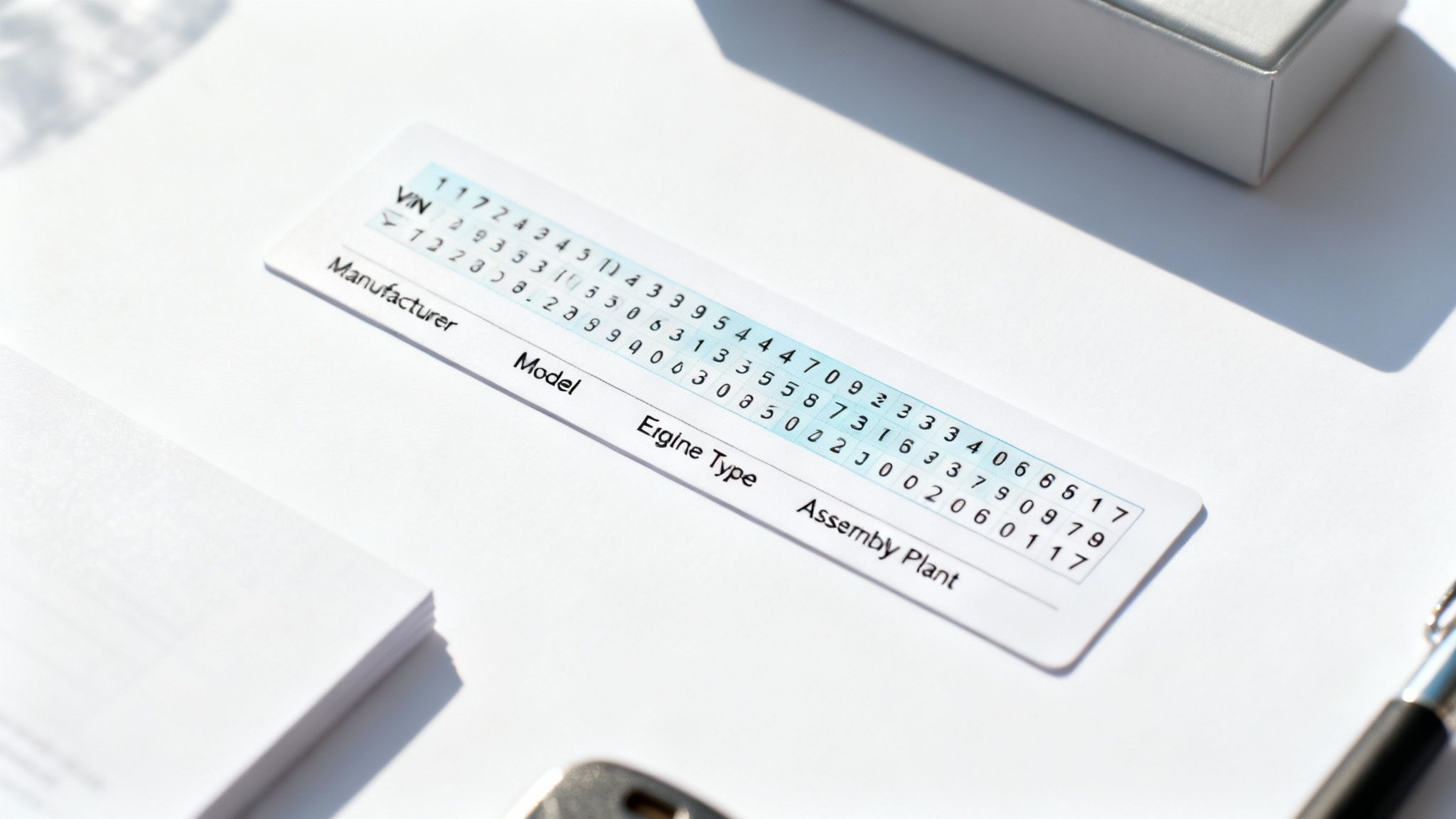
That 17-character string of letters and numbers stamped onto the car isn't just a random code. It’s the vehicle's entire story in miniature, a kind of automotive DNA that tells you far more than a registration plate ever could.
Think of it as the car's birth certificate. Each part of the chassis number, or Vehicle Identification Number (VIN), has a specific meaning. With a little know-how, you can perform a powerful initial vehicle check with the chassis number right there on the forecourt, long before you get to the paperwork.
Decoding The Details
The structure is standardised across the globe, giving you a quick way to confirm the basics. Let’s say you’re looking at a Ford Focus that seems like a good deal. A quick glance at the VIN can instantly tell you if it was built in Germany (the code WFO) for the European market. The next few characters will confirm if it's a hatchback or an estate, and crucially, what engine it left the factory with.
The first three characters are the World Manufacturer Identifier (WMI), telling you the manufacturer and origin. The next six characters are the real meat, describing the car’s specifications like the model, body style, and engine size. Finally, the last eight characters act like a serial number, containing the model year and pinpointing the exact factory where the car was assembled.
This level of detail is invaluable. Imagine the VIN tells you the car should have a 2.0-litre diesel engine, but the one you're looking at is clearly a 1.0-litre petrol. You’ve just uncovered a massive red flag. The engine may have been swapped out at some point, which could be hiding much bigger, undisclosed problems.
Understanding this structure adds a powerful layer of verification to your checks. It’s a physical-to-digital cross-reference that confirms the car in front of you matches the official records before you even run a full report.
This forensic detail is precisely what professional services like AutoProv use as a foundation for every report. Our systems decode this information instantly to build a complete, accurate vehicle profile. This ensures the data you receive is tied to that specific vehicle, not just its current number plate. It’s the only real starting point for proper due diligence.
Running A Full History Check With The Chassis Number

With the correct chassis number in hand, you're ready to uncover the vehicle’s complete story. This is where you move beyond a quick visual once-over and get into the real details. A professional vehicle check using the chassis number is what separates a smart buy from a nightmare on wheels.
Using a service built for the motor trade, like AutoProv, gives you access to the kind of critical data a seller might conveniently forget to mention. This isn’t just about looking up the MOT history; it’s about shielding your business from serious financial and legal headaches that you simply can't spot with the naked eye.
Uncovering The Hidden Truths
A comprehensive report pulls real-time information from a whole host of official sources, including the DVLA, major finance houses, and insurance databases. What you get is a clear, undeniable picture of the vehicle’s past life.
This information is absolutely crucial. Just to give you an idea of the scale, in the first quarter of 2025 alone, the DVLA recorded around 732,000 new vehicle registrations. Every single one is tied to a unique chassis number for official record-keeping. With so many cars on the road, knowing the precise history of the one you're buying is vital. You can dig into these vehicle registration statistics and their importance on the official government website.
A full check with AutoProv will flag up critical details. You can discover if there is an active hire purchase agreement, as if that debt isn't settled, the finance company can repossess the vehicle, leaving you massively out of pocket. The check also instantly cross-references the Police National Computer (PNC) to see if the car has been reported as stolen. Crucially, it will reveal if a car has been in a serious smash and declared a write-off, showing its salvage category (like Cat S or Cat N), which completely changes its value and safety profile.
Imagine this scenario: you're looking at a pristine-looking hatchback. The seller is charming, the price seems too good to be true. A quick check with AutoProv reveals it was declared a Category S write-off six months ago. The chassis was damaged, and while it's been repaired, its structural integrity is a huge question mark and its resale value has nosedived. That’s the kind of insight that can save you thousands.
By using a powerful tool that pulls together data from the DVLA, insurers, and finance companies, you get the clarity you need to walk away from a bad investment. It turns a risky guess into a data-backed business decision. Honestly, this single step is the most important part of your due diligence when buying stock.
Making Sense of Your Vehicle Check Report
Right, you've got the vehicle history report in hand. That's the easy part done. Now comes the crucial bit: making sense of what it all means so you can make a smart, confident buying decision. An AutoProv report is dense with data, and knowing how to decode it is what separates a savvy buyer from someone about to inherit a massive headache.
This isn't just about ticking a box. Think about the sheer number of cars on UK roads. The Society of Motor Manufacturers and Traders (SMMT) reported around 1,514,000 new registrations in 2024 alone. Each one has a unique story tied to its chassis number. With over 80% of buyers now running some kind of vehicle check, being the one who can properly interpret the results gives you a serious advantage. If you're interested in the wider market trends, the SMMT's official data portal is a good place to look.
The Deal Breakers
Some things you find in a report are simply non-negotiable. These are the bright red flags that tell you to walk away—no ifs, no buts. Getting this wrong can cost you your money, your reputation, and a whole lot more.
A 'Stolen' marker is a definite showstopper. If the report flags the vehicle on the Police National Computer (PNC) as stolen, the deal is dead. Don't even think about it. You’ll lose the car, your money, and could find yourself caught up in a criminal investigation. Another deal breaker is outstanding finance. A car with an active finance agreement doesn't belong to the person selling it; it belongs to the finance company. Buy it, and you're buying a debt. The lender has every right to repossess the vehicle, leaving you empty-handed. Finally, watch for serious write-off categories. A Category A or Category B write-off is the end of the line for a vehicle. These cars were so badly damaged they were deemed unsafe to ever return to the road and should have been scrapped.
A vehicle check isn't just about finding problems; it's about understanding and quantifying risk. Some issues are bargaining chips, but others are clear signs to kill the deal on the spot.
The Negotiating Points
Not every warning sign means you have to abandon the purchase. Sometimes, a flag in the report is your ticket to a better price. These are the issues you can use as leverage to negotiate a deal that reflects the car's true history and condition.
A Category S (structurally damaged but repairable) or Category N (non-structural damage) write-off is a classic example. These cars can be safely repaired and put back on the road, but their history will always impact their value and can sometimes make them harder to insure. This is a perfect reason to adjust your offer downwards.
Mileage discrepancies are another big one. If you see strange patterns in the MOT history—like a sudden drop in mileage or numbers that just don't add up—it's time to ask some hard questions. It could be something as simple as a clerical error, or it could point to clocking. Either way, an AutoProv check gives you the evidence you need to challenge the seller and pay for the car you’re actually getting, not the one they're trying to sell you.
Got Questions About Chassis Number Checks?
When you're looking into a used vehicle's past, a few common questions always seem to pop up. Getting straight answers is vital before you part with your money, so you can trust the information in a vehicle check chassis number report.
One of the first things people ask is whether a chassis number is the same as the Vehicle Identification Number (VIN). The short answer is: yes. Here in the UK, the terms are often used interchangeably for the unique 17-character code stamped on every vehicle. Think of "chassis number" as the classic term, while "VIN" is the modern, global standard.
Getting The Full Picture
So, can you get the full story with just the registration number? While a reg plate is a good starting point, any truly reliable, deep-dive report from a service like AutoProv will always anchor its data to the chassis number. Why? Because registration plates can be changed, cloned, or put on retention. The VIN, on the other hand, is physically stamped onto the vehicle's chassis, making it the only permanent and trustworthy identifier for pulling critical data like outstanding finance or theft records.
A golden rule of vehicle buying: if the chassis number stamped on the car doesn't match the one on the V5C logbook, walk away. Don't hesitate. This is one of the biggest red flags for a cloned or stolen vehicle. Pushing ahead could mean you buy an illegal car and lose every penny.
Seriously, a mismatch is a non-negotiable deal-breaker. A professional check links every piece of history directly to the vehicle's unique identity—not its number plate. This is how you guarantee the history you're reading actually belongs to the car parked in front of you, giving you the solid proof you need to make a smart, data-driven purchase and protect your business from a very expensive mistake.
Frequently Asked Questions
AI-Generated Content Notice
This article was created with the assistance of artificial intelligence technology. While we strive for accuracy, the information provided should be considered for general informational purposes only and should not be relied upon as professional automotive, legal, or financial advice. We recommend verifying any information with qualified professionals or official sources before making important decisions. AutoProv accepts no liability for any consequences resulting from the use of this information.
From our AI insights
- Navigating UK Grey Imports: A Trader's Guide
Understand the complexities and opportunities of UK grey imports for savvy motor traders.
- Navigating Private Plate Challenges in UK Vehicle Checks
Learn how private plates affect UK vehicle checks and how traders verify provenance and spot cloning risks.
- Navigating VIN Checks Post-Brexit: What UK Traders Need to Know
Discover how Brexit impacts VIN checks for UK traders and the crucial data to review.
Related Articles

Essential Vehicle Checks Before Buying a Used Car
Learn essential checks to ensure your used car purchase is safe and sound in the UK market.

Why a Provenance Check is Essential for Used Car Buyers
Ensure your used car is a smart investment by understanding the importance of a provenance check and how AutoProv can help.
A Guide to Vehicle Check with VIN Number
A vehicle check with vin number is easily the most important thing you can do before buying a used car. Think of it as your first line of defence—a quick, simple step that pulls back the curtain on a vehicle's past, protecting you from expensive mistakes, legal headaches, and downright dangerous cars.
Published by AutoProv
Your trusted source for vehicle intelligence