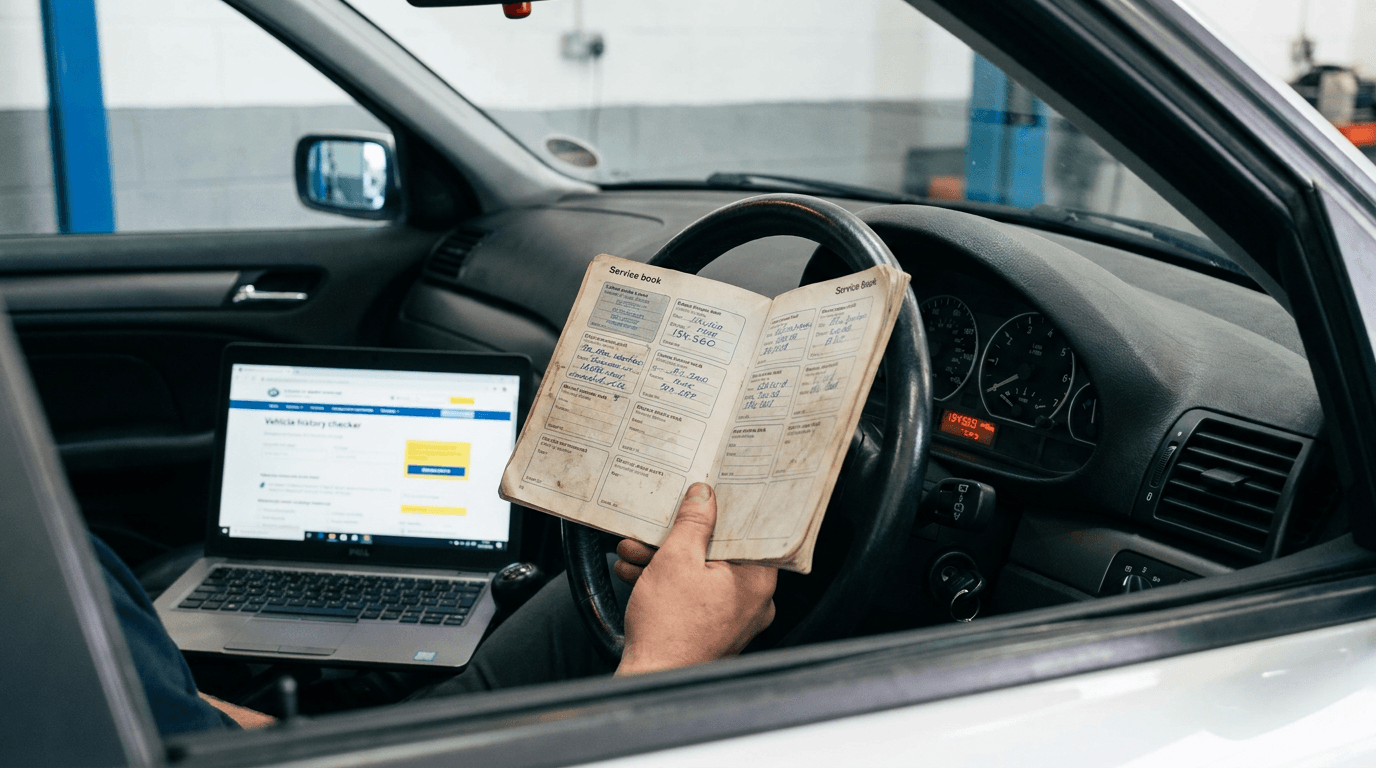
Learn the trade techniques for identifying clocked mileage on used vehicles using MOT history, service records, and digital verification tools before you buy.
By CiteFlow
What Is Clocked Mileage and Why Does It Matter to Dealers
Clocked mileage refers to the deliberate alteration of a vehicle's odometer reading to display fewer miles than the car has actually travelled. For motor traders, clocked vehicles represent a significant financial and legal risk. Purchasing a clocked car means overpaying for stock based on false provenance, exposing your business to Consumer Rights Act 2015 claims, and potentially facing Trading Standards investigations for mis-selling. The practice remains widespread across the UK used car market, with industry estimates suggesting thousands of vehicles are clocked annually, though exact figures are difficult to verify due to the covert nature of the fraud.
The financial impact extends beyond the initial purchase price. A vehicle with 80,000 genuine miles sold as a 40,000-mile example commands a premium that evaporates when the true mileage emerges. Customers who discover the discrepancy have strong legal grounds for rejection under the CRA 2015, leaving dealers liable for full refunds whilst holding depreciated stock. Beyond individual transactions, reputation damage and regulatory scrutiny can affect your entire operation.
Physical Warning Signs During Vehicle Inspection
Whilst digital checks provide the strongest evidence, physical inspection remains your first line of defence during appraisals. Excessive wear patterns that contradict the displayed mileage often reveal clocking attempts before you access any data.
Examine the driver's seat bolster, steering wheel rim, and gear knob for wear consistent with the claimed mileage. A vehicle showing 35,000 miles should not have a heavily worn leather steering wheel or a gear knob with the pattern rubbed smooth. Check pedal rubbers for wear depth. Original pedal rubbers showing significant wear or aftermarket replacements on a low-mileage vehicle warrant suspicion.
Inspect service stickers in door shuts, under the bonnet, and in the glovebox. Oil change reminders, brake fluid service dates, and timing belt replacement stickers often record mileage. Cross-reference these against the current odometer reading. A timing belt sticker showing replacement at 78,000 miles on a vehicle displaying 62,000 miles provides clear evidence of tampering.
Brake disc condition offers another physical indicator. Heavily lipped or worn discs on a claimed low-mileage vehicle suggest considerably more use than the odometer indicates. Similarly, worn suspension components, perished bushes, and tired interior trim all tell a story that should align with the recorded mileage.
Using MOT History to Identify Mileage Discrepancies
MOT history provides the most accessible and reliable method for spotting clocked vehicles. Every MOT test records the odometer reading, creating an official timeline that cannot be easily manipulated. Analysing this data reveals discrepancies that physical inspection might miss.
Access the complete MOT history and mileage records for any UK-registered vehicle using the registration number and V5C reference. Review the mileage progression year-on-year, looking for several red flags. Any backwards progression in mileage between tests indicates clocking. A reading of 78,000 miles in 2022 followed by 52,000 miles in 2023 provides definitive evidence of tampering.
Watch for suspiciously low annual mileage increases that suddenly change pattern. A vehicle consistently adding 15,000 miles annually that suddenly shows only 2,000 miles between tests may indicate clocking followed by limited use to establish a new lower baseline. Calculate average annual mileage across the vehicle's life and compare against recent patterns.
MOT failures and advisories also provide context. A vehicle that failed on worn brake pads at 65,000 miles should not display 48,000 miles two years later. Cross-reference advisory items like tyre wear, brake condition, and suspension issues against the mileage timeline. These components wear predictably, and their condition should align with recorded mileage.
Digital Service History as Mileage Verification
Manufacturer digital service records provide independent mileage verification that exists outside the vehicle itself. When a franchised dealer services a car, they record the mileage directly into the manufacturer's database, creating a permanent record accessible by VIN.
Digital service history from 44 manufacturer databases offers mileage verification that cannot be altered by clocking the odometer. A service record showing 72,000 miles in the manufacturer system provides definitive proof when the vehicle displays 54,000 miles. This verification works particularly well for vehicles with main dealer service history during their early years.
The value of digital service records for spotting clocked mileage extends beyond simple mileage comparison. Service intervals reveal usage patterns. A vehicle serviced every 12 months at 10,000-mile intervals that suddenly shows 18-month gaps with minimal mileage increase suggests intervention. Major service items like brake fluid changes, spark plugs, and timing belts are mileage-dependent, and their replacement history should align with the claimed odometer reading.
For vehicles without comprehensive main dealer history, independent service records, invoices, and repair documentation provide similar verification. Collect any paperwork during appraisal and cross-reference recorded mileages against the current reading.
Insurance and Finance Records as Additional Data Points
Insurance and finance documentation creates another independent mileage trail. When customers arrange insurance or finance, they typically declare annual mileage and current odometer readings. These records, whilst not always accessible to dealers during initial appraisal, become relevant during comprehensive provenance checks.
Finance agreements often record the mileage at the point of advance. A hire purchase agreement from two years ago showing 45,000 miles on a vehicle currently displaying 38,000 miles provides clear evidence of clocking. Similarly, insurance claims documentation records mileage at the time of incident, creating fixed data points in the vehicle's history.
Comprehensive vehicle intelligence reports combine these data sources with DVLA, DVSA, and Experian records to identify mileage discrepancies across multiple independent systems. When several sources contradict the displayed mileage, the evidence becomes compelling.
Understanding Mileage Correction vs Mileage Fraud
Not every mileage discrepancy indicates criminal fraud. Legitimate mileage corrections occur when odometers are replaced due to failure or when digital dashboards are updated following repairs. The distinction lies in documentation and disclosure.
Legitimate mileage correction requires proper documentation. When a garage replaces a failed instrument cluster, they should record the old mileage, the new cluster's reading, and calculate the true mileage. This documentation should accompany the vehicle and be disclosed to subsequent buyers. A sticker in the service book or a letter from the repairing garage explaining the correction demonstrates transparency.
Mileage fraud involves deliberate deception without disclosure. Rolling back an odometer to increase sale value, failing to disclose a mileage correction, or providing false service history to support a clocked reading all constitute fraud. The intent to deceive and the absence of disclosure separate legitimate correction from criminal activity.
When you discover a mileage discrepancy during appraisal, investigate whether documentation exists to explain it. A genuine correction will have a paper trail. Absence of documentation combined with a seller who claims ignorance typically indicates fraud rather than legitimate correction.
Trade Tools for Systematic Mileage Verification
Professional motor traders need systematic processes rather than ad-hoc checks. Incorporating mileage verification into your standard appraisal workflow reduces risk across all stock purchases.
Establish a standard checklist that includes MOT history review, service record verification, and physical inspection points for every vehicle appraisal. Train your buyers to spot the physical warning signs and to access digital records before making purchase decisions. A vehicle that fails multiple mileage checks should be rejected regardless of apparent condition or price.
Comprehensive provenance reports that combine MOT and service history data with finance checks, insurance records, and manufacturer databases provide the most thorough verification. These reports identify discrepancies across multiple independent sources, revealing clocking attempts that single-source checks might miss.
For auction purchases where time is limited, prioritise MOT history checks as your minimum standard. The official DVSA data is instantly accessible and provides reliable evidence. Supplement this with rapid visual inspection of wear items and any available service documentation. Walk away from vehicles showing clear discrepancies, regardless of apparent value.
Legal Implications of Selling Clocked Vehicles
Selling a clocked vehicle, even unknowingly, exposes your dealership to significant legal risk under the Consumer Rights Act 2015. Vehicles must be as described, and mileage forms a fundamental part of that description. A clocked car is not of satisfactory quality and does not match the description provided.
Customers who discover clocked mileage have the right to reject the vehicle and claim a full refund within 30 days of purchase. Beyond 30 days, they retain rejection rights if the issue is significant, though you have one opportunity to repair or replace. In practice, you cannot repair clocked mileage, making rejection almost certain.
Beyond consumer law, Trading Standards can pursue criminal charges for fraudulent trading if you sell clocked vehicles. Claiming ignorance provides no defence if you failed to conduct reasonable due diligence. Courts expect professional traders to verify mileage using available tools before sale. Your business systems and processes will be scrutinised to determine whether you took reasonable steps to identify clocking.
The financial impact extends beyond the individual transaction. Legal costs, Trading Standards investigations, and reputation damage can threaten business viability. Systematic mileage verification protects against these risks whilst demonstrating professional standards.
What to Do When You Discover a Clocked Vehicle
Discovering a clocked vehicle after purchase requires immediate action to limit your exposure and protect your business interests.
If you identify clocking before retail sale, do not attempt to sell the vehicle without full disclosure. Contact the seller immediately to discuss rejection and refund. Document all evidence of clocking, including MOT printouts, service records, and photographs of physical wear. If the seller is a trade vendor, you have business-to-business remedies. If you purchased from a private seller, your legal position is weaker but you should still pursue recovery.
Report the clocking to Trading Standards regardless of whether you achieve a refund. This creates an official record and may prevent the vehicle being clocked again for resale. Provide all evidence you have gathered to support their investigation.
If you discover clocking after retail sale to a customer, contact them immediately before they discover it themselves. Transparency and proactive resolution demonstrate good faith. Offer immediate rejection and full refund, and document your response. This approach minimises legal costs and reputation damage whilst demonstrating compliance with consumer protection law.
Never attempt to sell a known clocked vehicle by adjusting the price or providing vague descriptions. The legal and reputational risks far outweigh any potential profit. Vehicles with confirmed clocking should be rejected to the vendor, scrapped, or sold for parts with full disclosure of the mileage issues.
Building Mileage Verification into Your Buying Process
Systematic mileage verification should form part of your standard stock acquisition process, not an occasional check when something seems suspicious.
Train all staff involved in vehicle appraisal and purchasing to recognise clocking warning signs. Provide them with access to MOT history tools and manufacturer service history databases. Make mileage verification a mandatory step before any purchase decision, with clear authority to reject vehicles showing discrepancies.
Document your verification process for every vehicle. Record which checks you performed, what data sources you accessed, and what the results showed. This documentation demonstrates due diligence if issues arise later. It also provides evidence of your professional standards for regulatory purposes.
For high-value stock or vehicles where mileage significantly affects value, commission comprehensive provenance reports that verify mileage across multiple independent databases. The cost of thorough verification is minimal compared to the financial risk of purchasing a clocked vehicle.
Establish clear rejection criteria. Any vehicle showing backwards mileage progression on MOT records should be automatically rejected. Vehicles with unexplained gaps in service history combined with physical wear inconsistent with displayed mileage should trigger additional investigation before purchase. When doubt exists, walk away.
Common Clocking Scenarios and How to Spot Them
Certain vehicle types and scenarios present higher clocking risk. Understanding these patterns helps you focus verification efforts where they matter most.
High-mileage diesel vehicles, particularly premium German saloons used as motorway cruisers, represent prime clocking targets. A BMW 5 Series or Mercedes E-Class with genuine 150,000 miles might be clocked to 80,000 miles to access a different market segment. These vehicles often show minimal physical wear despite high mileage, making visual detection difficult. Prioritise digital verification for this category.
Ex-fleet and ex-rental vehicles face higher clocking risk when entering the retail market. These vehicles accumulate mileage rapidly and may be clocked before being sold at auction. Check for fleet management service records and verify against manufacturer databases. Ex-rental vehicles sometimes have service history gaps that make verification more difficult.
Vehicles imported from overseas, particularly from Ireland, present verification challenges. MOT history only covers the UK period, and manufacturer service records may not be accessible for foreign market vehicles. Exercise additional caution with imports and factor the verification difficulty into your purchase decision.
Very low mileage on older vehicles sometimes indicates genuine preservation but can also suggest clocking. A 10-year-old vehicle showing 25,000 miles should have documentary evidence explaining the low use. Look for continuous MOT history showing gradual mileage accumulation. Sudden appearance of a low-mileage older vehicle without clear provenance warrants suspicion.
Technology and Future Developments in Mileage Verification
Digital technology is making mileage clocking increasingly difficult, though fraudsters continue to adapt their methods.
Modern vehicles record mileage in multiple electronic control units throughout the car, not just the instrument cluster. Professional clocking now requires reprogramming numerous modules to maintain consistency. However, this also means that diagnostic tools can sometimes detect clocking by identifying mismatches between different modules' stored mileage data.
Blockchain and distributed ledger technology offers potential for immutable mileage recording. Some manufacturers are exploring systems where every service event, MOT test, and significant mileage point is recorded to a blockchain, creating a permanent record that cannot be altered retroactively. Whilst not yet widespread, this technology may eventually eliminate mileage fraud.
Connected vehicle technology that transmits mileage data to manufacturer servers in real-time creates another verification layer. Vehicles with active telematics or connected services maintain independent mileage records that exist outside the vehicle itself, making clocking detectable even when all physical modules are reprogrammed.
For motor traders, the practical implication is increasing reliance on digital verification rather than physical inspection. As vehicles become more technologically sophisticated, so do the verification tools available to professional buyers.
FAQ
Can mileage be clocked on modern cars with digital dashboards?
Yes, modern digital dashboards can be clocked using specialist electronic tools that reprogram the odometer memory. However, modern vehicles store mileage data in multiple electronic control units throughout the car, making comprehensive clocking more difficult and expensive. Professional verification tools can sometimes detect clocking by identifying mismatches between different modules. The key defence remains checking independent records like MOT history and manufacturer service databases that exist outside the vehicle itself.
Is it illegal to sell a car with clocked mileage if I did not know about it?
Whilst criminal fraud requires intent, selling a clocked vehicle even unknowingly still breaches the Consumer Rights Act 2015. The vehicle is not as described and customers have strong rejection rights. Courts expect professional motor traders to conduct reasonable due diligence before sale. Claiming ignorance provides no defence if you failed to check readily available data sources like MOT history. Your business systems and verification processes will be scrutinised to determine whether you took reasonable steps to identify the clocking.
What should I do if I buy a clocked car at auction?
Contact the auction house immediately with evidence of the clocking, including MOT printouts and service records. Most auction terms and conditions include mileage warranties that allow rejection for clocked vehicles. Document all evidence thoroughly and submit a formal rejection claim within the timeframe specified in the auction conditions, typically 24-72 hours for mileage discrepancies. Report the vehicle to Trading Standards regardless of whether the auction accepts your rejection. Do not attempt to retail the vehicle before resolving the issue.
How far back should I check MOT history when verifying mileage?
Check the complete MOT history from the vehicle's first test to present day. Clocking can occur at any point in a vehicle's life, and reviewing the entire timeline reveals patterns that partial checks miss. Look for backwards progression, suspicious gaps, and inconsistent annual mileage accumulation. The complete history also shows whether the vehicle has been continuously UK-registered or has periods abroad where mileage verification is more difficult. Full historical analysis takes minutes but provides comprehensive protection.
Are there any legitimate reasons for mileage to go backwards on MOT records?
Legitimate mileage corrections occur when instrument clusters are replaced due to failure or when odometers are reset during repairs. However, these corrections should be documented with garage records explaining the old mileage, new cluster reading, and calculated true mileage. A backwards progression without supporting documentation almost always indicates clocking rather than legitimate correction. If you encounter a backwards reading, demand written evidence from the seller explaining the discrepancy before proceeding with purchase.
Frequently Asked Questions
AI-Generated Content Notice
This article was created with the assistance of artificial intelligence technology. While we strive for accuracy, the information provided should be considered for general informational purposes only and should not be relied upon as professional automotive, legal, or financial advice. We recommend verifying any information with qualified professionals or official sources before making important decisions. AutoProv accepts no liability for any consequences resulting from the use of this information.
From our AI insights
- Understanding Mileage Correction Costs for UK Dealers
Explore the legal risks and cost implications of mileage correction for UK car dealers.
- Decoding Mileage: Impact of Seasonal Driving Patterns
Explore how seasonal driving impacts your car's mileage verification.
- Tackling Mileage Fraud in Electric Vehicles
Explore how motor traders can prevent mileage fraud in electric vehicles using advanced techniques.
Related Articles

Understanding Vehicle Mileage Importance
Discover the critical role of accurate mileage in vehicle provenance and how AutoProv can safeguard your purchase.
What Is the Average Annual Mileage in the UK?
Right now, the average annual mileage for a car in the UK hovers around 7,000 miles. For anyone in the motor trade, that number is more than just a statistic; it’s a vital benchmark that helps buyers, sellers, and insurers get a quick read on a car's usage and potential wear and tear.
Car Mileage Discrepancy Explained: A Guide for UK Motor Traders
When it comes to a car’s history, its mileage record should tell a simple, straightforward story: the number always goes up. A mileage discrepancy is what happens when that story suddenly does not make sense.
Published by AutoProv
Your trusted source for vehicle intelligence