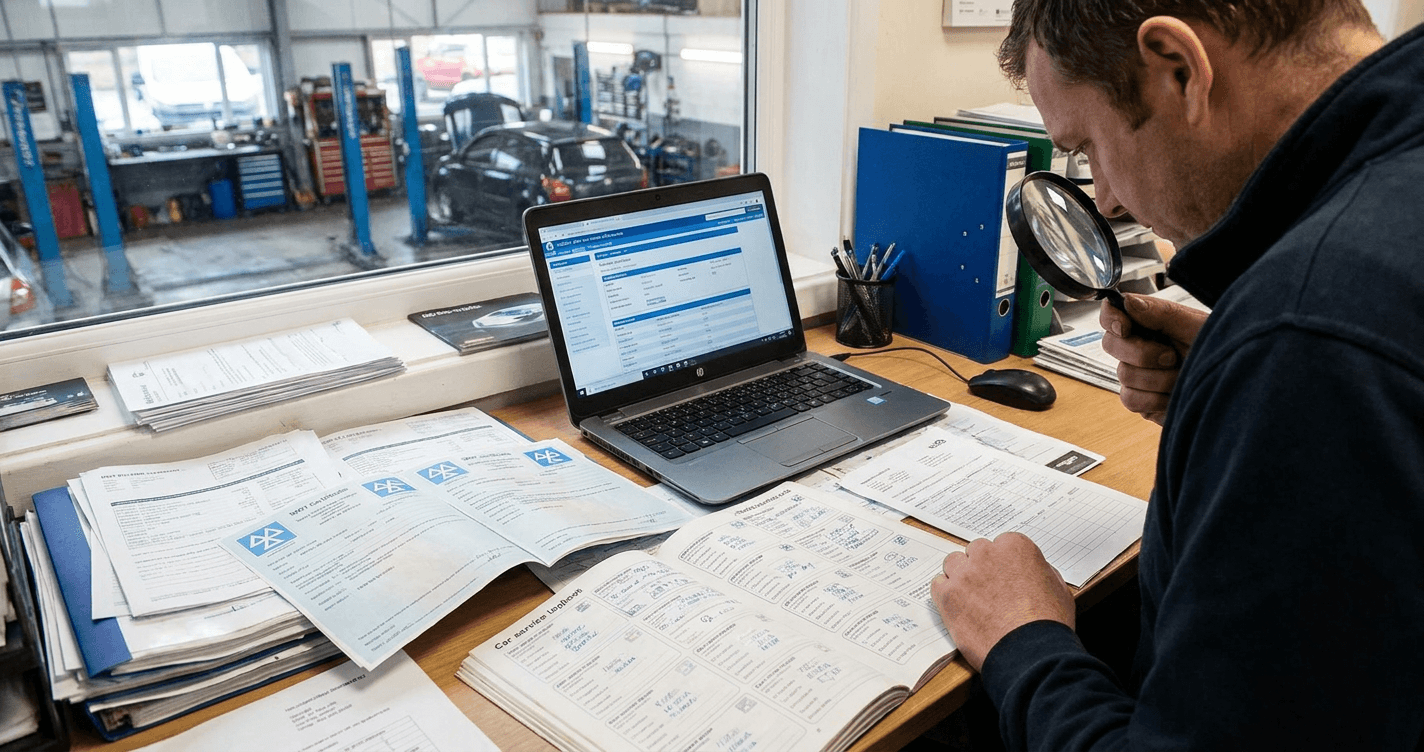
Learn how to identify clocked mileage by cross-referencing MOT history with manufacturer service records. Professional techniques for UK motor traders.
By CiteFlow
Understanding Mileage Clocking in the UK Motor Trade
Mileage clocking remains one of the most prevalent forms of vehicle fraud in the UK motor trade, with industry estimates suggesting hundreds of thousands of vehicles have altered odometer readings. The practice involves rolling back or resetting a vehicle's mileage to increase its apparent value, and it costs UK dealers thousands in mis-bought stock, customer disputes, and reputational damage. The most reliable method to detect clocked mileage combines official MOT history data from the DVSA with manufacturer-verified service records, creating a cross-referenced timeline that reveals inconsistencies fraudsters cannot easily manipulate.
Unlike physical odometers that could be wound back mechanically, modern digital systems require sophisticated equipment to alter. However, the technology exists and is readily available. The defence against this fraud lies not in the dashboard display but in the permanent records created every time a vehicle passes through an MOT station or authorised service centre.
Why MOT History Is Your First Line of Defence
MOT history provides an official, government-maintained record of mileage readings taken at each annual test. The DVSA database contains readings dating back to 2005 for most vehicles, creating a timeline that should show steady, logical progression. Each MOT record captures the exact mileage at the time of testing, the test date, and whether the vehicle passed or failed.
This data is particularly valuable because MOT stations have no commercial incentive to manipulate readings. Unlike service history that might be conducted by the seller or their associates, MOT tests are performed by independent testing stations under DVSA oversight. The readings are submitted electronically and cannot be retrospectively altered without leaving audit trails.
When you check MOT and mileage records, you should see annual increases that align with typical usage patterns. A private car averaging 8,000-12,000 miles annually should show consistent increments. Company cars or motorway commuters might show 15,000-25,000 miles per year. Any deviation from the established pattern warrants investigation.
Cross-Referencing Service Records with MOT Data
Manufacturer service records provide a second, independent mileage timeline. When dealers submit service data to manufacturer databases, they record the mileage alongside service details, parts fitted, and work completed. These records are timestamped and stored centrally, making them extremely difficult to falsify convincingly.
The power of this approach lies in the cross-reference. A vehicle might show 45,000 miles on the MOT in March and 47,000 miles at a main dealer service in June. If the odometer now reads 38,000 miles, you have documentary proof of clocking. The fraud becomes undeniable when you have two independent data sources confirming higher historical readings.
Why manufacturer service history beats stamped logbooks becomes immediately apparent in clocking investigations. Paper service books can be replaced, stamps can be forged, and pages can be removed. Digital manufacturer records cannot be edited by sellers or backstreet garages. They represent an immutable timeline of the vehicle's life.
Step 1: Obtain Complete MOT History
Begin every mileage verification by pulling the complete MOT history for the vehicle. You need the VRM (vehicle registration mark) to access DVSA records. The history should display every MOT test since 2005, including mileage at each test, pass/fail status, and any advisories or failures noted.
Look for the following patterns:
- Consistent annual increases in mileage
- Logical progression that matches the vehicle's age and type
- No sudden drops or unexplained plateaus
- Mileage readings that align with advisory notes (worn tyres at high mileage, for example)
Document every reading in chronological order. Create a simple spreadsheet showing date, mileage, and annual increase. This visualisation makes anomalies immediately obvious. A vehicle showing 12,000-mile annual increases for five years, then suddenly 3,000 miles in the most recent year, suggests either a change in usage pattern or potential interference.
Step 2: Access Manufacturer Service Records
Manufacturer databases hold service records for vehicles maintained at franchised dealers and many independent specialists who submit data to OEM systems. Coverage varies by manufacturer, but major brands including Audi, BMW, Mercedes-Benz, Volkswagen, and others maintain comprehensive digital histories.
These records show:
- Service dates and mileage at each visit
- Work completed and parts replaced
- Dealer location and technician notes
- Warranty claims and recall completions
Accessing these records requires either direct manufacturer portal access or a trade intelligence platform that aggregates data from multiple OEM databases. The records provide mileage readings at irregular intervals throughout the vehicle's life, filling gaps between annual MOT tests and creating a more detailed timeline.
Step 3: Plot a Combined Timeline
With both MOT and service data collected, create a unified timeline showing every recorded mileage reading in chronological order. This combined view reveals discrepancies that might not be obvious when examining either data source in isolation.
For example:
- January 2020: MOT at 34,567 miles
- June 2020: Service at 38,234 miles
- January 2021: MOT at 46,891 miles
- September 2021: Service at 51,203 miles
- January 2022: MOT at 42,000 miles
The January 2022 reading is clearly fraudulent. The vehicle cannot have lost 9,000 miles between September 2021 and January 2022. This pattern indicates clocking occurred sometime after the September service, probably shortly before the January MOT.
Step 4: Identify Common Clocking Patterns
Experienced traders recognise typical clocking signatures. The most common pattern shows consistent increases until a sudden drop or unexplained plateau, usually coinciding with a change of ownership or preparation for sale.
Watch for these red flags:
- Mileage decreases between any two consecutive readings
- Unusually low annual increases (under 3,000 miles) on vehicles with high-mileage histories
- Round numbers (exactly 50,000 or 75,000 miles) that suggest manual adjustment
- Missing MOT tests in years when clocking might have occurred
- Service records that stop abruptly, suggesting the vehicle left the franchised network
Some fraudsters attempt to create plausible deniability by claiming odometer replacement or dashboard changes. Legitimate replacements should be documented in service records with clear notes explaining the reason and confirming the true mileage. The absence of such documentation alongside a mileage discrepancy strengthens the clocking evidence.
Step 5: Examine Supporting Evidence
Mileage verification extends beyond database checks. Physical inspection of the vehicle should support or contradict the claimed mileage. High-mileage vehicles show characteristic wear patterns that low-mileage examples do not.
Inspect:
- Brake and clutch pedal rubber wear
- Driver's seat bolster condition
- Steering wheel surface wear
- Gear knob and handbrake condition
- Service stickers on door frames or under bonnet
- Tyre wear patterns and brand quality
A vehicle showing 35,000 miles with heavily worn pedals, a polished steering wheel, and collapsed driver's seat bolsters likely has significantly higher true mileage. Conversely, pristine interior condition on a claimed 95,000-mile vehicle warrants suspicion unless supported by exceptional service history and care.
MOT advisory notes provide additional corroboration. A vehicle showing tyre wear advisories at 60,000 miles should not have the same tyres fitted at a claimed 45,000 miles two years later. These details create a web of evidence that either supports the mileage claim or exposes the fraud.
Regional Variations in Mileage Patterns
Understanding typical regional mileage patterns helps identify anomalies. Urban vehicles in areas like London or Glasgow often accumulate lower annual mileage due to congestion and shorter journey distances. Rural vehicles or those from motorway-heavy regions may show higher annual increases.
Commercial centres and regions with significant motorway networks typically produce higher-mileage stock. Vehicles from Northern Ireland or Wales may show different usage patterns compared to metropolitan areas. This context helps distinguish genuine low-mileage vehicles from clocked examples.
What to Do When You Identify Clocking
Discovering clocked mileage before purchase saves you from buying problem stock. Walk away immediately. No amount of price reduction compensates for the legal, reputational, and financial risks of selling a clocked vehicle, even unknowingly.
If you discover clocking after purchase but before retail sale, you have several options:
- Return the vehicle to the seller if purchased recently from trade sources
- Adjust your records to reflect true mileage and price accordingly
- Report the fraud to Trading Standards and Action Fraud
- Document everything for potential legal recovery
Never attempt to sell a vehicle you know to be clocked without full disclosure of the true mileage. The legal consequences under the Consumer Rights Act 2015 and fraud legislation are severe, and the reputational damage to your business can be terminal.
Using Technology to Automate Mileage Verification
Manual cross-referencing of MOT and service records is time-consuming when checking multiple vehicles daily. Professional vehicle intelligence platforms automate this process, instantly comparing readings from multiple sources and flagging discrepancies.
These systems pull data from DVSA MOT databases and manufacturer service records simultaneously, presenting a unified timeline with anomalies highlighted. The technology identifies patterns human reviewers might miss, particularly subtle manipulations where mileage has been reduced by smaller amounts to avoid obvious detection.
Automated verification also creates audit trails for compliance purposes. When a customer later disputes a vehicle's history, you have documented evidence showing the checks you performed and the data available at the time of sale.
The Cost of Missing Clocked Mileage
Buying a clocked vehicle affects your business in multiple ways. The immediate financial impact comes from overpaying for stock based on false mileage. A vehicle you valued at £12,000 based on 45,000 miles might be worth £8,000 with its true 95,000 miles.
The customer who later discovers the clocking has legal rights to reject the vehicle and claim compensation. You face the cost of refunding the purchase price, collecting the vehicle, and potentially paying their legal costs and damages. Your reputation suffers when word spreads that you sold a clocked car, even if you were also a victim of the fraud.
Prevention costs a few pounds per vehicle check. The cost of failure runs into thousands per incident, plus the immeasurable damage to your trading reputation.
Mileage Verification as Standard Practice
Every vehicle entering your stock should undergo mileage verification before you commit to purchase. This applies whether buying from auction, trade-to-trade, part-exchange, or private sellers. The source does not guarantee honesty, and even reputable auction houses occasionally handle clocked vehicles.
Make verification part of your standard operating procedure:
- Check MOT history before bidding or making offers
- Access manufacturer service records during appraisal
- Cross-reference all mileage data points
- Document your checks for compliance records
- Train all buyers to recognise clocking patterns
Consistency protects your business. When every vehicle receives the same scrutiny, you eliminate the risk of rushing a purchase and missing obvious fraud indicators.
FAQs
Can mileage be clocked on modern vehicles with digital odometers?
Yes, digital odometers can be altered using readily available electronic tools that connect to the vehicle's OBD port. The technology required costs a few hundred pounds and is marketed online as mileage correction equipment. While more sophisticated than mechanical clocking, digital manipulation is widespread. This is precisely why cross-referencing independent data sources like MOT history and manufacturer service records is essential, as these external records cannot be altered by someone with access only to the vehicle.
How far back does MOT mileage history go?
MOT mileage records in the DVSA database extend back to 2005 for most vehicles. Any MOT test conducted since the electronic recording system was implemented will show the mileage reading. For vehicles first registered before 2005, you may have partial history showing only tests conducted after the system went live. Older vehicles with limited MOT history require greater reliance on service records and physical condition assessment to verify mileage claims.
What should I do if MOT and service history show different mileage on the same date?
Small discrepancies of a few hundred miles between readings taken on similar dates are normal and reflect the mileage accumulated between the two events. However, significant differences or readings that contradict the chronological progression indicate either data entry errors or deliberate fraud. Investigate further by checking additional data points, examining the vehicle's physical condition, and requesting documentation from the seller. If the discrepancy cannot be explained satisfactorily, walk away from the purchase.
Are there any legitimate reasons for mileage to decrease in vehicle records?
Legitimate mileage decreases are extremely rare and should always be documented. The only valid scenarios involve odometer replacement due to failure or dashboard replacement following accident damage, and these should be recorded in service history with notes confirming the true mileage at the time of replacement. Some vehicles have mileage recorded incorrectly due to data entry errors at MOT stations, but these isolated mistakes do not create patterns of decreasing mileage across multiple data points. Any decrease without clear documentary evidence should be treated as clocking.
How accurate are manufacturer service records for detecting clocked mileage?
Manufacturer service records are highly accurate when the vehicle has been maintained within the franchised dealer network. Main dealers submit service data electronically to central databases, creating timestamped records that cannot be retrospectively altered. However, coverage gaps exist for vehicles serviced exclusively by independent garages or those that left the franchised network early in their life. The most reliable verification combines manufacturer records with MOT history, as this provides multiple independent data sources covering different time periods and service locations.
Frequently Asked Questions
AI-Generated Content Notice
This article was created with the assistance of artificial intelligence technology. While we strive for accuracy, the information provided should be considered for general informational purposes only and should not be relied upon as professional automotive, legal, or financial advice. We recommend verifying any information with qualified professionals or official sources before making important decisions. AutoProv accepts no liability for any consequences resulting from the use of this information.
From our AI insights
- Decoding Mileage: Impact of Seasonal Driving Patterns
Explore how seasonal driving impacts your car's mileage verification.
- Tackling Mileage Fraud in Electric Vehicles
Explore how motor traders can prevent mileage fraud in electric vehicles using advanced techniques.
- Mileage Verification for Hybrid Cars: A 2024 Update
Explore the nuances of mileage verification for hybrid vehicles in 2024 with our expert guide.
Related Articles

Understanding Vehicle Mileage Importance
Discover the critical role of accurate mileage in vehicle provenance and how AutoProv can safeguard your purchase.
What Is the Average Annual Mileage in the UK?
Right now, the average annual mileage for a car in the UK hovers around 7,000 miles. For anyone in the motor trade, that number is more than just a statistic; it’s a vital benchmark that helps buyers, sellers, and insurers get a quick read on a car's usage and potential wear and tear.
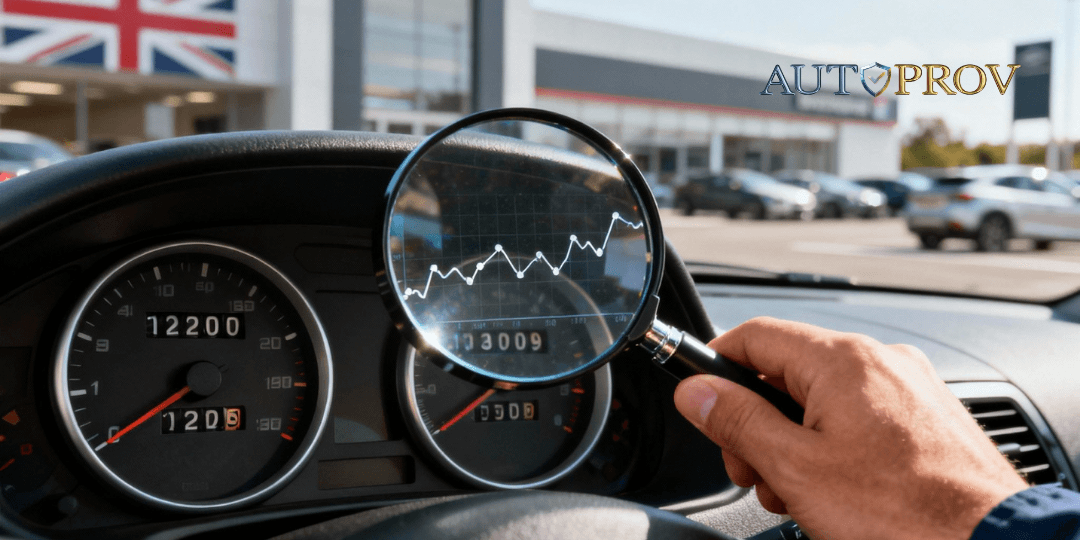
Car Mileage Discrepancy Explained: A Guide for UK Motor Traders
When it comes to a car’s history, its mileage record should tell a simple, straightforward story: the number always goes up. A mileage discrepancy is what happens when that story suddenly does not make sense.
Published by AutoProv
Your trusted source for vehicle intelligence