Learn how UK motor traders can identify exported and reimported vehicles using registration markers, VIN analysis, provenance data, and specification checks.
By CiteFlow
What Are the Tell-Tale Signs of an Exported and Reimported Vehicle
Vehicles that have been exported from the UK and later reimported display several distinctive markers in their registration records, physical condition, and documentation trail. The most reliable indicators include registration number changes (particularly age-identifier prefixes that don't match the vehicle's original registration date), VIN plate discrepancies, specification mismatches between UK and export markets, and gaps in MOT history that align with periods abroad. Export markers in DVLA records, when present, provide definitive proof, though not all exports are formally recorded if the vehicle left before deregistration.
Most experienced traders have lived that once, usually more than once. A vehicle presents well, the history looks clean on a basic check, and only later do you discover it spent three years in Ireland or Malta before returning with a fresh identity and undisclosed accident damage. The financial consequences can be severe, particularly when the reimport conceals structural repairs, specification downgrades, or mileage inconsistencies that would have been visible in its overseas records.
The UK motor trade sees reimported vehicles from several common routes. Irish exports and reimports are particularly prevalent due to the open border and shared vehicle standards. Vehicles also travel to mainland Europe, the Middle East, and occasionally further afield before returning. Some reimports are entirely legitimate, often high-value or classic vehicles returning home. Others represent deliberate attempts to obscure problematic history by breaking the documentation trail.
Why Vehicles Get Exported and Reimported
Legitimate reasons for export and reimport include military personnel relocating, expats returning to the UK, classic car restoration projects sent abroad for specialist work, and high-value vehicles sold internationally then repatriated by collectors. These transactions typically maintain complete documentation and transparent history.
The problematic scenarios involve vehicles exported to obscure damage history, reset identity after serious accidents, escape finance agreements, or exploit valuation differences between markets. A vehicle written off as Category S in the UK might be repaired abroad, reimported with a new registration, and sold without the salvage marker that should follow it. Similarly, vehicles with outstanding finance can be exported before the lender places a marker, then reimported appearing finance-free.
Insurance write-offs represent a significant driver of export activity. A Category N or S vehicle that would carry a permanent marker in UK records can be exported, repaired to varying standards overseas, and reimported without the same transparency. The repair quality varies enormously, from professional restoration to dangerous bodges that compromise structural integrity. Understanding what colour changes reveal about vehicle history can help identify poorly executed repairs on reimported vehicles.
Registration Number Analysis and Age Identifier Mismatches
The UK registration system uses age identifiers that correspond to specific six-month periods. A vehicle first registered in March 2018 should carry a '18' plate, whilst one from September 2018 should show '68'. When a reimported vehicle receives a new UK registration, it often gets a current-year plate that doesn't match its actual age.
This creates an obvious discrepancy. A 2016-manufactured vehicle showing a 2023 registration plate immediately raises questions. The V5C logbook date of first registration should align with the vehicle's age, and when it doesn't, export and reimport is a likely explanation. Some reimports retain their original registration if they were temporarily exported, whilst others receive Q-plates if their age cannot be verified, though Q-plates are increasingly rare for standard reimports.
Check the VIN against the registration date. The VIN's tenth character indicates model year (using a letter or number code that cycles every 30 years), and this should align broadly with the first registration date. A vehicle with a VIN indicating 2017 manufacture but a 2022 first registration date in DVLA records suggests a gap that needs explanation.
VIN Plate Location, Condition, and Authenticity Markers
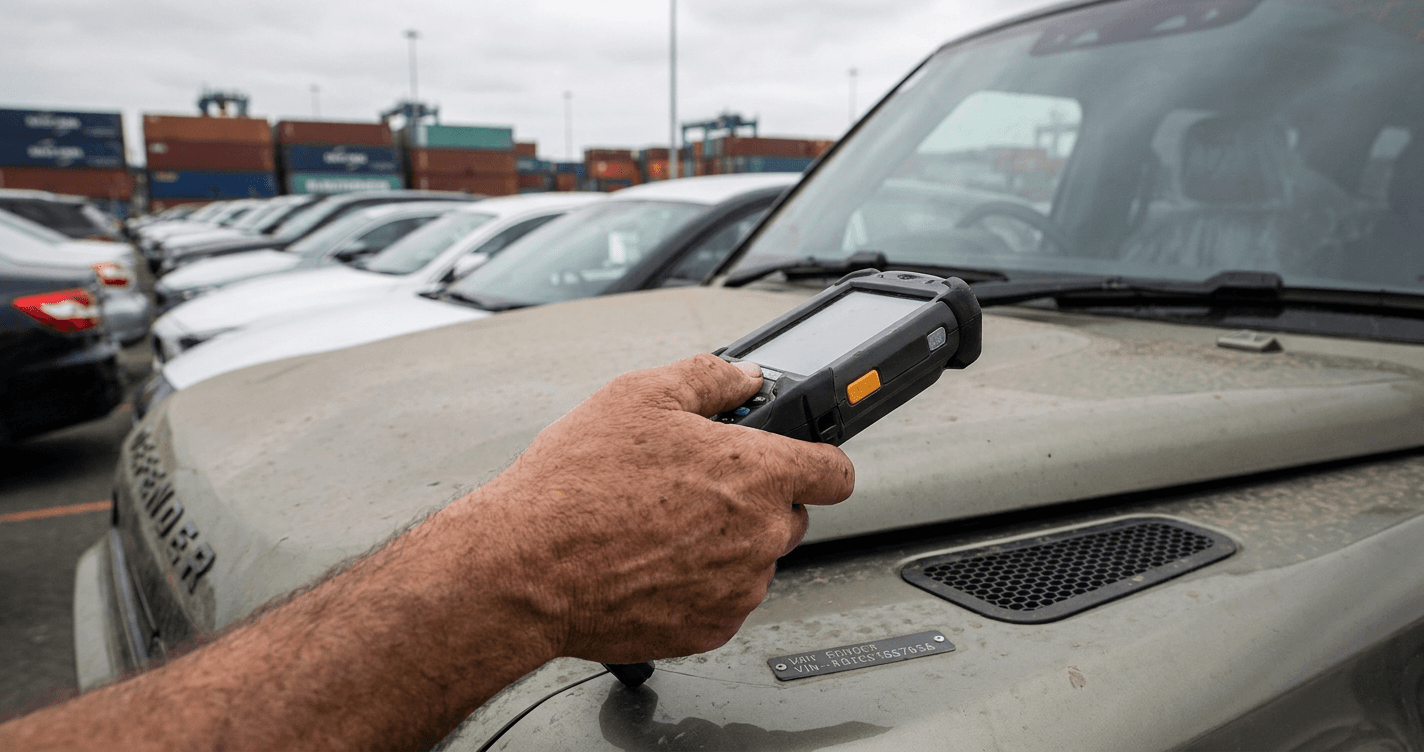
Factory-fitted VIN plates occupy specific locations determined by the manufacturer, typically on the bulkhead visible through the windscreen, on the driver's door pillar, and stamped into the chassis or floor pan. Reimported vehicles sometimes show signs of VIN plate replacement, repositioning, or tampering, particularly if the vehicle's identity was altered during its time abroad.
Examine the VIN plate for correct rivet type, font consistency, and positioning. Original VIN plates use specific rivet styles (often rosette or star-pattern security rivets) that differ from standard hardware-store alternatives. The font should be crisp and consistent, with uniform character spacing and depth. Any signs of recent removal, such as fresh paint around the plate, disturbed underseal, or mismatched rivets, warrant deeper investigation.
Compare all VIN locations on the vehicle. The windscreen VIN, door pillar VIN, and chassis-stamped VIN should match exactly. Discrepancies between these locations, or evidence that any plate has been replaced, suggest identity issues that often accompany problematic reimports. A comprehensive vehicle provenance report will flag VIN-related discrepancies when cross-referencing multiple data sources.
MOT History Gaps and Continuity Breaks
A vehicle that has been exported typically shows a gap in its MOT history. UK vehicles require annual MOT tests from their third birthday, creating a continuous record of test dates, mileage readings, and advisories. When a vehicle leaves the UK, this record stops. Upon reimport, the MOT history either resumes with a noticeable gap or starts afresh if the vehicle receives a new registration.
A 2015 vehicle with MOT records from 2018 to 2020, then nothing until a fresh test in 2024, has clearly been off UK roads for four years. The mileage at the final pre-export MOT and the first post-import MOT may show unusual patterns. Sometimes the mileage appears suspiciously low for the time elapsed, suggesting either minimal use abroad (unlikely for a standard vehicle) or odometer manipulation during the reimport process.
MOT history gaps don't always indicate problems, but they demand explanation. A vehicle might have been in long-term storage, undergoing restoration, or legitimately used abroad by an expat owner. However, gaps combined with other reimport markers, specification changes, or damage indicators suggest a more concerning scenario.
Specification Mismatches Between UK and Export Markets
Manufacturers configure vehicles differently for various markets, adjusting specifications for local regulations, climate, and consumer preferences. A vehicle originally built for the UK market should match UK specification standards for that model and year. When a vehicle shows specification elements from other markets, reimport is the likely explanation.
Common mismatches include headlight types (European asymmetric beam patterns versus UK-specific patterns), speedometer units (kilometres rather than miles, or aftermarket conversions), emissions equipment differences, and market-specific trim levels or option packages that were never sold in the UK. Some reimports show signs of conversion work, such as replacement instrument clusters, retrofitted lighting units, or modified emissions systems to meet UK MOT requirements.
Factory build data and specification verification can identify these discrepancies by comparing the vehicle's actual specification against the original manufacturer build record. A vehicle showing options, trim codes, or equipment that doesn't match UK market availability for that model year raises immediate questions about its origin and history.
DVLA Records, Export Markers, and Registration History
DVLA records sometimes contain explicit export markers when a vehicle has been formally deregistered for export. However, many exports occur without formal deregistration, particularly for temporary relocations or when vehicles are driven to Europe and sold there. The absence of an export marker doesn't prove a vehicle hasn't been abroad.
When export markers do appear in DVLA data, they provide definitive evidence of the vehicle's travel history. These markers typically include the export date and sometimes the destination country. Upon reimport, the vehicle either reclaims its original registration (if it was temporarily exported) or receives a new registration with a current age identifier.
The V5C logbook section detailing previous keepers can reveal unusual patterns. A vehicle with a single long-term keeper, then suddenly multiple keeper changes in quick succession around the time of reimport, suggests the vehicle has re-entered the trade after its overseas period. The registered keeper address history, when available through trade intelligence sources, might show addresses in port cities or areas with high export activity.
Physical Condition Indicators and Repair Quality Assessment
Reimported vehicles often show physical characteristics that betray their history. Paint condition, panel gaps, underseal application, and corrosion patterns can all indicate overseas use or post-export repairs. Vehicles used in hot climates show accelerated interior degradation, sun-damaged plastics, and faded paint. Those from coastal or high-humidity regions may display unusual corrosion patterns for their recorded UK mileage.
Repair quality varies significantly on reimported vehicles, particularly those exported after accident damage. Professional traders should assess panel alignment, paint thickness consistency, welding quality, and structural repair standards with the same rigour applied to suspected accident-damaged vehicles. Identifying whether a vehicle has been in a crash requires similar inspection techniques regardless of where the damage occurred.
Check for parts with foreign-language markings, non-UK supplier labels, or components that don't match the vehicle's supposed specification. Replacement parts sourced abroad during repairs may carry different part numbers, manufacturer codes, or language markings that reveal the vehicle's overseas history.
Documentation Red Flags and Paper Trail Inconsistencies
The documentation accompanying a reimported vehicle often contains subtle inconsistencies. Service history might show stamps from overseas dealers or independent garages in foreign locations. The V5C logbook issue date might be recent despite the vehicle's age, indicating a new registration upon reimport. Insurance documents, if available, might reference overseas policies or show gaps in continuous UK cover.
Some sellers present overseas service records, maintenance receipts, or registration documents as proof of history. Whilst these can be valuable for establishing legitimate provenance, they also confirm the vehicle's time abroad. Cross-reference any overseas documentation against the vehicle's current specification, recorded mileage, and claimed history. Inconsistencies between overseas records and UK presentation suggest selective disclosure.
The absence of original UK documentation for an older vehicle can itself indicate reimport. A 2016 vehicle should reasonably have its original service book, handbook pack, and possibly earlier MOT certificates. When these are missing and replaced with recent or foreign documentation, question why the original UK paper trail has been lost.
Using Comprehensive Provenance Data to Identify Reimports
Professional vehicle intelligence services aggregate data from multiple sources to reveal patterns that single-source checks miss. A comprehensive provenance check combines DVLA registration history, MOT records, finance verification, salvage database searches, and specification data to build a complete picture of the vehicle's life.
Export and reimport activity often creates discrepancies between these data sources. The DVLA might show a recent registration date, whilst the VIN decode reveals much earlier manufacture. MOT history might show gaps that align with overseas use. Finance checks might reveal historic agreements that were never properly settled before export. Comparing AutoProv's multi-source approach against traditional vehicle check providers demonstrates how comprehensive data reveals what single-source checks miss.
Manufacturer build data provides particularly valuable verification. The original factory specification, build date, and market destination are encoded in the VIN and stored in manufacturer databases. When the current vehicle specification doesn't match the factory build record, or when the build record indicates non-UK market destination, you have clear evidence of the vehicle's true origin.
Common Reimport Routes and Regional Patterns
Certain reimport routes appear more frequently in UK trade stock. Ireland represents the most common destination for UK exports and source of reimports, driven by the open border, right-hand-drive market, and ease of movement. Vehicles exported to Ireland might spend time there legitimately or be used as a staging post for identity changes before returning to the UK market.
Malta, Cyprus, and Gibraltar also feature in reimport patterns, particularly for higher-value vehicles. These jurisdictions offer sunshine climates attractive to expats whilst maintaining right-hand-drive standards and relatively straightforward reimport processes. Vehicles from these locations often show accelerated interior wear and sun damage despite relatively low recorded mileage.
Mainland European exports typically involve left-hand-drive conversions for vehicles intended to stay abroad. When these return to the UK, the conversion work (or evidence of reversal back to right-hand drive) provides clear proof of export history. Middle Eastern exports, whilst less common for standard trade stock, appear occasionally for premium and luxury vehicles, often showing extreme climate-related wear.
Legal Obligations When Selling Identified Reimports
The Consumer Rights Act 2015 requires dealers to ensure vehicles are as described and of satisfactory quality. A vehicle's export and reimport history constitutes material information that affects its value and desirability. Failing to disclose known reimport history, particularly when accompanied by accident damage, specification changes, or identity issues, creates liability under consumer protection legislation.
When you identify a reimport in stock, assess what the export concealed. If the vehicle was legitimately used abroad by an expat owner and returned in good condition with transparent history, disclosure might be straightforward. If the export obscured accident damage, mileage discrepancies, or specification downgrades, you face more serious concerns about merchantable quality and accurate description.
Understanding your compliance obligations under CRA 2015 includes knowing when vehicle history must be disclosed and how to document your due diligence. A vehicle with undisclosed reimport history that later proves to conceal damage or defects creates rejection rights for the customer and potential liability for the dealer.
Pricing Implications and Market Perception of Reimports
Reimported vehicles typically command lower values than equivalent UK-market vehicles with continuous domestic history, even when the reimport is entirely legitimate. Market perception treats reimports cautiously due to the potential for concealed history, specification uncertainty, and documentation gaps.
When pricing identified reimports for stock, consider the transparency of the export reason, the quality of overseas maintenance records, any specification differences from UK-market equivalents, and the completeness of the provenance trail. A well-documented expat-owned vehicle with full service history and clear export reason might justify pricing close to UK-market comparables. A vehicle with unexplained gaps, specification mismatches, or evidence of post-export repairs requires significant discount to reflect the risk and reduced desirability.
Vehicle valuations with market insights help establish appropriate pricing for reimported stock by comparing against genuinely equivalent vehicles rather than superficially similar ones with cleaner histories. Days-to-sell data for reimports typically shows extended marketing periods, affecting your stock turn calculations and working capital requirements.
FAQs
Can a vehicle be reimported without any record in UK databases?
Yes, vehicles exported without formal DVLA deregistration may show no explicit export marker in UK records. The MOT history will show a gap during the overseas period, and the vehicle may retain its original registration upon return or receive a new one. Comprehensive provenance checks identify these cases through MOT gaps, specification analysis, and VIN verification rather than relying solely on export markers.
Are all reimported vehicles problematic or hiding damage?
No, many reimports are entirely legitimate. Military personnel, expats, and classic car enthusiasts regularly export and reimport vehicles for valid reasons. The concern arises when reimport is used to obscure accident history, reset salvage markers, or break the documentation trail. Each reimport requires individual assessment based on the available evidence and the transparency of its history.
How can I verify a vehicle's original market destination from the VIN?
The VIN's first three characters (World Manufacturer Identifier) indicate the manufacturing country and region, whilst other VIN positions encode model year, assembly plant, and specification codes. Professional VIN decoding services and manufacturer databases can confirm the original market destination and specification. Discrepancies between the VIN-indicated specification and the vehicle's current configuration suggest market conversion or reimport.
What should I do if I discover a vehicle in stock is a reimport?
Conduct a thorough assessment of why it was exported, what happened during its time abroad, and whether any material history has been concealed. Obtain comprehensive provenance data, verify the specification against factory build records, and assess any repair work for quality and safety. If the reimport history is transparent and the vehicle is sound, disclose the history appropriately and price accordingly. If you discover concealed damage or identity issues, consider whether the vehicle meets your quality standards for retail sale.
Do reimported vehicles affect my insurance or warranty obligations?
Reimported vehicles with specification differences from UK-market equivalents may face insurance complications or exclusions. Warranty coverage, particularly manufacturer-backed warranties, often doesn't transfer across markets or may be voided by export. Any aftermarket warranty you provide should account for specification uncertainty and potential parts availability issues for non-UK-market configurations. Disclose these limitations to customers to avoid post-sale disputes.
Frequently Asked Questions
AI-Generated Content Notice
This article was created with the assistance of artificial intelligence technology. While we strive for accuracy, the information provided should be considered for general informational purposes only and should not be relied upon as professional automotive, legal, or financial advice. We recommend verifying any information with qualified professionals or official sources before making important decisions. AutoProv accepts no liability for any consequences resulting from the use of this information.
From our AI insights
- Navigating ULEZ Compliance for Used Car Dealers
A deep dive into ensuring your used car stock meets ULEZ standards, avoiding costly fines.
- Mastering Paint Verification with VIN Decoding
Learn how UK traders verify original paint using VIN decoding and provenance data.
- Understanding VIN Decoding: Avoid Misleading Imports
Learn how VIN decoding reveals vehicle origins and specs, preventing import pitfalls.
Related Articles

Car Specs by Reg: Instantly Find Vehicle Details & MOT History
Trying to find the full car specs by reg? In the UK, that little number plate is the key to unlocking a huge amount of information about a vehicle. From the exact engine size and CO2 emissions to its MOT history and tax status, it's all tied to the registration.

How to Check Previous Owners of a Car in the UK
Before you even start thinking about how to check the previous owners of a car, you need to get your head around why it's so important. This isn't just about being nosy; it’s a non-negotiable step that protects you from serious financial headaches and safety risks lurking under a shiny bonnet.

How to Check Service History in the UK
Think of a car's service history as its detailed CV, not just some dusty folder in the glovebox. To check service history is to get the real story behind a vehicle, digging into everything from its routine oil changes to any major surgery it's had. For any savvy car buyer in the UK, this record is the single most important document you can get your hands on.
Published by AutoProv
Your trusted source for vehicle intelligence