
A passion for cars is a great start, but it won’t get you very far without a rock-solid business plan. This document is your strategic roadmap. It's where you hash out the details of your market niche, your competition, and, most importantly, your financials. It’s what turns a great idea into a viable, fundable business.
Building Your Dealership Business Plan
Before the first car hits your forecourt, the most important tool you have is your business plan. This isn't just about ticking boxes for the bank. It's the process of figuring out exactly what your dealership is all about and mapping out a clear path to actually making money. A well-thought-out plan shows lenders, investors, and even yourself that you’ve done your homework and have a real strategy for success.
The UK car market is massive, but it’s also crowded. To get your slice of the pie, you need to be smart. In 2025, the New Car & Light Motor Vehicle Dealers sector in the UK is expected to pull in revenues of around £146.6 billion. With 9,152 businesses already operating in this space, you're stepping into a competitive ring. Location is everything; dealerships naturally follow population density, so finding a region with an underserved customer base can be a game-changer.
Defining Your Market Niche
You can't be everything to everyone, especially when you’re just starting out. The key to standing out is finding a specific niche. Are you going to be the go-to place for reliable, affordable first cars for new drivers? Maybe you'll tap into the growing demand for used electric vehicles (EVs) and hybrids. Other profitable routes could be performance cars, family-friendly SUVs, or focusing on specific brands like German or Japanese marques.
Let data drive this decision. Look at the local demographics and what people are buying. Is your area filled with young families needing practical transport, or affluent retirees with disposable income? Matching your stock to local demand makes you the local specialist, the first name people think of. To really get ahead, it's crucial to understand the wider UK used car market trends to help you spot the most profitable opportunities.
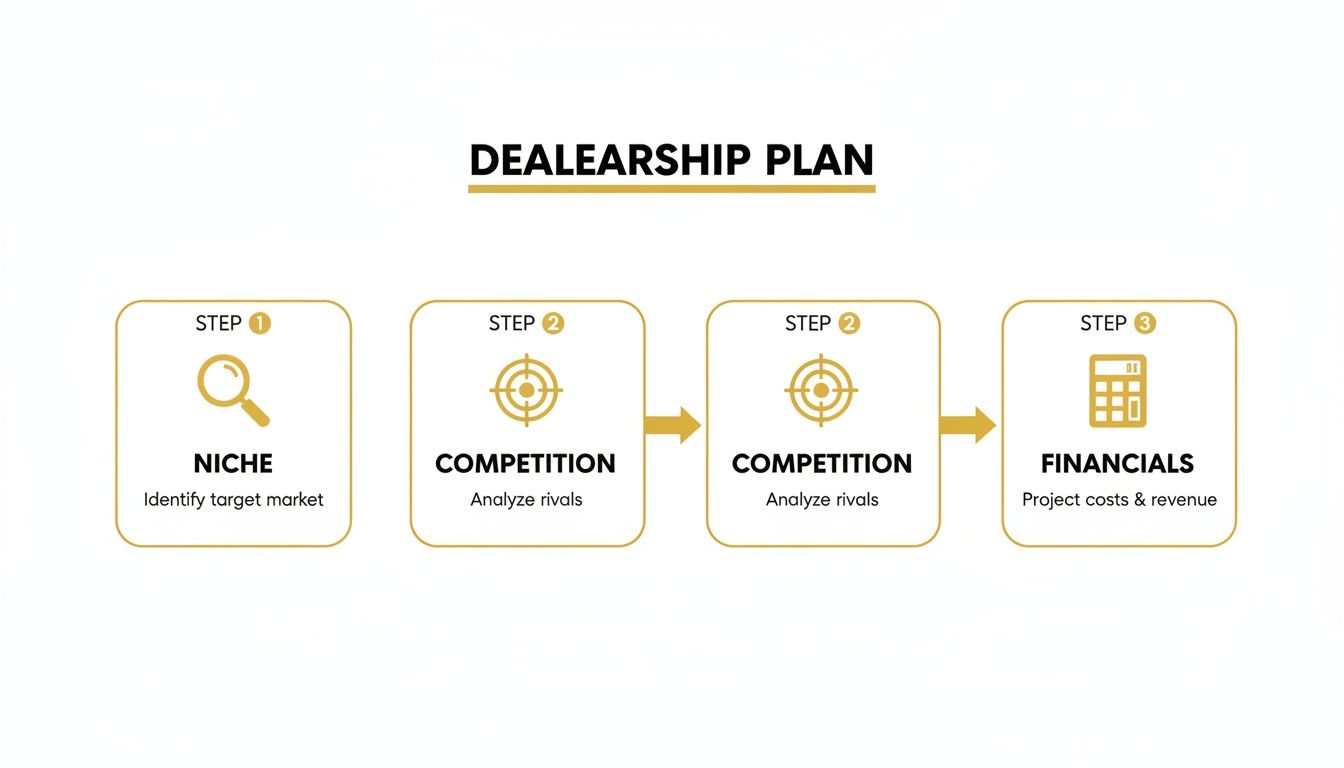
This diagram nails the three pillars of a solid plan: figuring out your niche, sizing up the competition, and getting your numbers straight.
Creating a Realistic Financial Forecast
Your financial forecast is the beating heart of your business plan. It needs to be detailed, realistic, and cover every conceivable cost and revenue stream. Vague guesses won’t cut it; you need to dig in, do the research, and put down concrete figures.
Your forecast has to include initial setup costs, such as business registration and solicitor fees, and the initial deposit on your premises. You'll need a dedicated stock acquisition fund, a pot of cash for buying your first batch of cars, which will be your biggest single expense. Don't forget operational overheads like monthly rent or mortgage payments, business rates, utilities, and those all-important motor trade insurance premiums. A budget for marketing and sales is also essential to cover the cost of getting your name out there through online listings, website development, and signage. Finally, you must have a contingency fund. Always set aside at least 15-20% of your startup capital for the things you didn't see coming. Because they will happen.
A classic mistake new dealers make is underestimating their running costs. Your financial model needs to project your cash flow for at least the first 12-24 months. This ensures you have enough working capital to survive the initial slow period before sales really start to build momentum.
By meticulously planning your finances, you build a buffer against nasty surprises and prove you have a professional, sustainable approach to building your business.
Navigating UK Legal and Financial Requirements
While a passion for cars might get the engine started, it's a solid legal and financial foundation that keeps your dealership on the road. This is the nuts and bolts of your operation, and getting it right from day one is what separates the professionals from the amateurs. Honestly, overlooking this stuff is one of the fastest ways to see a new dealership crash and burn.
The very first decision you'll make is about your business structure. This choice has huge, long-term implications for everything from your personal liability to how you pay your taxes.
Choosing Your Business Structure
For most new dealers starting out in the UK, the choice really boils down to two main paths: operating as a sole trader or setting up a limited company.
As a sole trader, you are the business. It’s definitely the simplest way to get going, with far less admin and paperwork. But—and it's a big but—there’s no legal line between your personal assets and your business debts. If the dealership gets into financial trouble, your own savings and even your home could be on the line.
Setting up a private limited company, on the other hand, creates a completely separate legal entity. This means your personal assets are shielded from business debts, a concept known as limited liability. Yes, it means a bit more formality—registering with Companies House and stricter record-keeping—but that protection is worth its weight in gold for most entrepreneurs in the motor trade.
Essential Registrations and Financial Setup
Once you've picked a structure, it's time to make it official. If you've gone the limited company route, you’ll need to register your business name and details with Companies House. This makes your company a formal, legal entity on the public record.
Next up is HMRC. You’ll have to register for Corporation Tax if you’re a limited company, or for Self Assessment if you’re a sole trader. The big one, though, is Value Added Tax (VAT). You are legally required to register for VAT as soon as your taxable turnover hits the government's threshold, which is currently £90,000. Plenty of dealers choose to register voluntarily before they even get close to that figure, as it allows them to reclaim the VAT on their business expenses.
A classic rookie mistake is sloppy bookkeeping. From the absolute first day, get yourself set up with proper accounting software or hire a professional. It doesn't just keep you on the right side of HMRC; it gives you a crystal-clear, real-time view of your dealership’s financial health, which is essential for making smart business decisions.
Securing Motor Trade Insurance
Let’s be clear: motor trade insurance isn't a 'nice-to-have'. It's a legal necessity for anyone buying and selling vehicles for profit. Your standard personal car insurance policy won't cover you for business activities, leaving you dangerously exposed. This is one of the most critical steps in setting up a dealership legally.
The right policy is your safety net, protecting you from the whole range of risks that are part of the motor trade. Road risk insurance is the bare minimum, letting you legally drive any vehicle you own for trade purposes, as well as take customers on test drives. It's absolutely essential for collecting cars from auctions or moving stock between your premises. A combined motor trade insurance policy is the comprehensive option. It bundles road risk cover with other crucial protections like premises cover, public liability insurance, and employers' liability if you hire staff.
The Importance of Trade Plates
Finally, you’ll need to apply to the DVLA for motor trade plates. These special registration plates allow you to use an untaxed vehicle on public roads for specific trade purposes, like driving it to an MOT station or letting a customer take it for a test drive.
Using trade plates correctly is a hallmark of a professional, compliant operation and they are vital for your day-to-day business. Remember, consumer protection is everything in this industry, and knowing your obligations under laws like the Consumer Rights Act is non-negotiable. For a deeper dive, check out our detailed guide on the Consumer Rights Act 2015 for the UK motor trade.
How to Source and Vet Profitable Vehicle Stock
Your inventory is your reputation. In the motor trade, the quality of the cars on your forecourt says everything about the quality of your business. Sourcing profitable vehicles is a skill, but the real art lies in the rigorous vetting process that comes next. This is where you separate the genuine bargains from the hidden money pits that can destroy your margins and your name.
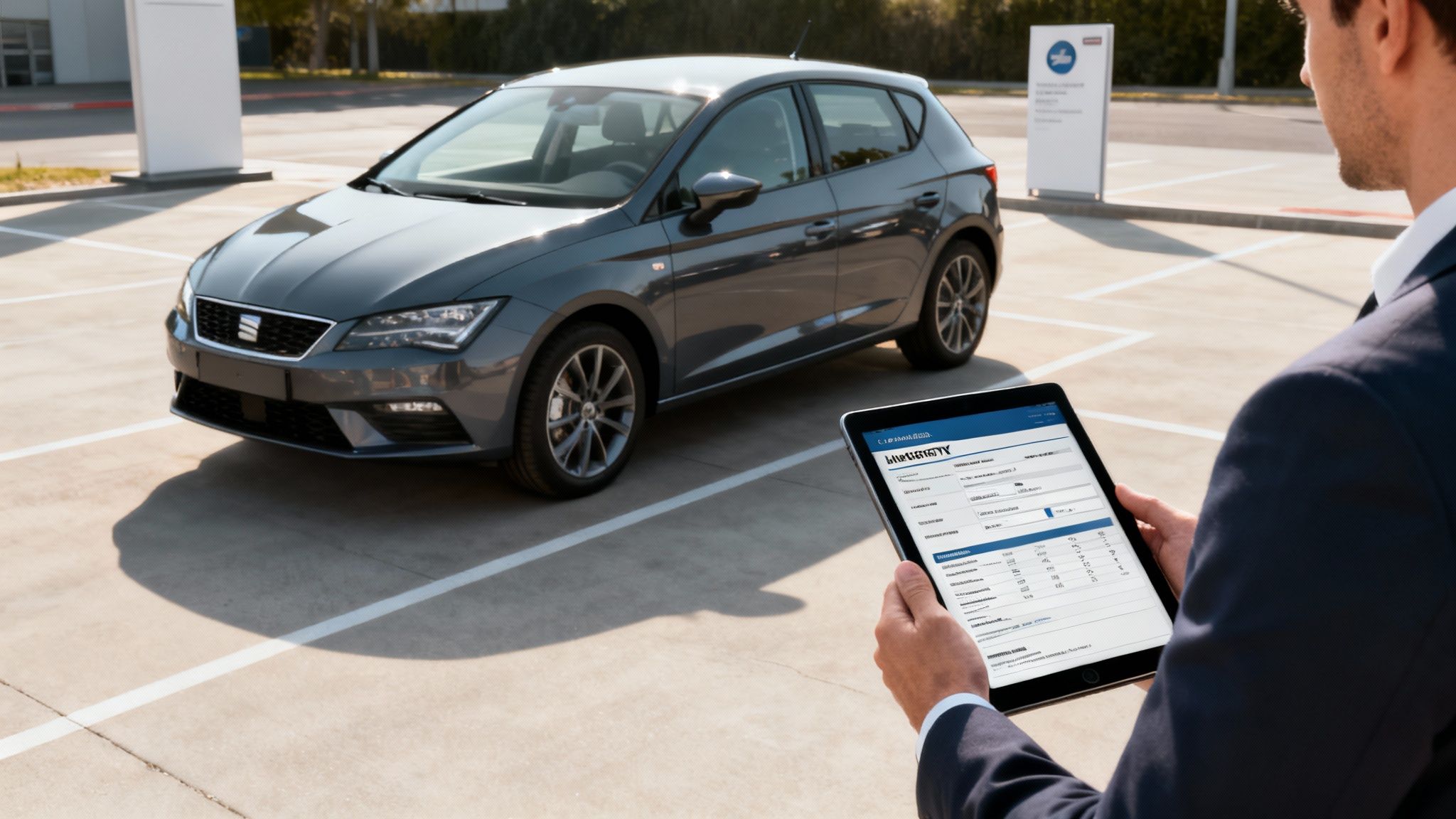
Successfully getting a car dealership off the ground means mastering stock acquisition from day one. For a new dealer, figuring out where and how to buy is fundamental. There are several main channels, and each one has its own rhythm, rewards, and risks.
Mastering the Art of Vehicle Sourcing
The most common hunting grounds for new dealers are trade auctions, but they are far from the only game in town. Building a diverse sourcing strategy is your best defence against market swings and opens up far more opportunities to find high-margin stock. The sharpest dealers rarely put all their eggs in one basket.
A few key avenues you should be exploring include trade auctions, which are fast-paced, high-pressure environments with a massive variety of stock. Building relationships with local franchised dealerships to access their main dealer part-exchanges can also be an absolute goldmine. Another route is buying direct from the public, which often yields the best profit margins because you're cutting out the middleman entirely, though it requires more legwork.
The UK market is incredibly dynamic, and you need to understand its scale. Projections show 2025 is on track to be the busiest year for car sales since 2019, with around 10 million deals expected across new and used markets. This surge, fuelled by vehicles coming off lease and finance cycles, means more stock will be available—but it also screams for the need for robust verification, which is where a platform like AutoProv becomes indispensable.
The Non-Negotiable Vetting Process
Sourcing a car is only step one. The second you identify a potential purchase, the due diligence clock starts ticking. This is where you protect your capital and your reputation. A single bad buy—a car with outstanding finance, clocked mileage, or an undisclosed write-off history—can easily wipe out the profit from five good sales.
This is precisely where a professional vehicle intelligence platform becomes your most valuable asset. A service like AutoProv is built for the trade, pulling data from over ten trusted sources into one instant report. It’s not just a history check; it's a complete diagnostic of the vehicle's past and present, empowering you to make informed buying decisions.
Your ability to vet a car thoroughly before you commit to buying is what defines a professional dealer. It's the difference between gambling and making a calculated business investment. Relying on your gut is a recipe for disaster; relying on data is a strategy for success.
From V5C to Full Vehicle Intelligence
Every check should start with the basics, but it absolutely cannot end there. A quick glance at the V5C logbook and a walk-around inspection just doesn't cut it anymore. Today's buyers are savvy, and your due diligence has to be watertight.
A comprehensive vetting process, like the one offered by AutoProv, must include several key checks. Instantly see if there's any outstanding finance against the vehicle with Experian. Uncover any undisclosed accident history by checking MIAFTR condition records to know a vehicle's category status. Cross-reference the odometer reading with previous MOT records and other data points to spot potential mileage discrepancies. Finally, confirm the vehicle hasn't been reported stolen via the Police National Computer (PNC) and check for any active safety recalls.
Ultimately, this level of scrutiny is about more than just dodging problems. It gives you the confidence to price your vehicles accurately, justify your asking price with transparent proof, and build unshakeable trust with your customers. Understanding what goes into the essential used car history report for dealers is the bedrock of profitable and reputable stock management.
Pricing and Preparing Cars for Maximum Profit
Sourcing a great vehicle is just the start. The real skill is in turning that promising car into a profitable sale. This is where a sharp pricing strategy and impeccable presentation come together. If you want to set prices that are competitive in the UK market and protect your margins on every single car, you have to move beyond guesswork.

This is where you swap gut feelings for hard data. Using a vehicle intelligence platform like AutoProv gives you an instant advantage. It serves up real-time, accurate trade and retail valuations, letting you see the potential profit window before you even commit to buying. That kind of clarity is fundamental to knowing your numbers inside out.
From Purchase Price to Forecourt Price
The hammer price at auction is only your starting point. To work out a profitable retail price, you have to meticulously account for every pound spent getting that car ready for the forecourt. This is often called calculating your "landed cost."
The calculation isn't complicated, but it has to be thorough. Every vehicle has its own unique prep costs, and you need to factor them all in before you even think about your profit margin. These costs almost always include auction fees and transport, mechanical prep like repairs or a new MOT, cosmetic refurbs such as dent removal, and a professional valet for that premium retail feel.
Once you have this total landed cost, you can add your desired profit margin. By checking the live retail valuation data from AutoProv, you can confidently set an asking price that’s both profitable for you and attractive to buyers in the current market. To go deeper, you should explore our guide on mastering car valuation for accurate vehicle pricing.
The Art of Retail Presentation
In the cut-throat used car market, presentation is everything. How a vehicle looks online and in person directly shapes a buyer's perception of its value and, ultimately, their willingness to pay your asking price. A well-presented car simply sells faster and for more money.
It’s a known fact that 73% of consumers say the overall experience is the most important factor when choosing where to buy. That experience begins with your online listing. Your job is to build trust and desire before the customer even steps onto your premises.
A car that looks meticulously cared for suggests it has been mechanically well-maintained, even if the two aren't directly related. This perception is incredibly powerful and helps justify a premium price point, creating a smoother and more confident sales process for the buyer.
Crafting the Perfect Online Advert
Your online listing is your digital shop window. To attract serious enquiries, it has to be compelling, transparent, and professional. Sloppy ads with poor photos and vague descriptions will only attract time-wasters and low-ball offers.
To create listings that actually convert, focus on high-quality photography, taking at least 20-30 well-lit photos from every angle. Write a detailed, honest description that highlights the car’s best points and service history. Most importantly, highlight transparency. Use the information from your AutoProv report as a key selling point. Advertising a vehicle as "fully checked for outstanding finance, salvage history, and mileage accuracy" tells buyers you are a professional, trustworthy dealer they can have confidence in.
Marketing Your Dealership to Attract Buyers
You’ve got a forecourt full of meticulously prepped, competitively priced cars. Great. But stock is only an asset once it's sold. Now comes the most important part of the business: getting buyers through the door, or more likely these days, onto your website. This is where a smart, modern marketing strategy is absolutely essential. It’s all about building your reputation from that very first click.

The process kicks off by building a strong digital presence. In today's market, your online listings are your digital shop window. For most customers, this is where they’ll get their first impression of you, long before they ever think about stepping onto your premises.
Building Your Digital Shop Window
Your dealership's website doesn't need to be fancy, but it absolutely must be professional, easy to navigate, and mobile-friendly. It’s your central hub, so it needs to clearly display your current inventory with high-quality photos, list your contact details, and give a bit of flavour about what makes your dealership different.
Alongside your own site, listing your cars on the major online marketplaces is completely non-negotiable. Platforms like Auto Trader are where the vast majority of UK buyers start their search. Creating compelling, transparent, and detailed ads here is fundamental to getting the phone to ring. Remember, the quality of your listings directly reflects the quality of your business. To see how different platforms approach this, you can check out how AutoProv stacks up against Auto Trader in providing deep, data-rich insights.
Using Social Media to Build a Community
For a new independent dealer, social media is so much more than just a place to post pictures of cars with a price tag. It's a powerful tool for building a local following and showing off the personality and transparency of your business. Platforms like Facebook and Instagram are perfect for sharing a bit of behind-the-scenes content.
Give some of these ideas a try: post high-quality videos and photos of new stock arrivals, share photos of happy customers collecting their new cars (with their permission), and show the prep process, like a car getting a professional valet. That kind of transparency shows you’re committed to quality.
The goal isn't just to sell cars; it's to build a following. When local people see you as a trustworthy, active, and professional part of the community, you'll be the first name that pops into their heads when they, or their friends and family, are looking to buy.
Mastering the Customer Journey
Good marketing gets the phone to ring, but it’s the sales process that seals the deal. Every single touchpoint—from that first email enquiry to the final handover—is a chance to build trust and create a five-star experience. Don't forget, a huge 73% of consumers say the overall experience, not just the price, is the top factor in their buying decision.
This means handling enquiries promptly and professionally, being completely open during test drives, and making the final paperwork as painless as possible. Providing a full AutoProv history report with every car is a powerful statement. It tells the customer you have nothing to hide and that you stand by the quality of your stock.
It’s also crucial to see where the market is heading. For example, 2025 data points to a UK new car market of 2,020,520 units, heavily influenced by fleet sales. Fleet registrations have surged to 1,194,545 units, grabbing a massive 59.1% market share. This opens up a huge opportunity for new dealers to target leasing firms and corporate clients by proving their stock is reliable—something AutoProv excels at by verifying MOT history, recalls, and valuations. This seamless, trust-based approach is what turns a one-time buyer into a repeat customer and a source of valuable word-of-mouth referrals—the true lifeblood of any successful independent dealership.
Got Questions About Starting a Car Dealership? We've Got Answers.
Jumping into the UK motor trade is a fantastic move, but let's be honest, it brings up a lot of questions. Getting straight answers from the get-go is the only way to build a solid business and dodge the common tripwires that catch out new dealers.
We get asked these questions all the time, so let's tackle them head-on.
How Much Money Do I Really Need to Start a Small Used Car Dealership?
This is the big one, isn't it? While it can vary, a realistic starting budget for a small, independent setup in the UK with just a handful of cars is somewhere in the ballpark of £25,000 to £50,000.
That cash needs to be sliced up carefully to cover the essentials right from day one. This includes buying your first cars, which will be your biggest initial hit, getting a base like a secure unit, and covering essentials like your first motor trade insurance premium and trade plates. You also need a running buffer for initial marketing, company registration, and those unexpected costs that always pop up.
Keeping your outgoings lean in those first few months is the name of the game. That's why using a cost-effective service like AutoProv from the very start is a no-brainer. It protects that precious starting capital by making sure you don't accidentally blow thousands on a car with a hidden, toxic history that could sink you before you've even started.
Do I Need a Proper Forecourt to Sell Cars?
Nope, not anymore. While the traditional glass-fronted showroom still has its place, many of today's sharpest dealers work on an appointment-only basis from a secure industrial unit or even from a registered home address.
This model slashes your biggest overheads—rent and business rates—which can be a massive relief when you're just finding your feet. But it's not a free-for-all. You'll still need a proper motor trade insurance policy that specifically covers your chosen premises, and you must have a secure, designated area for the cars. Crucially, always check with your local council to make sure your property’s zoning rules allow for motor trade activity. Don't skip that step.
What Are the Biggest Legal Blunders New Dealers Make?
The most common—and most expensive—mistakes almost always boil down to two things: misrepresenting a car and falling foul of the Consumer Rights Act 2015.
Failing to tell a buyer that a car is a Category S write-off or has a massive mileage discrepancy isn't just bad form; it can land you in serious legal hot water and will kill your reputation stone dead. Another classic pitfall is driving on the wrong insurance. Get caught without the right road risk cover and you are completely exposed, both personally and financially.
The key to sidestepping these disasters? Rigorous, consistent due diligence on every single car you look at. This isn't just a good idea; it's basic risk management. Using a full check from AutoProv gives you a time-stamped, verifiable record of a car's entire history—from salvage status to outstanding finance—protecting you and your customers.
How on Earth Can I Compete with the Big Dealerships?
Simple: you don't play their game. Trying to beat a huge car supermarket on price is a race to the bottom you will never win. Your advantage is something they can't replicate: trust, specialisation, and a genuinely personal service.
Find your niche. Become the go-to person in your area for perfect first-time driver cars, bulletproof family SUVs, or a particular German brand you know inside-out. Build your name by being obsessively transparent. A brilliant way to do this is by providing a full AutoProv vehicle history report with every single car as standard. It shows customers you have nothing to hide and are 100% confident in the quality of your stock.
Great reviews and word-of-mouth will become your best marketing tools. This is how you build a loyal following that the big, faceless dealerships with their high staff turnover simply can't touch. It’s all about building relationships, not just shifting metal.
Ready to build your dealership on a foundation of trust and confidence? AutoProv provides the trade-grade vehicle intelligence you need to buy smarter, price accurately, and sell with complete transparency.
Frequently Asked Questions
AI-Generated Content Notice
This article was created with the assistance of artificial intelligence technology. While we strive for accuracy, the information provided should be considered for general informational purposes only and should not be relied upon as professional automotive, legal, or financial advice. We recommend verifying any information with qualified professionals or official sources before making important decisions. AutoProv accepts no liability for any consequences resulting from the use of this information.
From our AI insights
- Unveiling Engine Codes: Avoid Mis-sold Vehicles
Discover how to verify engine codes using factory build sheets and VIN decoding to dodge mis-sold UK vehicles.
- Efficient Forecourt Appraisals: A Data-Driven Guide
Master forecourt appraisals with essential checks and data-driven techniques for UK motor traders.
- Decoding UK Car Reg Plates: A Motor Trader's Insight
Learn how to decode car reg plates to assess vehicle age and condition before buying.
Related Articles

Car Specs by Reg: Instantly Find Vehicle Details & MOT History
Trying to find the full car specs by reg? In the UK, that little number plate is the key to unlocking a huge amount of information about a vehicle. From the exact engine size and CO2 emissions to its MOT history and tax status, it's all tied to the registration.

How to Check Previous Owners of a Car in the UK
Before you even start thinking about how to check the previous owners of a car, you need to get your head around why it's so important. This isn't just about being nosy; it’s a non-negotiable step that protects you from serious financial headaches and safety risks lurking under a shiny bonnet.

How to Check Service History in the UK
Think of a car's service history as its detailed CV, not just some dusty folder in the glovebox. To check service history is to get the real story behind a vehicle, digging into everything from its routine oil changes to any major surgery it's had. For any savvy car buyer in the UK, this record is the single most important document you can get your hands on.
Published by AutoProv
Your trusted source for vehicle intelligence