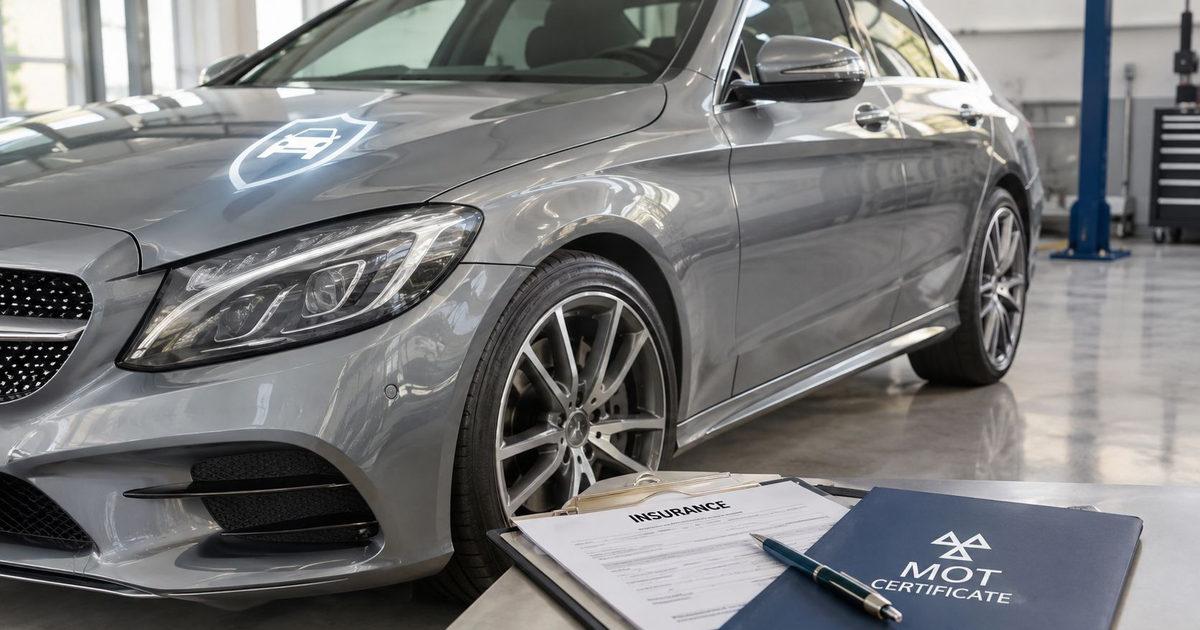
Yes, a car in the UK can technically be insured without a valid MOT, but cover is typically restricted to narrow exceptions such as driving to a pre-booked MOT. Using the car beyond those exceptions leaves the policy exposed at claim stage. The popular advice, “no MOT means no insurance”, is too crude for a dealer. The opposite claim, “the policy is still active, so the car can be driven”, is just as dangerous. The position depends on three separate questions: whether insurance exists, whether the policy remains technically in force, and whether the intended journey is legal and covered.
For a motor trader, that distinction affects every decision from collection and demonstration to auction movement, repair routing and retail preparation. A vehicle with an expired MOT shouldn't be treated as automatically uninsured, but it must be treated as restricted-use stock with unresolved roadworthiness risk until the paperwork, insurer position and vehicle condition have been checked.
Table of Contents
- The Short Answer for UK Drivers
- The UK Legal Backdrop for MOT and Insurance
- Why dealers confuse the two
- How UK Insurers Treat a Missing MOT
- A warranty or condition of cover
- A restricted-use clause
- An exemption
- When a Claim Actually Fails on MOT Grounds
- The causation question
- Narrow Exceptions That Keep Cover Alive
- A Trade Buying Workflow That Limits Exposure
- Start with the vehicle identity
- Cross-reference the road-use position
- Build the evidence pack
- Bringing It Together for Smarter Stock Decisions
- The dealer's decision checklist
The Short Answer for UK Drivers
A car can remain insured after its MOT expires, but that does not make ordinary driving lawful or covered. The useful answer to “is my car insured without MOT?” has three separate parts, and dealers must check all three before authorising a journey.
- Insured: a premium has been paid and a policy appears to exist.
- Policy alive: the insurer has not cancelled the policy, although its conditions can restrict the response.
- Road-legal use: the particular journey is allowed under MOT rules and the policy wording.
These states do not always align. An active policy may respond only to a direct journey to a pre-booked MOT test, or to a garage after a failed test, subject to the insurer's terms. A customer appointment, another vehicle collection or an unrelated trade delivery is a separate risk and should not be treated as automatically covered.
Practical rule: Keep an expired-MOT vehicle off ordinary roads until the legal route and the insurer's written position are confirmed.
The vehicle generally needs its first MOT at three years old, followed by annual testing. If the certificate has expired, public-road use is generally unlawful unless an exception applies. The MOT record therefore belongs in the buying and compliance check, alongside the policy schedule and the vehicle's condition. It is not merely an administrative date.
Before moving newly acquired stock, run a free MOT check, inspect the policy schedule and record the intended route. For a dealer, the decision is simple: confirm the insurance status, confirm the journey is permitted, and resolve any roadworthiness concern before treating the vehicle as usable stock.
The UK Legal Backdrop for MOT and Insurance
MOT status and insurance status answer different legal questions. Treating them as one compliance check is how dealers move stock into avoidable risk.
For most cars, the first MOT is required after the vehicle is three years old, followed by annual testing. Driving without a valid MOT can attract a fine of up to £1,000, according to UK guidance on driving without a valid MOT. There is no general grace period for errands, demonstrations or customer use. A pre-booked test journey is a narrow exception, not permission to drive normally.
Insurance has a separate statutory and enforcement framework. Driving without insurance can result in a £300 fixed penalty, penalty points, vehicle seizure and, in serious cases, a court fine of up to £1,000. The policy may still be in force while the particular journey falls outside the agreed use. That distinction separates three states: the vehicle is insured, the policy remains active, and the proposed road use is legally and contractually permitted.
Why dealers confuse the two
The legal test for uninsured driving is not solely whether the vehicle has a current MOT. A dealer can have an active policy and still breach a condition by using the car for a journey the insurer has not agreed to cover. A trade-plate trip to a booked test therefore differs materially from a customer demonstration, collection run or delivery to another site.
Automatic number plate recognition, insurance database checks and later claim scrutiny increase the exposure. Record the vehicle's MOT position, policy status, intended route and roadworthiness assessment before authorising movement.
Offence Typical penalty Enforcement Database check Driving without a valid MOT Fine of up to £1,000 Roadside enforcement and claim scrutiny MOT records Driving without insurance £300 fixed penalty, penalty points, possible seizure and serious-case court fine of up to £1,000 Police enforcement and insurance checks Insurance database records Use the MOT compliance guidance for UK dealers to build the procedure, but do not let a pass or fail label decide the movement alone. The intended journey, roadworthiness and policy wording determine whether the use is defensible.
How UK Insurers Treat a Missing MOT
A missing MOT does not produce one automatic insurance outcome. Dealers must separate three questions: is the vehicle insured, is the policy still in force, and is the proposed road use legally and contractually permitted? The policy schedule, endorsements and exclusions decide the answer for that vehicle and journey. A motor trade policy may treat stock differently from a private annual policy.
A warranty or condition of cover
Some policies require a current MOT where the law requires one. Breaching that requirement can give the insurer grounds to restrict or refuse own-damage and claims, especially where the vehicle was unroadworthy or a defect contributed to the loss. Third-party obligations may be treated differently under road traffic law, but that does not make the dealer's collision, fire or theft loss recoverable.
Check the wording before authorising movement. Do not rely on the phrase “the trade policy covers it”.
A restricted-use clause
Some policies preserve limited cover for a direct journey to a pre-booked MOT appointment, or to a garage for repairs after a failed test. The appointment must exist, the route must be appropriate, and the vehicle must be safe to drive. A booking does not authorise a detour to a forecourt, customer visit or personal errand.
Record the registration number, MOT position, booking, intended route and roadworthiness assessment. A test booking addresses only one part of the decision. It does not turn unsafe or unauthorised use into insured use.
An exemption
A car under three years old in Great Britain may not yet require an MOT. Some classic vehicles can also fall within MOT-exempt categories, subject to the relevant registration and exemption requirements. Establish why the vehicle has no current MOT. An absent certificate is not necessarily a missing compliance record.
For wider commercial-risk context, read this haulage insurance group guide, then check UK car insurance types and legalities before assuming a trade policy covers every stock movement.
Specialist road-risk insurers may apply stricter terms, including refusal to cover untested stock. Verify the position with the insurer before the keys leave the site, and retain the answer against the vehicle and intended journey. That workflow gives the claims handler a clear record and prevents staff treating an expired MOT as either an automatic cancellation of cover or permission to drive anywhere.
When a Claim Actually Fails on MOT Grounds
An expired MOT does not automatically erase insurance cover. It creates a claim question with three separate parts: whether the vehicle was insured, whether the policy remained in force, and whether the vehicle was being used lawfully and safely. For a dealer, the outcome usually turns on the last point and on whether the missing test connects to the loss.
A brake defect that would have caused an MOT failure, followed by a collision caused by brake failure, gives the insurer a strong basis to challenge own-damage cover. A stationary dealer vehicle struck by another road user presents a different analysis. The absent MOT may have no connection with the event, while third-party liability still requires separate consideration.
The causation question
Claims handlers will examine:
- The defect: What condition was the vehicle in at the time?
- The incident: What caused the collision, theft or damage?
- The connection: Did the defect contribute to the loss?
- The wording: Does the policy permit restriction, avoidance or recovery for the breach?
Do not label the result “void” or “valid”. The insurer may review MOT history, failure advisories, repair invoices, inspection reports, photographs and DVSA records. Evidence of an unresolved defect that caused the incident puts own-damage cover at risk. A loss arising independently may produce a different result, subject to the policy terms.
A failed MOT record therefore needs more than its headline result. The failure reason, test date and repair history can show whether the vehicle was merely overdue for testing or was being driven with a known safety defect. That distinction should sit in the stock file before any movement is authorised.
The same evidence discipline applies when reviewing wider commercial protection. Dealers should understand insurance indemnity and what cover means when claiming, then match the policy wording to the actual event.
Claims lesson: Do not argue from the certificate alone. Establish the vehicle's condition, the journey, the accident mechanism and the exact policy clause.
Use causation to assess exposure after an incident, not to authorise a journey. Prevent avoidable claims through controlled movement, documented inspections and repairs that address the recorded defect.
Narrow Exceptions That Keep Cover Alive
The exceptions are narrow because they preserve a route to compliance, not general use. A dealer must confirm the legal basis for the journey and the insurer's response before moving the car.
The common categories are these:
- Pre-booked MOT appointment: The vehicle may be driven directly to the booked test centre, provided the car is roadworthy and the policy permits that journey.
- Post-failure repair journey: Some insurers allow travel to a garage after a failed test, subject to policy wording and the vehicle's condition.
- Vehicle under three years old: In Great Britain, the first MOT isn't yet due, so the absence of a certificate may be normal.
- MOT-exempt classic: Certain classic vehicles may qualify for an exemption, but the dealer should verify the exemption rather than assume it from age or appearance.
- SORN vehicle: A vehicle declared off road shouldn't be driven on public roads because insurance exists. Arrange lawful transport or deal with the SORN and road-use requirements before movement.
Exception Cover preserved Key conditions Direct journey to a pre-booked MOT Usually limited journey cover, if policy permits Booking confirmed, direct route, vehicle safe to drive Journey to repairs after failure Potentially restricted cover Insurer wording, appropriate garage, no unsafe driving Under three years old Normal position may apply before first MOT is due Confirm first-registration date and territory MOT-exempt classic Cover may apply without a current MOT Confirm exemption and insurer acceptance SORN vehicle Off-road cover may remain relevant No ordinary public-road use without compliance steps A trade plate doesn't override these conditions. It may support an authorised trade movement, but it doesn't turn an unsafe or unlawfully used vehicle into ordinary road-legal stock. Likewise, a booking confirmation won't cure a dangerous defect or justify stopping at a customer site.
Notify the insurer when the vehicle's use, condition or status changes. Keep the booking, failure notice, recovery instruction, repair invoice and insurer correspondence with the stock file. If the answer is unclear, recover the vehicle instead of creating an evidential problem that will surface during a claim.
A Trade Buying Workflow That Limits Exposure
No-MOT stock should enter the business as high-risk stock, before anyone discusses retail preparation or customer presentation. The workflow must run before money transfers, because buying first and checking later leaves the dealer holding the compliance and claim risk.
Start with the vehicle identity
Run a vehicle history check UK search using the registration and VIN where available. Review MOT history, test outcomes, advisories, mileage progression, ownership changes, insurance-related events and any data anomaly that could change the acquisition decision.
A basic dealer vehicle check often answers whether a record exists. A proper provenance review asks why the gap exists, who held the vehicle, whether the mileage progression makes sense and whether the car appears to have been laid up, rapidly resold or moved through several hands.
Cross-reference the road-use position
Check the current MOT status against the DVSA record and inspect the last test result. A failed MOT with documented repairs is a different risk from an unexplained absence, a long period of inactivity or a vehicle presented with unresolved advisories.
Use a structured routing decision:
- Retail preparation: only after roadworthiness and insurer acceptance are confirmed.
- Trade sale or auction: disclose the MOT position clearly and price the risk rather than passing it on.
- Repair route: book the appropriate garage or arrange recovery.
- Scrap or disposal: consider this where repair economics and provenance make continued handling unjustifiable.
The MOT and mileage checking workflow should sit inside the acquisition process, not as a post-purchase administrative task.
Build the evidence pack
Keep the advert or purchase record, V5C information, inspection photographs, MOT history, failure documents, repair estimates, invoices, booking confirmation and insurer response. Record who approved the movement, where the vehicle was going and why that journey was permitted.
AutoProv can support this process by combining MOT history, mileage progression, ownership timelines and insurance-related records into a trade-focused vehicle intelligence report. Use that information alongside DVSA records and direct insurer confirmation, not as a substitute for either.
Bringing It Together for Smarter Stock Decisions
When a vehicle lands on the ramp with an expired or absent MOT, don't ask only, “is it insured?” Ask, “Is the cover usable for the journey we intend to make?”
That question forces the three-state analysis. The policy may exist. The insurer may not have cancelled it. Yet the proposed journey can still be unlawful, outside the policy's restricted use or unsafe because of an unresolved defect.
MOT status should also be read as a provenance signal. A gap can reflect a straightforward missed test, but it can also sit alongside ownership changes, a V5C inconsistency, mileage anomalies, insurance-related events or periods when the vehicle appears to have been laid up. No single flag proves misconduct. The combination tells the buyer whether more evidence is needed before committing capital.
The dealer's decision checklist
- Verify before purchase: Check MOT status, test history, failure reasons and mileage progression before funds are released.
- Confirm the exception: Establish whether the vehicle is under three years old, exempt or being moved only for an authorised test or repair journey.
- Obtain insurer confirmation: Ask what cover applies to this registration, this driver and this precise journey. Keep the response in writing.
- Control the movement: Use recovery where roadworthiness is uncertain. Don't rely on trade plates to solve a missing-MOT problem.
- Route the stock: Choose retail preparation, repair, trade sale, auction or disposal based on evidence and economics.
- Retain the file: Store the MOT record, provenance findings, inspection notes, repair evidence and movement approval together.

The strongest buying decision happens before the vehicle becomes stock. A mileage check UK result, ownership pattern and MOT gap should influence valuation and routing at the point of purchase, not become evidence assembled after a disputed claim. That is the practical value of trade vehicle intelligence. It lets the dealer price uncertainty into the deal instead of absorbing it after the keys change hands.
Use AutoProv to review MOT history, mileage progression, ownership patterns and insurance-related vehicle records before acquiring questionable stock. Add the report to your buying and compliance file, then confirm the intended journey directly with your insurer before moving any vehicle without a current MOT.
Frequently Asked Questions
AI-Generated Content Notice
This article was created with the assistance of artificial intelligence technology. While we strive for accuracy, the information provided should be considered for general informational purposes only and should not be relied upon as professional automotive, legal, or financial advice. We recommend verifying any information with qualified professionals or official sources before making important decisions. AutoProv accepts no liability for any consequences resulting from the use of this information.
From our AI insights
- Spotting Insurance Frauds: Key Indicators UK Dealers Need
Learn to identify insurance frauds with key risk indicators using AutoProv.
- Navigating Insurance Write-Offs in 2024: What UK Traders Need to Know
Explore how UK traders can navigate insurance write-offs using provenance intelligence in 2024.
- Impact of Write-Off Categories on Car Values in 2024
Explore how Cat S, Cat N, Cat A, and Cat B write-offs affect UK vehicle pricing and trader responsibilities.
Related Articles

Understanding UK Car Insurance: Types and Legalities
Explore the UK car insurance sector, types of coverage, and the legal implications of incorrect coverage.
How to Check If a Car Is Insured in the UK | Easy Guide
The quickest and most reliable way to check if a car is insured is by using the Motor Insurance Database (MID) online. All it takes is the vehicle's registration number to see if a valid insurance policy is on record. Remember, driving without at least third-party insurance is a serious offence here in the UK.
Hit by an uninsured driver: UK accident rights & claim guide
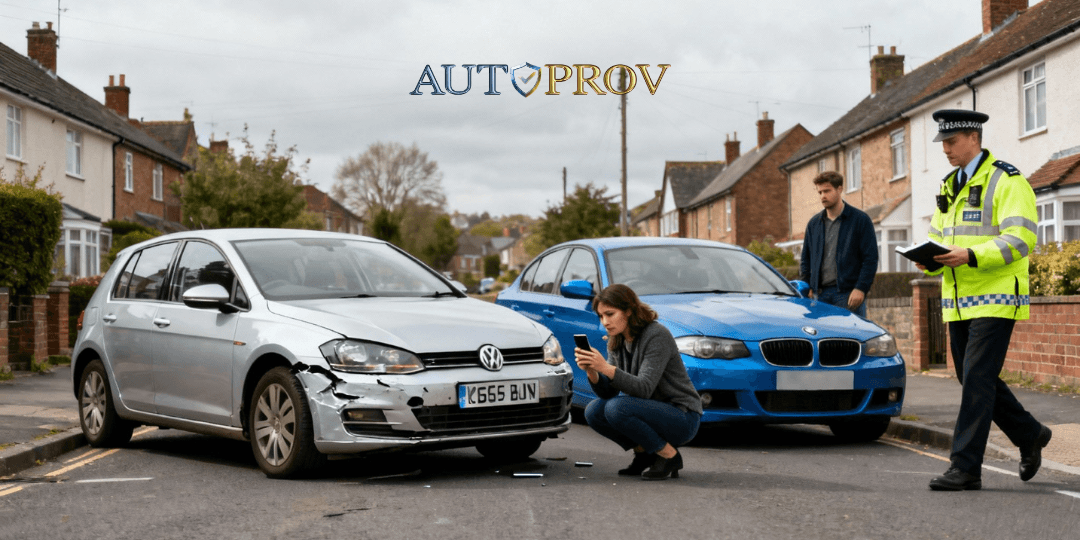
Being hit by an uninsured driver is a deeply frustrating experience. The shock of the accident is bad enough, but finding out the other party has no insurance just adds a whole new layer of stress and confusion. Suddenly, the straightforward path to getting your car fixed seems to vanish. This guide is here to cut through that noise and show you that you're not out of options.
Published by AutoProv
Your trusted source for vehicle intelligence