
You're probably looking at stock right now that has a fresh MOT, a clean enough appraisal sheet, and a margin that seems workable. Then the car lands on site, the valeter flags a warning light, the workshop finds a run of advisories that have been building for years, and the “good buy” starts absorbing prep budget before it's even photographed.
That's why MOT rules in the UK matter to the trade in a different way than they do to retail buyers. For a dealer, the pass certificate is only the front page. The useful part is the pattern behind it. MOT history can tell you how a vehicle has been maintained, whether defects are recurring, whether mileage progression looks coherent, and whether the seller's description matches the evidence.
A basic vehicle history check UK process is still necessary. It just isn't enough on its own when you're buying at speed, pricing risk, and protecting reputation across multiple stock sources.
Table of Contents
- Beyond the Pass Certificate Why MOT History Matters
- The Core MOT Framework for UK Motor Traders
- What a trader needs to verify first
- How to read the result commercially
- Reading Between the Lines Common Failures as Risk Signals
- The defect list is only the start
- Interpreting common MOT advisories and failures
- Navigating MOT Exemptions and Avoiding Costly Penalties
- Classic stock needs closer scrutiny
- The grace period myth causes real trade losses
- The 2026 MOT Shake-up What Traders Need to Know Now
- Why the photo requirement matters
- EV stock changes the workshop equation
- Integrating MOT Data into Your Vehicle Provenance Strategy
- MOT history works best when cross-checked
- What better trade vehicle intelligence looks like
- Frequently Asked Questions on MOT Rules for the Trade
- Can I sell a car without an MOT
- How far back can I check MOT history
- Is a pass with advisories a problem
- Does a valid MOT prove the car is a good buy
- What's the best way to use MOT data in a buying process
Beyond the Pass Certificate Why MOT History Matters
A car can pass its MOT and still be the wrong stock decision.
That's the trade reality. A fresh certificate often creates false comfort, especially in busy buying lanes where the temptation is to reduce the decision to “tested” versus “untested”. In practice, the more revealing question is whether the history behind that pass shows stable maintenance or a pattern of delay, patch repair, and recurring neglect.
A trader sees this most clearly in ordinary cars, not just problematic ones. The hatchback that passes this month but carried repeated visibility, tyre, and lighting advisories over multiple years may still retail well. But it needs tighter prep assumptions, stronger margin discipline, and a more careful read on customer suitability.
Practical rule: Never value a vehicle from the latest MOT outcome alone. Value it from the sequence.
Three clues usually matter more than the certificate itself:
- Repeated advisories: The same item returning year after year suggests deferred maintenance rather than one-off wear.
- Shifting defect mix: A vehicle that moves from minor consumables to electrical, structural, or visibility issues often needs closer workshop review.
- Timing around sale: A fresh pass issued shortly before disposal can be positive, but it can also mean minimum work was done only to make the car saleable.
For traders using MOT records as part of a wider buying process, the best habit is to read them as a maintenance timeline, not a compliance event. That's where trade vehicle intelligence starts becoming commercially useful. It helps you separate clean, predictable stock from vehicles that only look straightforward on first inspection.
A quick legal check still has value, and checking the current test status should be routine. But when you need to understand what a car has been like to own, not just whether it's legal today, the deeper read matters far more. This is exactly why experienced buyers routinely check MOT and mileage together rather than treating them as separate steps.
The Core MOT Framework for UK Motor Traders
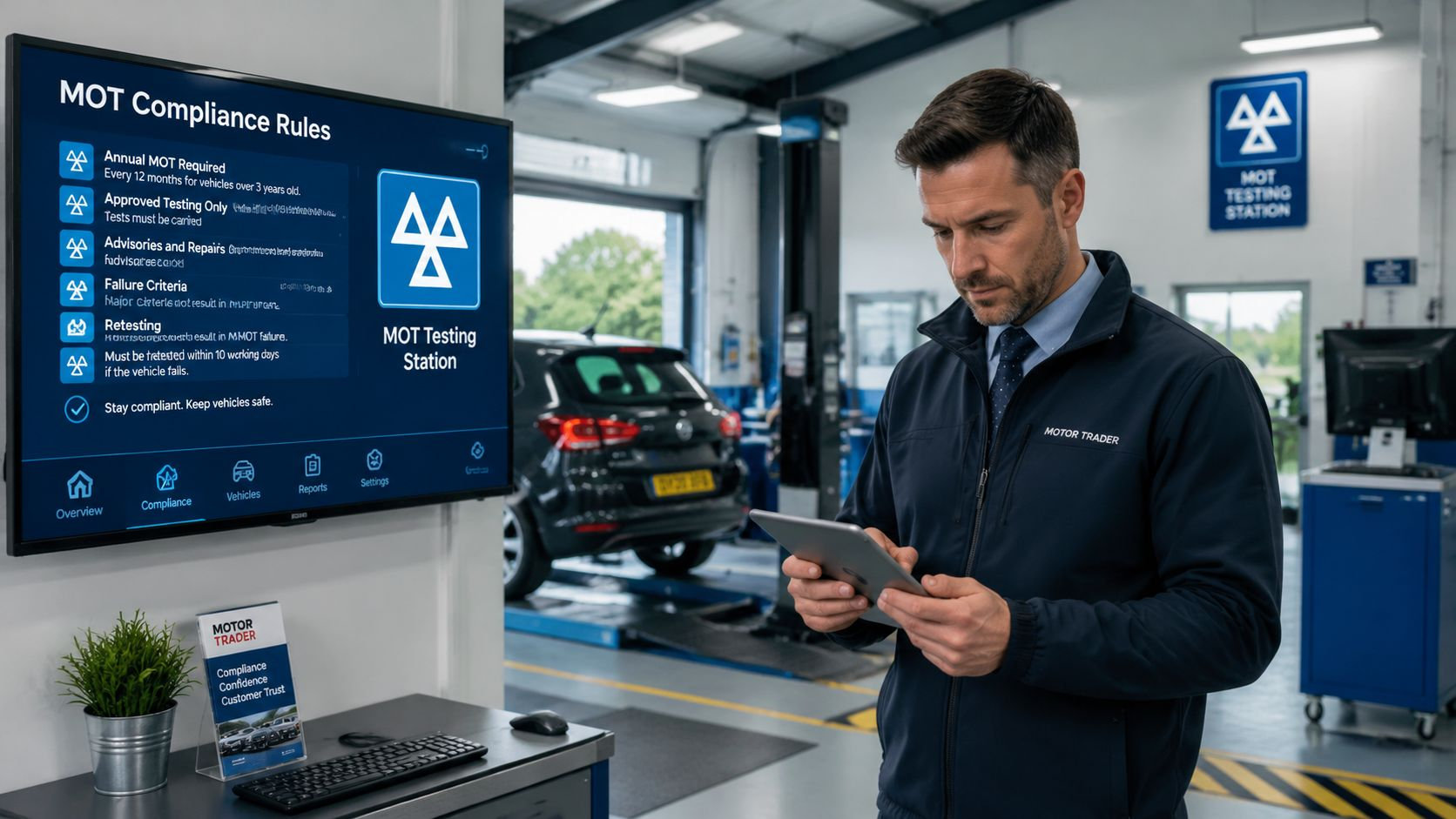
For day-to-day buying and stock control, you don't need a consumer explainer. You need a practical framework that lets you decide quickly whether a vehicle is compliant, roadworthy, and worth further attention.
The legal baseline is clear. The MOT test is a mandatory annual safety and emissions inspection for vehicles over three years old in Great Britain, with fees capped by the Government at a maximum of £54.85 for standard cars (Class 4). The test results in a Pass, Pass with Advisories, or Fail, with a Fail indicating Major or Dangerous defects that make the vehicle illegal to drive, as outlined in MotorCheck's guide to new MOT rules in the UK.
What a trader needs to verify first
At acquisition, there are four points that matter immediately:
- Test timing: In Great Britain, most passenger vehicles enter the MOT regime after three years and then require annual testing. Northern Ireland follows a different first-test timetable, so cross-border stock needs care.
- Class relevance: Make sure the vehicle's intended use and type line up with the testing category you expect. Errors here distort your assumptions on cost and compliance.
- Current status: A valid certificate tells you the car can legally be used on the road today, subject to its actual condition remaining roadworthy.
- Result detail: A pass with advisories is often more commercially important than a plain fail, because it points to upcoming prep or customer-facing wear items.
Use the MOT checklist as a buyer's walkaround discipline. The official test covers areas such as steering, brakes, tyres, lights, mirrors, seatbelts, and emissions. In trade terms, these aren't just test items. They're cost centres, negotiation points, and indicators of ownership standards.
How to read the result commercially
A Pass is a legal starting point, not a quality verdict.
A Pass with Advisories often deserves the closest attention because it tells you what the tester saw but didn't fail. That affects prep scheduling, warranty exposure, and how aggressively you can pitch the vehicle. A Fail can still be buyable stock, but only if the fail items are understood and priced in properly.
A trader's mistake isn't buying failed stock. It's buying unclear stock.
That's why many dealers run an MOT status check before arranging transport, workshop slotting, or appraisal sign-off. A simple first step is to check if a car has MOT before committing internal time to a vehicle that may already present avoidable compliance issues.
Reading Between the Lines Common Failures as Risk Signals
A large share of MOT trouble sits in ordinary, preventable items. That doesn't make it harmless from a trade perspective. It makes pattern recognition more important.
Analysis of 2024-25 data shows that nearly 3 in 10 vehicles fail their initial MOT, and the three most common defect categories, lighting faults, tyre condition, and windscreen visibility, account for 50% of all test failures, according to HonestJohn's review of recent MOT pass rate data. For a dealer, that means half the noise in the MOT system is coming from issues that are often visible, often manageable, and often informative.
The defect list is only the start
A one-off bulb failure isn't usually a buying problem. A chain of lighting advisories over several years can be. It may point to indifferent upkeep, poor previous repairs, water ingress, or electrical issues that sit outside the immediate MOT item.
Tyres tell a similar story. An isolated tyre-related fail can just mean a seller delayed replacement. Repeated tyre advisories, especially if they sit alongside steering or suspension comments, can suggest harder use, poor alignment, or neglect in areas that increase reconditioning cost.
Windscreen and visibility items also deserve context. On paper, they can look minor. In practice, recurring visibility issues may reveal a vehicle that has been run down cosmetically and mechanically together. That affects retail presentation as much as compliance.
If your buying process already uses broader controls for operational risk, the same mindset applies here. Dealerships that formalise inspection criteria often make better decisions under pressure, which is why frameworks such as risk management systems can be useful reading even outside the workshop.
Interpreting common MOT advisories and failures
Common Advisory/Failure Item What It Could Signal to a Trader Lighting and signalling faults Simple consumable issue, or recurring electrical faults if it appears repeatedly across tests Tyre condition Deferred maintenance, possible alignment problems, or evidence of harder use Windscreen visibility issues Poor ownership standards, cosmetic neglect, or likely additional prep before retail Brake wear advisories Near-term workshop cost and a likely negotiation point on acquisition Suspension comments Potential ride quality complaints, uneven wear, or broader chassis-related spend Corrosion notes Older stock that may need deeper structural inspection before committing capital Use MOT history diagnostically. Ask whether the issue is isolated, repeated, escalating, or clustered with other items.
- Isolated and resolved: Usually manageable stock.
- Repeated in the same category: Suggests the owner postponed proper repair.
- Escalating from advisory to fail: Indicates maintenance was deferred until the legal threshold forced action.
- Clustered across systems: Raises the chance that the car has been run on a budget.
Review the pattern, then compare it with mileage movement, ownership timing, and sale route. A defect only becomes useful intelligence when it's placed in context.
For traders who want a sharper read on pass and advisory patterns, it helps to understand in and out MOT behaviour rather than treating every pass as equal.
Navigating MOT Exemptions and Avoiding Costly Penalties
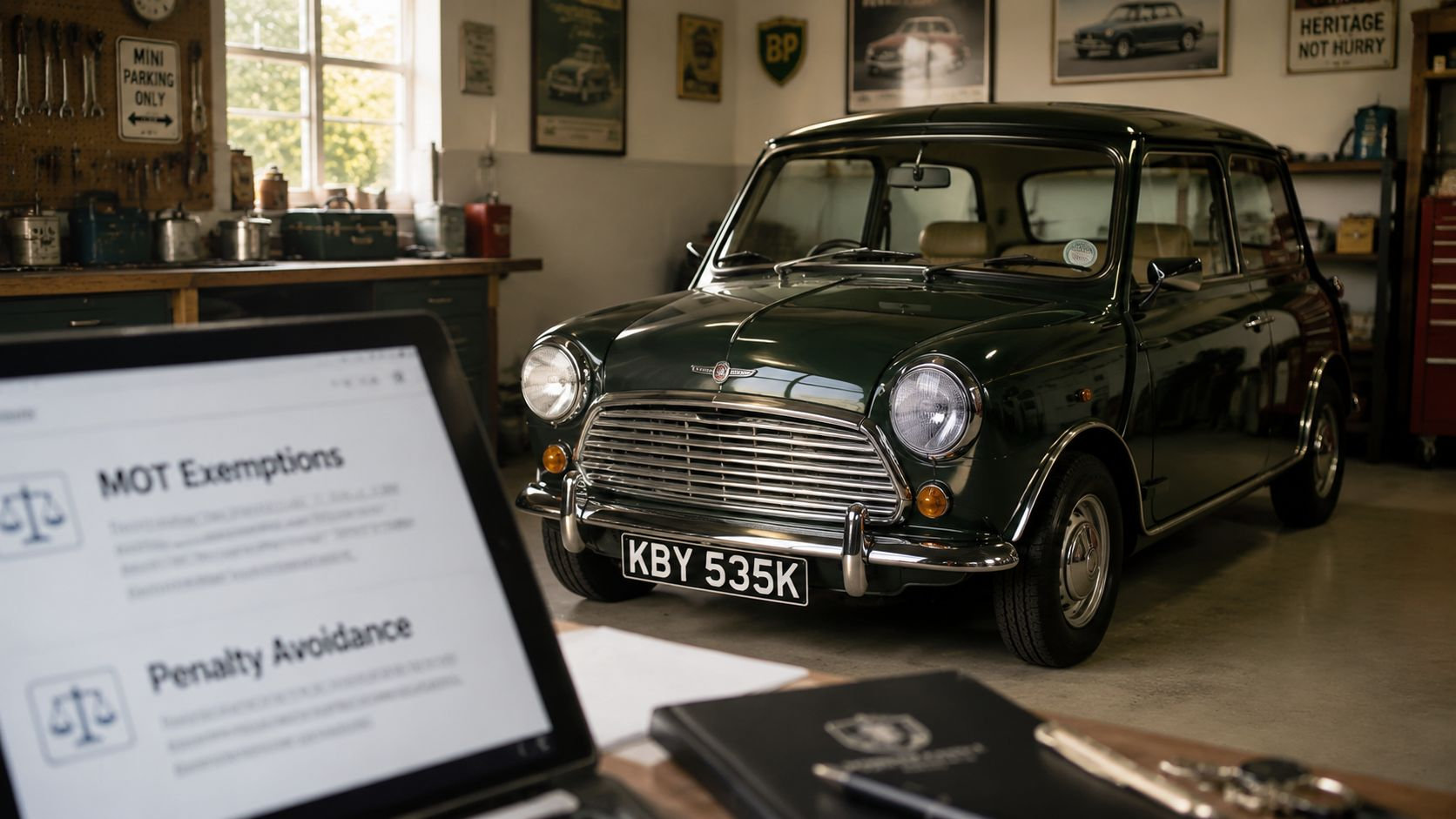
Two MOT issues regularly catch traders out. One involves exempt stock. The other involves vehicles that aren't exempt at all but are treated as though the rules are flexible.
They aren't.
Classic stock needs closer scrutiny
Vehicles first registered over forty years ago can be MOT exempt if there have been no substantial changes in the last thirty years. For classic specialists, that sounds straightforward until modified engines, suspension changes, or other technical alterations complicate the position.
The mistake is assuming age alone decides exemption. In reality, the vehicle's specification and change history matter. For buying teams, that means exemption should be verified as part of provenance, not assumed from registration year.
A car may be exempt and still be poor stock. It may also be non-exempt despite looking like an obvious classic. Either way, documentation quality matters.
The grace period myth causes real trade losses
There is no 14-day grace period for an expired MOT. Driving a vehicle without a valid MOT is illegal unless it's going to a pre-booked test, and it can invalidate insurance cover. DVSA data from 2025-2026 shows a 12% increase in penalties for this offence, with trade vehicles often cited between ownership transfers, as noted in Tangelo's summary of MOT grace period rules.
That matters to dealers because the risk isn't theoretical. It appears in familiar situations:
- Auction collections: The car is bought late, moved quickly, and nobody confirms expiry before road use.
- Part-exchange handling: Staff assume a recent sale or booking creates breathing room. It doesn't.
- Inter-site movement: A vehicle moves between premises on trade plates, but its compliance status hasn't been checked properly.
Buyer discipline: Verify MOT status at the point of acquisition, not when the car reaches prep.
The financial exposure isn't limited to inconvenience. If insurance is affected and the vehicle is involved in an incident, the problem escalates fast. Traders building internal compliance workflows often benefit from broader reading on digital audit and oversight, including AI Image Detector's compliance insights, because the operational lesson is the same: if status checks rely on assumption, failures multiply.
The 2026 MOT Shake-up What Traders Need to Know Now

The next change in MOT rules UK operators need to prepare for is about test integrity and modern vehicle suitability.
From 2026, the DVSA will mandate that MOT testers capture and submit vehicle photographs to create a verified visual record, reducing ghost MOTs. New rules from April 2026 also require garages to have lifting equipment suitable for heavier EVs, reflecting a shift toward modern vehicle safety standards, as set out in Car Owl's overview of the 2026 MOT changes.
Why the photo requirement matters
For trade buyers, the photography requirement should improve confidence in future MOT records. A pass tied to a verified visual record is harder to manipulate than a purely administrative entry.
That doesn't remove the need for proper dealer vehicle checks. It does mean future MOT data should become more reliable as part of your due diligence stack, especially where ghost MOT concerns have distorted trust in certain stock channels.
There's also a disciplinary angle. The DVSA is tightening consequences for testers and Authorised Examiner Principals subject to serious sanctions, with the aim of stopping sanctioned individuals from continuing to influence MOT operations. That points in the same direction: stronger system integrity.
EV stock changes the workshop equation
Heavier EVs and hybrids change the physical requirements of testing. They also change what traders should notice at appraisal.
Visible battery mountings, charging components, and high-voltage areas now sit much closer to the centre of roadworthiness discussions. For buyers, that means two practical shifts:
- Workshop capability matters more: Not every prep operation is equally set up for modern electric stock.
- MOT records need model context: A straightforward advisory on an older petrol hatchback doesn't carry the same diagnostic weight as an issue on a heavier EV with different safety considerations.
If your team is building sourcing rules around newer stock profiles, it's worth reviewing new MOT regulations in the context of how they affect appraisal, transport planning, and workshop capacity, not just legal compliance.
Integrating MOT Data into Your Vehicle Provenance Strategy

The strongest buying decisions don't treat MOT history as a separate task. They use it as one layer inside a full used car history report and provenance review.
That matters because MOT data is excellent at showing sequences. It's less useful when used in isolation. A pass history won't tell you everything about finance exposure, plate changes, write-off status, or ownership behaviour. It becomes powerful when it's cross-checked against those other signals.
RAC data shows that 1 in 3 UK vehicles has a hidden history issue, and 1 in 11 (9.1%) display inaccurate mileage records, a problem that can often be detected by analysing mileage progression between annual MOT tests, as discussed in AutoProv's review of free car history check limitations.
MOT history works best when cross-checked
A few combinations deserve immediate attention in trade buying:
- Mileage jump or reversal: The MOT line may expose a progression that doesn't fit the vehicle's age, use pattern, or sale narrative.
- Fresh pass after recurring neglect: A pass issued right before disposal can still sit on top of years of deferred maintenance.
- Advisories before rapid resale: When warning signs appear and the vehicle changes hands quickly, the commercial risk rises.
- Ownership gaps with defect clusters: If maintenance standards drop around transfer periods, provenance becomes more important than the latest certificate.
These are the points where mileage check UK work and MOT review should happen together, not as separate admin tasks.
What better trade vehicle intelligence looks like
Good buyers already connect these dots manually. The problem is speed and consistency. Under stock pressure, manual reading becomes selective.
A stronger process combines MOT history, mileage development, keeper timelines, and other anomalies into one point-of-decision view. That's the practical version of vehicle provenance. It helps buyers price uncertainty instead of discovering it in prep or after retail handover.
Operationally, the same principle shows up in other data-heavy environments. Teams that improve decision quality usually structure information around the moment action is taken, which is why broader work on optimizing transport logistics with data is relevant here as well. The lesson transfers cleanly to car buying. Data has value when it changes the decision before money moves.
For dealers who want a clearer provenance picture before committing capital, a dedicated vehicle provenance report is far more useful than relying on a pass certificate and a quick appraisal note.
Frequently Asked Questions on MOT Rules for the Trade
Can I sell a car without an MOT
Yes, a car can be sold without a valid MOT. The trade issue isn't the act of sale. It's whether the buyer has properly understood the roadworthiness, failure history, and likely prep cost before money changes hands.
How far back can I check MOT history
Checkable MOT history for cars in the UK is available from 2005 onwards, when the system was computerised, providing a digital record of mileage and defect reasons, as noted in WVS Cars' summary of MOT history records.
Is a pass with advisories a problem
Not automatically. It depends on what the advisories say, whether they recur, and how they fit with the vehicle's age, mileage, and intended retail position. Advisories are often where margin risk starts.
Does a valid MOT prove the car is a good buy
No. It proves the vehicle met the MOT standard on the day of test. It doesn't prove strong maintenance history, clean provenance, or low future prep spend.
What's the best way to use MOT data in a buying process
Use it early, and read it with context. Check status before movement, review history before bidding, and compare MOT patterns against mileage, ownership, and appraisal findings before agreeing a price.
AutoProv helps UK dealers turn MOT data into point-of-decision vehicle intelligence. If you need a clearer view of vehicle history check UK limitations, mileage anomalies, ownership patterns, and wider vehicle provenance risk before you buy, AutoProv provides trade-focused reports built for safer sourcing, better valuation, and stronger internal buying discipline.
Frequently Asked Questions
AI-Generated Content Notice
This article was created with the assistance of artificial intelligence technology. While we strive for accuracy, the information provided should be considered for general informational purposes only and should not be relied upon as professional automotive, legal, or financial advice. We recommend verifying any information with qualified professionals or official sources before making important decisions. AutoProv accepts no liability for any consequences resulting from the use of this information.
From our AI insights
- Spotting Insurance Frauds: Key Indicators UK Dealers Need
Learn to identify insurance frauds with key risk indicators using AutoProv.
- Navigating Insurance Write-Offs in 2024: What UK Traders Need to Know
Explore how UK traders can navigate insurance write-offs using provenance intelligence in 2024.
- Impact of Write-Off Categories on Car Values in 2024
Explore how Cat S, Cat N, Cat A, and Cat B write-offs affect UK vehicle pricing and trader responsibilities.
Related Articles

Understanding UK Car Insurance: Types and Legalities
Explore the UK car insurance sector, types of coverage, and the legal implications of incorrect coverage.
How to Check If a Car Is Insured in the UK | Easy Guide
The quickest and most reliable way to check if a car is insured is by using the Motor Insurance Database (MID) online. All it takes is the vehicle's registration number to see if a valid insurance policy is on record. Remember, driving without at least third-party insurance is a serious offence here in the UK.

Hit by an uninsured driver: UK accident rights & claim guide
Being hit by an uninsured driver is a deeply frustrating experience. The shock of the accident is bad enough, but finding out the other party has no insurance just adds a whole new layer of stress and confusion. Suddenly, the straightforward path to getting your car fixed seems to vanish. This guide is here to cut through that noise and show you that you're not out of options.
Published by AutoProv
Your trusted source for vehicle intelligence