

The MOT landscape is shifting in 2026, and for motor trade professionals, these are not minor procedural adjustments. Two major changes are being implemented by the DVSA, directly targeting electric vehicle testing and MOT fraud. These shifts will have a direct and immediate impact on how you source stock, appraise part-exchanges, and manage the underlying risk within your inventory.
What Is Changing with the 2026 MOT Rules?
For seasoned traders, regulatory compliance is a fundamental part of business. However, the 2026 updates are more than just new administrative tasks. They represent a direct response to two significant challenges in the modern used vehicle market: the increasing gross vehicle weight of EVs and the persistent issue of fraudulent MOT certificates.
Understanding these changes now is essential to protect your margins. The new regulations focus on two key areas:
- Enhanced EV & Hybrid Testing Standards: New rules for MOT bays will mandate equipment capable of safely handling the weight of modern electric and hybrid vehicles. This will directly affect where and how these vehicles can be tested.
- Systematic Measures Against Fraud: The DVSA is implementing robust measures to combat 'ghost MOTs'—certificates issued without a vehicle ever being physically present at a testing station. New requirements, including mandatory photographic evidence taken during the test, are designed to make a vehicle's MOT history a more reliable and verifiable record.
The timeline below outlines when these changes take effect and what they mean for day-to-day trade operations.

As this illustrates, these are not distant concerns. The new equipment mandates and digital verification checks will begin influencing your risk assessment processes imminently.
The Immediate Impact on Your Business
To provide a clear overview, here is a summary of the upcoming changes and their practical implications at a dealership level.
Key 2026 MOT Regulation Changes at a Glance
Regulatory Change Effective From Primary Impact for Dealers Enhanced EV Test Bay Standards Mid-2026 A reduced number of MOT stations will be equipped for heavier EVs, potentially increasing testing costs and causing logistical delays for electric stock. Mandatory Photo Evidence Late 2026 Increases the reliability of new MOTs but can expose suspicious patterns or gaps in a vehicle's older test history. Connected Equipment Rollout Ongoing to 2027 Digitally submitted test data creates a more detailed MOT record, making it harder for mileage discrepancies or recurring faults to go unnoticed. These changes introduce new risks that a standard history check may not identify. For example, stricter EV testing requirements could mean that perfectly sound electric stock becomes more difficult and expensive to process through an MOT, directly impacting profit margins.
While the crackdown on fraudulent MOTs is a positive development for the industry, it also exposes a new layer of historical risk. A vehicle that appears clean today might have a past involving questionable certificates that have masked long-term, costly defects. You can gain a more detailed perspective on how to interpret these shifts by reading our guide on the recent UK MOT changes.
The key takeaway for traders is this: these changes make a vehicle's provenance—its full, contextual history—more critical than ever. A cursory review of the current MOT certificate is no longer sufficient.
Ultimately, this requires a more sophisticated and thorough approach to due diligence. It is necessary to look beyond what an MOT states today and consider what it implies about the vehicle's future costs and its hidden past. This is precisely where advanced trade vehicle intelligence becomes an indispensable part of your operational toolkit, helping you to identify the subtle risk signals that a basic report will consistently miss.
Preparing for EV and Hybrid Test Bay Upgrades
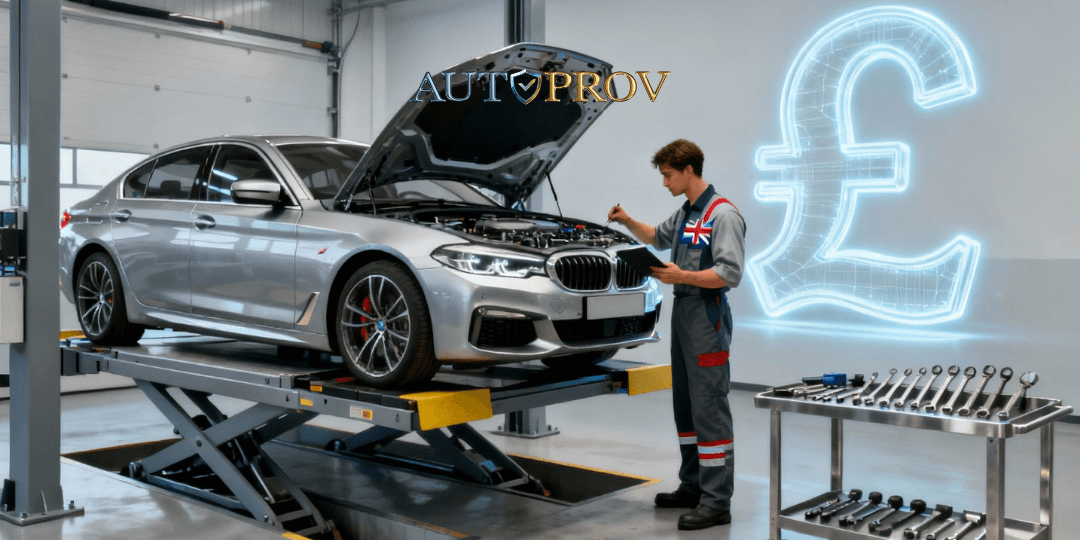
 The growing number of electric and hybrid vehicles on UK roads is compelling the DVSA to implement significant new MOT regulations. This is not an arbitrary measure but a direct response to a real-world safety issue that will affect every testing station and, in turn, every dealer who relies on them.
It is well-documented that EVs are heavy. Due to their large battery packs, an electric vehicle can be up to 30% heavier than its internal combustion engine counterpart. This additional weight places considerable strain on standard garage equipment, particularly vehicle lifts and jacking beams designed for lighter vehicles. An overloaded lift is a danger not only to the MOT tester but also to the vehicle itself, with the potential for thousands of pounds in structural damage.
To address this problem proactively, the DVSA is introducing stricter standards for MOT test bays. This is a logical step to ensure the UK's testing network can safely accommodate the changing vehicle parc.
Understanding the New Technical Mandates
The new rules establish specific requirements for any testing station applying for a new Class 4 MOT authorisation, or undertaking major changes to an existing bay, from mid-2026. These regulations are designed to manage the gross vehicle weight and unique design of modern EVs safely.
The key equipment upgrades are:
- Minimum 2.0-Tonne Jacking Beam: Jacking beams will require a safe working load (SWL) of at least 2,000kg. This ensures they have the capacity to lift heavier EVs for essential underbody inspections.
- Wider Lifting Pad Distance: The minimum distance between the centres of lifting pads is being increased to 1,700mm. This change is vital to accommodate the wider chassis and specific jacking points on many EVs, preventing potential damage to the battery housing.
It is important to note that these rules do not compel every existing MOT station to replace their current equipment immediately. However, when a garage needs to replace old equipment or set up a new test lane, they will be required to meet these stricter standards. This will likely create a two-tier system for a period, but it clearly indicates the future direction of the industry.
This shift means that not all of your current MOT partners may be equipped to handle the EV and hybrid stock you acquire. This could lead to MOT bottlenecks, forcing you to seek out newly equipped, and potentially more expensive, testing stations.
The Long-Term Consequences for Motor Traders
These workshop upgrades will have a ripple effect far beyond the garage floor. For motor trade professionals, they introduce a new set of risks into stock appraisal and sales processes. As UK MOT rules adapt to the EV transition, changes from 2026 will demand more from the testing stations your stock passes through. This is precisely why advanced vehicle provenance is becoming non-negotiable; as detailed in the new rules impacting the UK motor trade, stock with an inconsistent history could fail new high-voltage safety checks, leading to significant complications.
These new failure points, alongside the equipment upgrades, will ultimately affect your operational costs and buying strategy. A professional vehicle history check UK now needs to consider the future serviceability of an EV, something AutoProv's trade vehicle intelligence is designed to analyse. For a deeper look, see our guide on the specific checks for electric cars. Preparing for these changes now will help protect your margins and ensure you are not caught out by the evolving MOT landscape.
How the New Anti-Fraud Rules Change Vehicle Provenance

The second major initiative from the DVSA within the new MOT regulations is a comprehensive assault on certificate fraud. For years, the trade has contended with the problem of "ghost MOTs"—pass certificates issued for vehicles that have never been inside a test bay. This practice allows unscrupulous sellers to conceal serious defects, disguise clocked mileage, or sell structurally unsound vehicles, creating immense risk for trade buyers.
To eliminate this, the DVSA has trialled and is now rolling out a robust set of anti-fraud measures. The objective is to make it virtually impossible to generate a fraudulent MOT, which will fundamentally improve the integrity of the entire testing system. The goal is simple: an MOT pass certificate must mean the vehicle was physically tested and met the required standard.
This crackdown is a positive development for the motor trade. However, it also creates a new, more subtle risk—one that requires a much deeper investigation into a vehicle's provenance when sourcing stock.
The End of the Ghost MOT
The single most significant change is the introduction of mandatory photographic evidence during the MOT. Testers will now be required to upload time-stamped images of the vehicle at different points during the inspection, including clear photographs of the registration plate and vehicle identification number (VIN). These images will be logged directly into the MOT Testing Service (MTS).
This is a simple but highly effective measure. It creates a digital footprint, proving that a specific vehicle was physically present at the garage and inspected. This alone is a powerful deterrent against fraud.
This new digital evidence trail means that from 2026 onwards, the MOT certificate will become a far more reliable document. It provides a level of assurance that simply did not exist before, tying a specific vehicle to a specific test on a specific day.
In addition to photo uploads, the DVSA is implementing much stricter sanctions for dishonesty. The penalties for testers and Authorised Examiners caught issuing fraudulent MOTs are now far more severe, including longer suspensions and permanent removal from the scheme. This dual approach—technological verification and stricter enforcement—is designed to systematically dismantle the market for fraudulent MOTs.
The New Risk Hiding in Old Data
While these new MOT regulations will improve the integrity of MOT records going forward, they also highlight potential risks in a vehicle's past. A vehicle being appraised today could have a history containing fraudulent passes from before these rules were implemented. Those "ghost MOTs" might have successfully masked years of neglect, recurring faults, or even serious accident damage.
Consider this scenario:
- A vehicle's mileage is clocked back by 40,000 miles.
- The owner then obtains a ghost MOT to enter the new, lower reading onto the official record.
- For the next two years, the vehicle passes legitimate MOTs, and at a glance, the mileage history appears consistent.
A standard dealer vehicle check could easily miss this. It would focus on the most recent, clean data, while the earlier fraudulent MOT has already served its purpose—it has 'washed' the vehicle's history and concealed the mileage check UK anomaly. This is precisely where a comprehensive vehicle provenance report becomes an essential risk management tool. You need advanced trade vehicle intelligence to identify what has really occurred.
Why Historical Context Is Now Critical
The new anti-fraud measures effectively create a dividing line in every vehicle's history: pre-2026 and post-2026. A clean MOT issued after these rules take effect provides strong reassurance. The problem is that it does nothing to erase the risks buried in the vehicle’s earlier life.
This means historical MOT data must now be viewed through a completely different lens. It is necessary to search for the red flags that suggest past manipulation, such as:
- Unusual Gaps: Long periods where a vehicle was supposedly off the road, followed by a sudden, clean MOT.
- Advisory Wipeouts: A history filled with advisories that suddenly disappear at the next test, with no corresponding evidence of repair work.
- Inconsistent Mileage Progression: Large, unexplained jumps or drops in mileage between tests that do not follow a logical pattern.
These patterns are often the tell-tale signs of past fraud. To spot them, you must move beyond a simple pass/fail check and analyse the entire used car history report for context and anomalies. AutoProv is built to detect exactly these subtle risk signals, giving you the insight needed to avoid acquiring a vehicle whose clean MOT is merely concealing a deeply problematic past.
The Lingering Risk of Stricter Emissions Standards
While the focus is on new technology and anti-fraud measures in 2026, an older change continues to create issues in the used car market. In May 2018, the government significantly tightened MOT emissions standards. This was not a minor adjustment; it was a fundamental shift that created a latent risk for thousands of older petrol and, especially, diesel vehicles.
The immediate impact was significant. In the first six months, from May to November 2018, an estimated 744,592 vehicles failed their MOT on emissions alone. This was more than double the 350,472 failures recorded in the same period the previous year. Diesel vehicles were most affected, with failures increasing by 312%, from 58,004 to 238,971. You can review the official data in the government's report on these new MOT standards.
This was not an anomaly. The new rules specifically targeted harmful particulates, slashing the acceptable smoke limits from diesel engines and introducing much stricter checks on Diesel Particulate Filters (DPFs). Any visible smoke during the metered check or any sign of DPF tampering immediately became a Major defect—an automatic failure.
The Problem with a Pre-2018 Pass
For any motor trade professional sourcing stock, that 2018 date represents a critical dividing line. A vehicle manufactured before then, particularly a six to ten-year-old diesel, could have a history of MOT passes under the old, less stringent rules. It might have only just passed with borderline emissions that would result in an instant failure today.
A vehicle considered 'healthy enough' in 2017 could be classified as having a major defect by 2018 standards, even if its mechanical condition had not changed. The goalposts moved so dramatically that a large number of older vehicles were suddenly at high risk of requiring expensive emissions system repairs.
This creates a serious hidden risk for your business. A vehicle might have a clean, current MOT certificate, but its history can tell a different, and much more costly, story. An older diesel that passed every MOT before 2018 but then suddenly failed on emissions in 2019, or began accumulating DPF-related advisories, is a significant red flag.
Identifying the Emissions Time Bombs
A current MOT pass does not erase historical data. A vehicle could have been repaired just enough to pass its last test, but the underlying issue—a deteriorating DPF or a failing catalytic converter—may still be present. This is a classic motor trade risk that can erode your reconditioning budget and lead to post-sale customer issues.
To protect your margins, you must analyse the full MOT history and look for these specific warning signs:
- Post-2018 Emissions Advisories: Repeated advisories for exhaust smoke or emissions after the rules changed are a strong indicator that the system is failing.
- The First Fail: Pinpoint when the vehicle first failed an MOT on emissions. If it was immediately after May 2018, it is highly likely the vehicle was only ever compliant with the old, weaker standards.
- Missing or Tampered DPF: Any mention of DPF tampering is an absolute deal-breaker. A used car history report that flags this can save you thousands in potential repair costs.
As MOT rules continue to evolve, it is beneficial to understand exactly how measurements are taken; for instance, you can learn how to measure carbon monoxide emissions. A simple vehicle history check UK is no longer adequate. You need professional trade vehicle intelligence from a platform like AutoProv to connect the data points in a vehicle’s vehicle provenance, turning that raw MOT data into a clear, actionable risk assessment.
Using Advanced Intelligence to Mitigate MOT Risks
The rules of engagement have changed. With the latest overhaul of MOT regulations, from new EV requirements to robust anti-fraud measures, the risk profile of used vehicles has been fundamentally altered. A standard dealer vehicle check that merely confirms a current MOT pass is no longer sufficient. These new rules demand a much deeper investigation into the history that a basic report will invariably miss.
This is precisely where professional trade vehicle intelligence provides critical value. The EV rules mean you must scrutinise past service information to anticipate future costs. The anti-fraud rules require you to spot inconsistencies in a vehicle’s MOT timeline. The emissions standards demand a forensic look at its past performance. Each change introduces a new risk that can only be identified by connecting disparate data points.
Relying on a standalone MOT certificate is like reading only the last page of a book. You see the outcome but have no understanding of the plot, recurring issues, or the true character of the vehicle.
A trade-focused solution is essential because it is not just about data collection; it is about interpreting the story that data tells.
Moving Beyond Basic Data Points
A basic vehicle history check UK might tell you a vehicle passed its last MOT. That is not enough. Advanced intelligence asks more difficult questions, searching for the subtle patterns and red flags that indicate underlying problems and significant motor trade risk.
This means investigating areas that are often overlooked:
- Ownership Patterns: How many keepers has the vehicle had? A high turnover, especially involving short periods of ownership, is a classic indicator of a vehicle with unresolved issues.
- Mileage Anomalies: Is the mileage history logical? A sudden drop, or a vehicle that recorded minimal mileage for a year before receiving a "clean" MOT, can be a clear sign of clocking, even if the current reading appears plausible.
- Advisory History: What do the advisories truly indicate? A pattern of repeated advisories for the same component—brakes, tyres, emissions—points to cheap, temporary fixes rather than proper repairs.
- Geographical Context: Where has the vehicle spent its life? A vehicle from a coastal area may have a higher risk of hidden corrosion, while one from a major city might have accelerated wear on its clutch and gearbox.
These factors provide the crucial context that transforms raw data into actionable intelligence. This is the core of a professional vehicle provenance check. It is not just about what has been recorded, but what the patterns imply.
How Provenance Intelligence Protects Your Margin
This is where a platform built specifically for the trade, like AutoProv, makes a tangible difference. Instead of just presenting isolated facts, it synthesises the information to provide a clear risk profile. This enables you to make smarter buying decisions, price your stock accurately, and protect your margin from hidden liabilities.
Consider this risk scenario created by the new MOT regulations:
- A dealer is appraising a 2017 diesel with a fresh MOT certificate. A standard check shows it has no write-off or finance markers. It appears to be a good prospect.
- However, a detailed provenance analysis reveals it failed its MOT on emissions in 2019, immediately after the stricter standards were introduced. It also has a history of DPF-related advisories that were suddenly 'resolved' just before its most recent test.
- Advanced intelligence instantly flags this as a high-risk vehicle. The DPF is almost certainly near the end of its service life, and the 'fix' was likely a temporary, low-cost measure. It represents a latent liability, likely to result in an expensive warranty claim or failure at its next MOT.
Without that deeper insight, the dealer would have paid a price that did not account for a near-certain, costly emissions system repair. By using an advanced mileage check UK and full historical analysis, the risk is identified before any capital is committed. To see how these analytical tools function, you can explore the details of how advanced vehicle intelligence works to protect traders from these exact scenarios.
Ultimately, integrating this level of intelligence into your acquisition process is no longer a luxury; it is a necessity. It is what equips you to navigate the complex modern used car market, turning potential liabilities into informed decisions that protect both your reputation and your bottom line.
Don't Be Fooled by a Clean MOT Pass
At first glance, a rising MOT pass rate might seem like good news for the motor trade, suggesting a higher quality of used vehicles entering the market. However, taking this headline figure at face value can be a critical mistake. The real story is more complex—and presents greater risk for dealers sourcing stock.
On the surface, the statistics look positive. Over the last decade, the UK’s MOT pass rate has increased by 20%. It has risen from approximately 60% ten years ago to 72% in 2025, meaning only 28% of vehicles failed last year. But a deeper analysis reveals a different picture. Critical safety issues remain prevalent; lamps, reflectors, and electrical faults are the top reasons for failure, while a significant two-thirds of tyre defects and one-third of brake issues are classified as 'Dangerous'. The full findings are detailed on the Direct Line Group news site.
This contradiction highlights a crucial truth for any trade buyer: a rising pass rate does not necessarily mean vehicles are in better condition. It often indicates that more vehicles are receiving the bare minimum of work required to pass the test, concealing deeper problems that are likely to surface later.
Looking Beyond the Pass Certificate
For an experienced trader, an MOT pass certificate is the beginning of an investigation, not its conclusion. The real intelligence is buried within the full MOT history, which is where you can turn raw data into a powerful tool for identifying risk and making smarter buying decisions.
A 'Dangerous' defect on a test, even if the vehicle subsequently passes after a quick fix, is a major red flag. It points to a history of neglect. A responsible owner addresses problems before they become dangerous. An owner who waits until a tyre is illegal or a brake component is at the end of its service life has almost certainly cut corners elsewhere.
A clean MOT pass immediately following a 'Dangerous' defect is a classic sign of a cheap, reactive patch-up, not a quality, proactive repair. This is a huge indicator of future motor trade risk and the kind of post-sale issues that destroy your margin.
What Regional Differences Tell You
MOT data is not uniform. Pass rates vary significantly across the UK, and these geographical patterns provide vital clues about the likely condition of a vehicle before you even inspect it.
A vehicle that has spent its life in a damp, salty coastal environment is at a much higher risk of hidden corrosion than one from a dry, inland area. Likewise, vehicles from congested urban centres often exhibit greater wear on clutches, brakes, and suspension components.
Understanding these patterns helps you build a more complete picture of a vehicle's life. It allows you to anticipate problems that a simple MOT check will not show, strengthening your appraisal and providing leverage in negotiations. Understanding the essential fleet management system features that help process this kind of data is key to decoding modern MOT histories effectively.
Ultimately, the goal is to stop viewing an MOT history as a simple pass/fail document and start using it as an intelligence source. By analysing defect severity, repair patterns, and regional context, you can build a comprehensive vehicle provenance profile. This is how you avoid problem stock that is destined to cost you money and damage your reputation. You can learn more about how to view MOT history and make smarter buying decisions in our detailed guide. It is why platforms like AutoProv are built to perform this deep analysis for you, flagging these subtle risk signals instantly.
Frequently Asked Questions
When significant changes to MOT rules are introduced, practical questions inevitably arise. Here are some direct answers to the most common queries we are hearing from dealers and wholesalers.
Do the 2026 EV Test Bay Rules Affect My Existing Equipment?
No. There is no requirement for your local testing station to immediately upgrade its current setup. The new, stricter standards for wider lifts and higher-capacity jacking beams only apply to new MOT bays or garages making major changes to their lanes from mid-2026.
Your current MOT provider can continue to use their approved equipment. They are only required to meet the new standards when they decide to build a new lane or completely overhaul an existing one to accommodate the weight of modern electric vehicles.
How Can I Spot a Vehicle with a Historically Dodgy MOT?
The new anti-fraud measures are a positive step, but they cannot alter a vehicle's past. Identifying a car with a fraudulent MOT in its history requires a proper vehicle history check UK. You are looking for the classic red flags that indicate an inconsistent record.
Look for these tell-tale signs:
- Big Gaps in MOT History: Long periods where the vehicle was seemingly off the road, followed by a suspiciously clean pass.
- Mileage That Makes No Sense: A vehicle that records very few miles for several years and then suddenly shows a large increase between tests is a major warning sign.
- The "Miracle Pass": This refers to a vehicle with a long history of failures and advisories that abruptly receives a perfect pass certificate with no evidence of repair.
A professional vehicle provenance platform automates this analysis. It is designed to spot these patterns, flagging inconsistencies that are nearly impossible to detect by manually reviewing the history.
Will the New MOT Rules Affect Used Diesel Car Values?
The market has largely absorbed the impact of the stricter emissions rules introduced in 2018. However, any diesel with a poor emissions history remains a significant financial liability. A history of DPF-related advisories or outright emissions failures indicates underlying problems that can be very costly to rectify.
The new anti-fraud rules amplify this risk. As MOTs become more reliable, it will be harder for a vehicle's problematic past to be concealed. This reinforces the importance of thoroughly checking the emissions history as part of a vehicle’s provenance. That history has a direct impact on its real-world value and your profit margin.
To get the full story on any vehicle and protect your business from these new and evolving risks, AutoProv provides the trade-grade vehicle intelligence UK motor traders depend on. Get started with a comprehensive history check at https://autoprov.ai.
Frequently Asked Questions
AI-Generated Content Notice
This article was created with the assistance of artificial intelligence technology. While we strive for accuracy, the information provided should be considered for general informational purposes only and should not be relied upon as professional automotive, legal, or financial advice. We recommend verifying any information with qualified professionals or official sources before making important decisions. AutoProv accepts no liability for any consequences resulting from the use of this information.
From our AI insights
- The Importance of Tyre Verification for UK Motor Traders
Discover why verifying tyre specs is crucial for UK traders to ensure safety and compliance.
- Decoding CO2 Emissions: A Trader's Guide
Learn how traders can verify CO2 data using factory build sheets to prevent disputes.
- Navigating Recall Compliance for UK Car Traders
Ensure compliance with recall regulations: essential steps for UK car traders.
Related Articles

The Importance of Car Maintenance and Provenance Checks
Discover why regular car maintenance and proper provenance checks are essential for vehicle quality and longevity.

Essential Car Maintenance Tips for UK Drivers
Discover vital car maintenance tips to keep your vehicle roadworthy and compliant in the UK.
How Much Is a Car Service? Complete UK Price Guide
Trying to pin down exactly "how much is a car service?" can feel a bit like asking "how long is a piece of string?". Prices vary quite a bit, but to give you a ballpark figure, an interim service will usually set you back around £100 to get started. A more thorough full service often begins at £180, while a major service for many cars can easily top £300.
Published by AutoProv
Your trusted source for vehicle intelligence
