
Learn how outstanding finance checks protect UK motor traders from repossession risk, what data sources reveal hidden agreements, and how to verify finance status before
By CiteFlow
What Outstanding Finance Checks Reveal About a Vehicle
Outstanding finance checks identify whether a vehicle remains subject to an active hire-purchase, conditional sale, or lease agreement where the legal owner is a finance company rather than the registered keeper. When outstanding finance exists, the finance company retains ownership rights and can legally repossess the vehicle from anyone in possession, including innocent third-party purchasers who bought in good faith. Professional finance checks query the provenance database and other finance registers containing records from UK lenders, revealing active agreements, settlement figures, and the identity of the legal owner. This information protects motor traders from purchasing vehicles they do not legally own and cannot sell with clear title.
The distinction between registered keeper and legal owner creates the fundamental risk. The V5C logbook identifies the registered keeper but makes no statement about ownership. A vehicle can have outstanding finance of £8,000 whilst the logbook shows a private individual as keeper. Without a proper finance check, dealers buy what appears to be a clean vehicle only to discover the finance company holds legal title.
Finance agreements typically run for 36 to 60 months. Many vehicles entering the used market sit midway through their finance term. The previous keeper may have defaulted, sold the vehicle privately to raise cash, or part-exchanged it at a non-franchised dealer who failed to conduct proper checks. Each scenario leaves the next buyer holding a vehicle they do not own.
How Outstanding Finance Affects Motor Trade Purchases
When a dealer unknowingly purchases a vehicle with outstanding finance, the finance company can exercise its legal right to repossess. This right exists regardless of whether the dealer conducted checks, paid market value, or acted in good faith. The finance company's security interest in the vehicle predates the dealer's purchase, giving it priority under UK law.
Repossession leaves the dealer with a total loss: the purchase price paid, any reconditioning costs invested, and the opportunity cost of the forecourt space occupied. If the vehicle has already been sold to a retail customer, the dealer faces additional exposure under the Consumer Rights Act 2015 for selling goods they did not own. The customer can reject the vehicle, demand a full refund, and potentially claim consequential losses.
Understanding vehicle finance checks and outstanding finance risks requires recognising that finance companies maintain sophisticated tracing systems. They monitor DVLA records, insurance databases, and MOT test locations to track vehicles securing their loans. When a keeper defaults, the finance company initiates recovery proceedings that can take months to reach the current possessor. A dealer might buy a vehicle in January, retail it in February, and receive a repossession notice in May.
The financial impact extends beyond the single vehicle. Dealers who experience repossession face increased insurance premiums, potential regulatory scrutiny, and reputational damage within the trade. Auction houses and wholesale networks share information about dealers who unknowingly handle financed vehicles, affecting future purchasing relationships.
Data Sources That Identify Outstanding Finance
Professional finance checks aggregate data from multiple UK sources to identify outstanding agreements. The provenance database remains the primary register, containing records from major lenders including banks, manufacturer finance arms, and specialist vehicle finance companies. The provenance database receives daily updates from participating lenders, creating a near-real-time view of active agreements across millions of vehicles.
Experian provides a second critical data layer through its finance register and credit file integration. Experian's coverage includes agreements from lenders who may not participate in the provenance database, particularly smaller finance houses and peer-to-peer lending platforms. Cross-referencing both databases increases detection rates for outstanding finance.
The DVLA maintains records of registered keepers but not finance agreements. However, DVLA data helps identify discrepancies that suggest finance issues. Rapid keeper changes, particularly multiple transfers within short periods, often indicate a vehicle being moved through the trade to obscure its finance status. Similarly, vehicles registered to business addresses or fleet operators may have corporate finance arrangements not immediately visible in consumer finance registers.
Manufacturer finance arms operate their own internal systems tracking vehicles financed through dealership sales. These systems link VIN numbers to specific agreements and settlement balances. Professional-grade checks query manufacturer databases directly where access agreements exist, revealing finance that might not yet appear in centralised registers.
The Limitations of Basic Finance Checks
Consumer-grade finance checks often query only a single database, typically the provenance database, and provide binary yes/no answers without context. This approach misses agreements held by non-participating lenders, recently established finance not yet uploaded to registers, and corporate fleet arrangements structured differently from consumer hire-purchase.
Timing creates another limitation. Finance companies update registers on varying schedules, from daily to weekly. A vehicle settled on Monday might still show outstanding finance on Wednesday if the lender's update cycle has not completed. Conversely, a keeper who misses a payment on Friday might not appear in default until the following week's data refresh.
Why traditional provenance checks are no longer enough for professional traders becomes evident when examining coverage gaps. Private finance arrangements between individuals, director loans to limited companies, and informal family agreements never appear in commercial registers. These arrangements may still create legal ownership issues if documented through bills of sale or other security instruments.
Basic checks also fail to verify whether the person selling the vehicle has authority to do so. A vehicle might be finance-free but owned by a company, with the individual attempting to sell it lacking proper authorisation. Professional checks should verify the V5C registered keeper matches the seller's identity and confirm the seller has legal capacity to transfer ownership.
Indemnity Protection and Financial Safeguards
Professional vehicle intelligence platforms provide indemnity protection against losses arising from inaccurate finance data. Experian indemnity for UK motor traders typically covers up to £50,000 per vehicle when a check incorrectly reports no outstanding finance but an agreement subsequently emerges. This protection requires the dealer to have conducted a full provenance check before purchase and to have acted on the information provided.
Indemnity does not cover all scenarios. It protects against database errors and missing information but not against fraud, where the dealer knew or should have known about finance issues. It also excludes situations where the dealer failed to verify the seller's identity or ignored obvious warning signs like suspiciously low prices or reluctance to provide documentation.
The indemnity claim process requires contemporaneous evidence: the original check report, proof of purchase price paid, evidence the vehicle was subsequently repossessed, and documentation of the dealer's loss. Claims typically process within 30 to 60 days once complete documentation is submitted. Dealers should retain all check reports and purchase documentation for at least six years to support potential future claims.
Some platforms offer enhanced indemnity through partnerships with insurance underwriters, extending coverage beyond standard database warranties. These enhanced policies may cover fraud scenarios, higher vehicle values, and consequential losses like lost profit margins. The additional premium cost, typically £5 to £15 per check, provides proportionate protection for higher-value stock.
Best Practice Finance Checking Procedures
Professional motor traders implement systematic finance checking as part of every acquisition decision, whether buying at auction, taking part-exchanges, or purchasing privately. The check occurs before committing to purchase, not afterwards as a validation exercise. This timing allows the dealer to withdraw from the transaction if finance issues emerge or to negotiate a reduced price reflecting the settlement cost.
Verify the VIN and registration number match across all documentation before running the check. Cloned vehicles use registration numbers from similar legitimate vehicles, potentially returning clean finance results for a different car. Physical VIN inspection, comparing the stamped chassis number against the V5C and check report, confirms the data relates to the specific vehicle being purchased.
Obtain a settlement figure directly from the finance company when outstanding finance is identified. The seller may claim the agreement is nearly settled or that they plan to clear it from the sale proceeds, but verbal assurances carry no legal weight. A written settlement figure, valid for a specific date, allows the dealer to pay the finance company directly and receive confirmation of the charge being removed.
Importance of finance checks for vehicle purchase extends to verifying the seller's identity and authority. Request photographic ID, proof of address, and confirmation the person selling the vehicle is the registered keeper named on the V5C. For limited company sales, verify the seller is a director with authority to dispose of company assets. These identity checks prevent scenarios where a vehicle is finance-free but the seller lacks legal right to transfer ownership.
Document the entire checking process. Retain the original check report, screenshots of any online verifications, copies of identification documents, and records of any telephone conversations with finance companies. This documentation supports indemnity claims, defends against subsequent disputes, and demonstrates professional due diligence if regulatory questions arise.
Common Finance Check Scenarios and Solutions
Vehicles showing settled finance within the past 30 days require additional verification. The finance company should provide written confirmation the charge has been removed and the keeper holds clear title. Some finance companies take several weeks to notify registers of settlements, creating a window where the vehicle appears financed but the agreement has actually concluded.
Part-exchange vehicles often arrive with outstanding finance the customer expects the dealer to settle from the part-exchange allowance. This arrangement works only when the settlement figure is less than the vehicle's value and the dealer obtains written settlement confirmation before completing the retail sale. Dealers should never accept part-exchanges where the finance exceeds the vehicle's value, as this creates negative equity the customer may expect the dealer to absorb.
Company vehicles may show no consumer finance but remain subject to corporate lease agreements or fleet finance arrangements. These agreements do not always appear in standard finance registers. Verify company vehicles through direct contact with the fleet operator or leasing company, confirming the vehicle is being sold legitimately and all obligations have been settled.
Auction purchases typically include a guarantee that vehicles are sold free from finance, with the auction house conducting its own checks before sale. However, this guarantee protects only against finance existing at the point of sale. If a seller fraudulently obtained the vehicle or if finance was registered after the auction check but before the sale, the buyer may still face repossession risk. Conduct an independent check even when buying from reputable auction houses.
Integration with Comprehensive Provenance Checking
Finance checks form one component of complete vehicle provenance verification. Outstanding finance often correlates with other risk factors: mileage discrepancies, missing service history, or insurance write-off records. Vehicles being moved quickly through the trade to obscure finance status frequently exhibit multiple warning signs when examined comprehensively.
Professional platforms combine finance checks with MOT history analysis, insurance database queries, stolen vehicle registers, and manufacturer service records in a single report. This integration reveals patterns invisible when examining individual data points. A vehicle showing no outstanding finance but displaying three keeper changes in six months, irregular MOT mileage progression, and no manufacturer service records suggests a problematic history worth investigating further.
Vehicle history risks for UK motor traders multiply when finance issues combine with other problems. A vehicle might be finance-free but previously written off and poorly repaired, or clear of finance but stolen and re-registered with cloned documents. Comprehensive checking identifies these compound risks before they become expensive problems.
Digital service history verification adds another layer of due diligence. Vehicles with complete manufacturer service records and consistent mileage progression are less likely to have hidden finance issues than vehicles with missing history and documentation gaps. The correlation exists because owners maintaining finance payments typically also maintain service schedules, whilst those in financial difficulty often neglect both.
Regulatory Compliance and Record Keeping
The Consumer Rights Act 2015 requires dealers to have legal right to sell goods, meaning clear title free from third-party claims. Selling a vehicle with outstanding finance breaches this requirement even if the dealer was unaware of the finance. The customer can reject the vehicle, demand a full refund, and claim damages for any losses suffered.
Proper finance checking provides the due diligence defence dealers need when disputes arise. If a dealer conducted a professional check that incorrectly reported no finance, the dealer has acted reasonably and can pursue the check provider's indemnity rather than bearing the loss personally. Without documented checks, dealers face direct liability for the full customer refund plus any consequential losses.
Retain all check reports for six years, matching the limitation period for contract claims. Store reports electronically with backup systems ensuring they remain accessible if disputes arise years after the original transaction. Link each check report to the corresponding vehicle purchase documentation, creating an audit trail demonstrating proper procedure.
Some dealers implement policy requiring two independent checks for vehicles above certain values, typically £15,000 or £20,000. This redundancy catches database errors and provides additional indemnity coverage when both checks incorrectly report no finance. The marginal cost of a second check, usually £2.50 to £5.00, provides proportionate protection for higher-value stock.
Technology and Automation in Finance Checking
Modern vehicle intelligence platforms integrate finance checking into dealer management systems, automatically querying databases when a new vehicle record is created. This automation ensures no vehicle enters stock without proper verification and eliminates the risk of human error or oversight. Integration also maintains complete audit trails without requiring manual record-keeping.
API connectivity allows finance checks to occur in real-time during appraisal processes. A dealer inspecting a potential purchase can run a check from a mobile device, receiving instant results before making an offer. This immediacy prevents situations where dealers commit to purchases subject to satisfactory checks, only to discover finance issues that require renegotiation or withdrawal.
Bulk checking capabilities benefit dealers processing multiple vehicles simultaneously, such as auction buyers or fleet purchasers. Upload a spreadsheet of registration numbers and VINs, receive comprehensive reports for all vehicles, and filter results to identify any showing outstanding finance or other risk factors. This efficiency allows dealers to focus investigation time on problematic vehicles rather than manually checking clean stock.
Alert systems notify dealers if a vehicle's status changes after the initial check. A car might be finance-free when purchased but have a new agreement registered if the original keeper fraudulently refinanced it before selling. Ongoing monitoring catches these post-purchase changes, allowing dealers to investigate and protect their position before retailing the vehicle.
FAQ
Can a finance company repossess a vehicle I bought in good faith?
Yes, finance companies retain legal ownership rights that survive good-faith purchases. If you buy a vehicle with outstanding finance, the finance company can repossess it even though you were unaware of the agreement and paid full market value. The finance company's security interest predates your purchase, giving it priority under UK law. This makes pre-purchase finance checks essential for protecting your investment.
How long does outstanding finance remain on a vehicle's record?
Outstanding finance remains on vehicle registers until the agreement is fully settled and the finance company notifies the register of the settlement. Most agreements run for 36 to 60 months from the original finance date. After settlement, finance companies typically update registers within 7 to 14 days, though some take longer. Always verify recent settlements directly with the finance company rather than relying solely on register updates.
What should I do if I discover outstanding finance after purchasing a vehicle?
Contact the finance company immediately to verify the agreement details and obtain a settlement figure. Do not sell the vehicle until the finance is cleared. If you conducted a professional check that incorrectly reported no finance, file an indemnity claim with the check provider, providing your original report, proof of purchase, and evidence of the outstanding finance. If you did not conduct proper checks, you may need to settle the finance yourself to obtain clear title.
Do auction houses guarantee vehicles are sold free from finance?
Most reputable auction houses conduct finance checks and guarantee vehicles are free from outstanding agreements at the point of sale. However, this guarantee has limitations. It covers only finance existing when the auction conducted its check, not agreements registered afterwards or fraudulent situations where the seller misrepresented ownership. Conduct your own independent check even when buying from auction houses to verify current status and ensure you have indemnity protection.
How much does professional finance checking cost?
Professional finance checks integrated into comprehensive vehicle provenance reports typically cost from £2.50 per vehicle when purchased individually. Enterprise subscriptions offering unlimited checks start at £25 per month, providing better value for dealers processing higher volumes. The cost includes access to multiple finance registers, Experian indemnity protection up to £50,000, and integration with other provenance data like MOT history, insurance records, and manufacturer service history.
Frequently Asked Questions
AI-Generated Content Notice
This article was created with the assistance of artificial intelligence technology. While we strive for accuracy, the information provided should be considered for general informational purposes only and should not be relied upon as professional automotive, legal, or financial advice. We recommend verifying any information with qualified professionals or official sources before making important decisions. AutoProv accepts no liability for any consequences resulting from the use of this information.
From our AI insights
- Regional Finance Check Challenges for UK Dealers
Explore regional finance check challenges and solutions for UK car dealers.
- Liabilities of Selling Cars with Undisclosed Finance
Explore the legal risks UK car dealers face when selling vehicles with hidden finance agreements.
- Decoding Finance Agreements: A Trader's Guide
Master finance checks with this guide on spotting hidden agreements in the UK automotive trade.
Related Articles

The Importance of Vehicle History Checks in Finance
Discover why checking vehicle history is vital, especially for outstanding finance.

Why Finance Checks are Crucial Before Buying a Vehicle
Discover why running finance checks is essential before purchasing a vehicle and how it impacts your decision-making process.
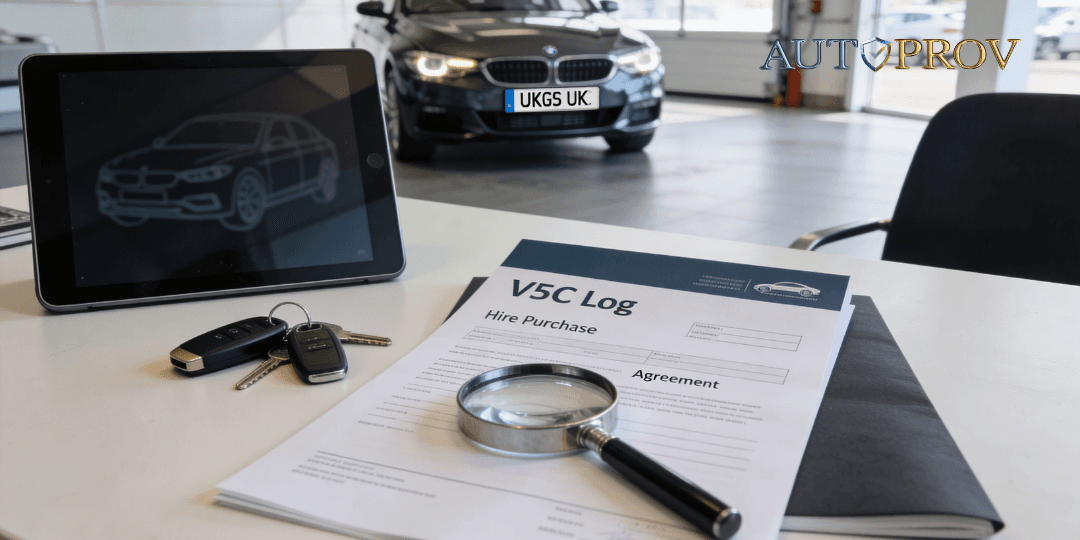
Car Hire Purchase Check: A UK Dealer's Guide for 2026
A car lands in the lane, the appraisal looks straightforward, the seller sounds credible, and the initial history result appears clean enough to keep the deal moving. Then the problem turns up after money has changed hands. An outstanding finance interest, an ownership timeline that doesn’t make commercial sense, or mileage history that doesn’t fit the vehicle’s condition.
Published by AutoProv
Your trusted source for vehicle intelligence