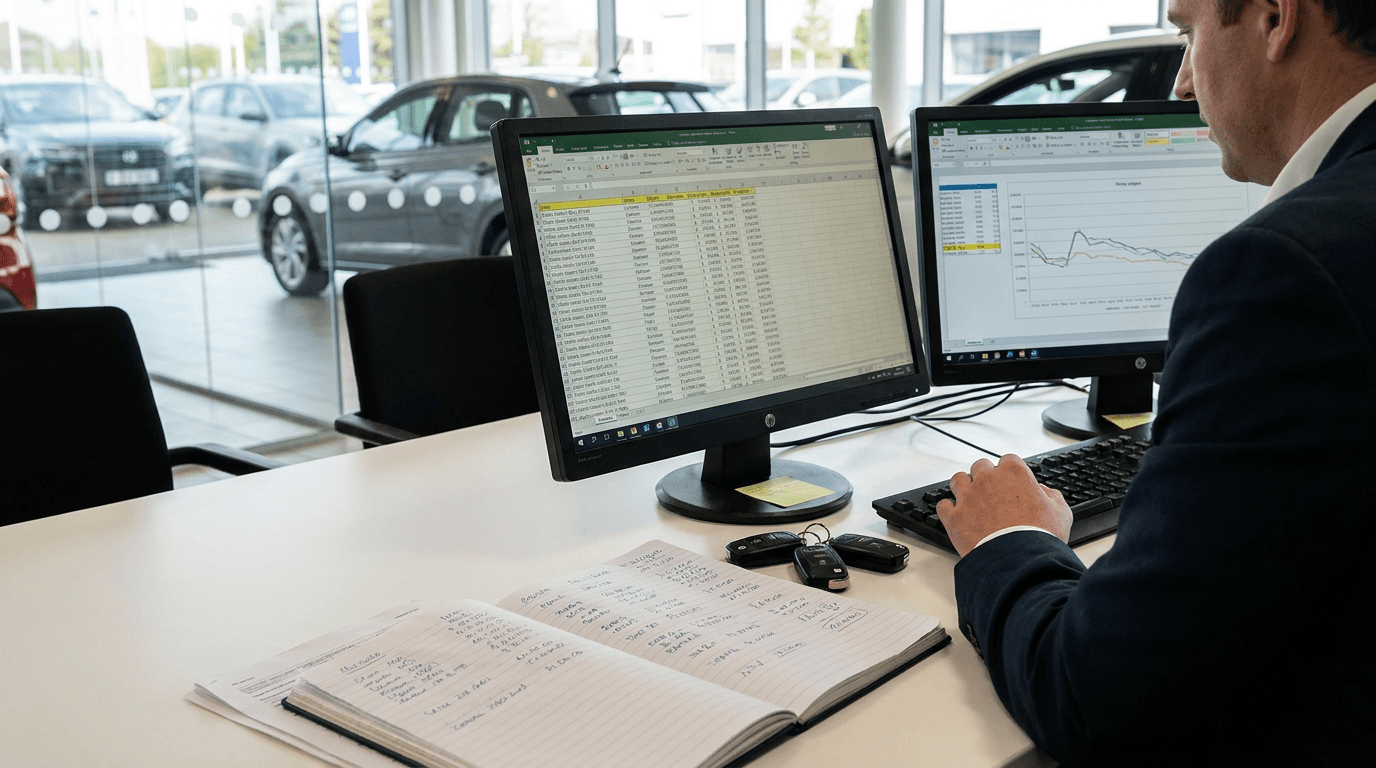
Learn how professional vehicle valuation data helps UK motor traders make smarter stock purchasing decisions, reduce holding times, and protect margins.
By CiteFlow
What vehicle valuation data tells you about stock potential
Vehicle valuation data provides three critical intelligence points for stock decisions: current market value, realistic selling price, and expected time to convert. Professional valuation tools aggregate live market data from thousands of trade transactions, giving you a benchmark that reflects what similar vehicles are actually achieving rather than theoretical book values. For motor traders, this intelligence transforms stock acquisition from guesswork into evidence-based decision-making, helping you identify vehicles that will turn quickly at healthy margins whilst avoiding stock that ties up capital on the forecourt.
The difference between consumer-grade valuations and trade-focused data is substantial. Consumer tools typically show inflated retail prices that ignore regional variations, current market sentiment, and the reality of trade preparation costs. Trade valuation data accounts for the commercial context: what you can realistically retail the vehicle for after factoring in prep, warranty provision, and the current supply-demand balance in your specific market segment.
Core components of professional valuation intelligence
Comprehensive valuation data combines multiple data streams to build an accurate picture. Market value represents the mid-point price based on recent comparable sales, adjusted for mileage, age, and condition. This figure gives you the foundation for calculating your maximum purchase price whilst maintaining target margin.
Retail pricing guidance shows the range within which similar vehicles are currently advertised and selling. This range matters more than a single figure because it reveals market depth. A narrow price band suggests strong market consensus and predictable pricing. A wide spread indicates uncertainty, potentially signalling a vehicle that different dealers are struggling to position correctly.
Days-to-sell metrics reveal velocity. A vehicle might show strong valuation figures, but if comparable examples are sitting on forecourts for 60-plus days, that capital tie-up erodes your effective margin. Days-to-sell data helps you distinguish between vehicles that look profitable on paper and vehicles that deliver actual cash flow.
Regional variations significantly impact valuations. A diesel estate that sells quickly in rural Scotland might languish in central London. Professional valuation tools account for geographic demand patterns, giving you localised intelligence rather than national averages that obscure critical regional differences.
How accurate valuations protect your margin
Margin protection starts at acquisition. Overpaying by £500 because you relied on outdated book values or optimistic retail prices means that £500 comes directly off your profit, assuming you can even achieve your intended selling price. Valuation data provides the reality check that prevents emotional buying decisions or auction fever from destroying your margin before the vehicle reaches your forecourt.
Accurate valuations also protect against mis-pricing when selling. Pricing too high extends days to sell, increasing holding costs and opportunity cost. Pricing too low leaves money on the table. Current market data helps you find the pricing sweet spot where the vehicle attracts serious buyers quickly whilst maximising return.
The interaction between valuation and specification data is particularly important. Two apparently identical vehicles can have vastly different market values based on factory-fitted options that aren't visible from basic registration lookups. Understanding high-value factory options through build sheet data ensures your valuation reflects the actual specification, not just the model designation.
Using market insights to time your stock purchases
Market sentiment shifts constantly. Valuation data that includes trend indicators shows whether values are rising, stable, or falling for specific vehicle types. Buying into a falling market segment means you're competing against dealers who purchased the same stock cheaper last month and can undercut your pricing whilst maintaining their margins.
Seasonal patterns affect different vehicle categories differently. Convertibles peak in spring, four-wheel drives in autumn. Professional valuation tools incorporate seasonal adjustment factors, helping you anticipate whether the vehicle you're considering today will be worth more or less by the time you've prepped it and brought it to market.
Supply and demand indicators reveal market saturation. If there are currently 200 examples of a particular model within 50 miles of your location, all competing for the same buyer pool, that oversupply will suppress prices and extend selling times regardless of what historical valuation data suggests the vehicle should be worth.
Interpreting days-to-sell data for stock selection
Days-to-sell figures tell you how liquid a vehicle is as a stock asset. A car showing 15-20 days average selling time represents quick-turning stock that generates cash flow and allows rapid reinvestment. A vehicle averaging 45-60 days ties up capital, accumulates holding costs, and increases risk exposure to market changes or hidden issues emerging during ownership.
The relationship between days to sell and margin is not always linear. Sometimes a slower-selling vehicle at a higher margin delivers better overall return than a fast-turner at a tight margin, once you factor in the reduced transaction costs and preparation time. The key is understanding your own business model and cash flow requirements.
Outliers in days-to-sell data often signal specific issues. If most examples of a model sell within 25 days but you're looking at one that's been available for 80 days, that extended period suggests problems beyond normal market dynamics. Perhaps the colour is unpopular, the mileage is higher than typical, or there are condition issues that other traders have already identified and rejected.
Combining valuation data with provenance intelligence
Valuation data becomes significantly more powerful when combined with comprehensive vehicle history. A vehicle might show strong market value, but if provenance checks reveal previous category damage, outstanding finance, or mileage discrepancies, that theoretical value becomes irrelevant because you cannot retail the vehicle at market price.
The sequence matters. Check provenance before you rely on valuation data to make purchase decisions. A vehicle with clean history and strong valuation metrics represents a genuine opportunity. Strong valuation data on a vehicle with history complications simply tells you how much profit you're about to lose.
Service history verification affects realised values significantly. Two identical vehicles with identical mileage can achieve different selling prices based purely on documented maintenance records. Official digital service history from manufacturer databases provides the proof that justifies premium pricing, whilst absence of verification pushes buyers towards the lower end of the valuation range.
Red flags in valuation data that signal problem stock
Extreme variance between trade and retail valuations suggests market uncertainty. When the gap between what dealers are bidding and what retail prices show is unusually wide, it indicates that either retail prices are inflated and unsustainable, or there's a specific issue with that model that's affecting trade confidence.
Inconsistent regional data can signal localised problems. If a vehicle shows strong values nationally but weak performance in your specific region, you need to understand why before committing. Perhaps there's a local supply glut, or the vehicle type doesn't suit your market demographic.
Sudden value drops in recent trend data often precede wider market corrections. If valuations for a particular model have fallen 10-15% in the past 30 days, that's not normal depreciation, it's a market signal. Perhaps reliability issues have emerged, or a manufacturer incentive programme is flooding the market with cheaper alternatives.
Practical application: using valuations at point of purchase
At auction or when appraising part-exchanges, you need instant access to current valuation data. The decision window is often minutes, not hours. Mobile-accessible valuation tools that deliver comprehensive market intelligence in real-time allow you to make confident purchase decisions without the risk of post-purchase regret when you research the vehicle properly back at base.
Your maximum bid calculation should work backwards from valuation data. Take the realistic retail price, subtract your required margin, subtract preparation costs, subtract any identified issues that need rectifying, and you arrive at your walk-away price. This disciplined approach prevents the common mistake of buying at a price that feels reasonable but leaves no room for profit once reality intervenes.
For part-exchange valuations, current market data protects you from both over-allowance and under-allowance. Over-allowance means you've effectively given away margin on the sale to secure the deal. Under-allowance loses the sale entirely. Market intelligence gives you the confidence to make fair offers that work commercially whilst remaining competitive.
Integration with broader due diligence processes
Valuation data is one component of comprehensive due diligence, not a replacement for it. The most accurate market value becomes irrelevant if you miss outstanding finance, fail to identify category markers, or overlook mileage discrepancies that will surface when your customer conducts their own checks.
Professional traders integrate valuation intelligence with multi-source vehicle checks that cover finance, theft, write-off history, MOT records, and specification verification. This combined approach ensures you understand both what a vehicle should be worth in perfect circumstances and what it's actually worth given its specific history and condition.
The cost of comprehensive checks is negligible compared to the cost of a single bad purchase. A £2.50 vehicle check that includes professional valuation data and complete provenance intelligence can prevent a £2,500 mistake. The return on investment is measured in avoided losses as much as identified opportunities.
How specification accuracy affects valuation reliability
Valuation tools rely on accurate specification data. If you're valuing a vehicle based on incorrect trim level, engine variant, or factory options, the valuation will be wrong. This is where factory build sheet verification becomes critical, confirming exactly what the vehicle is rather than what the registration document or seller claims it to be.
High-value options can add thousands to market value, but only if you can prove they're genuine factory-fitted equipment rather than aftermarket additions. Valuation data for a premium audio system or advanced driver assistance package assumes factory specification with manufacturer warranty support, not retrofitted equipment of uncertain quality.
Mis-described vehicles create valuation disconnects. If you purchase a vehicle described as one specification but it's actually a lower trim level, you've paid based on inflated valuation data. The vehicle's actual market value is lower, and your margin has disappeared before you've even started preparation.
Building confidence in stock selection decisions
Confidence in stock purchasing comes from evidence, not instinct. Experienced traders develop strong intuition, but that intuition becomes more reliable when supported by objective market data. Valuation intelligence provides the evidence base that either confirms your instinct or challenges it before you commit capital.
Consistent use of valuation data also builds performance benchmarks. When you track your purchase prices against market valuations and then monitor actual selling prices and days to sell, you develop a clear picture of your own pricing accuracy and market positioning. This feedback loop continuously improves your stock selection process.
For newer traders or those entering unfamiliar vehicle segments, valuation data provides the safety net that prevents expensive learning experiences. You might not yet have the instinct to know whether a particular vehicle at a particular price represents good value, but comprehensive market data gives you the intelligence that experienced traders have built through years of transactions.
Common valuation mistakes that cost dealers money
Relying on single-source valuations creates risk. Different valuation tools use different methodologies and data sources. Cross-referencing multiple sources identifies outliers and gives you a more reliable consensus view. A vehicle showing strong value in one guide but weak value in another deserves additional scrutiny before purchase.
Ignoring condition adjustments is a frequent error. Valuation data typically assumes good retail condition. If the vehicle you're considering needs significant cosmetic or mechanical work, you must adjust the valuation downwards by more than just the direct repair cost. Buyers discount imperfect vehicles beyond the cost of rectification because they perceive additional risk.
Failing to account for market timing means buying based on current valuations without considering where values will be when you bring the vehicle to market. If you need two weeks for preparation and compliance documentation, you're selling into next month's market, not today's. Trend data helps you anticipate whether you're buying into rising or falling values.
FAQ
How often does vehicle valuation data update?
Professional trade valuation data updates continuously, typically incorporating new market transactions within 24-48 hours. This ensures pricing reflects current market conditions rather than historical averages. However, significant market shifts, such as those caused by economic changes or manufacturer announcements, may take several days to fully reflect in valuation algorithms as sufficient transaction data accumulates.
Can valuation data account for regional price differences?
Yes, professional valuation tools incorporate regional adjustments based on local supply, demand, and demographic factors. A vehicle in London typically commands different pricing than the same vehicle in rural Wales due to varying buyer preferences, income levels, and market competition. Always ensure your valuation tool provides region-specific data rather than national averages that obscure these critical local variations.
What is the typical variance between trade and retail valuations?
The gap between trade and retail valuations typically ranges from 15-25% depending on vehicle type, age, and market conditions. Prestige and specialist vehicles often show wider spreads due to smaller buyer pools and higher preparation costs. This variance represents the working margin available to cover preparation, warranty provision, forecourt costs, and profit. Unusually narrow or wide spreads signal market anomalies worth investigating before purchase.
How do I adjust valuations for vehicles requiring preparation work?
Deduct the full cost of required work plus an additional 20-30% to account for buyer perception and negotiation buffer. If a vehicle needs £800 in cosmetic repairs, reduce the valuation by £1,000-£1,100. Buyers discount imperfect vehicles beyond direct repair costs because they assume additional hidden issues. Your purchase price must account for this market reality to maintain margin.
Should I trust valuation data over my own market experience?
Use valuation data to inform and validate your experience, not replace it. Experienced traders often identify opportunities that generic data misses, particularly in specialist segments or local markets. However, when your instinct conflicts significantly with market data, investigate why before proceeding. The data might reveal factors you've overlooked, or your local knowledge might identify opportunities the algorithms cannot detect. The combination of both provides the strongest foundation for decisions.
Making valuation data work within your business workflow
Effective use of valuation intelligence requires integration into your daily operations, not occasional reference when convenient. Establish clear protocols: every vehicle considered for purchase receives a valuation check before commitment, every part-exchange offer is validated against current market data, and every pricing decision on your forecourt is reviewed against updated valuations.
Mobile access to valuation tools ensures you have intelligence at point of need. Whether you're at auction, appraising a part-exchange, or responding to a vendor enquiry, instant access to current market data prevents the costly delay of promising to check and come back later, by which time the opportunity has often moved to a competitor.
The investment in professional valuation data is minimal compared to the cost of poor stock decisions. A single avoided bad purchase pays for months of data access. The compounding effect of consistently better stock selection, faster stock turn, and protected margins transforms valuation intelligence from a cost into one of your most profitable business tools.
Frequently Asked Questions
AI-Generated Content Notice
This article was created with the assistance of artificial intelligence technology. While we strive for accuracy, the information provided should be considered for general informational purposes only and should not be relied upon as professional automotive, legal, or financial advice. We recommend verifying any information with qualified professionals or official sources before making important decisions. AutoProv accepts no liability for any consequences resulting from the use of this information.
From our AI insights
- Advanced Mileage Verification for UK Dealers
Explore innovative mileage verification tactics for UK car dealers to mitigate risks and enhance negotiations.
- Harnessing Real-Time Data in UK Motor Trading
Explore how real-time data aids UK traders in identifying vehicle risks swiftly.
- Predictive Insights: Using DVLA Data for Stock Risk Analysis
Explore how DVLA data transforms into predictive insights for UK car dealers managing stock risk.
Related Articles

Navigating the UK Used Car Market
Explore the latest trends in the UK used car market and how AutoProv can reveal true vehicle values.

Understanding Market Insights for Vehicle Pricing
Learn how market insights can guide UK traders in setting the right vehicle prices.

7 Best Second Hand Cars to Buy UK: A 2025 Guide
The search for the best second hand cars to buy in the UK can feel like navigating a maze of private listings, vast online showrooms, and conflicting advice. With prices fluctuating and new models constantly entering the used market, how do you identify a reliable, fairly-priced vehicle that truly suits your needs? This guide is designed to cut through the noise and provide clear, actionable insights for your next purchase.
Published by AutoProv
Your trusted source for vehicle intelligence