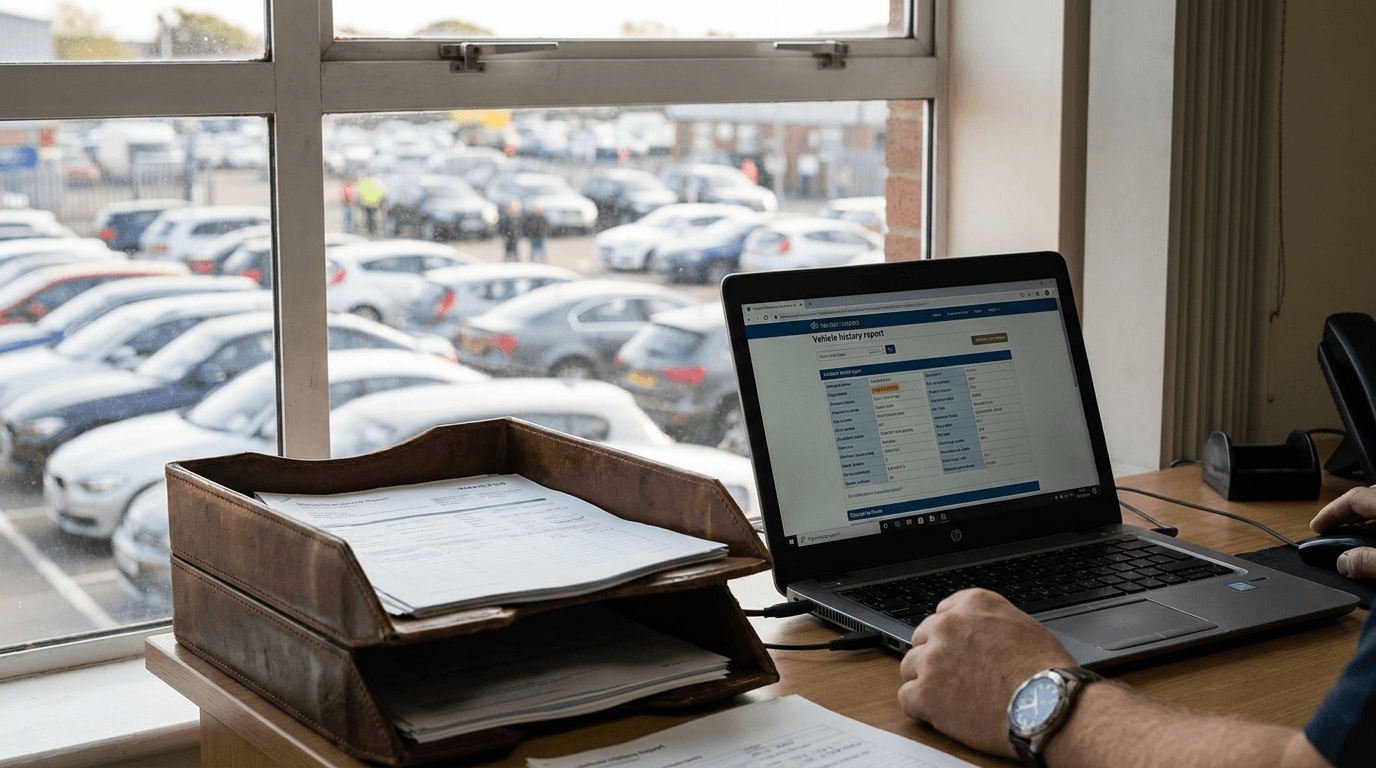
Experian indemnity protects motor traders against data inaccuracies in vehicle checks. Understand what's covered, what's excluded, and how to claim.
By CiteFlow
What Experian Indemnity Protection Covers
Experian indemnity provides financial protection against inaccuracies in specific data fields within vehicle history reports, covering motor traders for losses incurred when Experian-sourced information proves incorrect. The protection typically covers outstanding finance records, stolen vehicle status, write-off categories, and keeper history data supplied directly by Experian. Coverage limits vary by provider, with AutoProv offering up to £50,000 Experian indemnity protection on qualifying vehicle provenance reports. This indemnity specifically protects against data errors from Experian's databases, not against all possible vehicle issues or from data supplied by other sources within a multi-source report.
The indemnity acts as a safety net when you purchase a vehicle based on Experian data that later proves inaccurate. If you buy a car showing no outstanding finance on an Experian check, then a finance company later reclaims the vehicle because their charge was incorrectly recorded, the indemnity can compensate your financial loss. Similarly, if a vehicle passes an Experian stolen vehicle check but is later seized by police because it was actually stolen, the indemnity may cover your purchase price and associated costs.
Understanding exactly which data fields carry indemnity protection matters enormously. Not every piece of information in a comprehensive vehicle report comes from Experian, and only Experian-sourced data qualifies for their indemnity. When you run a report aggregating information from ten different sources, you need to know which elements carry financial protection and which represent informational data without guarantees.
Data Fields Typically Covered by Experian Indemnity
Outstanding finance represents the most critical covered field. Experian maintains records of vehicles with registered hire purchase agreements, conditional sale contracts, and other secured lending. If their database incorrectly shows a vehicle as finance-free when a valid charge exists, the indemnity covers your loss when the finance company exercises their legal right to repossess. This protection proves essential because outstanding finance risks remain one of the most common and costly problems facing motor traders.
Stolen vehicle status checks against police databases form another core covered element. When Experian data confirms a vehicle is not recorded as stolen, but it subsequently emerges on the stolen register with a valid police marker predating your check, the indemnity can compensate your loss. The vehicle will be seized and returned to the rightful owner or their insurer, leaving you with nothing unless the indemnity responds.
Write-off categories and insurance loss records also typically fall under indemnity protection. If Experian data shows no insurance write-off history, but the vehicle was actually recorded as a Category A, B, S, or N loss, you may claim against the indemnity. This matters particularly for Category A and B vehicles, which should never re-enter the road network. Discovering you have unknowingly purchased a Category B write-off represents both a financial loss and a serious compliance issue.
Keeper history and plate transfer information from DVLA sources accessed through Experian generally receive indemnity coverage. If the number of previous keepers is misstated, or if a cherished plate transfer is incorrectly recorded, causing you to misdescribe the vehicle to your customer, the resulting financial consequences may qualify for indemnity compensation.
What Experian Indemnity Does Not Cover
MOT history data, despite being crucial for identifying mileage discrepancies, typically carries no indemnity protection. The DVSA provides MOT records as a public service, and while the data is generally reliable, errors or omissions in MOT mileage recordings do not trigger Experian indemnity claims. If a vehicle's MOT history shows consistent mileage progression but the odometer has actually been clocked, you cannot claim against Experian indemnity for this data issue.
Manufacturer service history data from the 43 manufacturer databases falls outside Experian indemnity scope. These records come directly from franchise dealer networks and manufacturer systems, not from Experian. If a digital service history record proves incomplete or inaccurate, causing you to overpay for a vehicle you believed had full main dealer history, the Experian indemnity does not respond. The manufacturer data carries its own accuracy standards, but not Experian's financial guarantee.
Factory build sheet information and OEM specification data similarly lack indemnity coverage. When you verify a vehicle's original factory specification to identify fitted options and equipment codes, you are accessing manufacturer data, not Experian records. If a build sheet incorrectly shows a vehicle was fitted with a premium sound system that was never actually installed, you cannot claim this loss against Experian indemnity.
Valuation data and market pricing information carry no indemnity protection whatsoever. If you purchase a vehicle based on a valuation that proves optimistic, or if market conditions shift between your check and your sale, these commercial risks remain entirely yours. Indemnity protects against data inaccuracies, not against market movements or valuation judgements.
Physical condition, mechanical faults, and undisclosed damage fall completely outside indemnity scope. A vehicle history check confirms data records, not the actual state of the car. If the vehicle has accident damage that was never reported to insurers, or if it has a failing gearbox, or if the bodywork has been poorly repaired, the Experian indemnity offers no protection. These issues require physical inspection and mechanical assessment, not data checks.
How Experian Indemnity Claims Actually Work
Claiming against Experian indemnity requires specific documentation and adherence to strict timescales. You must typically report the inaccuracy within 30 days of discovering it, providing your original vehicle check report, proof of purchase, evidence of the data error, and documentation of your financial loss. Missing these deadlines or failing to provide complete evidence can invalidate your claim entirely.
The claim process begins with notifying the vehicle check provider who supplied your Experian-backed report. They will request your supporting documentation: the vehicle check report showing the incorrect data, your purchase invoice proving what you paid, evidence that the data was actually wrong (such as a finance company's repossession notice or a police stolen vehicle recovery document), and proof of your financial loss. Incomplete documentation delays or defeats claims.
Experian or the check provider will investigate the claim, verifying that the data error genuinely occurred in their systems at the time you ran the check. They will confirm the data field in question falls within indemnity coverage, verify you acted reasonably based on the information provided, and assess the quantum of your loss. This investigation period can take several weeks, during which you may need to provide additional evidence or clarification.
Successful claims result in compensation for your documented financial loss, up to the indemnity limit. This typically covers your purchase price, reasonable associated costs like transport and storage, and potentially your lost profit margin. However, you cannot claim for consequential losses like reputational damage, lost business opportunities, or general inconvenience. The indemnity covers direct financial loss arising from the specific data inaccuracy, nothing more.
Indemnity Limits and Their Practical Implications
Indemnity limits vary significantly between providers and service tiers. Consumer-grade vehicle checks often carry £10,000 or £20,000 limits, wholly inadequate for motor trade purposes where vehicle values routinely exceed these thresholds. Professional trade services like AutoProv offer higher limits, with up to £50,000 Experian indemnity protection, providing meaningful coverage for the majority of stock purchases.
A £50,000 limit protects most trade purchases adequately, but falls short for prestige and performance vehicles. If you purchase a £75,000 Range Rover that later proves to have undisclosed outstanding finance, your £50,000 indemnity leaves you £25,000 out of pocket. For high-value stock, you need either higher indemnity limits through enterprise agreements or additional insurance products covering the excess exposure.
Per-vehicle versus aggregate limits create another consideration. Some providers offer per-vehicle indemnity, meaning each check carries the full limit independently. Others impose aggregate annual limits, capping total claims across all your checks in a year. For volume dealers running hundreds of checks monthly, aggregate limits can prove inadequate if multiple claims arise in the same period.
The indemnity limit represents maximum coverage, not guaranteed payout. Your actual compensation equals your proven financial loss, capped at the indemnity limit. If you buy a £15,000 vehicle with a £50,000 indemnity, then discover a data error, you can only claim your actual £15,000 loss plus reasonable associated costs. The unused indemnity capacity does not carry forward or provide any additional value.
When Indemnity Protection Matters Most
Indemnity protection proves most valuable when purchasing vehicles from private sellers, auctions, and non-franchised sources where you bear maximum risk. Franchise dealers selling approved used vehicles typically provide warranties and have recourse to manufacturer support, reducing your exposure. Private purchases and auction lots offer no such safety net, making comprehensive vehicle checks with robust indemnity protection essential.
High-value stock purchases justify premium checks with maximum indemnity coverage. A £2.50 basic check might suffice for a £3,000 trade-in you will retail quickly, but a £35,000 prestige vehicle demands the full protection of comprehensive provenance reporting with maximum indemnity. The cost difference between check tiers becomes irrelevant when weighted against the potential loss from a data error on an expensive vehicle.
Distance purchases where you cannot physically inspect the vehicle before committing elevate indemnity importance. When buying remotely from online auctions, trade-to-trade platforms, or private sellers in other regions, you rely entirely on data and images. A comprehensive check with strong indemnity protection becomes your primary due diligence tool, compensating for the inability to conduct hands-on inspection.
Vehicles with complex histories, multiple previous keepers, or gaps in recorded information warrant maximum indemnity protection. A three-year-old car with one owner and full franchise history presents lower risk than a ten-year-old vehicle with five keepers and patchy service records. The latter demands more thorough checking and stronger indemnity coverage because the probability of hidden issues increases with complexity.
Indemnity Versus Insurance: Understanding the Difference
Experian indemnity protects against data inaccuracies in Experian's records, while motor trade insurance covers broader business risks including stock damage, liability, and premises. These products serve different purposes and do not substitute for each other. You need both: indemnity for data accuracy and insurance for operational risks.
Motor trade road risks insurance covers vehicles while you are driving them, protecting against accidents, theft, and damage. This insurance does not protect you from buying a vehicle with hidden finance or undisclosed write-off history. Conversely, Experian indemnity covers these data-related risks but offers no protection if you crash a vehicle during a test drive. The products address entirely separate risk categories.
Stock insurance protects vehicles on your premises against fire, theft, and damage, but does not cover you for purchasing a vehicle that proves unsellable due to hidden history. If you buy a car that later emerges as stolen and gets seized by police, your stock insurance will not compensate this loss because you never legitimately owned the vehicle. Only indemnity protection responds to this scenario.
Some motor trade insurance policies include limited cover for buying vehicles with hidden finance, typically capped at £5,000 or £10,000 per vehicle. This coverage supplements but does not replace proper indemnity protection from comprehensive vehicle checks. The insurance acts as a backstop for the rare occasions when both your checking process and the data provider's records fail simultaneously.
Maximising Your Indemnity Protection
Run your vehicle check immediately before committing to purchase, not days or weeks earlier. Indemnity protection applies to the data as it appeared at the time you ran the check. If you check a vehicle on Monday, but do not purchase until Friday, and new finance is registered on Wednesday, your Monday check provides no protection. The finance was correctly absent when you checked, so no data inaccuracy occurred.
Retain complete documentation for every vehicle purchase and its associated check report. Store the full report PDF, your purchase invoice, any correspondence with the seller, and evidence of payment. If you need to claim against indemnity months later, you must prove exactly what the check showed and what you paid. Missing documentation defeats otherwise valid claims.
Understand which data fields in your reports carry Experian indemnity and which come from other sources. A comprehensive report aggregating ten data sources provides superior intelligence, but only the Experian-sourced elements carry Experian indemnity. MOT data comes from DVSA, manufacturer service history from franchise networks, and build specifications from OEM databases. Know what is protected and what is not.
Use check providers offering meaningful indemnity limits appropriate to your stock profile. A £10,000 limit proves inadequate for professional motor trade operations. Providers offering £30,000, £50,000, or higher limits provide protection proportionate to typical trade vehicle values. The marginal cost difference between a basic consumer check and a professional trade report with robust indemnity becomes insignificant when measured against the potential loss from a single data error.
Common Indemnity Claim Scenarios
The most frequent indemnity claim arises when a vehicle showing clear on a finance check later proves subject to a hire purchase agreement. The finance company contacts you demanding return of their secured asset, providing documentation showing their charge was registered before your purchase. Your check incorrectly showed the vehicle as finance-free due to a database error or recording delay. With proper documentation, this scenario typically results in successful indemnity claims covering your purchase price and reasonable costs.
Stolen vehicle discoveries represent another common claim type. You purchase a vehicle showing clear on stolen checks, complete the transaction, and begin preparing it for retail sale. Weeks later, police contact you because the vehicle has been identified as stolen, with a theft report predating your purchase. The vehicle is seized and returned to the insurance company who paid the original theft claim. Your financial loss, documented through your purchase invoice and the police recovery notice, qualifies for indemnity compensation.
Write-off category discrepancies generate claims when vehicles recorded as insurance losses fail to appear in check results. You purchase a vehicle showing no insurance history, only to discover when preparing your retail advertisement that the car was actually recorded as a Category S (structural damage) loss two years earlier. This misrepresentation affects the vehicle's value and your ability to sell it at the price you anticipated. The data error, if proven to exist in Experian's records at the time of your check, supports an indemnity claim for your financial loss.
Plate transfer errors occasionally trigger claims when cherished number plates create confusion in vehicle records. A vehicle's identity becomes muddled in databases when plates are transferred, leading to incorrect keeper history or missing insurance records. If these errors in Experian data cause you financial loss, indemnity protection may respond, though these claims often prove more complex to resolve than straightforward finance or stolen vehicle cases.
Regional Considerations for Indemnity Protection
Vehicle history data quality varies across UK regions, though Experian indemnity coverage remains consistent nationwide. Urban areas with higher vehicle density and more franchised dealers typically generate more complete digital service history records, while rural regions may show more gaps in manufacturer data. However, the core Experian data fields (finance, stolen, write-off, keeper history) maintain consistent coverage regardless of regional variations.
Certain regions experience higher rates of specific vehicle issues that make indemnity protection more valuable. Coastal areas see more corrosion-related insurance claims, potentially affecting write-off records. Urban centres with higher crime rates generate more stolen vehicle reports. Understanding your regional risk profile helps you appreciate the value of robust indemnity protection, even though the coverage itself does not vary by location.
Cross-border purchases between England, Scotland, Wales, and Northern Ireland involve identical indemnity protection, as Experian maintains UK-wide databases. However, vehicles imported from Northern Ireland sometimes show data gaps due to different registration processes and insurance market structures. These gaps do not affect indemnity coverage for the data that is present, but they highlight the importance of understanding what information is and is not available.
Imported vehicles from outside the UK present indemnity complications. Experian's databases primarily cover UK-registered vehicles with UK insurance and finance histories. A vehicle imported from Germany or Japan may show completely clear on UK checks simply because it has no UK history, not because it genuinely has no issues. Indemnity protection proves less valuable for imports because the absence of data does not confirm the absence of problems.
FAQs About Experian Indemnity Coverage
Does Experian indemnity cover me if the vehicle has mechanical faults?
No. Experian indemnity protects against inaccuracies in data records, not against mechanical condition or physical defects. If a vehicle has a failing engine, worn brakes, or accident damage that was never reported to insurers, the indemnity provides no coverage. You need physical inspection, mechanical assessment, and potentially separate warranty products to protect against condition issues.
Can I claim indemnity if I discover the problem months after purchase?
Possibly, but strict time limits apply. Most indemnity terms require you to report claims within 30 days of discovering the inaccuracy, though the discovery itself might occur months after purchase. If you buy a vehicle in January, sell it in March, and the customer's finance company repossesses it in April, you have 30 days from April to notify your claim. However, you must prove the data was incorrect at the time of your original check in January.
Does higher indemnity coverage cost more per check?
Indemnity limits typically correlate with service tier and check price, but the relationship is not always linear. Professional trade services offering £50,000 indemnity might cost £6-8 per check, while basic consumer checks with £10,000 limits cost £3-5. The incremental cost for substantially higher protection often proves minimal, making maximum indemnity coverage a sensible choice for trade purchases.
What happens if my claim exceeds the indemnity limit?
You bear the excess loss personally unless you have additional insurance coverage. If you suffer a £60,000 loss on a vehicle with £50,000 indemnity protection, you receive £50,000 compensation and absorb the remaining £10,000 yourself. This scenario highlights the importance of matching indemnity limits to your stock value profile, or arranging supplementary insurance for high-value vehicles.
Does indemnity protect me against customer disputes under the Consumer Rights Act?
Indirectly, but not directly. If you unknowingly sell a vehicle with hidden finance because Experian data was incorrect, and your customer later faces repossession, the indemnity can compensate your financial loss when you refund the customer. However, the indemnity does not directly cover Consumer Rights Act claims, legal costs, or reputational damage. It purely addresses your financial loss arising from the data inaccuracy itself, which may include the cost of satisfying a customer's legitimate rejection rights.
Frequently Asked Questions
AI-Generated Content Notice
This article was created with the assistance of artificial intelligence technology. While we strive for accuracy, the information provided should be considered for general informational purposes only and should not be relied upon as professional automotive, legal, or financial advice. We recommend verifying any information with qualified professionals or official sources before making important decisions. AutoProv accepts no liability for any consequences resulting from the use of this information.
From our AI insights
- Navigating UK Grey Imports: A Trader's Guide
Understand the complexities and opportunities of UK grey imports for savvy motor traders.
- Navigating Low-Cost Vehicle Checks in the UK
Learn how to safely conduct low-cost vehicle checks and avoid pitfalls.
- Trade Secrets: Identifying Clocked Cars in the UK
Discover how UK traders can spot clocked cars using innovative tools and detailed checks.
Related Articles

Essential Vehicle Checks Before Buying a Used Car
Learn essential checks to ensure your used car purchase is safe and sound in the UK market.

Why a Provenance Check is Essential for Used Car Buyers
Ensure your used car is a smart investment by understanding the importance of a provenance check and how AutoProv can help.
A Guide to Vehicle Check with VIN Number
A vehicle check with vin number is easily the most important thing you can do before buying a used car. Think of it as your first line of defence—a quick, simple step that pulls back the curtain on a vehicle's past, protecting you from expensive mistakes, legal headaches, and downright dangerous cars.
Published by AutoProv
Your trusted source for vehicle intelligence