

Finding the right commercial van on Autotrader vans UK is a massive step for any business, whether you're a sole trader just starting out or managing a small fleet. As the UK's biggest online marketplace for new and used vans, the sheer choice can feel a bit much without a solid game plan.
Finding the right commercial van on Autotrader vans UK is a massive step for any business, whether you're a sole trader just starting out or managing a small fleet. As the UK's biggest online marketplace for new and used vans, the sheer choice can feel a bit much without a solid game plan.
But let’s be clear: making a smart purchase is about more than just snagging a low price. It's a proper investment in your business's day-to-day efficiency and long-term reliability.
Your Guide to the UK's Used Van Market

So, you're ready to dive into Autotrader to find your next van. Great. This guide is here to turn you from a casual window shopper into a confident, savvy buyer who knows exactly what they’re looking for.
The UK's used van market is incredibly lively right now, meaning there’s more choice than ever. We'll walk you through what to look for, helping you pinpoint the perfect workhorse for your specific needs.
Understanding the Current Landscape
First things first, the market for used commercial vehicles is always on the move. Supply, demand, and pricing can change faster than you’d think, so being up to speed is essential.
For instance, recent data shows a significant rise in the number of used vans listed on Autotrader. That increased supply often puts downward pressure on prices, which is fantastic news for buyers. But it also means you need to be on the ball to spot the real bargains. Getting a handle on these dynamics is your first step to making a purchase you won't regret. You can get a broader feel for this by looking into the latest UK used car market trends, as patterns there often spill over into the commercial sector.
The Power of a Professional Approach
It’s not just buyers who are getting smarter; sellers are too. Many dealerships now use sophisticated tools to create detailed, compelling vehicle descriptions that really stand out from the crowd. For a buyer, a high-quality, transparent vehicle advert is a massive advantage. It provides the crucial details needed to properly assess a van before you even see it in person.
When sellers use services like AutoProv to generate well-crafted, professional descriptions, it's a win for you. It means you get clearer, more reliable information right from the start. This kind of transparency helps you quickly sort the promising vehicles from the ones with vague or incomplete listings, saving you a huge amount of time and effort in your hunt for the ideal autotrader vans UK listing.
Laying the Groundwork: Defining Your Needs and Budget
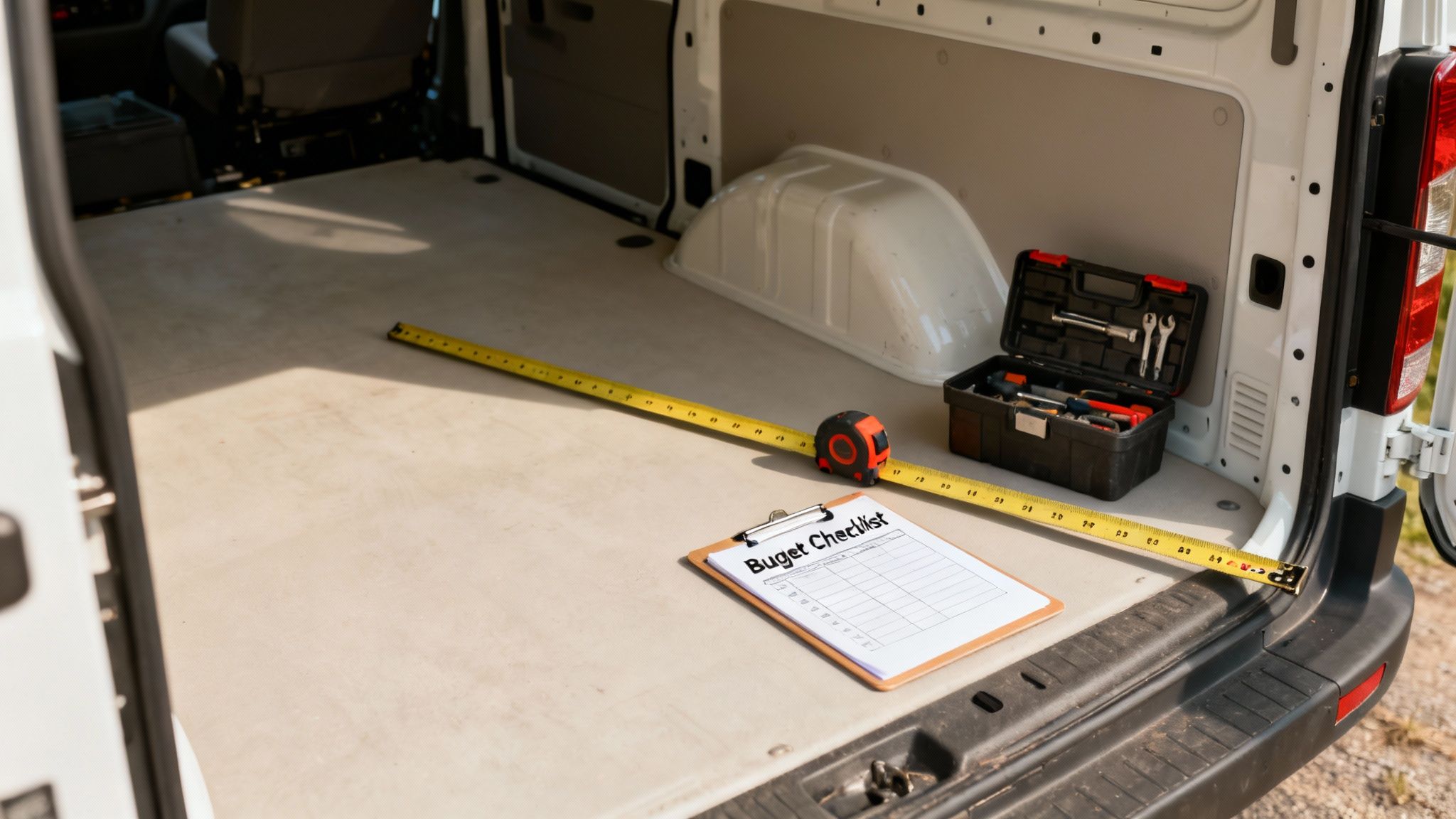
Before you even think about opening the Autotrader app, the most important work happens right where you are. Seriously. A great van purchase starts with a brutally honest look at what your business actually needs from a workhorse.
Without this initial blueprint, you're just browsing. You risk ending up with a van that’s too small for your gear, too thirsty for your budget, or just plain wrong for the job. So, let's get the foundations right.
Start by mapping out the day-to-day reality of this van's life. Think about its main purpose, the kind of punishment it's going to take, and what will make your life easier. Answering these questions now will build the core of your search and save you from some costly headaches down the road.
Nailing Down Your Operational Requirements
Let's get into the specifics of your trade. A long-wheelbase panel van might be a dream for a carpenter hauling 8x4 sheets, but it’s complete overkill for a mobile dog groomer. It’s these small details that make a huge difference to your daily grind.
Ask yourself about the real payload. Figure out the heaviest load you’ll ever need to carry. Always check the gross vehicle weight (GVW) and don't forget to factor in yourself, any passengers, tools, and racking. Overloading isn't just illegal; it's dangerous.
Think about the load space deal-breakers. Do you need a high roof to stand up inside or move bulky equipment? Is a side-loading door a must-have for kerbside deliveries on tight city streets? Get the tape measure out and check the dimensions of your most awkward gear.
Also, consider where this van is going to live. Will you be doing mostly city driving with constant stop-start traffic, or are you clocking up miles on the motorway? This decision massively impacts your choice of engine, fuel type, and whether you need to worry about ULEZ or other clean air zone charges. The whole point here is to build a detailed picture of your perfect van. Once you have that, you can quickly scan an autotrader vans uk listing and know instantly if it’s a contender. This saves you a massive amount of time.
Calculating the True Cost of Ownership
The price you see on the windscreen is just the opening act. A smart business owner always thinks about the total cost of ownership (TCO), which paints a much more realistic financial picture. That cheap-as-chips van can quickly become a money pit if it’s unreliable or guzzles fuel.
Your budget needs to account for all the ongoing costs, including insurance, Vehicle Excise Duty (VED), fuel efficiency, and maintenance. You need to budget for routine servicing, new tyres, and always, always have a contingency fund for those unexpected breakdowns.
Thinking about these costs from day one is just good business sense. For a deeper dive into managing these expenses, have a read of our guide on essential fleet management practices. A properly planned budget ensures your new van is a genuine asset, not a financial drain.
Using Autotrader Search Filters Like a Pro
Jumping onto Autotrader without a plan is a bit like wandering into a massive, disorganised warehouse looking for one specific tool. You might find it eventually, but you'll waste hours sifting through stuff you don't need. If you want to search for autotrader vans uk efficiently, you need to get friendly with the platform's search filters—they're your most valuable piece of kit.
Going beyond a simple make and model search is where you unearth the real gems. The advanced filters are there to help you slice through the noise and zero in on the vans that actually fit your business. It’s all about working smarter, not scrolling harder.
Mastering the Essential Commercial Filters
For anyone buying a van for work, some filters are simply more important than others. Think about it: a courier's priorities are worlds away from a plumber's. The trick is to build a search that mirrors the day-to-day reality of your job.
Always start with non-negotiables like Body Type, VAT Qualification, and Mileage. For Body Type, are you after a standard Panel Van, a Dropside, or a Tipper? Choosing the right one instantly removes thousands of irrelevant listings. For VAT, ticking the 'VAT Qualifying' box shows vans where a VAT-registered business can reclaim the 20% VAT, a massive potential saving. With mileage, be realistic about your budget and usage.
Never forget the 'Keywords' box. Need ply-lining, a roof rack, or a tow bar? Typing these terms in is a quick way to narrow your search to vans that are already kitted out and ready to go. By layering these filters, you create a powerful, customised search. You can even save it and set up email alerts. Let Autotrader do the legwork and ping you the moment a matching van hits the site.
Interpreting the Modern Van Market
The UK van market has had a real shake-up recently. In the first quarter of 2025, the number of used vans listed on Autotrader jumped by a huge 23% compared to last year. This flood of ex-fleet and older vehicles gives buyers more choice, but it’s also pushed the average retail price down by around £1,800 year-on-year. It's worth reading up on what today's van buyers really want to get a feel for the current climate.
This kind of market makes using precise filters even more important. With so much stock out there, you can afford to be picky and wait for the perfect vehicle to come along.
And while Autotrader is the big player, it’s always smart to see what’s happening elsewhere. Check out our guide on the top platforms to find the best used vehicles to get a full picture. Using these tools properly means you don't just find a van—you find the right van at the right price.
How to Evaluate Van Listings and Sellers
So, you've got your search filters dialled in and a shortlist of promising vans sitting in your Autotrader account. Now the real detective work begins. This is where you learn to read between the lines, separating the genuine workhorses from the Friday-afternoon lemons before you even think about leaving your desk.
Think of an advert as the seller's opening pitch. Your job is to pick it apart, looking at everything from the photo quality to the tone of the description. It all builds a picture of the van and the person selling it.
Reading the Digital Body Language
The photos are your first port of call, and they speak volumes if you know what you’re looking for. Don’t just glance at them—get in there and zoom. Are the pictures crisp, taken in good light, showing every angle, including the cab and the load bay? Or are they blurry, dark, or conveniently cutting off the sills and wheel arches?
Look for hidden damage like mismatched paint or damp patches on seats. Check for excessive wear on the driver's seat and steering wheel that might not align with a low mileage claim. Zoom in on the tyres to check for a matching set and any uneven wear. A seller who takes the time to upload a full gallery of clear, honest photos is usually someone with nothing to hide. A few grainy, strategically angled shots should raise a red flag.
Decoding the Description and Seller
Next up is the description. This is where you really get a feel for the seller. A vague, one-liner like "Ford Transit for sale, good runner" is a massive warning sign. It screams laziness at best, and at worst, that they're trying to hide something. You want a detailed, professional write-up that gives you confidence.
Sellers who use tools like AutoProv to generate clear, accurate adverts are showing their hand—they value transparency and are giving you the details you need right from the start. That means specifics on service history, recent repairs, and even known faults, allowing you to make a properly informed decision.
This is more important than ever. The light commercial vehicle market is buzzing right now; in fact, used LCV sales jumped by 24% year-on-year in March 2025. With so many vans changing hands, you need to be on your game. You can dig into this trend and what it means for business buyers in this recent market intelligence report.
Before you even pick up the phone, pore over the service history details mentioned. A full service history (FSH) is the gold standard. Get a list of questions ready based on what you’ve read. This is also the perfect point to run a background check. It's a non-negotiable step, and our guide on the essential Autotrader provenance check walks you through exactly what to look for.
The On-Site Inspection and Test Drive Checklist
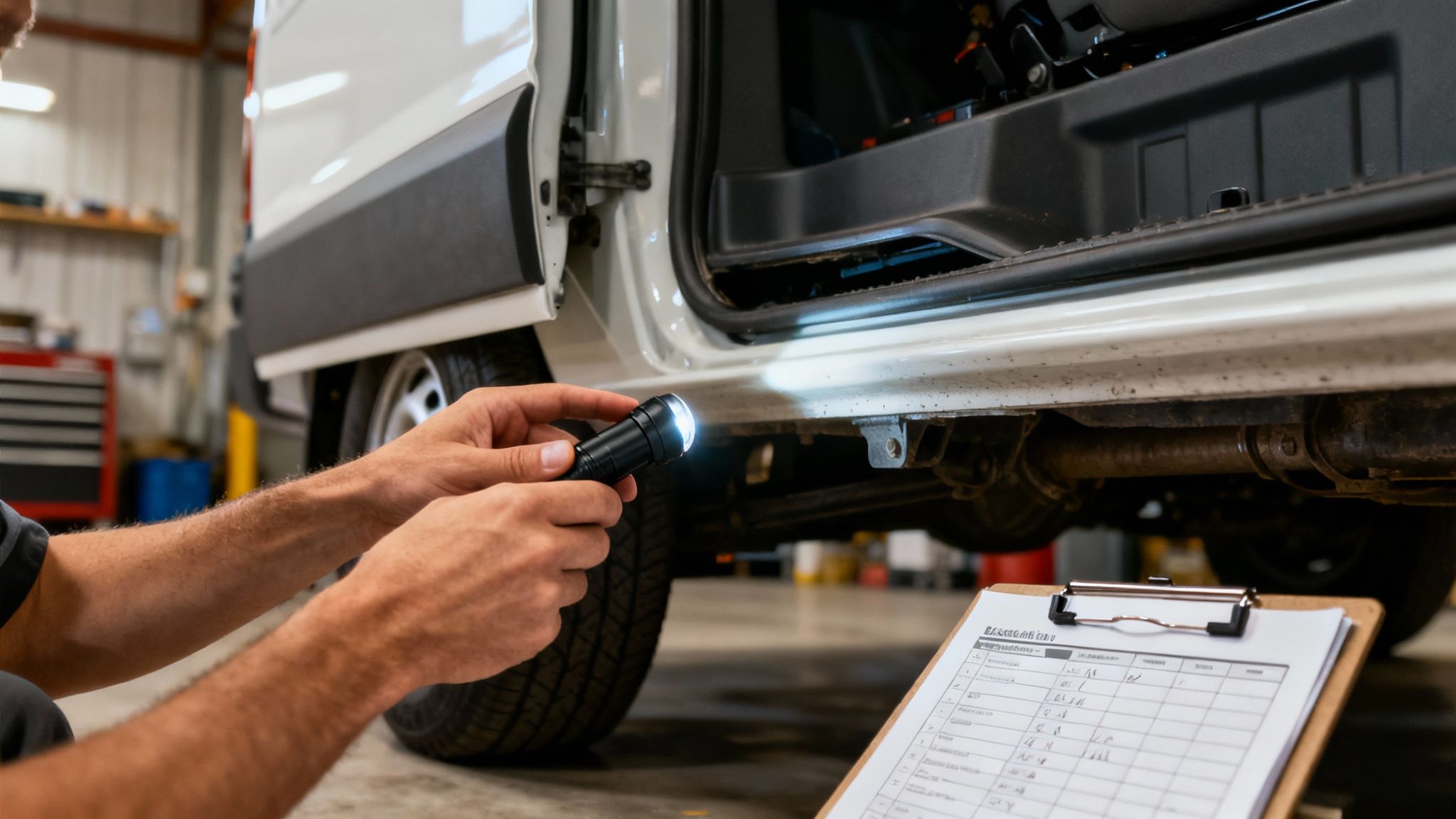
An online advert can only tell you so much. The real proof is in the metal, which is why the on-site inspection and test drive are easily the most critical moments in your entire van-buying journey. This is your chance to get hands-on, verify the seller's claims, and uncover any skeletons hiding just out of sight of the camera.
Showing up with a clear plan of attack is non-negotiable. It stops you from getting caught up in the moment and making a decision based on emotion rather than cold, hard facts. A systematic approach will help you spot potentially expensive problems before they become your headache.
Your Pre-Flight Walkaround
Before you even think about putting the key in the ignition, give the van a proper once-over. Do it in broad daylight and on level ground. Never, ever inspect a vehicle in the rain or at night; water and darkness are masters at hiding a multitude of sins, from dodgy paint touch-ups to serious bodywork flaws.
Start with the exterior. Check the chassis, sills, and wheel arches for corrosion. Be wary of fresh underseal. Look at the panel gaps; if they're uneven, it could signal previous accident damage. Inspect the tyres for tread depth and uneven wear. Finally, check the load bay for signs of abuse, and ensure all doors open, close, and lock securely. A detailed visual inspection is your first line of defence. It allows you to build a complete picture of the van's condition, going far beyond the glossy images you saw on the autotrader vans uk listing.
The All-Important Test Drive
The test drive is where you really get a feel for the van's mechanical health. Don't just go for a quick spin around the block. Ask for a route that covers different types of roads—slow town driving, some faster A-roads, and a few hills if you can find them. And turn the radio off. You need to listen.
From the second you start the engine, you're on duty. Does it fire up easily from cold? Check the exhaust for excessive smoke. As you pull away, feel for the clutch biting point. While driving, listen for engine noises like knocking or whining. Ensure gear changes are smooth and the brakes are firm and straight. The steering should feel direct, not sloppy.
This hands-on evaluation is absolutely indispensable. To make sure you don't miss a single thing, we've put together your ultimate used car inspection checklist. It’s just as relevant for a commercial vehicle and will guide you through every step.
Should Your Next Business Van Be Electric?
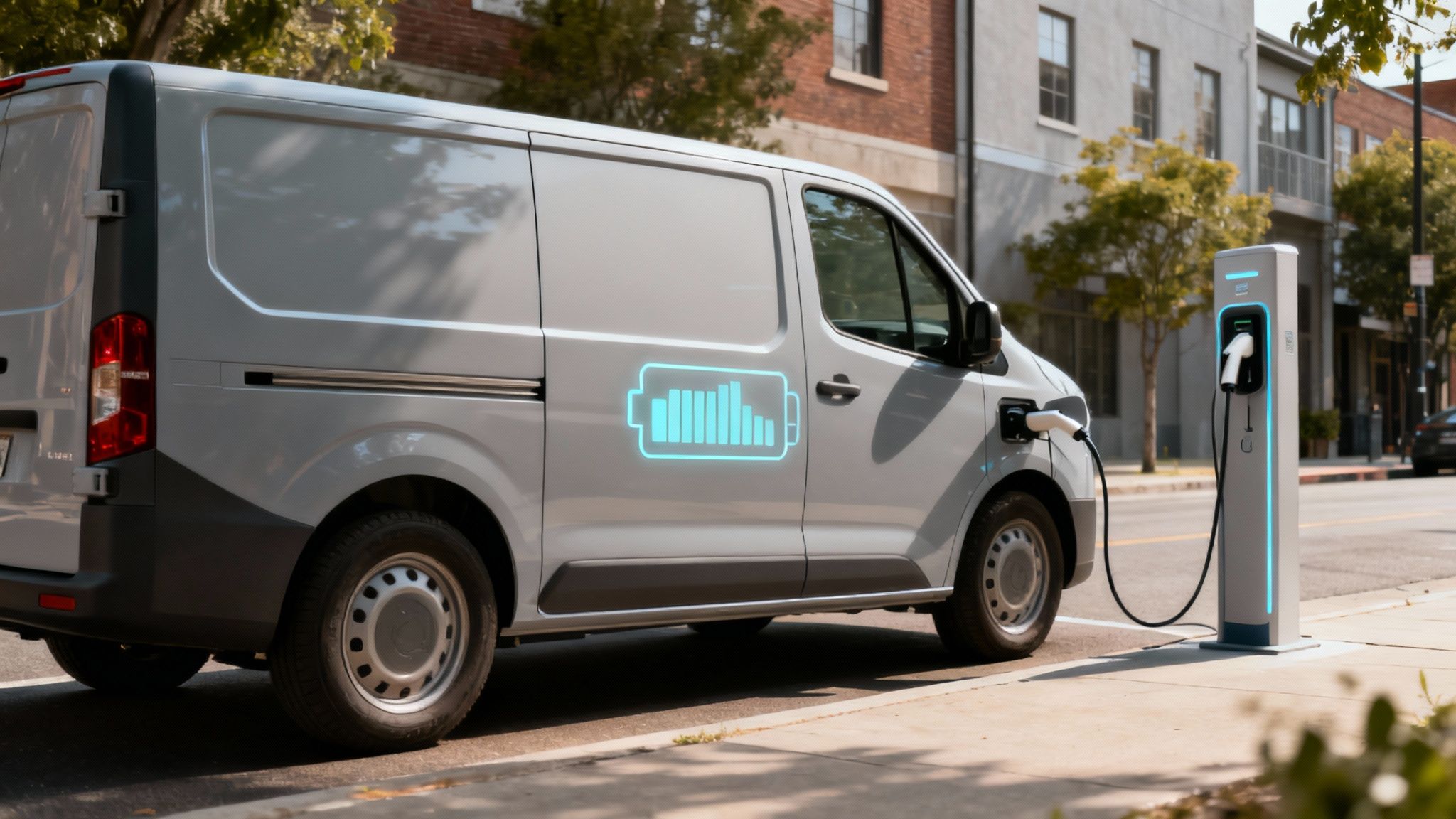
The quiet hum of electric motors is definitely getting louder in the commercial vehicle world. It’s no longer a question of if businesses will switch to electric vans, but when. As you’re scrolling through autotrader vans uk, you’ve probably noticed more and more electric options popping up next to the usual diesel workhorses. But is now the right moment for your business to take the plunge?
Figuring this out goes way beyond just comparing sticker prices. You need to take a hard look at the total ownership costs, the practical side of things, and whether you're future-proofing your business against the ever-growing number of Clean Air Zones.
The market is already showing us which way the wind is blowing. Auto Trader's own numbers show that advert views for new electric vans shot up by a massive 75% in September 2025 compared to the year before. And while diesel is still king of the used market, interest in second-hand electric vans is catching up fast, with views up 44% year-on-year. If you want to dig deeper, you can read more about the rising interest in electric vans and see the momentum for yourself.
Calculating the Real-World Costs
Let’s be honest, the biggest carrot being dangled is the promise of lower running costs. Charging up with electricity overnight at your own depot is worlds cheaper than a trip to the diesel pump. On top of that, electric vans have far fewer moving parts. That means no more oil changes, no exhaust systems to worry about, and just generally less that can go wrong.
Of course, the initial asking price for a used electric van can still be a bit steeper than a similar diesel model. You’ll also need to budget for getting a proper charging point installed at your base, which isn't a trivial expense. It all comes down to calculating the total cost of ownership (TCO). A higher purchase price can often be balanced out in just a few years by huge savings on fuel and maintenance. Suddenly, it starts to look like a very smart long-term investment.
Key Considerations Before You Commit
Before you get too excited about all those potential savings, there are a few practical things you need to nail down. The battery is the heart and soul of any EV, and its health is absolutely critical.
When you're looking at a used electric van, you must check its battery health report, often called the State of Health (SoH). This little piece of data tells you exactly how much of its original capacity the battery can still hold. It’s a deal-breaker.
You also need to ask about the real-world range, how you plan to charge it, and if the payload capacity works for your needs. Batteries are heavy and can reduce the maximum load a van can carry. Answering these questions honestly will tell you if an electric van is a genuine workhorse for your business right now, or if it’s something you need to plan for a little further down the road.
Got a Few Lingering Questions?
It's completely normal to have a few last-minute questions pop up as you get closer to sealing the deal. Let's run through some of the most common queries that come up when buying a van on Autotrader, so you can wrap things up with total confidence.
What Does 'VAT Qualifying' Actually Mean on a Van Ad?
When you see a van listed as 'VAT Qualifying', it's a heads-up that the price shown doesn't include Value Added Tax.
If you run a VAT-registered business, this is great news. It means you can usually reclaim that 20% VAT, making the van a much more attractive purchase for your company's books.
But a word of caution: always confirm the final price with the seller. Some dealers include VAT in their listings and others don't. A quick chat can prevent a nasty surprise when it's time to pay.
Should I Buy from a Private Seller or a Dealership?
This is a classic dilemma, and honestly, there are pros and cons to both.
Going through a dealership usually gives you more protection. They often provide warranties, carry out pre-sale inspections, and can offer finance deals. It’s the peace-of-mind option.
On the flip side, you might find a bargain with a private seller. The catch? The van is typically 'sold as seen', which leaves you with very little legal comeback if a problem appears down the road. It really boils down to your budget and how much of a gamble you're willing to take. No matter who you buy from, getting a comprehensive vehicle history check is an absolute must. Don't skip it. A service like the one from AutoProv is your best defence against hidden nightmares like outstanding finance or a secret past as an insurance write-off.
How Big a Deal Is a Full Service History?
In short, it’s a massive deal. A full service history (FSH) is the single best piece of evidence you have that a van has been looked after properly and on schedule.
Think of it as the van's CV. It tells you a story about its previous owners and how seriously they took maintenance. If the service record is patchy or, worse, completely missing, that’s a major red flag. You should proceed with extreme caution or, better yet, just walk away.
Frequently Asked Questions
AI-Generated Content Notice
This article was created with the assistance of artificial intelligence technology. While we strive for accuracy, the information provided should be considered for general informational purposes only and should not be relied upon as professional automotive, legal, or financial advice. We recommend verifying any information with qualified professionals or official sources before making important decisions. AutoProv accepts no liability for any consequences resulting from the use of this information.
From our AI insights
- Uncovering Bargain Sports Cars in the UK for 2026
Explore the cheapest sports cars in the UK for 2026 with expert insights on risk assessment and provenance checks.
- Starting a Classic Car Dealership: Costs and Challenges
Explore the costs and challenges of starting a classic car dealership in the UK, including regulatory insights and expert tips.
- Seasonal Storage Tips for Classic Cars
Discover expert tips on preparing and storing your classic car for seasonal changes in the UK.
Related Articles

Understanding Classic and Specialist Cars in the UK
Explore what defines classic and specialist cars in the UK and their growing popularity.

A Motor Trader's Guide to Motorcycle History Checks
Before you even think about adding a used motorcycle to your stock, there’s one piece of due diligence that’s completely non-negotiable: a professional motorcycle history check. This isn’t just about ticking a box; it’s the single most important step you can take to uncover a bike's hidden past and shield your business from some seriously costly problems.

Find Cheapest Sports Cars UK: Your 2026 Buying Guide
You see it in the auction lane or on a part exchange appraisal. Low entry money, strong visual appeal, easy headline for the advert, and a buyer base that still wants something fun even when budgets are tight. On paper, cheap sports cars in the UK look like ideal stock.
Published by AutoProv
Your trusted source for vehicle intelligence
