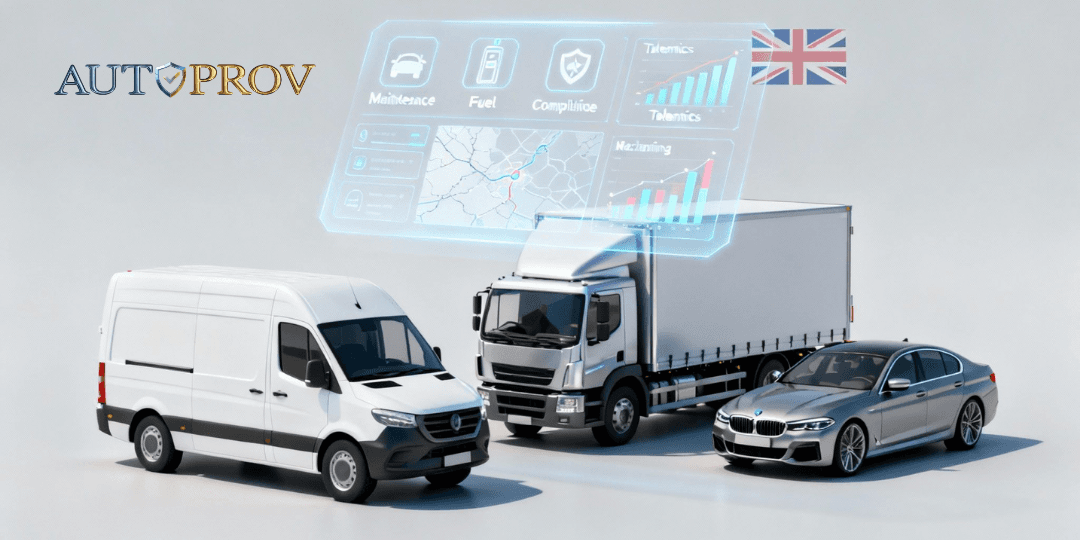
Forget the old-school idea of fleet management being just about tracking vans on a map. Today, it’s the strategic heart of any profitable motor trade business, pulling together logistics, finance, and risk management into one essential role. The ultimate goal? To squeeze every drop of efficiency out of your vehicles, slash costs, and keep everything compliant throughout a vehicle's entire life on your books.
What Is Modern Fleet Management Really About?
At its core, fleet management is the art and science of overseeing every single stage of a commercial vehicle's lifecycle. It starts long before a key is ever turned in the ignition and carries on well after that vehicle is sold. This whole process is designed to make sure every asset delivers maximum value while causing minimum hassle.
Think of a fleet manager as the director of a complex film. They don't just point a camera and hope for the best. They're involved in every single detail, from casting the right actors and scouting locations to controlling the budget and planning the final marketing push. A fleet manager works in almost the exact same way, just with vehicles instead of actors.
The Lifecycle of a Fleet Vehicle
The journey kicks off with smart vehicle acquisition—finding the right tools for the job. This is followed by proactive maintenance to keep your drivers and vehicles performing at their best, day in, day out. All the while, the fleet manager has to stick to a tight budget, keeping a close eye on fuel, insurance, and repair costs.
Finally, just like a film's success is judged by its box office takings, a vehicle’s profitability is defined by its final sale price. Getting the remarketing strategy right ensures you get the best possible return on your investment, bringing the entire cycle to a profitable close.
This all-encompassing approach means a fleet manager is responsible for making sharp buying decisions based on the total cost of ownership, not just the sticker price, and knowing the perfect time to sell for maximum return. They also oversee proactive servicing to prevent expensive downtime and look after driver safety and efficiency. A key part of the role is tracking fuel consumption and other expenses that can erode profits, all while navigating the complex world of MOTs, taxes, and insurance. For a deep dive, you can learn more by understanding UK automotive regulations and how they directly impact fleet operations.
Effective fleet management isn’t a luxury anymore; it's a fundamental requirement for survival and growth. It’s about shifting your focus from simply owning vehicles to strategically managing assets for peak performance and profit.
In this game, having instant access to accurate vehicle intelligence is non-negotiable. This is where platforms like AutoProv come in, providing the deep data needed for every decision you make—from verifying a vehicle's history before you buy it to valuing it correctly for resale. Our services are designed to give UK motor trade professionals a competitive edge by turning operational headaches into profit opportunities.
The Pillars of a High-Performing Fleet

Think of a high-performance engine. For it to deliver real power and reliability, every single part has to be perfectly tuned and working together. Neglect just one component, and you're heading for a costly breakdown. An effective fleet management strategy is built on the exact same principle.
These core components, or pillars, are the foundation of any fleet that actually makes money. From the second you think about buying a vehicle to the day you sell it on, getting these areas right is what separates a profitable fleet from a collection of expensive problems. It's a continuous cycle, and it runs on smart decisions and solid data.
Smart Vehicle Acquisition
The whole process starts here, with Vehicle Acquisition. And let's be clear, this isn't just about "buying vans." It's about investing in the right assets—vehicles that promise future value, not a future of headaches and hidden costs. A cheap price tag today can be easily wiped out by shocking fuel economy, constant trips to the garage, or a depreciation curve that drops like a stone.
Making a smart buy means looking beyond the polished paintwork. You need to know the vehicle's complete story before any money changes hands. Has it got outstanding finance? A dodgy past? Any nasty surprises like an undeclared write-off status lurking in its history?
This is where a proper provenance check from a trusted partner like AutoProv is non-negotiable. Our platform gives you instant access to over 40 critical data points, from Experian finance checks to salvage history. It’s the intelligence you need to avoid buying a liability and instead purchase an asset with complete confidence.
Proactive Maintenance and Driver Management
Once a vehicle is on your books, keeping it on the road and working safely is everything. Proactive Maintenance ditches the old "wait until it breaks" model, which is just a recipe for unplanned downtime and eye-watering repair bills. Instead, you use data to predict when servicing is needed and schedule it before things go wrong.
At the same time, Driver Management is about more than just dots on a map. The focus is on building a culture of safety and efficiency through targeted training and performance monitoring. A well-trained driver has fewer accidents, uses less fuel, and puts less wear and tear on the vehicle. That all flows directly to your bottom line.
A well-maintained vehicle operated by a skilled driver is the single most effective combination for reducing operational costs. This synergy between machine and operator is central to modern fleet management.
These two pillars are completely intertwined. For instance, telematics might flag up a driver who's constantly braking harshly. But a quick look at the vehicle's MOT history, easily pulled from an AutoProv report, might reveal an underlying issue with the brakes that needs fixing before it becomes a serious safety risk.
Controlling Costs and Ensuring Compliance
Every fleet runs on a budget, making Cost Control a daily battle. Fuel is the obvious one, but a top-tier fleet manager sees the whole picture. They're tracking every penny spent on insurance, tax, tyres, and all the other operational overheads that can quietly drain a budget.
Good cost control is all about spotting patterns and rooting out inefficiency. It means digging into fuel consumption data to identify wasteful habits or using market valuations to truly understand depreciation. This kind of detailed financial oversight is what keeps an operation in the black.
Running alongside this is the non-negotiable pillar of Regulatory Compliance. Trying to navigate the maze of MOT schedules, vehicle tax, and insurance renewals can feel like a full-time job. Miss just one deadline, and you're looking at hefty fines or, even worse, a vehicle being ordered off the road, throwing your entire operation into chaos.
Staying on the right side of the law demands meticulous records and a foolproof system for tracking those key dates. It’s the only way to ensure your fleet is always fully compliant and legal.
Strategic Remarketing for Maximum Return
The final pillar closes the loop on your investment: Strategic Remarketing. Getting the best possible price when it’s time to sell is just as critical as making a smart purchase in the first place.
Effective remarketing boils down to two things: timing and data. Selling a vehicle at the right point in its depreciation curve can make a huge difference to its final value. Just as important is being able to hand a buyer a complete, verified history file. Proof of a clean finance record and good condition builds trust and justifies a higher asking price.
By using a service like AutoProv to generate a detailed provenance report, you give potential buyers transparent, undeniable proof of the vehicle's quality. This not only helps you sell faster but ensures you lock in the maximum residual value, making your entire fleet operation more profitable from start to finish.
Tapping into Technology and Telematics Data

In modern fleet management, technology isn't just a nice-to-have; it's the central nervous system of the whole operation. The key player here is telematics, which acts as a live feedback loop for every single vehicle you run. Think of it as a constant stream of information that transforms guesswork into solid, data-driven decisions.
It might sound complex, but a telematics system is really just a way to see what's happening out on the road, in real-time. It gathers raw data—location, speed, idling time, fuel use—and translates it into intelligence you can actually use to cut costs, improve driver safety, and make everything run more smoothly.
The UK's fleet market is a huge part of the economy, with over 4.3 million company cars on the roads and fleet vehicles making up nearly 60% of all new car registrations. Yet, with a shortage of over 50,000 qualified HGV drivers, businesses often rely on less experienced staff. This is precisely why telematics is so vital; it’s been proven to slash accident rates by up to 20% while also cutting fuel consumption and emissions.
What Telematics Data Actually Tells You
So, what do you get from it? Telematics systems collect a goldmine of operational data that helps you fine-tune your fleet's performance. For example, knowing the live location of every vehicle is a game-changer for routing and keeping customers happy. You can also monitor driver behaviour to spot issues like harsh braking or speeding, which are key indicators of risk and wasted fuel. Furthermore, seeing fuel consumption in real-time helps pinpoint which drivers or vehicles are costing you the most, and many systems can now flag engine fault codes, letting you get ahead of mechanical problems before they become costly breakdowns.
This data lets you shift from being reactive to proactive. Instead of getting a call from an angry customer about a late delivery, you can see a delay building on the map and manage expectations upfront. The knock-on effects are clear: less wasted fuel, lower insurance premiums, and fewer incidents on the road.
The Missing Piece of the Data Puzzle
But for all its strengths, telematics has a massive blind spot. It's brilliant at telling you how a vehicle is being used right now, but it tells you absolutely nothing about what that vehicle is or its history. It can flag a driver for braking too hard, but it can't tell you if that same vehicle has a dodgy salvage history or outstanding finance that makes it a ticking time bomb on your books.
This is where integrating your data sources becomes incredibly powerful. When you pair live telematics with fundamental vehicle intelligence, you finally get the complete picture. You're combining real-time performance data with deep historical context.
Telematics shows you the symptoms of a problem, like poor fuel economy or aggressive driving. Vehicle provenance data helps you find the root cause—was it the driver, a hidden mechanical fault, or a high-risk vehicle you should never have acquired in the first place?
A platform like AutoProv provides this crucial context. While your GPS tracker is monitoring a journey, AutoProv can reveal the vehicle's entire life story: its MOT history, any outstanding finance, previous write-off status, and an accurate market valuation. It's this dual-layered approach that turns raw data into a powerful risk management tool. By combining these two streams of information, you build a much more resilient and profitable fleet. You can dig deeper into this subject by reading our article on the latest innovations in UK automotive technology.
Managing the Transition to Electric Vehicles
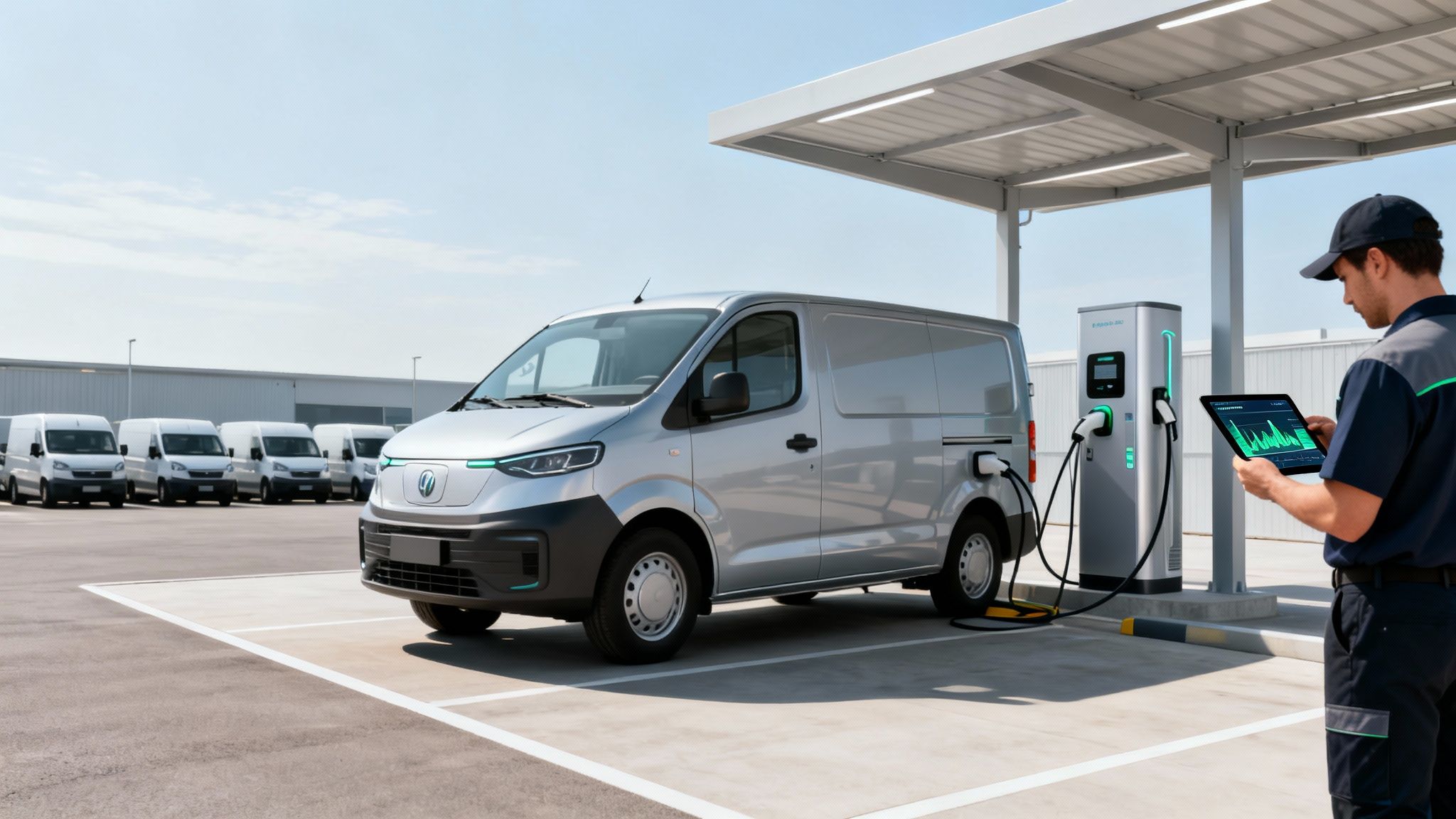
The move to electric vehicles isn't just a trend; it's a fundamental rewiring of modern fleet management. For any UK fleet operator, this transition presents massive opportunities, but it also throws up a whole new set of complex challenges. Get it wrong, and you could seriously dent your profitability and operational efficiency.
Going electric demands a completely different mindset. It's not as simple as swapping a diesel pump for a charging point. Suddenly, managers are grappling with planning charging infrastructure, getting their heads around battery degradation, and calculating a true total cost of ownership (TCO) for vehicles that behave nothing like their petrol or diesel cousins.
A New Data-Driven Approach
To run an EV fleet well, you need a new set of data and a fresh look at your KPIs. The old metrics that worked for internal combustion engine (ICE) vehicles just don't cut it anymore. Battery health, charging efficiency, and the real-world range you’re actually getting have become the critical data points.
A standard vehicle check focusing on the engine and transmission is now obsolete. The most valuable asset in an EV—and its biggest potential liability—is the battery pack. Knowing its true condition is vital, not just for day-to-day planning but for its eventual resale value. Our guide on how long a car battery lasts provides more context on this all-important component.
More than 50% of UK fleets now have at least one EV, with projections suggesting EV registrations will overtake petrol cars by 2030. However, rising operational costs and supply chain delays for specialised parts are creating significant budget pressures for fleet managers.
Overcoming Key EV Fleet Challenges
Navigating this shift means tackling several EV-specific hurdles head-on. The biggest challenges boil down to three things: planning charging infrastructure, optimising routes based on realistic range, and ensuring your team has the specialist maintenance skills required. Without the right data and a solid strategy, these can quickly wipe out any of the benefits of going electric. Fleet managers essentially have to become experts in a new field of vehicle tech and logistics overnight.
When you're acquiring an electric vehicle, its battery health is the single most important factor. It determines its future value and its operational viability. A standard vehicle history check simply doesn't give you the depth of information needed to make a safe investment.
De-Risking Your EV Investment with Data
This is where having access to detailed, EV-specific vehicle intelligence becomes a game-changer. A platform like AutoProv is crucial for navigating the transition, arming you with the vital data needed to de-risk any investment in electric assets. Our services provide in-depth technical specifications, accurate depreciation curves for specific EV models, and precise market valuations based on real-world data.
This level of insight gives businesses the power to make informed buying choices, confidently manage their electric assets, and sell them effectively in a fast-changing market. By verifying an EV's true specifications and market standing before you buy, fleet managers can avoid overpaying and ensure the vehicle actually meets their needs. It’s how you turn a potentially risky transition into a profitable long-term strategy.
Why a Vehicle’s Past is Your Greatest Asset
In fleet management, a vehicle’s story—its provenance—is a double-edged sword. Get it right, and it’s a powerful asset. Get it wrong, and it’s your biggest liability. We’re not talking about a basic history check that just ticks a few boxes. Real provenance is about digging up the complete, verified truth of a vehicle’s life before you put your capital on the line.
Getting this wrong can be financially crippling. The motor trade is littered with horror stories that all start with one thing: a lack of genuine vehicle intelligence. These aren't just cautionary tales; they're real-world scenarios that play out every single day, quietly eating away at profits and chipping away at reputations.
The Real Cost of Not Knowing
Picture this: a leasing company proudly adds a nearly-new executive saloon to its books. Months down the line, they discover it was a Category S write-off that’s been cosmetically repaired to look pristine. Suddenly, that vehicle is a huge liability. It's impossible to remarket for its book value, and worse, it’s a potential safety risk. Any projected profit? Wiped out overnight.
Or think about a busy dealership buying a batch of vans at auction. One of them looks immaculate, flies through a mechanical check, and is prepped for the forecourt. A week later, a call comes in from a finance company. They’re repossessing it due to outstanding finance that was never declared. The dealership is now facing a total loss on the purchase price and a damaging dispute they never saw coming.
These things happen. They are the direct result of making high-stakes financial decisions with incomplete, unverified, or slow-to-access information. In the motor trade, what you don’t know absolutely can, and often will, hurt your bottom line.
This is the fundamental risk that a proper provenance check is designed to kill. The problem has always been that pulling together a truly complete picture was a slow, fragmented process, forcing businesses to choose between moving fast and being certain.
Turning Due Diligence into a Strategic Edge
The key to protecting your business isn’t just about doing checks; it’s about having instant access to consolidated, professional-grade data. This is where you shift due diligence from a box-ticking chore into a genuine strategic advantage. Instead of trying to piece together fragments of information yourself, you need a single, reliable source that tells you everything, right now.
A modern vehicle intelligence platform like AutoProv does exactly this, pulling data from over 10 trusted sources and presenting it in one clear, instant report. This isn't just a simple check; it's a deep dive into the vehicle's entire history. By combining data from critical sources like the DVLA, Experian, the Police National Computer, and the Motor Insurance Anti-Fraud and Theft Register (MIAFTR), a fleet manager gets a vehicle's full story in seconds. The whole process transforms from a risky gamble into a confident, evidence-based decision. You can learn more about this vital process in our guide to performing a provenance check on a used car.
From Shielding Risk to Boosting Profit
Having this level of information on tap does more than just stop you from buying bad stock. It actively helps you make more profitable decisions right across the vehicle lifecycle. With a complete provenance report in hand, you can walk into a negotiation with more authority, armed with concrete evidence of the vehicle's true history and condition.
Then, when it comes to remarketing, presenting a buyer with a verified, transparent history builds immediate trust. It justifies a higher asking price and helps you shift vehicles faster, cutting down the costly impact of stock depreciation. At the end of the day, you’re not just selling a van or a car; you’re selling confidence and peace of mind—and that's something customers will always pay a premium for. This is how smart fleet management professionals turn a vehicle's past into a tool for future profit.
Building Your Modern Fleet Management Strategy
Knowing the theory is one thing, but turning that knowledge into a real-world advantage is where the magic happens. Now that we've covered the core pillars and the tech available, it's time to build a modern, practical fleet management strategy. This isn't about flipping a switch and changing everything overnight. It's a clear, step-by-step framework any UK motor trade business can use to build a more resilient, efficient, and ultimately more profitable operation.
The journey starts with a simple but vital question: where are you right now? Without an honest look at your starting point, any attempt to improve is just a shot in the dark. This process brings the clarity you need to make changes that actually stick.
Conduct a Thorough Fleet Audit
Before you can chart a course to where you want to go, you need to know your exact coordinates. A comprehensive fleet audit provides this crucial clarity. Think of it as a deep dive into every corner of your current operation, designed to uncover strengths, weaknesses, and those hidden opportunities for improvement. Be unflinchingly honest and let the data do the talking.
Your audit needs to get granular. A good starting point is to analyse the condition and age of every vehicle, all operational costs beyond just fuel, the utilisation rates of your assets, and the current compliance status of your entire fleet. This initial deep-dive gives you the raw material you need to start building a smarter strategy from the ground up.
Define Meaningful Performance Indicators
Once you have a clear picture of your fleet, the next question is: what does success actually look like? This means setting Key Performance Indicators (KPIs) that tell you more than the obvious. Tracking your total fuel spend is a start, but modern fleet management requires a much sharper focus.
Good KPIs aren't just numbers on a spreadsheet; they're the signposts telling you if your strategy is working. They turn a vague goal like "be more efficient" into a concrete, measurable target.
Consider putting KPIs in place that give you genuine operational insight. For instance, Cost-per-Mile is the ultimate health check for financial efficiency, rolling up fuel, maintenance, and depreciation. Tracking Vehicle Uptime vs Downtime shows how much time your vehicles are actually available to do their job. Measuring your Accident Rate per 100,000 miles reveals the effectiveness of driver safety initiatives, while analysing Maintenance Cost per Vehicle can help spot unreliable models.
Select and Integrate the Right Technology
With your goals clearly defined, you can now pick the technology that will help you hit them. Your tech stack should be built around a simple idea: integration. All your systems need to talk to each other to create a single, reliable source of truth. The two pillars here are telematics and vehicle intelligence.
Your telematics system is your eyes on the ground, delivering live, real-time data on what your vehicles are doing. But that's only half the story. It needs to work hand-in-glove with a vehicle intelligence platform like AutoProv. While telematics tells you how a vehicle is performing day-to-day, AutoProv confirms its fundamental identity—verifying its history, finance status, and true market value.
This powerful combination connects the how with the what, giving you a complete picture of both risk and performance. Choosing the right software is a cornerstone of any effective operation, as we cover in our guide to UK vehicle inventory management software.
Establish and Refine Your Processes
Finally, all the data and tech in the world is useless without clear, repeatable processes to support it. This is about weaving your new strategy into the daily fabric of your business. Document straightforward procedures for everything, from pre-purchase checks and routine maintenance scheduling to driver training and vehicle disposal.
Crucially, this isn't a "set it and forget it" task. Your fleet management strategy has to be a living thing, built on a constant cycle of review and improvement. Revisit your KPIs regularly, analyse the data, and don't be afraid to tweak your processes. This creates a system that not only solves today’s problems but is ready to adapt to whatever comes next, securing the long-term health of your fleet.
Frequently Asked Questions
AI-Generated Content Notice
This article was created with the assistance of artificial intelligence technology. While we strive for accuracy, the information provided should be considered for general informational purposes only and should not be relied upon as professional automotive, legal, or financial advice. We recommend verifying any information with qualified professionals or official sources before making important decisions. AutoProv accepts no liability for any consequences resulting from the use of this information.
From our AI insights
- Dealer Management Systems: Maximizing ROI in UK Fleets
Discover how UK motor traders can maximise ROI with dealer management systems.
- Navigating Fleet Risk Management with Vehicle Intelligence
Discover how vehicle intelligence transforms risk management in UK fleet operations.
- Fleet Management: Impact of Brexit on UK Fleet Operations
Explore how Brexit has reshaped fleet management in the UK, affecting regulations, costs, and operations.
Related Articles
Essential Fleet Management Practices for UK Businesses
Discover key fleet management practices to enhance efficiency and compliance in UK businesses.

A Guide to UK Vehicle Inventory Management Software
In the fast-paced UK automotive market, vehicle inventory management software is what separates the dealerships that thrive from those just trying to keep their heads above water. Think of it as the central nervous system for your entire operation, going way beyond a simple spreadsheet to give you real-time, data-driven command over every car on the forecourt. It's the true engine room of any modern dealership.

A Guide to Company Car Tax Implications in the UK
Figuring out company car tax can feel like wading through treacle, but it all comes down to a single, simple idea: if the company gives you a car for private use, it’s a taxable perk. HMRC calls this a Benefit-in-Kind (BIK), and its cash value gets added to your employee's income for tax purposes. Get your head around that, and you've taken the first and most important step.
Published by AutoProv
Your trusted source for vehicle intelligence