Performing a vehicle recall check in the UK is an absolutely critical step for any motor trader. It’s not just paperwork; it’s about safeguarding your business, your reputation, and most importantly, your customers.
Performing a vehicle recall check in the UK is an absolutely critical step for any motor trader. It’s not just paperwork; it’s about safeguarding your business, your reputation, and most importantly, your customers.
This simple check confirms if a manufacturer has flagged a safety defect that requires free-of-charge remedial work. Skipping it? That can land you in a world of legal, financial, and reputational trouble.
Why Recall Checks Are Non-Negotiable for UK Motor Traders
When you’re juggling sourcing, appraising, and selling used vehicles, it's tempting to see a recall check as just another box to tick. But that’s a dangerous mindset.
An unresolved safety notice isn't a minor detail—it's a ticking time bomb. Selling a car with an outstanding recall is a massive gamble with your business's integrity and your bottom line. The fallout goes way beyond a simple safety issue; we're talking about legal compliance, customer trust, and serious financial hits.
The Scale of the Problem
The sheer number of cars with unresolved recalls on UK roads is genuinely staggering. Think about this: between 2018 and 2023, manufacturers issued recalls for roughly 14.8 million cars and vans.
Even more shocking, an estimated 3.2 million of those vehicles never had the work done. That means over one in five recalled vehicles were still driving around with a known safety defect. If you want to dig into the numbers, the full industry report lays out the scale of the challenge traders are up against.
Legal and Reputational Risks
Let's be blunt. Selling a car with a known, unrectified safety recall is a serious breach of your professional duty. It puts you in direct violation of your legal obligations, which we cover in detail in our guide to the Consumer Rights Act 2015 for the UK motor trade.
Failing to run a thorough vehicle recall check in the UK exposes your business to a triple threat. You face legal liability if a customer has an accident because of a defect you should have spotted, which can be severe and costly. Then there’s reputation damage; it takes years to build a good reputation, but only one incident to shatter it. Word gets around fast, and being known as the dealer who sells unsafe cars is a label you can't afford. Finally, the combined hit of legal fees, customer compensation, and the inevitable drop in business from a tarnished name can be ruinous.
A diligent recall check isn’t just about being compliant; it's a fundamental pillar of responsible trading. It shows your commitment to safety and transparency, builds long-term customer loyalty, and protects your business from completely avoidable risk.
Fortunately, you don’t have to do it all manually anymore. Modern tools are changing the game. Platforms like AutoProv pull all that fragmented data from different sources into a single, instant report. This transforms a time-consuming chore into a streamlined, integrated part of your vehicle appraisal, ensuring you never miss a critical safety notice again.
Conducting a Manual Recall Check the Right Way
So, how do you go about doing a manual vehicle recall check in the UK properly? The truth is, a single search just doesn't cut it. To be sure you haven’t missed a critical safety notice before a car hits your forecourt, you need a layered approach.
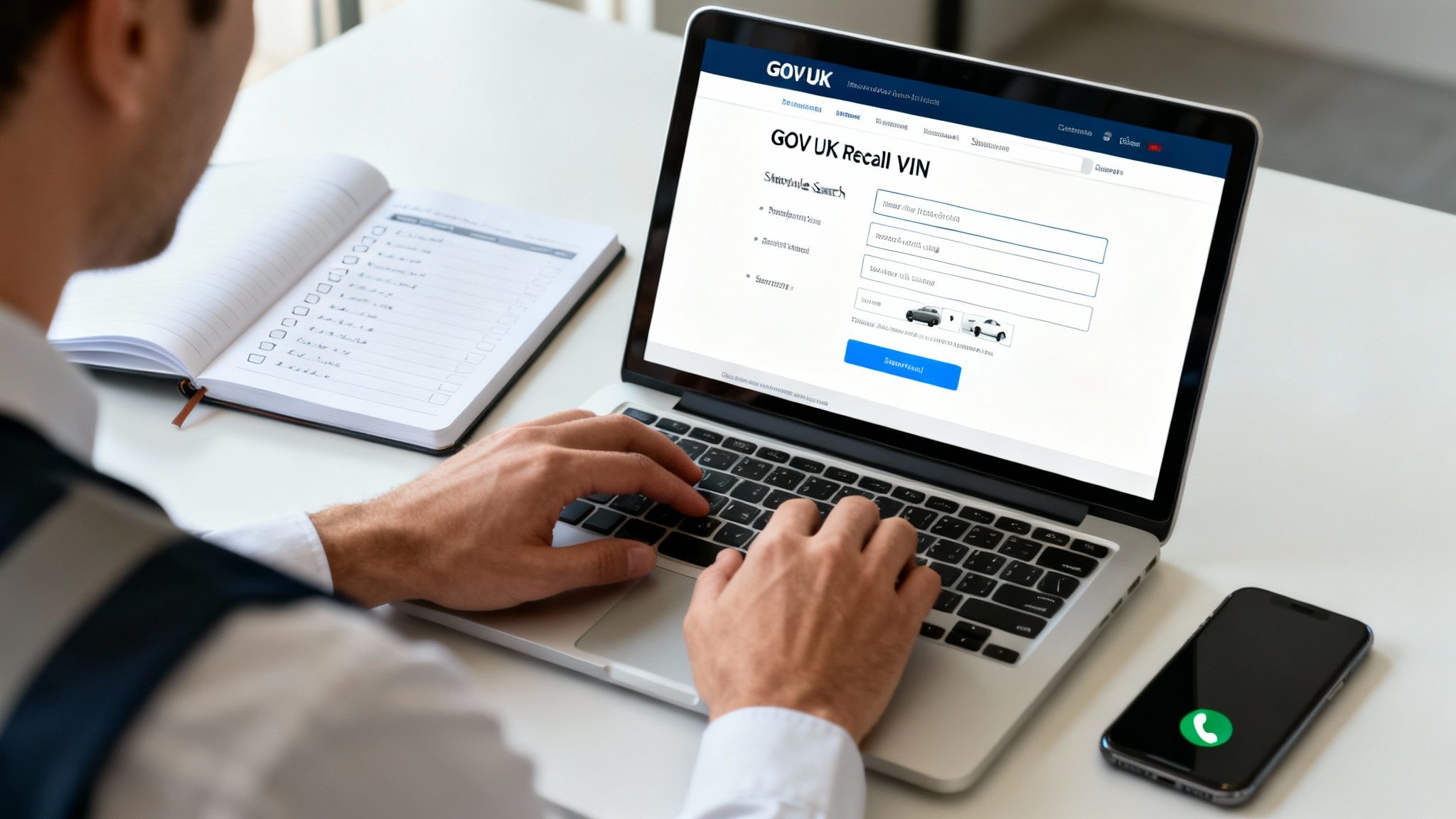
For any UK motor trader, the official starting line is the GOV.UK vehicle recalls and faults service. This is the free tool run by the Driver and Vehicle Standards Agency (DVSA), and it’s the main database for most safety-related recalls.
Using the GOV.UK Online Checker
The government portal gives you two ways in: you can pop in the vehicle's registration number (VRM) or search by its make and model. Using the VRM is quick, no doubt, but it can sometimes throw up general results for that model range, not specific, outstanding notices for the actual car in front of you.
This is where the Vehicle Identification Number (VIN) becomes your best friend. That unique 17-digit code is the car's fingerprint, offering a much sharper, more precise way to trace its history. You can get the full rundown on its importance in our guide to vehicle checks with a VIN number. A search using the VIN will often flag recalls that a registration check completely misses, especially if the car is on a private plate or has had its plates changed.
Relying solely on a VRM search is a common shortcut, but it's a risky one. For proper due diligence, a VIN-specific check is non-negotiable. It’s the only way to link directly to the manufacturer's original build data.
Once the results are up, you need to read them carefully. The report will list any safety recalls tied to the vehicle's make and model, explaining the fault and what needs to be done. Your job is to find out if the specific car you're appraising has actually had the work completed.
The Crucial Follow-Up Call
Here’s a tip from the trenches that separates the pros from the amateurs: the online check is just step one. The DVSA database isn't always updated in the blink of an eye. You can find discrepancies, especially with older vehicles, imported stock, or those pesky manufacturer "service campaigns" that aren't classed as official safety recalls.
That’s why your final step should always be a quick call to the manufacturer's main dealer. Give the service department the VIN and simply ask them to check for any outstanding campaigns or recalls on their internal system. This call is worth its weight in gold because it confirms completion, as the dealer network has the most up-to-date repair records. It can also spot gaps, flagging a brand-new recall that hasn't even hit the public DVSA database yet. Finally, it helps uncover service campaigns, which are manufacturer-led updates vital for the vehicle's performance and future value.
This manual, three-pronged process—VRM check, VIN check, and a dealer call—is thorough. But let's be honest, it’s also time-consuming and leaves room for admin errors. Juggling websites and phone calls for every single vehicle is a major drain, highlighting the daily grind traders face just to stay compliant while trying to run a profitable business.
Decoding Different Types of Vehicle Recalls
To a customer, the word "recall" is an instant red flag. But for those of us in the trade, we know it's not always that simple. You've got to understand the difference between a serious, safety-critical recall and a routine service campaign. Getting this right is crucial for assessing risk, talking straight with buyers, and managing your workshop's valuable time.
A DVSA-mandated safety recall is the big one. These are issued when a defect poses a genuine, direct risk to the driver, passengers, or anyone else on the road. We’re talking about major league problems: faulty braking systems, dodgy airbag inflators that could rupture, or steering components on the brink of failure. These are absolutely non-negotiable and must be sorted before that vehicle is sold. No ifs, no buts.
Service Campaigns and Quality Enhancements
On the other end of the scale, you have manufacturer-led service campaigns. You'll hear them called various things, like "quality enhancements" or "technical service bulletins" (TSBs). The key thing to remember is these are not mandated by the DVSA and usually tackle non-safety issues. They might include a software update to stop the infotainment system from throwing a wobbly, replacing a bit of interior trim that’s known to rattle, or a tweak to the engine map to improve fuel efficiency.
Now, while you’re not legally obligated to carry these out before a sale, ignoring them is a bad move. Sorting these campaigns out keeps the car in top nick, heads off minor complaints down the line, and shows you’re a dealer who cares about quality. That kind of thing builds serious trust with customers. Documenting this work proves you go the extra mile. For a closer look at what a thorough inspection should cover, have a read of our guide on essential car safety checks for UK used cars.
The Growing Complexity of Recalls
The whole recall game is changing. Modern cars are packed with more tech than ever, and that’s being reflected in the faults we're seeing. It’s less about purely mechanical bits and increasingly about complex electrical systems and lines of code.
It's a clear trend: independent analysis shows that while the total number of recalls might go up or down, electrical systems consistently cause the most problems. This is exactly why so many outstanding UK recalls involve fiddly fixes that need a main dealer's touch, not just a quick part swap in your own workshop.
This complexity can turn managing recalls into a real headache. Recent industry reports, like the product recall trends from RQA Group, show that even if UK DVSA recall numbers dip slightly, the number of recalls across the EU is expected to climb, driven by these very systems.
Knowing the difference between these recall types lets you prioritise your workshop's schedule properly and have honest, confidence-building chats with potential buyers. A vehicle recall check in the UK that clearly separates a critical safety issue from a manufacturer's refinement is an indispensable tool for any reputable trader. AutoProv cuts through the noise by laying all this data out in one simple, trade-ready report, saving you the hassle of trying to figure it all out yourself.
Your Responsibilities After Finding a Recall
So, you’ve found an outstanding safety recall on a vehicle in your stock. This isn't just another note for the file; it's a hard stop. Under the Consumer Rights Act, the line is crystal clear: you simply cannot sell a vehicle with a known, unresolved safety defect.
Selling it anyway isn’t a grey area. It’s a huge misstep that opens your business up to some very serious consequences. Your immediate job shifts from selling the car to getting it fixed. The law is there to stop unsafe goods from reaching the public, and a car with a dodgy airbag or a faulty brake component is exactly that.

Taking Immediate Action
First things first, get on the phone to the manufacturer’s authorised repair network. In plain English, that almost always means the local main dealer for that particular brand. Remember, all safety recall work is carried out completely free of charge. This is a non-negotiable part of the manufacturer's duty, overseen by the DVSA.
When you call, have the Vehicle Identification Number (VIN) to hand. It’s the only way to be certain you’re booking the right fix for that specific car. Just be ready for potential delays – there might be a wait for parts or a slot in the workshop, which is precisely why you need to act the moment you discover the recall.
It's a bigger problem than you might think. A recent analysis revealed a shocking statistic: an astonishing 72% of recalled vehicles in the UK never get repaired after the notices go out. Many of these relate to critical components like airbags and brakes. While we have fewer recalls than some countries, our abysmal completion rate is a real threat to road safety. You can read the full analysis on unrepaired recalled cars to grasp the scale of the issue.
Meticulous Record Keeping is Your Defence
Every call, every email, every conversation about this recall needs to be documented. Think of it as your legal and operational safety net. You're building a clear, chronological paper trail that proves you did everything by the book.
Your records should include the date, time, and name of who you spoke with at the main dealer for your initial contact. You should also save any email confirmation or booking reference number you receive. Most importantly, once the work is done, get the official paperwork from the dealer confirming the recall has been rectified – this is the golden ticket. Don't leave without it.
This isn't just about being organised. This paperwork is your proof that you fulfilled your duty of care. It will be your best defence against any future claims and shows you take customer safety seriously.
Failing to act on a known recall isn't a simple oversight; it's a conscious business decision with potentially disastrous outcomes. The legal liability in case of an accident is immense, but the reputational damage can be even more costly and permanent.
A solid vehicle recall check UK process is non-negotiable. By building these checks into your appraisal workflow with a tool like AutoProv, you catch these issues right at the point of acquisition. This gives you the maximum amount of time to get the free repair sorted, ensuring the vehicle is safe, compliant, and ready for the forecourt without any last-minute drama or legal headaches. It turns a potential crisis into just another manageable step in your process.
How AutoProv Cuts Through the Recall Check Hassle
Let's be honest, the old way of checking for recalls is a real pain. Juggling the DVSA website, manufacturer portals, and then spending half your morning on hold with a main dealer is nobody’s idea of an efficient workflow. It’s slow, clunky, and frankly, leaves too much room for human error. A missed callback or a detail overlooked can lead to a serious problem down the line. For any modern motor trade business, that’s a risk you just can’t afford.
This is exactly why we built AutoProv. Forget chasing down information from all corners of the internet. Our platform does the heavy lifting for you, instantly. We pull recall data directly from the DVSA and manufacturers, consolidating it into a single, straightforward report.
One Report, All the Answers
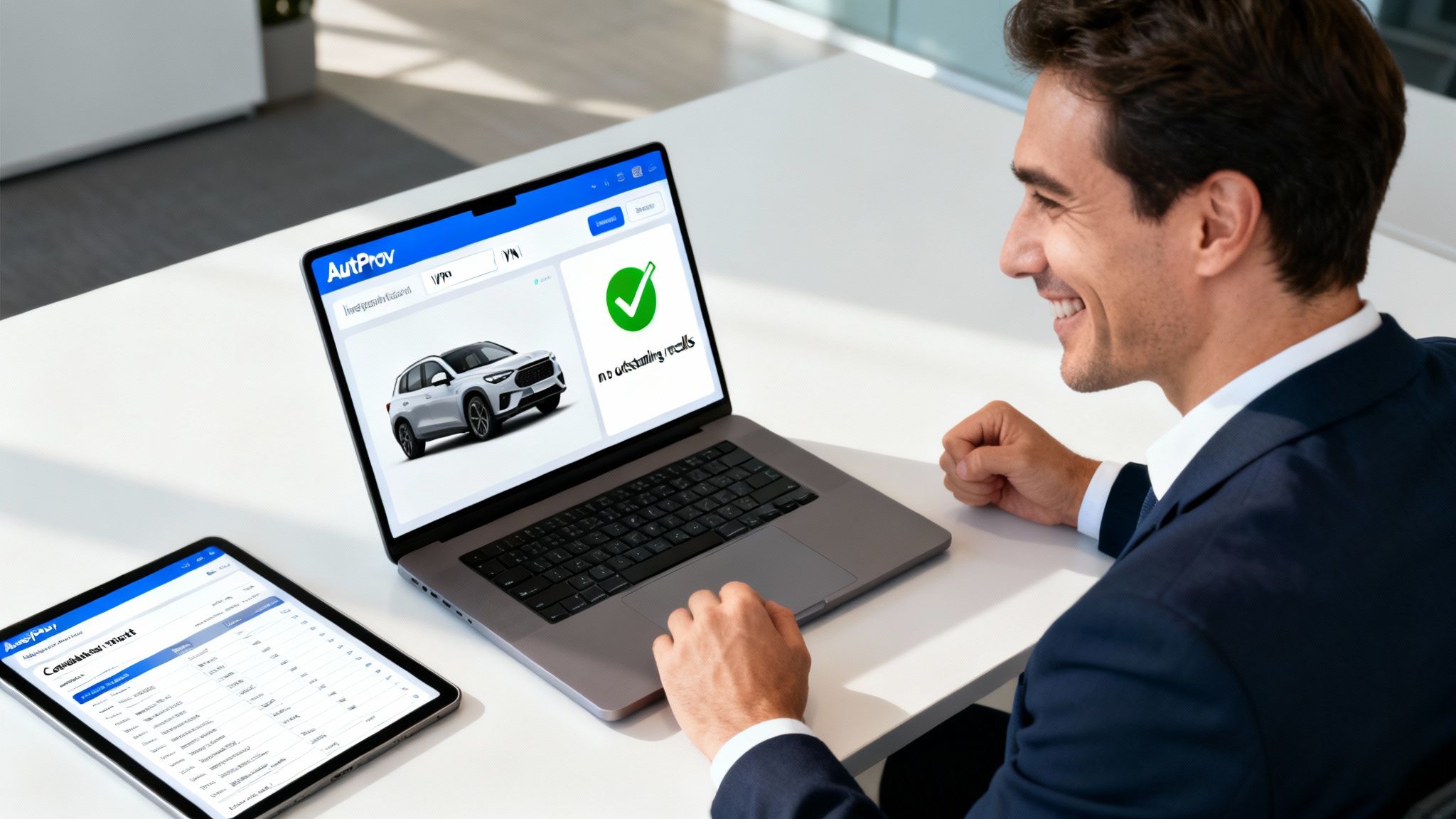
Picture this: you’re appraising a car and, in seconds, you have a definitive answer on its recall status. No more opening a dozen browser tabs or waiting for a service advisor to find the time to ring you back. With AutoProv, recall information becomes just another standard, instantly visible part of your initial vehicle check.
Our reports give you a crystal-clear breakdown of outstanding safety recalls, completed recalls, and manufacturer service campaigns. This kind of clarity changes everything. The moment a car lands on your forecourt, you know exactly what, if anything, needs to be done. It embeds professional due diligence into your day-to-day operations, making best practice your default setting, not an extra chore.
By putting all the recall data in one place, AutoProv takes the guesswork and administrative headache out of the equation. This isn't just about saving a bit of time; it's about making smart, risk-free decisions right at the point of acquisition, where it matters most.
The Real-World Benefits for Your Dealership
The impact on your business is immediate. Bringing AutoProv into your appraisal process gives you a proper operational advantage. All those hours your team used to lose on manual checks are instantly reclaimed, freeing them up to do what they do best: sourcing and selling great cars. To get a feel for how smoothly it fits into a dealership's routine, you can see how AutoProv's vehicle intelligence system functions.
Crucially, every report you run creates a verifiable audit trail. This digital record is your proof that you’ve done your homework, providing a solid defence against any future claims. It’s also an incredible tool for building trust, not just with customers but with finance and warranty partners too.
Imagine handing a customer a clean report showing 'No Outstanding Recalls'. It’s a powerful statement about the quality of your stock and the integrity of your business. You turn a potential worry into a moment of confidence, helping you close deals faster and build a reputation for being thorough and transparent. It's a simple step that sets you miles apart from the competition.
Answering Your Questions on UK Vehicle Recalls
Even for those of us who’ve been in the trade for years, the world of vehicle recalls can still throw a few curveballs. Let's tackle some of the most common questions we hear from traders on the ground, with straight answers to keep you compliant and confident.
Are Recall Repairs Genuinely Free of Charge?
Yes, they are. Any work needed for an official DVSA safety recall is done by the manufacturer's authorised dealers at no cost to the vehicle owner. That covers all the parts and labour needed to sort the problem.
But it’s important to know the difference between a safety recall and a manufacturer "service campaign." While those are often free too, they aren't a legal requirement in the same way, and sometimes they come with strings attached.
What if the Previous Owner Ignored a Recall Notice?
It makes no difference. The manufacturer's obligation to fix a safety recall is tied to the vehicle's VIN, not the owner. If you buy a car with an outstanding recall, you have every right to get it fixed by a main dealer, no matter who owned it before.
This happens all the time, which is exactly why doing your own diligent vehicle recall check in the UK is a non-negotiable part of your appraisal process. You simply can't assume the last keeper did the right thing.
Your responsibility as a motor trader begins the moment that vehicle lands in your stock. The history of the recall notice is irrelevant; its current outstanding status is all that matters legally and ethically before you put it on the forecourt.
Can I Sell a Car with an Outstanding Safety Recall?
Absolutely not. Selling a vehicle with a known, unrectified safety recall is illegal. It's a clear breach of your duties under the Consumer Rights Act 2015, which demands that any goods you sell must be safe and of satisfactory quality.
Pushing a car with a known safety defect out the door opens your business up to serious legal trouble, unhappy customers, and a damaged reputation that’s hard to fix. The only way forward is to get the free repair work done before the car is advertised or sold.
For more detailed answers, you can always check out the AutoProv frequently asked questions page.
How Does AutoProv Simplify Finding Recall Information?
Checking multiple sources for every single vehicle is a drain on your time and it's easy for something to slip through the cracks. AutoProv takes that headache away completely. Our platform pulls recall data directly from the DVSA and manufacturers into one, simple report.
When you run an AutoProv check, you see the full recall picture in seconds—outstanding, completed, or any non-safety campaigns. It’s all laid out clearly as part of your standard vehicle appraisal, meaning you’ll never miss a critical safety issue and can make smart decisions from the get-go.
Frequently Asked Questions
AI-Generated Content Notice
This article was created with the assistance of artificial intelligence technology. While we strive for accuracy, the information provided should be considered for general informational purposes only and should not be relied upon as professional automotive, legal, or financial advice. We recommend verifying any information with qualified professionals or official sources before making important decisions. AutoProv accepts no liability for any consequences resulting from the use of this information.
From our AI insights
- Managing Takata Recall Liability: A Trader’s Guide
Explore how UK traders can manage liability for Takata airbag recalls effectively.
- Advanced Airbag and Safety Recall Checks for UK Traders
Ensure safety compliance with advanced airbag and recall checks for UK motor traders. Protect your stock and clients.
- Navigating the A2 Motorcycle Test: Risks & Regulations
Understand A2 motorcycle test rules, vehicle restrictions, and provenance risks to accurately value your stock.
Related Articles
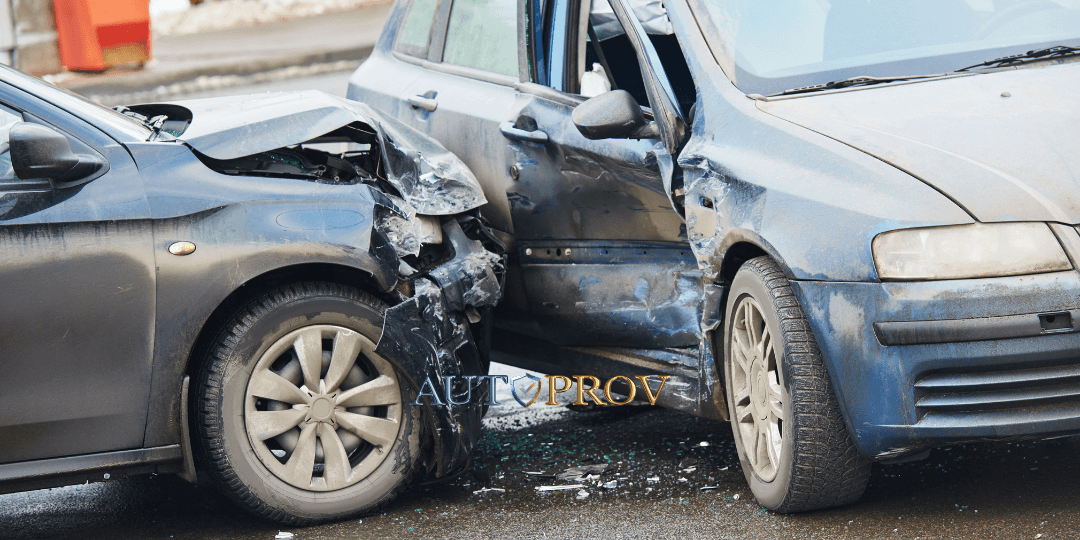
Essential Car Safety Checks for UK Used Cars
Discover crucial safety checks for used cars in the UK to ensure your vehicle is safe and reliable.
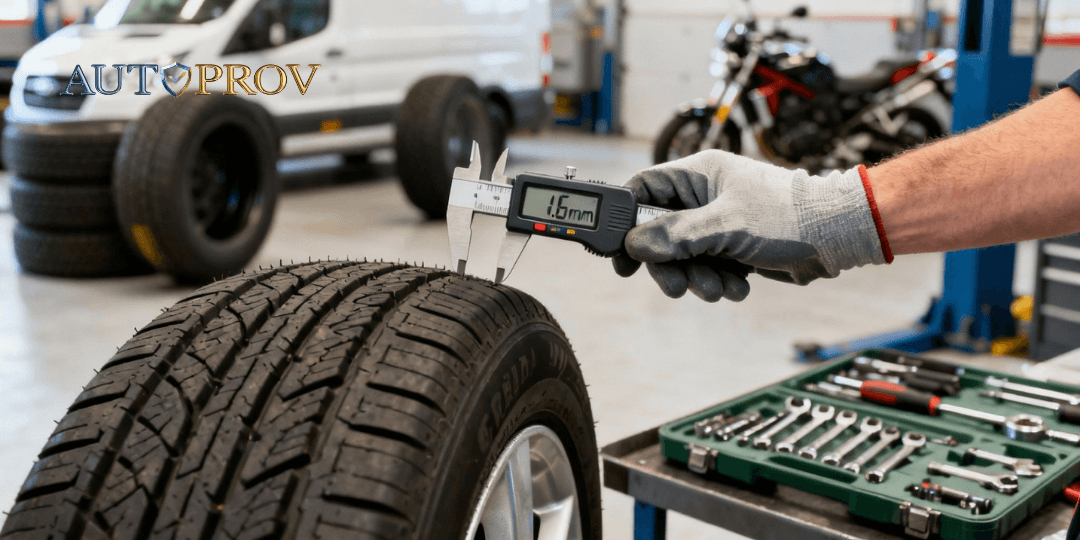
Minimum Tyre Tread Depth UK: A Guide for the Motor Trade
For anyone in the UK motor trade, one number should be front and centre in your mind: 1.6mm. That’s the legal minimum tyre tread depth. But it's so much more than a statistic—it’s a figure that has a direct line to your business's reputation, its legality, and ultimately, its bottom line. Getting this wrong isn't an option.

Cars Safety Ratings: Master Car Safety Ratings
Two cars roll through the same auction lane. Similar age. Similar mileage. Similar guide price. One carries a five-star Euro NCAP result from 2019. The other shows four stars from 2024. If you treat cars safety ratings as a simple hierarchy, the older car looks like the safer buy.
Published by AutoProv
Your trusted source for vehicle intelligence