
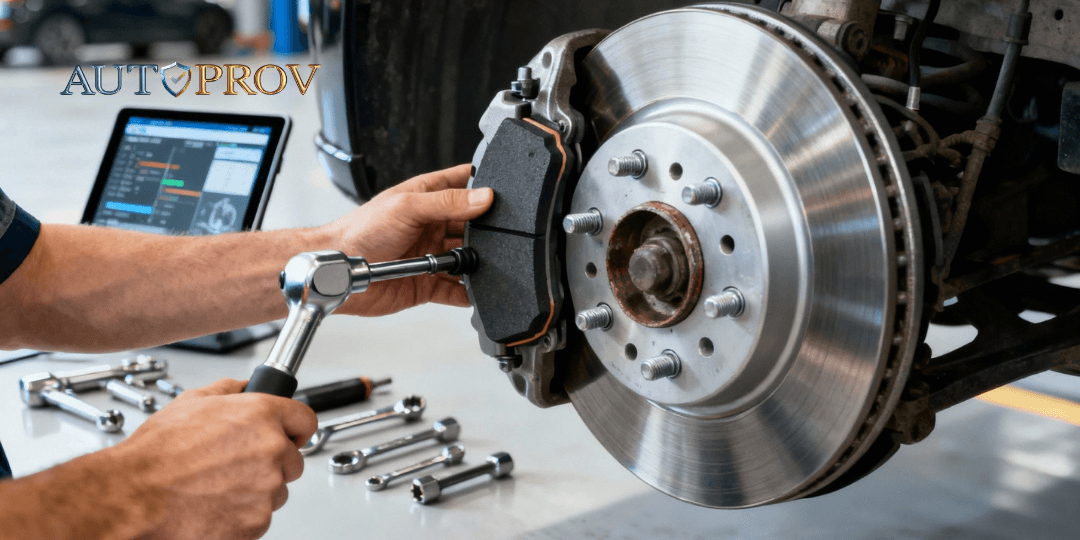
A professional brake pad replacement is far more than just a nuts-and-bolts job. It’s one of the most critical safety services a workshop provides, and the quality of your work directly defines your reputation. This isn't about simply swapping old pads for new; it’s a detailed diagnostic process that guarantees long-term reliability and earns customer trust. At AutoProv, we believe that leveraging accurate vehicle data is the key to delivering this exceptional level of service.
A professional brake pad replacement is far more than just a nuts-and-bolts job. It’s one of the most critical safety services a workshop provides, and the quality of your work directly defines your reputation. This isn't about simply swapping old pads for new; it’s a detailed diagnostic process that guarantees long-term reliability and earns customer trust. At AutoProv, we believe that leveraging accurate vehicle data is the key to delivering this exceptional level of service.
Beyond the Basics of Brake Pad Replacement
This guide is for the UK mechanic who wants to take their brake service from good to great. We're going to move past the standard procedures you could find anywhere. Instead, we'll dig into the real-world nuances—from correctly diagnosing a soft pedal to figuring out the root cause of uneven wear. A thorough job stops the car, but it also stops comebacks and builds a name for quality work.
We’ll also look at how modern tools are changing the game. By pulling in a platform like AutoProv, you can get your hands on specific vehicle data and service history in seconds. This turns a standard job into a data-driven service, a massive advantage that sets your workshop apart and links directly to the high-quality, transparent services we champion.
Here’s a snapshot of what we’ll cover:
- Precision Diagnostics: Getting to the true cause of brake issues, not just treating the symptoms.
- Accurate Quoting: Using vehicle-specific data to price jobs fairly and transparently.
- Professional Execution: Adhering strictly to manufacturer torque and fitting specifications.
- Digital Record-Keeping: Building a verifiable service history for every vehicle that rolls through your doors.
For a wider view on vehicle maintenance, our article on essential car maintenance tips for UK drivers is a great resource for both you and your customers.
A proper brake job isn't just about stopping power—it's about confidence. It’s the reassurance you give a customer that their car's most important safety system has been serviced without a single compromise, using the right parts and procedures, every single time.
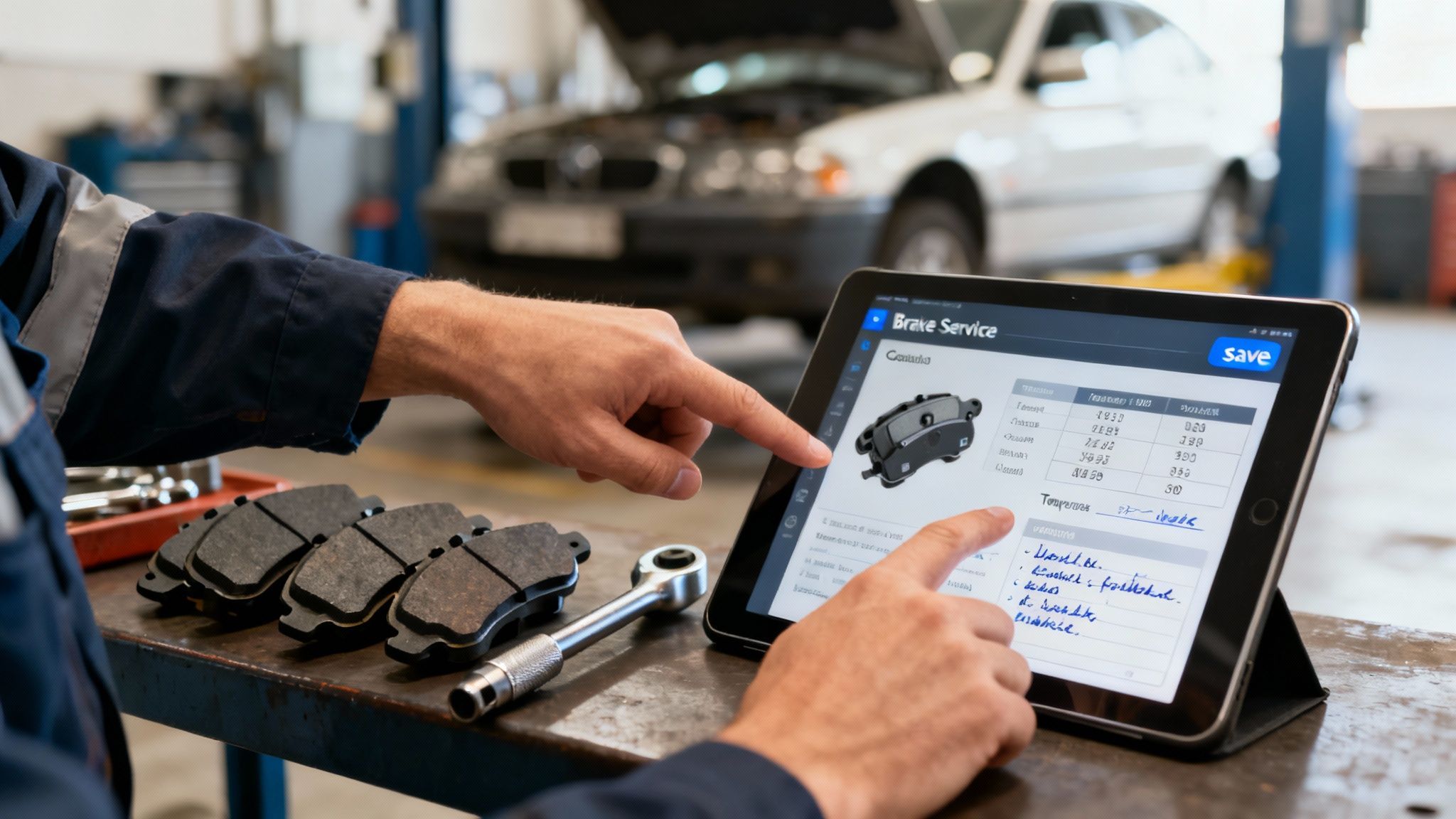
This kind of digital workflow, where technicians can access vehicle data instantly on a tablet, is becoming the new standard.
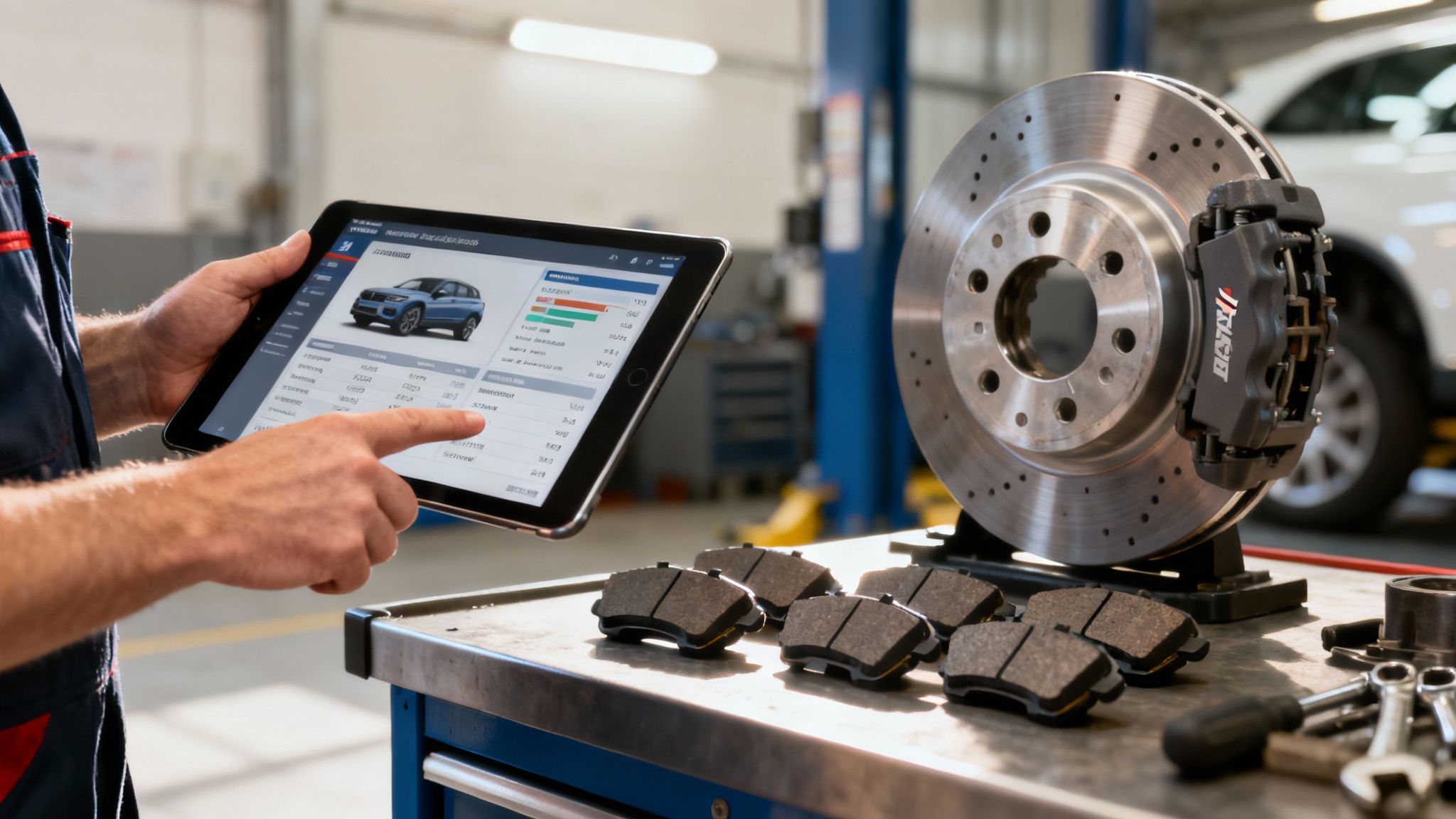
Having this information at your fingertips means you can speed up diagnostics, order the correct parts first time, and give customers precise, data-backed quotes. It builds trust and efficiency right from the moment a car enters your bay, reflecting the streamlined service philosophy of AutoProv.
Mastering Diagnostics and Inspection
A proper brake job starts long before you even touch a spanner. It begins with your ears, your hands, and a good conversation with the driver. This initial diagnosis is what separates a routine pad swap from a major brake overhaul, and it's your first real chance to show the customer you know your stuff.
The most common complaint is noise, but you have to know what you're listening for. Can you tell the difference between the high-pitched squeal of a wear indicator doing its job and the brutal, metallic grind of a backing plate chewing into a brake disc? That grinding sound is an immediate red flag. It tells you this job has just escalated from pads to new discs, and you’ll need to give the calipers a very close look.
Likewise, if a customer mentions a pulsing or vibration through the brake pedal, your mind should immediately go to warped discs. This is often caused by intense heat cycles or just driving for too long on worn-out pads.
Conducting a Thorough Physical Check
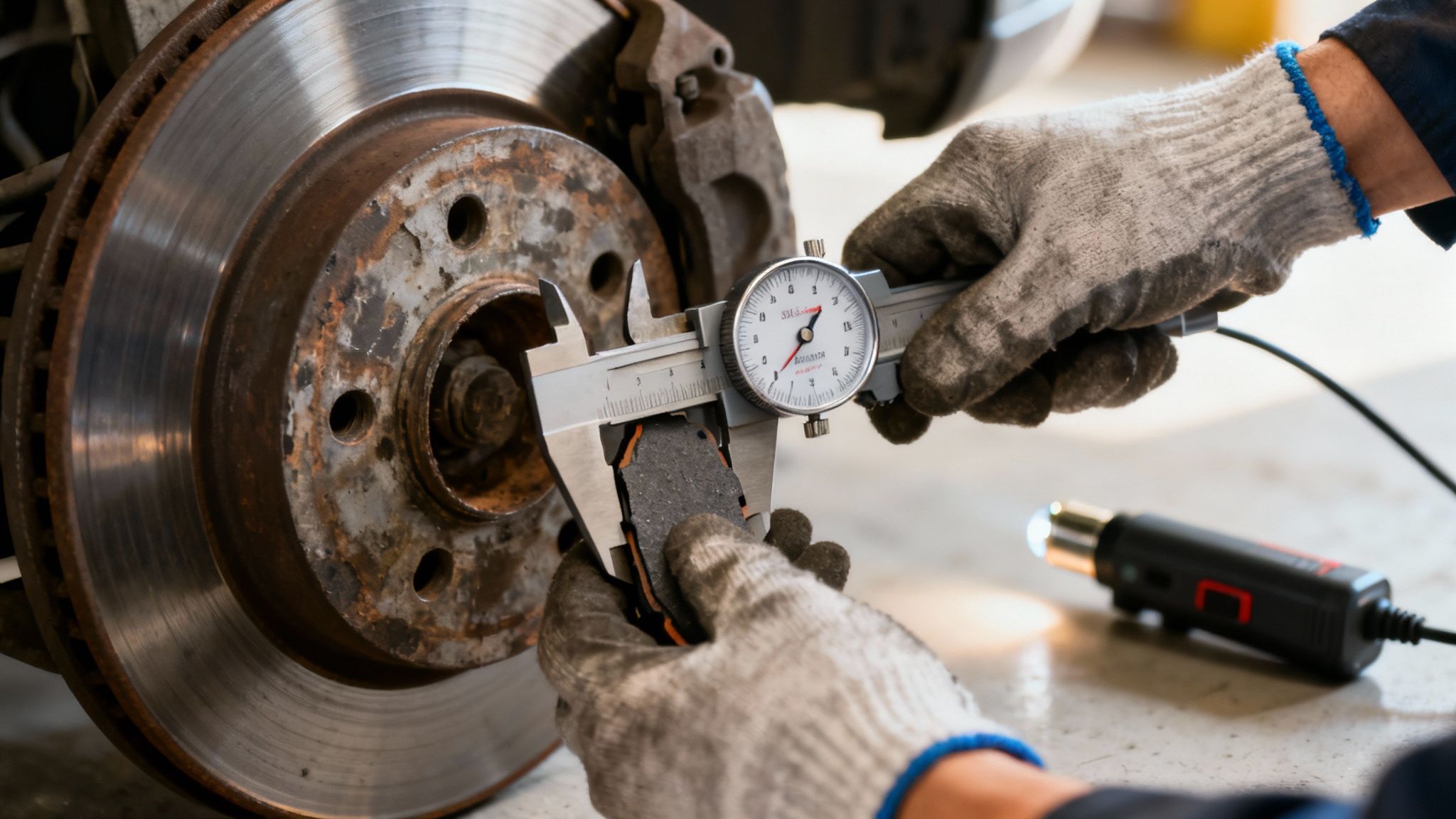
Once you get the car up on the ramp, the visual check is where you confirm those initial suspicions. Don’t just glance at the pad thickness. You're looking for the story the brakes are telling you. Uneven wear is a classic sign of a sticking caliper piston or seized guide pins. If that inner pad is worn down to nothing while the outer one looks almost new, you’ve found a caliper problem that needs sorting before any new pads go on.
A brake pad thickness gauge is a must-have, but the numbers it gives you are meaningless without context.
Knowing a pad is at 3mm is only half the story. You need to know the manufacturer's specified minimum thickness for that exact vehicle. Anything else is just guesswork, and that’s not a risk worth taking.
This is where having access to the right data really pays off. With AutoProv, you can punch in the vehicle’s registration and instantly get the OEM specifications, including the minimum thickness for both pads and discs. This isn't just about doing the job right; it's about building a solid, defensible repair plan. You can show the customer, in black and white, why a replacement is needed based on the manufacturer’s own safety standards. It's the same data-first approach we champion in our ultimate used car inspection checklist, where facts always trump opinion.
Leveraging Data for a Complete Diagnosis
Good data goes far beyond simple wear limits. It can tip you off to common faults and known issues with certain models. For instance, some cars are notorious for seizing rear calipers, while others have recurring ABS sensor faults that can present symptoms that look a lot like other brake problems.
Using a platform like AutoProv lets you see these potential hurdles before you’ve even quoted the job. This means you can:
- Order all the likely parts in one go, cutting down on ramp time and delays.
- Give the customer a heads-up about related repairs, managing their expectations from the start.
- Price the job accurately, reflecting the full scope of work needed for a safe, lasting fix.
Suddenly, a standard brake check becomes a full diagnostic service. It's this level of thoroughness that sets your workshop apart and, most importantly, prevents those frustrating and costly comebacks.
Executing a Precision Fitting and Torqueing Process
Once you’ve stripped down the old components, the real craftsmanship of a professional brake pad replacement begins. The difference between a job that comes back with a squeal and one that performs flawlessly for thousands of miles lies entirely in these next steps. It’s all about meticulous preparation and refusing to cut corners.
Before you even think about fitting the new pads, your focus should be squarely on the caliper and its carrier. These components need to be spotlessly clean. Any build-up of rust, road grime, or old lubricant on the carrier slides will stop the new pads from moving freely, leading to uneven wear and those dreaded noise complaints down the line. A wire brush and a good quality brake cleaner are your best friends here.
Give the caliper piston the same level of care. When you're retracting it to make space for the new, thicker pads, always reach for a proper piston wind-back tool. Trying to force it back with a G-clamp or a hefty lever can easily damage the delicate internal seals or, on vehicles with electronic parking brakes, completely wreck the caliper motor. A damaged seal lets moisture in and brake fluid out—a recipe for brake failure.
Lubrication and Contamination Control
With everything cleaned, lubrication is the next critical task. A common mistake I see is technicians using the wrong type of grease or just slapping on way too much. Copper grease, for example, is notorious for reacting with the rubber on guide pin boots, causing them to swell up and eventually seize. Stick to a dedicated, high-temperature ceramic brake lubricant.
You only need to apply it sparingly to these specific points:
- The metal-to-metal contact points on the caliper carrier where the pad's 'ears' sit.
- The caliper guide pins (after cleaning and checking them for wear).
- The back of the brake pads where they touch the caliper piston and fingers.
And whatever you do, avoid getting any lubricant, grease, or even fingerprints on the friction surface of the new pads or the brake disc. Contamination is a leading cause of brake squeal and poor performance. I always make it a rule to handle new pads and discs with clean gloves.
The Non-Negotiable Role of the Torque Wrench
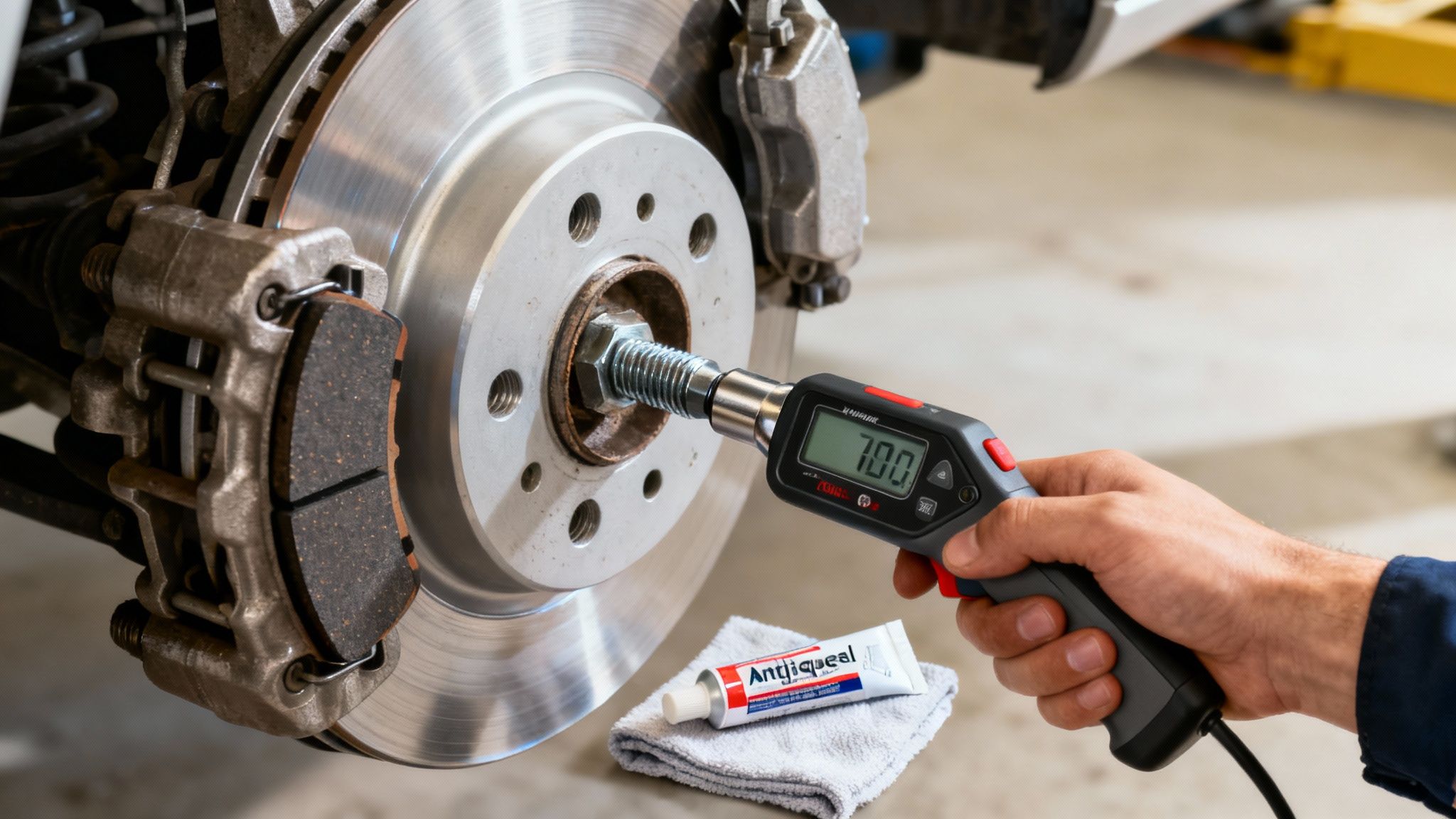
Now we get to the most crucial step for safety and compliance: torqueing. The phrase ‘good and tight’ has no place in a professional workshop. Every single bolt on a braking system has a specific torque setting for a very good reason. Under-tightening can lead to catastrophic failure, while over-tightening can strip threads or distort components, causing brake bind or disc warping.
This isn't guesswork; it's precision engineering. The caliper carrier bolts, the caliper bolts, and the wheel nuts all have manufacturer-stipulated values that you absolutely must follow.
A calibrated torque wrench is not just a tool; it's a liability mitigator. In the event of a component failure, being able to prove you followed the manufacturer's exact specifications, including torque settings, is your best defence. It demonstrates a professional, safety-conscious process.
This is where having instant access to vehicle data is a game-changer. Instead of wasting time digging through technical manuals, a platform like AutoProv lets you pull up the exact manufacturer specifications for the vehicle on the ramp. Just enter the registration, and you get immediate access to the correct torque settings for every bolt. It eliminates doubt and ensures every brake pad replacement is completed to a safe, professional standard. This data-driven approach turns a routine task into a verifiable, high-quality repair, building customer confidence and safeguarding your workshop's reputation.
Estimating Labour and Costing the Job Accurately
Pricing a brake pad job is a bit of a tightrope walk. Go too high, and the customer walks. Go too low, and you're chipping away at your own margin. Nailing that quote comes down to experience and knowing exactly what you’re up against before you even crack a wheel nut.
The final bill is never just about the pads. The real variable is the car itself. Swapping the front pads on a ten-year-old Ford Focus is one thing; it's a routine, predictable job. But tackling the rear pads on a new Audi with an electronic parking brake? That’s a different beast entirely. You’ll need a diagnostic tool just to retract the calipers. One job is a quick 45 minutes, the other could easily stretch to an hour and a half if you hit a snag.
This is exactly why having vehicle-specific data isn't a luxury—it's essential for getting your quote right from the start.
Factoring in Key Cost Variables
A solid, competitive quote has to account for all the moving parts. Thinking through these details beforehand is what separates a professional estimate from a blind guess.
Here’s what I always consider:
- Parts Selection: Is the customer happy with a quality aftermarket brand, or are they insisting on genuine OEM parts? That decision alone can swing the price significantly.
- Vehicle Complexity: Are we dealing with electronic parking brakes? Do the wear sensors need replacing as well? Are they performance calipers that need a bit more finesse?
- Potential Complications: I always build in a small buffer for the usual headaches. A seized guide pin or a stubborn caliper bolt can turn a simple job into a lengthy one, and that’s time you need to account for.
In the UK, the price for a brake pad replacement can be all over the map, depending on the car and where your workshop is. Take a VW Golf, for example. The front pads alone might cost anywhere from £104.95 to £134.95. But then you add labour, which can range from £50 an hour in some areas to over £90 in others. A garage in Glasgow might quote around £189 for the job, while the same work in London could easily hit £276.50, as highlighted in this regional pricing analysis from Checkatrade.
Building your quote from real data instead of a generic price list is what sets a professional workshop apart. It tells the customer you’ve looked at their car and are giving them a fair price, not just a one-size-fits-all number.
Using Vehicle Data to Refine Your Quotes
This is where a tool like AutoProv really earns its keep. Pop in the registration, and you instantly get the technical specifications and service data you need. You can see the exact braking system you're working with, know if you'll need special tools, and pick the right parts for the job and the customer's budget.
It completely changes how you quote. You can build a price that accurately reflects the work involved, which means fewer surprises for the customer and no nasty shocks for your bottom line. It’s about protecting your margins while building trust. For a broader look at how service costs add up, have a look at our complete UK price guide for car services.
Completing Post-Service Checks and Digital Records
A professional brake pad replacement doesn't end when you torque the last wheel nut. The job's not truly done until you've signed it off with final checks, a proper road test, and a clear handover to the customer. This is where you really cement your workshop's reputation for quality and safety, ensuring the vehicle leaves your bay performing perfectly and that your excellent work is meticulously documented.
Think of it as final quality control. This is your last chance to spot any potential snags before the customer does.
The Final Quality Control Checklist
Before that car comes off the ramp, running through a systematic check is simply non-negotiable. It's a straightforward process that saves you from the headache of costly comebacks and builds that all-important customer trust.
- Fluid Leak Inspection: Get your eyes on the calipers, bleed nipples, and brake hose connections. You're looking for any tell-tale weeping of brake fluid, which could point to a disturbed seal or a connection that's not quite nipped up.
- Pedal Feel Confirmation: With the engine running to get the servo working, give the brake pedal a few firm pumps. It should feel solid and consistent underfoot, not spongy. A soft pedal is a classic red flag for air still hiding in the system.
- The Essential Road Test: There's no substitute for a short, careful road test. This is the only way to be 100% certain the job is spot on. Keep an ear out for any odd noises, feel for vibrations through the pedal or wheel, and make sure the car pulls up straight and true.
Once you’re happy with the work, it's time to brief the customer on the "bedding-in" process. Explaining this clearly is vital for the performance and lifespan of the new brakes. Advise them to take it easy and avoid any harsh, sudden braking for the first 50-100 miles. This gives the new pad material a chance to properly mate with the disc surface.
Proper bedding-in is crucial. It ensures a uniform transfer layer of friction material gets deposited onto the brake disc. This simple process is what prevents brake judder, cuts down on noise, and ultimately maximises the stopping power and longevity of the new components.
The Power of Professional Record-Keeping
In today's market, a quick "all done" at the counter just doesn't cut it anymore. Meticulous, digital record-keeping is what separates a truly professional workshop from the rest. When you document every last detail of a brake job, you're creating a verifiable, transparent service history that adds real, tangible value to the vehicle.
This is exactly where integrating a platform like AutoProv into your workflow gives you a serious edge. Instead of scribbling notes on a dusty job card, you can digitally log every crucial piece of information against the vehicle's permanent record. We're talking exact part numbers and manufacturers, the specific torque settings you applied to every bolt, and any other observations made during the inspection.
This digital provenance provides undeniable proof of a job done right, to manufacturer specification. It’s a powerful tool for building long-term customer loyalty and protecting your workshop's hard-earned reputation. You can get a better sense of why this matters by reading our guide on how to check service history in the UK.
The demand for high-quality parts and servicing isn't going away; in fact, it's growing. The UK automotive brake pads market is projected to grow steadily, driven by rising vehicle ownership and new brake technologies like high-performance ceramic and sintered pads. By adopting a data-first approach to service and documentation, your workshop will be perfectly positioned to meet this demand head-on.
Common Questions We Hear at the Garage
Even the most experienced mechanics field the same questions about brake jobs day in, day out. Getting your answers straight isn't just about good customer service; it's about showing your expertise and building trust. Let's run through some of the most common queries that pop up in the workshop.
One of the big ones is, "Why do my discs need changing too?" It's a fair question. The simplest explanation is that pads and discs wear down as a team. Slap a new set of pads onto a worn, grooved disc, and you’re crippling them from the start. You get a tiny contact patch, which means poor braking and, almost certainly, some horrible squealing noises.
Then comes the classic debate over OEM versus aftermarket parts. Customers often worry that "aftermarket" is just a polite word for "cheap and nasty." This is a great chance to educate them. Many reputable aftermarket brands actually meet or even beat the original specifications, offering a solid, safe alternative that’s kinder on the wallet.
Explaining the Non-Negotiables
You’ll definitely hear this one: "Can't you just change the pads on the one wheel that's making noise?" The answer has to be a firm, clear "no." Brake pads are always, without exception, replaced in axle pairs—both fronts or both rears together. Anything else creates a dangerous braking imbalance, causing the car to pull sharply and unpredictably to one side when you hit the pedal. It's a massive safety issue.
This often leads to a conversation about uneven wear. When a customer asks why their front pads are shot but the rears look fine (or one side is worse than the other), it’s a perfect opening to talk about the diagnostic work you’ve done. It's rarely the pads' fault; it's usually a symptom of a sticking caliper piston or seized guide pins, which you've already found and sorted.
Taking a moment to explain why you have to replace pads in pairs isn't upselling. It's fundamental to customer safety and education. This builds a kind of trust that keeps them coming back, knowing you're putting their safety first.
Setting Realistic Expectations
Finally, the crystal ball question: "How long will these new pads last?" This is a real minefield. There are just too many variables—driving style, the type of car, whether they're doing city miles or motorway cruising. The best approach is to manage expectations. Don't give a specific mileage. Instead, explain that someone with a gentle commute on the M1 will get far more life from their pads than a delivery driver navigating stop-start traffic in central London.
By giving these straightforward, logical answers, you shift from being just a mechanic to a trusted advisor. If you want to dive deeper into these topics and have more data-driven answers ready for your team and your customers, our dedicated FAQ section is packed with useful information. It helps get everyone on the same page.
Frequently Asked Questions
AI-Generated Content Notice
This article was created with the assistance of artificial intelligence technology. While we strive for accuracy, the information provided should be considered for general informational purposes only and should not be relied upon as professional automotive, legal, or financial advice. We recommend verifying any information with qualified professionals or official sources before making important decisions. AutoProv accepts no liability for any consequences resulting from the use of this information.
From our AI insights
- The Importance of Tyre Verification for UK Motor Traders
Discover why verifying tyre specs is crucial for UK traders to ensure safety and compliance.
- Decoding CO2 Emissions: A Trader's Guide
Learn how traders can verify CO2 data using factory build sheets to prevent disputes.
- Navigating Recall Compliance for UK Car Traders
Ensure compliance with recall regulations: essential steps for UK car traders.
Related Articles

The Importance of Car Maintenance and Provenance Checks
Discover why regular car maintenance and proper provenance checks are essential for vehicle quality and longevity.
Essential Car Maintenance Tips for UK Drivers
Discover vital car maintenance tips to keep your vehicle roadworthy and compliant in the UK.
How Much Is a Car Service? Complete UK Price Guide
Trying to pin down exactly "how much is a car service?" can feel a bit like asking "how long is a piece of string?". Prices vary quite a bit, but to give you a ballpark figure, an interim service will usually set you back around £100 to get started. A more thorough full service often begins at £180, while a major service for many cars can easily top £300.
Published by AutoProv
Your trusted source for vehicle intelligence
