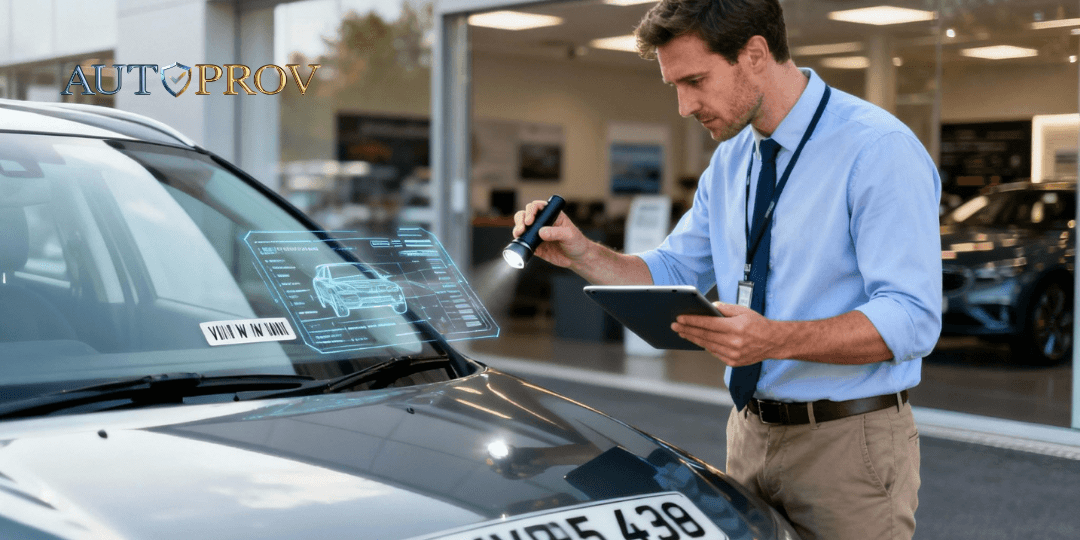
When it comes to stopping car cloning dead in its tracks, a UK dealer’s best defence is a two-pronged attack: rigorous physical inspections on the forecourt and comprehensive digital due diligence behind the scenes. Just glancing at a V5C logbook simply doesn’t cut it anymore. Criminals are churning out forgeries so convincing they can fool a seasoned eye, which is why you need sharp instincts and even sharper data tools to uncover the truth. Get this wrong, and you're not just looking at a financial loss; you're risking your reputation.
When it comes to stopping car cloning dead in its tracks, a UK dealer’s best defence is a two-pronged attack: rigorous physical inspections on the forecourt and comprehensive digital due diligence behind the scenes. Just glancing at a V5C logbook simply doesn’t cut it anymore. Criminals are churning out forgeries so convincing they can fool a seasoned eye, which is why you need sharp instincts and even sharper data tools to uncover the truth. Get this wrong, and you're not just looking at a financial loss; you're risking your reputation.
The Hidden Dangers of Car Cloning for UK Dealers
It’s the modern dealer’s nightmare: a vehicle that looks perfect on paper but could cost you everything. Car cloning isn't just about a dodgy number plate. It’s a sophisticated crime where criminals meticulously create a new identity for a stolen car, lifting the details from a legitimate, roadworthy vehicle—often the exact same make, model, and colour.
This creates a near-perfect copy, one specifically designed to sail through the checks of even experienced motor-trade professionals. The consequences of falling for it are severe.
The Real Cost to Your Dealership
When you unwittingly buy a cloned car, you're not just adding to your stock; you're acquiring a ticking time bomb. The second its real identity comes to light, the police will seize it as stolen property. You're left with a total loss on your investment. There’s no compensation scheme—the car, and every penny you paid for it, are gone.
Beyond the immediate financial gut-punch, the ripple effects can poison your business for years. Just think about the potential fallout:
- Legal Headaches: Being in possession of stolen goods, even if you had no idea, can drag you into messy legal complications and police investigations.
- Reputation in Tatters: If you sell that cloned car to a customer, the ensuing chaos will shatter their trust and drag your dealership’s name through the mud.
- Wasted Resources: All the time, money, and effort spent sourcing, prepping, and marketing that vehicle? All down the drain.
A Growing Threat Across the UK
This isn't some rare, one-off problem. The scale of vehicle cloning is escalating at an alarming rate. Between 2013 and 2023, the number of UK motorists who contacted the DVLA about fines for cars they didn't even own surged by a staggering 689%. This explosion is largely fuelled by number-plate cloning, which itself jumped 26% between 2022 and 2023 alone.
This isn't just a headache for the public; it's a direct threat to your forecourt. Every single one of those cloned plates is attached to a vehicle that could be offered to your dealership tomorrow, carrying an immense risk.
This is exactly why building a powerful vehicle provenance check into the very start of your buying process is non-negotiable. Services like AutoProv are your first line of defence, instantly cross-referencing the crucial data points that criminals are betting you’ll overlook.
Understanding these risks is paramount, which is why we’ve gone into more detail in our motor trader's guide to a stolen car check. By arming your team with the right tools and knowledge, you can turn a potential business-ending threat into a manageable risk.
Hands-On Checks to Uncover a Cloned Vehicle
While the digital data provides a crucial layer of defence, your best protection against car cloning starts with a proper, hands-on inspection. It’s time to get out of the office and get your hands dirty. The physical vehicle itself almost always holds the subtle, tell-tale signs of a fraud if you know where to look.
This meticulous process needs to become second nature for every car that enters your appraisal bay.
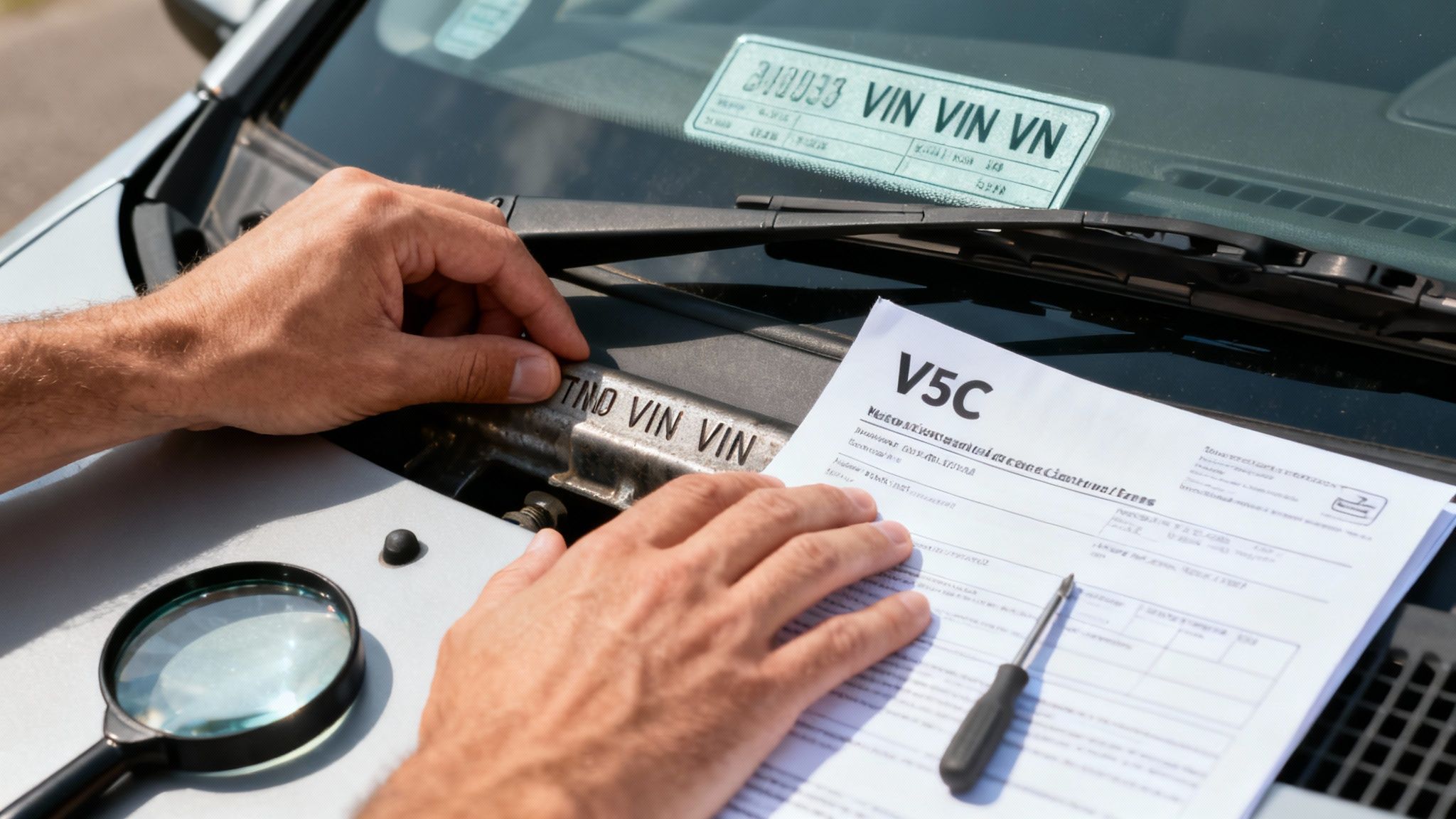
The single most important piece of data you have is the Vehicle Identification Number (VIN). Criminals know this, so it’s the first place they focus their efforts to make a clone convincing. Just glancing at the VIN plate through the windscreen isn’t nearly enough; a professional inspection demands a multi-point verification.
Scrutinising the VIN The Right Way
You must physically check the VIN in at least three key locations, making sure they are a perfect match. Any discrepancy, no matter how tiny, is an immediate red flag. It means you stop the acquisition process right there.
- The Windscreen Plate: This is the obvious one, usually on the passenger side at the bottom of the windscreen. Check for any sign that the plate has been glued on, tampered with, or looks newer than the surrounding area.
- The Chassis Stamp: This is the VIN that’s toughest for crooks to fake. It's physically stamped into the car's chassis, often found in the engine bay, on the driver's side door jamb, or tucked under the carpet. Look for uneven spacing, weird fonts, or any evidence of grinding and re-stamping.
- The V5C Logbook: The VIN printed on the official V5C must be an exact match to both the windscreen and chassis numbers. No excuses.
A mismatch between these locations is the classic sign of a cloned or heavily altered vehicle. This physical check is the absolute foundation of any decent vehicle appraisal. For a deeper dive into the full inspection process, you might find our ultimate used car inspection checklist a useful resource to run alongside these cloning-specific tips.
Examining the V5C Logbook for Forgery
A genuine V5C is more than just a bit of paper; it’s a security document. While forgeries are getting better, they're rarely perfect. Train your team to use their eyes and their hands when they handle the logbook.
A real V5C has a distinct feel and a DVL watermark you can see when you hold it up to the light. The paper shouldn't feel flimsy or like it just came out of an office printer. Look for spelling mistakes, fuzzy text, or dodgy fonts—these are dead giveaways of a fake.
A seller turning up with a very recently issued V5C should always ring alarm bells. Criminals often apply for a replacement logbook to try and 'clean' the vehicle's history, hoping it will stop you from digging deeper into its stolen past.
Checking Number Plates and Service History
The number plates themselves can tell a story. As of 2021, all new plates must meet the BS AU 145e standard. This means no stylised fonts or dodgy spacing, and they must show the supplier's name and postcode at the bottom. Plates that look old, damaged, or illegally spaced could be part of a lazy attempt to disguise the car’s real identity.
Finally, get forensic with the service history. A full main dealer history is great, but even independent garage stamps can be verified. Look for consistency in the stamps and handwriting. Does the mileage progression actually make sense? If anything feels off, pick up the phone and call the garage listed to confirm they serviced that specific vehicle on that date.
These are the on-the-ground skills that separate a diligent dealer from one who gets stung.
Digital Due Diligence: Your Most Powerful Defence
Right, you’ve given the car a thorough physical once-over. Now it’s time to head back to the office, because the real investigation happens online.
This is where you move from what you can see and touch to the hard data—the hidden story a cloned car is desperately trying to conceal. Your digital due diligence is the most critical layer of defence in your dealership's anti-cloning strategy.
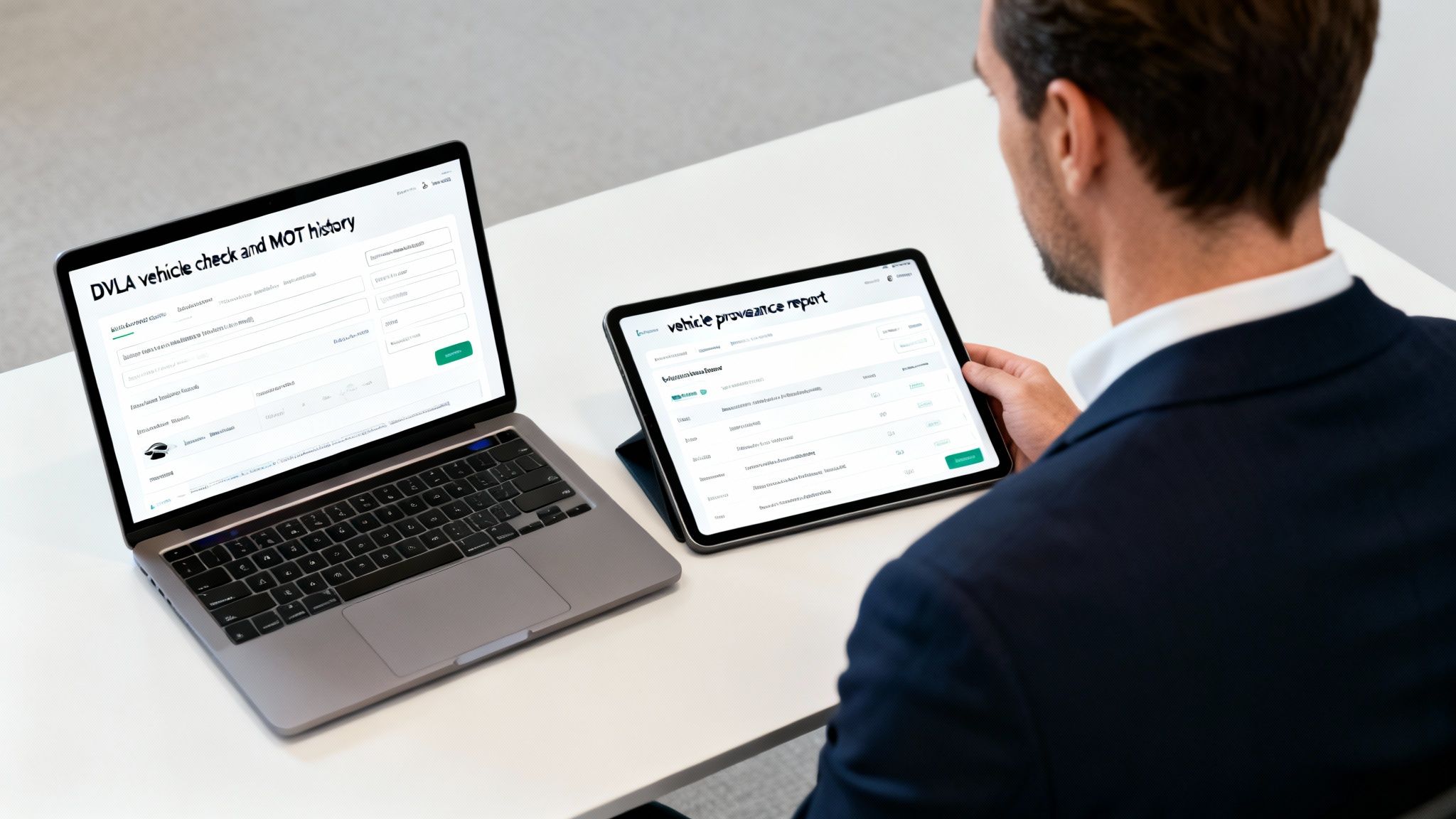
The first, most basic port of call is the DVLA's free online vehicle information checker. You pop in the registration number and check the results against the V5C you’re holding. Make, model, colour, date of first registration—it all needs to match perfectly. Any discrepancy, no matter how small you think it is, is a massive red flag.
But here’s the thing: relying only on this public check is a rookie mistake. Criminals aren’t daft; they clone cars using the details of legitimate, identical vehicles. That means the basic DVLA check will often come back looking completely normal. To find the cracks in their story, you need to dig a whole lot deeper.
Reading Between the Lines of the MOT History
The public MOT history is an absolute goldmine of information, but only if you know what you’re looking for. It's not just about passes and fails; you’re hunting for suspicious patterns and inconsistencies that just don’t add up.
Look closely at the mileage progression. Has there been a sudden, massive drop? Or maybe a few years with barely any miles added? That could suggest the car was stolen and stashed away before being given its new identity. On the flip side, a huge jump in mileage that makes no sense for the type of car is just as worrying.
And don’t just glance over the advisories. If one MOT has a long list of warnings about corrosion and the next one is magically pristine, you might be looking at two different cars sharing the same registration.
Why a Full Provenance Report is Non-Negotiable
This is where a professional-grade vehicle provenance report becomes absolutely essential. The free, public data only scratches the surface. To truly protect your business, you need access to the restricted, trade-only databases where the real story is told.
A comprehensive provenance report is your single most powerful weapon against car cloning. It pulls together vital data streams you can't access individually, giving you the complete, unvarnished truth about a vehicle in seconds.
Services like AutoProv are built from the ground up for the motor trade, consolidating all the crucial information that exposes a clone in an instant. This isn't just a simple history check; it's a full-blown security audit. For a deeper dive into how these checks work, have a look at our guide to vehicle checks with a VIN number.
The Critical Data Markers That Expose the Truth
A professional report interrogates databases that reveal a vehicle's deepest secrets. This is the kind of information that stops a fraudulent deal dead in its tracks.
- Police National Computer (PNC): This is the ultimate deal-breaker. A proper report will instantly flag if the vehicle is listed on the PNC as stolen. No ambiguity, just a clear "yes" or "no."
- Outstanding Finance: Is there finance tied to the vehicle's VIN? Scammers often sell a cloned car to illegally settle the debt on the original. If you buy it, that outstanding loan could become your problem.
- Insurance Write-Offs: The report will check the Motor Insurance Anti-Fraud and Theft Register (MIAFTR). This tells you if the car has ever been declared a write-off (Category S or N), a fact cloners love to hide by using the identity of a clean car for a damaged one.
This level of scrutiny has never been more important. Official figures show a worrying trend: the DVLA recorded 5,683 number-plate thefts in one recent year, a huge jump from 3,376 just three years earlier. It doesn't help that there are over 34,000 DVLA-registered number-plate suppliers operating with minimal checks, making it far too easy for criminals to get their hands on convincing plates.
By making a professional provenance check a mandatory part of your buying process, you stop relying on guesswork. You arm your business with verifiable data, making it almost impossible for a cloned car to ever end up on your forecourt.
Building a Fraud-Proof Dealership Culture
Individual checks are a great start, but they’re just single points of defence. A truly secure dealership runs on a system where every team member is a guardian of your forecourt's integrity. To really get ahead of car cloning in the UK, it’s not just about a checklist; it's about weaving vigilance into your daily operations and creating a culture that instinctively flags and rejects fraud.
This all starts by standardising your approach to every single vehicle that comes your way. There can be no shortcuts, no matter where the car is from.
Standardise Your Acquisition Policy
First things first: you need to create a non-negotiable vehicle acquisition policy. This isn't just a friendly guideline; it's a mandatory workflow that every member of your buying team has to follow, every single time. A strict policy like this brings consistency and seriously reduces the risk of human error or a rushed decision letting a cloned car slip through.
Your policy needs to be crystal clear, covering the absolute essentials of your due diligence:
- Physical Inspection Mandate: Every vehicle must have the full physical once-over we've already covered. That means checking all VINs, the V5C, and the number plates before any offer is even whispered.
- Digital Verification Rule: A comprehensive AutoProv provenance report must be run on every potential acquisition, without exception. The results then get saved straight to the vehicle's stock file.
- Payment Protocols: Lock down your payment rules. For instance, you could mandate that funds are only ever transferred to a bank account matching the name on the V5C. No exceptions.
Having a robust system doesn't just stop cloned cars; it also makes your entire intake process smoother. You can learn more about optimising these workflows in our guide to UK vehicle inventory management software, which can help slot these checks seamlessly into your day-to-day.
Handling High-Risk Buying Scenarios
Your acquisition policy must have specific clauses for different buying situations, because not all sources carry the same level of risk. Auctions generally offer a degree of protection, but a private sale? That demands a whole other level of scrutiny.
A private seller pushing for a cash deal is arguably the biggest red flag in the motor trade. It's a classic move by criminals to avoid leaving any kind of paper trail. Your policy should treat these situations with extreme caution—perhaps even requiring a senior manager's sign-off or extra ID verification steps before you go any further.
Think about the seller's story. Does it add up? Are they happy to meet you at their home address listed on the V5C, or are they suggesting a neutral spot like a supermarket car park? The latter is a massive warning sign.
A legitimate seller will almost always understand why you need to do thorough checks and use transparent payment methods. Someone who gets defensive, evasive, or tries to rush you is probably hiding something you don't want to find.
Empower Your Team Through Training
Your policies are only as good as the people putting them into practice. This is why ongoing staff training is the single most critical part of building a fraud-proof culture. You need to empower everyone—from the junior appraiser to the seasoned sales exec—to be your eyes and ears on the ground.
Training can't be a one-off box-ticking exercise. It has to be a continuous process, keeping your team clued up on the latest tactics criminals are using. This approach transforms them from people who just process cars into an active line of defence for your business.
Your training programme should hammer home three key areas:
- Recognising Suspicious Seller Behaviour: Teach your team to spot the behavioural red flags. We're talking about sellers who are overly pushy, have a vague or inconsistent story about the car's history, or refuse to provide basic ID.
- Mastering Your Tools: Make sure everyone is an expert with the tools you use. This isn't just about running an AutoProv report; it’s about knowing how to read every data point, from a finance marker to a PNC stolen status alert, and understanding what it means.
- Knowing When to Walk Away: This is crucial. You must empower your staff to say "no." Create an environment where they feel confident enough to kill a deal if something doesn't feel right, without any fear of comeback for losing a potential car.
By investing in this cultural shift, you move beyond just individual actions. You create a unified, vigilant team that protects your dealership's finances and reputation from the inside out.
What to Do When You Suspect a Cloned Car
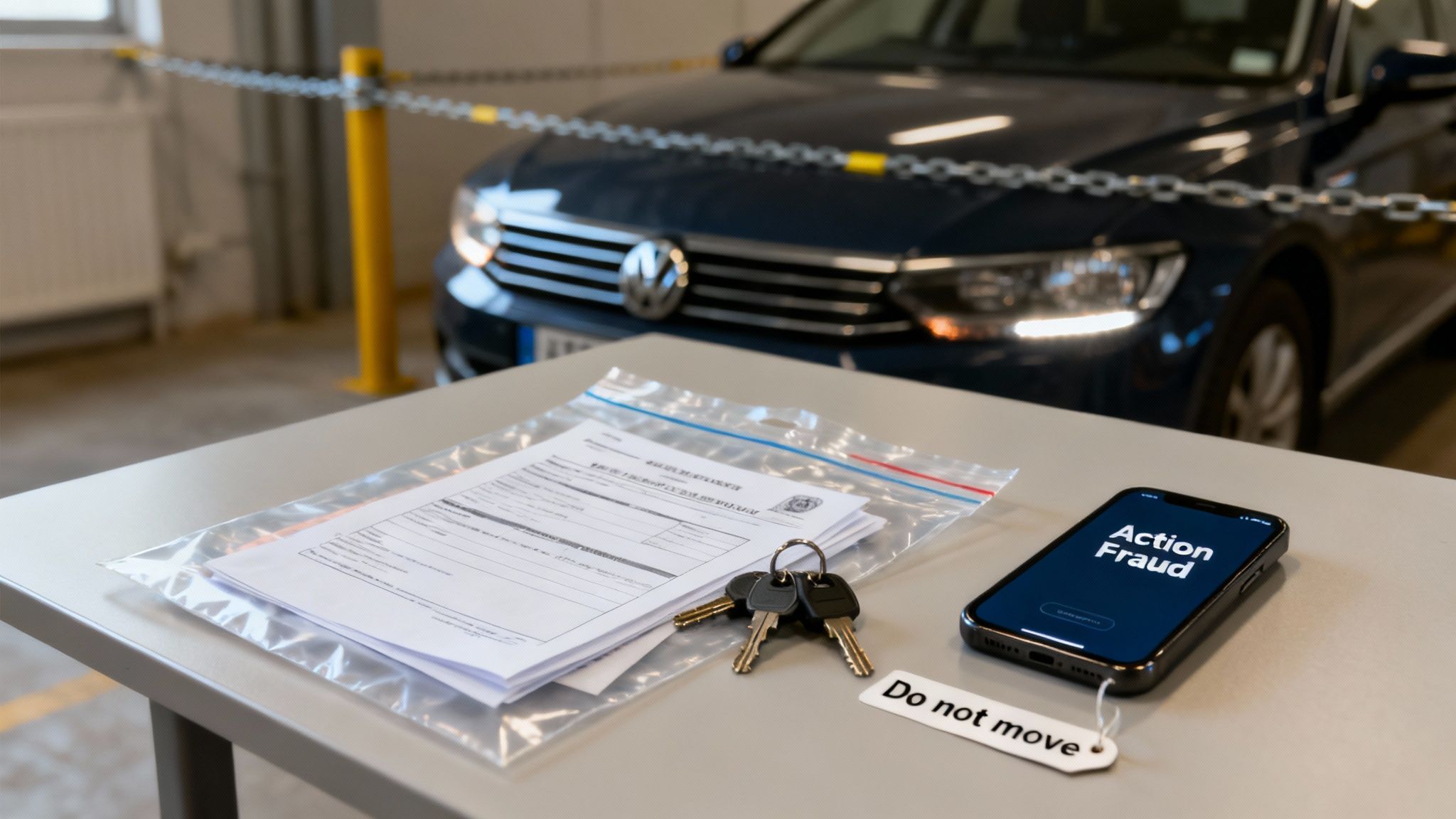
That sinking feeling when the paperwork doesn't quite add up is something no dealer wants. Discovering a potential clone on your forecourt can set the pulse racing, but having a clear plan transforms that initial panic into a controlled, professional procedure.
The key is to act swiftly and methodically. Your response not only protects your business from a significant loss but also plays a vital role in tackling the wider vehicle crime epidemic.
First things first: do not proceed with the transaction. It doesn’t matter if it’s a nagging doubt or a glaring red flag. Halt everything. Crucially, avoid confronting the seller or letting on that you suspect a problem. This could easily cause them to bolt, taking valuable evidence with them. Your priority is to manage the situation safely.
Secure the Vehicle and Documents
Your goal is to keep the vehicle and its documents—especially the V5C—on your premises while you take the next steps. You need a plausible reason for the delay.
Politely explain to the seller that you need a bit more time to finalise your checks, or perhaps that a senior manager needs to sign off on the paperwork. Most of the time, this is enough to buy you the time you need.
But what if the seller gets agitated or demands to leave with the car immediately? Don't ever put yourself or your staff at risk. Let them go. But as they do, make a detailed note of their appearance, the vehicle details, and the exact time. This information is gold for the police.
Your Immediate Reporting Protocol
Once the situation is under control, you need to contact the authorities in a specific order. This ensures the incident is logged correctly and investigated efficiently. Having a clear audit trail of every check you performed is absolutely essential for proving your due diligence and shielding your dealership from any legal blowback.
Here are the key steps for reporting a suspected clone:
- Contact the Police: Dial 101 (the non-emergency number) right away. State that you're a motor trader with a suspected cloned vehicle on site. Give them the registration number, VIN, and a description of the seller. If you feel there's an immediate threat, don't hesitate—call 999.
- Report to Action Fraud: This is the UK's national reporting centre for fraud and cybercrime. You can file a report on their website or over the phone. This creates an official crime record and feeds into national intelligence, helping authorities connect the dots on larger criminal operations.
- Inform Your Provenance Check Provider: If you used a service like AutoProv, get in touch with their support team. They can flag the vehicle's record, which helps protect other traders who might run a check on the same registration.
Remember, the reports you run are your evidence. The comprehensive data from an AutoProv report—showing discrepancies in mileage, finance markers, or a stolen alert—provides a bulletproof justification for your actions and proves you followed a professional process.
Understanding the Wider Context of Enforcement
Your vigilance is a crucial part of a much larger fight against vehicle crime. Law enforcement is increasingly using technology to spot fraudulent plates on the road. For instance, Transport for London (TfL) deployed advanced cameras to tackle 'ghost' plates from July 2023. An initial sweep found non-compliant plates on a staggering 41% of 1,000 licensed taxis, resulting in over 4,200 fines. This shows how focused enforcement can make a real difference. You can read more about the widespread issue of number plate illegality.
By reporting a suspected clone, you're doing more than just preventing a loss for your business. You're providing critical intelligence that helps the police dismantle organised criminal networks. It's about professionally managing a tough situation, minimising your liability, and contributing to a safer market for everyone.
Your Car Cloning Questions Answered
Even with the sharpest processes, you'll still run into situations that make you pause. Here are some of the most common questions we hear from dealers on the front line of car cloning prevention, with clear answers to back up the strategies we've covered.
What If a V5C Has a Recent Issue Date?
A logbook with a brand-new issue date isn't a guaranteed red flag, but it should definitely make you sharpen your focus. There are plenty of legitimate reasons for it, like a recent purchase, a change of address, or a cherished plate transfer.
But here's the catch: criminals love getting a fresh V5C. They do it to wipe the slate clean or create a more convincing fake. If you see a new issue date, your due diligence needs to kick into a higher gear. Get back to basics with your physical VIN checks and make a comprehensive AutoProv report a non-negotiable part of the deal. It's the only way to be sure you're seeing the vehicle's true, unedited history.
Can a Cloned Car Still Have a Clean History Report?
Yes, absolutely. And this is the detail that trips up so many people. A basic history check that just pings the registration against the DVLA database can easily be fooled by a professional clone.
Think about it: the criminals have pinched the identity of a legitimate, identical car. So when you run the reg number, the data that comes back will look spotless because it belongs to the genuine vehicle. This is exactly why a proper, professional-grade provenance report is so essential.
A service like AutoProv digs much deeper. It cross-references the VIN against restricted law enforcement databases like the Police National Computer (PNC) and private finance company records. A VIN that doesn't align with the registration's known history, or one that flags as stolen, is the single detail that will unravel the entire scam where a basic check would give you a false sense of security.
Is Buying from an Auction Safer Than a Private Sale?
On the whole, yes, but no source is ever completely bulletproof. The big, reputable auction houses usually run their own basic checks and offer a degree of buyer protection, which certainly makes them a lower-risk environment than buying from a stranger in a car park.
That said, organised criminals target auctions, too. The fast pace and high pressure can easily lead to a rushed decision or a missed detail. Your dealership's buying policy has to be applied just as rigorously to auction stock as it is to a private purchase. Never, ever skip the full physical inspection and digital provenance check just because it’s coming from a well-known auction house.
What’s My Legal Position If I Unwittingly Buy a Clone?
In short, it’s not good. If you buy a cloned car, you never actually gain legal title to it. The vehicle always remains the property of the person or company it was stolen from. When the police inevitably track it down, it will be seized and returned to the rightful owner or their insurer.
You are left with a 100% financial loss. The only real defence you have is prevention. Being able to demonstrate that you performed thorough due diligence—including a full provenance report—is absolutely vital. While it won't get your money back, it proves you acted in good faith and protects your professional reputation.
For a complete breakdown of the paperwork, have a look at our guide on what a V5C document is and how to spot a fake.
Frequently Asked Questions
AI-Generated Content Notice
This article was created with the assistance of artificial intelligence technology. While we strive for accuracy, the information provided should be considered for general informational purposes only and should not be relied upon as professional automotive, legal, or financial advice. We recommend verifying any information with qualified professionals or official sources before making important decisions. AutoProv accepts no liability for any consequences resulting from the use of this information.
From our AI insights
- Auction Pitfalls: Avoiding Costly Mistakes
Navigate UK car auctions with confidence by avoiding finance, write-off, and mileage risks.
- Mastering Paint Code Checks: Detecting Hidden Car Repairs
Discover how to use paint code verification to identify hidden car repairs and ensure a smarter purchase.
- UK Part-Exchange Checks: Protecting Dealer Margins
Explore essential part-exchange checks for UK dealers to safeguard profit margins, including provenance and finance verification.
Related Articles

Your Ultimate Guide to Buying a Used Car in the UK
Navigate the UK used car market with confidence using our comprehensive buying guide. Tips, checks, and AutoProv Provenance insights included.
Difference Between MOT and Service: What You Need to Know
An MOT is a mandatory legal inspection that every car on UK roads needs to pass.Think of it as the government's way of ensuring your vehicle meets the absolute minimum safety and environmental standards to be considered roadworthy. A service, on the other hand, is a completely different beast. It's the proactive maintenance routine recommended by the people who built your car, designed to keep it running smoothly and catch problems before they start. In short, an MOT is a pass-or-fail exam required by law. A service is a comprehensive health plan for your car.
Your Ultimate Used Car Inspection Checklist
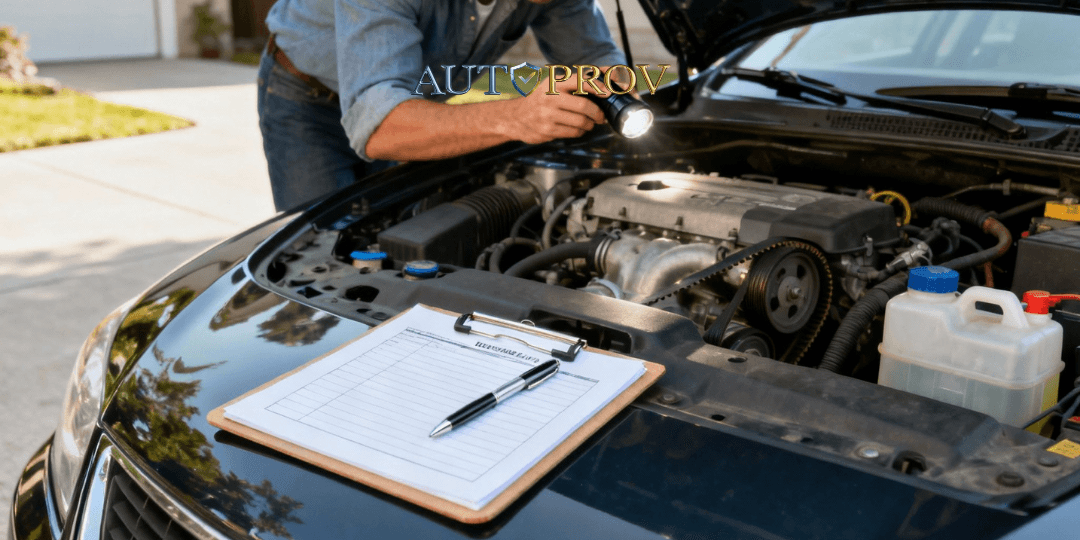
A solid used car inspection checklist is the single most powerful tool you have to avoid buying a lemon. It gives you a methodical way to look past the shiny paint and assess a car's real condition, helping you spot hidden problems and get a fair price before you shake hands on the deal.
Published by AutoProv
Your trusted source for vehicle intelligence