
For any professional in the UK motor trade, the ability to pull up precise car specifications by registration number is the difference between a great buy and a costly mistake. It's the instant check that lets you verify a vehicle's exact trim, engine, and those all-important optional extras in seconds, paving the way for accurate pricing and confident decisions.
Why a Number Plate Unlocks Critical Vehicle Data
In the fast-paced world of the motor trade, speed and accuracy are everything. A simple registration number is so much more than a legal identifier; it's your direct line to a vehicle's entire history and original build sheet.
For dealerships, fleet managers, and auction buyers, relying on the V5C logbook or a seller's word alone is a risky game. The information you really need to make a profitable decision lies much deeper.

This guide is built for professionals who need more than a basic check—for those who know that the difference between a 'Sport' and an 'M Sport' trim can mean thousands of pounds in value. It demonstrates how integrating a service like AutoProv into your workflow is not just an advantage, but a necessity.
Beyond the Basics for Motor Traders
A professional-grade lookup goes way beyond the publicly available MOT and tax status. It digs into the data that genuinely impacts a vehicle's value and desirability. Key data points a proper registration check should instantly reveal include:
- Precise Trim and Model Version: Confirming the exact specification level, which is a massive driver of market value.
- Engine and Transmission Details: Verifying the engine size, fuel type, and gearbox—all crucial for performance, running costs, and buyer appeal.
- CO2 Emissions and Euro Status: This is essential for understanding tax liabilities and whether a vehicle is compliant with emissions zones like ULEZ.
- Factory-Fitted Optional Extras: Spotting high-value additions like panoramic roofs, upgraded sound systems, or advanced driver-assistance packs that you can factor into your pricing.
A professional vehicle intelligence tool doesn't just list data; it puts it into context. It turns a string of characters on a number plate into a detailed report that supports smarter buying, accurate pricing, and faster sales.
Platforms like AutoProv are designed specifically for this job, transforming a simple number plate into a rich report packed with over 40 critical data points. By exploring how AutoProv works, you can see how a single check pulls together multiple data sources into one clear, actionable view.
It completely removes the need to juggle different services, giving you one powerful tool to verify and value vehicles with total confidence.
How a Simple Registration Plate Reveals So Much
Ever wondered how a simple number plate can reveal so much about a car? It’s not just a random string of characters; it’s a direct key to a vehicle’s entire history, logged from the day it was first driven. For anyone in the motor trade, getting your head around this is absolutely fundamental.
The whole system, expertly managed by the DVLA today, ensures every vehicle has a unique identifier. This links back to its core manufacturing data, its MOT history, and its legal status on the road. A registration plate isn't just for identification—it's the digital fingerprint of a car.
From Speed Traps to Spec Sheets
The reliability of this system isn't a recent thing; it has deep historical roots. The UK's vehicle registration framework, which is the bedrock for finding car specifications by registration number, has been evolving since 1903. Back then, the Motor Car Act made registration mandatory, mainly so the police could identify anyone brave enough to break the blistering 20 mph speed limit.
That simple act established the critical link between a physical plate and a vehicle's official record that we rely on today. If you're interested in the origins, you can delve into the history of the Motor Car Act and see how it all started.
The Modern Data Handshake
Fast forward to today, and that connection is infinitely more powerful. When a car rolls off the production line, its unique Vehicle Identification Number (VIN) and detailed build sheet are logged. The moment it's first registered in the UK, the DVLA assigns it a number plate, creating a permanent, digital link between that registration and the car's factory DNA.
This is the "digital handshake" that makes modern vehicle intelligence work. It’s what allows services like AutoProv to take a registration number and instantly pull data from multiple, official sources, turning that simple plate into a detailed, actionable report.
For a dealer, this isn't about convenience—it's about certainty. The number plate becomes an indispensable tool for due diligence, accurate appraisals, and confident buying. It strips the guesswork right out of the valuation process.
Why This is Critical for Accurate Valuations
Understanding this direct data link is non-negotiable if you're buying or selling vehicles professionally. The information you get isn't based on someone's memory or a seller's best guess; it’s pulled from the vehicle's original, registered details. This includes the make-or-break specs that directly hit its value:
- Engine Size and Fuel Type: Instantly confirms the powertrain. Is it the desirable 2.0-litre diesel or the less popular 1.6 petrol? This is a huge factor in performance, running costs, and market demand.
- Trim Level: This is where thousands of pounds can be won or lost. The system distinguishes a high-spec ‘Titanium X’ from a base ‘Style’ model, which is something you can’t always tell from a photo.
- Date of First Registration: Pins down the vehicle's exact age, which is crucial for depreciation calculations.
- CO2 Emissions: Determines the vehicle’s tax band and whether it’s compliant with ULEZ or other clean air zones, directly impacting its running costs and appeal to city buyers.
This pipeline of pure data means you can trust what you see. It gives you the power to appraise and price a vehicle with precision before you’ve even laid eyes on it.
Putting It All Together: A Practical Workflow for Verifying Specs
Okay, let's move from theory to a real-world process for getting and verifying car specs. In the fast-paced trade environment, you need a workflow that’s both quick and solid, starting from the second a potential vehicle pops up on your radar.
The whole thing kicks off with the registration number. Your first move, always, should be to punch that number plate into a professional tool like AutoProv. This generates an instant, comprehensive report, giving you a data-driven foundation—a detailed snapshot of the vehicle before you even lay eyes on it.
Dissecting the Initial Data Report
Once that report lands, the real work begins. Don't just skim the summary. You need to pull the data apart, focusing on the details that have the biggest impact on valuation.
Pay close attention to these critical areas:
- Exact Trim Level: Is it a 'Zetec S' or just a 'Zetec'? That single detail can easily add or subtract hundreds, if not thousands, of pounds from its market value.
- Factory-Fitted Options: Hunt for the high-value optional extras. Does the report list a panoramic sunroof, an upgraded media system, or adaptive cruise control? These are massive selling points and justify a higher price.
- Technical Specifications: Double-check the engine size, fuel type, and CO2 emissions. This information is vital for calculating running costs and making sure the vehicle is compliant with regional standards, like London's ULEZ.
A digital report tells you the "as-built" factory specification. Your next job is to confirm that the car on the ground today still matches that original build sheet. Modifications, repairs, and component swaps are more common than you'd think.
For a deeper dive into what a top-tier check should cover, our ultimate car spec checker guide for trade buyers gives you a complete breakdown of all the essential data points.
The All-Important Physical Check
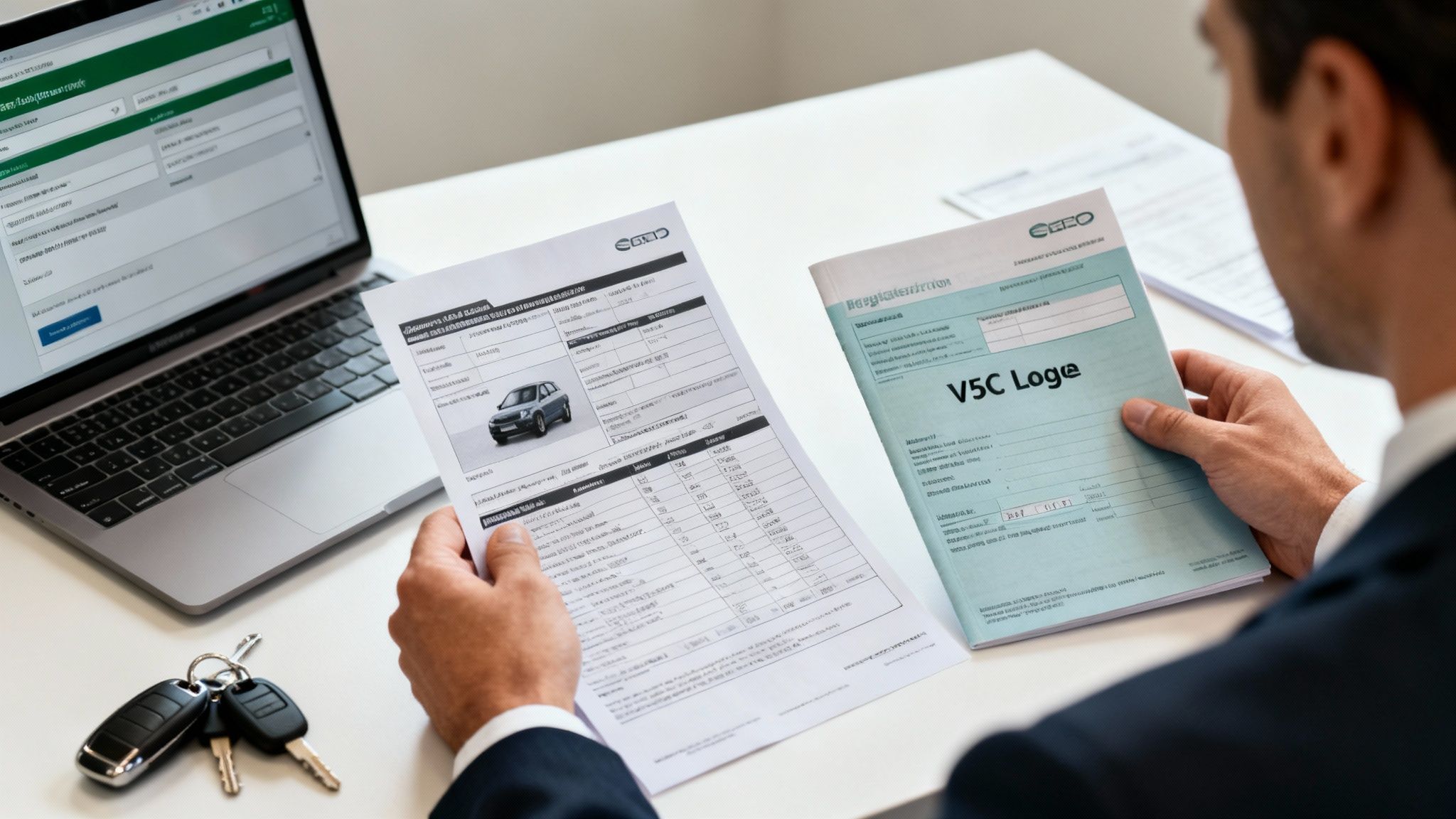
With the digital report in hand, your next move is to compare this data against the physical car and its V5C logbook. This cross-referencing stage is non-negotiable—it's where the most expensive mistakes are caught.
Think about it. The report might list 18-inch alloy wheels, but the car is sitting on cheap 16-inch steel rims. Or maybe the infotainment system in the dashboard is a basic unit, despite the spec sheet listing a premium navigation package. These are the kinds of discrepancies that can seriously tank a vehicle's value and desirability.
Your physical check should be systematic. Walk around the vehicle, get inside, and physically confirm the key features from the report are present and, crucially, functional. This hands-on part of your workflow helps you spot the gremlins and confirm the goodies before you commit to buying, ensuring the price you pay accurately reflects the vehicle's true spec.
It’s this disciplined approach that protects your margin on every single deal.
Handling Discrepancies in Vehicle Data
It’s a scenario every motor trade professional has faced. The data report you pull up says one thing, but the car sitting right in front of you tells a completely different story. Discovering discrepancies between a vehicle's digital record and its physical state is a common headache, but knowing how to handle them is what separates a sharp buyer from one who gets caught out.
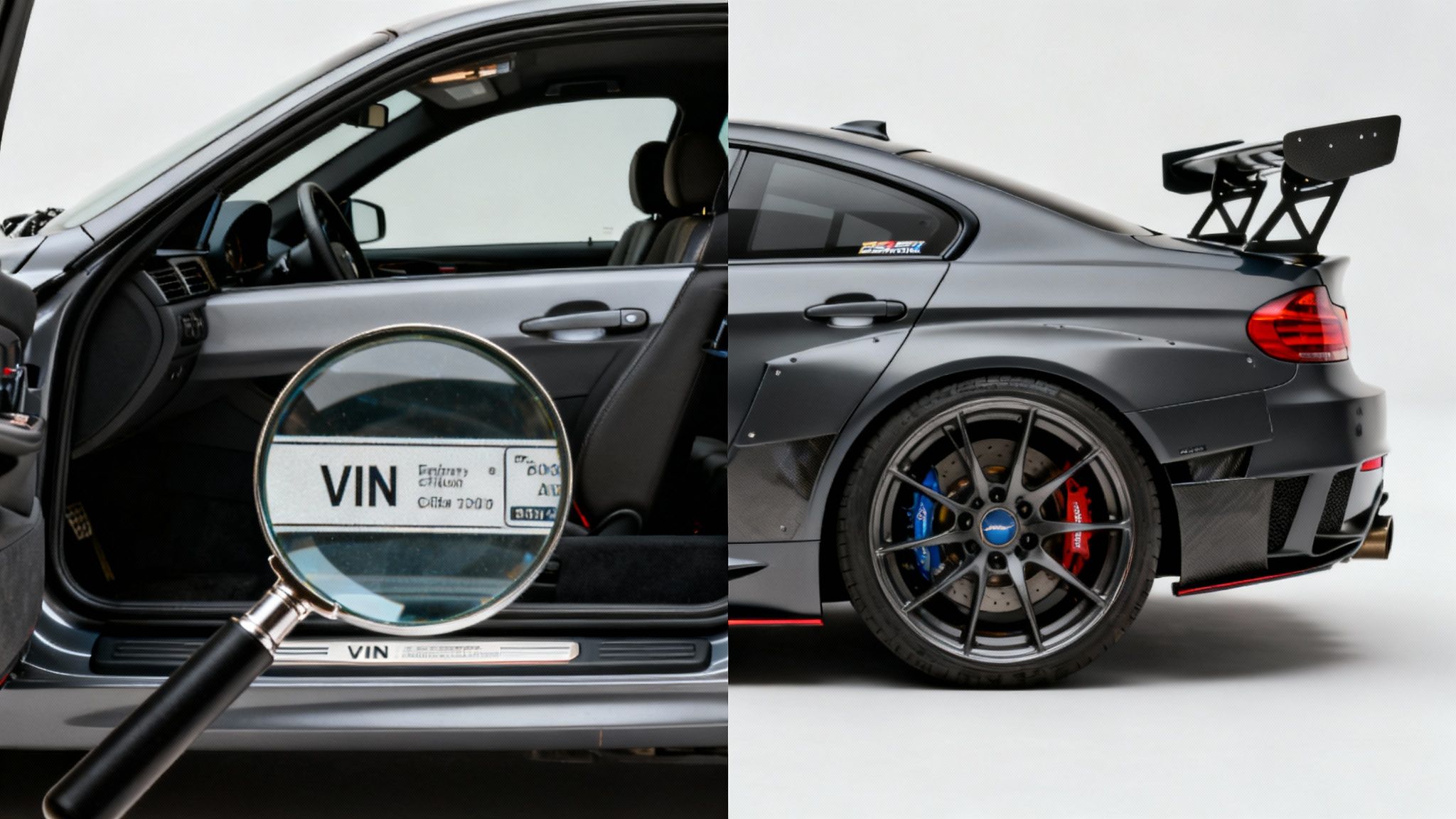
You might find a vehicle listed as a base model that's been cleverly kitted out with aftermarket parts to mimic a high-spec version. Another classic issue is an imported vehicle with an unclear or incomplete history, making its true specifications a mystery. These inconsistencies are serious red flags that demand immediate and thorough investigation before any money changes hands.
Using the VIN as Your Tie-Breaker
When the registration number check raises more questions than it answers, the Vehicle Identification Number (VIN) should be your next port of call. This 17-character code is the vehicle's unique factory fingerprint, permanently stamped onto the chassis. It's far harder to tamper with than a number plate and can often cut straight through the confusion.
By running the VIN against manufacturer records, you can confirm the vehicle's original factory build sheet. This check will verify the exact model, engine, colour, and factory-fitted options as it left the production line. If the VIN details don't align with what the V5C or registration check says, you've uncovered a significant issue that needs explaining. A thorough provenance check on a used car should always include this vital step if discrepancies arise.
Leveraging Multi-Source Data Platforms
This is exactly where a professional vehicle intelligence platform becomes indispensable. Services like AutoProv don't just rely on a single data stream. Instead, they cross-reference information from multiple, authoritative sources in a single search, providing a much clearer and more reliable picture. This multi-layered approach gives you the tools to investigate inconsistencies properly.
For example, a comprehensive AutoProv check will pull data from sources like:
- DVLA records for registration and tax history.
- MIAFTR (Motor Insurance Anti-Fraud and Theft Register) for any insurance write-off history.
- OEM recall information to see if there are outstanding safety notices.
- Experian for outstanding finance agreements.
When you can see data from the DVLA, insurance companies, and manufacturers all in one place, discrepancies become much easier to spot and understand. A mismatch in one area can often be explained by another, giving you the context needed to make an informed decision.
Ultimately, investigating these issues is about protecting your business. It allows you to understand the potential impact on valuation, from minor cosmetic changes to major undisclosed accident damage. Armed with this complete picture, you can confidently adjust your offer or walk away from a vehicle that simply isn't what it seems, safeguarding both your reputation and your bottom line.
Turning Specification Data into a Commercial Edge
Let’s be honest, accurate vehicle data isn't just about ticking boxes for due diligence. It's a powerful tool for boosting your bottom line and carving out an advantage in a seriously crowded market. When you move beyond basic checks and really dig into the detailed car specifications by registration number, you start operating with a whole new level of precision—from the initial appraisal right through to the final handshake.
Think about it. Knowing the exact trim level is one thing, but knowing about the desirable, factory-fitted optional extras? That's the foundation of a sharp valuation. A panoramic sunroof or an upgraded sound system can easily add hundreds, sometimes thousands, of pounds to a vehicle's value. But that value only exists if you know it's there from the start.
Smarter Stock Acquisition and Pricing
Picture this: you're at an auction, and two seemingly identical cars roll through. With instant, detailed data from a platform like AutoProv, you can see that one has the more sought-after engine and a winter pack, while the other is a bog-standard model. That insight lets you bid with confidence, knowing the true market appeal and potential margin on each car.
This data-driven approach takes stock acquisition from a bit of a gamble to a calculated business move. It helps you build an inventory packed with desirable, fast-moving vehicles that your target buyers are actually looking for, which in turn directly improves your stock turnover. For a deeper dive on this, check out our guide on market insights and vehicle pricing.
Crafting Compelling Sales Descriptions
That commercial edge doesn't stop once you've bought the car. When it's time to sell, that same detailed specification data lets you write compelling, fact-based sales descriptions that pull in serious buyers and filter out the time-wasters.
Instead of a generic listing that blends into the background, you can highlight specific, high-value features that justify the price tag:
- "Factory-fitted M Sport Plus package."
- "Includes the desirable Technology Pack with Head-Up Display."
- "ULEZ compliant Euro 6 diesel engine."
These specifics don't just sound good; they build trust and justify your asking price, helping you stand out from competitors who are still using vague, cookie-cutter descriptions.
Using precise data allows you to market a vehicle based on its unique strengths. It tells a story that resonates with informed buyers, leading to quicker sales and stronger profit margins.
Keeping an eye on market trends is also vital. Data from the Society of Motor Manufacturers and Traders (SMMT) shows consistent activity in the UK car market. Knowing which manufacturers and models are flying out of showrooms helps you gauge the likely demand for the vehicles you're considering. You can explore the latest SMMT registration data to stay on top of what's hot.
By weaving this level of vehicle intelligence into your daily operations, you turn a simple registration number into a strategic asset that actively drives greater profitability.
Weaving Vehicle Intelligence into Your Daily Operations
Alright, so you've got the tools. Now for the most important part: making this a habit. It's about shifting from one-off, reactive lookups to embedding a full vehicle intelligence workflow into the very fabric of your business. It needs to be as automatic as checking the tyre pressure on new stock.
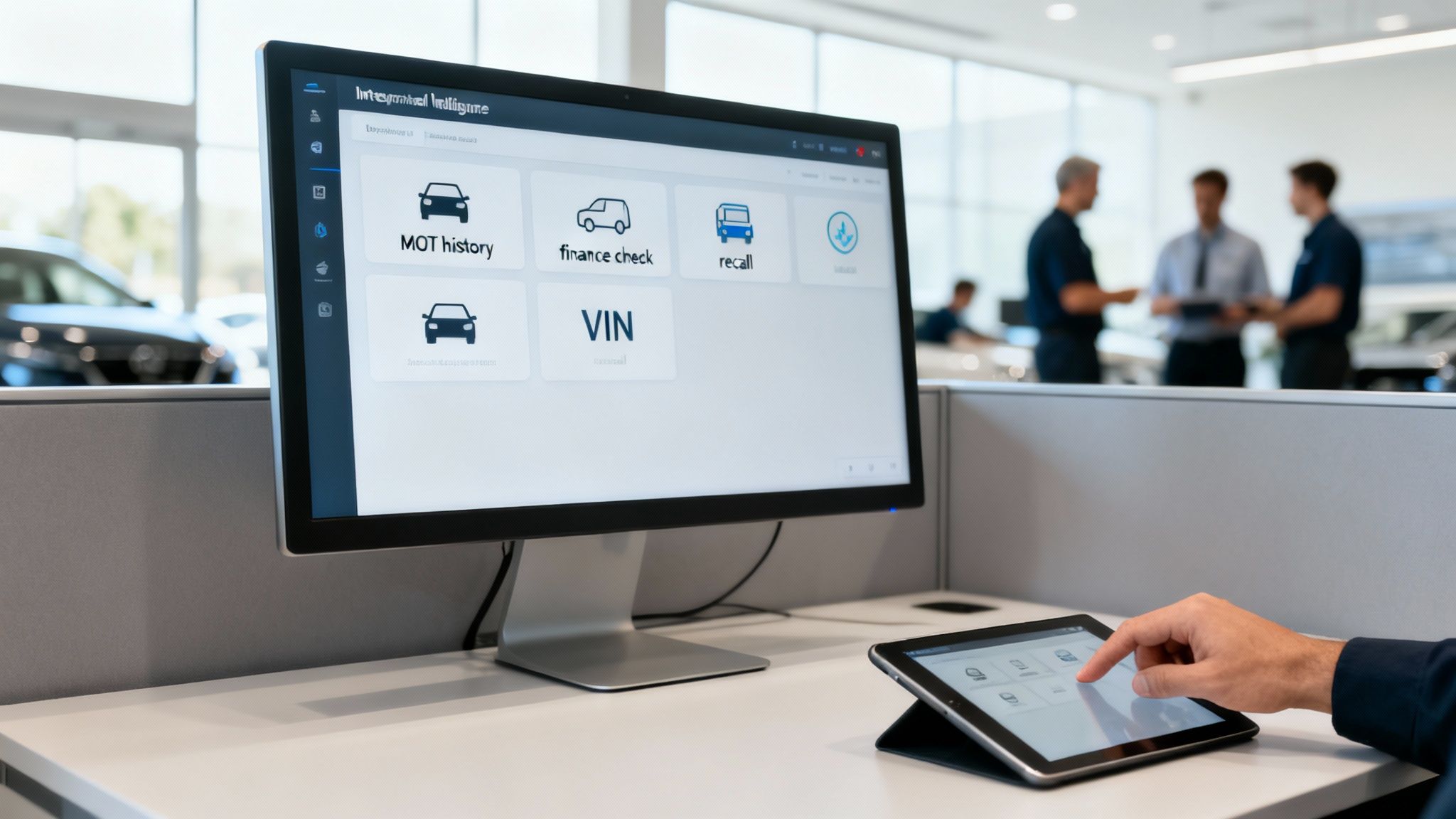
This means for every single potential acquisition, appraisal, or part-exchange, running a check becomes the non-negotiable first step. Trade-focused platforms like AutoProv are built for exactly this kind of speed and repetition. They can deliver a comprehensive report in seconds, fitting right into your existing process. You can pull up the complete car specifications by registration number while the customer is still standing on the forecourt.
From Data Check to Standard Procedure
When you make this a core part of your operations, you immediately slash your risk and give your efficiency a massive boost. It kills the guesswork. It empowers your team to make quick, confident decisions, backed by hard, verified data.
By pulling data from over 10 sources—we're talking Experian finance checks, PNC stolen markers, and full MOT history—into a single check, you cut right through the due diligence and shave off costly admin time. In the fast-moving UK vehicle market, that level of detail isn't a luxury; it's essential.
When instant data access becomes your standard operating procedure, every transaction is built on a foundation of verified, complete data. This protects your margins, enhances your reputation, and ensures you never overpay for a vehicle again.
The sheer volume of vehicles passing through the market makes this crucial. UK government statistics show consistent activity and changes in vehicle registrations year on year. These aren't just numbers; they represent the scale of the market that professionals have to navigate every day, hammering home the need for reliable, registration-based checks. You can dig into the official data yourself over at the government's vehicle licensing statistics portal.
Ultimately, embedding this workflow is about future-proofing your business. For more ideas on how to use these insights to manage your stock more effectively, have a read of our guide to UK vehicle inventory management software.
Your Questions, Answered
When you're pulling car specs by registration number day in and day out, a few questions always crop up. Let's tackle some of the most common ones that motor trade professionals run into. Getting these details straight can make a real difference in your appraisal process.
How Accurate Is the Data from a Registration Lookup?
For the most part, it is highly accurate. When you use a professional service like AutoProv, you're tapping directly into primary data feeds from the DVLA, SMMT, and the manufacturers themselves. This gives you a rock-solid baseline for any vehicle appraisal.
However – and this is a big however – it’s only the starting point. That data needs to be verified with a physical inspection of the car. Always. That's the only way you'll catch post-factory modifications, undeclared repairs, or even component swaps that obviously won't show up on the original build sheet.
Can I Find Out Which Optional Extras Are Fitted?
Yes, and this is where a proper trade-level check really earns its keep. It can often detail the specific factory-fitted optional extras, which is absolutely crucial for getting a valuation right.
Standard, consumer-grade checks will usually just spit out the basic trim level. Professional tools such as those offered by AutoProv go much deeper, digging into the manufacturer’s own build data to pinpoint those high-value add-ons. We're talking about things like technology packs, upgraded upholstery, or panoramic sunroofs that can seriously shift a vehicle's market price.
A discrepancy between your data check and the V5C is a massive red flag. It could be a simple admin slip-up, or it could point to something far more serious. Whatever you do, don't proceed with a purchase until you've investigated and resolved it completely.
Frequently Asked Questions
AI-Generated Content Notice
This article was created with the assistance of artificial intelligence technology. While we strive for accuracy, the information provided should be considered for general informational purposes only and should not be relied upon as professional automotive, legal, or financial advice. We recommend verifying any information with qualified professionals or official sources before making important decisions. AutoProv accepts no liability for any consequences resulting from the use of this information.
From our AI insights
- Navigating UK Grey Imports: A Trader's Guide
Understand the complexities and opportunities of UK grey imports for savvy motor traders.
- Navigating Private Plate Challenges in UK Vehicle Checks
Learn how private plates affect UK vehicle checks and how traders verify provenance and spot cloning risks.
- Navigating VIN Checks Post-Brexit: What UK Traders Need to Know
Discover how Brexit impacts VIN checks for UK traders and the crucial data to review.
Related Articles

Essential Vehicle Checks Before Buying a Used Car
Learn essential checks to ensure your used car purchase is safe and sound in the UK market.

Why a Provenance Check is Essential for Used Car Buyers
Ensure your used car is a smart investment by understanding the importance of a provenance check and how AutoProv can help.

A Guide to Vehicle Check with VIN Number
A vehicle check with vin number is easily the most important thing you can do before buying a used car. Think of it as your first line of defence—a quick, simple step that pulls back the curtain on a vehicle's past, protecting you from expensive mistakes, legal headaches, and downright dangerous cars.
Published by AutoProv
Your trusted source for vehicle intelligence