Let's get straight to it. Vehicle Excise Duty (VED), or what everyone just calls car tax, isn't a tax on driving – it's a tax on owning a vehicle. For anyone in the motor trade, getting this wrong isn't just a bit of bad luck; it's a direct hit to your bottom line and your legal standing. Mastering the ins and outs of VED is non-negotiable.
Decoding UK Car Tax for Your Dealership

Knowing the VED system inside and out isn't just about dodging fines. It's about making sharper decisions when buying stock and pricing it for the forecourt. Think of car tax compliance as a core part of your business, every bit as crucial as getting an MOT sorted or giving a car a full service before sale.
The whole point of the system is to make sure any vehicle kept or used on a public road pays its way. And it's a massive revenue stream for the government. The Office for Budget Responsibility (OBR) projects that VED will bring in £9.1 billion in 2025–26. That works out to about £320 per household. With recent hikes to first-year rates and the new rules for electric vehicles kicking in from April 2025, that number is only going one way. You can dig into the full VED revenue forecasts on the OBR website.
Key Factors Influencing Car Tax Rates
So, how is the final bill calculated? It’s not a simple flat fee, which is where dealers often get caught out. The tax is a variable cost that hinges on a few key details. If you misjudge these on a car you're thinking of buying, it can make the vehicle a much harder sell and eat right into your margin.
The main things that determine a car's tax are:
- First Registration Date: This is the big one. It decides which of the three main tax systems a car falls into. A car registered in March 2017 could have a completely different annual tax cost to one registered just one month later.
- CO2 Emissions: For most modern cars, the official CO2 figure (in g/km) slots it into a specific tax band. The rule is simple: higher emissions mean a higher first-year tax payment, and sometimes a higher ongoing rate too.
- List Price When New: This is a crucial detail, especially for premium stock. Any car with an original list price over £40,000 gets hit with an 'expensive car supplement' for five years. This adds a hefty chunk to the standard annual rate.
For any motor trade business, verifying the tax status of every single vehicle before you buy it is an absolute must. It’s a quick check that saves you from a world of financial and legal pain later.
This tangle of rules means you can't just guess or take the previous owner's word for it. It's why using a verification tool is now standard practice for savvy dealers. Services like AutoProv take this complex legal headache and turn it into a simple, risk-free part of your acquisition process. An instant check confirms the vehicle's exact tax status and cost, protecting your dealership from accidentally buying a car with a hidden liability.
Understanding the Three Eras of Car Tax

Ever stood on the forecourt, looking at two nearly identical cars, and wondered why their tax would be wildly different? The answer lies in the UK’s ever-evolving Vehicle Excise Duty (VED) system. A car's date of first registration is the key, placing it into one of three distinct "tax eras."
For any dealer, getting to grips with these rules isn't just a bit of admin—it’s fundamental to pricing stock correctly and advising customers with confidence. Misjudge the VED, and you risk overvaluing a part-exchange or putting a customer off with an unexpected running cost. Think of the registration date as part of the car's financial DNA; it tells a crucial story about its lifetime expense.
The Old School: Pre-March 2001 (Engine Size)
Let’s start with the simplest system, which applies to any car first registered before 1 March 2001. Back then, life was refreshingly straightforward. Tax was based purely on engine size.
There were just two brackets to remember: cars with engines up to 1549cc paid a lower rate of tax, while everything bigger fell into a single, higher flat-rate band. This means a roaring 3.5-litre saloon from 1999 pays exactly the same car tax as a 2.0-litre hot hatch from the same year. It's a throwback, for sure, but still essential knowledge when dealing with modern classics and older part-exchanges.
The CO2 Years: March 2001 to March 2017
Things got a lot more complicated for cars registered between 1 March 2001 and 31 March 2017. This is when the government's focus shifted firmly to environmental impact. VED rates were pegged directly to a vehicle's official CO2 emissions.
The system split cars into 13 distinct bands, from the tax-free Band A for the cleanest models to the costly Band M for the biggest polluters. This created clear winners and losers in the used market. Efficient diesels, small petrol city cars, and early hybrids became hugely popular for their £0 or low-rate tax—a massive selling point that still holds weight today.
Knowing the CO2 band of a vehicle from this era is a game-changer. A 2016 model with £0 annual tax is a far easier sell to a budget-conscious buyer than a similar car with a yearly bill of a few hundred pounds.
The Modern Maze: Post-April 2017 (First-Year Rate & the £40k Rule)
The current, most complex system applies to all cars first registered on or after 1 April 2017. This regime introduced a two-stage approach: a hefty one-off "showroom tax" for the first year, based on CO2, followed by a standard annual rate from the second year onwards.
Critically, this era also brought in the expensive car supplement. Any car with a list price of over £40,000 when new gets hit with an extra fee on top of the standard rate. This surcharge applies for five years (from the second to the sixth year of the car's life) and is a massive consideration for anyone trading in premium used cars. It can add hundreds to the annual running cost and be a real deal-breaker for potential buyers.
The rules are still changing. Staying informed is vital. You can see a full breakdown of car tax bands on the RAC website.
With three distinct tax eras in play every single day, guesswork is a risk you can't afford to take. The only way to be certain is to run an instant vehicle check. A quick report from AutoProv verifies the registration date, confirms the exact VED costs, and gives you the hard data you need to price your stock with total confidence.
Running a Tight Ship: Car Tax Processes in the Trade
For any dealership, getting the day-to-day car tax process right isn’t just about staying on the right side of the law – it’s about running an efficient, professional operation. From the moment a vehicle lands in your stock, the clock is ticking. A simple slip-up can lead to automatic fines and a heap of admin, quickly eating into the profit on a car.
This is your operational playbook. We’ll cover everything from declaring a vehicle off-road and using trade plates correctly to ensuring a seamless, legal handover to the new owner. Nail these steps, and you’ll not only build trust with your customers but also keep your business safe from DVLA penalties that so often catch out unprepared dealers.
The First Move: Declaring SORN
As soon as a vehicle arrives on your forecourt and becomes stock, it's officially off the public road. This is a critical distinction. Your immediate and legal responsibility is to tell the DVLA by making a Statutory Off Road Notification (SORN).
Think of a SORN as hitting the pause button on the car's "on-road" life. It's the official declaration that the vehicle is being kept on private property and won't be driven on public highways. This is non-negotiable. If you have an untaxed car in your possession without a SORN, the DVLA's system will flag it automatically, and a penalty notice will be heading straight for your desk. The process is quick, entirely online, and an absolute must for every single car you take in.
Getting Trade Plates Right
Trade plates are an essential tool of the trade, but they’re also one of the most misunderstood. They are not a "get out of tax free" card for every car you own. Their use is very specific and strictly enforced.
Legally, you can only use trade plates to move untaxed vehicles for legitimate business reasons. These include taking a customer out for a test drive, delivering a vehicle to its new owner after a sale, moving stock between your dealership sites, or taking a vehicle to a pre-booked MOT test or to a garage for repairs.
What you absolutely cannot do is use them for general business errands, like nipping to the bank, or for personal use. Getting caught doing so can lead to hefty fines and, in serious cases, having your trade licence revoked.
Trade plates are a privilege, not a right. Using them properly shows you’re a professional and keeps you out of trouble with the authorities.
Taxing a Car at the Point of Sale
The days of queuing at the Post Office to tax a car are long gone. Today, the process is instant and digital, and it’s your job to make sure the new keeper taxes the vehicle before they drive off your forecourt.
You can handle this right there in the showroom. All the customer needs is the 12-digit reference number from the new keeper slip (the green V5C/2). With that number, they can go to the GOV.UK website and tax the vehicle on the spot. It’s a simple step that ensures the handover is fully compliant and the customer leaves legally.
This is also the moment you, the dealer, go online and notify the DVLA of the change of keeper. Doing this immediately updates the official record and removes your business from any future liability for that car. To avoid any last-minute hitches, a quick check with a tool like AutoProv can verify all the vehicle details are correct, preventing data entry mistakes and ensuring the new tax is tied to the right record.
Explaining the Automatic Refund
One of the most common questions you'll get from a customer part-exchanging their old car is, "What about the tax I've already paid?" You need a clear and confident answer. The rule is straightforward: car tax is not transferable.
The second you notify the DVLA that the car has been sold, the tax on it is automatically cancelled. The DVLA then calculates any full months of tax remaining and issues a refund cheque directly to the previous owner. It’s crucial they know the cheque will be sent to the name and address on the V5C, so their details must be up to date. Explaining this simple, automated process puts customers at ease and reinforces your expertise.
Weaving Tax Checks into Your Acquisition Workflow
Knowing the car tax rules is one thing. Applying them under the pressure of a busy auction or a part-exchange appraisal is another game entirely. The single most critical moment to get it right is during acquisition. Buying a vehicle with a hidden tax problem isn't just bad luck—it's an unforced error that can wipe out your profit margin before the car even sees a bucket and sponge.
This is where building instant tax checks into your workflow stops being a 'nice-to-have' and becomes an essential business practice. It’s your first line of defence, turning a potential liability into a known quantity you can work with.
From Manual Chore to Automated Safeguard
Let's be honest, checking a vehicle's tax status the old way is a pain. It means jumping onto the GOV.UK website, punching in reg numbers, and waiting for the page to load. When you’re appraising several cars a day, that friction means checks often get skipped in the rush to close a deal. It's a gamble that smart dealerships are no longer willing to take.
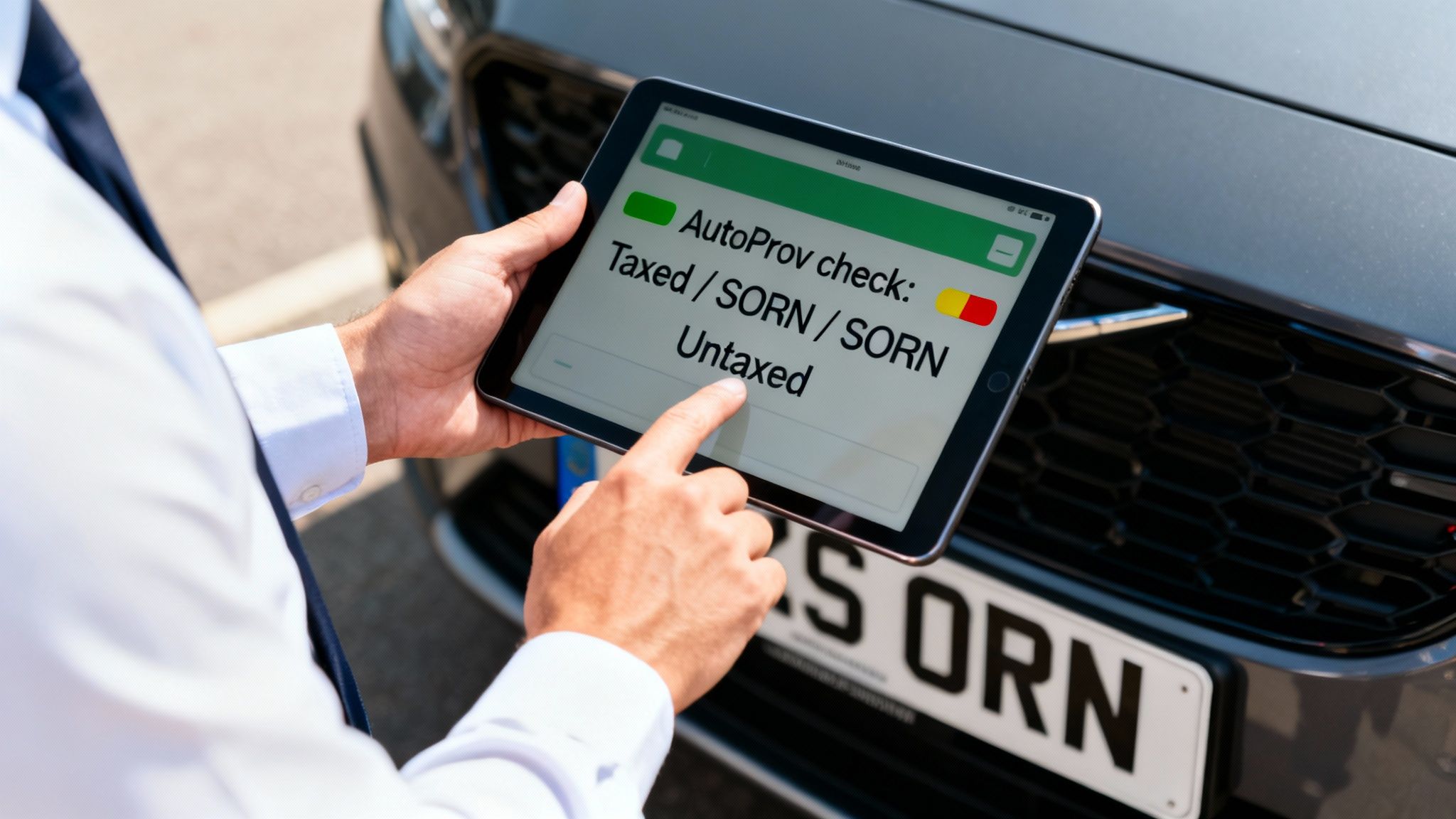
Modern vehicle intelligence platforms have changed all that. By pulling real-time DVLA data directly into the tools you already use, you can see a vehicle's status in a split second. A quick scan of the VRM should tell you instantly: is it taxed, is it on SORN, or is it flagged as untaxed?
Think of it like this: an integrated tax check should be a foundational part of your due diligence, every bit as vital as a provenance check or verifying the MOT history. It's a simple risk management strategy that protects your dealership from the moment a car is offered to you.
This instant verification lets you make better, faster decisions. If a car comes in untaxed and without a SORN, you know straight away that's a red flag. How has it been stored and driven? It gives you immediate leverage in negotiations and flags it for your admin team to get it on SORN the second it hits your stock book.
Building Confidence with Every Purchase
Integrating this check isn't just about dodging fines; it’s about building a more solid and profitable buying process. When your team has reliable data at their fingertips, they can work with more confidence and precision.
- Spot-On Appraisals: Knowing the precise VED band and whether the £40,000 supplement applies ensures you price the vehicle correctly, both for buying and selling. No nasty surprises for you or the customer.
- Lowered Risk: You kill the risk of acquiring a vehicle that’s been driven illegally, which can come with all sorts of associated problems and potential legal headaches.
- Smoother Operations: Automating the check saves valuable minutes on every appraisal. That time adds up, freeing your team to focus on negotiating deals and managing stock instead of getting bogged down in admin.
Platforms like AutoProv are built to make this completely seamless. By pulling live DVLA data into one clear report—right alongside finance checks, MOT history, and market valuations—AutoProv makes the car tax check an effortless part of your standard procedure. It means that before you commit a penny, you have the full picture of the vehicle’s legal and financial standing, protecting your business from nasty surprises and ensuring every car you buy is a clean deal.
Avoiding Costly Penalties and Common Pitfalls
Getting UK car tax wrong isn't a minor slip-up; it’s a direct and often immediate hit to your wallet. In the motor trade, where margins are already tight, you just can't afford to absorb penalties for what are essentially paperwork errors. Staying on the right side of the law isn't just good practice—it's a critical part of running a professional dealership.
Here, we'll walk through the real-world risks. We’ll break down the serious consequences of getting it wrong and shine a light on the common traps that even seasoned dealers can fall into. Think of it as a bit of preventative medicine for your business, designed to protect your bottom line.
The Heavy Price of Non-Compliance
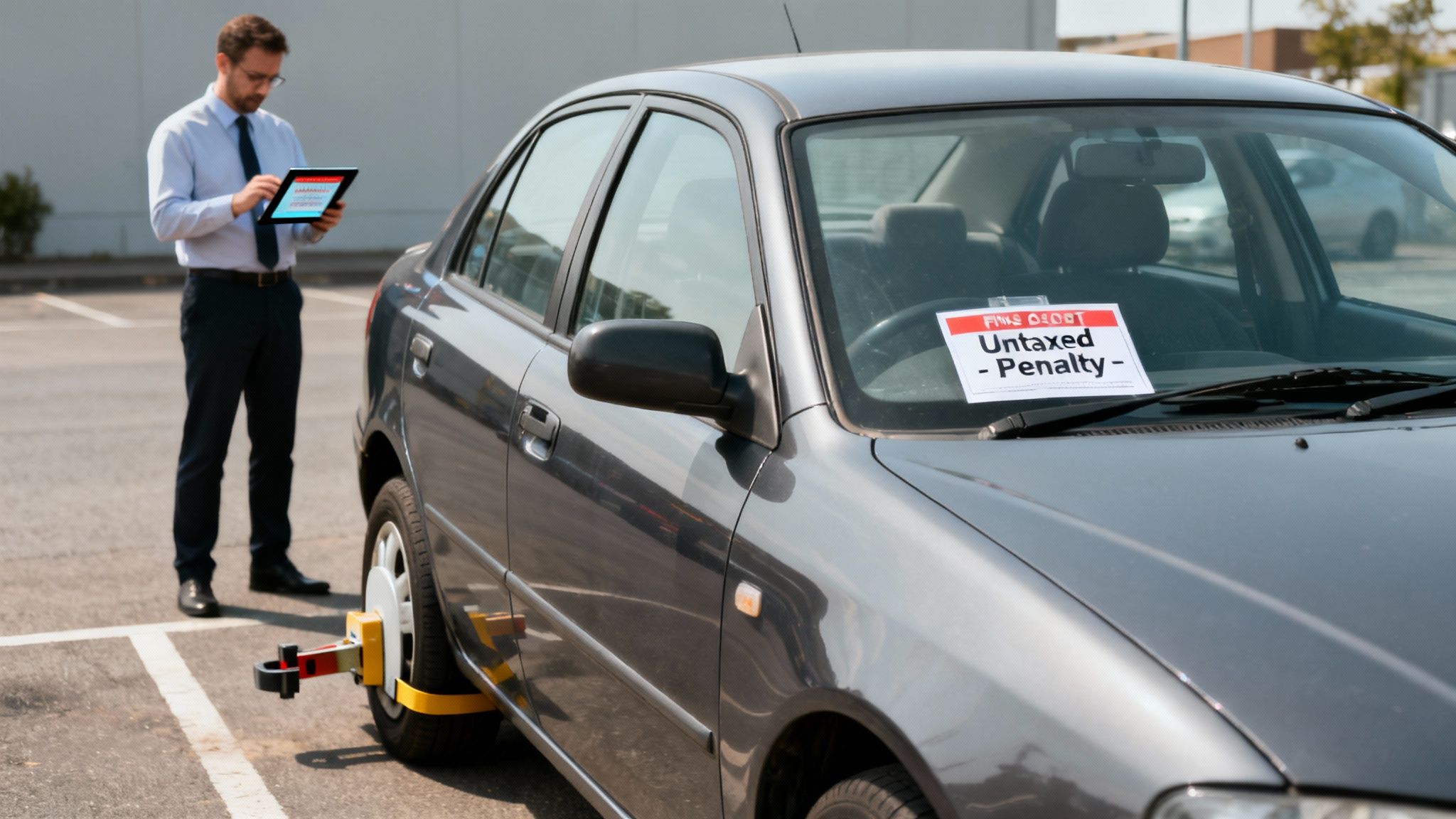
Don't underestimate the DVLA's enforcement network. It’s largely automated and incredibly efficient. A single untaxed car on a public road will get flagged by an Automatic Number Plate Recognition (ANPR) camera, triggering a response almost instantly.
The financial pain escalates quickly, beginning with an automatic £80 fine sent to the registered keeper, which can jump to £1,000 if it goes to court. Enforcement officers can clamp untaxed vehicles, requiring a £100 release fee on top of the tax payment. If that's not paid within 24 hours, the car gets towed to an impound lot where daily storage charges begin to mount, potentially leading to the vehicle being sold or scrapped.
These penalties aren't just empty threats. They're handed out every single day across the UK. For a dealership, each one represents a direct loss of profit and a massive administrative headache you don't need.
The single most important rule to burn into your memory is that car tax never transfers with a vehicle. The second you tell the DVLA you've sold a car, the previous keeper's tax is cancelled and refunded. The responsibility falls squarely on the new keeper—whether that's your dealership or your customer.
Common Traps for the Unwary Dealer
Even with the best intentions, it's easy to get caught out. Building solid processes to sidestep these recurring pitfalls is fundamental to protecting your business.
1. The SORN Delay
This is probably the most common mistake. A part-exchange vehicle lands on your forecourt, and you get busy. But if it's not being taxed immediately, it must be declared SORN. Waiting even a day or two can be enough for the DVLA's automated system to spit out a penalty notice. Make it a day-one job, every time.
2. Trade Plate Misuse
Another classic error is getting a bit too casual with trade plates. Their use is strictly defined: test drives, moving stock between sites, and other legitimate motor trade journeys. Using them to nip to the parts supplier or for a personal errand is a big no-no. It can lead to fines and even put your trade licence at risk.
3. Assumption and Trust
Never, ever assume the previous owner has done their bit. Always check the vehicle's status for yourself. Guesswork is a recipe for disaster in this game.
This is exactly where a professional vehicle check becomes one of the most valuable tools in your arsenal. Before you finalise any deal, a quick report from a service like AutoProv gives you instant confirmation of a car's tax and SORN status, pulled directly from DVLA data. It removes all the doubt, letting you build a risk-free workflow and dodge the costly fallout from a simple oversight.
How VED Policy Shapes the Used Car Market
If you want to get ahead in the motor trade, you don’t just react to the market—you learn to predict it. And in the UK, almost nothing shapes the used car landscape more than the government's Vehicle Excise Duty (VED) policy. It's a direct lever on demand, residual values, and what your customers are looking for when they walk onto the forecourt.
Getting your head around the link between car tax and market trends gives you a real commercial edge. It helps you make smarter stocking decisions, price your vehicles more effectively, and give customers solid advice that builds trust. Keeping an eye on VED policy isn't just about ticking compliance boxes; it's a core part of a winning business strategy.
The Tax Incentive Effect
Just look at the initial boom in electric vehicles (EVs) for a perfect example. For years, the promise of £0 car tax was a massive selling point for battery electric vehicles (BEVs). That single incentive, along with a few grants, created a huge pull for early adopters and made EVs look like a seriously smart financial choice for a lot of buyers.
This tax break had a direct knock-on effect on the used market. Early, low-tax BEVs and efficient hybrids held their value incredibly well because low running costs were a key part of their appeal. As a dealer, you could stock these with confidence, knowing the tax status was a strong closing argument.
Bracing for a Market Rebalance
But things are about to change in a big way. From April 2025, the VED exemption for new electric cars is being scrapped. They’re being moved into the same first-year and standard rate structures as petrol and diesel cars. This is going to fundamentally rebalance the dynamics for both new and used vehicles.
When a major financial carrot like zero car tax is taken away, it’s bound to change how customers see a vehicle's value. The whole cost-of-ownership calculation shifts overnight, and smart dealers need to be ready for it.
Pulling this key benefit will likely cool the demand for certain used EV models, which will inevitably hit their residual values. A car that was once tax-free will suddenly come with an annual bill, making it a less obvious choice for buyers trying to keep costs down.
Industry data from the Society of Motor Manufacturers and Traders (SMMT) already shows how much tax policy influences buying behaviour. You can read more on how tax policy changes threaten market decline on the SMMT website.
Getting ahead of these shifts is vital. For dealers, this means rethinking your stock, adjusting your prices to reflect the new reality of EV ownership costs, and educating your customers. Be ready to explain the new car tax rules clearly. It positions you as a trusted expert who knows their stuff.
The link between VED and market value is undeniable. As policies change, your ability to adapt will make all the difference. This is where having precise, real-time data becomes non-negotiable. Using a service like AutoProv to instantly verify a vehicle’s exact tax liability and market valuation means you won’t get caught out by policy changes, allowing you to buy and sell with total confidence.
Car Tax FAQs: Questions We Hear All the Time
Even for those of us who live and breathe the motor trade, a few car tax questions seem to pop up constantly. Getting these wrong can lead to unhappy customers or, even worse, legal headaches for your business. Let's clear up some of the most common queries we see.
Can a Customer Just Drive Their New Car Home Untaxed?
Absolutely not. This is a big one, and it's non-negotiable. It's illegal to drive on a public road unless the vehicle is taxed in the new keeper's name. The moment you notify the DVLA of the sale, the previous owner's tax is instantly cancelled.
Your customer has to get the car taxed before it even leaves your forecourt. The only razor-thin exception is driving directly to a pre-booked MOT test, and even then, proper insurance is still a must.
Do I Really Need to SORN Every Single Car in Stock?
Yes, without a doubt. As soon as a vehicle comes into your stock and is being kept off public roads – whether on your lot or in storage – you must make a Statutory Off Road Notification (SORN). This tells the DVLA it’s not being used, which removes the legal requirement to keep it taxed and insured.
Skipping the SORN on an untaxed vehicle is a simple but expensive mistake. The DVLA’s systems are automated to catch this, and a penalty notice will land on your desk before you know it. It’s a quick bit of admin that protects your business from needless fines.
How Does That ‘Expensive Car’ Supplement Actually Work?
This extra charge trips people up all the time. It applies to any car that had a list price of over £40,000 when it was brand new. It’s not a one-off hit either; it’s an extra annual fee the owner pays for five years, starting from the second time the car is taxed.
If you’re selling a nearly-new model that falls into this bracket, you need to make this crystal clear to the buyer. It adds a hefty chunk to their annual car tax bill and is a vital piece of information they need to know about running costs.
Does the Tax Just Transfer to the New Owner?
Not anymore. Since the rules were overhauled in 2014, car tax is never transferable. When you tell the DVLA you've sold a vehicle, their system automatically cancels any tax that’s left on it.
The DVLA then sends a refund for any full months remaining directly to the previous keeper. It is then squarely on the new owner's shoulders to tax the vehicle themselves before they use it. Checking this instantly with a tool like AutoProv before you buy stock is the best way to avoid any confusion over a vehicle's true tax status.
Frequently Asked Questions
AI-Generated Content Notice
This article was created with the assistance of artificial intelligence technology. While we strive for accuracy, the information provided should be considered for general informational purposes only and should not be relied upon as professional automotive, legal, or financial advice. We recommend verifying any information with qualified professionals or official sources before making important decisions. AutoProv accepts no liability for any consequences resulting from the use of this information.
From our AI insights
- Navigating CCR 2013: Niche Insights for UK Motor Traders
Explore niche insights on CCR 2013 for UK motor traders, focusing on compliance and cancellation rights.
- Decoding CRA 2015: Dealer's Guide to 30-Day Rejections
Explore CRA 2015's 30-day rejection rights from a dealer's perspective, highlighting key compliance strategies.
- Navigating DVLA Conviction Checks: Dealer Compliance
Understand DVLA conviction checks and lawful access for UK dealers.
Related Articles

Understanding the Consumer Rights Act 2015 in the UK Motor Trade
Explore the Consumer Rights Act 2015 and its impact on UK car buyers and sellers, offering essential protections and insights.

Understanding UK Automotive Regulations
Explore the complexities of automotive regulations in the UK, covering DVLA, FCA, MOT, and more.
What is a V5C Document: A Quick UK Log Book Guide
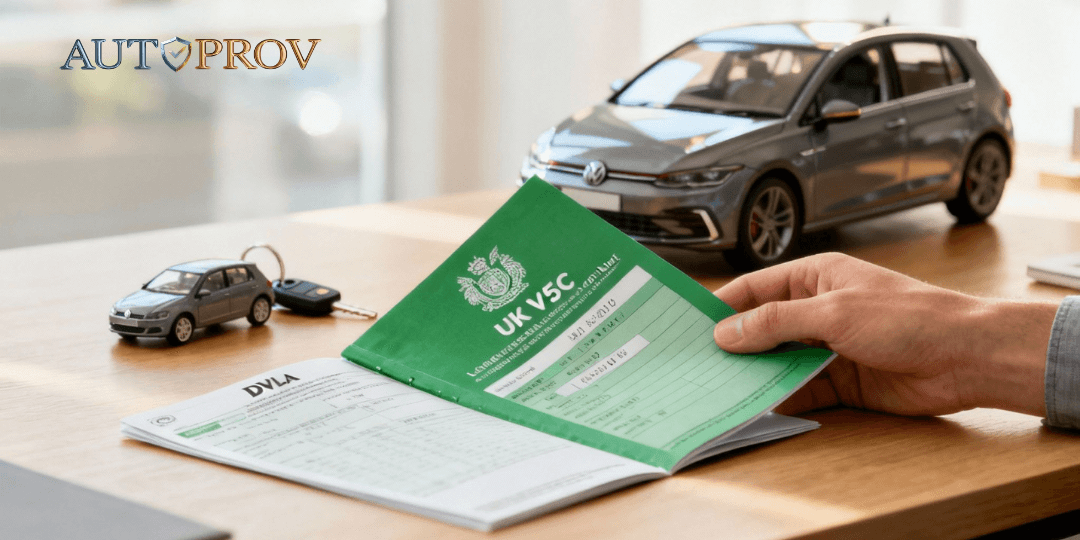
If you've ever bought or sold a car in the UK, you've definitely come across the V5C. It's often just called the 'log book', and it’s the official Vehicle Registration Certificate issued by the DVLA.
Published by AutoProv
Your trusted source for vehicle intelligence