
A used car can look straightforward on paper and still turn into a headache after the sale. The check comes back clean, the car presents well, and the stock team moves quickly because the margin looks safe. Then the customer notices a mismatch, the file gets reopened, and the dealer is left explaining why a single report didn't show the whole story.
That's the problem with a basic vehicle history check UK buyers often rely on. A trade decision needs context, not just one pass or fail answer. Trade vehicle intelligence works differently because it connects the dots across vehicle provenance, mileage patterns, ownership timing, and source reliability before money changes hands.
Table of Contents
- The Hidden Risks a Standard Vehicle Check Can Miss
- Why single-source confidence can be misleading
- What Is a Data Integration Platform for the Motor Trade
- Think like a detective, not a witness list
- Core Components and Common Integration Patterns
- How the parts fit together
- Common patterns that actually help dealers
- Why Integrated Data Matters for Risk Management
- Mileage, ownership, and the gaps between them
- Compliance expects more than a single source
- Example Architecture for a UK Vehicle Intelligence Platform
- A simple flow that works in the trade
- What it looks like at point of decision
- Evaluating a Platform A Checklist for Dealers
- Questions worth asking before you commit
- Data Integration Platform Evaluation Checklist
- The Future of Trading Smarter with Integrated Intelligence
The Hidden Risks a Standard Vehicle Check Can Miss
A dealer buys a tidy-looking hatchback at auction. The used car history report is clean, the mileage seems plausible, and nothing obvious flashes red. Weeks later, a workshop note and a previous service record tell a different story, and the file starts to look less like a simple purchase and more like an avoidable risk.
That's the trap. A single check can show a vehicle's status at one moment, but it can't always show the shape of the story around it. If a car has been passed through multiple hands quickly, had a mileage correction, or carries a subtle pattern of inconsistencies, a one-source view may not surface the risk until after the vehicle has already been retailed.
The scale of the issue is not trivial. Independent research suggests that nearly 160,000 UK used-car buyers could be victims of mileage fraud in a single year, with other analysis estimating 2.1% of all secondhand cars in the UK have been clocked. That's enough to justify stronger dealer vehicle checks as a standard buying discipline, not an optional extra. Honest John's report on clocked cars and mileage fraud makes the market risk plain.
Why single-source confidence can be misleading
A clean result doesn't always mean a clean vehicle. It can mean the source didn't see the problem, the problem sits in another dataset, or the anomaly is only visible when records are compared side by side.
Practical rule: if a vehicle only looks clean because one source was checked, the file isn't finished.
Dealers who want a deeper view usually start by asking where the data came from, how recent it is, and whether it has been cross-checked against other records. That is the point of a proper mileage check UK workflow. If you want a useful breakdown of the source mix behind professional checks, the guide to what data sources power professional vehicle checks is worth reading once before you tighten your buying process. For another useful way to think about the wider fraud surface, the InsecureWeb Carswitch leak analysis shows why exposed or incomplete data environments can create blind spots that a dealer can't afford.
What Is a Data Integration Platform for the Motor Trade
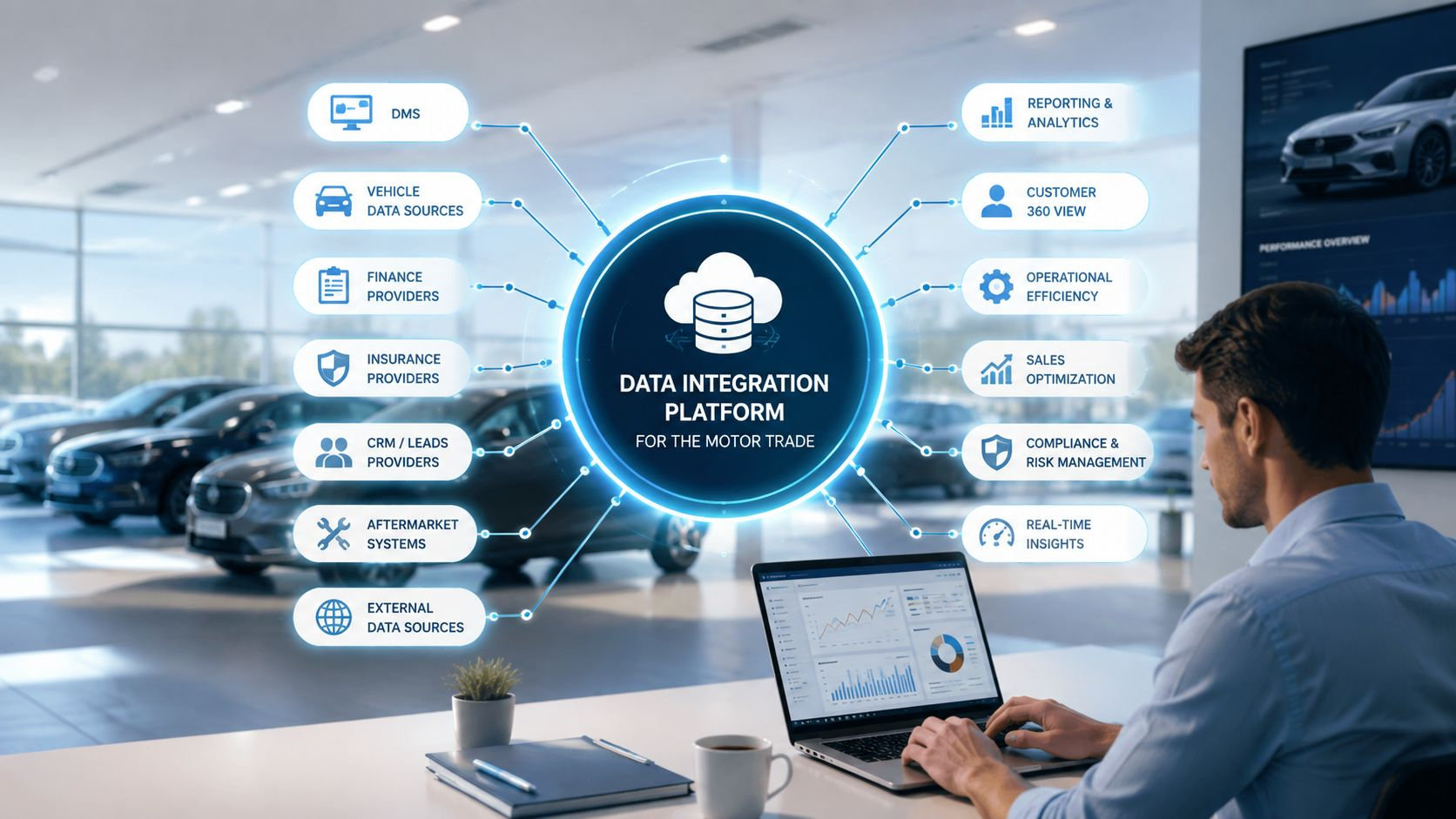
A data integration platform is the layer that takes separate records and turns them into one usable vehicle view. In practice, it pulls in MOT history, registration data, ownership timing, mileage evidence, and other source records, then lines them up so a trader can make sense of the car as a whole. It's closer to a case file than a spreadsheet, because every document supports or challenges the others.
Think like a detective, not a witness list
A single witness can tell you what they saw. A proper case file shows how the story fits together. That's the difference between a basic vehicle check and integrated vehicle provenance.
The UK government's National Data Strategy describes an integrated platform as a “safe, secure and trusted infrastructure” built as a digital collaborative environment to access linked data and support better policy decisions. In the motor trade, that same logic applies to acquisition and compliance decisions. You need linked records, controlled access, and enough structure to compare one source against another without losing the original evidence. The National Data Strategy makes the governance point clearly.
A useful platform doesn't just collect data, it shapes it. It has to:
- Collect data from relevant sources
- Clean formats, dates, and identifiers
- Match records to the right vehicle
- Compare data points across time
- Surface anomalies the buyer should review
For a dealer, that means the platform has one job, to make the buying decision clearer. If you want to see how this looks in a practical workflow, the overview of how it works shows the basic mechanics without the usual software jargon. Retail teams looking at wider systems design can also compare the same logic with retail data integration use cases, because the underlying pattern is the same, isolated systems become more valuable when they're connected properly.
The value isn't more data. The value is the right data, organised so the buyer can trust the pattern.
Core Components and Common Integration Patterns
A motor trade data integration platform usually has three moving parts. First, it needs a way to pull data in from source systems. Second, it needs a transformation layer that normalises messy records into a consistent format. Third, it needs a place to hold the combined view so buyers, valuers, and compliance teams can use it without chasing half a dozen tabs.
How the parts fit together
An API is the messenger. In motor trade terms, it's the connector that fetches a vehicle record, such as MOT history or registration information, and passes it back in a structured way. The DVSA's MOT history service is a useful benchmark here because it provides data for Great Britain cars, motorcycles, and vans since 2005, and for HGVs, trailers, buses, and coaches since 2018, with Northern Ireland coverage added for relevant classes. DVSA MOT history documentation shows why normalisation matters, because the platform has to handle long historical time series across classes and jurisdictions.
ETL, short for extract, transform, load, is the clean-up process. A reg plate might arrive in one format, a mileage reading in another, and a date in a style that doesn't match the dealership system. ETL standardises the record so the platform can compare like with like instead of treating every feed as a separate story.
A central repository is the combined file cabinet. It stores the aligned records so the buyer sees one vehicle view rather than several disconnected snippets. That matters in the trade because a stock controller doesn't want to interpret raw feeds. They want a usable result.
Common patterns that actually help dealers
The most useful pattern is consolidation. Data flows in from government sources, commercial intelligence feeds, and internal systems, then the platform reconciles overlaps and flags contradictions. If one dataset says a vehicle looks fine and another shows a mileage pattern that doesn't fit, the platform should expose the mismatch rather than hide it.
This is also where market edge on data sync becomes relevant in a broader systems sense, because integration only helps if records stay aligned as source data changes. A practical overview is available in Market Edge on data sync, especially for teams thinking about refresh timing and cross-system consistency.
For dealers, the outcome is simple. Better integration reduces manual checking, cuts down on repeated searches, and gives the buying team one consistent file to act on. That's the shape of a usable data integration platform in the motor trade.
Why Integrated Data Matters for Risk Management
A dealer loses money when records are read in isolation. A vehicle can clear a basic check and still carry issues that affect valuation, stock turn, or aftersales reputation.
Mileage, ownership, and the gaps between them
Mileage is the clearest example. The DVSA says an MOT mileage error can be corrected by the test centre if it is spotted within 28 days of the test. After that, it must be reported to DVSA, and the correction needs documentary evidence showing the correct mileage and a date within one day of the test. DVSA correction guidance makes the point plainly, MOT history is a record, not final proof of true mileage.
GOV.UK goes further. To fix an incorrect MOT mileage record, the applicant must provide evidence such as an MOT invoice, emissions printout, service receipt, or vehicle job card from the MOT centre, and the evidence must show the correct mileage and be dated within one day of the test. GOV.UK's correction process shows why a mileage anomaly should be checked against workshop paperwork and service records, not treated as settled by one screen.
Integrated data lets a trader compare mileage with service timestamps, previous sale timing, and the MOT trail. A single record can be accurate and still mislead if the rest of the file is missing.
Compliance expects more than a single source
The compliance angle matters too. A GOV.UK mileage checklist linked to the Consumer Protection from Unfair Trading Regulations 2008 explicitly tells traders to request a vehicle mileage history report from an independent and reliable company. The mileage checklist is a clear signal that one source does not meet the trade's standard of care.
If a mileage story changes across records, treat it as a buying risk until the paperwork proves otherwise.
A strong motor trade risk process starts there. Integrated checks expose problems earlier and tell a buyer what needs deeper review before the vehicle becomes stock. Trade vehicle intelligence goes beyond pass/fail results by showing whether a file makes business sense. A platform such as AutoProv is built around that kind of joined-up vehicle intelligence, but the principle matters more than the brand name, compare sources, not just statuses. For a practical angle on how live intelligence improves decision-making, the note on real-time intelligence is a useful follow-on.
Example Architecture for a UK Vehicle Intelligence Platform
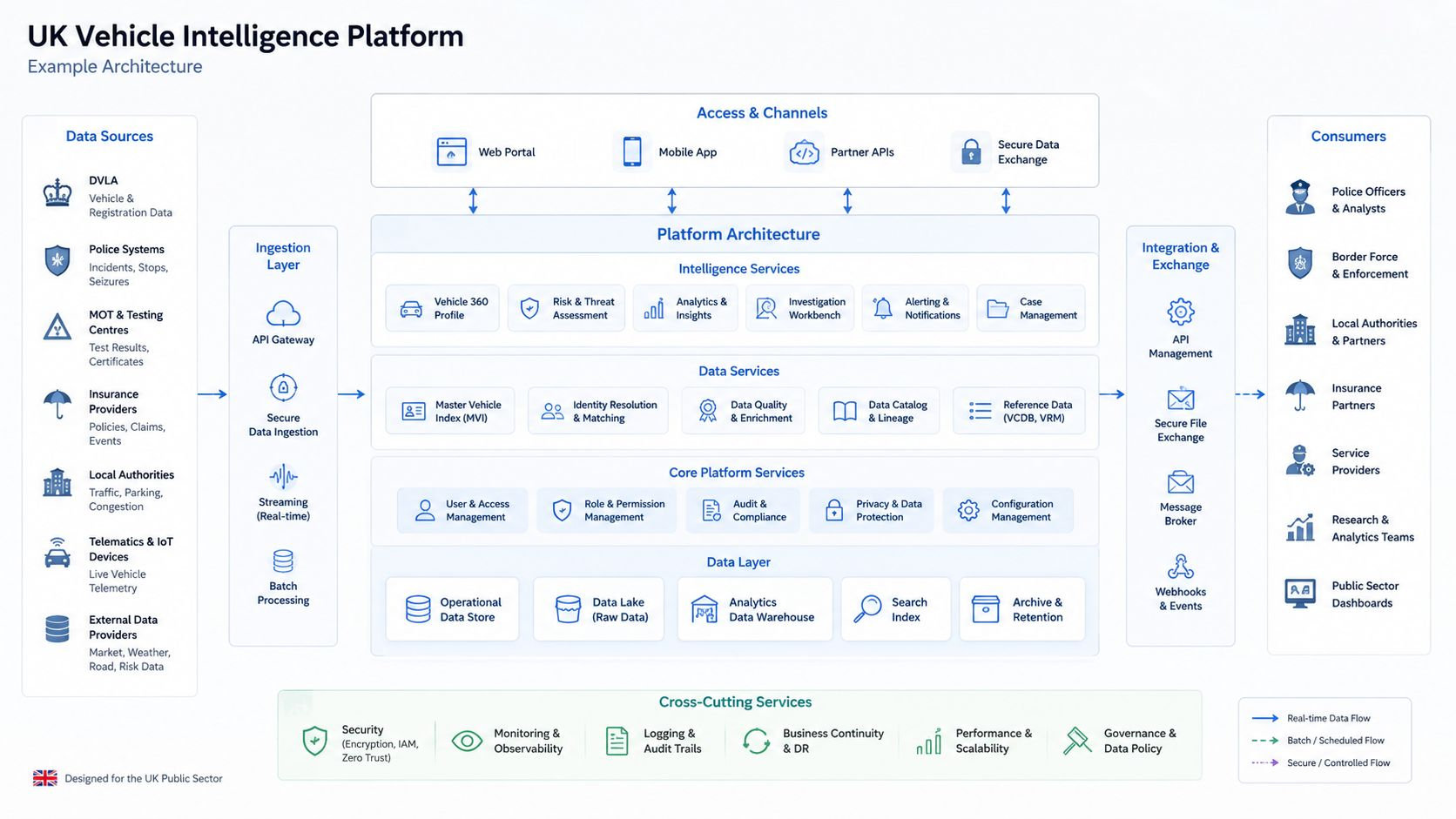
At auction, time is short. A buyer has minutes, sometimes less, to decide whether a vehicle deserves a bid or belongs on the pass list. The useful platform is the one that turns a registration number into a joined-up file before the line moves on.
A simple flow that works in the trade
A VRM search starts the process. The platform queries source layers, pulls relevant records, and assembles them into a single vehicle intelligence view. In the UK, that usually means drawing on DVSA MOT history, DVLA-style registration and keeper information, and other provenance feeds that help explain ownership and mileage context.
The important detail is history depth. The DVSA MOT service covers cars since 2005, so a platform used for dealer vehicle checks has to cope with nearly two decades of time-series data if it wants to identify long-running mileage patterns and advisory repetition. The MOT history documentation is the practical reason a simple lookup isn't enough.
A good architecture also keeps the source trail visible. If a buyer sees a mileage jump, they should be able to see which record created it, which date it sits on, and whether another source supports or contradicts it. That is how a platform earns trust in a trade setting.
What it looks like at point of decision
A common use case is a trader at an auction seeing a car that looks clean until the integrated view shows a recent MOT reading that doesn't sit comfortably with earlier service records. A basic check might only show that the vehicle passed. An integrated platform highlights the pattern that needs attention.
That's the difference between a pass/fail tool and trade vehicle intelligence. The first tells you the file exists. The second tells you whether the file makes business sense.
For operational teams that need deeper system connectivity, AutoProv's Enterprise API can also support broader workflow integration, but the main point here is architectural. A useful platform takes scattered records, aligns them, and gives the buyer a decision-ready view before the hammer falls.
Evaluating a Platform A Checklist for Dealers
The easiest way to judge a data integration platform is to test whether it helps a buyer make a better call, not whether it looks impressive in a demo. Dealers don't need more dashboards. They need a clearer answer on the car they're about to fund.
Questions worth asking before you commit
Start with source coverage. Does the platform include the UK records that matter to your buying process, or does it only surface generic history? If your stock profile leans heavily on used cars, you need a platform that understands MOT history, mileage context, and ownership patterns rather than one that aggregates broad internet data.
Then look at the quality of the insight. A good platform shouldn't stop at showing records. It should compare them, flag contradictions, and explain why a vehicle needs attention. If it only republishes raw fields, the buying team still has to do the analysis manually.
Ease of use matters as well. Sales managers, buyers, and valuers won't adopt a system that takes too long to interpret. The workflow should fit into the way the dealership already works, not force the team into a separate process for every car. For teams evaluating workflow fit, the article on process automation benefits is a good companion piece.
A tool that only works in the office after the deal is already live is too late for stock acquisition.
Data Integration Platform Evaluation Checklist
Evaluation Area Key Question to Ask Why It Matters UK data coverage Does it include the records your buyers actually use? A trade decision is only as good as the source mix behind it. Mileage analysis Does it compare mileage across multiple records, not just display a single value? Mileage risk often sits in the gaps between sources. Ownership context Does it highlight short-term ownership or rapid resale patterns? These patterns can change how a car should be valued or reviewed. Workflow fit Can the team use it during stock appraisal or auction bidding? If the platform slows the process, it won't get adopted. Evidence trail Does it show where each finding came from? Buyers need to defend decisions internally and after the sale. Integration options Can it connect with dealership systems and appraisal tools? Joined-up processes reduce duplication and manual error. For a dealership, this checklist is really an internal audit. It shows where the current used car history report process is thin, where the team is over-relying on one source, and where risk is still being judged by instinct instead of evidence. That's the right way to evaluate vehicle provenance software before it becomes part of the buying process.
The Future of Trading Smarter with Integrated Intelligence
UK vehicle data has moved a long way from isolated records. The foundation for modern integration was set with data.gov.uk in 2010, and its growth to over 47,000 datasets by 2023 created an ecosystem where authoritative public records can be combined at scale. The data.gov.uk history matters because it explains why integrated vehicle intelligence is no longer a niche idea, it's the natural next step for professional buying.
The competitive advantage now comes from how well a dealer connects the dots. A stock team that reads mileage, ownership, MOT history, and supporting records together will usually make cleaner decisions than a team relying on one-off checks. That's the shift worth making in 2026 and beyond, because the market rewards sharper risk control, not just faster access to data.
If your current process still depends on a single mileage check UK or a basic history result, the first step is simple. Review one week of recent purchases, compare what you checked against what you later learned, and identify the gaps. That audit usually shows where integrated intelligence will pay for itself in avoided mistakes, cleaner valuations, and stronger confidence at point of purchase.
AutoProv gives UK motor traders a trade-focused way to combine vehicle history, provenance, mileage, and risk signals into one decision layer. If you want to tighten stock acquisition and reduce avoidable surprises, visit AutoProv and see how integrated vehicle intelligence supports cleaner buying decisions for the motor trade.
Frequently Asked Questions
AI-Generated Content Notice
This article was created with the assistance of artificial intelligence technology. While we strive for accuracy, the information provided should be considered for general informational purposes only and should not be relied upon as professional automotive, legal, or financial advice. We recommend verifying any information with qualified professionals or official sources before making important decisions. AutoProv accepts no liability for any consequences resulting from the use of this information.
From our AI insights
- Navigating UK Dealer Software Regs: A 2024 Deep Dive
Explore 2024 UK dealer software regulations, focusing on compliance, features and strategic choices.
- Decoding Vehicle Build Sheets: A Trader's Guide
Master the art of decoding factory build sheets for precise vehicle insights.
- Integrating Vehicle Data: Mitigating Risks for UK Dealers
Explore how data integration platforms help UK dealers manage risk using DVLA, MOT, and provenance data.
Related Articles

Latest Innovations in UK Automotive Technology
Explore cutting-edge technology advancements in the UK car market and future trends.

Innovations in Automotive Tech: Benefits for UK Drivers
Explore the latest automotive technologies and their benefits for UK drivers, from EV advancements to smart safety features.

The Future of Automotive Technology in the UK
Explore how emerging automotive technologies are shaping the UK market, from electric vehicles to autonomous driving.
Published by AutoProv
Your trusted source for vehicle intelligence