

You're probably dealing with this already. A buyer appraises a part-exchange in the DMS, opens a vehicle history check UK result in another tab, asks accounts to confirm something in a third system, then phones someone to check whether the stock feed has updated on the website. The car hasn't moved, but the data has. That's where margin leaks start.
Most first-time integration projects are framed as IT work. In practice, dealer management system integration is a governance job first. If the buying team, prep team, sales desk, finance desk, and stock control team aren't all working from the same trusted record, you don't have one process. You have several partial versions of the truth.
That matters more in used stock than many groups admit. In the UK market, 1 in 3 used cars contains a hidden history, including outstanding finance, undisclosed accident damage, or a clocked odometer, according to CarHealth's UK guide to what a car history check shows. When buyers rely on disconnected screens, risk signals stay outside the operational workflow instead of influencing the decision at the point of purchase.
Table of Contents
- Why Your DMS Needs to Talk to Other Systems
- Disconnected workflows cost time and judgement
- The DMS has to become the working hub
- Defining Your Integration Strategy and Goals
- Start with operational pain, not software features
- Set rules before you set integrations live
- Choosing the Right Integration Approach
- When APIs are the right answer
- Where webhooks fit
- When ETL still has a place
- A simple decision view
- Key Technical Considerations for UK Dealers
- Map risk signals into usable DMS fields
- Secure the connection properly
- Plan for bad data and failed requests
- Testing and Deployment Best Practices
- Use real buyers in UAT
- Roll out in phases
- Ensuring Long-Term Success with Data Governance
- Own the record, own the rulebook
- Good integration depends on good vehicle intelligence
Why Your DMS Needs to Talk to Other Systems
On a busy appraisal lane, nobody wants another login. The buyer wants one screen that shows stock details, valuation context, previous activity, and risk markers in a usable order. If the team has to hunt across tabs for a used car history report, MOT clues, ownership context, or finance checks, they'll either slow down or skip steps.
Disconnected workflows cost time and judgement
The usual symptoms are easy to spot:
- Duplicate entry: Buyers type the same vehicle details into more than one system.
- Delayed decisions: A car sits in “pending” because one data point lives outside the appraisal flow.
- Inconsistent stock records: Website, CRM, and DMS don't match on status or pricing.
- Weak risk handling: Important provenance signals are seen once, then lost in email or PDFs.
For groups starting this work, it helps to think in broader automation terms, not only motor retail software. A useful overview of connecting business systems for automation shows why stitched-together manual processes always create friction at the handoff points.
Practical rule: If a buyer must read a risk signal in one system and then remember to act on it in another, the integration isn't finished.
This is especially important in trade buying. A proper vehicle provenance process isn't just about whether a check returned an alert. It's about whether that alert becomes part of the live vehicle record and influences appraisal, valuation, preparation approval, and eventual retail decision.
The DMS has to become the working hub
For most dealer groups, the DMS already sits closest to the operational truth. That's why the best integrations don't create a parallel stock platform with its own decisions and comments. They enrich the DMS record that the rest of the business already trusts.
That principle also sits behind better stock operations more broadly. If you're reviewing how appraisal, merchandising, and stock control fit together, this guide to UK vehicle inventory management software is a useful reference point for aligning the process.
Done properly, dealer vehicle checks, mileage check UK workflows, and trade vehicle intelligence become part of one record. Done badly, they become one more disconnected tool that the team stops trusting after a few months.
Defining Your Integration Strategy and Goals
Before anyone talks about APIs, middleware, or feeds, fix the operating model. In the UK motor trade, dealer management systems are explicitly defined as the primary system of record for critical dealership data. That includes vehicle stock availability, pricing, reservations, finance and insurance details, and customer operational data, as set out in Rogue Digital's guidance on DMS and ecommerce integration.
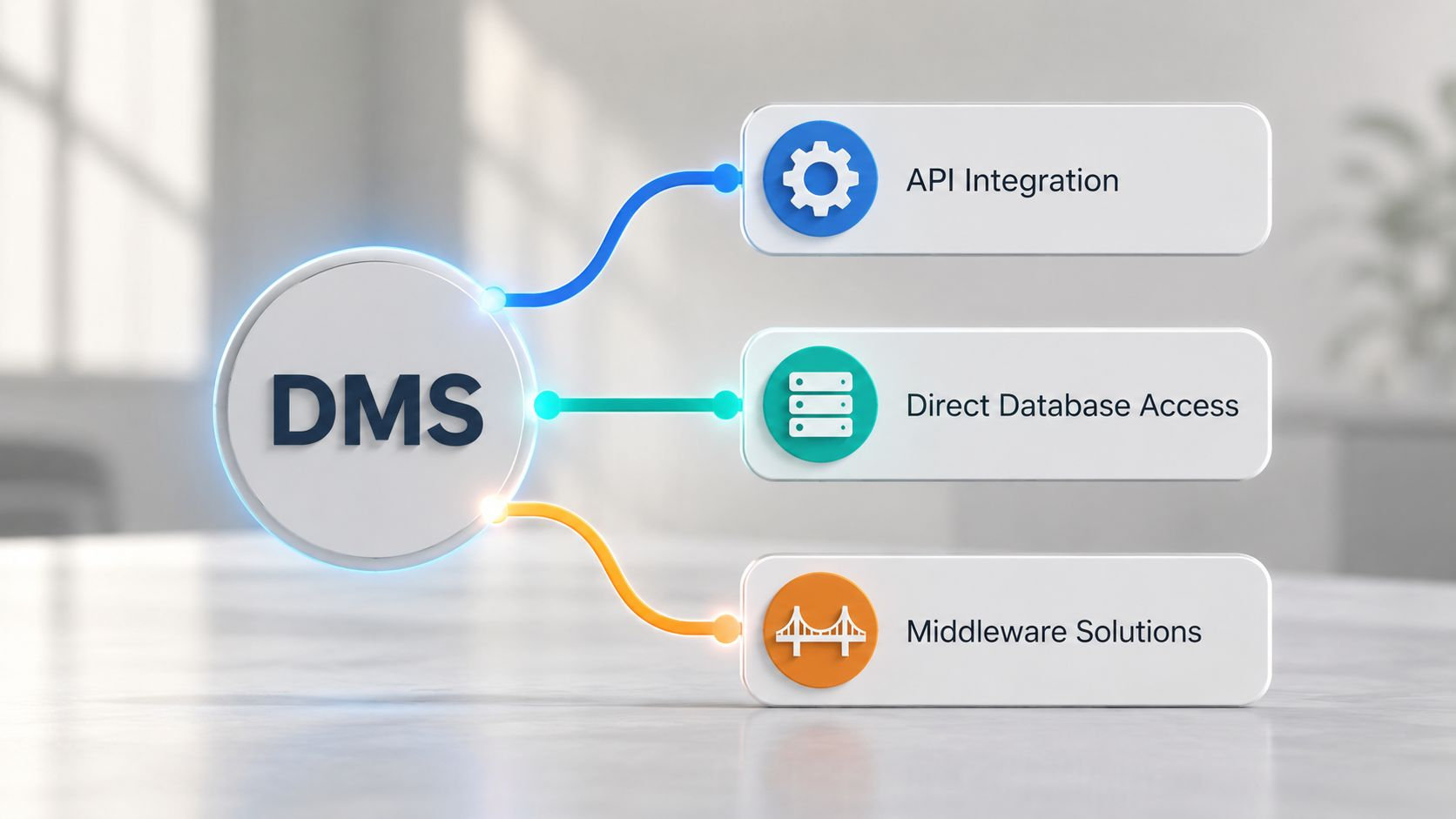
If you ignore that rule, the project usually fails for a simple reason. Different teams start updating different versions of the same vehicle or customer record. Then nobody knows which one should drive pricing, reservation status, or buying decisions.
Start with operational pain, not software features
A strong integration brief answers business questions first:
- Where are decisions slowing down?
- Is the problem stock appraisals, online lead handling, web publishing, accounting reconciliation, or all of them?
- Which data must be live?
- A provenance warning at appraisal stage may need immediate visibility. Some reporting fields don't.
- Who acts on the data?
- Buyers, stock controllers, sales managers, service reception, and accounts all need different outputs.
- What must never be overwritten outside the DMS?
- This should be written down, not assumed.
A lot of groups start with the wrong question. They ask, “What can this vendor integrate with?” The better question is, “What decision are we trying to improve, and where should that decision live?”
Here's a simple planning table that works well early on:
Business process Core decision Must sit in DMS Can sit outside DMS Appraisal Buy, bid lower, or decline Vehicle identity, appraisal notes, risk flags Raw supporting documents Stock management Ready, prep, reserve, retail Status, price, location, availability Specialist analysis tools Customer handling One record, one history Customer master record Campaign activity detail Reporting Performance review Final operational outputs Analytical models
Set rules before you set integrations live
The most useful strategy documents are short and strict. They define field ownership, matching logic, refresh expectations, and exception handling.
Include these points:
- Master ownership: Decide which system owns customers, vehicles, and transaction status.
- Write permissions: Be explicit about what external systems may write back into the DMS.
- Risk visibility: Define where a used car history report result or provenance marker will appear for buyers.
- Escalation path: Decide what happens when data conflicts.
A pricing or buying decision based on weak data governance isn't a technical issue. It's a management issue.
If you're also evaluating how risk intelligence should be bought and deployed across the group, this comparison of enterprise vs pay-per-check pricing for dealerships is relevant at planning stage because commercial model affects adoption behaviour.
Choosing the Right Integration Approach
Most UK dealers don't need every integration method. They need the right one for the job. The mistake is treating every data flow as identical.
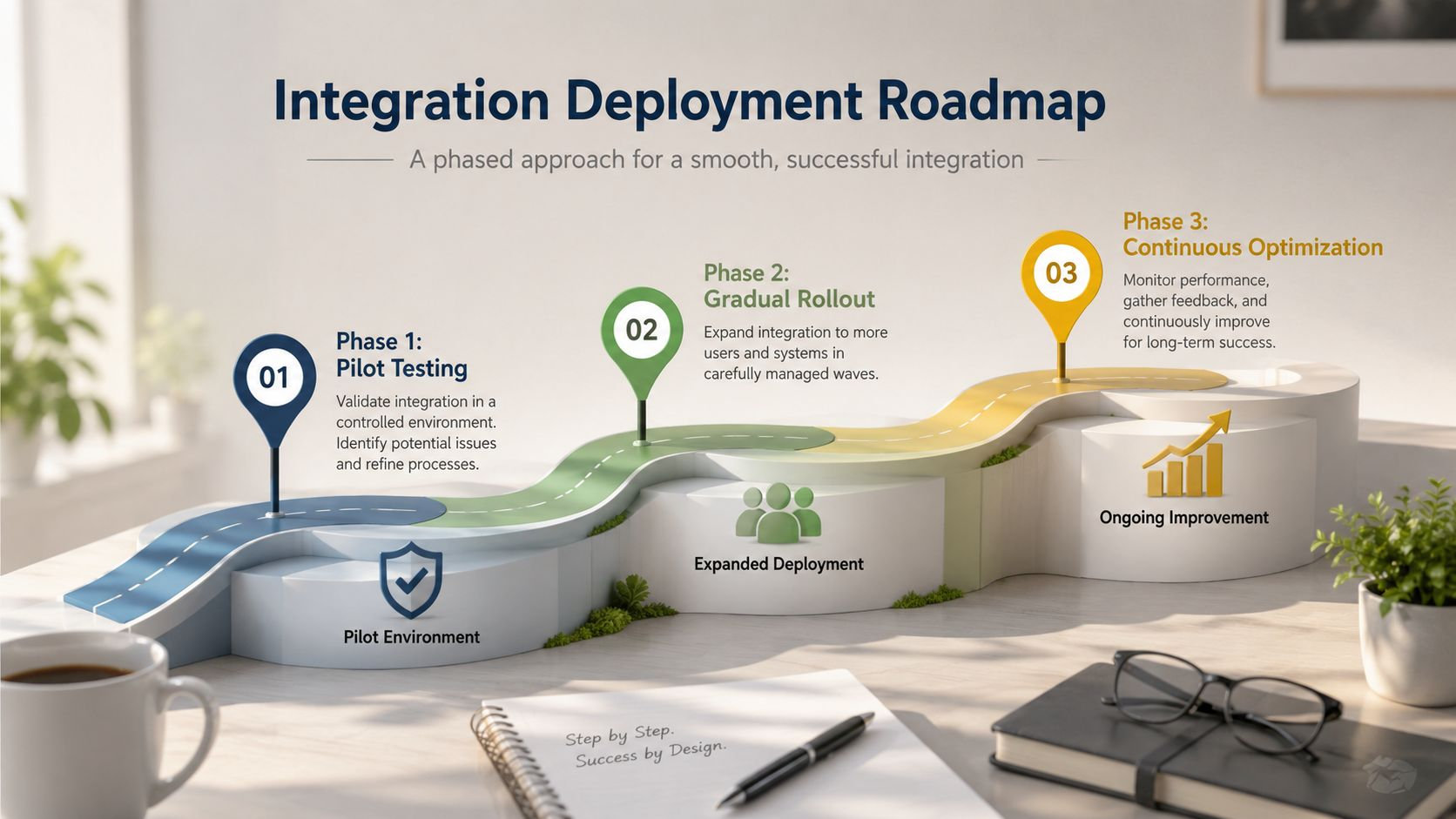
For UK dealers integrating DMS with CRM and listings, event-based APIs are preferred over batch files to support low-latency data flow, and that approach works best when master data governance and a canonical model for customers, vehicles, and parts are defined first, according to PAM's DMS integration guidance.
When APIs are the right answer
APIs suit workflows where a user needs current information inside an active task.
Typical examples include:
- Live appraisal support: Pulling current risk and provenance markers while the buyer is assessing a part-exchange or auction purchase.
- Stock updates: Writing vehicle status changes back to connected systems without waiting for an overnight cycle.
- Customer activity: Passing lead or reservation events quickly enough for the team to act.
If your buying process depends on immediate trade vehicle intelligence, APIs are usually the right fit. The buyer doesn't care about integration architecture. They care whether the record on screen is current enough to trust.
Where webhooks fit
Webhooks are useful when one system needs to notify another that something changed. Think of them as event triggers rather than full conversations.
A webhook can work well when:
- a new vehicle is added to stock
- a status changes from appraisal to purchased
- a reservation is created or cancelled
- a report is completed and a summary marker needs posting back
They're efficient, but only if your field definitions and receiving logic are clean. If not, you just automate confusion faster.
The fastest integration in the world still fails if one system calls the car “in stock” and another calls it “reserved pending prep” for the same unit.
When ETL still has a place
ETL, meaning extract, transform, load, still has value. It just isn't the answer for everything.
Nightly or scheduled ETL makes sense for:
- management reporting
- historic analysis
- non-urgent archive sync
- finance or operational summaries that don't drive live front-line decisions
It's less suitable for point-of-decision vehicle intelligence. A used car buyer appraising stock this morning can't rely on a risk field that refreshed overnight if the source data may have changed since.
A simple decision view
Integration method Best for Less suitable for API Live appraisal, stock, customer actions Large historic backfills Webhook Event notifications and triggers Complex transformation logic on its own ETL Reporting, scheduled sync, data warehousing Time-sensitive risk decisions If your team needs a clearer product-level view of how trade-focused provenance data can be consumed operationally, how AutoProv works gives a practical reference without forcing you into a one-size-fits-all architecture.
The bigger lesson is simple. Choose the method by decision speed, not by vendor preference.
Key Technical Considerations for UK Dealers
Technical work goes wrong when the build team talks in endpoints and payloads while the dealership talks in stock, margin, provenance, and fraud risk. You need both. The integration only matters if the output is usable in the DMS by the people making decisions.
Map risk signals into usable DMS fields
Data mapping is where governance becomes real. If a provenance platform returns ownership anomalies, mileage concerns, document inconsistencies, or write-off context, the team must decide exactly where each item lands inside the DMS.
A practical model might include:
- A visible risk status field: Shown at appraisal and stock review stage.
- Structured risk categories: For finance, mileage, ownership, document, or history concerns.
- A review note field: For buyer comments and decision rationale.
- A timestamped source marker: So the team knows when the intelligence was last refreshed.
Many groups often overcomplicate things. They import too much raw data and bury the useful signal. Buyers don't need every source response in front of them. They need clear prompts that support action.
A good supporting checklist for this work is this breakdown of data sources a trade vehicle check should include, because it forces the team to think about data completeness before field design.
Secure the connection properly
Authentication should be treated as part of operational control, not a developer afterthought. API keys, access tokens, service accounts, and role permissions need ownership and review.
That means:
- Separate environments: Test and live credentials should never be mixed.
- Least privilege: Each integration should access only the data and actions it needs.
- Credential rotation: Keys shouldn't sit unchanged for years.
- Audit visibility: Someone should be able to confirm what system wrote what data, and when.
Dealership groups often focus heavily on whether the integration works. They spend less time on whether an unauthorised process could write bad data back into the DMS. That's a risk to stock accuracy and customer handling, not just system hygiene.
Plan for bad data and failed requests
Every integration fails at some point. A service times out. A field value changes. A third-party response arrives incomplete. The question isn't whether that happens. It's what the dealership sees when it does.
The V5C is a good example of why fallback logic matters. The V5C logbook remains a critical fraud-screening document for UK dealers, but it is not proof of ownership in the legal sense, and traders need to verify print details, issue timing, and vehicle identifiers as active risk signals, as explained in AutoProv's guide to checking a used car's history. If an integration can't confirm one supporting source, the workflow should tell the buyer what remains verified, what is missing, and whether manual review is required.
Operational standard: Never return a blank screen where a risk workflow should return a clear status.
Build your exception handling around real trade scenarios:
- Incomplete registration data
- VIN mismatch
- Temporary source outage
- Duplicate customer or vehicle records
- Conflicting risk indicators across sources
That's what keeps the business moving when the ideal data path breaks.
Testing and Deployment Best Practices
Skipping formal testing usually gets sold internally as speed. It isn't speed. It's deferred disruption.
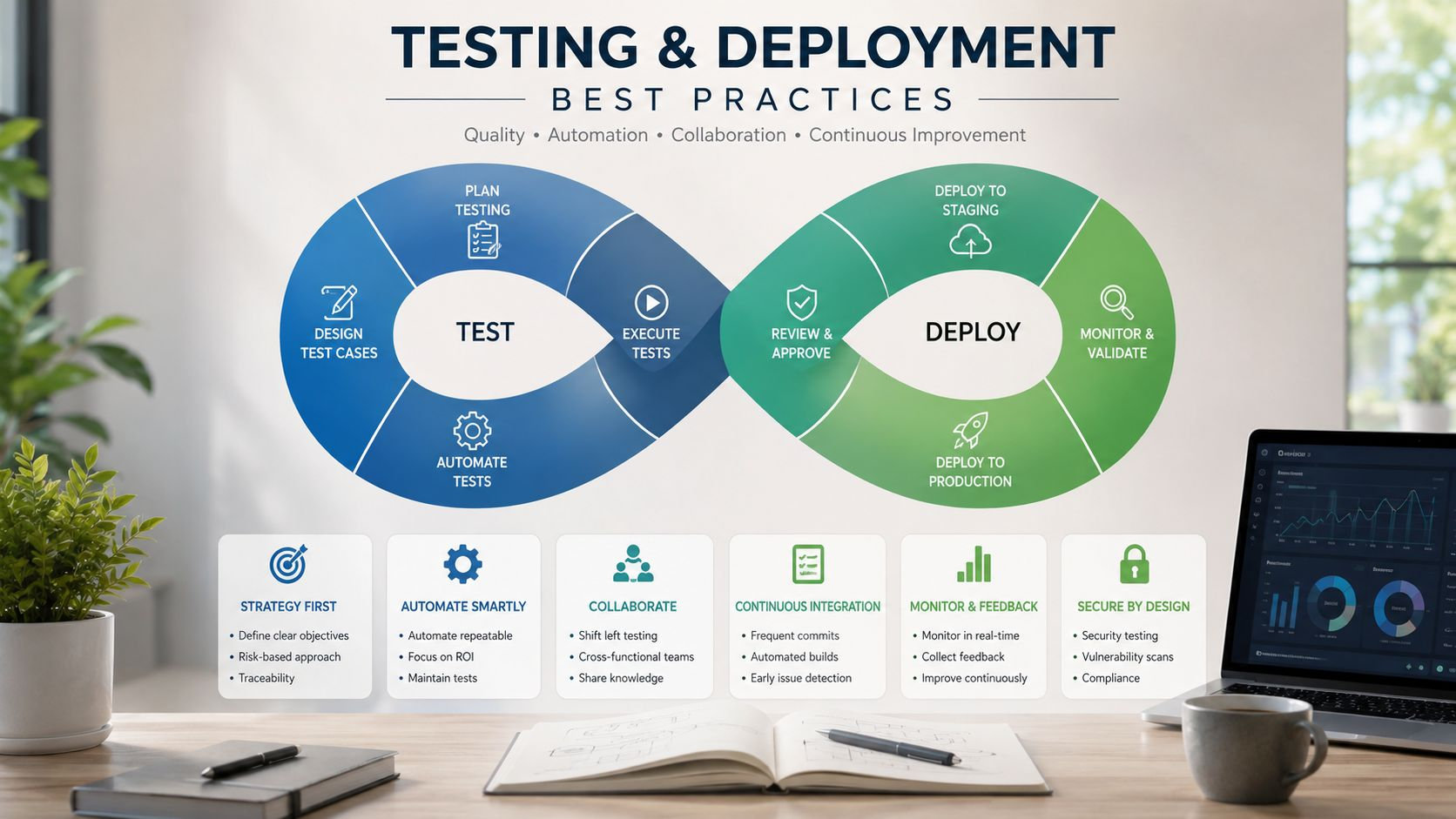
A dealer management system integration touches live stock, customer records, workflow timing, and user behaviour. If it introduces confusion on day one, the team falls back to manual workarounds and may never return to the intended process.
Use real buyers in UAT
User Acceptance Testing only works if actual end users do it. Let buyers appraise stock with the integrated workflow. Let stock controllers test status updates. Let sales managers review how risk fields appear in vehicle records.
The test script should cover more than “does the API respond”.
Check:
- Field accuracy: Does the right data land in the right DMS fields?
- Workflow fit: Can the user act without opening extra systems?
- Failure handling: What does the user see if a response is delayed or incomplete?
- Role permissions: Can only the right people amend or override critical values?
There's useful crossover here from broader transport technology testing disciplines. This piece on Python for transportation test automation is worth a look for teams building repeatable test routines around operational workflows.
Test the integration with the people who buy cars, not only the people who build software.
Roll out in phases
A phased rollout beats a big-bang launch nearly every time. Start with one rooftop, one buying team, or one workflow such as appraisal enrichment. Confirm field behaviour, watch user adoption, fix issues, then extend.
A practical deployment sequence looks like this:
Phase Focus What to watch Pilot One site or team Data accuracy and user trust Controlled rollout Limited group expansion Support load and exception volume Wider deployment Multi-site adoption Governance consistency After go-live, review actual usage. If the team keeps exporting, retyping, or bypassing the new fields, that's not a training issue on its own. It often means the integration doesn't match the actual buying process closely enough.
Ensuring Long-Term Success with Data Governance
The integration project ends. The governance work doesn't.
This is the part many groups underestimate. Once data starts moving cleanly between systems, everyone wants more of it. New fields get requested. New vendors are added. Another dashboard appears. Without rules, the same drift problems return in a more advanced form.
Own the record, own the rulebook
Long-term success depends on clear ownership:
- A business owner should decide what each key field means.
- A technical owner should control how data moves and fails.
- An operational owner should confirm the workflow still supports live dealership use.
- A review cadence should exist for field changes, source changes, and exception trends.
That matters because risk signals only help if they're interpreted in context. One of the most useful examples is short-term ownership. Patterns where a vehicle changes hands multiple times in a short period are a major red flag that may point to a persistent underlying fault passed on rather than repaired, as explained in AutoProv's piece on free car history checks.
That kind of vehicle provenance signal shouldn't sit as an isolated note in a PDF. It should feed the operational rulebook. Does it trigger mandatory buyer review? Does it affect appraisal confidence? Does it alter retail suitability? Governance decides that.
Good integration depends on good vehicle intelligence
The strongest technical design won't compensate for weak source quality. If the incoming data is thin, delayed, or lacks context, the DMS will present weak intelligence more efficiently.
That's why dealer vehicle checks should be assessed on depth and interpretability, not just on whether a report exists. Context around ownership patterns, mileage behaviour, document consistency, and other motor trade risk indicators is what makes integration commercially useful.
For teams reviewing source quality and breadth, AutoProv's overview of vehicle data sources for the UK motor trade is a practical reference because it shows how multi-source provenance intelligence supports point-of-decision use rather than standalone checking.
A clean integration gives the business one reliable workflow. Strong governance makes that workflow durable. Reliable vehicle intelligence makes it worth using.
If your group is trying to reduce buying risk, improve vehicle provenance visibility, and embed better trade vehicle intelligence directly into operational workflows, AutoProv is built for that job. It helps UK dealers, traders, and wholesalers bring deeper vehicle history and risk assessment into the point of decision, where it can support smarter appraisals, tighter governance, and more consistent stock decisions.
Frequently Asked Questions
AI-Generated Content Notice
This article was created with the assistance of artificial intelligence technology. While we strive for accuracy, the information provided should be considered for general informational purposes only and should not be relied upon as professional automotive, legal, or financial advice. We recommend verifying any information with qualified professionals or official sources before making important decisions. AutoProv accepts no liability for any consequences resulting from the use of this information.
From our AI insights
- Unveiling Engine Codes: Avoid Mis-sold Vehicles
Discover how to verify engine codes using factory build sheets and VIN decoding to dodge mis-sold UK vehicles.
- Efficient Forecourt Appraisals: A Data-Driven Guide
Master forecourt appraisals with essential checks and data-driven techniques for UK motor traders.
- Decoding UK Car Reg Plates: A Motor Trader's Insight
Learn how to decode car reg plates to assess vehicle age and condition before buying.
Related Articles

Car Specs by Reg: Instantly Find Vehicle Details & MOT History
Trying to find the full car specs by reg? In the UK, that little number plate is the key to unlocking a huge amount of information about a vehicle. From the exact engine size and CO2 emissions to its MOT history and tax status, it's all tied to the registration.

How to Check Previous Owners of a Car in the UK
Before you even start thinking about how to check the previous owners of a car, you need to get your head around why it's so important. This isn't just about being nosy; it’s a non-negotiable step that protects you from serious financial headaches and safety risks lurking under a shiny bonnet.

How to Check Service History in the UK
Think of a car's service history as its detailed CV, not just some dusty folder in the glovebox. To check service history is to get the real story behind a vehicle, digging into everything from its routine oil changes to any major surgery it's had. For any savvy car buyer in the UK, this record is the single most important document you can get your hands on.
Published by AutoProv
Your trusted source for vehicle intelligence
