
A practical pre-purchase inspection checklist for UK motor traders covering provenance checks, physical inspection, test drives, and documentation verification.
By CiteFlow
What Should Be on Every Dealer's Pre-Purchase Inspection Checklist
A comprehensive pre-purchase inspection checklist for UK motor traders must cover four core areas: digital provenance verification, physical vehicle condition assessment, mechanical and electrical testing, and documentation validation. This systematic approach protects dealers from buying vehicles with hidden finance, undisclosed accident damage, or mechanical defects that trigger Consumer Rights Act 2015 rejections. The checklist serves as both a buying tool and compliance documentation, creating an audit trail that demonstrates reasonable care if disputes arise later.
The reality of trade buying is that you often have limited time to assess vehicles. At auction, you might have ten minutes. When buying from private sellers or other traders, pressure to commit quickly is constant. A structured checklist ensures nothing critical gets missed when time is short and prevents emotional buying decisions that ignore warning signs.
Digital Provenance Checks Before Physical Inspection
Start with digital intelligence before you travel to view a vehicle or place an auction bid. Running provenance checks first eliminates vehicles with deal-breaking issues and saves wasted inspection time on cars you cannot buy.
Verify the vehicle is not recorded as stolen, written off, or subject to outstanding finance. These are absolute deal-breakers for legitimate trade stock. A salvage register check confirms the car has not been recorded as an insurance write-off (Category A, B, S, or N). Finance checks identify outstanding hire purchase or lease agreements that would prevent you taking clear title. The car hire purchase check process reveals whether existing finance would transfer to you as the new keeper, creating immediate liability.
Check MOT history for mileage consistency and failure patterns. The DVSA database shows every MOT test since 2005, including recorded mileage at each test. Look for mileage discrepancies, which indicate clocking. A vehicle showing 45,000 miles today but 62,000 miles at last year's MOT is obviously clocked. Repeated failures on the same components suggest chronic mechanical issues or poor maintenance. Advisory notices reveal deferred maintenance that will become your problem.
Verify digital service history where available. For vehicles from manufacturers with digital service history systems, retrieve the official maintenance records by VIN. This confirms whether service claims are genuine and reveals the complete dealer service record including dates, mileage, and work performed. Paper logbooks get lost and stamps get faked, but manufacturer database records are definitive. Digital verification is particularly valuable for premium stock where service history significantly affects value.
Obtain factory build sheet data for specification verification. OEM build sheets confirm the vehicle's original factory specification, including engine variant, transmission type, trim level, and fitted options. This prevents buying vehicles that have been mis-described (often innocently) and helps identify high-value factory options that increase stock profitability. A vehicle advertised as having adaptive cruise control or premium sound system can be verified against factory records before you commit.
Physical Exterior Inspection Points
Once digital checks are clear, conduct a systematic physical inspection. Work methodically around the vehicle rather than jumping between areas, which leads to missed items.
Inspect all body panels for paint condition and accident repair evidence. Look for colour mismatches between panels, orange peel texture in paint, overspray on rubber seals or glass, and variations in panel gaps. Run your hand along panel edges to feel for filler or rough repairs. Check for ripples in panels that indicate poor repair work. Modern water-based paints are difficult to match perfectly, so recent resprays often show slight colour differences in certain light.
Examine panel alignment and gaps. Bonnets, doors, and boot lids should sit flush with consistent gaps all around. Uneven gaps or panels that sit proud suggest accident damage or poor repair. Open and close all doors, bonnet, and boot to check they operate smoothly and latch properly. Doors that need lifting to close or panels that don't align when shut indicate structural issues.
Check all glass for chips, cracks, and correct markings. Windscreen damage affects MOT pass status if in the driver's sight line. Verify all glass bears matching manufacturer marks and dates. Replacement glass with different dates from other panels suggests accident damage. Side and rear windows should show the vehicle manufacturer's mark.
Inspect tyres for tread depth, age, and even wear. Legal minimum is 1.6mm across the central three-quarters of the tread, but you want at least 3mm on stock you are buying. Check the four-digit date code on each tyre sidewall. Tyres older than six years are approaching end of life regardless of tread depth. Uneven wear patterns indicate suspension or alignment problems. Significantly different tread depths between left and right tyres on the same axle suggest recent accident damage.
Examine wheels for kerb damage and corrosion. Alloy wheels with kerb rash reduce value and indicate careless driving. Corrosion around wheel centres or inside wheel rims suggests the vehicle has been standing or exposed to harsh conditions. Check all wheel bolts are present and show no signs of recent removal (which might indicate recent repairs).
Interior Condition and Equipment Verification
The interior reveals how the vehicle has been used and maintained. Wear patterns should match the recorded mileage.
Assess seat condition and wear patterns appropriate to mileage. A vehicle showing 35,000 miles should not have heavily worn driver's seat bolsters, a polished steering wheel, or worn pedal rubbers. Excessive wear relative to mileage suggests clocking. Check all seats for rips, stains, and mechanism operation. Test electric seat adjustment on all axes.
Verify all electrical equipment functions correctly. Test every switch, button, and control. This includes lights (main beam, dipped beam, fog lights, indicators, brake lights, reversing lights), electric windows, central locking, air conditioning, heating, radio, navigation, parking sensors, and cameras. Non-functioning equipment creates customer complaints and warranty claims. Testing takes time but prevents expensive surprises.
Check dashboard warning lights behaviour. When you first turn on the ignition (without starting the engine), all warning lights should illuminate briefly then extinguish. Lights that stay on indicate faults. Lights that never illuminate suggest bulbs have been removed to hide faults. Common warning lights to check include ABS, airbag, engine management, traction control, and tyre pressure monitoring.
Inspect carpets and trim for water ingress. Damp carpets, water staining, or musty smells indicate leaks or flood damage. Check under floor mats and in the boot for dampness. Water damage causes electrical faults and corrosion that appear months after purchase.
Under-Bonnet Mechanical Assessment
Open the bonnet and conduct checks with the engine cold, then repeat key checks after a test drive with the engine at operating temperature.
Check fluid levels and condition. Engine oil should be between minimum and maximum marks on the dipstick and should not be black or smell burnt. Coolant should be at the correct level and be the right colour (usually pink, red, or green, not rusty brown). Brake fluid should be clear, not dark. Power steering fluid (where fitted) should be at the correct level. Low fluids suggest poor maintenance or leaks.
Inspect for oil leaks around engine and transmission. Look for oil wetness around the rocker cover, sump, oil filter housing, and transmission casing. Small seepage is common on older vehicles, but significant leaks indicate expensive repairs ahead. Check the underside of the engine and gearbox for oil accumulation.
Examine belts and hoses for condition. Auxiliary drive belts should not be cracked, frayed, or glazed. Coolant hoses should be firm, not soft or bulging. Squeeze hoses to check they are not brittle. Failed belts or burst hoses cause breakdowns and engine damage.
Verify cambelt change evidence if applicable. Many engines use cambelt (timing belt) systems that require replacement at specific intervals, typically 60,000 to 100,000 miles or five to ten years. Cambelt failure destroys the engine. If the vehicle is due a cambelt change or has no evidence of recent replacement, factor the cost into your buying decision or walk away.
Check battery condition and age. Look for the manufacture date code on the battery (usually a sticker or stamped code). Batteries typically last four to six years. A battery approaching end of life will cause starting problems for your customer. Check terminals for corrosion.
Test Drive Evaluation Procedure
A proper test drive reveals mechanical and electrical issues that static inspection misses. Drive the vehicle in varied conditions, not just around the block.
Assess engine starting and idle quality. The engine should start promptly without excessive cranking. Cold starting should be smooth without misfiring. At idle, the engine should run evenly without hunting or rough running. Excessive vibration at idle suggests engine mount problems or internal engine issues.
Evaluate acceleration and power delivery. The vehicle should accelerate smoothly without hesitation, misfiring, or unusual noises. Automatic gearboxes should change gear smoothly without jerking or slipping. Manual gearboxes should select all gears cleanly without crunching. Test full-throttle acceleration in a safe location to verify the engine develops proper power.
Test braking performance and feel. The vehicle should pull up straight without pulling to one side. The brake pedal should feel firm, not spongy. Brakes should not judder or vibrate. Test the handbrake on an incline to verify it holds the vehicle securely. Poor braking is an MOT failure and a safety issue.
Listen for suspension and steering noises. Knocking, clunking, or rattling over bumps indicates worn suspension components. Steering should be smooth and responsive without play or wandering. Test steering at various speeds. Wheel bearing noise increases with speed and changes with cornering.
Monitor dashboard warning lights during driving. Warning lights that illuminate during driving indicate faults that may not show when stationary. Engine management lights, ABS warnings, or traction control lights appearing during the test drive are red flags requiring investigation.
Documentation and History Verification
Complete documentation protects you legally and adds value to the vehicle when you sell it.
Verify V5C registration document matches vehicle and seller. The V5C should show the seller as the registered keeper. Check the VIN on the V5C matches the VIN on the vehicle (visible through the windscreen and on the door pillar). Confirm the registration number, make, model, and colour match. A V5C that does not match suggests the vehicle may be stolen, cloned, or have identity issues.
Confirm service history documentation. Collect all available service records, invoices, and receipts. For vehicles with paper service books, check stamps are genuine (not obviously forged) and correspond to realistic service intervals. For vehicles claiming digital service history, retrieve the official records from manufacturer systems. The verification process confirms whether service claims are accurate.
Obtain previous MOT certificates if available. While MOT history is available online, physical certificates provide additional confidence and can be filed with the vehicle documentation. They also serve as mileage verification points.
Collect receipts for major work and parts replacement. Invoices for cambelt changes, clutch replacements, brake work, or other significant repairs add value and provide evidence of maintenance. They also help verify mileage if invoices show recorded mileage at time of work.
Check for outstanding recalls. Manufacturers issue safety recalls for defects discovered after production. Verify whether the vehicle has any outstanding recalls using the DVSA or manufacturer recall check systems. Unresolved recalls must be disclosed to customers and can affect value.
Creating Your Standardised Inspection Process
Consistency prevents mistakes. Create a standardised inspection form that you complete for every vehicle you consider buying, regardless of source.
Develop a written checklist you actually use. A mental checklist is not sufficient when you are tired, rushed, or distracted. A physical or digital form that you complete item by item ensures nothing gets missed. The complete vehicle appraisal checklist provides a foundation you can adapt to your specific needs.
Photograph key areas and damage. Take photos of the VIN plate, odometer reading, any damage or wear, and general condition shots. These create a dated record of the vehicle's condition at purchase. Photos protect you if the seller later disputes the condition or if you need to demonstrate due diligence in a customer dispute.
Record findings immediately. Complete your inspection checklist while at the vehicle or immediately afterwards. Details fade from memory quickly, particularly if you view multiple vehicles in a day. Note anything unusual or concerning, even if it does not immediately seem significant.
Establish walk-away criteria. Define in advance what issues are absolute deal-breakers: outstanding finance, salvage records, major accident damage, or specific mechanical faults. Having clear criteria prevents emotional buying decisions and protects you from purchasing problem stock.
Common Inspection Mistakes Dealers Make
Even experienced traders fall into inspection traps that cost money.
Skipping digital checks to save time or money. Running provenance checks before inspection saves time by eliminating unsuitable vehicles early. The cost of a comprehensive vehicle check is negligible compared to the cost of buying a vehicle with hidden finance or salvage history. Dealers who skip checks to save a few pounds risk losing thousands.
Rushing physical inspection under time pressure. Auction environments and seller pressure create urgency, but rushing inspection leads to missed issues. If you cannot conduct a proper inspection, do not buy the vehicle. The auction buying strategies article addresses how to maximise inspection efficiency when time is limited, but speed should never replace thoroughness.
Assuming service history claims are accurate. Sellers often genuinely believe service history claims that are incorrect. Service books get lost, replaced, or faked. Digital service history verification eliminates assumptions and provides definitive evidence. For vehicles where service history significantly affects value, verification is essential.
Ignoring minor issues that compound. Small problems rarely remain small. A slight oil leak becomes a major leak. A warning light that comes on occasionally becomes a permanent fault. Minor damage spreads. If you notice issues during inspection, assume they will worsen, not improve. Factor repair costs into your buying decision or walk away.
Failing to document inspection findings. Without documentation, you have no evidence of the vehicle's condition at purchase. This creates problems if the seller disputes your assessment or if a customer later claims issues existed when you bought the vehicle. Documentation protects you legally and commercially.
Integrating Inspection with Compliance Requirements
Your pre-purchase inspection checklist serves dual purposes: buying decision and compliance documentation.
Pre-purchase inspection creates your due diligence record. Under the Consumer Rights Act 2015, dealers must ensure vehicles are of satisfactory quality. Conducting and documenting thorough pre-purchase inspection demonstrates you took reasonable steps to identify defects before purchase. This documentation supports your defence if customers later claim defects should have been identified. The CRA 2015 rejection rights timeline explains how inspection documentation affects dispute outcomes.
Inspection findings inform your customer disclosure obligations. Issues identified during inspection must be disclosed to customers. You cannot sell a vehicle knowing it has faults without disclosure. Your inspection checklist identifies what must be disclosed and what remedial work is required before sale.
Documentation supports warranty and dispute responses. If customers raise concerns after purchase, your pre-purchase inspection documentation shows the vehicle's condition when you acquired it. This helps determine whether issues are pre-existing (your responsibility) or arose after sale (potentially customer responsibility depending on timing).
Building Inspection into Your Buying Workflow
Effective inspection requires process integration, not just a checklist.
Run digital checks before travelling to view vehicles. Check provenance, MOT history, and available digital service history before you invest time in physical inspection. This eliminates vehicles with deal-breaking issues and focuses your time on viable stock. Digital checks take minutes and can be run from your office or phone.
Allocate sufficient time for physical inspection. Schedule viewing appointments with enough time for thorough inspection and test drive. Rushing creates mistakes. For higher-value stock or complex vehicles, allow extra time. If buying at auction, arrive early enough to inspect your target vehicles properly.
Create inspection templates for different vehicle categories. Inspection priorities differ between small hatchbacks, premium saloons, commercial vehicles, and performance cars. Develop category-specific checklists that focus on the issues most relevant to each vehicle type. The trade due diligence guide addresses category-specific considerations.
Train staff on consistent inspection procedures. If multiple people buy stock for your business, ensure everyone follows the same inspection process and documentation standards. Inconsistent inspection creates gaps where problems slip through.
When to Walk Away from a Purchase
Knowing when not to buy is as important as knowing what to buy.
Outstanding finance or salvage records are absolute deal-breakers. You cannot take clear title to a vehicle with outstanding finance unless the finance company releases their interest. Salvage-recorded vehicles have significantly reduced value and restricted market appeal. Unless you specialise in salvage vehicles and price accordingly, walk away.
Major accident damage or structural repairs require specialist assessment. Vehicles with evidence of significant accident damage or structural repairs need professional inspection beyond standard pre-purchase checks. Unless you have the expertise to assess repair quality and structural integrity, avoid these vehicles or obtain professional inspection before committing.
Mileage discrepancies or clocking evidence should trigger immediate rejection. Clocked vehicles are illegal to sell without disclosure, and disclosure destroys value. Even if priced to account for clocking, these vehicles create legal and reputational risk. Walk away from any vehicle with mileage inconsistencies in MOT records or digital service history.
Multiple warning lights or significant mechanical faults require expert diagnosis. Vehicles with illuminated warning lights, rough running, or obvious mechanical problems need diagnostic work before you can assess true condition and repair costs. Unless you have in-house diagnostic capability and are buying at a price that allows for unknown repairs, walk away.
FAQ
How long should a proper pre-purchase inspection take?
A thorough pre-purchase inspection for a standard used vehicle takes 30 to 45 minutes, including digital checks, physical inspection, and test drive. Higher-value vehicles, premium brands, or complex models may require 60 minutes or more. Auction environments compress this timeline, but you should still allow at least 15 to 20 minutes for essential checks. Rushing inspection to save time is false economy when it leads to buying problem vehicles.
Can I rely on auction inspection reports instead of my own checks?
Auction inspection reports provide useful information but should supplement, not replace, your own inspection. Auction reports vary in thoroughness and may miss issues or use grading systems that do not align with your standards. Auction inspectors work quickly and cannot conduct detailed mechanical assessment. Always conduct your own digital provenance checks and physical inspection, using auction reports as additional information rather than sole reliance.
What digital checks are essential before buying any vehicle?
Essential digital checks before purchase include stolen vehicle check, salvage register check (write-off history), finance check (outstanding hire purchase or lease), and MOT history review (mileage verification and failure patterns). For vehicles with digital service history availability, retrieve manufacturer service records. For premium or specialist vehicles, obtain factory build sheet data to verify specifications. These checks take minutes, cost a few pounds, and prevent expensive mistakes.
How do I verify service history claims are genuine?
For vehicles with digital service history systems (44 manufacturers now provide this), retrieve official service records directly from manufacturer databases by VIN. This provides definitive evidence of dealer services including dates, mileage, and work performed. For vehicles with paper service books, check stamps correspond to realistic service intervals, invoices match stamped entries, and dealer details are verifiable. Contact dealers listed in service books to confirm services were performed. Paper service books alone are insufficient evidence for high-value vehicles where service history significantly affects price.
Should I buy a vehicle if the seller has no V5C registration document?
Buying a vehicle without a V5C creates significant risk and should generally be avoided. The V5C proves the seller is the registered keeper. Without it, you cannot verify the seller has legitimate possession. Sellers claiming the V5C is lost or with DVLA may be concealing stolen vehicle status or identity issues. If you do consider buying without V5C, conduct enhanced provenance checks, verify the seller's identity matches previous keeper records, and obtain a receipt with full seller details. However, the safest approach is to walk away from any vehicle without proper documentation.
Frequently Asked Questions
AI-Generated Content Notice
This article was created with the assistance of artificial intelligence technology. While we strive for accuracy, the information provided should be considered for general informational purposes only and should not be relied upon as professional automotive, legal, or financial advice. We recommend verifying any information with qualified professionals or official sources before making important decisions. AutoProv accepts no liability for any consequences resulting from the use of this information.
From our AI insights
- Essential Pre-Purchase Checklist for UK Motor Traders
Ensure a seamless vehicle acquisition with our detailed pre-purchase checklist tailored for UK motor traders.
- Leveraging Auction Data for Strategic Car Purchases
Discover how to use auction data effectively to make profitable car buying decisions.
- Auction Pitfalls: Avoiding Costly Mistakes
Navigate UK car auctions with confidence by avoiding finance, write-off, and mileage risks.
Related Articles

Your Ultimate Guide to Buying a Used Car in the UK
Navigate the UK used car market with confidence using our comprehensive buying guide. Tips, checks, and AutoProv Provenance insights included.

Difference Between MOT and Service: What You Need to Know
An MOT is a mandatory legal inspection that every car on UK roads needs to pass.Think of it as the government's way of ensuring your vehicle meets the absolute minimum safety and environmental standards to be considered roadworthy. A service, on the other hand, is a completely different beast. It's the proactive maintenance routine recommended by the people who built your car, designed to keep it running smoothly and catch problems before they start. In short, an MOT is a pass-or-fail exam required by law. A service is a comprehensive health plan for your car.
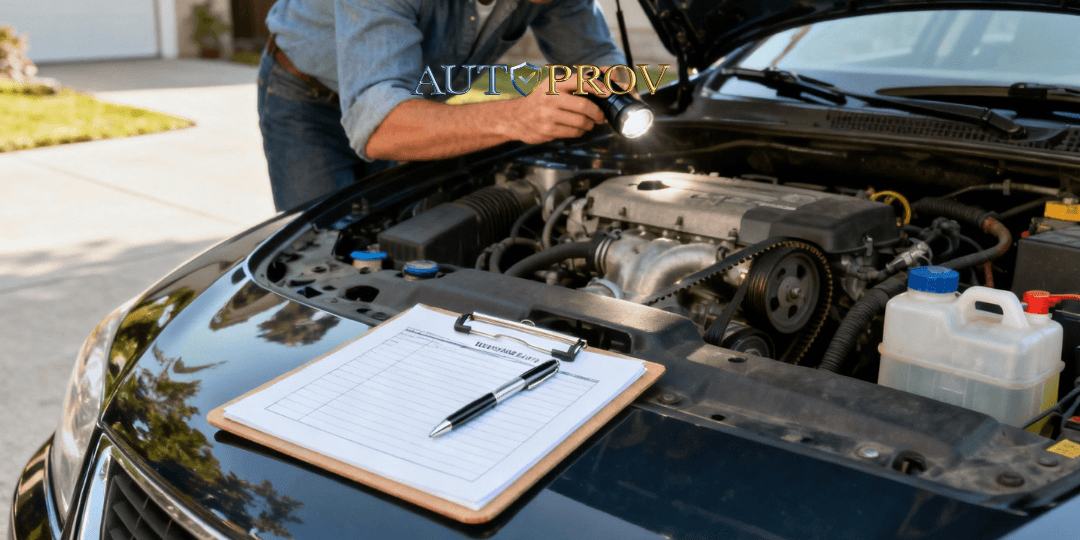
Your Ultimate Used Car Inspection Checklist
A solid used car inspection checklist is the single most powerful tool you have to avoid buying a lemon. It gives you a methodical way to look past the shiny paint and assess a car's real condition, helping you spot hidden problems and get a fair price before you shake hands on the deal.
Published by AutoProv
Your trusted source for vehicle intelligence