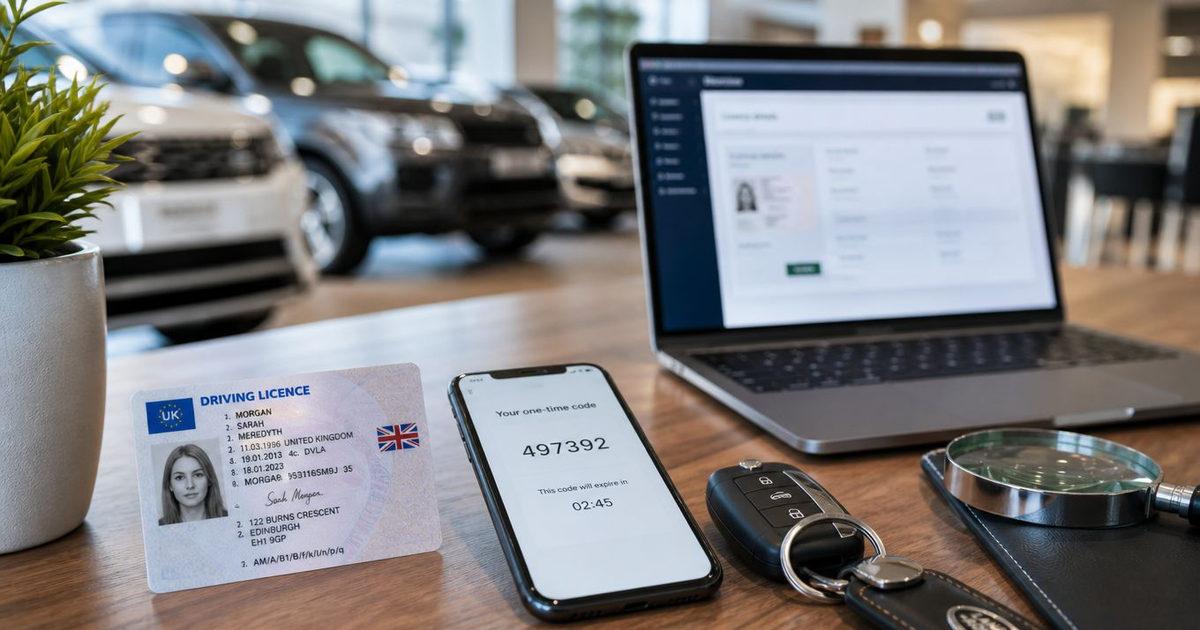
The most popular advice about a DVLA conviction check is also the advice that causes dealers the most confusion: “Run a check before you buy the car.” That instruction collapses two separate questions into one. A DVLA check concerns a driver's record, while a vehicle history check concerns the car's provenance, condition and risk history.
Those checks don't replace each other. They're triggered by different risks, rely on different information, and belong at different points in a dealership's buying and compliance workflow. A dealer who treats a driver-record check as a standard vehicle-history product may chase information that isn't relevant to the purchase, or handle personal data without a clear purpose.
For most stock acquisitions, the commercial decision rests on the vehicle. The important questions are whether the mileage is credible, whether the ownership story makes sense, whether finance or insurance history creates exposure, and whether the car has been accurately represented. A driver check may be relevant in a separate, properly consented process, but it won't answer those vehicle questions.
Table of Contents
- Why a DVLA Conviction Check Is Not the Same as a Vehicle History Check
- Two subjects, two workflows
- What the DVLA Shared Licence Service Actually Returns
- What the service can and cannot answer
- Consent, Lawful Basis and the 21-Day Check Code
- Treat the code as consent-led access
- DVLA Conviction Check vs DBS Check vs Vehicle History Check
- Match the check to the decision
- A Real Dealer Scenario Where the Check Comes Up
- Put the evidence against the car
- Lawful Alternatives When You Cannot Run a DVLA Conviction Check
- Build the buying file around provenance
- Add physical and documentary checks
- Smarter Trade Decisions Start with Vehicle Intelligence
- Three rules for the buying desk
Why a DVLA Conviction Check Is Not the Same as a Vehicle History Check
A DVLA conviction check interrogates the driver, not the car. It uses the Driver and Vehicle Licensing Agency's shared driving licence service to show information connected with a driver's licence, including endorsements and disqualifications where those records are available through the service. The check therefore addresses a driver-records question: is there relevant information on this person's driving record?
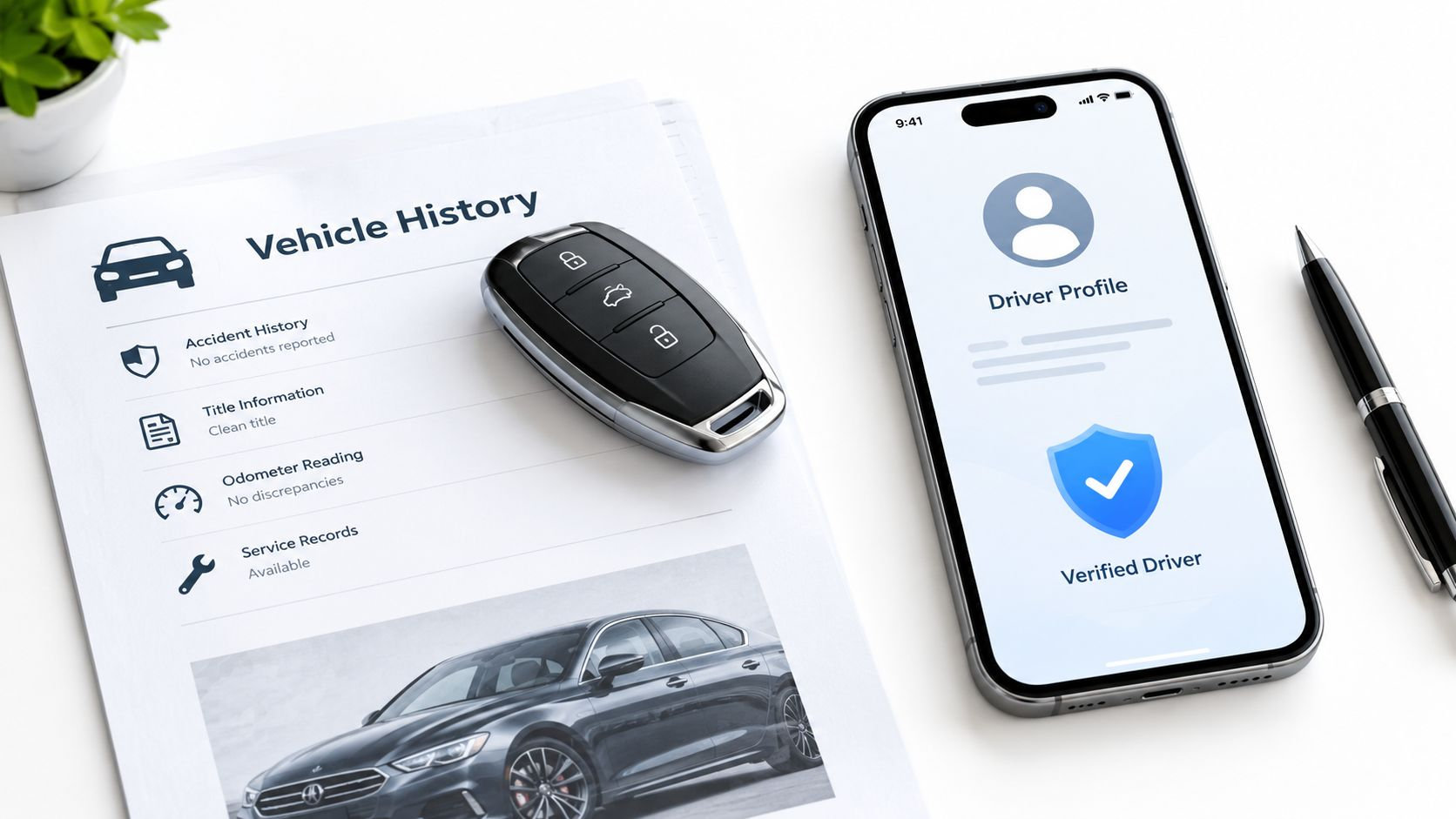
A vehicle history check UK service addresses a different subject. It examines the car's available provenance, which can include finance indicators, insurance-related events, recorded mileage, keeper history, registration changes and other vehicle risk signals. That's why a used car history report can help a buyer assess stock, while a driver-record check cannot establish whether the vehicle has hidden finance or an unreliable mileage story.
Two subjects, two workflows
Dealers should separate the questions before ordering any report:
- Driver suitability: Does the individual's shared driving record show endorsements or disqualifications relevant to a defined business purpose?
- Vehicle provenance: Does the car's recorded history support the seller's description, declared mileage and ownership story?
- Purchase risk: Is there enough reliable information to value, acquire or reject the vehicle?
The distinction matters because a seller's driving record doesn't tell you where the car has been kept, how many people have used it, whether it has been subject to finance, or whether its mileage is credible. Conversely, a vehicle history report doesn't tell you whether the person presenting the car has a motoring conviction.
A useful DVLA mileage check guide can sit within a wider vehicle assessment, but it shouldn't be presented as a substitute for a driver-record process. The clean approach is to run the check that matches the risk, document the purpose, and avoid collecting personal information just because it might be available.
Practical rule: If the buying decision concerns the car, start with the car's provenance. Don't use a driver check as a proxy for vehicle intelligence.
What the DVLA Shared Licence Service Actually Returns
The DVLA shared driving licence service is a controlled, point-in-time way to share driving-record information. The driver generates a check code through the government service and gives it to the person or organisation carrying out the check. The recipient also needs the driver's licence number, National Insurance number and the postcode shown on the licence to access the record through the relevant service.
The code is valid for 21 days and can be used once, according to GOV.UK's driving information service. That makes the result a snapshot of the record at the time of the check, not a permanent clearance certificate. If the dealership needs a fresh review later, the driver must provide a new code.
The output is relevant to driving eligibility and recorded motoring history. GOV.UK states that the service can show penalty points and disqualifications, while endorsement information remains on a driving record for 4 or 11 years depending on the offence. Those retention periods are set out in the official endorsement codes and penalty points guidance.
What the service can and cannot answer
Use the service for a defined driver-record question. Don't describe it to a customer, buyer or internal colleague as a general criminal-record search or a vehicle background report.
Returned by DVLA Shared Service Not returned by DVLA Driving-record information connected with the licence Vehicle provenance, finance or write-off history Recorded penalty points and disqualifications where shown on the record Mileage history or MOT history Endorsement information retained on the driving record Ownership patterns, keeper changes or plate-transfer history A point-in-time view accessed with a driver-generated code A permanent monitoring record or general vehicle risk assessment The service also shouldn't be treated as a replacement for a wider criminal-record process. The government's guidance confirms that driving offences can appear in basic criminal-record checks, with the treatment of a conviction depending on whether it's spent or unspent and the relevant sentence conditions. That context sits outside the narrow operational purpose of sharing a driving licence record.
For dealers building systems rather than checking manually, the distinction between a vehicle lookup and a driver-record workflow is important. A DVLA vehicle check API overview can help frame the vehicle side of the process, but the driver must still supply the information and consent needed for a shared licence check.
Consent, Lawful Basis and the 21-Day Check Code
The check code is the central control in this process. The driver generates it and decides to share it. A dealer shouldn't attempt to obtain or reuse driver-record information without a clear, recorded purpose and an appropriate basis for processing the information.
That means a dealership needs to distinguish between the existence of a commercial concern and permission to inspect a driver's record. A suspicion that someone may have a conviction isn't, by itself, a sound reason to collect personal data. The business should know why the check is needed, what decision it will inform, who will see the result and how long the record will be retained.

Treat the code as consent-led access
In practical terms, an organised workflow should cover four points:
- Purpose: State whether the check relates to a driving role, an operator assessment, a regulated activity or another defined business need.
- Access: Limit the result to the dealer, an authorised counter-check clerk or a checking partner acting within the disclosed purpose.
- Retention: Keep notes only for as long as they're needed for that stated purpose. Don't build an informal permanent file because a code was once supplied.
- Disclosure: Don't pass the result to another buyer, branch, insurer or third party outside the use case explained to the driver.
The code's short life reinforces the point. GOV.UK says it's valid for 21 days and can be used once, so a result is not evidence that a driver's record remains unchanged after the check. A later review requires a new code and a fresh decision to share.
Dealers should also avoid treating a shared licence result as a complete criminal background check. The service is aimed at the driving record. It doesn't turn a dealership into a vetting authority, and it doesn't remove the need to keep the process proportionate.
A documented know your customer process can help separate identity checks, vehicle checks and optional driver screening. Keep those purposes distinct in forms, systems and staff training. If the business can't explain why it needs the record, it shouldn't request it.
DVLA Conviction Check vs DBS Check vs Vehicle History Check
These three checks are often discussed as if they were interchangeable. They aren't. The subject, access route and output differ in each case, so the correct choice depends on the decision the dealer is making.
A DVLA conviction check concerns the driving record linked to an individual's licence. It's useful where motoring eligibility or recorded endorsements matter and where the driver has supplied the required check information. It's not a search of the vehicle and it shouldn't be described as a general criminal-record report.
A DBS check belongs to a different type of process. It concerns criminal-record information for an eligible role or purpose, rather than vehicle acquisition. The appropriate level and route depend on the role and the applicable requirements. A dealer shouldn't order a DBS check just because a vehicle seller seems unusual.
A vehicle history check concerns the car. It can support analysis of provenance, mileage, ownership and risk indicators without inspecting the seller's driving record. That makes it the relevant starting point for most trade buying decisions.
Check Subject Lawful basis or consent Typical output DVLA conviction check Individual driver Driver-generated sharing permission and a defined purpose Driving-record information, including available endorsements, penalty points and disqualifications DBS check Individual applicant for an eligible role The appropriate application route and applicant consent Criminal-record information relevant to the check level Vehicle history check Vehicle A vehicle-focused purchasing or risk-assessment purpose Provenance, mileage, ownership and other recorded vehicle risk indicators
Match the check to the decision
If the question is “Can this person drive within a defined business arrangement?”, a driver-record process may be relevant. If it's “Can this person work in an eligible role?”, the business should assess the appropriate DBS route. If it's “Should we buy this car?”, the answer requires vehicle intelligence.
The UK drink-drive penalties guidance may help staff understand why a motoring endorsement can matter in a driver-focused process. It still won't establish anything about the vehicle's title, mileage or provenance.
The mistake is rarely a lack of available checks. It's usually a failure to define the decision first. Write the decision at the top of the workflow, then select the narrowest check that answers it.
A Real Dealer Scenario Where the Check Comes Up
A franchised dealer takes a three-year-old hatchback in part exchange from a private seller. The seller claims there has been one previous keeper and describes the car as having a clean history. During the appraisal, the salesperson notices mismatched service stamps and asks whether a DVLA conviction check would help “verify the driver”.
It wouldn't answer the question in front of the dealer. The seller's driving record could show relevant motoring information, but it wouldn't establish how the hatchback was used, where it was kept, whether the service history was genuine, or whether finance remained attached to it. It also wouldn't confirm the seller's claim about the number of keepers.
Put the evidence against the car
The correct buying workflow would focus on the vehicle:
- Start with provenance: Run a vehicle history check covering the available finance, write-off, stolen, registration and mileage indicators.
- Inspect identity documents: Compare the V5C with the seller's identity and the declared keeper details. Treat inconsistencies as a reason to pause, not as a minor administration issue.
- Test the condition: Arrange a proper pre-purchase inspection and investigate the mismatch between the service stamps and the vehicle's recorded history.
- Verify supporting records: Ask for service invoices and other documentation that can support the claimed maintenance story.
- Set a clear decision point: If the seller won't provide ordinary documentation needed to establish the car's provenance, decline the transaction.
A driver's conviction record doesn't make a vehicle legitimate. The car must stand up on its own evidence.
The salesperson's instinct to investigate risk is sound, but the proposed check is misdirected. A mileage check UK workflow, document inspection and mechanical assessment address the facts that affect valuation and resale exposure. A driver check would create a separate privacy issue without resolving the original discrepancy.
The conviction question becomes relevant only if the dealer is running a distinct driver-screening process, perhaps for a repeat customer, operator or driving-related commercial arrangement. Even then, the process should be consent-led, proportionate and documented. It mustn't be used as a back-door attempt to obtain information about the vehicle.
Lawful Alternatives When You Cannot Run a DVLA Conviction Check
A dealer doesn't need a driver conviction record to carry out disciplined vehicle due diligence. In most stock-buying situations, the stronger route is to gather more relevant evidence about the vehicle and stop the transaction when the evidence doesn't support the seller's account.
Build the buying file around provenance
Begin with a full vehicle history assessment. Review available indicators for finance, write-off history, stolen status, registration changes and mileage. Compare the result with the V5C, the seller's documents, the vehicle itself and the proposed valuation.
The official MOT service provides a particularly useful source for mileage analysis. It shows whether the vehicle passed or failed, the mileage recorded at each test and the next MOT due date, as explained in the GOV.UK MOT history service. That dated sequence gives the buyer something concrete to compare with the advertised mileage and later appraisal.
If an MOT mileage entry appears wrong, don't overwrite it without noting it in your internal records. The test centre can correct the record within 28 days of the test, while corrections after that period go through DVSA and require evidence such as an MOT invoice, emissions printout, service receipt or vehicle job card. The official MOT correction process explains the evidence requirements.
Add physical and documentary checks
A sensible trade workflow combines data with inspection:
- Identity review: Check the V5C and seller details against the vehicle and the transaction records.
- Mechanical inspection: Examine condition, warning lights, tyres, panels and signs of repair. Use a diagnostic scan where appropriate.
- Service verification: Contact the servicing business or examine original invoices rather than relying on stamps alone.
- Risk escalation: Refer unusual mileage, rapid resale, inconsistent ownership or unexplained documentation to a senior buyer.
- Walk-away rule: If the counterparty refuses normal vehicle documentation, don't compensate by investigating the driver. Decline the stock.
For ongoing screening of repeat trade-in or hire customers, create a separate consent form that sets out the purpose, access and retention approach before any DVLA check is attempted. Store the supplied code and result securely, restrict access, and obtain a new code for a later review. That workflow is distinct from the vehicle file and should remain separate.
Smarter Trade Decisions Start with Vehicle Intelligence
The durable lesson is simple. A conviction check is a driver-records tool, not a provenance tool. Consent and a defined purpose are essential before a dealer requests or records driver information. When the driver's record is unavailable, irrelevant or outside the lawful purpose, the dealer must return to the evidence attached to the vehicle.
That evidence includes the ownership chain, finance indicators, write-off signals, MOT mileage sequence, registration history and the condition found during inspection. It helps the buyer decide whether to acquire, revalue, investigate further or reject the car. It also creates a more defensible internal record because the decision relates directly to the stock under consideration.
Three rules for the buying desk
- Separate the subjects. The driver and the vehicle are different risk subjects. Don't let one check stand in for the other.
- Use consent deliberately. A one-time DVLA code gives a time-bound view, not an open-ended right to monitor or circulate a record.
- Act on relevant evidence. Vehicle provenance is the information that supports a purchase, valuation and resale decision.
A trade-focused real-time vehicle intelligence approach can bring those vehicle signals together at the point of purchase. The purpose isn't to promise certainty. It's to help the buyer see inconsistencies early, apply the same controls across stock and make a decision based on commercially relevant information.
Build the workflow around what the dealership can lawfully access and reliably use. Don't chase a driver record that won't explain a mileage anomaly, hidden finance or an ownership gap. Check the person only when the business has a genuine, documented driver-screening purpose. Check the vehicle every time the purchase decision depends on the vehicle.
AutoProv provides UK motor-trade vehicle history, provenance and risk intelligence, including mileage patterns, ownership timelines and vehicle risk indicators that support dealer buying decisions. Visit AutoProv to assess vehicle history and provenance before committing capital to stock.
Frequently Asked Questions
AI-Generated Content Notice
This article was created with the assistance of artificial intelligence technology. While we strive for accuracy, the information provided should be considered for general informational purposes only and should not be relied upon as professional automotive, legal, or financial advice. We recommend verifying any information with qualified professionals or official sources before making important decisions. AutoProv accepts no liability for any consequences resulting from the use of this information.
From our AI insights
- Navigating DVLA Conviction Checks: Dealer Compliance
Understand DVLA conviction checks and lawful access for UK dealers.
- Streamlining Compliance: Automated Checks for Dealers
Discover how UK car dealers can automate compliance checks, reduce risk, and build trust with AutoProv.
- Avoiding Towing Missteps: Legal Checks for Dealers
Protect your dealership by ensuring vehicle weight and towing capacity compliance before listing stock.
Related Articles

Understanding the Consumer Rights Act 2015 in the UK Motor Trade
Explore the Consumer Rights Act 2015 and its impact on UK car buyers and sellers, offering essential protections and insights.
Understanding UK Automotive Regulations
Explore the complexities of automotive regulations in the UK, covering DVLA, FCA, MOT, and more.
What is a V5C Document: A Quick UK Log Book Guide
If you've ever bought or sold a car in the UK, you've definitely come across the V5C. It's often just called the 'log book', and it’s the official Vehicle Registration Certificate issued by the DVLA.
Published by AutoProv
Your trusted source for vehicle intelligence