

Learn how OEM build sheets verify factory specifications, prevent mis-description disputes, and protect dealers from CRA 2015 rejection claims.
By CiteFlow
What Factory Build Data Reveals About Vehicle Specifications
Factory build data provides the original equipment manufacturer's record of exactly what was fitted to a vehicle when it left the production line. This OEM documentation lists every factory-installed option, equipment code, paint colour, trim specification, and technical detail as recorded during manufacturing. Unlike advertised descriptions or seller claims, build sheets represent the authoritative source for what a vehicle actually contains, making them essential for preventing mis-description disputes under the Consumer Rights Act 2015.
Most dealers rely on visual inspection, V5C documents, or previous advertisements when describing stock. These methods miss hidden specifications, fail to identify deleted options, and cannot verify whether premium features are genuine factory installations or aftermarket additions. A vehicle advertised with navigation, leather seats, or advanced driver assistance might lack the factory codes to support those claims, exposing dealers to rejection rights and refund obligations.
The financial risk is substantial. A customer who discovers their "fully loaded" premium model lacks factory-fitted options they paid extra for can reject the vehicle within 30 days and claim a full refund. Between 30 days and six months, the burden of proof shifts to the dealer to demonstrate the vehicle was correctly described. Factory build data eliminates this exposure by providing manufacturer-verified evidence of what was actually fitted.
Why Visual Inspection Fails to Verify Specifications
Physical inspection cannot distinguish between factory-fitted equipment and aftermarket installations. A navigation screen might be dealer-fitted rather than the manufacturer's integrated system. Leather seats could be retrimmed aftermarket rather than the original factory option. Parking sensors, upgraded audio systems, and even badging can be added after manufacture, creating vehicles that appear to match premium specifications without the corresponding factory codes.
This matters because buyers increasingly research specific option codes and equipment packages before purchase. Enthusiast buyers know that certain codes indicate performance packages, limited editions, or desirable factory combinations. When the build sheet contradicts the advertisement, the mis-description is provable and actionable.
The V5C registration document lists basic details like engine size and fuel type but omits the granular specification data that differentiates trim levels and option packages. Two vehicles with identical V5C entries can have vastly different factory equipment lists. Relying on registration documents alone leaves dealers vulnerable to describing vehicles based on incomplete information.
Previous advertisements compound the problem. Dealers often copy descriptions from auction listings or part-exchange paperwork without verification. If the previous seller mis-described the vehicle, that error propagates through the supply chain. Each subsequent dealer repeats the incorrect specification, building a paper trail that appears to support claims that factory data contradicts.
How OEM Build Sheets Identify Missing or Incorrect Options
Official OEM build sheets decode the vehicle identification number to retrieve the production record from manufacturer databases. This process accesses the same specification data used during assembly, listing every option code, package, and feature installed at the factory. The report shows paint codes, interior trim codes, transmission specifications, engine variants, and individual options ranging from sunroofs to tow bars.
Option codes appear as alphanumeric strings that correspond to specific features. For example, a code might indicate adaptive cruise control, while another confirms the premium sound system. These codes are manufacturer-specific and cannot be replicated by aftermarket installations. When a dealer advertises features that lack corresponding factory codes, the mis-description becomes immediately apparent.
Package verification is particularly valuable. Manufacturers bundle options into named packages like "Technology Pack" or "Winter Pack". Advertising a vehicle as having a specific package when the build sheet shows only some components were fitted individually constitutes mis-description. Buyers who research package contents will identify the discrepancy, triggering rejection rights.
The build sheet also reveals deleted options. Some manufacturers offer delete options where buyers specify the removal of standard equipment, often for weight reduction or cost saving. A vehicle might lack features that appear standard for its model year and trim level because they were factory-deleted. Without build data, dealers assume these features should be present and inadvertently mis-describe the vehicle.
Common Mis-Description Scenarios Build Data Prevents
Trim level confusion represents the most frequent mis-description risk. Manufacturers use similar model names across different specification levels, with subtle badging differences that are easily missed. A base model with aftermarket additions might resemble a higher trim level visually, but the factory codes tell the true story. Advertising a vehicle at a higher trim level than its build sheet confirms inflates the price and creates immediate rejection grounds.
Navigation system claims are particularly problematic. Factory navigation integrates with the vehicle's systems and appears on the build sheet with specific option codes. Aftermarket units, even when professionally installed, lack these codes. Buyers who pay premium prices for factory navigation can prove mis-description when the build data shows the system was never fitted.
Performance packages and sport variants carry significant value premiums. Enthusiasts research these thoroughly and know the exact option codes that confirm genuine specification. A vehicle badged as a performance variant without the corresponding factory codes represents serious mis-description. The buyer can demonstrate they paid for specific mechanical upgrades that were never factory-fitted.
Leather interior claims require verification. Some manufacturers offer multiple leather options at different price points, from basic leather to premium Nappa grades. Others offer leather-effect materials that resemble genuine hides. The build sheet specifies exactly which interior was fitted, preventing dealers from inadvertently upgrading vinyl to leather in their descriptions.
Driver assistance features like adaptive cruise control, lane keeping assist, and autonomous emergency braking appear on build sheets with specific codes. These safety features influence buying decisions and vehicle values. Advertising systems that are not factory-fitted creates liability when buyers discover the discrepancy, particularly if they relied on those features for safety reasons.
Protecting Your Business from CRA 2015 Rejection Claims
The Consumer Rights Act 2015 gives buyers powerful rejection rights when vehicles are mis-described. Within the first 30 days, rejection is nearly automatic if the vehicle does not match its description. The dealer must provide a full refund, collect the vehicle, and absorb all associated costs. Between 30 days and six months, the dealer must prove the vehicle was correctly described, a burden that factory build data satisfies conclusively.
Documenting your due diligence protects against disputes. When you verify specifications against factory build sheets before advertising, you create an audit trail showing reasonable care. If a customer claims mis-description, you can demonstrate that your description matched manufacturer data available at the time of sale. This evidence is crucial for defending against rejection claims.
Accurate descriptions also prevent the reputational damage of public disputes. Customers who feel mis-sold share experiences on review platforms and social media. A single high-profile case of proven mis-description can damage dealer credibility far beyond the immediate financial loss. Verification systems prevent these scenarios by ensuring descriptions match factory reality.
The cost of verification is minimal compared to rejection exposure. A single refund on a mis-described vehicle can exceed the annual cost of unlimited build sheet access. When you factor in collection costs, lost profit, and the vehicle's depreciation during the customer's ownership period, prevention becomes obviously cost-effective.
Integrating Build Data into Your Stock Preparation Process
Effective verification happens before advertising, not after customer queries arise. When a vehicle enters stock, obtain the build sheet alongside traditional provenance checks. This parallel process ensures you have complete specification data before writing advertisements, photographing specific features, or setting prices.
Cross-reference the build sheet against visual inspection findings. If you observe features that lack corresponding factory codes, investigate whether they are aftermarket additions. Document these findings in your internal records and ensure advertisements distinguish between factory-fitted and dealer-fitted equipment. Transparency about aftermarket additions actually builds trust rather than diminishing value.
Use build data to identify hidden value. Factory options that are not immediately visible can justify higher asking prices when properly documented. A vehicle might have upgraded suspension, limited-slip differential, or premium audio components that are not obvious during casual inspection. The build sheet reveals these features, allowing you to describe and price the vehicle accurately.
Train your sales team to reference build data when discussing specifications with customers. When a buyer asks about specific features, confirming them against the factory sheet provides authoritative answers. This approach positions your dealership as thorough and transparent, differentiating you from competitors who rely on assumptions.
How AutoProv Delivers Manufacturer-Verified Build Data
AutoProv retrieves official OEM build sheets directly from manufacturer databases using the vehicle identification number. This access covers multiple brands and provides the same specification data used during vehicle production. The reports decode option codes into plain English descriptions, making technical factory data accessible for advertising and customer discussions.
The service integrates build sheet verification with comprehensive provenance reporting. A single check provides factory specifications alongside MOT history, finance status, and salvage records from trusted UK sources. This consolidated approach ensures you verify both what the vehicle is and what has happened to it, creating complete due diligence documentation.
Reports are instant and accessible from any device. When appraising a part-exchange or considering an auction purchase, you can verify specifications immediately rather than waiting for manual lookups. This speed supports quick decision-making without compromising verification thoroughness.
Pricing starts from £2.50 per check for pay-as-you-go users, with unlimited enterprise subscriptions at £25 per month for dealers requiring high-volume access. The enterprise model eliminates per-check costs, encouraging thorough verification across all stock without budget concerns. Every report includes up to £50,000 Experian indemnity protection, providing financial backing for the data accuracy you rely on when describing vehicles.
Regional Considerations for Build Sheet Verification
Vehicle specifications can vary by original market destination, particularly for imported vehicles. A vehicle manufactured for a different European market might have different standard equipment or option availability compared to UK-market equivalents. Build sheets reveal these differences, preventing dealers from assuming UK-specification equipment on grey imports or reimported vehicles.
Regional dealer networks sometimes fitted accessories as standard delivery additions. These dealer-fit items appear on some documentation but not on factory build sheets. Understanding this distinction prevents confusion when paperwork suggests features that the manufacturer never installed. Dealers across regions from Yorkshire and the Humber to Scotland benefit from clarifying which features are genuine factory options.
Limited edition models and regional variants require particular attention. Manufacturers sometimes produce specific editions for certain markets or dealer groups. The build sheet confirms whether a vehicle is genuinely a limited edition or a standard model with added badging. This verification is essential in areas with strong enthusiast communities where buyers research model authenticity thoroughly.
Beyond Compliance: Using Build Data for Competitive Advantage
Accurate specification data improves advertising effectiveness. Detailed, verified descriptions attract serious buyers who research thoroughly before contacting dealers. When your advertisements list specific option codes and factory packages, you signal professionalism and transparency that builds buyer confidence.
Build sheets support premium pricing for correctly specified vehicles. When you can document rare options or desirable factory combinations, you justify higher asking prices with manufacturer evidence. Buyers accept price premiums when they see authoritative proof of the specifications they are paying for.
The data also informs purchasing decisions. Before bidding on auction stock or agreeing part-exchange values, verify the specifications match the seller's claims. A vehicle described as a high-specification variant might lack the factory codes to support that classification, affecting its true market value. This intelligence prevents overpaying for mis-described stock.
Factory build verification differentiates your dealership in a competitive market. While competitors rely on visual inspection and previous advertisements, you offer manufacturer-verified accuracy. This distinction matters to informed buyers who understand the value of authoritative specification data. Marketing your verification process attracts quality customers who appreciate thorough due diligence.
FAQ
Can factory build data identify aftermarket modifications?
Factory build sheets show what was installed during manufacturing but do not track subsequent modifications. However, they reveal what was not factory-fitted, allowing you to identify aftermarket additions by comparing the build sheet against the vehicle's current specification. If a feature is present on the vehicle but absent from the factory codes, it was added after manufacture.
How far back does manufacturer build data coverage extend?
Coverage varies by manufacturer, with most databases extending back 10-15 years for mainstream brands. Some premium manufacturers maintain records for older vehicles, particularly for classic or collectible models. The data sources AutoProv accesses include multiple manufacturer databases, maximising the likelihood of retrieving build data for vehicles in typical dealer stock.
Does a build sheet replace physical vehicle inspection?
Build sheets complement rather than replace physical inspection. They verify what should be present according to factory records, while inspection confirms the current condition and presence of those features. The combination provides complete verification: the build sheet proves what was fitted originally, and inspection confirms it remains on the vehicle and functions correctly.
What happens if the build sheet contradicts the V5C document?
The V5C records basic registration details like engine size and fuel type but contains limited specification data. Build sheets provide far more detailed information and represent the manufacturer's production record. If discrepancies appear in the basic data both documents share, investigate further as this might indicate identity issues or registration errors that require resolution before sale.
Can build data help identify limited edition or special models?
Yes, build sheets often include production codes, edition identifiers, and special order information that confirm limited edition status. These codes verify whether a vehicle is genuinely a special variant or a standard model with added badging. This authentication is particularly valuable for performance models, commemorative editions, and manufacturer collaborations where authenticity significantly affects value.
Frequently Asked Questions
AI-Generated Content Notice
This article was created with the assistance of artificial intelligence technology. While we strive for accuracy, the information provided should be considered for general informational purposes only and should not be relied upon as professional automotive, legal, or financial advice. We recommend verifying any information with qualified professionals or official sources before making important decisions. AutoProv accepts no liability for any consequences resulting from the use of this information.
From our AI insights
- Navigating UK Grey Imports: A Trader's Guide
Understand the complexities and opportunities of UK grey imports for savvy motor traders.
- Navigating Private Plate Challenges in UK Vehicle Checks
Learn how private plates affect UK vehicle checks and how traders verify provenance and spot cloning risks.
- Navigating VIN Checks Post-Brexit: What UK Traders Need to Know
Discover how Brexit impacts VIN checks for UK traders and the crucial data to review.
Related Articles

Essential Vehicle Checks Before Buying a Used Car
Learn essential checks to ensure your used car purchase is safe and sound in the UK market.

Why a Provenance Check is Essential for Used Car Buyers
Ensure your used car is a smart investment by understanding the importance of a provenance check and how AutoProv can help.
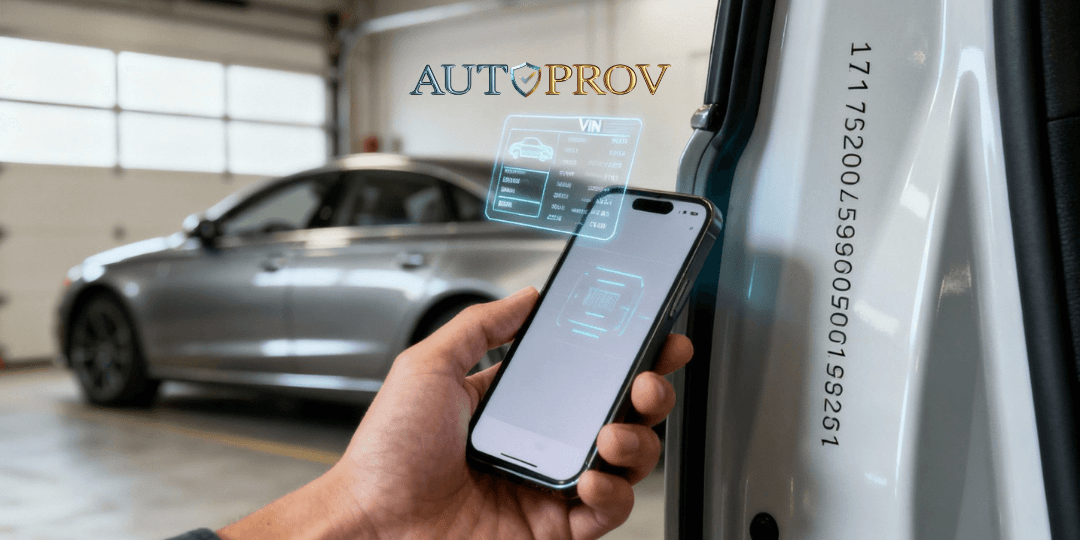
A Guide to Vehicle Check with VIN Number
A vehicle check with vin number is easily the most important thing you can do before buying a used car. Think of it as your first line of defence—a quick, simple step that pulls back the curtain on a vehicle's past, protecting you from expensive mistakes, legal headaches, and downright dangerous cars.
Published by AutoProv
Your trusted source for vehicle intelligence
