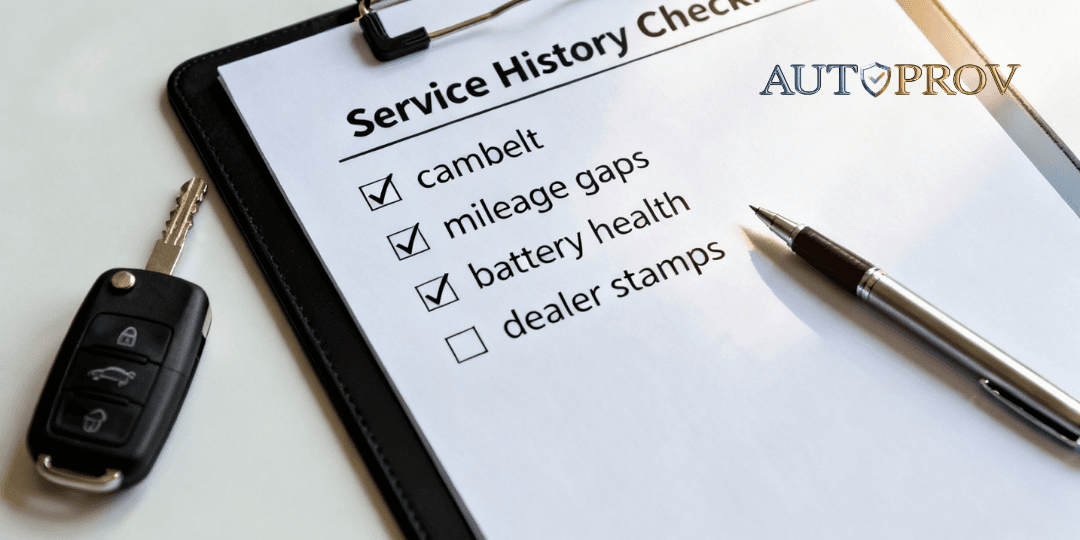
To really understand a car's service history, you need to be a bit of a detective, combining official records with smart digital checks. It's a process of cross-referencing everything you can find—from MOT history online and manufacturer records held by dealerships, right through to pulling a professional vehicle intelligence report from AutoProv to tie it all together. A complete, verified history is the only way to be certain about the vehicle's maintenance, its true mileage, and its overall condition.
To really understand a car's service history, you need to be a bit of a detective, combining official records with smart digital checks. It's a process of cross-referencing everything you can find—from MOT history online and manufacturer records held by dealerships, right through to pulling a professional vehicle intelligence report from AutoProv to tie it all together. A complete, verified history is the only way to be certain about the vehicle's maintenance, its true mileage, and its overall condition.
Why A Car's Service History Matters

Before you even think about buying a used vehicle, digging into its past isn't just a good idea—it's non-negotiable. A full service history is so much more than a stack of old invoices; it's the car's biography, detailing its entire life on the road. For anyone in the motor trade, it’s your single most valuable tool for making a sound investment.
This paper trail, whether physical or digital, reveals patterns of care, flags potential recurring faults, and helps you confirm if the mileage is genuine. Consistent, professional maintenance has a direct and massive impact on a car’s future reliability, its safety, and ultimately, its resale value. Skipping this check is like buying a house without a survey—a huge gamble you simply can't afford to take.
Moving Beyond the Paper Trail
The days of just flicking through a glove box full of crumpled receipts and a stamped service book are long gone. While those physical records still have their place, the modern approach to vehicle verification is digital-first. Buyers today, especially in the trade, need certainty, and that only comes from verifiable, hard data, not just handwritten notes in a booklet.
This is where a data-driven approach becomes absolutely essential. It’s no longer about just ticking a box to say "service history present." It's about building a complete, accurate picture of the vehicle's life. The demand for thorough car service history checks has rocketed in the UK, reflecting a wider shift towards greater transparency. In fact, by 2025, the UK's Motor Vehicle Maintenance and Repair industry is projected to be worth a staggering £34.9 billion. That number alone shows just how much importance we place on reliability. You can explore more data on the UK vehicle maintenance market and its growth drivers to see the trend.
The True Value of a Full History
For automotive professionals, a complete and verifiable service history offers much more than just peace of mind. It’s a critical business tool that gives you a real competitive edge. It's important for accurate valuations, as a car with a complete, main-dealer service history can command a much higher price and is always easier to sell, giving you the evidence to justify a premium asking price. It's also vital for risk mitigation, helping you spot red flags early on, such as clocked mileage, recurring mechanical faults, or even evidence of major accident repairs that weren't disclosed by the seller. Finally, it enables informed decisions. Knowing that key jobs—like a cambelt change or an automatic gearbox service—have been done on schedule is crucial. It stops you from buying a car that's about to land you with a massive, unexpected repair bill.
At the end of the day, a car's service history is the single best indicator of how it has been treated. It’s what separates a well-maintained asset from a potential liability, giving you the hard evidence needed to buy with complete confidence.
This is why modern platforms like AutoProv have become indispensable for the motor trade. They do the heavy lifting, pulling together data from all these different sources into a single, easy-to-read report. By moving past outdated methods and embracing a data-led approach, you can protect your investment and ensure every vehicle you bring onto the forecourt meets your high standards.
Start With The Official MOT History Check
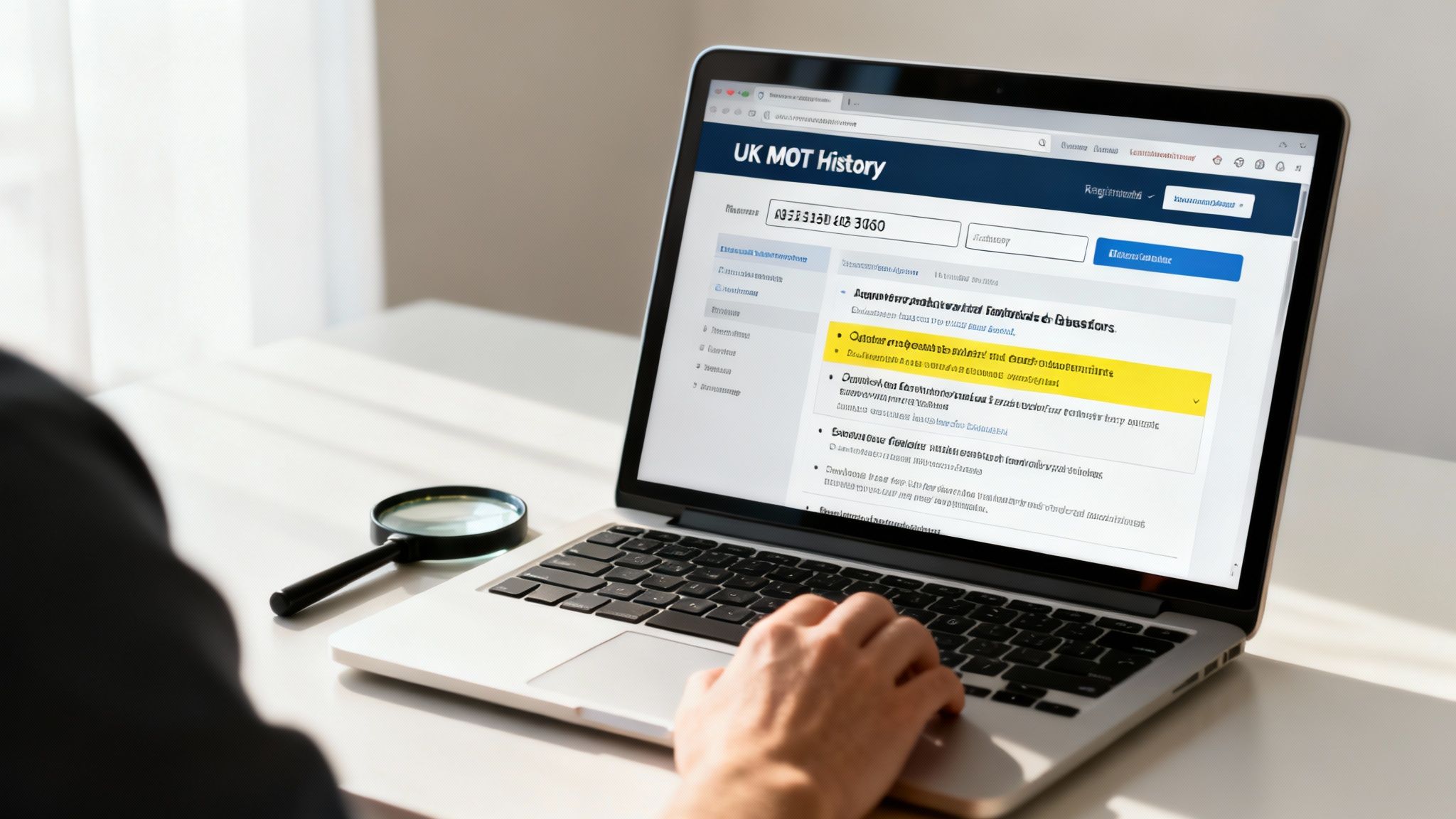
Before you do anything else, your first port of call for any used car should be the UK government's free MOT history check. It’s a powerful, data-rich resource that’s available instantly with just the vehicle's registration number. Think of it as the foundation of your due diligence, laying out a clear timeline of the car's annual roadworthiness inspections.
This check pulls up every pass, fail, and advisory note logged since the system went digital. Crucially, it also records the precise mileage at the time of each test. This creates an official mileage record that’s incredibly difficult for a dodgy seller to alter, making it your best defence against clocking.
Reading Between The Lines
Just spotting a "Pass" certificate isn't nearly enough. The real skill, especially for anyone in the trade, is in spotting the patterns and reading between the lines of the report. A savvy buyer knows exactly what to look for, turning a simple MOT check into a genuinely useful diagnostic tool.
For example, a recurring advisory on the very same component—something like "nearside front tyre worn close to legal limit" cropping up year after year—screams neglect. It suggests an owner who only does the absolute bare minimum to scrape through the test. This kind of pattern can hint at deeper issues, like poor wheel alignment, that you’d never spot with a quick walkaround.
The mileage progression is another goldmine of information. You want to see logical, consistent increases between each test. Any red flags? A sudden drop, a long period with unusually low mileage, or a big gap in the MOT history could mean the car has been off the road for a major repair, clocked, or worse.
The MOT history gives you the skeleton of a vehicle's story. It shows you where it’s been tested, what its mileage was at specific points in time, and any safety-critical faults it developed. It’s the undisputed first step to find car service history data you can trust.
What The MOT Check Misses
It’s just as important to understand what the MOT check doesn't tell you. An MOT certificate is just a snapshot of a car's condition on one particular day; it is not a service history. It tells you absolutely nothing about the routine maintenance that’s so vital for a vehicle's long-term health and reliability. You won't find records of routine servicing like oil changes, critical jobs like cambelt changes, or non-MOT repairs on the report.
This is exactly why the MOT check is only the beginning. It provides the essential framework, but the real story of how a car has been cared for is found elsewhere. To get better at spotting the clues, you can explore our complete MOT history guide for more expert tips. Your next job is to start fleshing out this skeleton with records from dealers and specialists.
Uncovering Manufacturer and Dealer Records
While an MOT history gives you the skeleton of a car's past, the real story of its upkeep lives in the service records held by manufacturers and dealerships. The days of simply flicking through a stamped service book in the glove box are quickly fading, especially for modern, premium-brand vehicles.
These days, it’s all about the Digital Service Record (DSR). Every time a car visits a main dealer for work, it’s logged into a central, brand-specific system. This shift is a massive win for transparency, giving buyers a much more accurate and verifiable maintenance timeline. The scale of this change is huge; the Society of Motor Manufacturers and Traders (SMMT) notes the UK automotive industry supports over 796,000 jobs, with a growing number of professionals now dedicated to maintaining these precise digital histories. You can discover more motor industry facts to see just how much the industry is evolving.
Because this data is digital, it’s all tied directly to the car’s unique Vehicle Identification Number (VIN).
Accessing Digital Service Records
So, how do you get your hands on this info? Your first port of call should be an official main dealer for the car's brand. You'll need to have the V5C logbook handy, as they'll ask for the VIN. Crucially, you’ll also need to prove you're the owner or have the current keeper's permission to request the data.
Some manufacturers make this even easier by offering online portals where owners can register their vehicle and view its service history directly. Brands like BMW, Audi, and Mercedes-Benz have some really solid online systems. It’s always worth a quick search on the manufacturer's UK website to see if a self-service option is available.
Don’t be surprised if you hit a few roadblocks, though. Dealerships can sometimes be cagey about sharing data, citing privacy concerns, or they might simply be less helpful if you aren't an existing customer.
Pro Tip: When you call or visit a dealer, your approach matters. Be polite and professional. Explain that you're looking to verify the car's maintenance history before a potential purchase. Framing it this way, rather than just demanding information, often gets you a much better result.
Tracking Down Independent Garage Records
Of course, not every car has been pampered exclusively at a main dealer. Many owners rely on trusted independent garages, which can offer fantastic, and often more personal, service. The tricky part? Their records aren't plugged into any centralised manufacturer system.
If you’re lucky, the seller is organised and has kept a neat file of invoices and receipts. These documents are gold dust, as they often detail the exact parts used and work carried out.
If those receipts are missing, your only real option is to start playing detective and contact the garages directly—assuming you know which ones were used. This can be a seriously time-consuming headache. It’s exactly this kind of manual legwork that makes a comprehensive check so valuable. A service like AutoProv pulls together information from a huge range of trusted vehicle data sources, creating a single, instant report. This saves you the hassle of chasing down individual garages and helps you piece together a much more complete picture, ensuring you don't miss crucial jobs like a cambelt change or a gearbox fluid service.
How AutoProv Delivers The Complete Picture
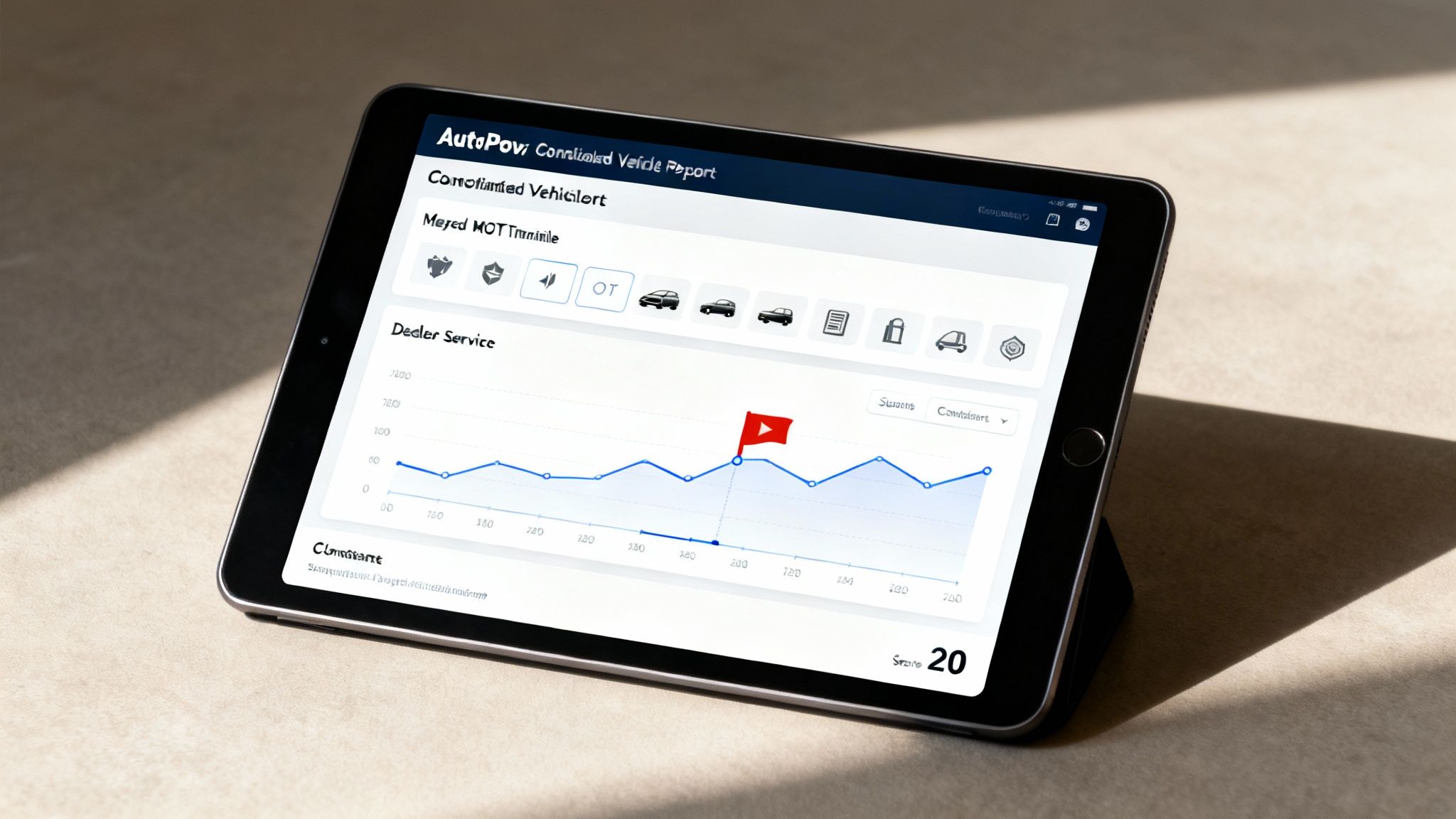
Let’s be honest, trying to piece together MOT data, track down scattered digital dealer records, and make sense of a glovebox full of old paper invoices is a massive headache. It's a manual, time-consuming slog that almost always leaves gaps in the vehicle’s story.
This is precisely where AutoProv steps in. We’ve designed our platform to cut out the hours of detective work and deliver the answers you need in seconds.
Our system was built from the ground up for the motor trade, designed to cut through the noise and deliver absolute clarity. By tapping into multiple official databases, service centres, and MOT records, we pull everything together into a single, easy-to-read report. This isn't just about dumping data on your screen; it's about making it make sense.
AI-Driven Verification And Analysis
The real power of an AutoProv report lies in our AI-driven analysis. It’s one thing to have a list of service dates; it's another to know if they're legitimate and if the timeline adds up. Our system actively verifies the authenticity of records and flags the kind of inconsistencies that point to serious underlying issues.
This intelligent analysis helps you spot the red flags that are nearly impossible to find by hand. Imagine a car with an MOT mileage record that suddenly stalls or, worse, drops. Our system flags this instantly, highlighting a potential clocking issue. It cross-references service dates with MOT advisories, building a complete, coherent timeline of the vehicle’s entire life. This allows you to find car service history data and understand its real-world context immediately.
An AutoProv report isn't just a history check; it's a vehicle intelligence tool. It moves beyond simple data retrieval to provide actionable insights, flagging discrepancies that could indicate clocked mileage, undisclosed accident damage, or a neglected maintenance schedule.
More Than Just A Service History
A car's background is far more than just its maintenance log. Proper due diligence means taking a wider view, covering financial risks, legal status, and market context. A standard history check often barely scratches the surface. An AutoProv report delivers a rich, multi-layered view of the vehicle, including vital checks that protect both your investment and your reputation. These include outstanding finance checks via Experian, Police National Computer (PNC) status checks to see if the vehicle is stolen, and insurance write-off records from the MIAFTR. We also provide previous keeper history, helping you understand how many owners the vehicle has had.
This is the depth of insight that gives you the confidence to make quick, profitable decisions. You can learn more about how our intelligent platform works to pull all these data points together. By combining every essential check into one place, AutoProv provides the certainty you need to buy and sell with complete confidence.
How To Read A Service History Like A Pro
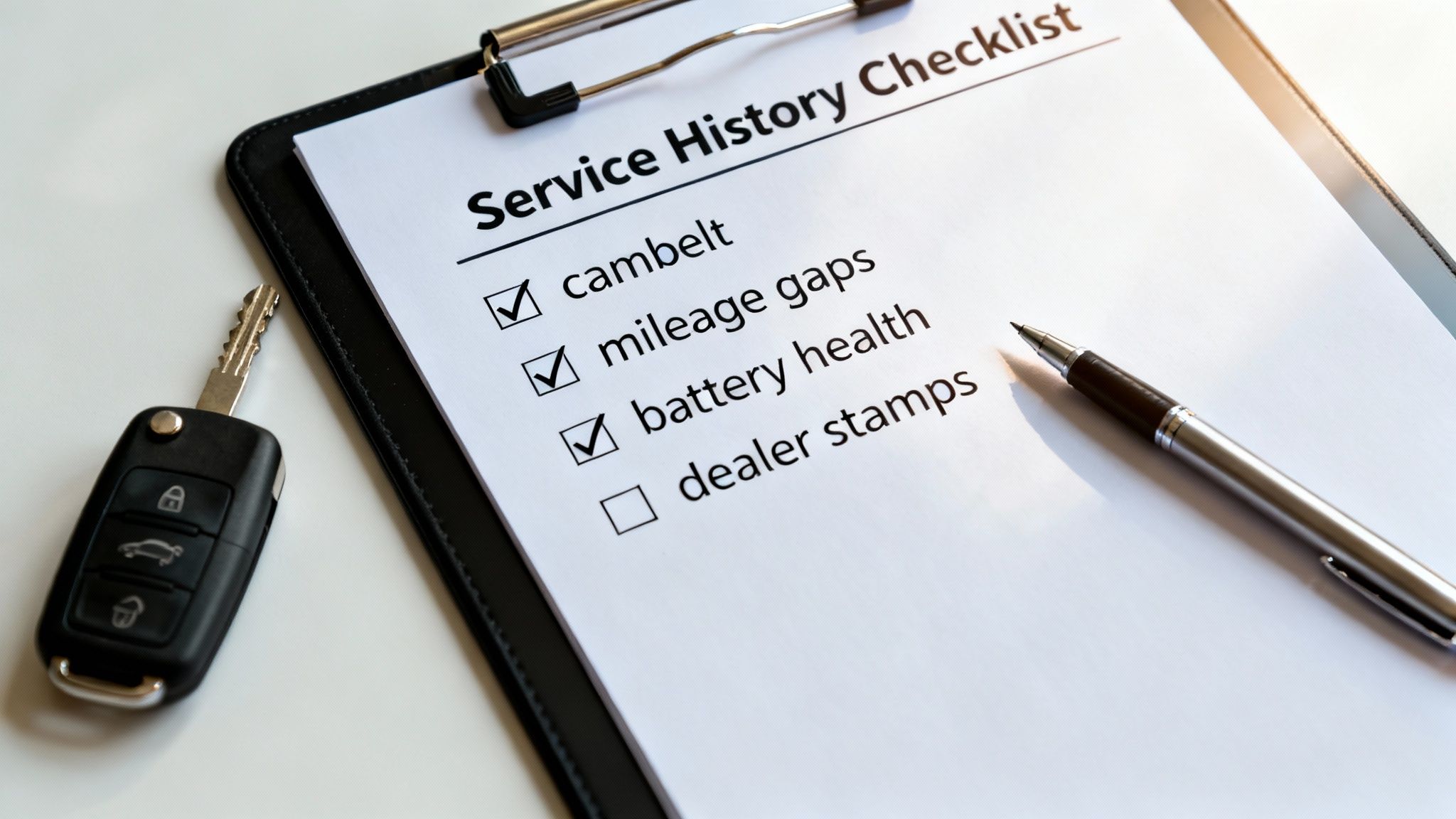
Getting your hands on the service records—whether they’re a stack of papers or a digital file—is a great start. But the real skill is knowing how to read between the lines. A thick folder of receipts doesn't automatically mean a car has been cherished; you have to analyse the details like an expert to tell a solid vehicle from one with a costly, hidden past.
Think of it as forensic accounting for cars. You’re not just ticking boxes; you’re searching for patterns, inconsistencies, and evidence of quality care. The difference between a car with a pristine main-dealer history and one with a patchy, questionable record can mean thousands of pounds in profit or loss.
Pinpointing Critical Service Items
Every car has its own maintenance schedule and specific weak points. A quick glance just won’t cut it. You need to know what to look for based on the make, model, and engine. Some jobs are so crucial that if they've been missed, it should be an immediate red flag.
Be sure to check for a cambelt and water pump replacement; for most engines, this is critical, and you must check the manufacturer's recommended interval. Another often-overlooked item is the automatic gearbox service. A fluid and filter change is vital for long-term health, and no record of this is a major warning sign. For electric vehicles, you need to see a clear battery health check (SoH) report. Finally, for all-wheel-drive performance cars, check that the Haldex system has had its regular oil services to prevent catastrophic failure.
Spotting The Warning Signs
Beyond the specific jobs, the overall pattern of maintenance tells a powerful story. A well-cared-for car will have a consistent, logical history. A neglected one often leaves clues behind for anyone sharp enough to spot them.
The most revealing insights often come from what’s missing. Long, unexplained gaps between services suggest an owner who cut corners. Similarly, a premium vehicle like a BMW or Mercedes being serviced with cheap, non-genuine parts is a clear indicator of neglect.
Keep an eye out for recurring problems. If you see the same fault—like a persistent coolant leak or an electrical gremlin—being "fixed" multiple times by different garages, it points to a deeper issue that has never been properly diagnosed.
Here’s a fantastic pro tip: cross-reference repair dates with the car's MOT history. If you see an advisory for worn brake discs on an MOT, you should expect to find an invoice for their replacement not long after. If you can't find one, it's another sign that the owner did the bare minimum.
Understanding the difference between an MOT and a service is fundamental here, as it helps you connect the safety inspection with the actual maintenance work. When you find car service history documents, this cross-referencing process builds a much more accurate picture of the vehicle’s true condition, helping you make a smarter, more profitable buying decision.
Your Questions About Car Service History Answered
When you're sourcing used vehicles, you're bound to run into some tricky questions. Even with a solid grasp of MOTs and dealer records, some situations just aren't black and white. Let's tackle some of the most common queries we see from trade professionals.
The aim here is to clear up any lingering doubts, so you have the confidence to make the right call every time a potential new vehicle lands on your radar.
What If The Car Has A Gap In Its History?
This one comes up all the time. The car looks great, drives well, but then you spot a two-year black hole in the service records. Do you walk away? Not always, but you absolutely have to tread carefully.
A gap could mean anything. Maybe the owner was a DIY mechanic (a massive red flag on most modern cars), or perhaps the car was off the road for a major repair they're not telling you about.
First, ask the seller directly and see what they say. If the explanation feels a bit thin, that’s your first warning sign. Your next, and most crucial, step is to run a proper, in-depth check. An AutoProv report is perfect for this, as it can cross-reference MOT data and other records. It’ll quickly show if the mileage progression during that gap makes sense, revealing whether the car was actually parked up or still racking up miles without any documented care.
Can I Trust A Handwritten Service Book?
Back in the day, a fully stamped service book was the holy grail. Today? A handwritten or stamped book without a stack of matching invoices just doesn't cut it. Unfortunately, it's far too easy to buy a blank service book online and fake a pristine maintenance history.
Think of a physical service book as a clue, not concrete evidence. You must verify the information inside. Check the garage stamps for legitimacy, look for corresponding invoices that detail the real work done, and if you are still unsure, call the garage to confirm they carried out the work.
What Is The Best Way To Get The Full Story?
At the end of the day, the only way to be completely certain about a car's past is to pull all the scattered pieces of information together into one verified timeline. Chasing down individual records from different sources is a huge time sink and often leaves you with an incomplete picture. This is where a professional vehicle intelligence platform becomes indispensable.
A complete check isn't just about avoiding a lemon; it's about having the hard evidence to price a good car accurately. When you can prove a vehicle's impeccable history, you can confidently justify a premium price tag, leading to better margins and a faster sale.
Using a service like AutoProv consolidates data from over 10 trusted sources—including the DVLA, Experian, and the Police National Computer—into one clear report. It connects all the dots for you, verifying records and flagging inconsistencies in under 30 seconds. This gives you the full story instantly, allowing you to find car service history data and make a decision on the spot with total confidence.
If you have more specific questions about vehicle data or our reports, you can find more answers in our detailed AutoProv FAQ section.
Frequently Asked Questions
AI-Generated Content Notice
This article was created with the assistance of artificial intelligence technology. While we strive for accuracy, the information provided should be considered for general informational purposes only and should not be relied upon as professional automotive, legal, or financial advice. We recommend verifying any information with qualified professionals or official sources before making important decisions. AutoProv accepts no liability for any consequences resulting from the use of this information.
From our AI insights
- Auction Pitfalls: Avoiding Costly Mistakes
Navigate UK car auctions with confidence by avoiding finance, write-off, and mileage risks.
- Mastering Paint Code Checks: Detecting Hidden Car Repairs
Discover how to use paint code verification to identify hidden car repairs and ensure a smarter purchase.
- UK Part-Exchange Checks: Protecting Dealer Margins
Explore essential part-exchange checks for UK dealers to safeguard profit margins, including provenance and finance verification.
Related Articles

Your Ultimate Guide to Buying a Used Car in the UK
Navigate the UK used car market with confidence using our comprehensive buying guide. Tips, checks, and AutoProv Provenance insights included.

Difference Between MOT and Service: What You Need to Know
An MOT is a mandatory legal inspection that every car on UK roads needs to pass.Think of it as the government's way of ensuring your vehicle meets the absolute minimum safety and environmental standards to be considered roadworthy. A service, on the other hand, is a completely different beast. It's the proactive maintenance routine recommended by the people who built your car, designed to keep it running smoothly and catch problems before they start. In short, an MOT is a pass-or-fail exam required by law. A service is a comprehensive health plan for your car.
Your Ultimate Used Car Inspection Checklist
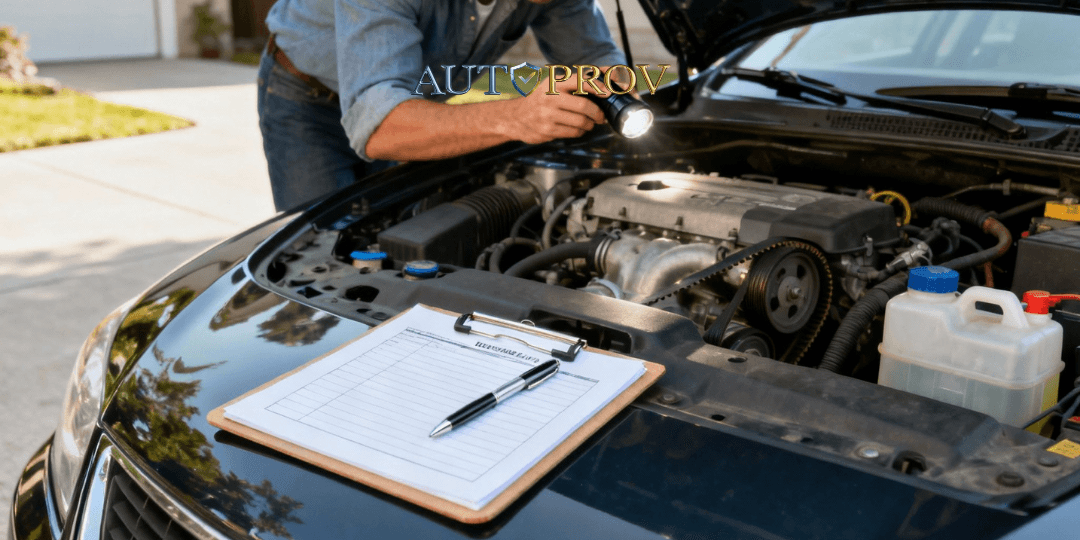
A solid used car inspection checklist is the single most powerful tool you have to avoid buying a lemon. It gives you a methodical way to look past the shiny paint and assess a car's real condition, helping you spot hidden problems and get a fair price before you shake hands on the deal.
Published by AutoProv
Your trusted source for vehicle intelligence