
Discover the financial risks UK motor traders face when skipping vehicle provenance checks, from finance claims to mileage fraud and mis-described stock.
By CiteFlow
What Are the Real Financial Risks of Skipping Vehicle Provenance Checks?
The financial risks of buying vehicles without proper provenance checks extend far beyond the initial purchase price. UK motor traders face exposure to outstanding finance claims that can result in vehicle repossession, Consumer Rights Act 2015 rejection costs averaging £2,000-£5,000 per incident, mileage discrepancy disputes, and the complete loss of stock value when undisclosed write-offs surface. A single unchecked vehicle can wipe out the profit margin from ten successful sales, yet many dealers still treat comprehensive checks as an optional expense rather than essential risk management.
The motor trade operates on tight margins where a £500 mistake on one vehicle can eliminate the profit from an entire week's sales. When dealers skip provenance checks to save £10 or £15, they're gambling thousands against pennies. The mathematics simply doesn't work. Every vehicle entering your forecourt without proper verification represents an unquantified liability, and the costs materialise in ways that compound over time.
Outstanding Finance: The Repossession Risk
Outstanding finance represents the most immediate and severe financial threat to motor traders. When a vehicle has undisclosed finance, the finance company retains legal ownership until the agreement is settled. This means they can repossess the vehicle from your forecourt or, worse, from your customer, triggering a chain of consequences that extend well beyond the vehicle's value.
The direct cost starts with the complete loss of your stock investment. If you paid £8,000 for a vehicle with £6,500 outstanding finance, you lose the entire £8,000 when it's repossessed. You don't get a refund for the equity difference. The finance company takes the vehicle, and you're left pursuing the seller, who may be untraceable, insolvent, or operating under false details.
When the repossession happens after you've sold the vehicle, the situation deteriorates rapidly. Under the Consumer Rights Act 2015, you must provide a full refund to your customer, meaning you're out both the purchase price you paid and the sale price you refunded. If you sold that £8,000 vehicle for £10,500, you've now lost £18,500 on a single transaction. Add legal costs if the customer instructs solicitors, and you're approaching £20,000 in total exposure.
The reputational damage compounds these direct costs. Customers who experience finance repossession rarely keep quiet about it. Online reviews, social media posts, and word-of-mouth warnings can deter dozens of potential buyers. One finance repossession incident can cost you months of future sales that never materialise because prospects chose a competitor after reading about your mistake.
Write-Off Categories and Resale Value Destruction
Undisclosed write-off history destroys vehicle value in ways that aren't immediately apparent during physical inspection. A Category S (structural damage) or Category N (non-structural damage) marker can reduce a vehicle's market value by 20-40%, yet these vehicles often look identical to clean examples on the forecourt.
The financial impact operates on multiple levels. First, you overpay at acquisition because you're pricing the vehicle as clean stock. A £12,000 purchase that should have been £8,000 represents an immediate £4,000 loss before you've even moved the vehicle. Second, when the write-off history emerges during a customer's pre-purchase check or finance application, you face either selling at a steep discount or watching the vehicle age on your forecourt while carrying costs accumulate.
Category B (break for parts) and Category A (scrap) vehicles should never enter the retail market, yet they occasionally surface with cloned identities or fraudulent documentation. If you unknowingly purchase one of these vehicles, it has zero legal resale value. The entire purchase price becomes a write-off, and you may face regulatory scrutiny for attempting to sell a vehicle that should have been destroyed. Understanding vehicle finance checks and outstanding finance risks helps traders identify these red flags before money changes hands.
Mileage Discrepancies and Customer Rejection Claims
Mileage fraud remains one of the most common forms of automotive deception, and the costs extend well beyond simple mis-pricing. When digital service records reveal that a vehicle showing 62,000 miles actually covered 94,000 miles before the odometer was adjusted, you face multiple simultaneous problems.
The immediate issue is mis-description under the Consumer Rights Act 2015. Your customer has the right to reject the vehicle and claim a full refund within 30 days, or a partial refund after that period. The refund includes not just the purchase price but also any costs the customer incurred, potentially including finance arrangement fees, insurance, road tax, and even their inspection costs. A £9,500 sale can easily become a £10,200 liability.
Beyond the refund, you must address the vehicle itself. You now own a car with confirmed mileage fraud, which must be disclosed to any future buyer. This disclosure typically reduces the vehicle's value by £1,500-£3,000 depending on the category and mileage differential. You've lost the profit margin, paid refund costs, and absorbed a value reduction on stock that's now harder to sell.
The administrative burden adds hidden costs that dealers often overlook. Staff time spent handling the complaint, preparing dispute responses, liaising with the customer, and potentially dealing with Trading Standards enquiries represents hours of work that could have been spent on profitable activities. The true cost of buying a vehicle with hidden history includes these operational inefficiencies that drain resources without generating revenue.
Stolen Vehicle Recovery and Total Loss Scenarios
Stolen vehicle markers create absolute loss scenarios where recovery is impossible. When police identify a vehicle on your forecourt as stolen, they seize it immediately. You receive no compensation, no grace period, and no opportunity to sell it quickly to recoup costs. The vehicle simply disappears, along with your entire investment.
The legal position offers no protection to innocent purchasers in the motor trade. Unlike consumer buyers who may have some recourse, dealers are expected to conduct proper due diligence. Courts consistently rule that professional traders should have identified stolen status through proper checks, making recovery claims against sellers difficult even when you can locate them.
The secondary costs often surprise dealers who haven't experienced stolen vehicle recovery. You may face investigation by police to establish how the vehicle entered your stock, requiring you to produce purchase documentation, seller identification, and transaction records. If your due diligence processes are found lacking, you risk regulatory attention from Trading Standards. The time spent on these investigations, legal consultations, and compliance reviews can easily exceed £2,000 in professional fees and lost productivity.
Compliance Failures and Regulatory Penalties
Failure to conduct proper provenance checks exposes dealers to Consumer Rights Act 2015 violations that carry both financial and reputational consequences. When you sell a vehicle with undisclosed issues, you breach the requirement that goods must be as described and of satisfactory quality. These breaches give customers statutory rights that operate independently of any disclaimers or terms you might include in sale contracts.
Trading Standards enforcement has intensified around vehicle mis-description and inadequate due diligence. Penalties for systematic failures can include formal notices requiring process improvements, public naming in enforcement bulletins, and in severe cases, prosecution. Legal costs for defending against Trading Standards action typically start at £5,000 and escalate rapidly if the case proceeds to court.
The compliance costs extend to civil claims. Customers who successfully argue that you sold them a mis-described vehicle may claim damages beyond the purchase price, including consequential losses if the vehicle's defects caused them additional problems. A customer who bought a vehicle with undisclosed finance and then had it repossessed while on holiday, requiring expensive alternative transport, can claim those additional costs from you.
The Compounding Effect of Multiple Small Failures
Many dealers underestimate how quickly small oversights accumulate into significant financial damage. Skipping checks on ten vehicles to save £100 in total check costs seems insignificant until you consider the probability distribution of problems.
If one in twenty unchecked vehicles has a serious issue, and you're buying forty vehicles per month without proper checks, you're likely encountering two problem vehicles monthly. At an average cost of £3,500 per incident (combining refunds, value loss, and administrative costs), you're losing £7,000 per month, or £84,000 annually. The £100 monthly saving on check costs becomes an £84,000 annual loss, representing a negative return of 84,000%.
The probability isn't theoretical. Industry data consistently shows that approximately 5-8% of vehicles in the used market have some form of undisclosed issue that would be revealed by comprehensive checks. The percentage increases in certain acquisition channels, particularly private purchases, part-exchanges from unknown customers, and auction vehicles without detailed history.
Market Pricing Errors and Stock Profitability
Without verified provenance data, dealers routinely misprice stock in both directions, leaving money on the table or pricing vehicles out of the market. A vehicle with verified manufacturer service history from official dealer networks commands a premium that can add £800-£1,500 to the achievable sale price. When you don't verify this history, you either underprice and lose profit, or overprice based on assumptions and watch the vehicle age on the forecourt.
Factory build sheet verification reveals high-value options that aren't always visible during physical inspection. A premium audio system, advanced driver assistance package, or performance upgrade can add £1,000-£2,000 to a vehicle's value, but only if you can prove it was factory-fitted rather than aftermarket. Identifying high-value factory options that increase stock profitability requires access to manufacturer databases that confirm original specifications.
The carrying costs of mis-priced stock compound daily. Every week a vehicle sits unsold because it's overpriced costs you in forecourt space, insurance, depreciation, and opportunity cost. A vehicle that should turn in 28 days but takes 84 days because of pricing errors ties up capital that could have cycled through three transactions, tripling your profit opportunity.
Insurance Implications and Premium Increases
Motor trade insurance policies increasingly include requirements for proper due diligence as a condition of cover. When claims arise from vehicles with undisclosed issues, insurers scrutinise your checking processes. If you cannot demonstrate that you conducted industry-standard provenance checks, insurers may reduce claim payments or, in extreme cases, void cover entirely.
The premium impact extends beyond individual claims. Insurers track your claims history and adjust premiums accordingly. A dealer with multiple claims related to inadequate due diligence faces premium increases of 30-50% at renewal, adding thousands to annual operating costs. These increases persist for several years, creating a long-term financial penalty that far exceeds the cost of proper checking.
Some insurers now mandate specific checking standards as policy conditions, requiring evidence that you use approved data sources for all stock acquisitions. Failure to comply doesn't just risk claim rejection; it can invalidate your entire policy, leaving you trading without cover and potentially in breach of regulatory requirements.
The Cost-Benefit Analysis of Comprehensive Checking
When dealers compare the cost of comprehensive provenance checks against the financial risks of operating without them, the mathematics strongly favours checking. A professional-grade check combining finance verification, write-off status, mileage validation, stolen vehicle screening, and manufacturer service history costs between £2.50 and £15 depending on the provider and volume.
Against this cost, consider the risk exposure: £10,000-£20,000 for finance repossession scenarios, £4,000-£8,000 for undisclosed write-offs, £2,000-£5,000 for mileage discrepancy rejections, and total loss for stolen vehicles. Even if comprehensive checking prevents just one serious incident per year, the return on investment exceeds 10,000%.
The operational benefits extend beyond pure risk mitigation. Verified provenance data enables confident pricing, faster stock turn, and stronger customer confidence. When you can show customers official manufacturer service records, verified mileage history, and clean finance status, you remove their purchase anxiety and accelerate sales cycles. The time saved on customer reassurance and post-sale disputes often exceeds the time spent conducting proper checks.
Building Systematic Due Diligence Processes
The most successful dealers treat provenance checking as a mandatory step in stock acquisition, not an optional extra. By building checks into your workflow before purchase commitments, you eliminate the pressure to skip steps when time is tight or margins look attractive.
Systematic checking requires clear policies that specify which checks apply to which vehicle categories, who is authorised to approve purchases, and what documentation must be retained. These policies protect individual staff members from pressure to cut corners and ensure consistent standards across your operation.
The documentation trail serves multiple purposes. It demonstrates compliance if Trading Standards or customers question your processes. It provides evidence for insurance claims if issues arise despite proper checking. It creates an audit trail that helps you identify problematic sellers or acquisition channels that consistently present higher risk.
Integrating provenance checks with your dealer management system ensures that no vehicle enters stock without completed verification. Automated workflows can flag high-risk indicators, require supervisor approval for borderline cases, and maintain permanent records that survive staff changes and system migrations.
Frequently Asked Questions
AI-Generated Content Notice
This article was created with the assistance of artificial intelligence technology. While we strive for accuracy, the information provided should be considered for general informational purposes only and should not be relied upon as professional automotive, legal, or financial advice. We recommend verifying any information with qualified professionals or official sources before making important decisions. AutoProv accepts no liability for any consequences resulting from the use of this information.
From our AI insights
- Navigating UK Grey Imports: A Trader's Guide
Understand the complexities and opportunities of UK grey imports for savvy motor traders.
- Trade Secrets: Identifying Clocked Cars in the UK
Discover how UK traders can spot clocked cars using innovative tools and detailed checks.
- Identifying Ex-Driving School Cars Using MOT Patterns
Learn how to spot ex-driving school vehicles with MOT patterns and history checks.
Related Articles

Essential Vehicle Checks Before Buying a Used Car
Learn essential checks to ensure your used car purchase is safe and sound in the UK market.

Why a Provenance Check is Essential for Used Car Buyers
Ensure your used car is a smart investment by understanding the importance of a provenance check and how AutoProv can help.
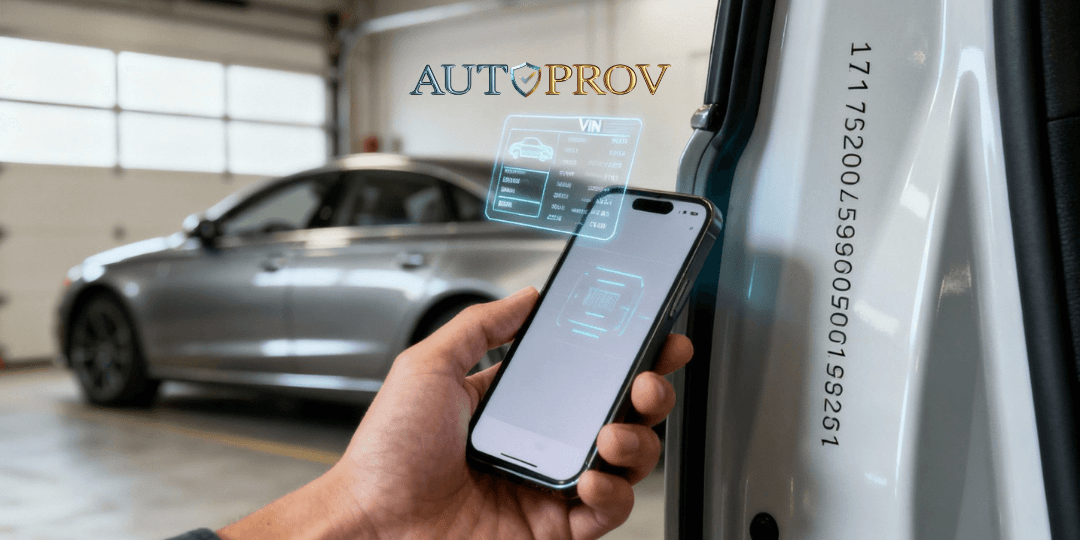
A Guide to Vehicle Check with VIN Number
A vehicle check with vin number is easily the most important thing you can do before buying a used car. Think of it as your first line of defence—a quick, simple step that pulls back the curtain on a vehicle's past, protecting you from expensive mistakes, legal headaches, and downright dangerous cars.
Published by AutoProv
Your trusted source for vehicle intelligence