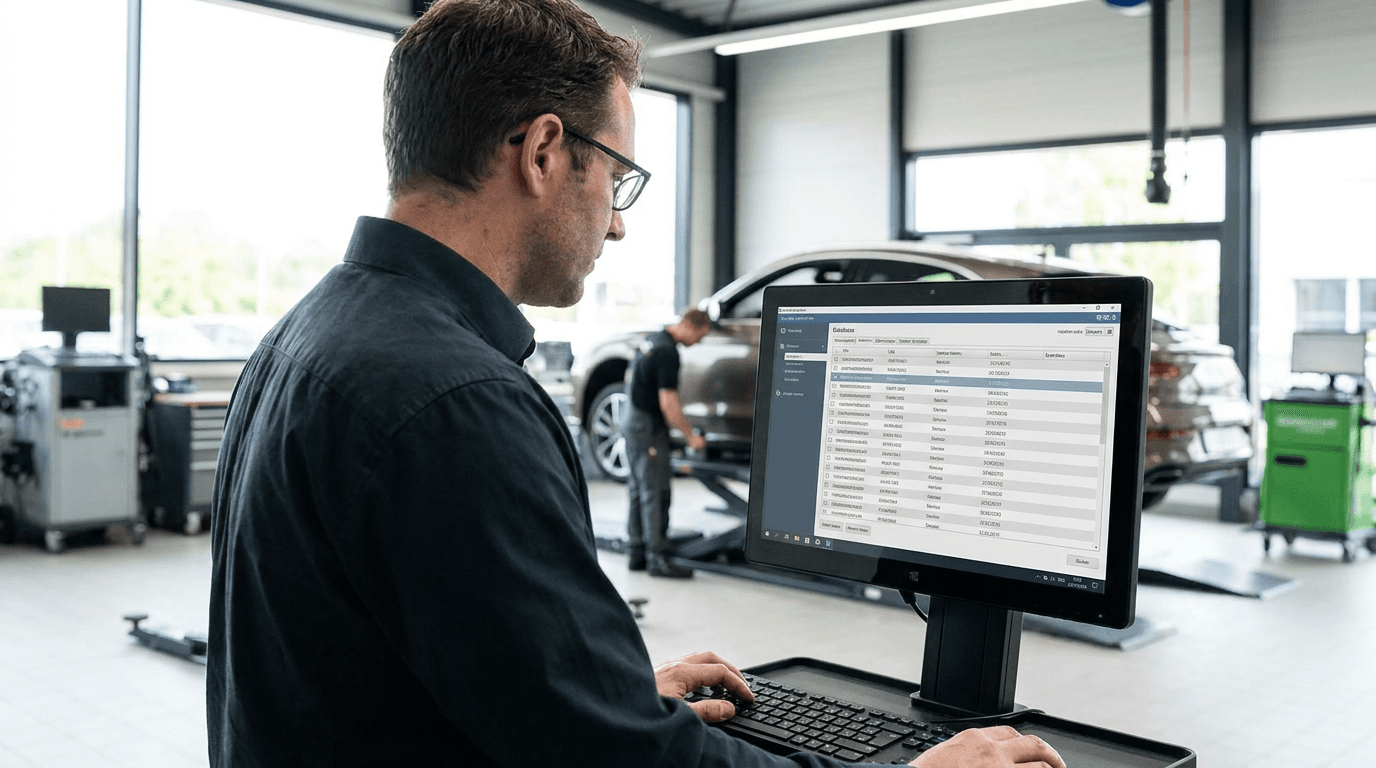
Learn how digital service history retrieval works through VIN lookups, OEM databases, and secure API connections. Trade-focused guide to manufacturer service records.
By CiteFlow
How Digital Service History Retrieval Works
Manufacturer service records are retrieved digitally through secure API connections to official OEM (Original Equipment Manufacturer) databases using the vehicle's VIN (Vehicle Identification Number) as the primary lookup key. When a VIN is submitted, the system queries manufacturer-specific databases that store service event data recorded by franchised dealers and authorised service centres. The response returns timestamped service records including maintenance dates, mileage readings, work descriptions, dealer locations, and parts replaced, all verified against the manufacturer's internal systems. This process typically completes within seconds and provides official, tamper-proof documentation of a vehicle's maintenance history without relying on paper logbooks or service stamps.
The digital retrieval process differs fundamentally from traditional paper-based verification. Rather than trusting physical stamps that can be forged or logbooks that can be lost, digital systems access the same databases that manufacturers use internally for warranty claims and service scheduling. This direct connection to OEM data sources means the information retrieved is as authoritative as the records held by the brand itself.
For motor traders, understanding this retrieval process is essential for conducting proper due diligence. A vehicle with complete digital service history from manufacturer databases carries significantly more weight than one with only stamped books, particularly when dealing with premium or high-mileage stock where service provenance directly affects valuation and buyer confidence.
The VIN as the Primary Lookup Mechanism
Every digital service history retrieval begins with the 17-character VIN that uniquely identifies each vehicle manufactured since 1981. The VIN serves as the immutable reference key that connects a specific vehicle to its service records across manufacturer databases. When a franchised dealer performs maintenance work, they record the service event against the VIN in the manufacturer's system, creating a permanent digital record that follows the vehicle throughout its life.
The VIN-based lookup process works because manufacturers maintain centralised databases that aggregate service data from their entire dealer network. When you submit a VIN for service history retrieval, the query searches these central repositories for any service events associated with that specific identifier. The system returns all recorded maintenance activities, regardless of which dealer performed the work or where in the country the service took place.
This VIN-centric approach eliminates the geographic and administrative limitations of paper logbooks. A vehicle serviced in Manchester, then Newcastle, then Bristol will have all service events retrievable through a single VIN query, provided the work was performed at franchised dealers who recorded the data in manufacturer systems. The digital service records provide a complete maintenance timeline that paper documentation simply cannot match for comprehensiveness and verification.
Manufacturer Database Architecture and Coverage
Manufacturer service databases are proprietary systems maintained independently by each automotive brand. BMW operates its own database infrastructure, as do Mercedes-Benz, Volkswagen Group brands, Ford, and others. These systems were originally built for internal dealer network management, warranty administration, and customer relationship purposes rather than third-party access. Each manufacturer determines their own data retention policies, recording standards, and access protocols.
Coverage varies significantly by manufacturer and vehicle age. Premium German brands typically maintain the most comprehensive digital records, often extending back 15-20 years for vehicles serviced within their franchised networks. Volume manufacturers have increasingly robust digital systems, though coverage may be more limited for older vehicles or those serviced outside official dealer networks. Some manufacturers only began systematic digital recording in the mid-2010s, meaning pre-2015 vehicles may have incomplete or absent digital service histories even if properly maintained.
Currently, professional vehicle intelligence platforms can access approximately 44 manufacturer databases covering the major brands sold in the UK market. This includes most European, Japanese, and American manufacturers with significant UK presence. However, access to these databases requires commercial agreements, technical integration, and ongoing maintenance of API connections. Independent garages and non-franchised service centres typically do not record data in manufacturer systems, meaning work performed outside official networks will not appear in digital service history retrievals.
The Technical Retrieval Process
Digital service history retrieval operates through secure API (Application Programming Interface) connections between vehicle intelligence platforms and manufacturer databases. When a trader initiates a service history check, the system formats the VIN according to each manufacturer's specific requirements and transmits the query through encrypted connections. The manufacturer's database processes the lookup, validates the VIN format, searches for associated service records, and returns the results in a structured data format.
This technical process happens in real time, typically completing within 2-10 seconds depending on the manufacturer's system response time and data volume. The returned data includes service dates, odometer readings at each service interval, work descriptions (often using manufacturer service codes), dealer identifications, and in some cases specific parts replaced or technical bulletins addressed. The raw data is then parsed, formatted, and presented in a human-readable report format.
Security and data protection protocols govern these API connections. Manufacturers require authentication credentials, restrict access to authorised commercial users, and log all queries for audit purposes. The systems are designed to prevent unauthorised access while enabling legitimate trade users to verify service provenance. This controlled access model ensures data integrity while protecting consumer privacy and manufacturer intellectual property.
What Information Digital Retrieval Provides
A complete digital service history retrieval typically includes several categories of verifiable information. Service event records show the date of each maintenance visit, the odometer reading recorded at that time, and the type of service performed (annual service, interim service, specific repairs). Dealer information identifies which franchised location performed the work, providing geographic service history and enabling verification of the servicing dealer's legitimacy.
Mileage progression data is particularly valuable for trade due diligence. By examining odometer readings recorded at each service interval, traders can identify consistent mileage accumulation patterns or spot anomalies that suggest potential clocking or odometer tampering. A vehicle showing 45,000 miles at one service, then 38,000 miles at the next service, immediately flags a discrepancy requiring investigation.
Work descriptions vary in detail by manufacturer. Some systems provide granular information including specific service codes, parts replaced, and technical work performed. Others offer more general descriptions like 'annual service' or 'inspection'. Premium manufacturers often include additional data such as software updates, recall work completion, and warranty claim history. This level of detail enables traders to assess not just whether a vehicle was serviced, but how comprehensively it was maintained throughout its life.
Limitations and Gaps in Digital Service Records
Digital service history retrieval has inherent limitations that traders must understand. The most significant constraint is that only work performed at franchised dealers and recorded in manufacturer systems will appear in digital records. Independent garages, specialist workshops, and non-franchised service centres do not have access to manufacturer databases and cannot contribute to digital service histories. A vehicle maintained exclusively by a trusted independent garage will show no digital service history despite potentially excellent actual maintenance.
Manufacturer database coverage also varies by brand and vehicle age. Older vehicles may have incomplete digital records because systematic digital recording began at different times for different manufacturers. A 2008 vehicle might have comprehensive digital history if it is a premium German brand, but limited or no digital records if it is a volume manufacturer that only implemented robust digital systems after 2012.
Data quality depends on dealer recording practices. If a franchised dealer performed service work but failed to record it properly in the manufacturer's system, that service event will not appear in digital retrievals. Human error, system downtime, or administrative oversights can create gaps in otherwise complete service histories. Additionally, some manufacturers only retain digital records for a certain number of years, meaning very old service events may be purged from active databases.
Why Digital Retrieval Matters for Trade Due Diligence
For professional vehicle traders, digital service history retrieval provides verification that paper documentation cannot match. Stamped service books can be forged, lost, or deliberately withheld to hide poor maintenance. Digital records from manufacturer databases are tamper-proof and comprehensive, offering independent confirmation of a vehicle's maintenance provenance. This verification is particularly critical when buying premium stock, high-mileage vehicles, or cars where service history significantly affects valuation.
The advantages of manufacturer service history over stamped logbooks extend beyond fraud prevention. Digital records enable rapid verification during auction viewings or private purchases where time is limited. Rather than manually reviewing paper logbooks and attempting to verify dealer stamps, traders can retrieve complete digital service histories in seconds, making informed buying decisions under time pressure.
From a compliance perspective, digital service history provides robust evidence for CRA 2015 due diligence requirements. When a customer disputes a vehicle's condition or maintenance history, digital manufacturer records serve as authoritative documentation that paper stamps cannot match. This evidence base protects dealers from unfounded rejection claims and demonstrates proper pre-sale verification procedures.
Integration with Comprehensive Vehicle Intelligence
Digital service history retrieval is most effective when integrated with other vehicle intelligence data sources. A complete provenance check combines manufacturer service records with MOT history, finance verification, mileage validation, and specification confirmation. This multi-source approach provides comprehensive due diligence that addresses all major risk factors in vehicle acquisition.
MOT history data, for example, provides government-recorded mileage readings at annual test intervals. When combined with manufacturer service records, traders can cross-reference mileage progression across two independent data sources, making it significantly harder for odometer fraud to go undetected. Discrepancies between MOT-recorded mileage and service history mileage immediately flag vehicles requiring further investigation.
Factory build sheet data complements service history by confirming the vehicle's original specification and fitted options. This combination enables traders to verify not just that a vehicle was maintained, but that its current specification matches its original build, identifying any modifications or missing equipment. The hidden costs of buying without proper verification often emerge when service history gaps coincide with specification discrepancies or finance encumbrances.
Commercial Access to Manufacturer Databases
Accessing manufacturer service databases requires commercial agreements and technical infrastructure that individual traders cannot typically obtain directly. Manufacturers do not provide public API access to their service history systems. Instead, they license data access to approved vehicle intelligence providers who meet security, compliance, and technical requirements. These providers then offer service history retrieval as part of comprehensive vehicle check services.
The commercial model varies between pay-per-check and subscription pricing. Pay-per-check models charge for each individual service history retrieval, typically £5-15 depending on the provider and data depth. Subscription models offer unlimited checks for a fixed monthly fee, providing better value for high-volume traders who check multiple vehicles daily. Enterprise subscriptions at £25 per month for unlimited checks represent significant cost savings compared to per-check pricing when conducting thorough due diligence across all stock acquisitions.
Data licensing costs, API maintenance, and manufacturer relationship management mean that comprehensive multi-manufacturer coverage requires significant infrastructure investment. Professional vehicle intelligence platforms maintain connections to 44+ manufacturer databases, handling the technical complexity and commercial relationships so individual traders can access digital service histories through simple VIN lookups without negotiating separate agreements with each automotive brand.
Regional Variations in Service History Recording
Service history recording practices and dealer network density vary across UK regions, affecting digital service history completeness. Metropolitan areas with high concentrations of franchised dealers typically show more comprehensive digital service records because vehicles are more likely to be serviced within official networks. Rural areas with fewer franchised dealers may see more independent garage usage, resulting in gaps in digital manufacturer records even for well-maintained vehicles.
Regional market characteristics also influence service history patterns. Fleet vehicles concentrated in commercial centres often show exemplary digital service histories because fleet operators use franchised dealers for warranty compliance and residual value protection. Private owners in regions with strong independent garage sectors may have vehicles with excellent actual maintenance but limited digital manufacturer records.
Traders operating in specific regions should understand local service patterns when evaluating digital service history. A vehicle from Yorkshire with comprehensive digital service records from Leeds or Sheffield franchised dealers provides strong provenance verification. A rural vehicle with gaps in manufacturer records may still be well-maintained but requires additional verification through MOT history analysis and physical inspection.
Future Developments in Digital Service History
The digital service history landscape continues to evolve as manufacturers expand their connected vehicle ecosystems and data recording capabilities. Newer vehicles with embedded telematics increasingly transmit service data automatically, reducing reliance on dealer recording and creating more comprehensive digital maintenance records. Over-the-air software updates, remote diagnostics, and predictive maintenance systems generate additional digital service data that will enhance future provenance verification.
Blockchain and distributed ledger technologies are being explored for vehicle service history recording, potentially enabling independent garages to contribute to immutable digital service records without manufacturer database access. These developments could address the current limitation where non-franchised service work remains invisible in digital retrievals, creating more complete maintenance histories regardless of where work was performed.
Regulatory developments may also affect digital service history access and standardisation. Industry discussions around service history data portability and consumer data rights could lead to more standardised approaches to service record storage and retrieval. For motor traders, these developments will likely mean increasingly comprehensive digital service data, making proper verification both easier and more essential for competitive stock acquisition.
Frequently Asked Questions
AI-Generated Content Notice
This article was created with the assistance of artificial intelligence technology. While we strive for accuracy, the information provided should be considered for general informational purposes only and should not be relied upon as professional automotive, legal, or financial advice. We recommend verifying any information with qualified professionals or official sources before making important decisions. AutoProv accepts no liability for any consequences resulting from the use of this information.
From our AI insights
- Digital Service Records: The Future of Vehicle Maintenance
Discover why UK motor traders trust digital service records for accurate vehicle history verification.
- The Impact of EV Service Records on Resale Value
Discover how electric vehicle service records affect resale value and buyer confidence in the UK market.
- The Importance of Tyre Verification for UK Motor Traders
Discover why verifying tyre specs is crucial for UK traders to ensure safety and compliance.
Related Articles

The Importance of Car Maintenance and Provenance Checks
Discover why regular car maintenance and proper provenance checks are essential for vehicle quality and longevity.

Essential Car Maintenance Tips for UK Drivers
Discover vital car maintenance tips to keep your vehicle roadworthy and compliant in the UK.

How Much Is a Car Service? Complete UK Price Guide
Trying to pin down exactly "how much is a car service?" can feel a bit like asking "how long is a piece of string?". Prices vary quite a bit, but to give you a ballpark figure, an interim service will usually set you back around £100 to get started. A more thorough full service often begins at £180, while a major service for many cars can easily top £300.
Published by AutoProv
Your trusted source for vehicle intelligence