
Learning how to get a better price on a car doesn't start on the dealership forecourt—it begins in your own head. The real secret is to transform your approach from a confrontation into a calm, prepared conversation. This means setting a firm budget, knowing your walk-away price, and strategically timing your purchase before you even shake hands with a salesperson.
Learning how to get a better price on a car doesn't start on the dealership forecourt—it begins in your own head. The real secret is to transform your approach from a confrontation into a calm, prepared conversation. This means setting a firm budget, knowing your walk-away price, and strategically timing your purchase before you even shake hands with a salesperson.
Build Your Negotiation Mindset
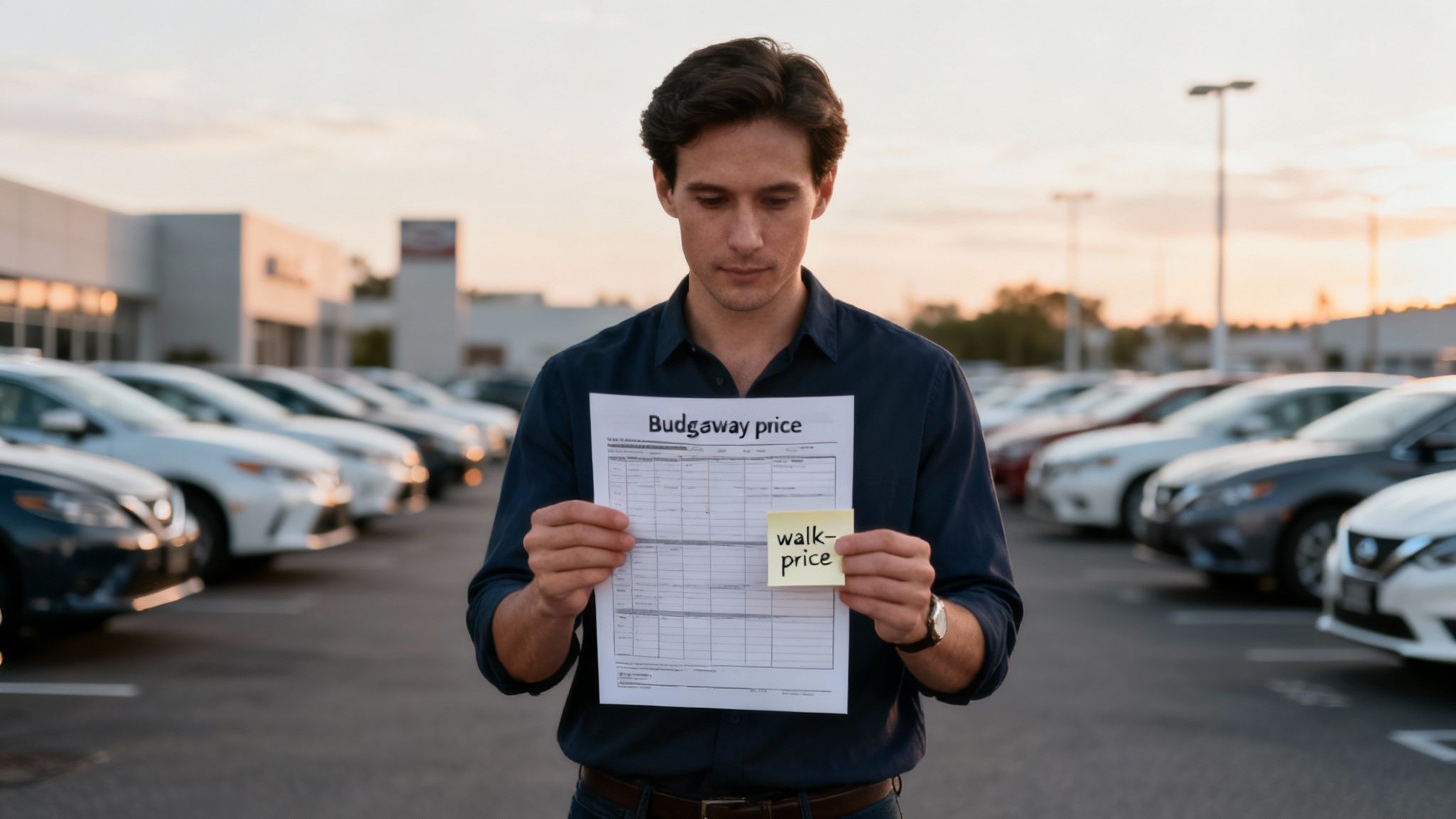
Walking into a dealership can feel like stepping onto a stage where you don't know the lines. The bright lights, the rows of gleaming cars, the approaching salesperson... it can all be a bit much. But here’s what the best negotiators know: it’s just a business transaction, not a personal battle. The trick is to reframe the entire experience.
Instead of gearing up for a high-pressure fight, think of it as a structured process where you actually hold a lot of the power. Your biggest asset? Being prepared. At AutoProv, we believe that preparation, backed by solid data, builds the confidence you need to stay in control.
Define Your Financial Boundaries First
Before you even glance at a single car, you need to lock down two critical numbers: your ideal budget and your absolute walk-away price. Your budget is what you realistically want to spend. Your walk-away price is your non-negotiable ceiling. If the final price goes one pound over this number, you have to be ready to leave without a second thought.
This isn’t just about being financially sensible; it’s a powerful psychological tool. When you know your absolute limit, you strip the emotion out of the negotiation. It stops you from being swayed by clever sales tactics or the temptation of a slightly higher-spec model. It anchors your position and keeps the chat focused on what you can genuinely afford.
A well-defined walk-away price is your ultimate safety net. It ensures you make a decision based on logic and affordability, not pressure, preventing you from committing to a deal you'll later regret.
The savings from this one step can be massive. In the UK, buyers who are willing to negotiate save an average of 11% on their car's purchase price, which works out to about £900. Despite this, a staggering 53% of buyers don't even try to haggle because they find it too uncomfortable. That’s a lot of money being left on the table. You can find more negotiation insights from CarGurus to see what you could be saving.
Use Strategic Timing to Your Advantage
Timing is one of the most underrated yet effective tools in your negotiation arsenal. Dealerships and their sales staff live and die by targets—monthly, quarterly, and annually. This creates predictable windows of opportunity for anyone smart enough to use them.
Think about shopping at these key times. Salespeople are often scrambling to hit their monthly quotas to lock in their bonuses at the end of the month. They’re far more likely to be flexible on price just to get a few more deals over the line. The pressure really ramps up at the end of the quarter, particularly at the end of March, June, September, and December. Dealerships need to hit those big quarterly targets, making them much more motivated to negotiate. Another great opportunity is during a model changeover. Just before a new model year is released, dealers are desperate to clear out the previous year's stock. This is the perfect time to find huge discounts on brand-new, outgoing models.
By lining up your visit with these periods, you walk in when the dealership's need to sell is at its absolute peak. This shifts the balance of power squarely in your favour before you've even said hello. For more tips on navigating the buying journey, our comprehensive used car buying guide for the UK has all the essential advice you need to prepare.
Arm Yourself with Data-Driven Leverage
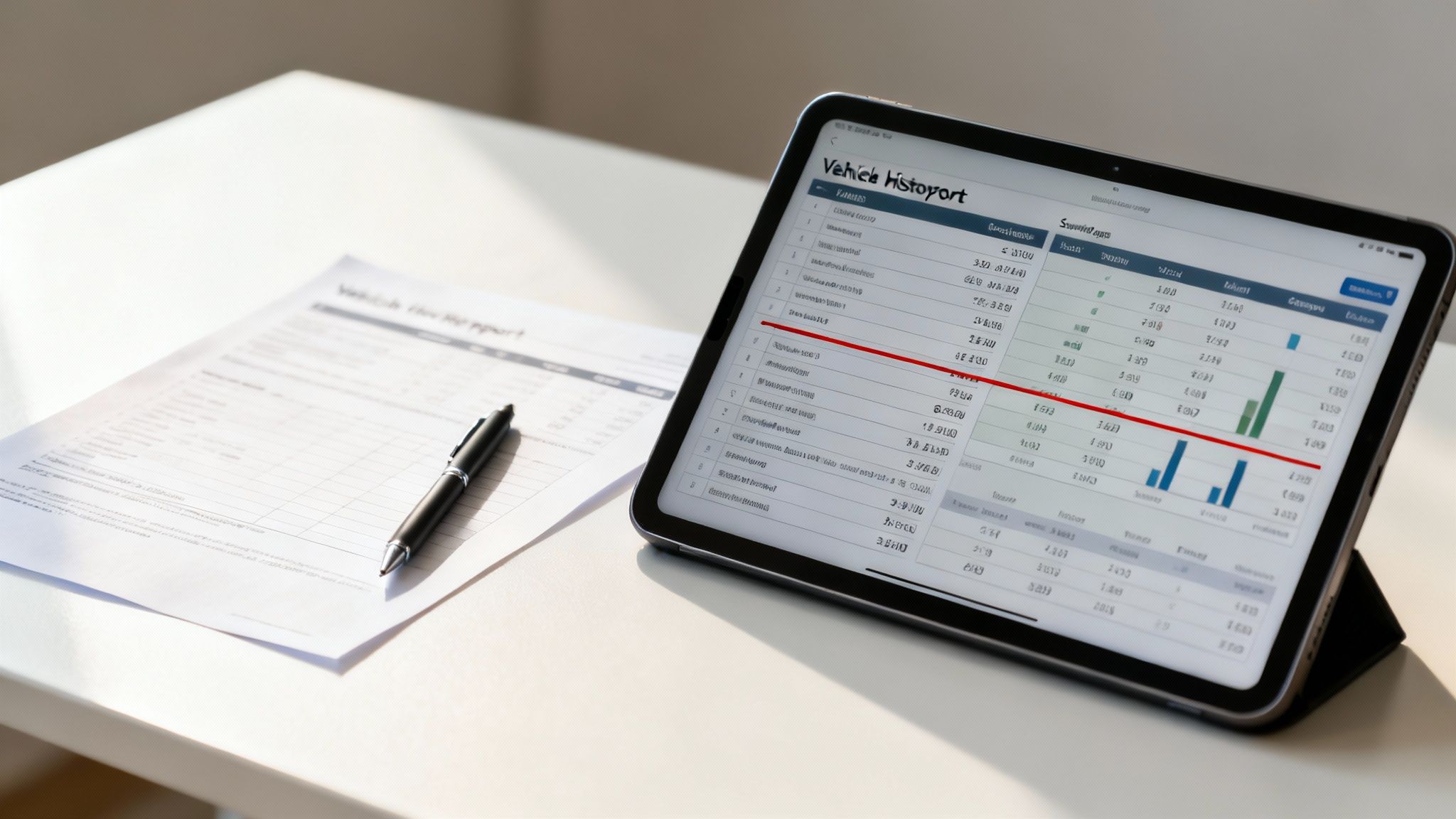
The kind of professional-grade data provided by AutoProv, all pulled together in one clear report, is what separates a hopeful buyer from a strategic negotiator. It’s the key to shifting the conversation from opinion to objective fact, giving you undeniable influence.
In any negotiation, the most informed person holds the power. Just walking onto a forecourt and asking for a discount "just because" is a weak opening move that will get you nowhere fast. To really bargain effectively, you need to build a rock-solid case for your offer—one grounded in hard data.
This completely changes the dynamic. You’re no longer just haggling; you're presenting a logical, evidence-based argument. This data-first approach, which is central to AutoProv's services, puts you in control and gives you firm ground to stand on.
Establish the Vehicle's True Market Value
First things first: you need to figure out what the car is actually worth in today's market, not just what the sticker price says. A dealership's asking price is their ideal scenario, with a healthy profit margin already baked in. Your job is to uncover the realistic price it should be selling for.
Kick things off with free online valuation tools to get a rough idea. But don't stop there. The real insight comes from cross-referencing that figure with live listings for nearly identical cars. Hunt for the same make, model, year, trim, and similar mileage across various dealership sites and online marketplaces.
This bit of digging quickly reveals the average asking price. Let's say the car you're looking at is listed at £12,500, but you find three similar models elsewhere priced between £11,700 and £12,000. Boom. You’ve just found a negotiation starting point of at least £500. This evidence is far more powerful than just saying, "That feels a bit steep."
For a deeper dive, exploring professional resources on market insights and vehicle pricing will give you an even clearer picture of where that specific model sits in terms of depreciation and demand.
Your Secret Weapon: The Vehicle History Report
Knowing the market value is crucial, but the real game-changer is uncovering the specific history of the exact car you want to buy. This is where a professional-grade vehicle history report from a service like AutoProv becomes your most powerful tool. It lays out the car's entire past, often flagging details that provide concrete reasons for a price drop.
A comprehensive vehicle history check isn't just for peace of mind; it's a strategic tool. It provides the specific, factual evidence needed to justify a lower offer, turning your negotiation into a data-driven discussion.
Imagine the confidence this gives you. The report can uncover a whole host of negotiable points that the seller might not have mentioned—or might not even know about themselves.
Turning Data into Tangible Bargaining Chips
A detailed report from AutoProv gives you specific, actionable points to raise. You're no longer guessing or going on a hunch; you're presenting cold, hard facts.
Here are a few real-world scenarios where an AutoProv report provides undeniable leverage. You can point out upcoming maintenance costs; if the report shows the car's last service was 9,000 miles ago, and the manufacturer recommends a major one every 10,000 miles, you have a solid point. You could calmly point out, "I see the next major service is due in 1,000 miles, which my local garage quotes at around £400. I'd like that reflected in the price." You can also highlight MOT advisories. Perhaps last year's MOT test listed "tyres nearing legal limit" as an advisory. You can say, "The MOT from last year flagged the tyres, and they'll need replacing soon. That's an immediate cost of about £300." Discovering service history gaps, especially around a critical interval like a cambelt change, is a major bargaining point. It creates uncertainty about the car’s mechanical health. Finally, uncovering hidden history, such as minor cosmetic repairs or a past life as a fleet vehicle, can absolutely justify a significant price reduction.
This factual approach completely changes the tone of the negotiation. You aren't criticising the car or the dealer. You're simply highlighting the financial realities tied to its specific history. This makes it incredibly difficult for a salesperson to brush off your points, forcing them to address the data and negotiate on your terms. This is how you confidently and effectively bargain a car price down.
Mastering Your In-Person Negotiation
 This is it. All the research and preparation lead to this moment—the face-to-face discussion. This is where your data-driven approach turns into real, tangible savings. A successful negotiation isn't about aggression or emotion; it's a calm, respectful conversation guided by the facts you've gathered.
The process kicks off the second you slide into the driver's seat for a test drive. This isn't just about getting a feel for the car. It's your first, best chance to find physical evidence that backs up all the research you’ve done on paper.
The Test Drive Is Your First Negotiation Tool
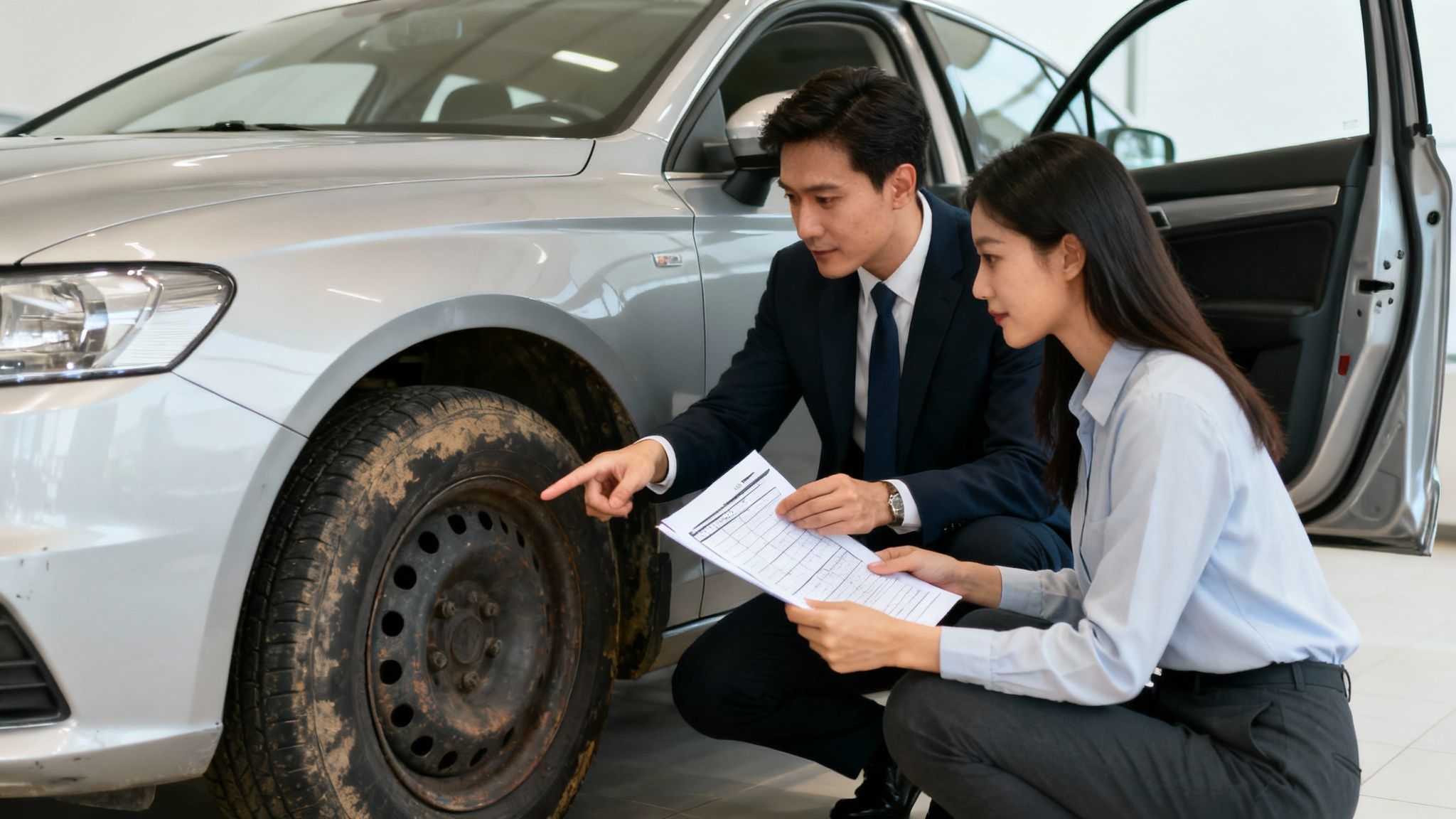
Think of the test drive as a hands-on inspection. As you drive, your focus should be on more than just how the car feels. You're looking for the small details, the little imperfections that represent real-world costs and give you leverage to justify a lower price.
During your drive and walk-around, keep an eye out for worn tyres, as a new set can run into hundreds of pounds. Note any minor scratches or dents; while expected on a used car, they still impact its value. Also, look for interior wear and tear, such as scuffs on the plastic trim, stains on the seats, or any buttons and controls that don't work quite right.
These observations add another powerful layer to your toolkit. When you combine them with your research, you build a solid, multi-faceted case for a price adjustment. If you want a more structured way to check everything, our ultimate used car inspection checklist can walk you through a proper examination.
Opening the Price Discussion Calmly
Once you’re done with the test drive and it's time to talk numbers, your opening line sets the tone for everything that follows. Don't start with a ridiculously low offer. That just puts the salesperson on the defensive and makes the whole thing confrontational from the get-go.
Instead, start with a collaborative, open-ended question. Something like, "The car is great, but the price is a little higher than I was expecting. What's the best price you can do on this today?" works a treat. It’s non-confrontational and invites the salesperson to make the first move, giving you a sense of how flexible they might be.
The goal of your opening is to start a conversation, not a battle. A polite, inquisitive approach keeps the dialogue constructive and makes the salesperson more willing to work with you to find a mutually agreeable price.
Presenting Your Research with Confidence
Now’s the time to calmly bring out the facts you've gathered. The key is to present your findings as objective data points, not as criticisms of the car or the dealership. This is how you can effectively bargain the car price without causing any friction.
For example, when you bring up your AutoProv vehicle history report, you could say: "My history check shows there's a gap in the service record around the 40,000-mile mark. That creates a bit of uncertainty for me, which I think should be reflected in the final price."
The same goes for your market value research: "I've seen three other cars with almost identical mileage and specifications priced around £11,800. I'm keen to understand how we can get closer to that market value."
Making a Realistic Opening Offer
After the salesperson gives you their initial revised price, it's your turn to make a counter-offer. Your first offer needs to be realistic but also strategically lower than your absolute walk-away price. A good rule of thumb is to start about 10-15% below their best offer. This leaves plenty of room to meet somewhere in the middle.
Let's say their best price is £12,000 and your maximum budget is £11,500. A sensible opening offer would be around £10,800. This anchors the negotiation lower and shows you're a serious buyer who has done their homework.
The UK used car market is built on margins that allow for this sort of back-and-forth. Industry analysis shows that dealerships typically have markups that allow for 5% to 15% reductions off the sticker price. Things like the car's popularity, its condition, and how long it’s been sitting on the forecourt will all influence just how much wiggle room they have.
Handling Common Dealer Tactics
During the negotiation, be ready for some classic dealer tactics. They might say they need to "speak to their manager"—a time-honoured move to make you wait and break your concentration. Just stay patient. When they come back with a slightly better offer, calmly hold your ground and refer back to your data.
Knowing when to stand firm and when to give a little is the final piece of the puzzle. If you're only a couple of hundred pounds apart on a car you really want, offering to meet in the middle is a smart way to close a fantastic deal. But if they refuse to budge on a price your research shows is too high, you have to be ready to walk away. Sometimes, the most powerful move you can make is to thank them for their time and leave. You’d be surprised how often that prompts a last-minute, much better offer.
Negotiate Beyond the Sticker Price
Getting a great deal on the sticker price feels like a win, but honestly, that's often just the first round. A savvy salesperson knows plenty of other ways to claw back their profit margin, and this is exactly where many buyers watch their hard-won savings vanish.
The golden rule is simple but absolutely critical: negotiate one thing at a time.
Always, always lock in the final purchase price of the car itself before you even breathe a word about financing, a part-exchange, or any optional extras. By keeping these conversations separate, you stay in control. It stops the dealer from shuffling numbers around behind the scenes to muddy the waters and pad their pockets. Think of it as building your deal brick by brick.
Secure Your Finance Before You Shop
Walking into a dealership with a pre-approved finance offer from your own bank or a trusted lender is one of the most powerful moves you can make. It completely flips the script.
Suddenly, you have a solid benchmark for interest rates and monthly payments. When the salesperson slides their finance package across the desk, you’re not just guessing if it’s any good. You can compare it directly to the offer you’re already holding. This puts you in the driver's seat, letting you say with confidence, "I appreciate the offer, but my bank has already approved me at X%. Can you beat that?"
Having a pre-approved finance offer in hand is like knowing the market value of the car—it gives you a factual baseline. It transforms the finance discussion from a sales pitch into a straightforward comparison of numbers.
Funnily enough, dealer finance isn't always the enemy. Research actually shows that buyers who finance through a dealer can sometimes get better deals than cash buyers. Why? Because manufacturers might offer juicy deposit contributions or special discounts tied to their own finance products. The trick is to use your pre-approved offer as leverage to make sure you get the absolute best rate they can give you.
Get a Fair Price for Your Part-Exchange
If you’ve got a car to trade in, the dealer sees another prime opportunity to claw back profit. It’s a classic tactic: they’ll offer you a fantastic discount on the new car, only to massively undervalue your current one. This is precisely why you have to treat the part-exchange as a totally separate deal.
Before you even step onto the forecourt, get a clear idea of what your car is worth. Use a few different online valuation tools, and see what similar models are actually selling for, both privately and at other dealerships. This arms you with a realistic trade-in value.
Don't mention your part-exchange until after you have a final, agreed-upon, written price for the car you're buying. Once that number is set in stone, then you can bring up your trade-in. If their offer is disappointingly low, you can pull out your research and negotiate upwards. If they won’t play ball, you always have the option to sell it privately.
Sidestep Overpriced Add-Ons
With the price and financing sorted, you’ll probably face one last hurdle: the upsell. Just as you’re ready to sign and your decision-making stamina is at its lowest, the salesperson will start pitching a whole menu of extras.
Be ready to politely but firmly say no to common, high-margin add-ons. Modern car paint is incredibly tough, so expensive paint protection often provides little more benefit than a good quality wax you could apply yourself. The extended warranties offered by dealers are often seriously overpriced; you can usually find better and more affordable cover from independent providers. GAP insurance can be a smart move, but it's almost always cheaper to buy from a standalone insurer rather than rolling it into your car deal.
By breaking the negotiation down into these separate parts—the car's price, your financing, the part-exchange, and the extras—you maintain complete control. This methodical approach ensures the great price you fought for on the car remains a great deal when you finally sign on the dotted line. To understand what that final paperwork should look like, take a look at our guide to the UK car sale contract.
How to Finalise Your Deal and Avoid Pitfalls
You’ve navigated the negotiation with skill and reached a verbal agreement on the price. That's a great feeling, but the job isn't quite finished. This final stage—turning that handshake deal into a signed, sealed, and delivered contract—is exactly where costly mistakes can creep in if you let your guard down.
The move from talking numbers to signing papers is a critical moment. You have to be absolutely certain the deal you made is the one you sign. A moment of haste here can undo all your hard work.
Get Every Single Detail in Writing
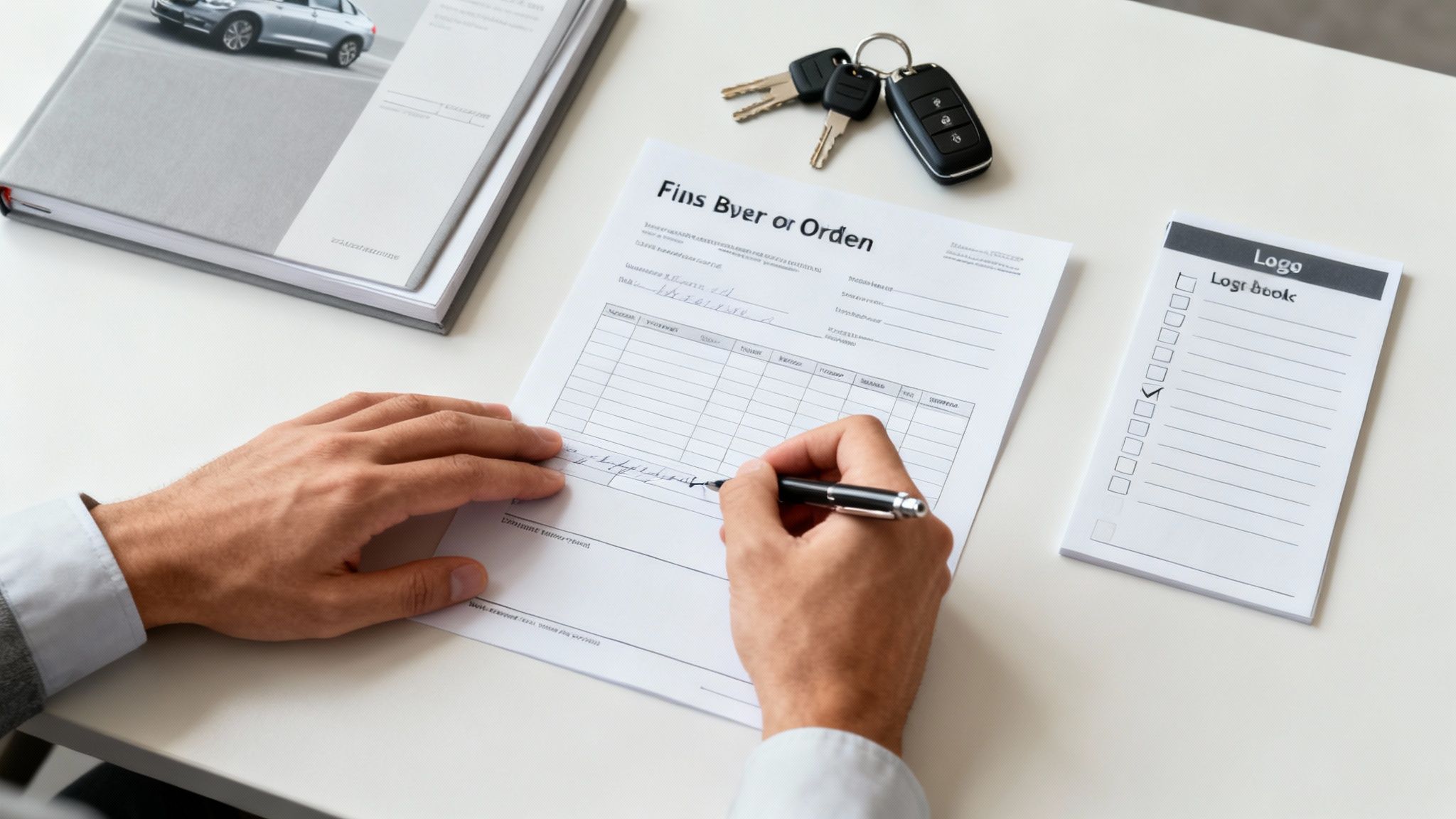
Before you even think about picking up a pen, insist on seeing the "buyer's order" or purchase agreement. This document is the definitive record of the sale, and it needs to reflect every single point you agreed upon. Don't accept verbal assurances for anything.
Take your time and read every single line. The document should spell out the final agreed-upon price, any agreed-upon repairs, all included extras, and the specific warranty terms.
Until it’s in writing and signed by both of you, you don't really have a deal. A verbal agreement isn’t legally binding in a car sale, which makes the buyer's order the single source of truth for your purchase.
This isn’t about being difficult; it’s about being thorough. A professional dealership will have no issue putting all agreed terms on paper. Any hesitation to do so is a massive red flag.
Watch for Last-Minute Pitfalls
Just when you think you’re over the finish line, surprise fees can suddenly materialise on the final invoice. It's a classic move some places use to claw back profit from a heavily negotiated deal, hoping you're too excited to notice.
Be vigilant for vague charges that weren’t discussed before. Common culprits include "admin fees," "documentation charges," or "preparation fees." Question every single one. Ask the salesperson to explain precisely what each fee covers. If you didn’t agree to it during the negotiation, you have every right to demand its removal. These charges can add hundreds of pounds to the final price if you aren't paying attention.
Perform One Final Inspection
With the paperwork in order, it’s time for one last check of the car and its documents. This is your final opportunity to confirm that everything is exactly as promised before ownership is transferred.
First, give the car another walk-around. Make sure no new scratches or dings have appeared while it's been sitting on the lot. Check that any promised repairs have been completed to a satisfactory standard.
Next, go through the vehicle’s paperwork with a fine-tooth comb. Ensure the VIN on the V5C logbook matches the one on the car. Double-check that the service history and any receipts are present and correct. Finally, verify the MOT certificate's expiry date and review any advisories from the last test.
Understanding your legal protections is also vital at this stage. Knowing your rights empowers you to handle any discrepancies with confidence. For more detailed information, it's well worth reading up on how the Consumer Rights Act 2015 protects UK car buyers. By completing this final checklist, you can drive away not just with a great deal, but with total peace of mind.
Your Car Negotiation Questions Answered
Stepping onto the forecourt to negotiate a car price can feel like walking into the lion’s den. It’s completely normal to have questions. Let’s clear up some of the most common ones so you can walk in with your head held high, ready to get a great deal.
How Much Can I Realistically Knock Off a Used Car in the UK?
In most cases, aiming for 5% to 10% off the sticker price is a solid, realistic target for a used car. But think of that as a starting point, not a hard-and-fast rule.
The real negotiating power comes into play when a car has been sitting on the lot for a while—say, over 60 days. That’s when a dealer gets really keen to shift it. Your position gets even stronger when you’ve done your homework. For instance, if your AutoProv vehicle history check flags that a pricey cambelt change is just around the corner, you’re not just haggling—you’re presenting a solid, fact-based reason for a bigger discount.
Is It Better to Negotiate in Person or Over Email?
While firing off a few emails is a decent way to test the waters and see which dealers are willing to play ball, the real deal-making happens face-to-face.
Showing up in person sends a clear signal: you're a serious buyer, not a tyre-kicker. This simple act makes the salesperson take your offer much more seriously. It’s also far more powerful to physically show them the AutoProv report on your phone or point out a scuff mark you found during the test drive. A savvy approach is to use email to gather initial offers, then go visit the most promising dealer to shake hands on the final price.
Should I Mention I’m a Cash Buyer?
This one trips a lot of people up. It feels like telling them you have cash should give you the upper hand, but it often does the opposite. Dealerships make a good chunk of their profit on the finance deals they sell, so when you take that off the table from the get-go, they’re less likely to budge on the car's price.
Here’s the pro move: negotiate the price of the car first, and act like you’re open to hearing about their finance packages. Once you’ve agreed on a final figure and have it in writing, then you can reveal you’ll be paying with cash (or your own financing).
What if the Salesperson Says, “I Need to Speak to My Manager”?
Ah, the classic. This is one of the oldest plays in the salesperson’s handbook. It’s a stalling tactic designed to break your rhythm, make you sweat a little, and make it seem like they’re going into battle for you. Don’t fall for it. Just stay cool, calm, and patient.
When they come back, they’ll likely have a counter-offer that’s still a bit higher than you want to pay. Simply hold your ground. Calmly restate your offer and remind them of your reasoning—be it the market value you researched or a specific point from the vehicle’s history report. Standing firm shows you’ve done your homework and aren’t just throwing out random numbers. More often than not, this is when they'll come back with a much more serious offer.
Frequently Asked Questions
AI-Generated Content Notice
This article was created with the assistance of artificial intelligence technology. While we strive for accuracy, the information provided should be considered for general informational purposes only and should not be relied upon as professional automotive, legal, or financial advice. We recommend verifying any information with qualified professionals or official sources before making important decisions. AutoProv accepts no liability for any consequences resulting from the use of this information.
From our AI insights
- Auction Pitfalls: Avoiding Costly Mistakes
Navigate UK car auctions with confidence by avoiding finance, write-off, and mileage risks.
- Mastering Paint Code Checks: Detecting Hidden Car Repairs
Discover how to use paint code verification to identify hidden car repairs and ensure a smarter purchase.
- UK Part-Exchange Checks: Protecting Dealer Margins
Explore essential part-exchange checks for UK dealers to safeguard profit margins, including provenance and finance verification.
Related Articles

Your Ultimate Guide to Buying a Used Car in the UK
Navigate the UK used car market with confidence using our comprehensive buying guide. Tips, checks, and AutoProv Provenance insights included.
Difference Between MOT and Service: What You Need to Know
An MOT is a mandatory legal inspection that every car on UK roads needs to pass.Think of it as the government's way of ensuring your vehicle meets the absolute minimum safety and environmental standards to be considered roadworthy. A service, on the other hand, is a completely different beast. It's the proactive maintenance routine recommended by the people who built your car, designed to keep it running smoothly and catch problems before they start. In short, an MOT is a pass-or-fail exam required by law. A service is a comprehensive health plan for your car.
Your Ultimate Used Car Inspection Checklist
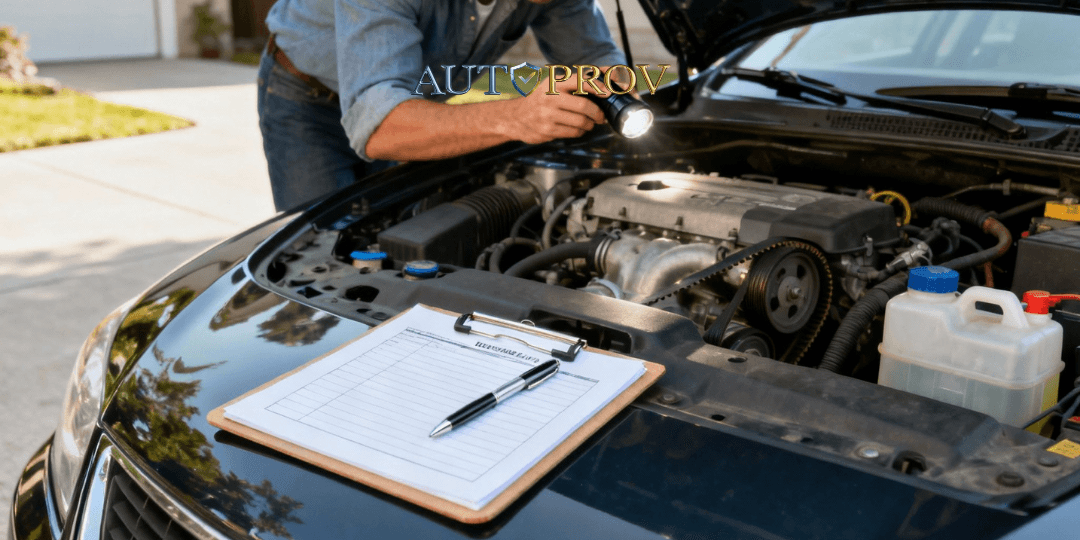
A solid used car inspection checklist is the single most powerful tool you have to avoid buying a lemon. It gives you a methodical way to look past the shiny paint and assess a car's real condition, helping you spot hidden problems and get a fair price before you shake hands on the deal.
Published by AutoProv
Your trusted source for vehicle intelligence