When you're buying or selling a car privately in the UK, the car sale contract is arguably the most important document in the entire deal. It’s the legally binding agreement that protects everyone involved. Think of it as the official rulebook for the sale, ensuring every detail, from the price to the car's condition, is crystal clear and signed off on. If you skip this step, you’re leaving the door wide open for headaches and financial trouble later on.
When you're buying or selling a car privately in the UK, the car sale contract is arguably the most important document in the entire deal. It’s the legally binding agreement that protects everyone involved. Think of it as the official rulebook for the sale, ensuring every detail, from the price to the car's condition, is crystal clear and signed off on. If you skip this step, you’re leaving the door wide open for headaches and financial trouble later on.
Understanding Your Car Sale Contract

At its core, a car sale contract is what’s known as a bilateral agreement. That’s just a formal way of saying it’s a two-way promise: the seller promises to hand over the keys and ownership, and the buyer promises to pay the agreed-upon amount. It’s this mutual promise that gives the document its legal teeth.
This isn’t just a simple receipt or a bill of sale, which only confirms a payment was made. A proper car sale contract lays out all the terms and conditions before any money changes hands. It's the playbook for the entire transaction, spelling out every expectation and responsibility. This proactive approach is exactly what you need to prevent misunderstandings down the road.
Why This Document Is Crucial
Just imagine buying a car on a handshake alone. What happens if you find a major mechanical issue a week later that the seller "forgot" to mention? Or what if the seller claims you still owe them money? Without a written contract, you’re stuck in a messy "he said, she said" argument with very little legal ground to stand on. A proper agreement gets rid of all that ambiguity.
A well-written contract provides several key things:
- Clarity: It leaves no doubt about the vehicle's details, the price, how payment will be made, and the handover date.
- Protection: It gives you legal cover by defining what each person is responsible for.
- Proof: The document stands as the definitive, final word on what was agreed.
A robust car sale contract transforms vague promises into concrete, enforceable terms. It is the foundation of a secure and transparent vehicle transaction, providing peace of mind for both buyer and seller.
These days, modern platforms are making the whole process even more secure. For example, services like AutoProv are designed to create a verifiable, digital record of the entire transaction. This ensures every detail, from the initial handshake to the final key handover, is accurately logged and easy to access, adding a much-needed layer of trust to any private sale.
Why a Watertight Contract Is Not Negotiable
Selling a car on a handshake deal is a bit like setting off on a long road trip without a map. You might eventually get where you're going, but you're taking a huge, unnecessary risk. A proper, watertight car sale contract isn't just a nice-to-have; it’s your single most important tool for clarity and legal protection.
When you skip the paperwork, you’re building the deal on a foundation of assumptions. Key details are left open to interpretation, and that ambiguity is a breeding ground for problems. What starts as a simple sale can quickly descend into a frustrating and expensive dispute.
Common Pitfalls of Informal Deals
Without a formal contract, you’re leaving yourself wide open. Verbal agreements almost never cover the specifics needed to head off future disagreements over the car's condition, how and when payment is made, or the official transfer of ownership.
Picture this: a buyer calls you a week after the sale, furious about a mechanical fault they've just discovered. Without a written record of what you disclosed or what they agreed to, it immediately becomes a messy "he said, she said" argument. A formal contract stops that dead in its tracks by documenting everything upfront.
Some of the most common headaches from informal sales include:
- Payment Disputes: Arguments over the final price, the payment method, or deadlines can easily poison a deal.
- Condition Misunderstandings: One person's idea of "good condition" can be wildly different from another's, leading to inevitable conflict.
- Title Transfer Headaches: Delays or problems getting the V5C logbook updated can leave the seller legally on the hook for a car they don't even have anymore.
A formal contract is your safeguard. It transforms vague promises into concrete, enforceable terms. It’s the definitive record of your agreement, protecting both you and the buyer from misunderstandings and financial loss.
As the UK's used car market continues to fire on all cylinders, the need for professional agreements has never been more critical. To give you an idea, in one recent March alone, UK passenger car sales jumped by 12.4% compared to the previous year. That surge in demand feeds directly into the second-hand market, making a solid contract essential for managing the sheer volume of transactions safely.
Your Legal Safeguard
At the end of the day, a car sale contract is your primary legal defence. It provides a clear framework that aligns with UK law, spelling out the rights and responsibilities of both the buyer and the seller. This is especially important in private sales, where the legal protections aren't the same as when buying from a dealership. To learn more about this, check out our guide on the Consumer Rights Act 2015 in the UK motor trade.
By using a detailed and professionally structured document, like those facilitated here at AutoProv, you ensure every part of the sale is transparent and legally sound. Our platform is designed to help automotive professionals create these crucial documents efficiently, preventing disputes before they even have a chance to start and guaranteeing a smooth, secure transaction for everyone.
Key Components of a UK Car Sale Contract

Think of a solid car sale contract like a well-engineered car; every component has a critical job to do. To build a legally sound agreement, you need a set of non-negotiable parts that, when put together, create a complete and clear picture of the deal. If you miss one, you’re leaving a dangerous gap in your legal protection.
These core elements are the bedrock of the agreement, leaving no room for crossed wires or misunderstandings down the line. They are what turn a simple handshake into a binding contract that holds up under UK law.
Identifying the Parties and the Vehicle
First things first, the contract needs to state exactly who is involved and what is being sold. It sounds basic, but getting this wrong can unravel the whole agreement. You need complete and accurate details to lock in who is bound by the contract and which specific car is changing hands.
For the people involved, make sure you have:
- Full Legal Names: The complete, official names of both the buyer and the seller.
- Current Addresses: The full home addresses for both parties.
For the vehicle, the description needs to be watertight. There should be zero doubt about the car in question. Be sure to include:
- Make and Model: For instance, Ford Fiesta Zetec S.
- Vehicle Registration Number: The car's official number plate.
- VIN (Vehicle Identification Number): This is the car's unique 17-digit fingerprint. For a closer look at why this is so important, check out our guide to vehicle checks with a VIN number.
- Current Mileage: The exact reading on the odometer at the moment of sale.
- Colour and Year of Manufacture: Extra details to help identify the vehicle.
Defining the Financial Terms
Next up are the financials. This section must spell out the money side of the deal with absolute clarity to head off any arguments about payment later. Any grey areas here are just asking for trouble.
You need to clearly state the agreed purchase price in pounds sterling (£). After that, outline the payment terms. Will the buyer pay with a single bank transfer? Cash on collection? The contract must specify the exact method and date of payment. This creates a clear timeline and set of expectations for everyone to follow.
At its heart, a car sale contract is simply a record of the promises made between a buyer and a seller. Nailing down these key components turns a spoken agreement into a clear, reliable, and legally enforceable document.
Outlining Conditions and Declarations
Finally, the contract must lay out the specific conditions of the sale. A very common clause in private UK sales is "sold as seen." This essentially means the buyer is accepting the car as it is, faults and all. While this gives the seller a degree of protection, it’s not a get-out-of-jail-free card for being dishonest. The seller still has a duty to be upfront about the car's condition and history.
This is also the place to mention any warranties being offered (or to state that none are included) and to list any known defects. Honesty is everything here. Using a service like AutoProv helps by creating an indisputable digital record of these declarations. Our platform ensures every detail is captured accurately, protecting both buyer and seller with a clear, verifiable history of the transaction.
Used Cars and the Nuances of Their Contracts
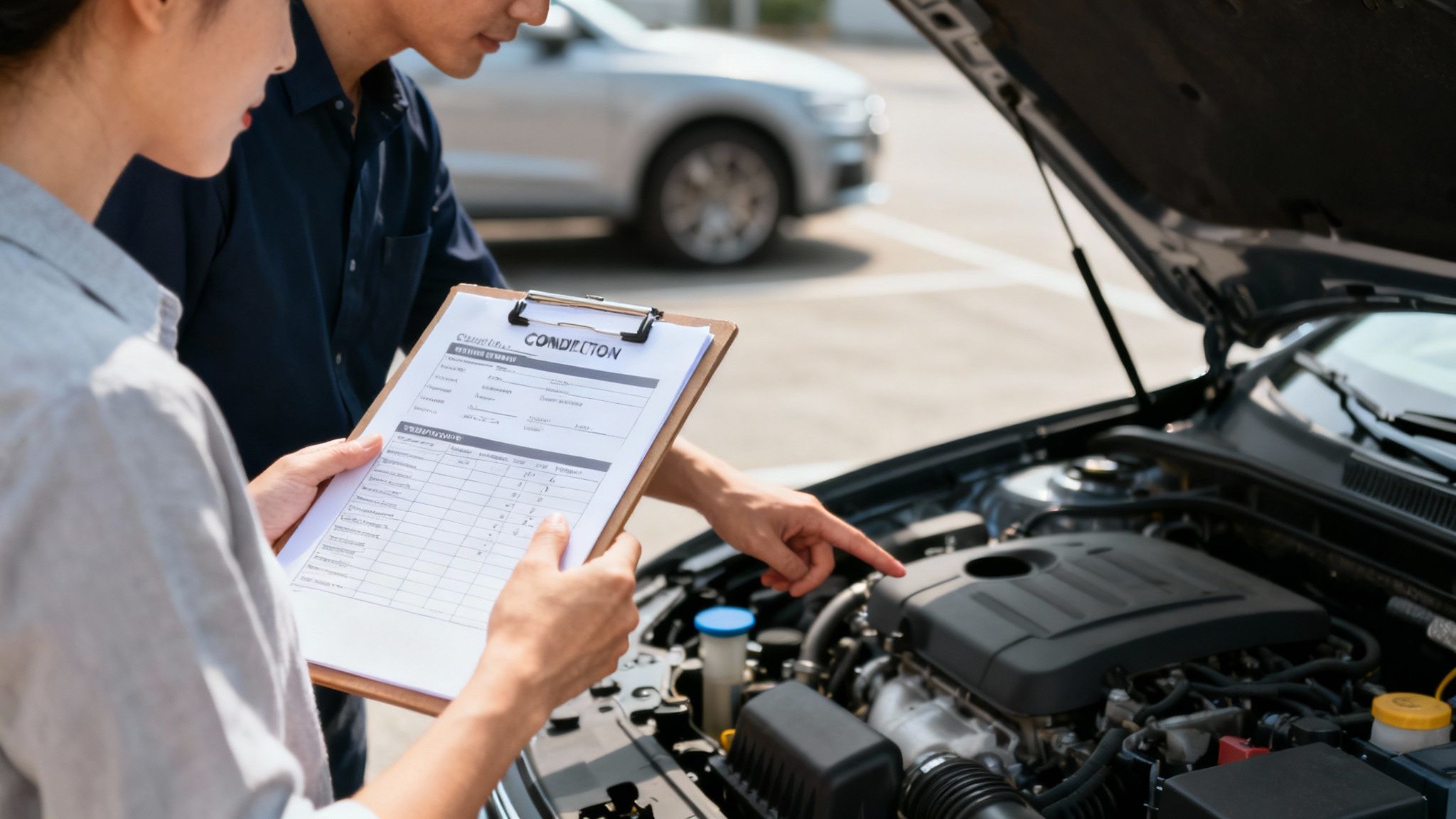
Selling a used car brings a unique set of responsibilities that a good car sale contract needs to handle carefully. Unlike a brand-new vehicle straight from the factory, a pre-owned car has a past—a story told in its mileage, repair receipts, and general wear and tear. Getting this history down on paper isn't just a formality; it's essential.
This is where transparency becomes your best friend. A solid contract for a used car does more than just name the make and model; it acts as an honest record of the car’s current state. Building that trust between a private seller and a buyer is fundamental to heading off any arguments down the road.
Getting the Vehicle's Condition and History in Writing
The foundation of any fair used car sale is an honest description of its condition. Your contract needs a specific section that lays out any known issues, from a small scratch on the bumper to a more significant engine quirk. Hiding problems is simply asking for trouble later.
A thorough approach to documenting the car's state should include:
- Known Faults: Be upfront about any mechanical or electrical problems, no matter how minor they seem. This sets clear expectations for the buyer and protects you from being accused of misrepresentation.
- Service History: Lay out the car’s maintenance records. Noting the date of the last service, the current MOT status, and any major repair work gives a clear picture of how the car’s been looked after.
- Modifications: Have you added new alloy wheels or tweaked the engine? Any changes from the factory standard should be listed.
It might feel like extra work to document everything so meticulously, but it's a critical part of a secure sale. If you're looking for more tips on what to inspect, our used car buying guide for the UK has some great pointers.
Why Honesty is Your Best Legal Defence
You often hear the phrase "sold as seen" in private car sales, but this isn't a green light to deceive a buyer. The car must still be roadworthy and, crucially, it must match the description you've given. If you deliberately fail to mention a serious fault, you could find yourself in legal hot water. A detailed, honest contract is your strongest defence.
An honest and transparent car sale contract is the strongest bridge between a seller's word and a buyer's trust. It transforms the vehicle's past into a clear, agreed-upon record, ensuring peace of mind for both parties.
The need for this level of accuracy is only growing. The UK's used car market was recently valued at over USD 103 billion and is still expanding. This growth is partly thanks to digital tools that make the whole process more transparent, with automated valuations, for instance, boosting pricing accuracy by as much as 12%. It’s clear the market is shifting towards data-driven sales, and a detailed contract is right at the heart of it.
This is exactly where platforms like AutoProv come in. Our service provides automotive professionals with tools to verify a vehicle’s history and condition. By giving sellers access to comprehensive data, we empower them to draw up contracts that are not only fair but are also supported by verifiable facts, adding a powerful layer of security to every single deal.
Special Considerations for Electric Vehicle Contracts
As electric vehicles (EVs) become more common on UK roads, the contracts we use to sell them need a serious update. A standard agreement, built for the world of petrol and diesel, simply doesn't cover the unique – and valuable – parts of an EV.
Think about it: a traditional contract wouldn't miss the engine size or gearbox type. But does it mention the battery's health, its ownership status, or the software that runs the car? These aren't just details; they're fundamental to an EV's performance and value. Overlooking them can lead to expensive mix-ups for everyone involved.
Key EV-Specific Clauses to Include
To make your sales contracts fit for the electric age, you need to go beyond the usual vehicle description. The battery is the heart of an EV and often its single most expensive component. It absolutely needs its own detailed section.
Your contract must clearly state:
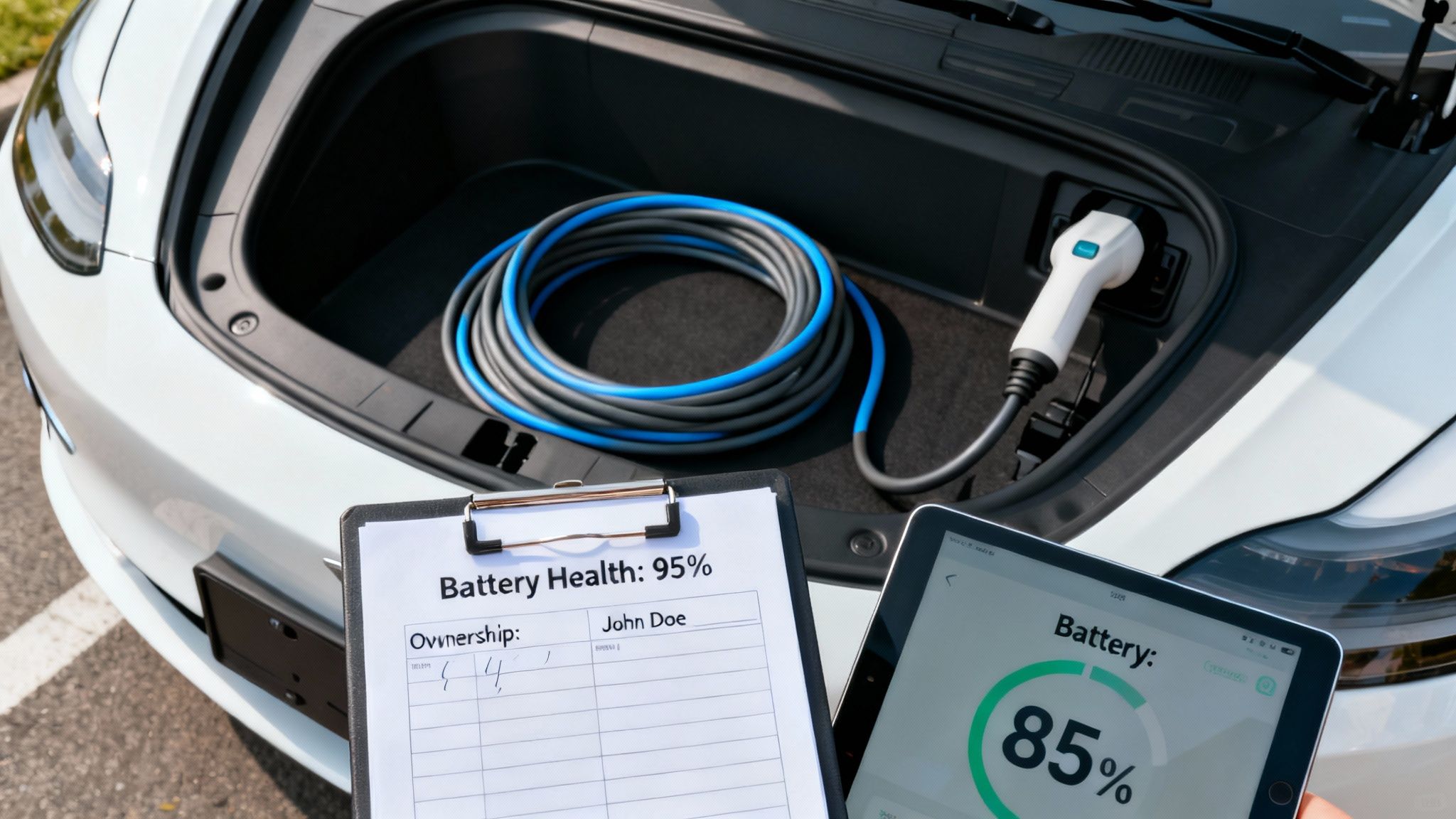
- Battery Health and Status: You need to include the current state of health (SoH), which is usually given as a percentage. This figure is a direct indicator of the car's range and massively affects its resale value.
- Battery Ownership: This is a big one. Is the battery owned outright, or is it on a separate lease? If it’s leased, the buyer needs to see and agree to the terms of that lease agreement.
- Remaining Warranties: Document any manufacturer warranties still in play, especially for the battery and drivetrain, as these often last much longer than the standard vehicle warranty.
And it doesn't stop there. Don't forget to itemise the accessories and software essential for running an EV. These are valuable assets that must be included in the sale.
An EV contract is incomplete without addressing its technological heart. Documenting battery health, ownership, and software status is no longer optional—it's essential for protecting value and ensuring a transparent transaction in a rapidly evolving market.
Future-Proofing Your EV Agreements
Beyond the battery, a truly comprehensive EV contract should pin down other key tech components. This means listing all charging cables (like the home charger and public charging cable) included in the deal and clarifying the status of any over-the-air software updates.
What about subscriptions? Many EVs have them for features like premium connectivity or advanced driver-assistance systems. The contract must state which subscriptions are active and whether they can be transferred to the new owner. As the UK's used EV market grows, details like these become absolutely vital. If you're curious about EV battery life in general, our guide on how long a car battery lasts is a great resource.
The market shift is clear. The growth of used EVs is projected at a CAGR of 25.20% through 2030, which highlights just how urgently contracts need to adapt. You can learn more about the British vehicle market trends on Focus2Move.
Forward-thinking platforms like AutoProv are already ahead of the game, providing frameworks that help automotive professionals account for the unique tech in every EV, ensuring every agreement is clear, complete, and ready for the modern motor trade.
Finalising the Sale and Transfer of Ownership
So, you’ve got a signed car sale contract. That’s a huge step – the deal is agreed in principle. But it’s not quite over yet. The final stage is all about the handover, the practical steps that make the transfer of ownership official. Getting this part right is absolutely critical for a clean, hassle-free transaction.
This final process boils down to three key actions: getting paid securely, swapping the documents and keys, and telling the authorities. Each step needs to be handled meticulously to make sure the buyer legally owns the car and the seller is no longer responsible for it.
The Handover Process
First things first: payment. In the UK, the safest and most common method is an instant bank transfer. It’s quick, creates a clear digital paper trail, and you know the funds have cleared before you even think about handing over the keys. It’s best to steer clear of cheques or complicated payment plans unless you have a rock-solid system for managing them.
Once you’ve confirmed the money is safely in your account, it’s time for the physical handover. This involves:
- The Keys: Handing over every single set of keys for the vehicle.
- Essential Documents: This includes the V5C logbook, the current MOT certificate, and all the service history and receipts you have.
This next bit is crucial. The seller needs to fill out the green ‘new keeper’ slip (officially known as the V5C/2) from the logbook and give it to the buyer. Then, the seller has a legal duty to notify the DVLA of the sale immediately – you can do this online in minutes. This is the step that officially transfers all legal responsibility for the car. If you're buying, it's always smart to ensure the vehicle is clear of any existing debt; you can read more about the importance of finance checks for a vehicle purchase.
Using a platform like AutoProv creates a verifiable audit trail for the entire transaction. From the initial agreement to the final payment and handover, every step is documented, offering complete peace of mind and an indisputable record of the sale.
Common Questions About Car Sale Contracts
When you’re selling a car privately, a few common questions always seem to pop up. Getting your head around the answers will help you move forward with confidence, knowing your car sale contract is solid and legally sound.
Is a Handwritten Contract Legally Binding in the UK?
The short answer is yes, a handwritten agreement can absolutely be legally binding. As long as it ticks the essential boxes—an offer, acceptance, a price (what lawyers call 'consideration'), and a clear intention from both sides to make it official, all sealed with signatures—it can hold up in a dispute.
But let's be realistic. A typed or digital document is always the smarter choice. It’s clearer, leaves far less room for misinterpretation, and just looks more professional. Using a dedicated platform like AutoProv takes the guesswork out of it, ensuring all the necessary legal clauses are baked in from the start. Plus, our service provides everyone with a secure, digital copy they can access anytime, making record-keeping simple and reliable for professionals in the trade.
What Does "Sold As Seen" Really Mean?
In a private sale, "sold as seen" is a crucial phrase. It means the buyer is taking the car in its current condition, warts and all. That includes any faults, whether they're obvious or hiding under the surface. The seller isn't expected to provide a laundry list of every minor squeak and rattle.
However—and this is a big however—it’s not a get-out-of-jail-free card for dishonesty. You can't legally misrepresent the car. For example, if you claim it has a full service history when it doesn't, you've broken the law. The car must also be roadworthy and match the description you've given. This is where a detailed contract becomes so important; it documents the car's agreed-upon condition and protects everyone from future arguments.
What If I Find a Problem After Signing?
What you can do next really depends on who you bought the car from. In a private sale with a 'sold as seen' clause, your options are pretty limited. Unless you can prove the seller intentionally misled you about the car's condition (this is known as misrepresentation), you don't have much recourse.
It's a completely different story if you bought from a dealer. You have much stronger protections under the Consumer Rights Act, which states the car must be of satisfactory quality and fit for purpose. In either scenario, a clear, detailed car sale contract is your most important piece of evidence, outlining exactly what was agreed upon when you shook hands on the deal.
Frequently Asked Questions
AI-Generated Content Notice
This article was created with the assistance of artificial intelligence technology. While we strive for accuracy, the information provided should be considered for general informational purposes only and should not be relied upon as professional automotive, legal, or financial advice. We recommend verifying any information with qualified professionals or official sources before making important decisions. AutoProv accepts no liability for any consequences resulting from the use of this information.
From our AI insights
- Leveraging Auction Data for Strategic Car Purchases
Discover how to use auction data effectively to make profitable car buying decisions.
- Auction Pitfalls: Avoiding Costly Mistakes
Navigate UK car auctions with confidence by avoiding finance, write-off, and mileage risks.
- Mastering Paint Code Checks: Detecting Hidden Car Repairs
Discover how to use paint code verification to identify hidden car repairs and ensure a smarter purchase.
Related Articles

Your Ultimate Guide to Buying a Used Car in the UK
Navigate the UK used car market with confidence using our comprehensive buying guide. Tips, checks, and AutoProv Provenance insights included.

Difference Between MOT and Service: What You Need to Know
An MOT is a mandatory legal inspection that every car on UK roads needs to pass.Think of it as the government's way of ensuring your vehicle meets the absolute minimum safety and environmental standards to be considered roadworthy. A service, on the other hand, is a completely different beast. It's the proactive maintenance routine recommended by the people who built your car, designed to keep it running smoothly and catch problems before they start. In short, an MOT is a pass-or-fail exam required by law. A service is a comprehensive health plan for your car.
Your Ultimate Used Car Inspection Checklist
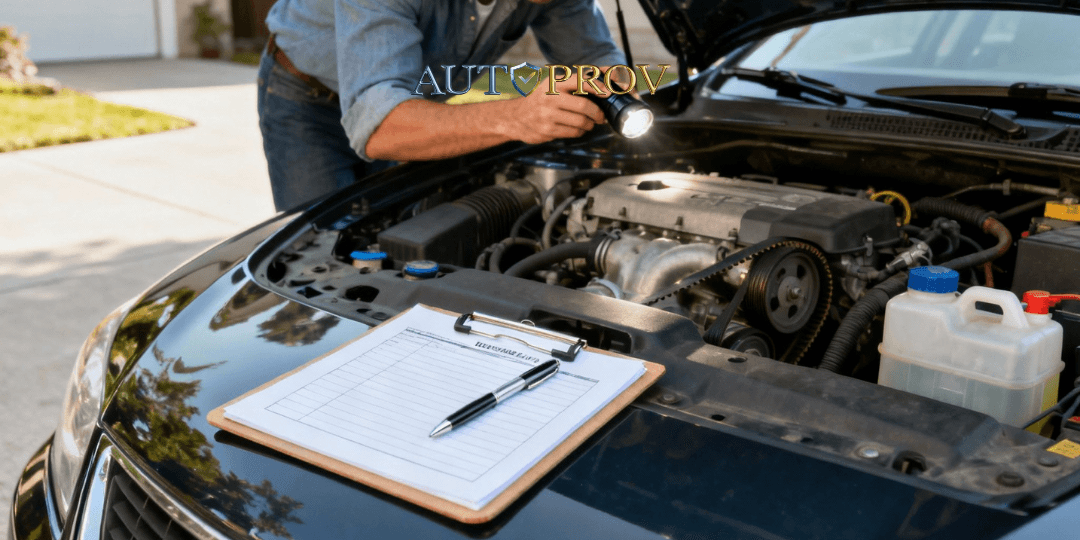
A solid used car inspection checklist is the single most powerful tool you have to avoid buying a lemon. It gives you a methodical way to look past the shiny paint and assess a car's real condition, helping you spot hidden problems and get a fair price before you shake hands on the deal.
Published by AutoProv
Your trusted source for vehicle intelligence