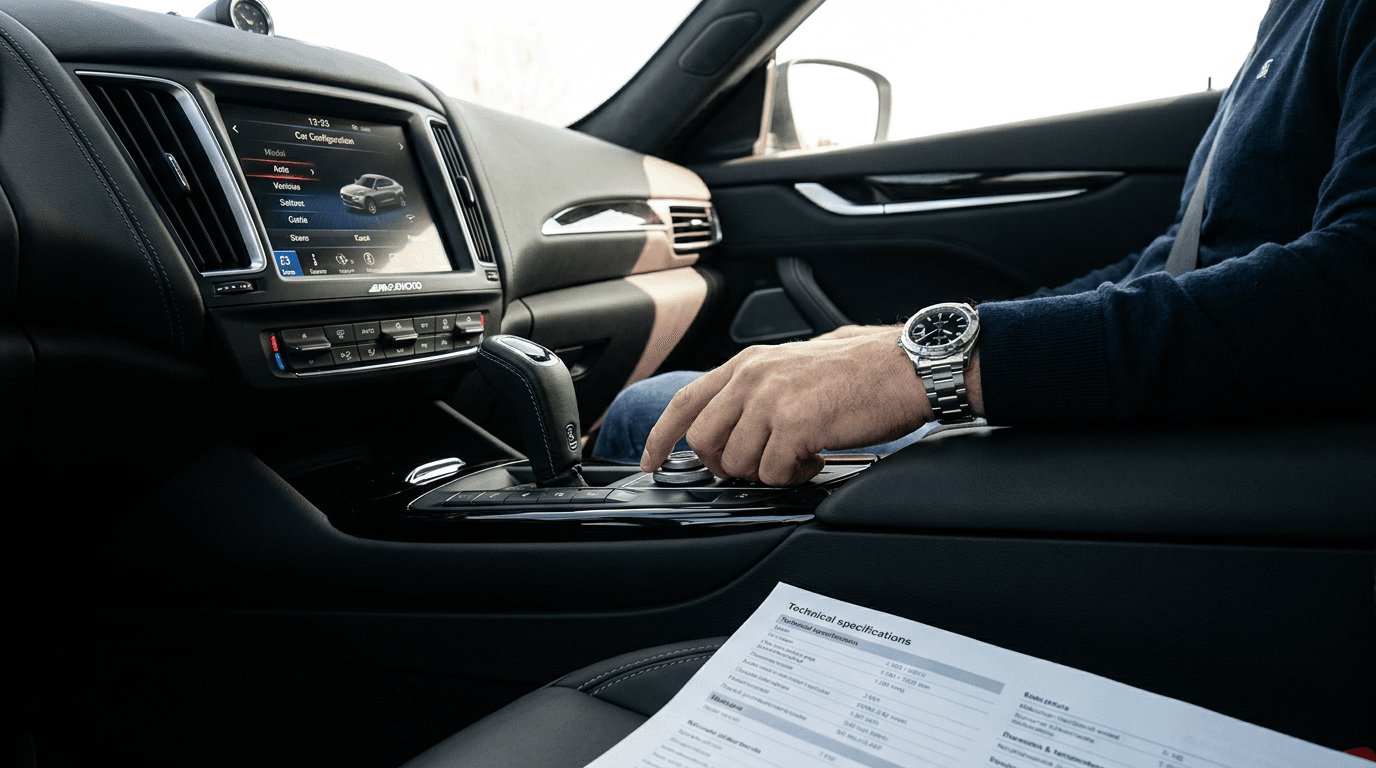
Learn which factory-fitted options add real profit to used car stock. Professional guide to identifying high-value equipment using OEM build data.
By CiteFlow
Why Factory Options Matter for Stock Profitability
Factory-fitted options can add £2,000 to £8,000 to a vehicle's retail value, yet many dealers miss these profit opportunities because they rely on visual inspection alone. High-value options like adaptive cruise control, premium audio systems, and manufacturer navigation packages are often invisible without access to official OEM build data. The difference between buying a vehicle described as "well-specced" and knowing it carries £4,500 worth of verified factory options is the difference between a standard margin and a premium sale.
The challenge is straightforward: aftermarket additions look identical to factory fit, and sellers frequently omit or misunderstand what was actually specified when the vehicle left the production line. A Audi with "leather seats" might have standard leather worth £800 or Valcona leather worth £2,400. Without factory build verification, you are guessing.
Professional traders use factory build data to prevent mis-described vehicle sales and to identify genuine profit opportunities that competitors miss. This is not about inflating prices on standard equipment. It is about recognising and marketing genuine high-value specifications that justify premium pricing and faster stock turn.
The Most Profitable Factory Options Across Popular Marques
Premium German Marques (BMW, Audi, Mercedes-Benz)
Adaptive LED headlights consistently add £1,200 to £2,000 to retail values on premium German vehicles. These systems adjust beam patterns based on speed and steering angle, and buyers actively search for them. The factory option code distinguishes them from standard LED units that look similar but lack adaptive functionality.
Panoramic sunroofs represent another high-return option, typically adding £1,500 to £2,200. On BMW 3 Series and Audi A4 models, the panoramic roof option appears in approximately 35% of UK stock but commands disproportionate buyer interest. Vehicles with this feature sell 8-12 days faster than equivalent models without it.
Manufacturer navigation systems with live traffic updates add £800 to £1,400, despite the prevalence of smartphone navigation. Buyers perceive integrated systems as premium features, and they are often bundled with other technology packages that multiply value. A BMW Professional Navigation system, for instance, typically includes upgraded speakers, voice control, and real-time traffic, creating a cumulative value addition.
Four-wheel drive or quattro systems on models where it is optional (not standard) add £2,500 to £4,000. This is particularly relevant for Audi A4, A6, and BMW 3 Series models where 2WD variants exist. The drivetrain specification must be verified through build data because badge engineering and model codes can be misleading.
Volume Brands (Ford, Vauxhall, Volkswagen)
On volume brands, the margin percentages are similar but the absolute values are lower. Adaptive cruise control adds £600 to £1,200 on Ford Focus, Volkswagen Golf, and Vauxhall Astra models from 2017 onwards. This feature has moved from luxury to highly desirable, and buyers filter search results specifically for it.
Premium audio systems (B&O in VW/Audi, Sony in Ford, Bose in Vauxhall) add £400 to £900. These are frequently overlooked because they require familiarity with manufacturer option codes to identify. A Volkswagen Golf with Dynaudio system carries option code 9VD and commands a premium over the standard eight-speaker setup that looks visually identical.
Metallic or premium paint finishes add £300 to £600 to retail value, but only when verified as factory-applied. Resprays, even high-quality ones, do not carry the same value. Build data confirms original paint codes and eliminates the risk of marketing a resprayed vehicle as factory metallic.
Prestige and Luxury Marques (Range Rover, Porsche, Jaguar)
Air suspension on Range Rover models adds £2,000 to £3,500, but only when functioning correctly. The option must be verified through build data because retrofitting is common and problematic. Genuine factory air suspension includes specific chassis codes and calibration that aftermarket systems lack.
Porsche Sport Chrono packages add £1,800 to £3,200 depending on model. This option includes performance-oriented features that enthusiast buyers actively seek. Verification through official Porsche build data prevents confusion with aftermarket steering wheel modifications that mimic the Sport Chrono clock.
Jaguar Meridian and Range Rover Meridian Signature audio systems add £1,200 to £2,400. These are high-margin options because they are easily verified, difficult to retrofit convincingly, and create clear differentiation in listings.
Using OEM Build Data to Verify Factory Specifications
Official manufacturer build sheets provide the only reliable method to verify factory-fitted options. These documents are generated using the vehicle's VIN and connect directly to the original production specification created when the vehicle was built. Unlike inspection or guesswork, OEM build data eliminates ambiguity.
Build data reveals option codes, package bundles, and equipment that is invisible to visual inspection. A Mercedes-Benz with option code P20 carries the Premium package including keyless entry, electrically adjustable front seats with memory, and ambient lighting. Without build data, you might identify one or two of these features but miss the package designation that buyers search for.
Package bundling is critical to understand because manufacturers sell options in groups. A BMW with option code ZPP (Professional Media package) includes navigation, voice control, and DAB radio. Identifying the package code allows you to market all included features accurately and justifies higher pricing than listing navigation alone.
Factory paint codes distinguish premium finishes from standard colours. A Range Rover in Santorini Black (premium metallic, option code CAV) commands £800 more than one in Narvik Black (standard metallic, option code LRC). Both appear black. Only build data reveals the difference.
Common High-Value Options Dealers Miss
Technology Packages Often Overlooked
Blind spot monitoring and lane keeping assist systems add £600 to £1,100 but are frequently omitted from listings because they operate passively. Buyers specifically search for these safety features, particularly on family vehicles. Build data identifies the option codes (often part of safety packages) that confirm their presence.
Wireless phone charging and multiple USB ports seem minor but add £200 to £400 on vehicles from 2018 onwards. Younger buyers expect these features, and their absence can slow stock turn. Conversely, confirming their factory fitment through build data allows you to highlight them in listings.
Digital instrument clusters (Audi Virtual Cockpit, BMW Live Cockpit, Mercedes MBUX) add £800 to £1,800 depending on generation and manufacturer. These are high-visibility features that photograph well and create listing differentiation. Build data confirms the specific generation and functionality level, as manufacturers offered multiple versions.
Comfort and Convenience Features With Hidden Value
Heated steering wheels add £300 to £600 and are difficult to verify without testing in cold weather or accessing build data. Buyers in northern regions actively seek this feature, and it is often bundled with winter packages that include heated washer jets and other cold-weather equipment.
Electrically adjustable steering columns add £200 to £400 but are invisible in photographs. Build data confirms this feature, which is particularly valued by buyers who share vehicles or have specific ergonomic requirements.
Memory seats (driver and passenger) add £400 to £800 on premium vehicles. This feature is often bundled with other comfort options, and build data reveals the complete package specification. Marketing "memory seats" is less effective than marketing "Comfort Package including memory seats, lumbar support, and seat heating."
How to Price Stock Based on Verified Factory Options
Start with base market value for the model, year, and mileage using market intelligence for stock purchasing decisions. This establishes the floor price before option adjustments. Reliable valuation data accounts for regional variations and current market conditions.
Add verified option values individually, but apply a discount factor for cumulative options. A vehicle with £6,000 worth of factory options does not command £6,000 above base value. Apply 60-75% of individual option values when multiple high-value features are present. Buyers expect well-specified vehicles to cost more, but they resist paying full retail for every option.
Cross-reference your pricing against similar specifications currently on the market. If comparable vehicles with adaptive cruise, panoramic roof, and premium audio are priced at £18,500, your verified example should sit at £18,200 to £18,800 depending on condition and mileage. Use days-to-sell data to determine whether aggressive or conservative pricing suits current market velocity.
Document every verified option in your listing with specific terminology. "Navigation" is vague. "BMW Professional Navigation with real-time traffic and voice control" is specific and valuable. Buyers searching for specific features use precise terms, and your listing must match their search behaviour.
Building Profit Into Your Buying Strategy
Identify high-value options before you bid or negotiate. Access to build data during the appraisal process allows you to recognise profit opportunities that sellers and competing buyers miss. A vehicle advertised as "full leather, sat nav" might carry £3,500 in additional verified options that justify a higher purchase price while still delivering superior margin.
Develop option-value reference lists for your core stock profiles. If you regularly stock BMW 3 Series, create a quick-reference guide showing option codes and their value impact. This allows rapid appraisal decisions without consulting build data for every common feature.
Prioritise vehicles with desirable option combinations over high-specification vehicles with unpopular features. A well-specified vehicle with options buyers actively search for will outperform a heavily optioned vehicle with niche features. Adaptive cruise control and heated seats sell faster than head-up displays and gesture control.
Use verified specifications as negotiation leverage. When a seller claims "fully loaded" but build data reveals a mid-specification vehicle, you have objective evidence to support a lower offer. Conversely, when build data confirms genuinely rare options, you can justify paying closer to asking price because you have identified margin opportunity.
Marketing High-Value Options Effectively
List verified options prominently in the first paragraph of your description. Buyers skim listings, and burying "panoramic sunroof" in paragraph four reduces its impact. Lead with high-value features: "2019 Audi A4 with adaptive cruise control, Audi Virtual Cockpit, and Bang & Olufsen audio."
Use manufacturer terminology for premium options. "Leather seats" is generic. "Valcona leather with diamond stitching" is specific and commands attention. Build data provides the exact option names and codes that match manufacturer marketing materials.
Photograph high-value options clearly. Close-ups of adaptive LED headlight signatures, panoramic roof glass, premium audio speaker grilles, and digital instrument clusters provide visual proof of specifications. Buyers are sceptical of text claims without supporting imagery.
Include option codes in your listing where appropriate for enthusiast markets. Porsche, BMW, and Audi buyers often search by option code (e.g., "Porsche 991 with X51 Powerkit" or "BMW M3 with Competition Package ZCP"). Including these codes captures informed buyers willing to pay premiums for specific configurations.
Avoiding Costly Specification Mistakes
Never assume options based on visual inspection alone. Aftermarket additions, retrofits, and dealer-fitted accessories can appear factory-original. A navigation screen might be a dealer-installed aftermarket unit worth £200, not a factory system worth £1,200. Build data eliminates this risk.
Verify package contents rather than individual features. Manufacturers change package specifications across model years, and what was included in a 2017 Technology Package might differ from 2019. Build data confirms exactly what was fitted to the specific vehicle, not what the package typically includes.
Distinguish between factory options and dealer-fitted accessories. Roof bars, tow bars, and parking sensors can be factory or aftermarket. Factory-fitted items are coded in the build data and typically add more value because they are integrated into vehicle systems and warranty.
Check for option deletions on high-specification models. Some manufacturers allow buyers to delete standard equipment for cost reduction or weight saving. A performance model might have deleted rear seats or air conditioning. Build data reveals these deletions, preventing embarrassing listing errors.
Compliance and Accuracy in Specification Claims
Under the Consumer Rights Act 2015, vehicles must be as described. Claiming factory options that are not present or misrepresenting specification levels creates legal liability. Build data provides documentary evidence that your descriptions are accurate, protecting you from disputes and rejection claims.
Retain build sheet documentation for each vehicle. If a buyer challenges a specification claim, you need evidence that your description was accurate at point of sale. Digital build data creates an audit trail that supports your position in any dispute.
Be precise about option availability and functionality. If a vehicle has adaptive cruise control but the system is not currently functioning, you must disclose this. Build data confirms the feature was factory-fitted, but you remain responsible for ensuring it works as described.
Frequently Asked Questions
AI-Generated Content Notice
This article was created with the assistance of artificial intelligence technology. While we strive for accuracy, the information provided should be considered for general informational purposes only and should not be relied upon as professional automotive, legal, or financial advice. We recommend verifying any information with qualified professionals or official sources before making important decisions. AutoProv accepts no liability for any consequences resulting from the use of this information.
From our AI insights
- Auction Pitfalls: Avoiding Costly Mistakes
Navigate UK car auctions with confidence by avoiding finance, write-off, and mileage risks.
- Mastering Paint Code Checks: Detecting Hidden Car Repairs
Discover how to use paint code verification to identify hidden car repairs and ensure a smarter purchase.
- UK Part-Exchange Checks: Protecting Dealer Margins
Explore essential part-exchange checks for UK dealers to safeguard profit margins, including provenance and finance verification.
Related Articles

Your Ultimate Guide to Buying a Used Car in the UK
Navigate the UK used car market with confidence using our comprehensive buying guide. Tips, checks, and AutoProv Provenance insights included.
Difference Between MOT and Service: What You Need to Know
An MOT is a mandatory legal inspection that every car on UK roads needs to pass.Think of it as the government's way of ensuring your vehicle meets the absolute minimum safety and environmental standards to be considered roadworthy. A service, on the other hand, is a completely different beast. It's the proactive maintenance routine recommended by the people who built your car, designed to keep it running smoothly and catch problems before they start. In short, an MOT is a pass-or-fail exam required by law. A service is a comprehensive health plan for your car.

Your Ultimate Used Car Inspection Checklist
A solid used car inspection checklist is the single most powerful tool you have to avoid buying a lemon. It gives you a methodical way to look past the shiny paint and assess a car's real condition, helping you spot hidden problems and get a fair price before you shake hands on the deal.
Published by AutoProv
Your trusted source for vehicle intelligence