
Knowing how to negotiate used car prices isn't about having the sharpest elbows; it's about walking into the conversation with more information than the person on the other side of the desk. For professionals in the trade, this means swapping guesswork for a systematic, data-driven approach. You need to know a vehicle's true value, its hidden risks, and its current market position before you even think about making an offer. This guide is your playbook for getting that professional edge, leveraging the powerful insights provided by AutoProv to ensure every purchase is a profitable one.
Your Professional Edge in Used Car Negotiation
In the razor-thin margins of the UK motor trade, profit is made when you buy, not just when you sell. The average car buyer might get by with a few basic checks and a bit of haggling, but your business lives or dies on a much deeper level of insight. This is where we move beyond the usual consumer advice and into a strategic framework built specifically for dealers, trade buyers, and fleet managers.
Our goal is to get you from relying on gut instinct to operating a repeatable, data-led system. Winning a negotiation isn't about being the loudest voice in the room. It’s about being the most prepared. With the right intelligence from services like those offered by AutoProv, you can build an unshakeable position that protects your bottom line on every single purchase.
Moving Beyond Basic Haggling
For anyone in the trade, negotiation is a core business function, not a one-off event. It demands a completely different toolkit from the one a private buyer uses. Your success boils down to understanding three key areas:
- True Vehicle Provenance: You need the full story. That means digging past the surface to uncover everything from a hidden write-off status to mileage discrepancies. A detailed history check from a provider like AutoProv isn't optional; it's the foundation of any serious offer.
- Real-Time Market Value: It's not just about the asking price. You need to know current trade and retail values, regional demand, and even depreciation trends. This is the data that anchors your offer in reality, not wishful thinking.
- Strategic Leverage Points: This is about finding the details that justify a price adjustment. It could be a gap in the MOT history, a tyre on its last legs, or outstanding finance. These aren't just flaws; they are factual reasons for your offer.
The most powerful position in any negotiation is holding verifiable facts that the other party may not have. A comprehensive vehicle report isn't just a background check; it's your primary negotiation script.
Why Data Is Your Greatest Asset
Ultimately, this playbook will show you how to use platforms like AutoProv to gather this critical intelligence and turn it into real-world negotiation tactics. Whether you're bidding at a busy auction, striking a deal with another trader, or sourcing from a private seller, concrete data is what gives you the confidence to secure the right stock at the right price.
With this approach, every acquisition stops being a gamble and becomes a calculated business decision. This data-first mindset transforms negotiation from a tense confrontation into a straightforward conversation about value, ensuring every purchase is a strategic win for your operation.
Building Your Negotiation Strategy With Data
A winning negotiation isn't decided in the heat of the moment on the forecourt or auction floor. It's secured hours, even days, beforehand through meticulous prep. Relying on gut instinct alone is a high-risk game that leaves your profit margin wide open to chance.
The secret to turning a risky guess into a calculated acquisition is building your entire strategy on a foundation of solid, undeniable data. This is where a professional vehicle intelligence report becomes your single most important tool. For those of us in the motor trade, platforms like AutoProv aren't just for background checks; they are the source of the hard facts you need to control the price conversation from the very start.
Uncovering The Vehicle's True Story
Before you can even think about a fair price, you need to understand exactly what you’re buying. A seller will always show a car in its best light, but a comprehensive report pulls back the curtain on its unvarnished history. Your job is to move past the seller's narrative and get to the vehicle's reality.
Here are the key areas to scrutinise in your AutoProv report:
- Finance Checks: Is there outstanding finance? A provenance-clear status is completely non-negotiable. Finding an active agreement gives you immediate grounds to halt the deal or, at the very least, require the seller to settle the debt before any money changes hands.
- MIAFTR Write-Off Records: The Motor Insurance Anti-Fraud and Theft Register (MIAFTR) is your window into the car's past life. An undisclosed Category S (structural) or N (non-structural) status absolutely hammers its value and desirability.
- MOT History: This is so much more than a simple pass/fail record. You need to look for patterns. Are there recurring advisories that point to a persistent issue? Gaps in the history that suggest the car was off the road? A recent failure that was just patched up cheaply to get a pass?
- Mileage Discrepancies: A clean, consistent mileage record is a great sign. Any amber or red flags from mileage services, however, suggest potential clocking, which instantly guts the car's integrity and its value.
These checks are your first line of defence. Unearthing a major issue like outstanding finance or a hidden write-off can be an instant deal-breaker, saving you from a catastrophic purchase.
Translating Data Into Direct Leverage
Finding the red flags is one thing. The real skill is knowing how to translate those findings into powerful, fact-based leverage. You aren't just pointing out flaws; you are logically explaining how these specific issues directly impact the vehicle's market value.
This tactic shifts a subjective argument over price into an objective discussion based on cold, hard evidence. For example, a small gap in the service history is a concrete reason to lower your offer—it creates uncertainty for the future retail buyer and signals potentially missed, and costly, maintenance.
A data point without context is just a number. When you can explain that a specific MOT advisory will cost £300 to rectify or that a mileage discrepancy reduces the car's retail value by 10%, your offer becomes a logical conclusion, not just a low-ball opinion.
Think of it this way. If your report flags an inconsistent mileage record, you can state, "The history shows a 15,000-mile discrepancy between 2021 and 2022. That raises a major red flag for retail buyers, so we have to price the car accordingly to account for that risk." It’s infinitely more effective than simply saying, "I think it's worth less."
Setting Your Walk-Away Price
The final, crucial piece of your data-driven strategy is calculating a precise walk-away price. This isn't a number you pull out of thin air. It’s the absolute maximum you can pay while still protecting your target profit margin, based on the vehicle’s true condition and its real-time position in the market.
This is where advanced market insights are critical. Understanding how to interpret key performance indicators lets you build a solid business case for your final offer. For a deeper look at this, check out our guide to market insights and vehicle pricing.
Your walk-away price should be a firm figure influenced by:
- Current Valuations: What are the genuine, up-to-the-minute trade and retail values for this exact model, age, and mileage?
- Desirability Scoring: How quickly is this model actually selling in your area? A fast-moving car might justify pushing your bid a little higher, whereas a slow-seller demands a much lower entry point to be worthwhile.
- Depreciation Trends: Is this vehicle’s value holding steady, or is it about to drop off a cliff in the next three months? This forecast directly impacts your potential profit.
By combining the car’s specific history with these broader market trends, you arrive at a firm, evidence-backed number. This is the price you will not exceed, no matter how persuasive the seller is. Having that clarity beforehand takes emotion out of the negotiation and helps ensure every car you buy is a profitable one.
Mastering Negotiation Tactics for Every Scenario
This is where the seasoned pros separate themselves from the amateurs. A one-size-fits-all negotiation strategy just doesn't cut it in the motor trade. The tactics you’d use in a fast-paced auction hall will get you nowhere with a private seller, and vice versa.
Every environment has its own unwritten rules. Your job is to know them, adapt your approach, and use your data to secure the best price on every single car.
Navigating The Auction Environment
Auctions are a game of discipline and speed. Forget about overpaying by a few quid; the real danger is getting sucked into a bidding war and making a catastrophic, five-figure mistake in the heat of the moment. Your only defence is that hard maximum bid you set during your research.
Here’s your game plan:
- Set Your Limit, No Excuses: Your pre-auction homework with the AutoProv report gave you a walk-away price. This number is your bible. Write it down, burn it into your brain, and never, ever go a penny over.
- Bid with Authority: Don't creep in with tiny, hesitant bids. Start strong and bid decisively right up to your limit. This projects confidence and can often rattle less-prepared bidders who are just testing the water.
- Know When to Fold: The second the bidding sails past your maximum, you’re out. It’s that simple. This isn’t about ego; it’s a cold, hard business decision. There’s always another car on another day.
Dealing With Other Trade Professionals
When you're negotiating with another dealer, the dynamic changes completely. You’re both on the same page, speaking the same language. Forget emotional pleas or lowball haggling tactics—they won’t work. This conversation is all about one thing: the margin between trade value and retail reality.
Your market data is your best and only weapon here. You’re not just throwing out an offer; you're presenting a sound business case. The goal is a fast, clean deal that leaves a bit of meat on the bone for both of you.
Show them the numbers from your AutoProv report—current trade values, local days-to-sell metrics, regional demand. When your offer is backed up by the same data they’re likely looking at, it’s not an insult; it’s just the market price.
In trade-to-trade deals, nobody "wins." You're working together to find a number that reflects the car's true market position, allowing both sides to maintain a workable margin.
Negotiating With Private Sellers
Talking to private sellers is a different art altogether. It requires a much softer touch. Unlike a dealer, a private owner often has an emotional connection to their car and a wildly optimistic view of its value, usually based on the highest-priced examples they’ve seen on AutoTrader.
Your approach needs to be two-pronged: build a connection, then gently introduce the facts.
- Build Rapport First: Be polite, be friendly, and show some genuine appreciation for the car. Point out what you like about it before you get to the issues. This builds trust and makes the seller far more open to hearing what you have to say next.
- Let the Report Do the Talking: Don't just pull a low number out of thin air. Walk them through your findings from a platform like AutoProv. Show them the report. Explain calmly how the undisclosed scuff on the alloy or the looming cambelt change translates into real-world costs you’ll have to cover to get the car ready for retail.
Proven Techniques for Price Negotiation
No matter who you’re talking to, a few core techniques will always give you an edge. A sharp, data-backed offer based on regional stock levels and depreciation data from AutoProv becomes almost impossible to refuse. The market data a service like this provides is your leverage. When a seller's forecourt is packed, for example, they are far more motivated to do a deal.
Finally, never underestimate the power of silence. Once you've made your offer and laid out your evidence, just stop talking. The silence can be uncomfortable, and the first person to break it usually gives ground. And if the numbers just don't stack up, be ready to walk. Knowing your walk-away price is useless if you're not prepared to do just that.
Using Market Valuations to Anchor Your Offer
Successful negotiation isn’t about plucking a number from thin air. It’s about justifying your offer with cold, hard evidence that’s impossible to argue with. This is how you shift the conversation away from a seller’s inflated asking price and anchor it firmly to the vehicle’s real-world market value. Using data isn’t just a tactic—it's the core of a professional buying strategy.
Your ability to control the price discussion from the get-go hinges entirely on the quality of your market intelligence. A report from a tool like AutoProv provides the specific, live data you need to build this anchor, turning a potential argument into a logical, fact-based discussion.
From Asking Price to Trade Reality
Whether you’re dealing with a private seller or another dealer, they will always kick things off with an optimistic retail figure. Your first job is to politely but firmly shift the entire frame of reference down to a realistic trade price. And you can’t do that without the data to back you up.
You need to build a compelling narrative, explaining precisely why your offer is fair based on what’s happening in the market right now. This isn't about being aggressive; it’s about being transparent.
Here are the key data points from AutoProv to build your case:
- Current Trade vs. Retail Pricing: Show the seller the live data for both. Explain that your offer has to account for your margin, reconditioning costs, and the commercial risk of holding the stock.
- Regional Stock Levels: If there’s a glut of a particular model in your area, its real-world value is lower. Simple supply and demand. You can demonstrate this with market data, showing exactly how many similar cars are for sale nearby.
- Model-Specific Depreciation Curves: Use the report to show how this specific model is forecast to lose value over the next few months. A car that’s depreciating quickly needs a lower buy-in price to protect your investment.
Countering Objections With Facts
Sellers always have objections. You'll hear it all. "I've seen one down the road for £1,000 more," or "My mate in the trade said it's worth at least £15,000." Generic haggling falls apart here, but a data-led approach lets you counter these points calmly and effectively.
When a seller pushes back, you just refer to the evidence from your AutoProv report.
Say they cite a higher-priced competitor. You can point to your report and say, "That one might be priced higher, but the data shows this model is actually taking an average of 65 days to sell in this region. We have to price for a much quicker sale." This changes the dynamic completely. You’re no longer just another buyer trying to chip the price; you're the market expert in the room presenting an undeniable case.
The goal is to make your offer seem like the only logical conclusion. When you can show a seller why their asking price is misaligned with the current market, it becomes much harder for them to justify holding out for an unrealistic number.
Using Market Trends as Your Ultimate Leverage
The UK used car market is a complex machine where big-picture trends create real-time opportunities on the ground. For a professional buyer, understanding this split picture is a massive advantage. You can learn more about how to get started with an effective car valuation tool for the UK market in our detailed guide.
For instance, while the overall used sector holds steady, an oversupply of nearly-new cars is starting to squeeze their residual values. At the same time, demand for well-maintained 3-5-year-old petrol and hybrid stock is still strong, meaning their trade values are holding firm.
Armed with this insight from a service like AutoProv, you know you can push harder for a discount on a one-year-old vehicle but might have to accept a tighter margin on an in-demand four-year-old model. If you can show that a specific derivative is depreciating just 0.5% faster per quarter than its segment average, you can build a powerful case for why an advertised £14,000 car should realistically trade closer to £13,300 to protect your margin against that predicted value drift.
Finalising the Deal and Post-Purchase Actions
So, you've played a blinder in the negotiation and landed a price that keeps your margins healthy. But don't pop the champagne just yet. The deal isn't really done until the paperwork is signed and the funds have cleared. This is where a great deal can turn sour if you're not careful.
Getting the price right is only half the battle. The final stage is all about meticulous, almost forensic, verification. It’s less about charm and more about process. Rushing this bit is how you introduce unnecessary and expensive risk into your business – something no professional can afford.
The Pre-Payment Paperwork Checklist
Before a single penny changes hands, it's time for one last, thorough check of all the documents. You need to hold them up against the information in your AutoProv report and make sure everything lines up perfectly. Any discrepancy now is a huge red flag and should stop the transaction in its tracks.
Here’s your final checklist:
- V5C Logbook Verification: Does the name and address on the V5C match the seller’s ID? Crucially, does the VIN and registration number on the document perfectly match what’s on the car?
- Service History Scrutiny: Pull out the service book and cross-reference the stamps with the MOT history you’ve already checked. Are the dates and mileage readings logical? Do they tell a consistent story?
- MOT Certificates: Get the current MOT certificate in your hands. Take one last look at any advisories – these are your immediate prep costs waiting to happen.
- Keys and Manuals: Make sure all the original keys are there, especially any master or red keys. Is the owner's manual and the rest of the book pack present? Missing items will chip away at the car's retail value.
Think of this final paperwork check as your last line of defence. An AutoProv report can tell you a car's history, but only a physical check of the V5C can confirm you're buying it from the legal owner.
This isn’t just about ticking boxes. You're building a complete, verifiable history for the vehicle. Not only does this protect you, but a clean and comprehensive paper trail is a massive selling point when that car is on your forecourt. It builds trust and adds real value for your retail customers.
Securing the Transaction and Mitigating Risk
With the documents all verified, your focus shifts to payment and final protection. For high-value stock, it’s always worth considering an extra layer of security. Platforms like AutoProv offer services that can give you a financial safety net against title issues or data problems that might crop up later. It’s a small upfront cost that can save you from a catastrophic loss.
When it comes to paying, always use a secure, traceable method. A bank transfer is ideal. Steer clear of large cash deals; they're a security risk and an accounting headache you don't need. A clean payment record is non-negotiable. For a deeper dive into the legal side, reviewing a guide to the UK car sale contract is time well spent.
Post-Purchase Efficiency and Strategy
The moment the deal is done, the clock is ticking. That vehicle is now your asset, and every day it sits idle, it's costing you money. The speed and efficiency of your post-purchase actions are what will ultimately lock in the profit you fought for.
Here’s what needs to happen immediately:
- Logistics and Collection: Get the car collected and transported back to base as quickly as possible. If you're using trade plates, double-check they're updated and compliant for the journey.
- Stock Processing: The second it lands on your premises, start your standard intake process. That means a full appraisal for retail prep, identifying any necessary repairs, and getting it booked in for a professional valet and photos.
- Informing Your Retail Price: All that data you gathered earlier now comes into play. Use what you know about the car's condition, history, and local market demand to set a sharp, competitive retail price that guarantees you realise the margin you worked so hard to negotiate.
Tackling Common Negotiation Hurdles
Even the sharpest traders hit roadblocks. A seller who won't budge, a surprise issue during inspection—these are the moments that separate a decent buy from a truly profitable one. Let's walk through some common scenarios you'll face in the trade.
The key to handling all of them? Preparation. When you've done your homework with a professional tool like AutoProv, you're not guessing. You're operating with facts, and that's your biggest advantage.
What Should I Do If The Seller Won't Budge on Price?
It’s the classic standoff. You’ve made a fair, data-backed offer, and the seller just won't move. First things first: trust your numbers. Your walk-away price wasn't plucked from thin air; it was a hard calculation based on market value, condition, and the profit you need to make.
Lay out your reasoning one last time, keeping it professional. You’re not haggling, you’re stating facts.
- "The cambelt is due in the next 5,000 miles, and that's a cost I have to factor in."
- "Market data from AutoProv shows this model is sitting on forecourts for an average of 60 days right now."
- "I understand your asking price, but for the trade, the value is closer to my offer."
If they still refuse to meet you at or below your maximum price, there’s only one move left. Walk away. Seriously. It's the most powerful tool you have. Another car will always come along, but overpaying on this one is a guaranteed way to shrink your margin. Sticking to your data is the mark of a pro.
How Do I Handle Undisclosed Issues Found During Inspection?
Finding a problem the seller “forgot” to mention isn’t a personal slight—it’s a business calculation. This isn't about pointing fingers; it's about adjusting the vehicle's price to reflect its true condition.
The moment you spot something—a slipping clutch, a warning light, a dodgy paint repair—your first job is to put a number on it. Get a quick, realistic trade cost for the fix.
Then, you address it head-on. No emotion, just business. Something like: "I've spotted the rear brake discs and pads are shot, they'll need replacing before it can go on the forecourt. That's a £250 job. I'm still keen, but the price needs to reflect that."
By tying a real-world cost to the defect, you shift the conversation. It's no longer your opinion against theirs. It's a tangible, financial fact that has to be accounted for.
This tactic removes the emotion and grounds the negotiation in simple maths, making your revised offer hard to argue with.
What's The Best Way To Open Negotiations With A Private Seller?
Dealing with private sellers is a different game entirely. They're often emotionally invested and have an over-inflated sense of their car's worth, probably based on retail prices they've seen online. A lowball offer right out of the gate will just shut them down.
Instead, ease into it.
- Build some rapport. Start with a genuine compliment about the car. "It's a really clean example," or "You've clearly looked after it." This shows you're a serious buyer, not just a tyre-kicker looking for faults.
- Frame the conversation. Subtly introduce your professional standing. "It's a great car. I've already run a full history and market report from AutoProv to see where it sits in the trade at the moment." This instantly shifts the focus from their personal opinion to objective market data.
- Justify your offer. When you do name your price, don't just throw it out there. Connect it directly to your research. Explain how you arrived at that figure based on trade values and the costs needed to get it retail-ready. It shows your offer is considered and fair, not just a random low number.
Frequently Asked Questions
AI-Generated Content Notice
This article was created with the assistance of artificial intelligence technology. While we strive for accuracy, the information provided should be considered for general informational purposes only and should not be relied upon as professional automotive, legal, or financial advice. We recommend verifying any information with qualified professionals or official sources before making important decisions. AutoProv accepts no liability for any consequences resulting from the use of this information.
From our AI insights
- UK Part-Exchange Checks: Protecting Dealer Margins
Explore essential part-exchange checks for UK dealers to safeguard profit margins, including provenance and finance verification.
- Why Every Keeper Matters: Insights for UK Car Traders
Understand the importance of checking previous keepers for UK motor trade compliance and risk management.
- Navigating UK Car Auctions: Dealer Insights
Master UK car auctions with these strategic dealer insights and avoid common pitfalls.
Related Articles

Your Ultimate Guide to Buying a Used Car in the UK
Navigate the UK used car market with confidence using our comprehensive buying guide. Tips, checks, and AutoProv Provenance insights included.

Difference Between MOT and Service: What You Need to Know
An MOT is a mandatory legal inspection that every car on UK roads needs to pass.Think of it as the government's way of ensuring your vehicle meets the absolute minimum safety and environmental standards to be considered roadworthy. A service, on the other hand, is a completely different beast. It's the proactive maintenance routine recommended by the people who built your car, designed to keep it running smoothly and catch problems before they start. In short, an MOT is a pass-or-fail exam required by law. A service is a comprehensive health plan for your car.
Your Ultimate Used Car Inspection Checklist
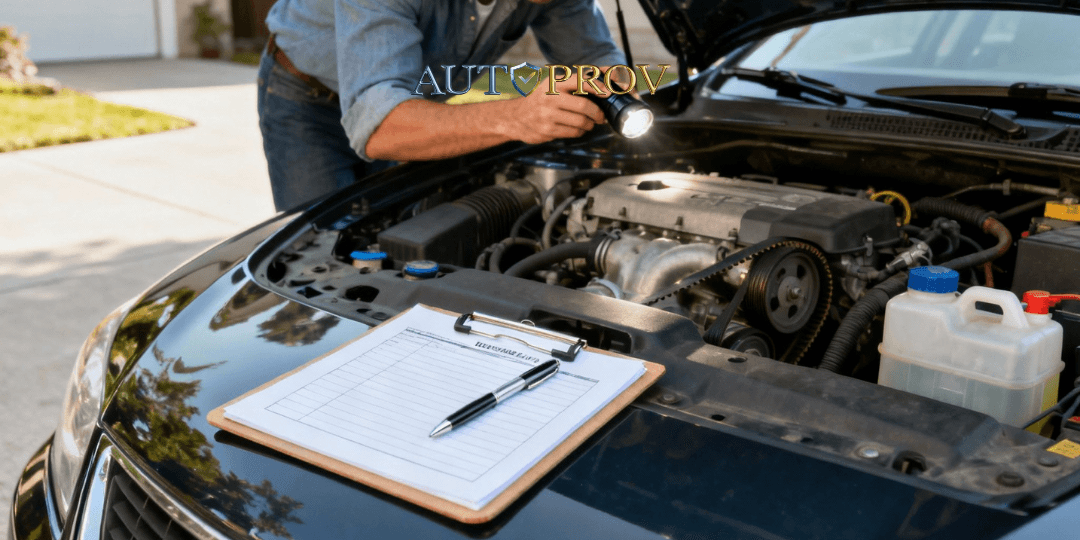
A solid used car inspection checklist is the single most powerful tool you have to avoid buying a lemon. It gives you a methodical way to look past the shiny paint and assess a car's real condition, helping you spot hidden problems and get a fair price before you shake hands on the deal.
Published by AutoProv
Your trusted source for vehicle intelligence