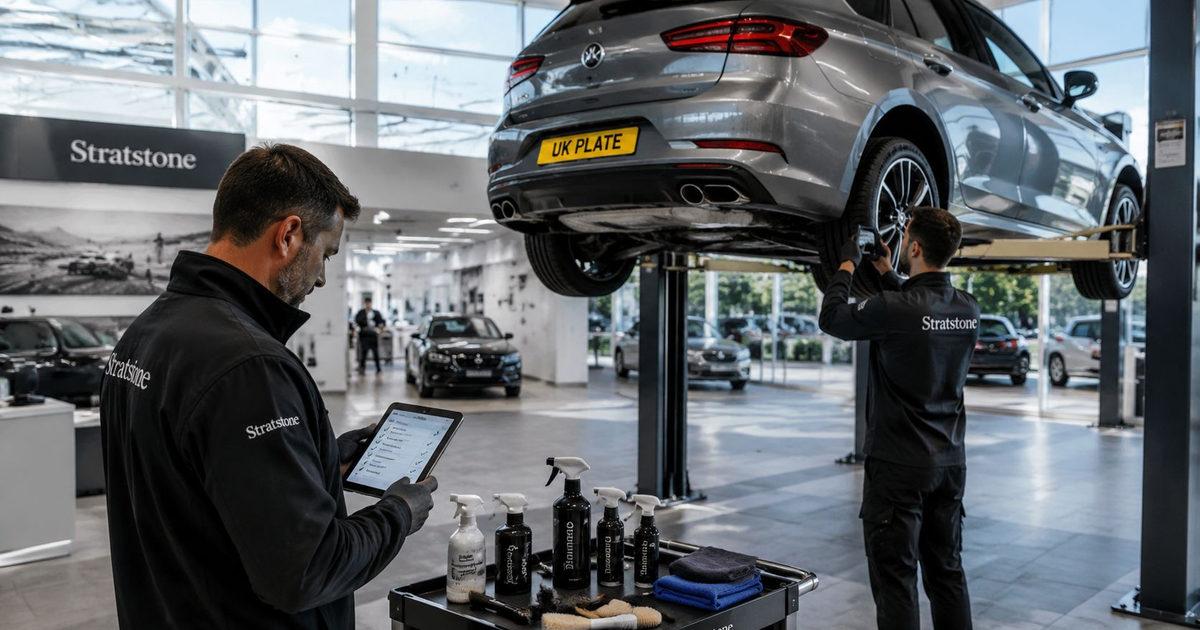
You can have a forecourt full of decent-looking stock and still be one awkward phone call away from a margin hit. A three-year-old hatchback comes in at trade price, the basic history check looks clean, the car presents well, and the deal feels straightforward. Then a buyer raises a mileage concern weeks later, the paperwork starts getting pulled apart, and you realise the weak point wasn't the workshop prep, it was the way the car entered the business in the first place.
That's where quality assurance processes matter for the motor trade. Not as a final inspection ritual, but as a set of controls that protect margin, reduce dispute exposure, and keep bad stock from becoming expensive stock. For UK dealers, that means treating provenance, mileage pattern, ownership history, and documentation as part of the buy decision, then carrying that evidence through reconditioning and aftersales.
Table of Contents
- What Quality Assurance Really Means in a Dealership
- Intake Checks Before You Commit to Trade Stock
- The walkround has to happen first
- Why Basic Vehicle Checks Are Not Enough
- A clean-looking record can still be incomplete
- Using Provenance Intelligence at the Point of Purchase
- Turn the signal into a buying decision
- Reconditioning and Documentation That Withstand Disputes
- Build the evidence trail while the work is happening
- Compliance, Risk Signals and Post-Sale Protection
- One evidence pack, three conversations
- Building Your 90-Day Dealership QA Rollout
- Phase the change so it sticks
What Quality Assurance Really Means in a Dealership
A dealership's QA system starts long before a car reaches valet or mechanical prep. If a buyer commits on a vehicle with an odd mileage trail, a mismatched story, or thin paperwork, the later checks are already playing catch-up. The car may still be saleable, but the business has now taken on risk that should've been priced, challenged, or rejected at source.
That's why quality assurance in the trade is closer to control of the full buying and selling lifecycle than to a single PDI sheet. The UK Government's analysis guidance defines QA in official statistics as anticipating and avoiding problems in inputs and methods rather than only reacting after publication, and that logic translates well to the forecourt because weak inputs create weak outcomes later on. In practice, the same mindset shows up in structured evidence, sign-off, revision control, and post-publication review in government workflows, which is a useful model for any dealership that wants repeatability rather than guesswork. UK Government Analysis Function quality guidance
A useful way to think about it is in three layers:
- Stock-side intelligence at acquisition, so you know what you're really buying.
- Process controls during preparation, so reconditioning doesn't erase or confuse the evidence trail.
- Evidence retention after sale, so complaints, refunds, and warranty questions can be handled from records rather than memory.
Practical rule: if a vehicle's story isn't clear at intake, don't “clean it up later” and hope the file will carry the risk for you.
For dealers modernising their workflow, it helps to look at how software and workflow tools support repeatable controls. The AmasaTech automotive software guide is a useful starting point if you're comparing how operational systems support process discipline rather than just admin convenience. For an internal view of dealership controls, see the internal audit procedures guide.
What QA must prevent is straightforward, even if the fixes aren't. It needs to catch misdescribed provenance, undocumented mileage gaps, unexplained ownership patterns, missing paperwork trails, and the sort of reconditioning shortcuts that don't show up until the buyer comes back with a complaint. If your controls don't stop those issues at the buying desk, you're relying on a workshop to solve a commercial problem it didn't create.
Intake Checks Before You Commit to Trade Stock
A proper intake process starts with the vehicle in front of you, not the appraisal estimate on the screen. The buyer needs to inspect the car, challenge the story, and record the outcome before money moves. That sequence matters because once the purchase is signed off, a vague concern becomes a reconditioning cost, and a reconditioning cost is much harder to recover than a rejected bid.
The walkround has to happen first
The physical check tells you whether the car behaves like the paperwork says it should. Panel gaps, glass etchings, tyre age stamps, VIN plate consistency, and under-bonnet or under-carpet telltales can all raise questions about clocking, repair history, or recovered vehicle status. None of that proves wrongdoing on its own, but it does tell a buyer where the file needs more pressure before the bid is fixed.
Then the document trail has to line up with the bodywork. V5C, service book, MOT history, and invoice continuity should tell a coherent story. If the story breaks, the buyer should ask why a keeper change was abrupt, why mileage jumps don't fit the usage pattern, or why the supporting service record feels patched together.
The strongest intake files are the ones where the buyer can explain why the car was bought, not just why it looked cheap.
A clear workflow helps. The buyer does the physical inspection, the appraiser checks the paper trail, and the purchasing manager signs off the exception if the risk is still acceptable. The written outcome should be simple, for example, buy, reject, or buy subject to extra verification, with the evidence attached to the file.
A broader intake workflow can be supported by tooling that standardises data capture and keeps the evidence in one place. If you want a view of how process automation can reduce gaps at this stage, the how Truespeak streamlines intake resource is relevant because intake discipline is where a lot of later disputes are either prevented or created.
Check Step Responsible Role Evidence Captured Physical walkround Buyer or appraiser Photos, VIN confirmation, condition notes Paperwork review Buyer or compliance lead V5C details, service history, MOT trail, invoice gaps Story challenge Purchasing manager Written questions, seller response, exception notes Bid approval Authorised signatory Purchase decision, pricing rationale, file sign-off For trade buyers, the best internal reference point is the due diligence guide for trade stock. The practical aim is to stop the wrong car entering stock, because every mistake caught here saves recon time, admin time, and potential margin.
Why Basic Vehicle Checks Are Not Enough
A free MOT lookup and a quick DVLA view are useful, but they're not a complete provenance picture. The MOT record only exists when a test has been taken, so the gaps between tests are exactly where manipulation can hide. DVLA data is also a point-in-time view, which means it can't give you the continuous story a dealer needs when deciding whether to bid, hold, or walk away.

A clean-looking record can still be incomplete
The UK MOT history guide only shows mileage readings recorded at MOT tests, so it can expose inconsistencies, but it can't tell you everything about the car's past. An industry guide on car history checking notes that registration, tax, and test data sit in the free baseline, while finance, write-off, and stolen-marker information sit outside it and need extra checking. That distinction matters because a clean-looking mileage trail is not the same thing as clean provenance. Car history check guide
A vehicle can also present as tidy on the surface while carrying a provenance problem that basic checks won't surface. A car written off abroad can re-enter the UK with paperwork that doesn't immediately show the full context, and a vehicle with apparently consistent annual use can still conceal a gap that needs closer scrutiny. The point isn't that MOT data is useless, it's that it's partial.
The same applies to keeper history. V5C confirms the current registered keeper, not the full chain of title, so a dealer who leans on that document alone is buying a snapshot, not a timeline. That's where layered provenance intelligence earns its place, because it lets the buyer triangulate MOT mileage, DVLA keeper changes, finance markers, and anomaly signals instead of treating any single data source as proof.
Dealer rule: if the file only looks strong because one source hasn't contradicted it yet, keep digging.
For a deeper trade-focused view of the limits, see the case for stronger provenance checks. The issue isn't just fraud, either. It's the commercial cost of buying into uncertainty when the evidence was always thin.
Using Provenance Intelligence at the Point of Purchase
The most effective dealers don't treat provenance as admin after the appraisal. They use it while setting the bid. That means pulling mileage patterns, checking keeper timing, and scoring the risk before the number goes into the system, because a car that looks profitable at first glance can turn into a poor buy once the timeline is under pressure.
Turn the signal into a buying decision
A buyer should be able to read the file and make a same-day decision. If two or more keeper changes happen within a short period, that pattern deserves a lower ceiling or a full hold for verification. If MOT-recorded mileage drops, stalls unexpectedly, or leaves a gap that doesn't fit normal running, the bid should be capped until the seller explains the anomaly to a standard the business accepts.
That process works best when the output is written into the appraisal sheet. A risk flag is not just a warning label, it's a commercial input that should affect bid price, recon expectations, and whether the car is even worth the time. If the file suggests increased risk, the buyer can still proceed, but only with a conscious margin adjustment and a clear audit trail.
A practical sequence looks like this:
- Check the mileage graph first. Look for drops, plateaus, or sudden changes that don't fit the car's usage.
- Compare keeper dates with the advertisement story. If the timing feels compressed, ask for documentary support.
- Flag the V5C against other records. A current keeper document doesn't replace a fuller ownership timeline.
- Assign a risk band. Use the band to guide bid ceiling, extra checks, or rejection.
- Record the rationale. If the car still enters stock, the file should explain why.
AutoProv fits naturally into that workflow because it is designed to surface those risk signals at the point of purchase, not as a separate filing exercise. A tool like this belongs inside the appraisal routine, where the buyer is already deciding how much margin the car can support.
The provenance trade check guide is useful if you want to see how the buying decision and the margin model should sit together. In a well-run business, provenance intelligence isn't an extra step, it's part of the offer price.
Reconditioning and Documentation That Withstand Disputes
Most disputes aren't won or lost on the repair itself. They're won or lost on whether the dealer can show what was done, when it was done, and why it was done. If the file is thin, a customer can turn normal wear into an alleged concealment problem, and a warranty provider can decide the evidence doesn't support the claim.
Build the evidence trail while the work is happening
Every reconditioning job should generate a contemporaneous record. Timed job cards, before-and-after photography linked to the VRM and timestamp, parts invoices with supplier batch numbers, and technician sign-off against written quality standards all make later questioning much easier to answer. If a turbo, brake component, or cosmetic repair becomes part of a complaint, the dealership needs to show the repair was real, necessary, and correctly completed.
That evidence also protects against a different kind of challenge. If a buyer claims undisclosed wear, the file should show the vehicle's condition at intake and the precise work done before retail. If someone later alleges pre-existing damage, dated photographs and technician notes help separate prior condition from later use.
A simple evidence pack should include:
- Timed job cards with the vehicle registration and work description.
- Before-and-after images stored against the vehicle file.
- Parts and labour invoices with identifiable supplier details.
- Technician sign-off against written standards.
- Final quality check record before the car is released to retail.
Keep the file contemporaneous. A record written after the complaint lands is always weaker than one created while the work was being done.
Documentation isn't bureaucracy for its own sake. It shifts the conversation from recollection to record, placing the dealer in a stronger position when the customer, warranty administrator, or ombudsman begins asking questions. If the file shows the work was logged properly, the business can defend the sale with facts rather than explanations.
Compliance, Risk Signals and Post-Sale Protection
QA only works if the evidence travels beyond the workshop. A provenance flag, a recon record, and a signed-off appraisal should all feed the conversations dealers later have with customers, regulators, and insurers. Without that handoff, the business ends up with scattered notes instead of a defensible file.
One evidence pack, three conversations
A consolidated pack helps with a Trading Standards enquiry because it shows the dealer's checks, decision points, and disclosure posture. It helps a warranty administrator because it clarifies whether the issue was pre-existing, repaired, or unrelated. It also helps the salesperson because it gives them a factual basis for any refund or redress discussion.
The UK motor trade also has to think about official statistics quality logic, where sign-off, cross-checking, and post-publication review are routine parts of control. The same discipline makes sense in retail vehicle sales because the dealership's record needs to survive external scrutiny, not just internal confidence. The DVSA guidance on correcting MOT certificate mistakes is a good reminder that correction windows and evidence standards matter when something is found after the fact.
Stakeholder Challenge QA Artefact Used Outcome Protected Trading Standards enquiry Intake file, disclosure notes, recon evidence Demonstrates reasonable checks and record keeping Warranty decision Job cards, parts invoices, technician sign-off Supports liability assessment Refund or complaint Mileage trail, photos, signed appraisal Gives the salesperson a defensible narrative If a risk signal fires after sale, the dealer needs to act as soon as the issue is reasonably discoverable and keep the records that show when that happened. That means logging the alert, preserving the file state, and documenting the customer conversation rather than waiting to see whether the problem disappears. The earlier the response is recorded, the easier it is to show the business didn't bury the issue.
For a practical view of how risk transfer and indemnity questions can sit alongside this process, the experian indemnity protection coverage guide is relevant. The broader point is simple. If the evidence pack is strong, the dealership has a better chance of managing the dispute without letting one bad file contaminate the rest of the business.
Building Your 90-Day Dealership QA Rollout
A proper rollout doesn't need a grand transformation programme. It needs a controlled sequence, one that changes the intake decision first, then hardens the evidence trail, then makes the controls routine. That way the business can measure what improved, what still leaks, and which parts of the workflow need more training.
Phase the change so it sticks
The first phase should be diagnostic. Pull the last six months of rejections, complaints, and trade-in write-downs, then map where the current process failed. Assign a named owner with written authority to halt purchases when risk signals appear, because QA without decision rights just becomes record keeping.
The second phase should redesign intake. Provenance intelligence needs to sit at the bidding stage, with documented decision rules and a standard evidence folder structure on every vehicle file. That's where the buyer starts seeing the car as a risk-adjusted asset, not just a unit with a live margin number.
The third phase is supplier alignment. Reconditioning partners need to understand the evidence trail expectation, including photo minimums, work-order sign-off, and timestamped mechanical reports that travel with the car. If the file leaves the workshop incomplete, the sales team inherits the weakness.
The fourth phase embeds the routine. Weekly QA huddles, monthly audit sampling, named training for buyer and workshop staff, and a one-page checklist beside each buying desk turn the process into habit rather than exception. For teams wanting to measure whether the system is paying back, the quality assurance metrics for ROI resource is a helpful reference point for thinking about metrics, even though the dealership should define its own operational measures.
Phase (Days) Operational Focus Measurable Milestone Deliverable Artefact 1 to 21 Baseline review and authority Failed deals, complaints, and write-downs mapped to process gaps Diagnostic report and owner assignment 22 to 42 Intake redesign Provenance checks embedded before bid approval Revised intake form and decision rule card 43 to 63 Supplier and recon alignment Evidence standards agreed with external partners Evidence pack template and work-order standard 64 to 90 Routine control and audit Weekly huddles and monthly sampling in place Audit sheet, training record, dispute folder structure By day ninety, the live deliverables should include the revised intake form, the decision rule card, the evidence pack template, the audit sheet, and the dispute response folder structure. The improvement roadmap can still carry deeper system automation or broader supplier integration, but the core controls should already be signed off and operating.
If you want a trade-focused vehicle intelligence layer that helps your team catch provenance risk before the buy and keep the file together after the sale, visit AutoProv and review how its reporting fits into your intake, appraisal, and evidence workflows. If your dealership is rebuilding QA after a bad dispute, make the next step a structured one, not another loose check that only works when the car is already on the ramp.
Frequently Asked Questions
AI-Generated Content Notice
This article was created with the assistance of artificial intelligence technology. While we strive for accuracy, the information provided should be considered for general informational purposes only and should not be relied upon as professional automotive, legal, or financial advice. We recommend verifying any information with qualified professionals or official sources before making important decisions. AutoProv accepts no liability for any consequences resulting from the use of this information.
From our AI insights
- Understanding Mileage Correction Costs for UK Dealers
Explore the legal risks and cost implications of mileage correction for UK car dealers.
- Decoding Mileage: Impact of Seasonal Driving Patterns
Explore how seasonal driving impacts your car's mileage verification.
- Tackling Mileage Fraud in Electric Vehicles
Explore how motor traders can prevent mileage fraud in electric vehicles using advanced techniques.
Related Articles

Understanding Vehicle Mileage Importance
Discover the critical role of accurate mileage in vehicle provenance and how AutoProv can safeguard your purchase.
What Is the Average Annual Mileage in the UK?
Right now, the average annual mileage for a car in the UK hovers around 7,000 miles. For anyone in the motor trade, that number is more than just a statistic; it’s a vital benchmark that helps buyers, sellers, and insurers get a quick read on a car's usage and potential wear and tear.
Car Mileage Discrepancy Explained: A Guide for UK Motor Traders
When it comes to a car’s history, its mileage record should tell a simple, straightforward story: the number always goes up. A mileage discrepancy is what happens when that story suddenly does not make sense.
Published by AutoProv
Your trusted source for vehicle intelligence