

Master trade due diligence across mainstream, premium, classic, and commercial vehicle categories. Learn category-specific risks, data sources, and verification
By CiteFlow
Why Due Diligence Requirements Vary by Vehicle Category
Due diligence requirements differ fundamentally across vehicle categories because each segment carries distinct risk profiles, data availability, and market dynamics. A £3,000 hatchback requires different verification depth than a £45,000 premium saloon or a 1970s classic with no digital service history. Mainstream vehicles demand finance and mileage verification, premium stock requires factory specification validation to protect margins, classics need provenance documentation, and commercial vehicles face additional operator licensing and payload capacity concerns.
The motor trade operates across fundamentally different risk landscapes depending on stock type. A forecourt appraisal might reveal a clean-looking vehicle, but category-specific hidden histories can turn profitable stock into costly mistakes. Paper documentation becomes less reliable as vehicle age increases, while digital data sources become more comprehensive for newer vehicles. Understanding which verification protocols apply to each category prevents both over-spending on unnecessary checks and under-investing in critical due diligence.
Mainstream Passenger Vehicles: Volume Stock Due Diligence
Mainstream passenger vehicles (hatchbacks, saloons, estates, and crossovers from volume manufacturers) represent the highest transaction volume in UK motor trade. These vehicles require comprehensive but cost-efficient due diligence that balances thoroughness against per-unit margins.
Finance verification sits at the top of the priority list for mainstream stock. Outstanding finance represents the single largest hidden liability, with vehicles frequently part-exchanged before settlement. A complete vehicle finance check confirms whether any lending institution holds security interest, preventing the catastrophic scenario of a finance company reclaiming a vehicle you've already sold.
Mileage verification through MOT history provides the second critical layer. Digital MOT records from DVSA create an auditable mileage trail from first test onwards. Discrepancies between recorded mileage and odometer reading flag potential clocking. A vehicle showing 45,000 miles on the dashboard but 62,000 miles at last year's MOT represents either odometer fraud or a data recording error requiring immediate investigation.
Categorisation and write-off history checks identify structural damage that affects both safety and resale value. Category S and Category N designations indicate previous insurance write-offs that must be disclosed under Consumer Rights Act 2015. Some buyers accept properly repaired Cat N vehicles at appropriate discounts, but undisclosed write-off history creates legal liability and reputational damage.
Factory specification verification prevents mis-selling on equipment levels. A vehicle advertised as having navigation, leather trim, or advanced safety packages commands premium pricing. Verifying these features through OEM build data rather than visual inspection alone confirms whether equipment was factory-fitted or aftermarket, protecting both purchase price accuracy and subsequent sale descriptions.
Premium and Prestige Vehicles: High-Value Stock Protocols
Premium vehicles from manufacturers like BMW, Mercedes-Benz, Audi, Jaguar, Land Rover, and Porsche require enhanced due diligence justified by higher transaction values and more sophisticated buyer expectations.
Digital service history verification becomes mandatory rather than optional. Premium buyers expect complete maintenance records, and missing service history dramatically impacts resale values. Manufacturer database integration retrieves official service records by VIN, confirming which dealer performed which services on which dates. This eliminates reliance on stamped service books that can be lost, forged, or incomplete.
Factory options verification protects margin on high-specification stock. A Range Rover with £15,000 worth of factory options looks identical on a forecourt to a base model, but commands significantly different pricing. Build sheet data retrieved by VIN lists every factory-fitted option, package, and equipment code. This prevents under-pricing high-specification stock and over-paying for vehicles with claimed options that were never fitted.
Warranty status and recall compliance checks add value for premium stock buyers. Remaining manufacturer warranty transfers to new owners and represents tangible value. Outstanding safety recalls must be disclosed and ideally rectified before sale. Premium buyers conduct their own due diligence and discovering undisclosed recalls damages trust and negotiating position.
Ownership history depth matters more for prestige vehicles. A single-owner Porsche with full main dealer history commands premium pricing over a five-owner example with patchy documentation. While DVLA keeper changes provide basic ownership count, comprehensive provenance reports reveal the full picture including previous trade sales and auction passages.
Classic and Vintage Vehicles: Provenance-Led Verification
Classic vehicles (generally 20+ years old, often 40+ years for true vintage) present unique due diligence challenges because digital data sources diminish as vehicle age increases, while provenance documentation becomes more critical.
Authenticity verification forms the foundation of classic vehicle due diligence. Factory build records, heritage certificates from manufacturers, and original specification documentation confirm whether a vehicle retains original engine, gearbox, and body panels. Matching numbers (engine and chassis numbers matching factory records) significantly impact value for collectible vehicles. A claimed-original 1960s sports car with replacement engine loses substantial value compared to a matching-numbers example.
Restoration and modification history requires detailed investigation. Professional restoration by recognised specialists adds value, while poor-quality repairs destroy it. Documentation of restoration work, parts suppliers, and specialist involvement provides evidence of quality. Modifications must be disclosed, with some (period-correct upgrades) accepted or valued, while others (non-original engines, modern electronics) may reduce desirability among purist collectors.
MOT exemption status affects both legal compliance and verification options. Vehicles manufactured before 1960 (and some between 1960-1980 depending on classification) qualify for MOT exemption. This removes one digital data trail but doesn't eliminate roadworthiness obligations. For exempt vehicles, independent pre-purchase inspection by marque specialists becomes more important.
Provenance documentation including previous ownership records, period photographs, competition history, and original sales literature adds significant value to collectible vehicles. A classic with documented celebrity ownership, racing history, or concours awards commands premium pricing. Verifying these claims through period documentation, club records, and specialist authentication prevents paying provenance premiums for undocumented claims.
Commercial Vehicles: Operator Compliance and Duty Cycle
Commercial vehicles (vans, trucks, tippers, and specialist vehicles) require due diligence focused on operational history, payload capacity, and regulatory compliance rather than cosmetic condition.
Operator licensing history and compliance records indicate how the vehicle was used. A van operated by a compliant fleet with documented maintenance schedules differs fundamentally from one run by a sole trader with minimal record-keeping. DVSA enforcement data, operator compliance ratings, and maintenance records reveal duty cycle severity.
Payload capacity and plating verification confirms legal carrying capacity. Gross Vehicle Weight (GVW) and payload ratings determine what the vehicle can legally carry. Overloading causes premature wear to suspension, brakes, and drivetrain. Verification through manufacturer specifications and any uprating documentation prevents purchasing vehicles with hidden structural fatigue from chronic overloading.
Tachograph data (for vehicles requiring tachographs under EU/UK regulations) provides objective evidence of how the vehicle was driven. Excessive speeding, insufficient rest periods, and chronic overloading all appear in tachograph records. While tachograph data isn't always accessible during pre-purchase inspection, its existence means the vehicle's entire operating history is documented somewhere.
Conversion and bodywork certification matters for specialist commercial vehicles. Refrigerated units, tail lifts, tippers, and other conversions require certification that work was completed to appropriate standards. A tipper without certification for its hydraulic system or a refrigerated van with uncertified cooling unit installation creates both safety and insurance complications.
Electric and Hybrid Vehicles: Battery Health and Charging History
Electric vehicles (EVs) and plug-in hybrids (PHEVs) introduce battery health as a critical due diligence factor alongside traditional verification protocols.
Battery state of health (SOH) assessment determines remaining capacity versus original specification. Lithium-ion batteries degrade over time and charge cycles, with typical degradation of 2-3% per year under normal use. A five-year-old EV with 85% battery health sits within normal parameters, while one showing 70% health indicates either high mileage, poor charging practices, or potential battery issues. Manufacturer diagnostic tools provide official SOH readings, though not all are accessible without dealer-level equipment.
Charging history affects battery longevity and reveals usage patterns. Frequent rapid charging (DC fast charging) accelerates battery degradation compared to slower AC charging. Fleet vehicles used for delivery or taxi work often show higher degradation due to multiple daily rapid charging sessions. While comprehensive charging logs aren't always available, service history and mileage patterns indicate likely charging behaviour.
Software version and update history matters more for EVs than conventional vehicles. Manufacturers release over-the-air updates affecting battery management, range estimation, and charging speeds. A vehicle running outdated software may exhibit reduced performance or range. Verification through manufacturer systems confirms current software version and whether all recalls and updates have been applied.
Warranty status for battery and electric drivetrain components requires specific verification. Most manufacturers provide 8-year or 100,000-mile battery warranties, but terms vary regarding capacity degradation thresholds. Confirming remaining warranty coverage and whether any battery-related claims have been made protects against inheriting degraded batteries just outside warranty coverage.
Integrating Category-Specific Checks into Trade Workflow
Efficient trade operations require category-specific due diligence protocols integrated into purchasing workflow rather than applied ad-hoc. Different vehicle categories justify different check depths and costs based on transaction value and risk profile.
Tiered verification protocols match check depth to stock value. A £2,000 hatchback justifies basic finance, mileage, and categorisation checks but not £50 worth of specialist verification. A £35,000 premium SUV justifies comprehensive checks including digital service history, factory options verification, and detailed provenance reporting. The cost of thorough due diligence becomes negligible relative to the consequences of missing hidden history on high-value stock.
Pre-auction and pre-purchase checklists tailored to vehicle category streamline decision-making under time pressure. Auction environments demand rapid assessment, making standardised vehicle appraisal checklists essential. Category-specific checklists ensure critical verification steps aren't skipped when time is limited.
Data source prioritisation varies by category. Mainstream vehicles benefit most from DVLA, DVSA MOT, and finance databases. Premium vehicles require manufacturer service history databases and OEM build data. Classics need heritage certificates and marque club records. Commercial vehicles demand operator licensing and DVSA enforcement data. Understanding which sources matter most for each category prevents wasting time on low-value data while missing critical information.
Cost-benefit analysis guides verification depth. A comprehensive provenance report with Experian indemnity protection, digital service history, and factory build data costs under £10 but protects against thousands in hidden liabilities. The question isn't whether to conduct due diligence but which specific checks each category requires. Comparing traditional vehicle check providers reveals significant variation in data depth and cost-effectiveness.
Documentation and Record-Keeping by Category
Proper documentation of category-specific due diligence creates both legal protection under Consumer Rights Act 2015 and operational efficiency for stock management.
Digital record retention for all verification checks performed provides evidence of reasonable pre-purchase investigation. If a buyer later claims undisclosed history, contemporaneous due diligence records demonstrate that appropriate checks were conducted with available data sources. Seven-year retention aligns with typical limitation periods for consumer claims.
Category-specific disclosure requirements under CRA 2015 mandate different information provision. Write-off history must always be disclosed. For premium vehicles, missing service history constitutes material information affecting value. For classics, non-original components and restoration history require disclosure. For commercial vehicles, operator history and payload capacity matter. Understanding what constitutes material information for each category prevents inadvertent mis-selling.
Stock file organisation by category streamlines future reference. When a customer queries a vehicle's history six months after purchase, category-organised records enable rapid retrieval of all verification documentation. This supports both customer service and legal defence if disputes arise.
Regional Market Considerations and Category Demand
Vehicle category demand and risk profiles vary across UK regions, affecting which stock categories justify investment and which verification protocols matter most locally.
Urban versus rural market dynamics influence category viability. London and major cities show strong demand for compact vehicles, EVs, and ULEZ-compliant stock, while rural areas favour 4x4s, estates, and commercial vehicles. Regional vehicle price variations affect both purchase strategy and which categories offer best margins in specific territories.
Local buyer sophistication levels influence due diligence visibility. Premium vehicle buyers in affluent areas conduct their own verification and expect comprehensive documentation. Volume market buyers may rely more heavily on dealer assurances, but this doesn't reduce legal obligations for disclosure. Category-appropriate documentation meets buyer expectations while maintaining compliance.
Seasonal category demand affects stock turn and holding costs. Convertibles and sports cars sell faster in spring and summer. 4x4s and winter-capable vehicles move better in autumn. Commercial vehicles follow business cycles with stronger demand in Q1 and Q3. Due diligence timing aligned with seasonal purchasing optimises stock turn.
Common Category-Specific Due Diligence Failures
Understanding frequent verification failures by category prevents repeating common trade mistakes that turn apparently profitable stock into costly problems.
Mainstream vehicle failures typically involve missed finance checks or unverified mileage. A vehicle with outstanding finance becomes unsellable until settlement, tying up capital and forecourt space. Clocked vehicles create legal liability when sold with inaccurate mileage, even if the dealer didn't perform the clocking.
Premium vehicle failures centre on specification mis-description and missing service history. Advertising a vehicle with options it doesn't have creates Consumer Rights Act liability. Discovering missing service history after purchase eliminates the margin premium that justified the purchase price.
Classic vehicle failures involve authenticity claims without documentation. Paying provenance premiums for claimed competition history, celebrity ownership, or matching numbers without verifying documentation through period records or marque specialists destroys profitability when claims prove unfounded.
Commercial vehicle failures relate to undisclosed operator history or structural issues from overloading. A van with chronic overloading history faces premature component failure even if current condition appears acceptable. Tipper bodies with uncertified hydraulic systems create insurance and safety complications.
Frequently Asked Questions
AI-Generated Content Notice
This article was created with the assistance of artificial intelligence technology. While we strive for accuracy, the information provided should be considered for general informational purposes only and should not be relied upon as professional automotive, legal, or financial advice. We recommend verifying any information with qualified professionals or official sources before making important decisions. AutoProv accepts no liability for any consequences resulting from the use of this information.
From our AI insights
- Navigating UK Grey Imports: A Trader's Guide
Understand the complexities and opportunities of UK grey imports for savvy motor traders.
- Navigating Private Plate Challenges in UK Vehicle Checks
Learn how private plates affect UK vehicle checks and how traders verify provenance and spot cloning risks.
- Navigating VIN Checks Post-Brexit: What UK Traders Need to Know
Discover how Brexit impacts VIN checks for UK traders and the crucial data to review.
Related Articles

Essential Vehicle Checks Before Buying a Used Car
Learn essential checks to ensure your used car purchase is safe and sound in the UK market.

Why a Provenance Check is Essential for Used Car Buyers
Ensure your used car is a smart investment by understanding the importance of a provenance check and how AutoProv can help.
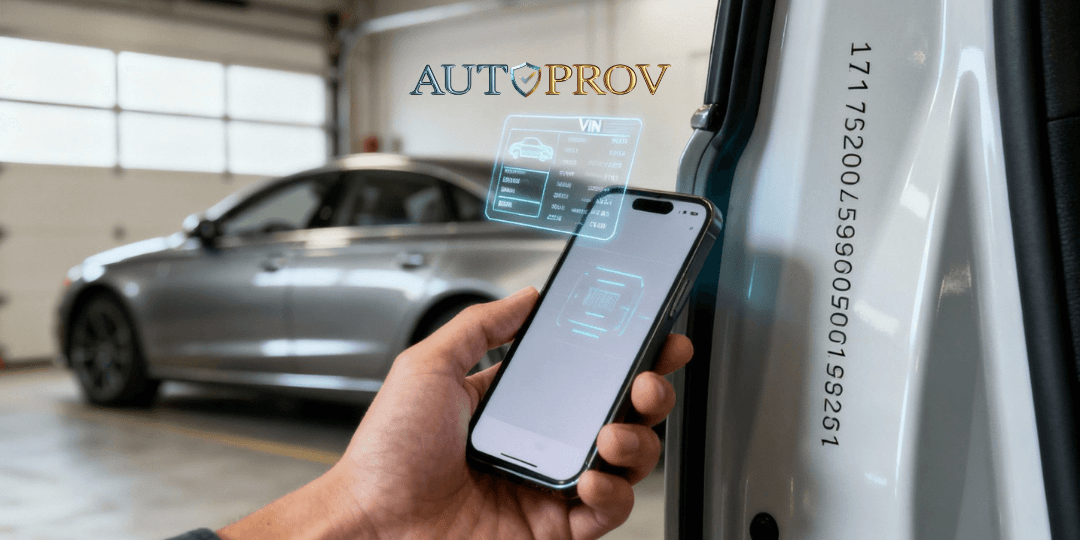
A Guide to Vehicle Check with VIN Number
A vehicle check with vin number is easily the most important thing you can do before buying a used car. Think of it as your first line of defence—a quick, simple step that pulls back the curtain on a vehicle's past, protecting you from expensive mistakes, legal headaches, and downright dangerous cars.
Published by AutoProv
Your trusted source for vehicle intelligence
