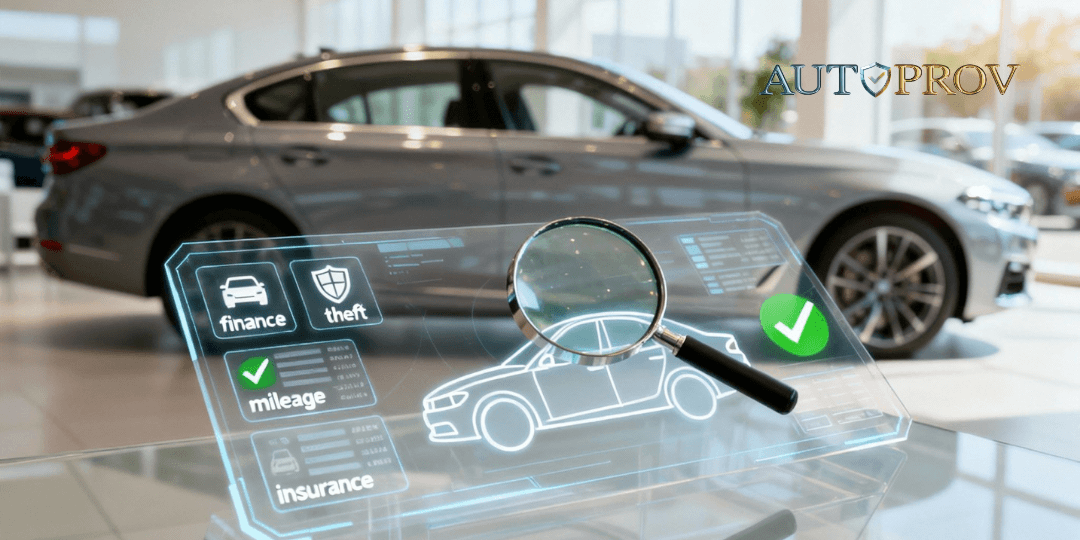
For anyone in the motor trade, a trade provenance check is your professional-grade, first line of defence. It’s a vehicle history report built specifically for businesses, digging much deeper than the checks available to the general public. It's designed to flag up business-critical issues like outstanding finance, theft records, and insurance write-offs to stop you from making a costly mistake when buying stock.
Understanding the Essential Trade Provenance Check
Imagine buying a high-value asset for your business with only half the story. That’s exactly the risk you run without a professional trade provenance check. This isn't the basic check a private buyer might use; it's a comprehensive due diligence tool built for the demanding, fast-paced world of the motor trade.
Think of it as the difference between a simple homeowner's survey and a full structural report for a property developer. One confirms the basics, while the other uncovers hidden liabilities that could sink the entire investment. For car dealers, fleet managers, and auction houses, it’s the essential safeguard for your capital.
Why Is It a Non-Negotiable Tool?
A trade-specific check is so critical because the risks are far greater for a business. A consumer might lose a few thousand pounds on a bad purchase, but a dealership buying dozens of vehicles a month faces exponential financial exposure.
Platforms like AutoProv deliver this vital intelligence instantly, revealing the kind of hidden histories that a standard check would almost certainly miss. These are the red flags that could turn a profitable unit into a significant loss or, even worse, a legal nightmare.
A proper trade check gives you much deeper insight, especially in these key areas:
- Outstanding Finance: It uncovers active finance agreements, which means the vehicle legally belongs to the finance company, not the person selling it.
- Theft Records: It verifies the car against the Police National Computer (PNC) to ensure it isn’t registered as stolen.
- Insurance Write-Offs: It identifies if a car has been declared a write-off (like a Cat S or Cat N) and confirms whether it's legal to resell.
- Logbook Loans: It highlights high-risk loans that have been secured against the vehicle's V5C document.
In short, a trade provenance check transforms vehicle acquisition from a gamble into a calculated, data-driven decision. It gives you the certainty needed to invest with confidence, protect your reputation, and stay profitable in a tough market.
Without this level of scrutiny, your business is left wide open to fraudulent sellers and cars with deeply problematic pasts. This is what makes the trade provenance check a non-negotiable part of modern vehicle acquisition. It’s not an expense; it’s an investment in your business’s security and long-term success.
What's Really Under the Bonnet? Uncovering the Data That Matters
A standard consumer check barely gives you a peek at a vehicle's history. For anyone in the motor trade, that surface-level glance isn't just insufficient—it's a direct threat to your bottom line. A professional trade provenance check, like the ones provided by AutoProv, digs deep into the datasets that have a real, tangible impact on your profitability, reputation, and legal standing.
This isn't just about ticking boxes on a form. It's about translating complex data into clear business intelligence. Knowing a vehicle's complete, unfiltered story is your single best defence against financial loss and nasty surprises down the line. It's the difference between buying blind and making a calculated investment with the full picture in front of you.
The Critical Alerts That Protect Your Business
The real power of a professional check is its ability to flag the kind of issues a basic report would sail right past. These are the red flags that can turn a sweet-looking deal into a financial nightmare. A proper trade check from a service like AutoProv scours multiple high-stakes databases to keep your business safe.
Key alerts you simply cannot ignore include:
- Police National Computer (PNC) Stolen Markers: This is a straight yes-or-no check. Is the vehicle currently listed as stolen by UK police forces? This stops you from illegally buying and reselling stolen property.
- Outstanding Finance Agreements: This flags whether a car is still tied to a hire purchase or PCP agreement. If it is, the finance company is still the legal owner, not the seller.
- Logbook Loans: A massive red flag. This check spots high-risk loans secured against the V5C, which can lead to incredibly messy ownership battles.
- MIAFTR Insurance Write-Offs: The Motor Insurance Anti-Fraud and Theft Register (MIAFTR) is where insurers log vehicles declared a total loss. This check reveals crucial Cat S (Structural) or Cat N (Non-Structural) classifications that hammer a vehicle's value and safety credentials.
These checks are absolutely non-negotiable. Finding out about an outstanding finance agreement after you've paid can lead to the vehicle being repossessed, leaving you thousands of pounds out of pocket. And the legal and financial fallout from unknowingly buying a stolen car is just as severe.
Turning Data Into Profitability
Beyond the big, scary alerts, a professional check is loaded with data that directly shapes your pricing and reconditioning strategy. A mileage discrepancy alert, for instance, is so much more than a number—it’s a direct challenge to the car's valuation and your profit margin.
A vehicle showing a discrepancy of 20,000 miles could be worth significantly less than its advertised price, and selling it on without disclosure would be a fast track to a damaged reputation. The UK vehicle history check industry exists for professionals precisely because of these hidden risks. Industry data reveals that an alarming 1 in 11 cars checked shows mileage discrepancies, suggesting it may have been clocked. On top of that, 1 in 4 cars has had a plate change, while an estimated 200,000 stolen logbooks are still floating around, which gives you an idea of the scale of potential fraud out there.
A trade provenance check turns raw data into a clear financial forecast. It lets you see potential problems before they become actual losses, giving you the power to adjust your offer or walk away from a bad deal entirely.
Getting access to a vehicle's complete MOT history is another powerful tool in your arsenal. It lets you see past failures and, more importantly, the advisories. This helps you accurately forecast potential reconditioning costs before you even make an offer. If a car has a history of failing its MOT on suspension components, you can factor that future repair bill into your bid, protecting your margin from the very start. Platforms like AutoProv bring all these critical details together, drawing from a wide array of trusted UK data sources to give you a complete and reliable picture of every single vehicle.
How Trade Checks Mitigate Business Risk
Making a professional trade provenance check part of your standard workflow is the single best move you can make to manage both financial and reputational risk. These checks are more than just data points; they're a direct form of business protection. Think of them as your shield against accidentally buying stolen vehicles, cars with hidden finance deals, or undisclosed write-offs that are illegal and dangerous to put back on the road.
In the motor trade, risk isn't a possibility; it's a constant. Every single vehicle you look at comes with an invisible history. Without the right tools, you’re basically making a high-stakes bet with incomplete information. A proper, comprehensive check from AutoProv gets rid of the guesswork and gives you certainty.
Shielding Your Business from Criminal Activity
The threat of dodgy vehicles getting into the trade supply chain isn’t some distant problem—it's an everyday reality. Vehicle crime stats in the UK paint a pretty grim picture, with over 129,000 vehicles stolen in just one 12-month period. Even more worrying, an analysis over four years shows that 342,000 stolen vehicles were never seen again, meaning recovery rates have plummeted.
For dealerships and fleet operators, this means the risk of buying stolen assets is huge, especially in hotspots like London and the West Midlands. This is exactly why professional checks linked to the Police National Computer (PNC) are a non-negotiable part of the job.
This infographic shows just a few of the most common hidden problems uncovered by a trade provenance check.
The data speaks for itself. Major risks like write-offs, mileage clocking, and plate changes are everywhere, which makes a thorough check essential for every car you buy.
Beyond theft, the most common financial trap is outstanding finance. A vehicle with an active finance agreement legally belongs to the lender, not the person selling it. If you buy it, the finance company can repossess it at any time, leaving you with a total loss and an empty space on the forecourt. Our guide on the importance of finance checks in a vehicle purchase goes into more detail on this critical risk.
The Crucial Role of Indemnity Cover
Even with the best data in the world, things can sometimes get missed. That’s where indemnity cover becomes your financial safety net. It's an insurance policy that protects your business from financial loss if there’s inaccurate or incomplete information in a vehicle history report.
Think of it this way: the vehicle check is your primary defence, but the indemnity cover is your last line of defence. It provides a financial guarantee that if something is missed and you suffer a loss, you are compensated.
Platforms like AutoProv offer robust indemnity cover, with guarantees available up to £50,000. This level of protection is designed specifically for the high-value deals common in the motor trade. It shows the provider's confidence in their data and gives you genuine peace of mind.
This cover is designed to protect you against specific risks, including:
- Undisclosed outstanding finance.
- Vehicles registered on the stolen register.
- Undisclosed insurance write-offs (Category A or B).
This financial backing transforms the trade provenance check from a simple operational cost into a core investment. It's an essential part of securing the integrity, financial health, and long-term reputation of your business. Without it, you’re shouldering all the risk yourself.
Driving Profitability with Market Intelligence
A modern trade provenance check is a whole lot more than just a safety net; it’s a powerful market intelligence tool designed to fatten up your profit margins. Gone are the days of simply looking for red flags. Today’s advanced platforms reframe the vehicle check as a proactive tool for sharpening your entire business strategy, from buying at auction to pricing on the forecourt.
Platforms like AutoProv deliver live, actionable insights that help you make smarter buying and selling decisions. By pulling real-time market data directly into the vehicle report, you get an immediate competitive edge. This is the kind of intelligence that lets you move beyond gut feelings and start making properly data-driven stocking choices.
Smarter Acquisitions and Precision Pricing
The golden rule of the motor trade is that you make your money when you buy. A comprehensive check armed with market data ensures you never overpay for stock or undervalue a desirable part-exchange. It gives you the crucial context needed to see a vehicle's genuine potential.
This is all about looking beyond the basics and focusing on what’s coming down the road:
- Live Retail and Trade Valuations: Get your hands on up-to-the-minute pricing guides to understand a vehicle's current market value. This ensures your offers are competitive but, most importantly, profitable.
- Depreciation Forecasts: See how a specific model is predicted to lose value over the next 12 to 36 months. This helps you prioritise stock that holds its value longer and avoids tying up cash in a depreciating asset.
- Desirability Scores: Understand just how quickly a particular vehicle is likely to fly off the forecourt, based on real-world supply and demand data.
It means you can assess a car not just on its history, but on its future profit potential. That’s the difference between just buying a car and making a strategic investment. For a deeper dive, you can learn more about how market insights drive vehicle pricing strategies in our detailed guide.
A professional trade check turns every acquisition into an opportunity. It equips you with the market intelligence to confidently bid higher on a fast-selling model or step away from one that will just tie up capital on your forecourt.
A Practical Scenario in Action
Picture this. Two seemingly identical 2019 hatchbacks are up at auction. Same mileage, same trim, and both have a clean history. On paper, they look like equal opportunities.
But an advanced trade check from AutoProv reveals a crucial difference.
Car A has a much higher desirability score, showing it sells, on average, 15% faster than Car B. On top of that, the depreciation data shows Car A is projected to hold on to £750 more of its value over the next 12 months. Instantly, you know which vehicle is the better return on investment.
This insight allows a dealer to make a confident, data-backed decision. They can bid more aggressively for Car A, knowing it will sell quicker and deliver a healthier margin. This is the power of market intelligence in action—transforming a standard trade provenance check from a defensive necessity into an offensive weapon for driving profitability.
Integrating Vehicle Checks into Your Workflow
In the motor trade, speed is everything. Efficiency isn't just a nice-to-have; it's the difference between profit and loss. The real power of a trade provenance check is only unlocked when it slides seamlessly into your day-to-day, making your decisions sharper without slowing you down. Modern systems are built for this very purpose—to thrive in high-pressure environments where every second counts.
The aim is to make proper due diligence an instinct, not an obstacle. Platforms like AutoProv are designed to turn around comprehensive reports in seconds, putting critical data in your hands the exact moment you need it. This changes the check from a clunky admin chore into a powerful, real-time asset that makes your entire operation stronger.
Workflow for Independent Dealers
For an independent dealer, the most common—and most crucial—time to run a check is during a part-exchange appraisal. The customer is right there, waiting, and you have to make a quick, accurate, and profitable call on their car.
A smart, streamlined process looks like this:
- Instant Scan: While you're starting your physical walk-around of the vehicle, just use your phone to scan the reg plate or VIN.
- Initial Data Review: The report is ready before you've even finished checking the tyres. Instantly confirm the keeper history and look for massive red flags like theft markers or outstanding finance.
- Informed Valuation: Use the live market valuation data baked into the report to get a solid baseline trade value. Cross-reference that with the car's physical condition and MOT history to work out your reconditioning costs.
- Confident Offer: Make a fair, data-backed offer to the customer, and explain your valuation with total confidence. That kind of transparency builds trust and gets the deal done faster.
Workflow for Auction Buyers
The auction hall is probably the most time-crunched place in the entire motor trade. You make decisions in moments, and one bad buy can destroy a whole week's profit. For anyone buying at auction, integrating a rapid trade provenance check isn't just a good idea; it's a matter of survival.
A simple, effective workflow for buyers is essential:
- Pre-Auction Shortlisting: Go through the auction catalogue and run checks on potential targets before the bidding even starts. This lets you build a "safe list" of cars with clean histories.
- Live Lane Checks: For those last-minute opportunities, run an instant check as the car rolls into the lane. The speed of a platform like AutoProv ensures you have the report before the hammer falls.
- Valuation Benchmarking: Use the built-in trade and retail valuation data to set a hard maximum bid. This stops you from getting swept up in the heat of the moment and overpaying.
Integrating instant checks at auction takes the gamble out of buying. It means every bid you place is on a vehicle you’ve properly vetted, protecting your capital from the kind of hidden history that only shows up after you’ve paid.
Enterprise Solutions for Larger Operations
For bigger dealership groups and fleet management companies, efficiency has to work at scale. Manually checking hundreds of vehicles just isn't an option. This is where enterprise-level solutions and API integrations become absolutely vital.
An Application Programming Interface (API) is what allows your existing software—like your Dealer Management System (DMS) or stock management tool—to talk directly to a vehicle data provider. It automates the entire checking process. For example, when a new vehicle is added to your system, a check can be triggered automatically, and the results are logged against the car's record without a single person having to lift a finger.
This ensures 100% compliance with your due diligence policies and saves countless hours of admin. You can see how AutoProv’s system is built for this kind of large-scale integration by exploring how it works to support businesses of all sizes.
Choosing Your Ideal Vehicle Check Partner
Picking the right partner for your trade provenance check is every bit as important as running the check itself. With your capital and reputation on the line with every car you buy, your data provider has to be a reliable, robust, and supportive part of your business. The market has plenty of options, but they are not all built the same, especially when it comes to the sharp end of the motor trade.
Looking beyond the headline price per check is non-negotiable. You need to weigh up potential partners on a few core criteria that directly impact your security and profitability. Think of it like choosing a key supplier; their performance has a direct effect on your end product.
Key Criteria for Evaluation
When you’re comparing providers, your assessment should boil down to four essential pillars. These are the elements that separate a basic service from a true vehicle intelligence partner that actually helps your business grow.
- Data Depth and Quality: How many sources are they pulling from? A partner like AutoProv consolidates information from over 10 trusted sources, including Experian, the DVLA, and the Police National Computer, giving you the complete picture.
- Speed of Delivery: In a fast-moving environment like an auction or a part-exchange appraisal, you need that data in seconds, not minutes. The speed of the report is critical to keeping your workflow efficient and getting ahead of the competition.
- Strength of Indemnity Cover: This is your financial safety net. A strong guarantee, like the up to £50k cover offered with some checks, shows the provider’s confidence in their data and gives you genuine peace of mind.
- Pricing and Scalability: Does the provider offer flexible pricing that grows with your business? Look for pay-as-you-go options for smaller dealers and enterprise solutions with API integration for larger operations.
Choosing a partner is a strategic decision. The right provider doesn't just send you data; they deliver the confidence and security needed to make smarter, more profitable decisions consistently. This is where the difference between a standard check and a professional-grade service becomes crystal clear.
Making the Right Choice for Your Business
Ultimately, the best partner is one whose services slot perfectly into your operational needs. While the traditional names have been around for a long time, newer platforms like AutoProv often provide more agile technology and better value. To see exactly how they stack up, you can explore a detailed breakdown of AutoProv vs Provenance and compare the features, data sources, and pricing models for yourself.
By carefully considering these factors, you can select a vehicle check partner that not only protects your business from immediate risks but also equips you with the market intelligence you need to thrive. This strategic choice reinforces the value of a quality trade provenance check as a direct investment in your company’s future success and stability.
Frequently Asked Questions About Trade Checks
When you're in the motor trade, you don't have time for vague answers. You need clear, direct information to make quick, profitable decisions. Getting your head around the details of a trade provenance check is fundamental to keeping your business safe.
This is where we tackle the most common queries head-on, giving you the practical insights you need. We'll cover why a professional check is a world away from the free online tools, the crucial role of indemnity cover, and how to actually use valuation data to your advantage.
How Is a Trade Check Different from a Free DVLA Check?
A free DVLA MOT history check is a decent starting point, but that's all it is. It gives you a tiny snapshot of the car's past, leaving massive, costly gaps in your knowledge. Sure, you can see MOT results and advisories, but you're blind to the real risks.
A professional trade provenance check is your full due diligence report. It digs into the critical data that the DVLA check completely ignores, such as:
- Outstanding Finance: The single biggest check to confirm legal ownership.
- Theft Markers: Verifies the vehicle isn't flagged on the Police National Computer.
- Insurance Write-Off Status: Instantly identifies if a car is a Category S or N write-off.
Think of it this way: the DVLA check confirms a car can pass a test, while a trade check confirms it’s a safe, legal, and profitable asset to buy. For any business, ignoring this deeper data isn't just a risk; it's a gamble you can't afford to take.
Why Is Indemnity Cover So Important?
Indemnity cover is your financial backstop—an absolutely essential layer of protection when things go wrong. While data providers like AutoProv aim for 100% accuracy, the sheer complexity of vehicle histories means that sophisticated fraud or the occasional rare error can slip through.
This cover acts as an insurance policy on the data itself. If a check misses a critical piece of information—like an outstanding finance agreement—and your business takes a financial hit as a result, the indemnity cover is there to compensate you.
It turns the check from a simple data report into a guaranteed business safeguard. This financial protection is precisely why professionals rely on paid services instead of free, uninsured alternatives.
How Should I Use the Valuation Data in a Report?
The valuation data you get in a professional check is a powerful tool for protecting your margins. It’s not just a number to flash at customers; it’s your internal guide for setting sharp prices and negotiating from a position of strength.
Use the trade and retail values as a baseline for your own appraisal. Start with the suggested market value, then adjust it based on your physical inspection—factoring in reconditioning costs for worn tyres, bodywork scuffs, or interior repairs.
This data-driven approach gives you a clear, logical foundation for your part-exchange offers. It also helps manage customer expectations by demonstrating that your valuation is based on real-world market conditions, not just a figure plucked from thin air.
Ready to protect your business and sharpen your profitability on every single vehicle? AutoProv provides the UK's leading vehicle intelligence reports, designed specifically for the motor trade. Get instant, comprehensive checks that combine critical history data with live market valuations. Visit AutoProv today to start making smarter, safer buying decisions.
Frequently Asked Questions
AI-Generated Content Notice
This article was created with the assistance of artificial intelligence technology. While we strive for accuracy, the information provided should be considered for general informational purposes only and should not be relied upon as professional automotive, legal, or financial advice. We recommend verifying any information with qualified professionals or official sources before making important decisions. AutoProv accepts no liability for any consequences resulting from the use of this information.
From our AI insights
- Essential Pre-Purchase Checklist for UK Motor Traders
Ensure a seamless vehicle acquisition with our detailed pre-purchase checklist tailored for UK motor traders.
- Leveraging Auction Data for Strategic Car Purchases
Discover how to use auction data effectively to make profitable car buying decisions.
- Auction Pitfalls: Avoiding Costly Mistakes
Navigate UK car auctions with confidence by avoiding finance, write-off, and mileage risks.
Related Articles

Your Ultimate Guide to Buying a Used Car in the UK
Navigate the UK used car market with confidence using our comprehensive buying guide. Tips, checks, and AutoProv Provenance insights included.

Difference Between MOT and Service: What You Need to Know
An MOT is a mandatory legal inspection that every car on UK roads needs to pass.Think of it as the government's way of ensuring your vehicle meets the absolute minimum safety and environmental standards to be considered roadworthy. A service, on the other hand, is a completely different beast. It's the proactive maintenance routine recommended by the people who built your car, designed to keep it running smoothly and catch problems before they start. In short, an MOT is a pass-or-fail exam required by law. A service is a comprehensive health plan for your car.
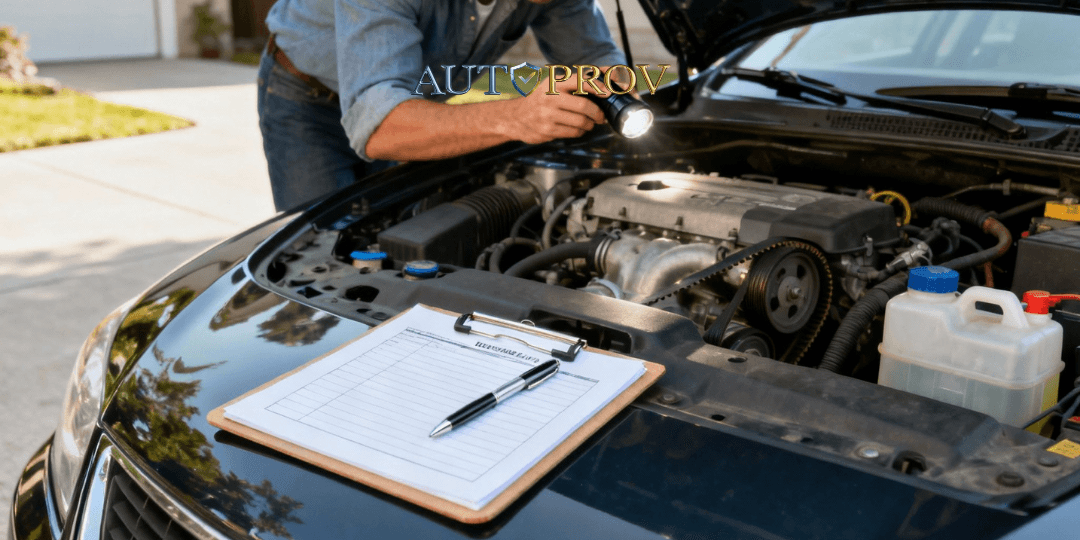
Your Ultimate Used Car Inspection Checklist
A solid used car inspection checklist is the single most powerful tool you have to avoid buying a lemon. It gives you a methodical way to look past the shiny paint and assess a car's real condition, helping you spot hidden problems and get a fair price before you shake hands on the deal.
Published by AutoProv
Your trusted source for vehicle intelligence